In this article:
- Getting to Koenji and Reading the Layout
- The Vintage Clothing Districts
- Eating and Drinking After Dark
- Beyond the Shops: Music, Baths, and a Weather Shrine
- Koenji Tokyo: Frequently Asked Questions
Introduction
Koenji, Tokyo is what the city looks like when nobody is trying to impress you.
The ride from Shinjuku takes under ten minutes on a local train, and the change is immediate. Buildings drop to three and four storeys. The chain logos thin out. Within a hundred metres of the ticket gates, you are in covered arcades. There, the shops sell used Levi’s, second-press vinyl, and yakitori. This often happens within the same block. Nobody here is dressed for anyone else’s benefit, which is precisely why people dress interestingly.
We send travelers to Koenji when they have already done Shibuya and Asakusa. We want them to know what a Tokyo neighborhood feels like when it is not performing. It rewards a slow afternoon and an unhurried evening. On the other hand, it punishes a rushed hour. The shops are small, and the good bars seat only eight people. The whole thing runs on a willingness to open doors without knowing what is behind them.
Getting to Koenji and Reading the Layout
Koenji Station is on the JR Chuo Line, three stops west of Shinjuku. Everything worth walking to sits within roughly fifteen minutes of the gates. This makes it one of the easier Tokyo neighborhoods to cover on foot.
The Chuo Line Catch Nobody Warns You About
On weekdays, Chuo Line rapid services stop at Koenji. On Saturdays, Sundays and public holidays, they do not stop. They run straight through instead. Only the Chuo-Sobu local trains (the yellow ones) call at the platform.
This catches people out constantly. You board a rapid at Shinjuku on a Sunday afternoon. You watch Koenji slide past the window. As a result, you get off at Nakano or Ogikubo instead. On weekends, take the local from the Chuo-Sobu platform and accept the extra few minutes.
The Tokyo Metro Marunouchi Line offers a second route. Shin-Koenji and Higashi-Koenji stations both sit south of the JR line. They are roughly a ten to fifteen minute walk from Koenji Station. In particular, Shin-Koenji is a sensible exit point if you have spent the afternoon working south through the shops.
North Exit, South Exit, and What Each Gives You
The station splits the neighborhood into two halves with different personalities. Choosing an exit is the first real decision you make here.
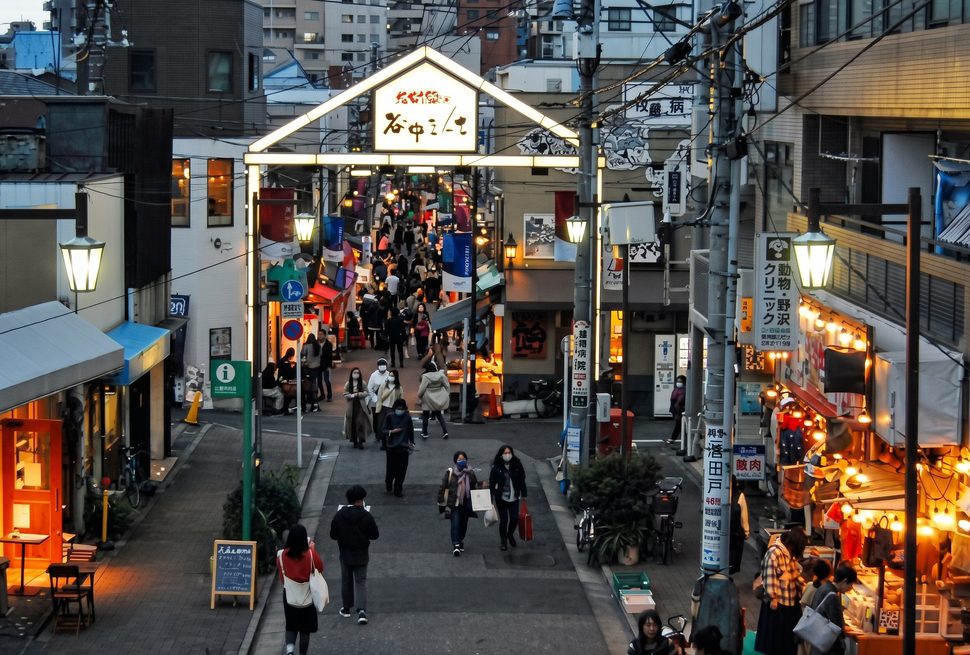
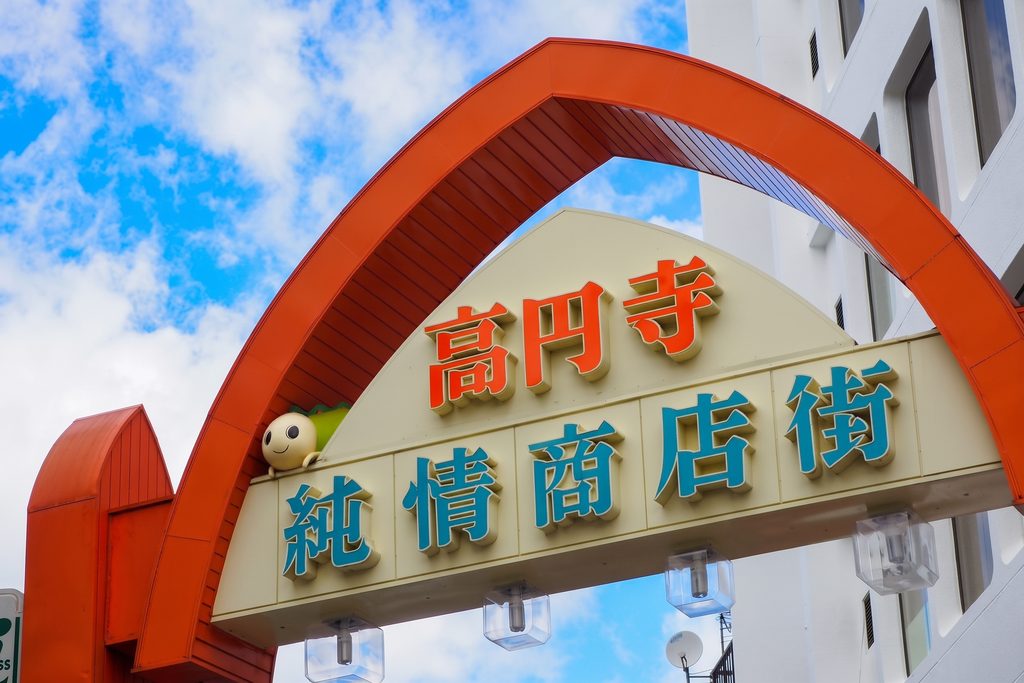
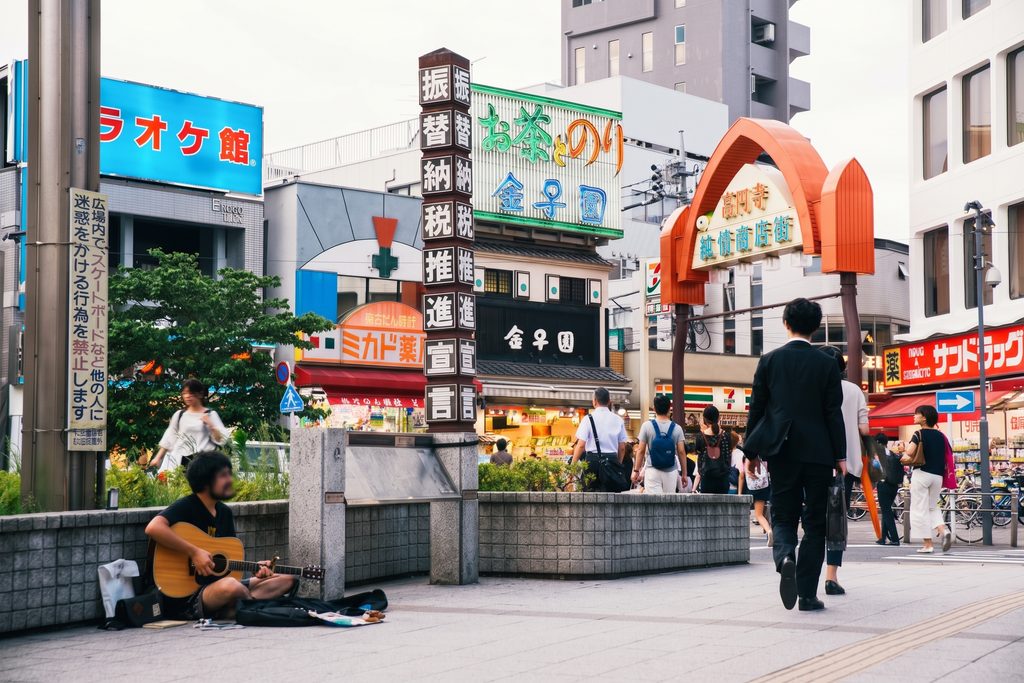
The north exit puts you at Koenji Junjo Shotengai. This is an arcade named after a novel. It is marked by an archway that most people photograph before they have worked out why. North is the more domestic side — greengrocers, old coffee shops, the sento, the shrines. It is where Koenji does its daily business.
The south exit leads into Pal Shopping Street. This is a long covered arcade that runs on into Look Street in the direction of Shin-Koenji. This is the shopping spine. The dense cluster of secondhand clothing shops spreads out from it into the surrounding backstreets. If your interest is clothes, go south first.
Why the Neighborhood Is Named After a Temple
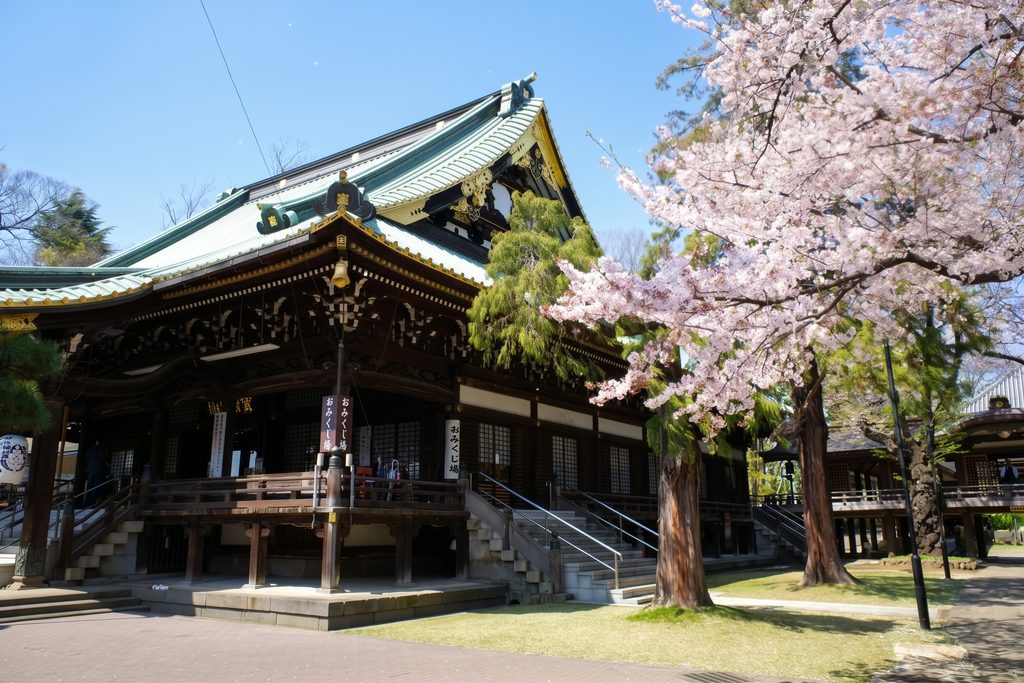
The name comes from Shukuhozan Koenji, a Soto Zen temple that still stands a short walk from the station. The area was a village under a different name until the temple became well enough known that the village took its name instead.
The temple itself is quiet and takes ten minutes to visit. We mention it less as a sight than as a correction — the punk reputation is real, but it is about fifty years old, sitting on top of several hundred years of something else entirely.
Expert Tip
Do not arrive before noon. A large share of the secondhand shops open somewhere between 12:00 and 13:00, and the bars that matter open at five or six. A 13:00 arrival gives you four hours of shopping, a bath, and then dinner — which is the sequence the neighborhood is actually built around. Morning in Koenji is shuttered metal and delivery vans.
The Vintage Clothing Districts
Secondhand clothing is the reason most people outside Tokyo have heard of Koenji, and the reputation holds up. What the guides rarely convey is how concentrated it is: this is not a neighborhood with some vintage shops in it, it is several streets where nearly every ground floor is one.
Where the Shops Actually Cluster
The densest concentration sits south and southeast of the station, in the grid of low streets between Pal Shopping Street and the Marunouchi Line. Look Street, running south toward Shin-Koenji, is the other reliable line to walk.
Shops here specialise hard. One sells only American workwear, the next only 1980s band shirts, the one after that only hats. That specialisation is the point — it is what separates Koenji from the broader survey of Tokyo’s shopping neighborhoods, where the good secondhand tends to be one floor of a larger building rather than an entire district.
Prices run across the full range. Safari, one of the longer-established names, sits at the collector end with pieces priced accordingly. Several streets away you will find shirts at ¥1,000. Both ends are legitimate; they are simply not the same activity.
The Kitakore Building
The Kitakore Building is the neighborhood’s strangest retail space and worth ten minutes even if you buy nothing. It is a narrow, dim, multi-level warren of tiny units occupied by remake labels and one-person brands, with corridors you have to turn sideways in.
It has picked up a certain amount of international fame over the years, which has not made it any less odd. Some units keep irregular hours and some have no visible signage. Treat a closed door as normal rather than as a problem.
How to Shop It Without Wasting the Afternoon
Carry cash. Card acceptance has improved across Japan, but small independent secondhand shops are among the last holdouts, and an ATM run mid-browse breaks the rhythm.
Ask before trying anything on. Many shops here have one curtained corner or none at all, and some vintage pieces are not offered for fitting. Sizing is the other thing to plan for: a lot of the stock is Japanese-cut, and Japanese sizing runs smaller than US or European equivalents, so ignore the label and check the measurements on the tag.
Do not expect tax-free processing. Registered tax-free retailers are rare among shops this small, and the paperwork rarely applies to secondhand stock anyway. Budget the tax in.
Eating and Drinking After Dark
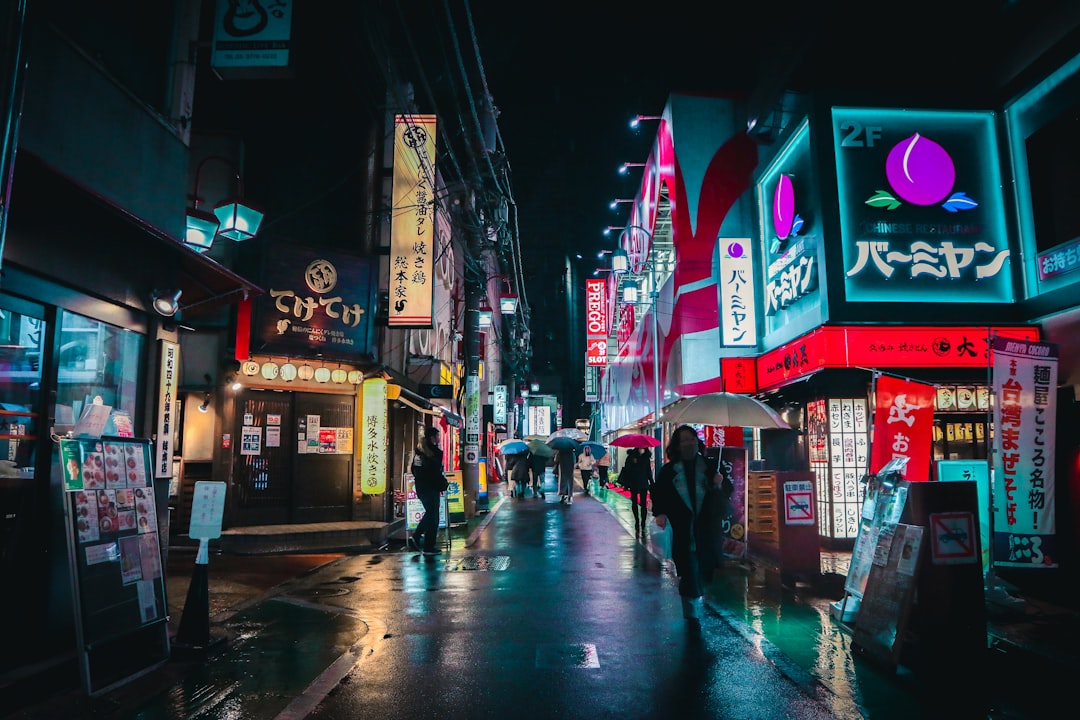
Koenji drinks earlier and cheaper than central Tokyo, and it does so in rooms that hold ten people. The transition happens around six, when the shutters on the clothing shops come down and the lanterns on the bars go up on the same street.
Under the Tracks
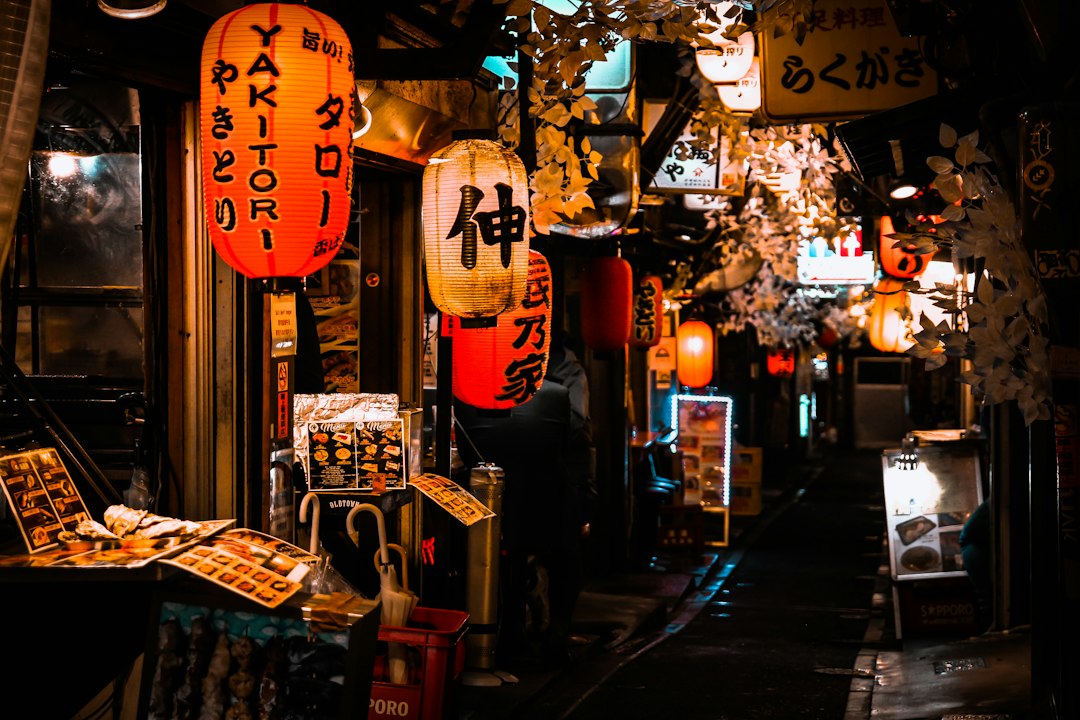
The strip beneath and alongside the elevated railway line is where the neighborhood’s drinking is at its most concentrated. Standing bars, yakitori counters, and izakaya run in a line, trains passing overhead every few minutes loud enough that you stop noticing by the second drink.
This is inexpensive drinking by Tokyo standards. Many places here open from late afternoon, and a good number have no seating at all — you stand at a counter, you eat three or four skewers, you move on. Turning over two or three places in an evening is the normal way to do it.
The Arcades at Night
Junjo Shotengai and Pal both change character after dark. The daytime shops close, and the restaurants and bars behind and between them take over. Because both arcades are roofed, they are also the answer to a rainy evening, which in a neighborhood built around walking matters more than it sounds.
Step one street off either arcade and you are into unroofed backstreets where the density of small bars increases again. Our advice is to walk a full loop before choosing anything. The first acceptable-looking place is rarely the best one within fifty metres.
How Koenji Differs from Shinjuku
The structural difference is regulars. A Golden Gai bar in Shinjuku has spent thirty years working out how to handle a stranger who speaks no Japanese. A Koenji counter with eight seats and a neighborhood clientele has not needed to, because it mostly does not get them.
That is not unfriendliness, and Koenji is not a closed neighborhood — but English menus are scarcer, the seat count is lower, and the odds of walking into a full room are higher. Expect an otoshi seating charge at most sit-down places, which is normal and not a tourist surcharge.
If you want a guided version of this kind of evening, Shinjuku is where we run it. Our three-hour bar and izakaya crawl moves through Omoide Yokocho, Kabukicho and Golden Gai with a guide ordering for the table, and travelers who do that first tend to handle Koenji on their own the following night with no trouble at all. The skills transfer. The room-reading, the counter etiquette, the willingness to point at a wall menu — that is all the same.
Beyond the Shops: Music, Baths, and a Weather Shrine
Strip out the clothes and the bars and Koenji still has more going on per square kilometre than most of west Tokyo. Three things in particular are worth building a visit around.
The Live Houses and Record Stores
Koenji was the centre of Tokyo’s punk scene at the end of the 1970s, and the venues that grew out of it are still operating. U.F.O. CLUB, open since 1996, programmes psychedelic and underground rock in a room decorated like a low-budget occult film set. Show Boat has run since 1993 and leans toward indie bands. Koenji High is the larger, better-equipped room where more established acts play.
The most-told story here concerns 20000V, a hardcore venue that closed in 2009 after a fire in the izakaya above it. Its staff reopened nearby as Niman Denatsu, which still runs punk, noise and experimental nights.
Two practical notes. Tickets are usually sold in advance and a separate drink charge is collected at the door, so bring cash. And the record shops scattered through the arcades are a genuine part of the same ecosystem rather than a nostalgia play — the stock moves.
Kosugiyu and the Sento Habit
Kosugiyu, north of the station, is one of Tokyo’s better-known public bathhouses and an easy way to break up an afternoon of walking. Mount Fuji murals on the bath walls, a rotating scented bath, and the standard hot-cold cycle.
Adult admission is ¥600 — Tokyo caps what any public bathhouse may charge, and the ceiling rose to that figure in August 2026, so the price is the same across the city. It is closed on Thursdays. Towels can be bought or rented on site if you arrive without one.
If you have not used a Japanese public bath before, the washing-before-soaking rules are the same as at any onsen, and a neighborhood sento is a more forgiving place to learn them than a resort.
Kisho Jinja and the Awa Odori Weekend
Inside the grounds of Koenji Hikawa Shrine sits Kisho Jinja, dedicated to weather — reportedly the only shrine in Japan of its kind. It was relocated here after the war from the former Army meteorological department. The votive tablets are shaped like wooden geta sandals, a reference to the children’s method of forecasting by flipping a shoe into the air.
People come to pray for clear skies on wedding days, sports days, and outdoor events. It takes fifteen minutes and it is the single most Koenji thing in Koenji: small, specific, entirely serious about something slightly absurd.
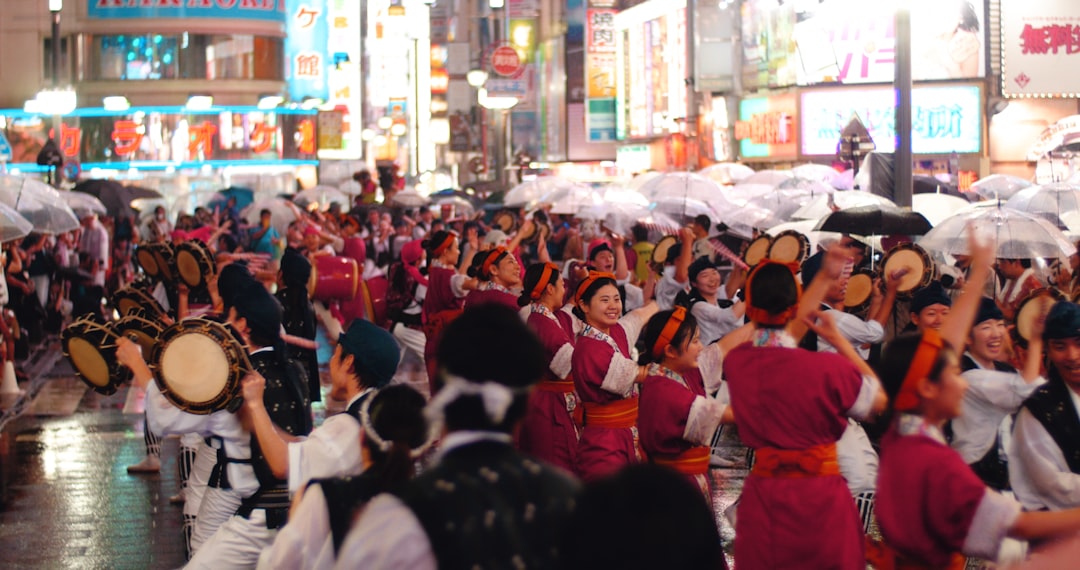
Then there is Awa Odori. Koenji has staged its own version of the Tokushima dance festival since 1957, on the last weekend of August, and it is now the second largest in the country. Around a million people come, the arcades and surrounding streets become performance corridors, and the neighborhood is functionally impassable for two evenings. The 67th edition ran on 29 and 30 August 2026. If your trip lands on that weekend, plan for it deliberately — it is either the reason you go or the reason you go a different day.
Expert Tip
The best single-day sequence we give travelers is south first, north second. Arrive early afternoon, work the secondhand streets south of the station until your legs go, cross under to the north side for a soak at the sento around five, then eat and drink under the tracks from six. The bath in the middle is not a novelty — it is what makes the second half of the day possible after four hours on concrete.
Koenji Tokyo: Frequently Asked Questions
Is Koenji worth visiting on a short Tokyo trip?
On a first visit of three or four days, probably not — Asakusa, Shibuya and a day trip will fill that time better. On a second visit, or on a stay of a week or more, it earns an afternoon and an evening easily. The test is what you want from a neighborhood. If you are interested in secondhand clothing, live music, or simply seeing a residential Tokyo district that has not been rebuilt for visitors, Koenji delivers all three within a fifteen-minute walk.
Does the Chuo Line rapid stop at Koenji?
On weekdays, yes. On Saturdays, Sundays and public holidays, rapid services pass through without stopping, and you need a Chuo-Sobu local train instead. Since the weekend is when most visitors go, this is the single most useful piece of access information about the neighborhood. Check the train type on the platform display before boarding at Shinjuku.
Do I need cash in Koenji?
Yes, more than in central Tokyo. Small secondhand shops, standing bars and live music venues are exactly the categories that remain cash-only or cash-preferred, and drink charges at venues are almost always cash. Convenience store ATMs near the station accept foreign cards, but bringing ¥15,000 to ¥20,000 in notes saves you interrupting the afternoon.
Related Tours

Conclusion
Go on a weekday if you can. The rapid stops, the shops are quieter, the eight-seat bars have seats, and the neighborhood is doing what it does rather than absorbing a weekend crowd from the rest of the city. Saturday in Koenji is still good; Tuesday is better, and almost nobody plans it that way.
Give it the full arc rather than a stop. An hour in Koenji gets you one arcade and a vague impression. Half a day — early afternoon through to a second or third bar — gets you the actual neighborhood, and the difference between those two visits is larger here than in almost any other part of Tokyo we send people to.
And if you are already building a longer Tokyo stay, slot Koenji against the days you have nothing scheduled in the evening. It is not a place to visit on the way to something else. It is the something else.
Plan Your Japan Trip with Local Experts
Our team has guided 40,000+ travelers across Japan. Tell us about your trip and we’ll get back to you within 24 hours.