In this article:
- What Coming of Age Day Actually Is
- What You Will See on the Street
- The Two Rituals Worth Planning Around
- Planning a Trip Around the Second Monday of January
- Coming of Age Day: Frequently Asked Questions
Introduction
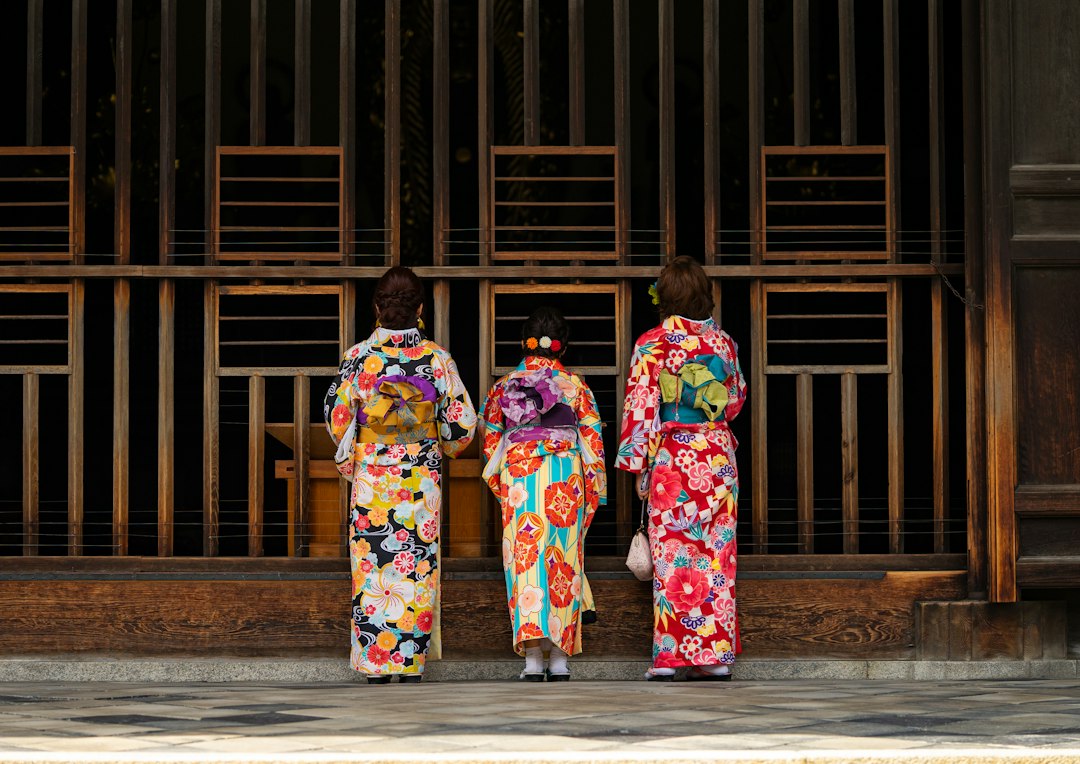
On the second Monday of January, a normal Japanese suburb briefly stops looking normal. Coming of Age Day empties the ward office car park of cars. It fills the space with twenty-year-olds in silk. The contrast between the concrete civic hall and the kimono outside it is the whole character of the day.
You will not find it in any festival calendar as a spectacle. There is no float, no procession, no drumming. What there is instead is roughly a million young adults. They are dressed more formally than they will be again until their weddings. At ten in the morning, they stand in groups outside a municipal building. Their parents are taking photographs of them.
For the travelers we work with, this is the more interesting kind of Japanese event. It is unstaged and not built for visitors. However, it becomes completely legible once someone explains what you are looking at. That explanation is what follows, along with where to stand and what not to do with your camera.
What Coming of Age Day Actually Is
Coming of Age Day, or Seijin no Hi, is a national public holiday. It exists to mark the transition into adulthood. The holiday itself is a day off work. Each municipality, not the state, runs the ceremony that happens on that day.
A National Holiday Built Around a Municipal Ceremony
The ceremony is called seijinshiki. Your city, town or ward invites everyone who reached the relevant age in the preceding year, books a hall, and puts on an hour or so of speeches from the mayor and local officials, sometimes with a short performance and a commemorative gift.
Almost nobody remembers the speeches. What people remember is the part afterwards, when a cohort who last saw each other at fifteen in school uniform meet again in formal dress, take photographs on the steps, and then go and drink somewhere. The ceremony is the excuse; the reunion is the event.
The National Holidays Law established the holiday in 1948 and originally fixed it to January 15. In 2000, Japan’s Happy Monday reforms moved it to the second Monday in January, which is why it now anchors a three-day weekend rather than landing mid-week.
The 18-Versus-20 Problem Nobody Resolved
Japan lowered its legal age of adulthood from 20 to 18, effective April 2022. Japan made that change to the Civil Code — contracts, credit cards, passports — and lawmakers included no instructions about who should attend the ceremony.
Most municipalities kept the ceremony at 20 and renamed it. If you see an English translation along the lines of “gathering of twenty-year-olds,” that is why: the word seijin means adult, and using it for a room full of 20-year-olds stopped being accurate. A minority of local governments moved their ceremony to 18.
The practical reasoning is unglamorous and convincing. Eighteen-year-olds in mid-January are sitting university entrance exams, and the drinking and smoking age stayed at 20 regardless of the Civil Code. Inviting a cohort to a formal reunion in the middle of exam season, where half of them legally cannot drink at the party afterwards, solves nothing.
The Date Moves, and Some Towns Ignore It Entirely
The Law defines the holiday as the second Monday, so the date shifts each year. It falls on January 11 in 2027 and January 10 in 2028.
Not every ceremony happens on the day. Municipalities in heavy snow country, and those whose young adults have mostly moved away to Tokyo or Osaka, often hold theirs in the Golden Week holidays in May or during Obon in August, when people can actually get home. If you are hoping to see a ceremony in a rural town, do not assume January.
A handful of places treat it as civic theatre. Urayasu in Chiba has held its ceremony inside Tokyo Disney Resort since the early 2000s, with the city covering park admission for participants. The public cannot enter it, but the event shows how seriously people take the milestone.
Expert Tip
If you want to see kimono rather than a ceremony, be out between 9am and 11am, and be near a city hall, a civic culture hall or a large shrine. By early afternoon the formal groups have dispersed into restaurants and karaoke rooms, and by evening the furisode have gone back to the rental shop. The window is genuinely a morning, not a day.
What You Will See on the Street
The visual content of Coming of Age Day is clothing. Specifically, it is the one day in an ordinary Japanese life when a large number of people under thirty wear full traditional formalwear at the same time in the same place.
Furisode, Hakama, and the Morning That Produces Them
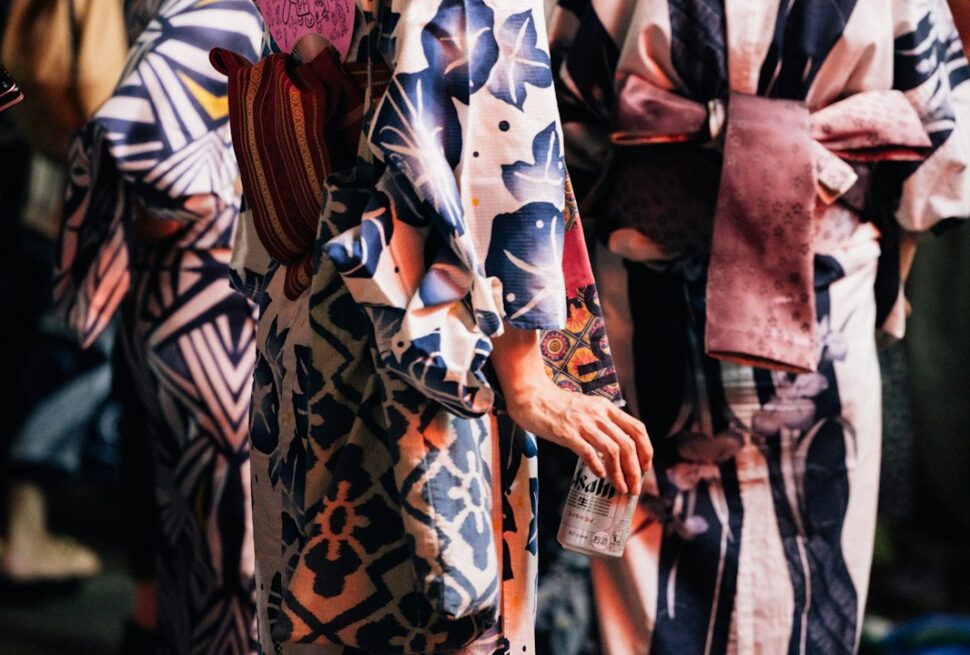
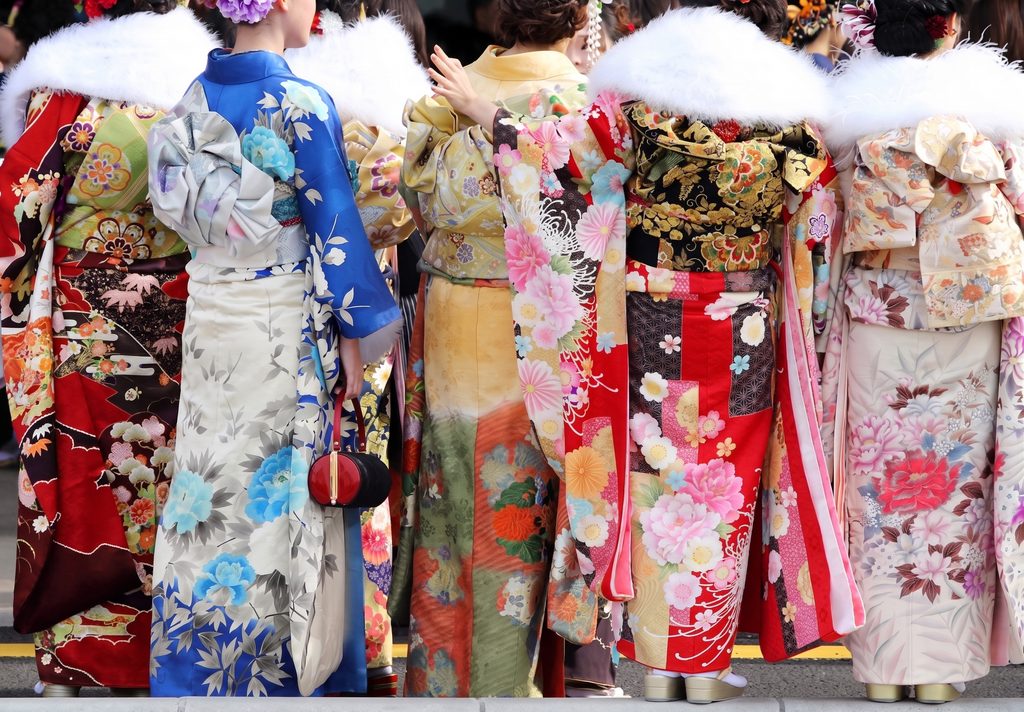
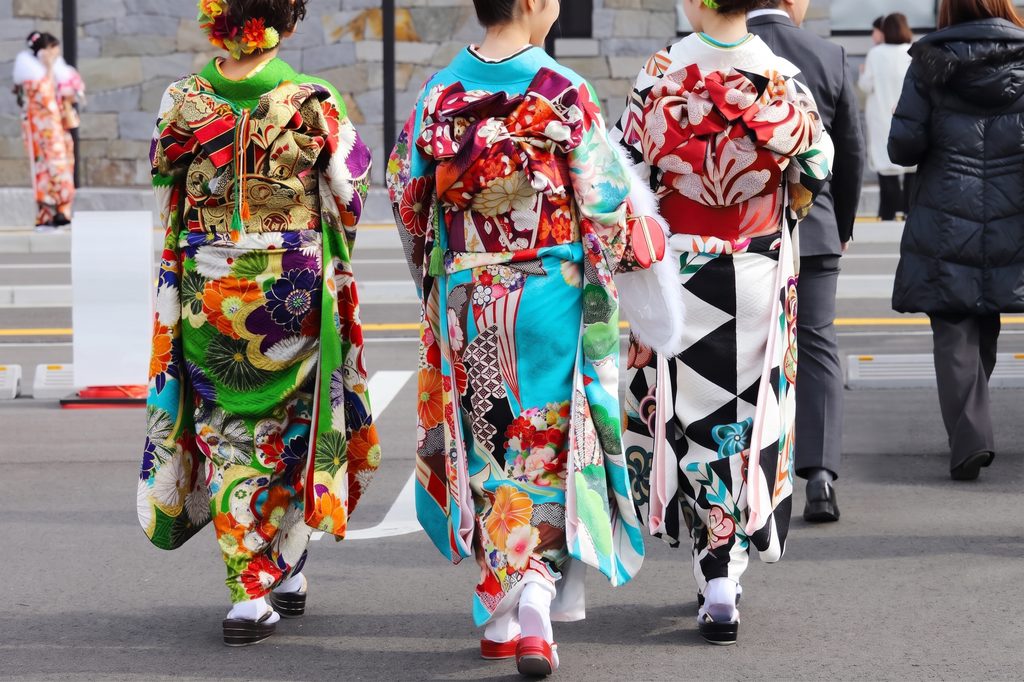
Women wear furisode — a kimono with long, swinging sleeves that reach nearly to the ankle, worn by unmarried women and reserved for the most formal occasions. The sleeves are the signal. Wearers use colour without restraint, unlike in everyday kimono. They choose vermilion, deep blue, or white with gold. Patterns of chrysanthemum and pine run across the whole garment rather than sit politely at the hem.
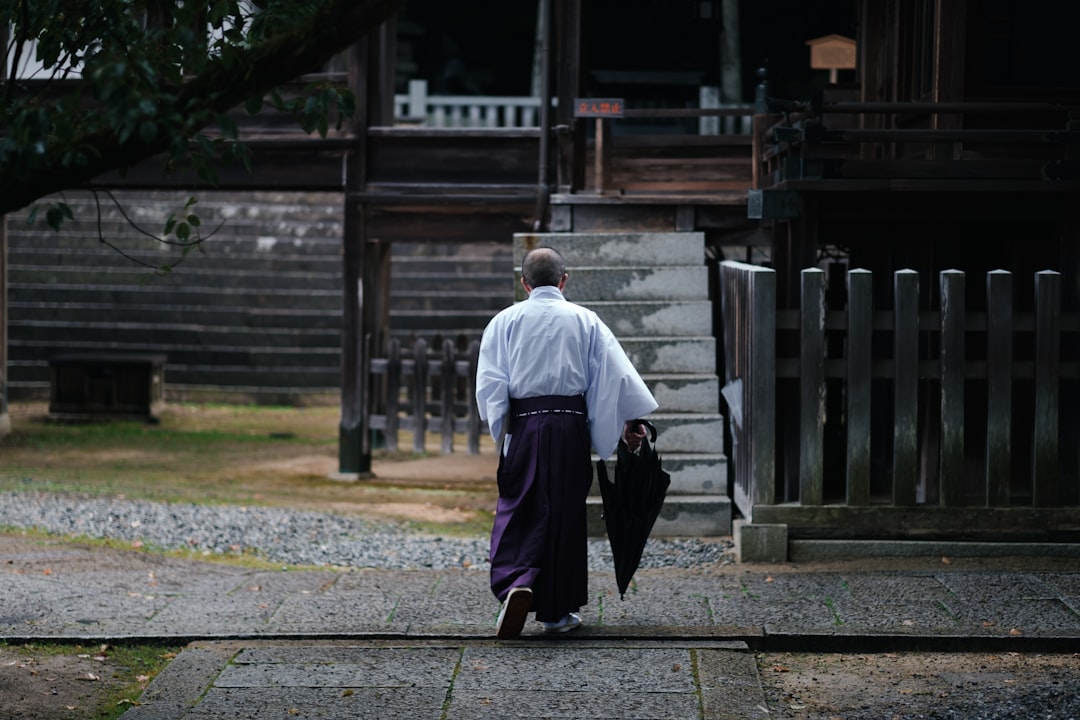
Men are split. Some wear a dark suit, which is the low-effort option and increasingly common. Others wear hakama — pleated trousers over a kimono — which reads as the more considered choice and photographs far better.
What you do not see is the logistics. Wearers cannot put on a furisode by themselves. Clients book hair, makeup, and dressing at a salon months ahead, and stylists often start work before dawn because one stylist must process a queue of clients before a ten o’clock ceremony. Rental packages cover the garment, the obi, the accessories, and the dressing, and shops quote prices across an extremely wide range depending on the shop and the fabric. If the whole subject interests you, our guide to kimono rental in Japan covers how dressing actually works.
Where the Kimono Cluster After the Ceremony
Three places reliably collect people: the front steps of the venue, the nearest large shrine, and any photogenic street within walking distance of both.
In Tokyo, Meiji Jingu draws groups all morning, and the gravel approach under the torii is where most of the good photographs get taken. Asakusa works the same way around Senso-ji, with the added advantage that the approach to the temple is interesting whether or not anyone is in kimono.
In Kyoto, the stone-paved lanes of Higashiyama fill up — the same slopes that are busy every other day of the year, with an extra layer of formal dress on top. Our photographers who work that area say the morning before about nine is still workable and the middle of the day on a holiday is not.
Photographing People Without Being the Problem
Ask. That is the entire rule, and it is not a difficult one.
A phrase and a gesture toward your camera is enough; most groups will say yes, and several will arrange themselves for you. What annoys people is the long lens from across the plaza, and the visitor who steps into a family’s shot because they wanted the same angle. These are young adults at a personal milestone with their parents present, not street performers.
Two practical constraints. Wide shots of a crowd are fine anywhere public. Inside shrine and temple buildings, photography is frequently restricted regardless of the occasion, and the signs are usually in English.
The Two Rituals Worth Planning Around
Two archery events attach themselves to this holiday, and both are considerably more photogenic than a municipal hall.
Momote-shiki at Meiji Jingu
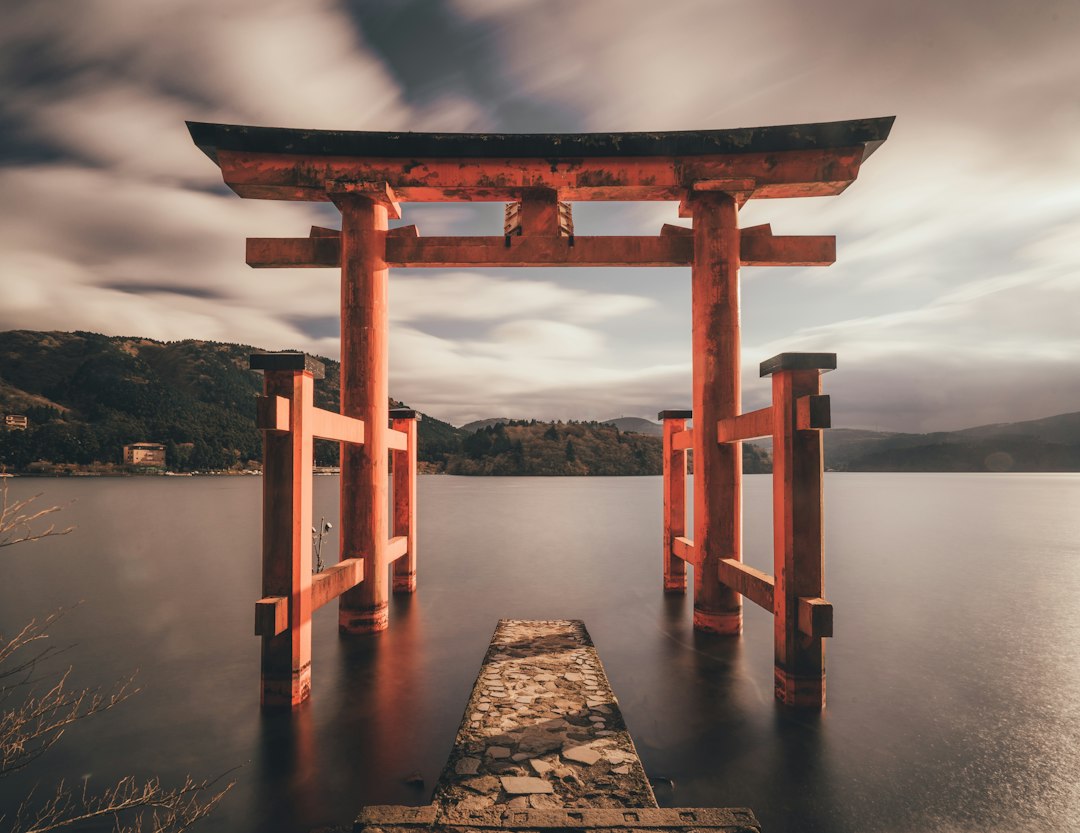
Meiji Jingu in Tokyo holds Momote-shiki, a ceremonial archery ritual, on Coming of Age Day. It is conducted by the Ogasawara school, which has preserved a formalised style of mounted and standing archery for centuries, and it is performed in the shrine grounds near the treasure hall.
The appeal is the choreography rather than the marksmanship. Archers in formal traditional dress move through a set sequence of bows, steps and draws, each one slow and exact, and the arrow release is almost an afterthought to the ritual around it. It lasts well under an hour.
Meiji Jingu sits directly beside Harajuku station, so this combines with a Tokyo morning without any special routing. Confirm the year’s schedule on the shrine’s own site before you build a day around it — ceremony times are announced close to the date.
Omato Taikai at Sanjusangen-do in Kyoto
Kyoto’s version is larger, louder and open to anyone who walks in. The Omato Taikai at Sanjusangen-do draws roughly two thousand kyudo archers from across Japan in mid-January, a large share of them twenty-year-old women shooting in furisode with the sleeves tied back.
They shoot along the west side of the temple at targets sixty metres away, two arrows each, and only those who hit twice go through to the next round. The hall behind the shooting line is the one holding a thousand and one Kannon statues, and entry to the temple is free on the day of the competition.
The event descends from Toshiya, an Edo-period endurance contest held under the same west veranda, in which archers shot through a full day and night and the record-holders are still commemorated on site. The modern version is a single morning, which is an improvement.
What to Expect If You Turn Up
Both are free, outdoors and cold. January in Tokyo and Kyoto means single-digit temperatures and standing still on gravel or stone for an hour, so dress as you would for a winter football match rather than a city walk.
Neither is ticketed, which also means neither is managed. Sanjusangen-do in particular gets genuinely crowded along the shooting line, and the good positions are taken early. We would rather send a traveler there at opening than have them arrive at eleven and see backs of heads.
Expert Tip
Check the exact date before booking flights. Coming of Age Day is the second Monday of January, but the Kyoto archery competition is held on a January Sunday tied to the holiday weekend, and the two are not the same day. Sanjusangen-do publishes its date each winter, and travel blogs frequently repeat the previous year’s.
Planning a Trip Around the Second Monday of January
The holiday matters to your itinerary whether or not you care about the ceremony, because it creates a three-day weekend in the middle of January.
It Is a Three-Day Weekend, and Trains Know It
Saturday, Sunday and Monday off sends a meaningful number of Japanese households somewhere. Shinkansen reserved seats on the Sunday out and the Monday evening back fill early, hotel rates in Hakone, Nikko and the ski towns rise, and popular restaurants lose their last-minute availability.
None of this approaches New Year or Golden Week. It is a mild squeeze, not a wall, and it is handled by reserving your long-distance trains a few days ahead rather than walking up. Our guide to Japan’s public holidays sets out which periods actually justify rearranging a trip.
What Is Open, What Is Shut, and the Tuesday Trap
On the holiday itself, almost everything commercial is open. Department stores, restaurants and shops treat a Monday public holiday as a Sunday and trade normally.
The catch is the following day. Museums that close on Mondays generally shift that closure to the Tuesday when the Monday is a public holiday, so the Tuesday after Coming of Age Day quietly becomes a bad museum day across the country. Check individual sites rather than assuming — this trips up more itineraries than the holiday itself does.
Banks, post offices and government offices close on the holiday. That is rarely a problem for visitors, with one exception: if you were relying on a bank branch to change money, use an ATM at a convenience store or a post office ATM on a different day.
January Weather and the Snow-Country Reschedule
Mid-January is the coldest stretch of the Japanese year and also one of the clearest on the Pacific side. Tokyo and Kyoto give you cold, dry, bright days with genuinely good light, which is why the photographs from this holiday look the way they do.
The Sea of Japan side is a different country in January. Kanazawa, Niigata and the Tohoku coast get heavy snow, which is exactly why so many towns there postpone their ceremonies. For what else the month offers, see our month guide to visiting Japan in January.
Pack for standing outdoors rather than walking. Thermal layers, gloves and something for your ears matter more in January than a heavy coat does, because the cold you will feel is the cold of not moving.
Coming of Age Day: Frequently Asked Questions
Can tourists attend a coming of age ceremony?
No. Municipal ceremonies are invitation-only, restricted to residents registered in that city or ward, and held inside a hall with a guest list. What is open to you is everything around the ceremony — the arrivals, the photographs on the steps, the shrine visits afterwards — all of which happens in public space. The archery events at Meiji Jingu and Sanjusangen-do are the parts of the day genuinely open to anyone.
Is it rude to photograph someone in a furisode?
Not if you ask first. Gesturing at your camera and waiting for a nod is understood everywhere and refusal is rare. Photographing a specific person or family group without asking is where it becomes rude, and standing in the way of a parent taking a photograph is worse. General crowd shots in a public plaza need no permission.
Can I rent a furisode and join in?
You can rent one, and plenty of visitors do — the shops around Higashiyama in Kyoto and Asakusa in Tokyo rent kimono to anyone. You cannot attend the ceremony. Be aware that January is the single busiest week of the year for kimono rental shops, since their regular clients are booked for the holiday, so reserve well ahead or choose a different week for a dressing experience.
Related Tours
Conclusion
Coming of Age Day rewards a small amount of planning and almost no effort. Pick a morning position — a shrine approach, a civic hall forecourt, the veranda at Sanjusangen-do — get there before ten, and let the day come to you. There is nothing to book and nothing to queue for.
What makes it worth the cold is that none of it is performed for visitors. The families on those steps are marking a private threshold in public, using clothing their grandmothers would recognise, in front of a building where the rubbish collection schedule is posted by the door. That mixture is Japan doing what it does best, and it happens to be free to watch.
If your trip lands on the second Monday of January, treat it as a fixed point and build the rest of the week outward. Reserve your shinkansen seats early, keep the following Tuesday free of museums, and spend the holiday morning outdoors with a warm coat and the manners to ask before you photograph anyone.
Plan Your Japan Trip with Local Experts
Our team has guided 40,000+ travelers across Japan. Tell us about your trip and we’ll get back to you within 24 hours.