In this article:
- The Permit You Cannot Get Here
- Driving on the Left
- Signs, Stops, and Speed Limits
- Parking Systems
- Petrol Stations
- Driving in Japan with a US License: Frequently Asked Questions
Introduction
An American licence in Japan is worth exactly nothing by itself. The rental desk will not argue with you about it; they will simply not give you the keys.
That is the single most important sentence in this article, and it is the one people discover at Chitose Airport at eleven at night with a reservation they cannot use. Everything else here is manageable on the day.
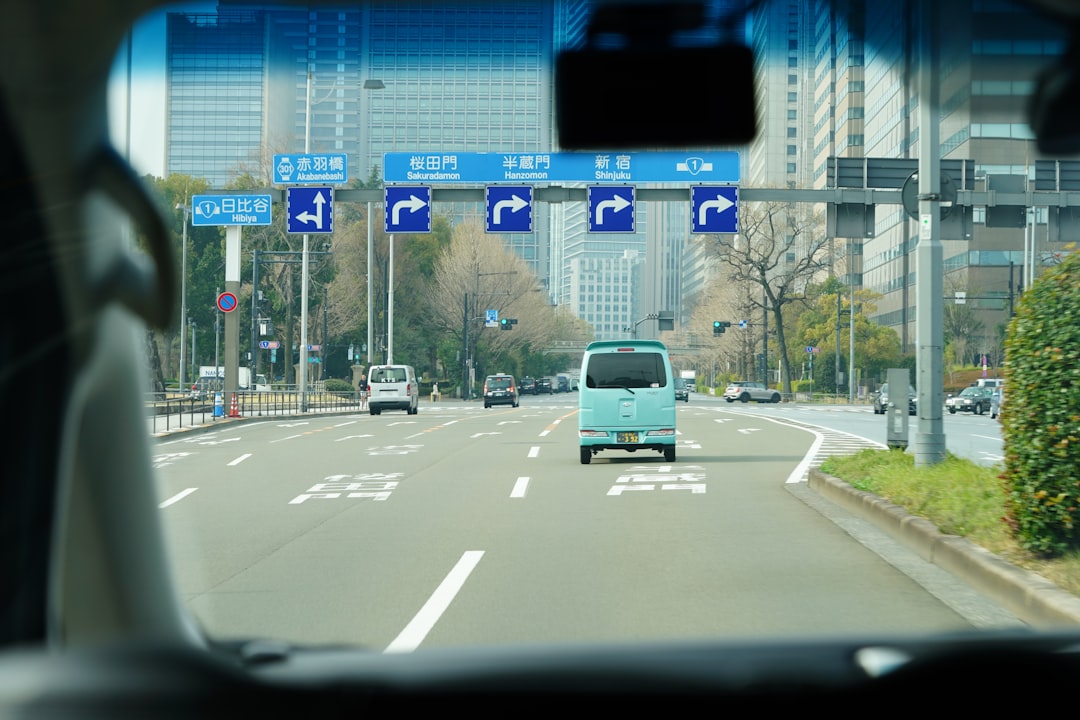
The good news is that Japanese roads reward an American driver more than most foreign systems do. Traffic is slow, drivers do not tailgate, lane discipline is close to absolute, and signage on any route a visitor uses carries romanised text. The learning curve is real but short.
The Permit You Cannot Get Here
Japan honours the International Driving Permit issued under the 1949 Geneva Convention, and the United States is a party to it.
Getting One From AAA
AAA and AATA are the only two organisations authorised to issue IDPs in the United States. AAA branches handle it over the counter: bring your licence, two passport-sized photographs, and about twenty dollars, and you walk out with the booklet the same day. You do not need to be a AAA member.
Applications by mail take a few weeks. If your trip is close, go to a branch.
The permit is a grey booklet that translates your licence into ten languages. It is not a licence in itself and has no standing without the plastic card it refers to.
One Year, and Only From the Issue Date
The IDP is valid for twelve months from the date of issue, not from the date you enter Japan. Getting one nine months before a trip wastes three months of it, though for a two-week holiday this rarely matters.
There is a separate rule that affects long-stay visitors: if you leave Japan and return within three months, the clock does not reset for the purposes of the one-year driving limit. For an ordinary holiday it is irrelevant.
Why the Plastic Licence Alone Is Refused
Japanese law requires a driver to hold either a Japanese licence, a Geneva Convention IDP accompanied by their home licence, or an approved official translation. There is no discretionary category for a foreign licence on its own.
Rental staff have no authority to waive it, insurers will not cover a driver without it, and driving without one is an offence carrying a fine and potential detention. If an accident occurs you are, in the eyes of both the police and the insurer, an unlicensed driver.
We have had travelers ask whether they can obtain an IDP after landing. They cannot. It must come from the country that issued the licence.
Expert Tip
Photograph your IDP and your licence and store the images somewhere you can reach without a data connection. Police checkpoints are uncommon but do occur, particularly on rural roads and near ski resorts in winter, and the officer will want to see the physical documents. The photographs will not satisfy an officer — they exist so that you can prove what you held if the booklet is lost, and so a rental branch can start the paperwork while you find it.
Driving on the Left
The side of the road is not the hard part. The controls are.
The First Twenty Minutes
Sitting on the right and driving on the left feels wrong for roughly two miles, and then stops feeling like anything. The brain adjusts faster than people expect because every other car on the road is doing it correctly and you simply follow.
Where it comes back is at moments of low traffic — pulling out of an empty car park, turning onto a deserted rural road at dawn. That is when an American driver drifts right. Say the direction out loud for the first day.
Collect the car somewhere quiet. Picking up at a regional airport and driving out through farmland is a much gentler start than collecting in Shinjuku.
The Wiper Problem
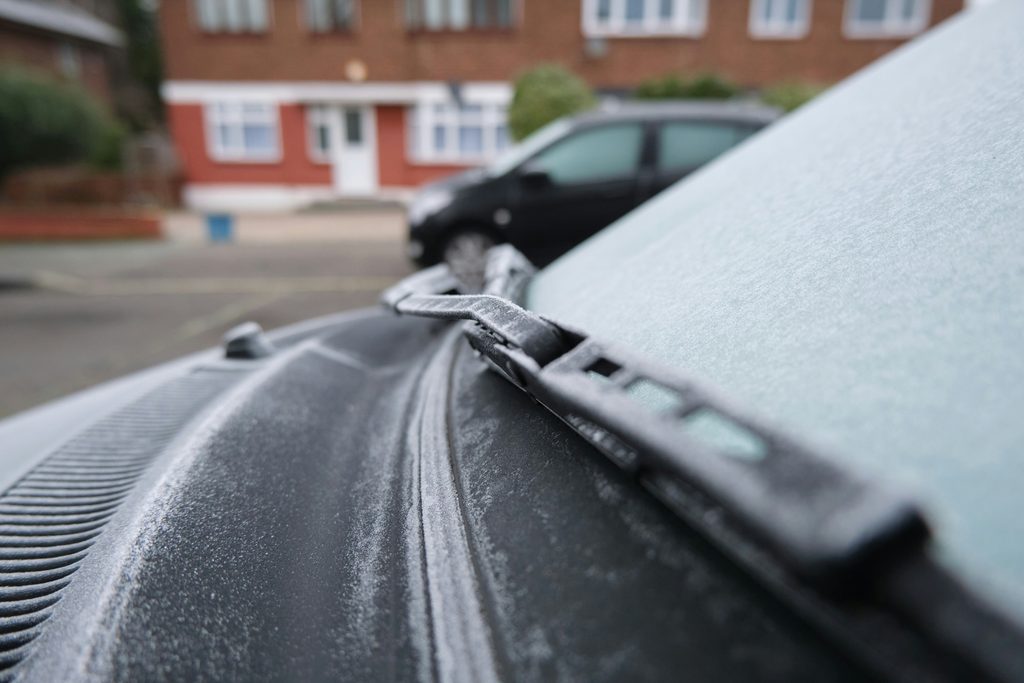
On a Japanese car the turn signal stalk is on the right of the steering column and the wipers are on the left, the reverse of an American layout.
You will turn on the wipers when you mean to indicate. Everyone does, for about a day. It is harmless and mildly embarrassing, and there is no way to train it out in advance.
Pedestrians Have Absolute Priority
This is the genuine adjustment, and it is a legal matter rather than a courtesy. Vehicles must stop for pedestrians at unsignalled crossings, and enforcement of this has tightened considerably in recent years.
On a left turn — the equivalent of an American right turn — you are crossing a pedestrian crossing that has a green signal at the same time as your green light. You stop. There is no filtering through a gap.
Japanese drivers stop dead for a pedestrian standing at a zebra crossing with no signal at all. Do the same.
Signs, Stops, and Speed Limits
Most Japanese road signs follow international conventions and are readable on sight. Three are worth learning before you drive.
The Red Triangle Means Stop
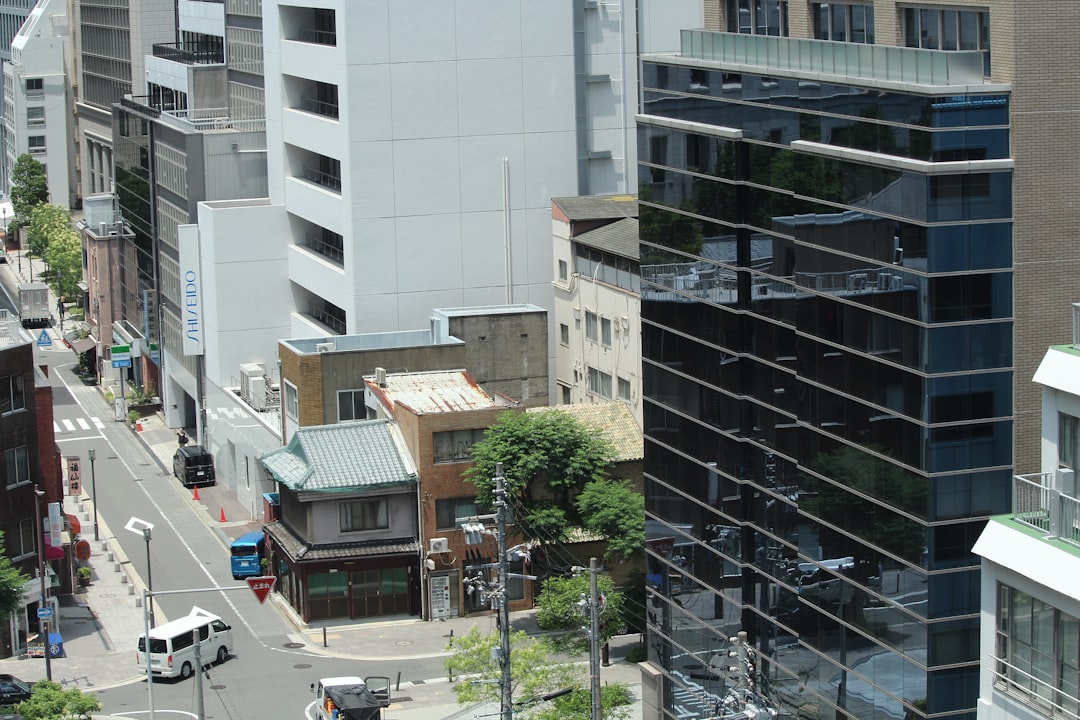
Japan’s stop sign is an inverted red triangle bearing the word 止まれ (tomare). It is not an octagon and it is not always accompanied by a painted line.
It means bringing the vehicle to a complete stop with the wheels stationary, and police enforce the rule. Rolling through a stop sign is one of the most common reasons police pull over visiting drivers.
Every Railway Crossing Requires a Full Stop
This surprises Americans more than anything else on the list. Japanese law requires every vehicle to come to a complete stop before every level crossing, every time, regardless of whether barriers are down, lights are flashing, or a train is anywhere in the vicinity.
Stop, look both ways, then proceed. Traffic behind you expects it and will not react.
Speed Limits and Local Reality
Authorities typically set speed limits at 40 to 60 kph on urban roads, 50 to 60 kph on rural highways, and 100 kph on expressways, while allowing 120 kph on certain sections of the Shin-Tomei and Tohoku expressways.
Expressways have speed cameras, and signs clearly mark their locations. The practical guidance is to drive at the speed of surrounding traffic, which on expressways often sits somewhat above the posted limit and in towns often sits below it.
The offence with no tolerance at all is drink driving. The law sets the blood alcohol limit at 0.03 percent, imposes penalties that can include imprisonment, and can also prosecute passengers who knowingly allowed the driver to drink. Treat it as zero.
Parking Systems
There is effectively no street parking in urban Japan. Assume that any car you see parked on a road is either loading or breaking the law.
Coin Parking With Flap Barriers
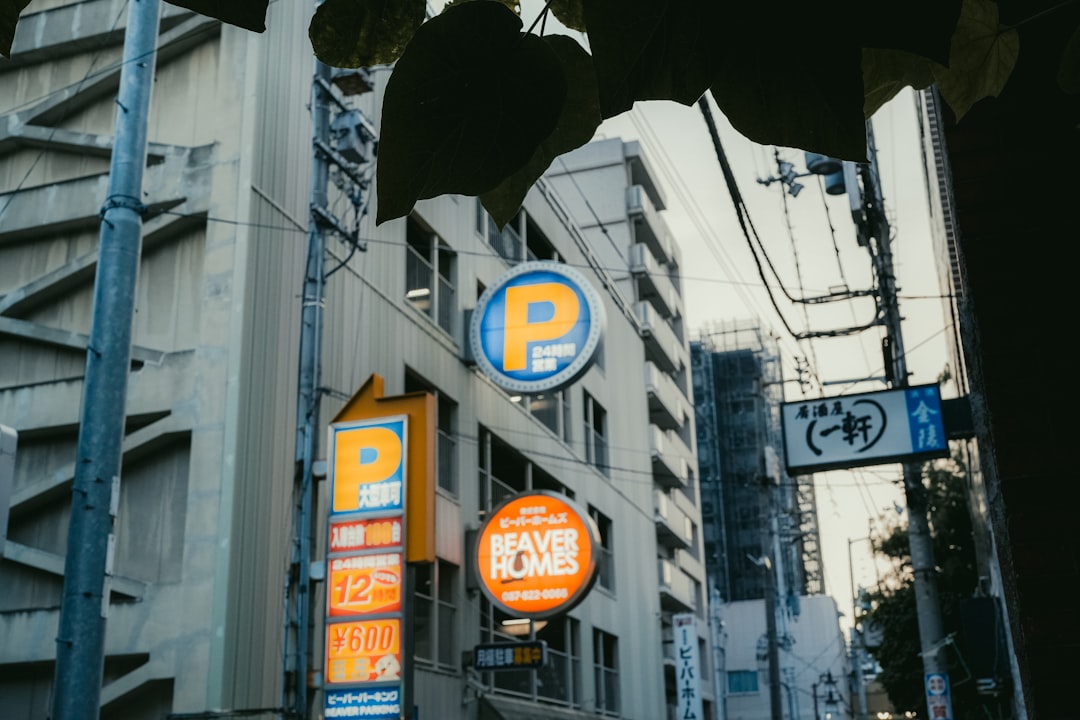
The most common system is a small lot with numbered bays, each with a hinged metal plate in the road surface. Park over the bay, and the plate rises under the car a minute later, locking it in place.
To leave, go to the payment kiosk, enter your bay number, pay the displayed amount in cash or by IC card, and the plate lowers. You then have a few minutes to drive out.
Rates are shown on a board at the entrance, usually per twenty or thirty minutes with a daily maximum. City centre rates in Tokyo and Kyoto are high enough that we generally recommend leaving the car at the hotel and taking the train for a day in the centre.
Mechanical Tower Parking
In dense districts, parking is a vertical machine. An attendant or a screen directs you onto a platform, you get out, and the car is lifted into a tower.
Vehicle dimensions are strictly limited, and larger rental vehicles will be refused. Check the posted height and width restriction at the entrance before committing.
Retrieval takes a few minutes. Do not use tower parking if you need to get somewhere in a hurry.
Why Street Parking Is Not an Option
Illegal parking is enforced by patrolling wardens who photograph vehicles and issue penalties that follow the rental company back to you, with an administrative fee attached. Fines run to tens of thousands of yen.
Owning a car in Japan requires proof of an off-street parking space, which is why the streets are clear. There is no informal tolerance to rely on.
Expert Tip
Michi-no-eki — roadside stations — are the most useful facility on a Japanese road trip and have no American equivalent. They combine free parking, clean toilets open around the clock, a farmers’ market selling local produce, and usually a restaurant serving whatever the surrounding area is known for. They are signposted from the main road, they are where the region’s best food often is, and on a long rural drive they solve the break, the meal, and the lunch shopping at once.
Petrol Stations
Fuel in Japan is sold by the litre and comes in three grades, colour-coded at the pump.
Full Service
Attended stations are still common, especially outside cities, and are the easier option for a visitor. Pull in, and an attendant approaches the window.
Say “regular, mantan” — regular unleaded, full tank. That single phrase covers virtually every rental car in the country. Attendants will also take your rubbish and clean the windscreen while the tank fills.
Pay by card or cash at the window. The whole process takes four minutes and involves no machine navigation.
Self Service
Self-service stations are increasingly common and cheaper. Newer machines have an English toggle; older ones do not.
The nozzle colours are consistent nationwide: red for regular unleaded, yellow for high-octane, green for diesel. Rental cars are almost always regular. Confirm on the sticker inside the fuel flap.
Some machines require payment before dispensing and issue change afterwards from a separate kiosk. If nothing happens when you lift the nozzle, that is why.
Driving in Japan with a US License: Frequently Asked Questions
Can I get an International Driving Permit after arriving in Japan?
No. An IDP must be issued by the country that issued your licence, which for an American means AAA or AATA on US soil. There is no counter in Japan, at the airport or otherwise, that can produce one for you. Travelers who arrive without it either abandon the rental or find that the trip becomes a rail trip. Get it before you fly.
What do I do after a minor collision?
Call 110 for the police, without exception. Reporting any accident to the police is a legal obligation in Japan, and the police report is what your insurance claim rests on — an agreement settled privately at the roadside will not be honoured by the rental company’s insurer. Then call the rental company’s emergency line, which is on the paperwork in the glovebox and on a sticker in the car. Do not admit fault or offer payment at the scene; that has specific legal weight here. Exchange details, photograph everything, and wait.
Are Japanese tolls expensive compared to US highways?
Considerably, yes. Japanese expressways are privately operated toll roads rather than publicly funded interstates, and the rates reflect it. Tokyo to Kyoto costs roughly ¥11,000 in tolls one way, against two hours and twenty minutes on the Shinkansen. This changes the calculation on long trips: for city-to-city distances the Shinkansen is usually faster and cheaper, and the car earns its cost within a region rather than between them. If you are driving long distances, look at whether a regional unlimited-toll pass for visitors covers your route.
Related Tours


Conclusion
The permit is the whole battle. Get to a AAA branch, spend twenty dollars, and the rest of driving in Japan is a matter of a slightly awkward first afternoon.
Then plan the trip so the car does what a car is good for. Rail between the cities, collect a car for the three or four days you spend somewhere the trains do not reach, and hand it back. That structure gives you the coastline and the mountain villages without paying ¥11,000 in tolls to duplicate a journey the Shinkansen does in two hours.
Plan Your Japan Trip with Local Experts
Our team has guided 40,000+ travelers across Japan. Tell us about your trip and we’ll get back to you within 24 hours.