In this article:
- The Two Core Numbers
- Placing the Call
- Advice Lines That Are Not Emergencies
- Apps Worth Installing Before You Fly
- Police Boxes and Minor Problems
- Emergency Numbers in Japan: Frequently Asked Questions
Introduction
There is no 911 in Japan. There are two numbers, and dialling the wrong one costs time you may not have.
Police are 110. Fire and ambulance are 119. The split follows the same logic as the UK before 999 consolidated because entirely separate organisations run the two services — the prefectural police and the municipal fire department.
Both are free from any phone, including a locked mobile with no SIM. Operators answer both calls immediately. However, they do not speak English by default, and that is the part worth preparing for.

The Two Core Numbers
Three numbers, in practice. The third is rarely needed and worth knowing anyway.
110 — Police
Call 110 for crime, traffic accidents, theft, assault, or any situation requiring police attendance. Traffic accidents are a legal obligation rather than a choice: Japanese law requires every road accident to be reported to police, and your rental car insurance claim depends on the report they produce.
Response times in urban Japan are fast. The dispatcher will want the location first, then the nature of the incident.
Crime against visitors is rare enough that most travelers will never use this number. Lost property, which is what visitors actually experience, does not warrant a 110 call — that goes to a police box.
119 — Fire and Ambulance
119 covers fire, medical emergencies, and rescue. The same number reaches both services and the dispatcher determines which is sent.
Ambulances in Japan are operated by the fire department and the ride itself is free, funded publicly. This is worth stating plainly because visitors from countries with billed ambulance services sometimes hesitate. Do not hesitate.
Note that free transport does not mean free treatment. The hospital bill that follows is charged to you in full as a foreign visitor, which is a separate matter and a reason to hold travel insurance.
Some municipalities have introduced charges aimed at discouraging non-urgent emergency room use. This is a hospital-level fee rather than an ambulance fare, and it is not a reason to avoid calling in a genuine emergency.
118 — Coast Guard
118 reaches the Japan Coast Guard for maritime incidents: accidents at sea, someone in difficulty off a beach, an oil spill, a vessel in distress.
For anyone diving in Okinawa, sea kayaking in the Seto Inland Sea, or on a boat anywhere, this is the correct number. From a beach where you can see the person in trouble, 119 will also work and will reach the local fire service faster.
Expert Tip
Put 110 and 119 into your phone as contacts before you leave home, labelled “Police Japan” and “Ambulance Japan”. This sounds trivial. In an actual emergency, at three in the morning, in a country where you have been for two days, people do not reliably recall which of two similar three-digit numbers does which — and the failure mode is dialling 110 for a heart attack and losing ninety seconds to a transfer.
Placing the Call
The call will be answered in Japanese. What happens next depends on what you say first.
From a Mobile Phone
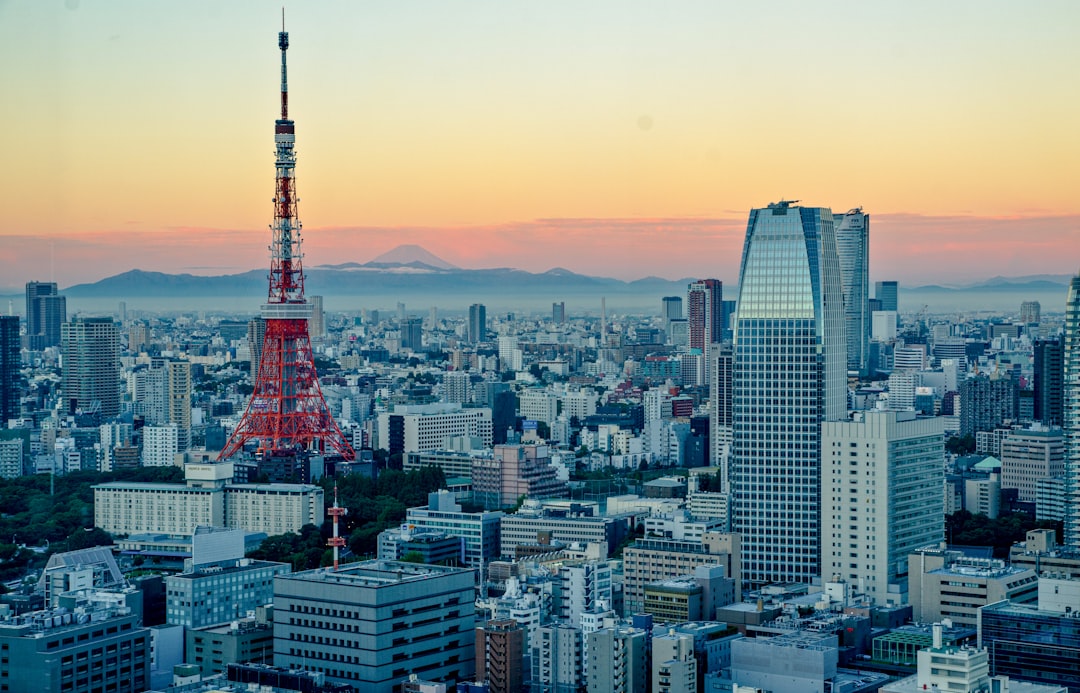
Dial 110 or 119 directly with no area code and no country code. A foreign SIM, an eSIM, or a Japanese travel SIM all work, and so does a phone with no SIM at all — emergency calls are carried by any available network.
One consequence of mobile calling worth knowing: calls from mobiles are routed to a regional centre rather than the local station, so the dispatcher does not necessarily know where you are. Giving your location clearly is more important than it would be at home.
From a Public Phone
Green and grey payphones still exist across Japan, particularly in stations and near public buildings, and they are the reliable fallback when a battery dies.
Emergency calls from payphones are free. On most models, lift the handset, press the red emergency button, and dial. No coin and no card is needed.
Getting an English Speaker
Say “English please” immediately, clearly, and then stop and wait. Do not begin explaining in English — the operator’s first task is to bring in a translator, and they cannot do that while you are talking.
Both 110 and 119 have interpretation services available, typically through a three-way call with an interpreter. Connection takes a short time. In the meantime, three pieces of information get across even without shared language: your location, the word “ambulance” or “police”, and the number of people involved.
If you are at a hotel, ryokan, or restaurant, the fastest route is often to hand the phone to a member of staff, or to ask them to call. This is not an imposition and they will do it without hesitation.
Advice Lines That Are Not Emergencies
Most travel problems are not emergencies, and using an emergency number for one is both unhelpful to you and unhelpful to the person who needs it.
#7119 — Should This Be an Ambulance?
#7119 is a medical consultation line staffed by nurses who assess whether your situation warrants an ambulance, a hospital visit, or waiting until morning. They can also direct you to a facility open at that hour.
This is exactly the service a visitor with a sick child at midnight needs. The service is operated regionally and is not available in every prefecture, and language support varies. Tokyo’s version is well established.
The JNTO Visitor Hotline
050-3816-2720 is the Japan National Tourism Organization’s visitor hotline, operating 24 hours a day in English, Chinese, and Korean.
It handles medical guidance, accident support, disaster information, and general travel trouble, and it will act as an interpreter in a situation that has not yet become an emergency. For a traveler, this is the most broadly useful number in this article after the two core ones.
Save it. It is the right call for “I am unwell and do not know where to go” and for “there has been an earthquake and I do not understand the announcements”.
Finding a Clinic or Pharmacy at Night
JNTO maintains an online directory of medical institutions that accept foreign patients, searchable by prefecture, speciality, and language. Prefectural websites list on-duty clinics and late-opening pharmacies.
A hotel front desk will do this search for you and telephone ahead, which is faster than working through a Japanese-language prefectural site at two in the morning.
Apps Worth Installing Before You Fly
Two of these will alert you to something before it happens. That is not an exaggeration.
Safety Tips
Safety Tips is the official disaster alert app published under the Japan Tourism Agency, and it is the one we ask every traveler to install.
It delivers earthquake early warnings, tsunami advisories, typhoon and heavy rain alerts, volcanic warnings, and evacuation instructions, in English and several other languages. The earthquake early warning gives you seconds — sometimes tens of seconds — between the detection of the initial wave and the arrival of the shaking. Those seconds are enough to get away from glass and under a table.
It also includes flowcharts for what to do during each type of event, which is more useful than it sounds when you are disoriented.
Japan Travel by NAVITIME
Primarily a transport app, and the reason it belongs here is that it shows rail suspension information and reroutes in real time. After an earthquake or during a typhoon, the trains stop, and knowing which lines have resumed is the difference between a long wait and a long walk.
It also maps evacuation sites and works offline for saved routes.
VoiceTra
Japan’s National Institute of Information and Communications Technology developed VoiceTra, a translation app that handles medical and emergency vocabulary noticeably better than general-purpose translators.
It back-translates, showing you what your Japanese sentence means when rendered back into English, so you can tell whether “my chest hurts” survived the trip. Paramedics and clinic staff often see it.
Expert Tip
Turn on your phone’s Japanese emergency alerts and leave them on. The national J-Alert system pushes earthquake and evacuation warnings to every handset in the affected area regardless of app, and the sound is deliberately alarming. Visitors sometimes disable it after being woken at four in the morning by a distant tremor. Do not. The one you switch it off before is the one that matters.
Police Boxes and Minor Problems
The koban is the most useful institution in Japan that visitors do not know how to use.
What a Koban Is
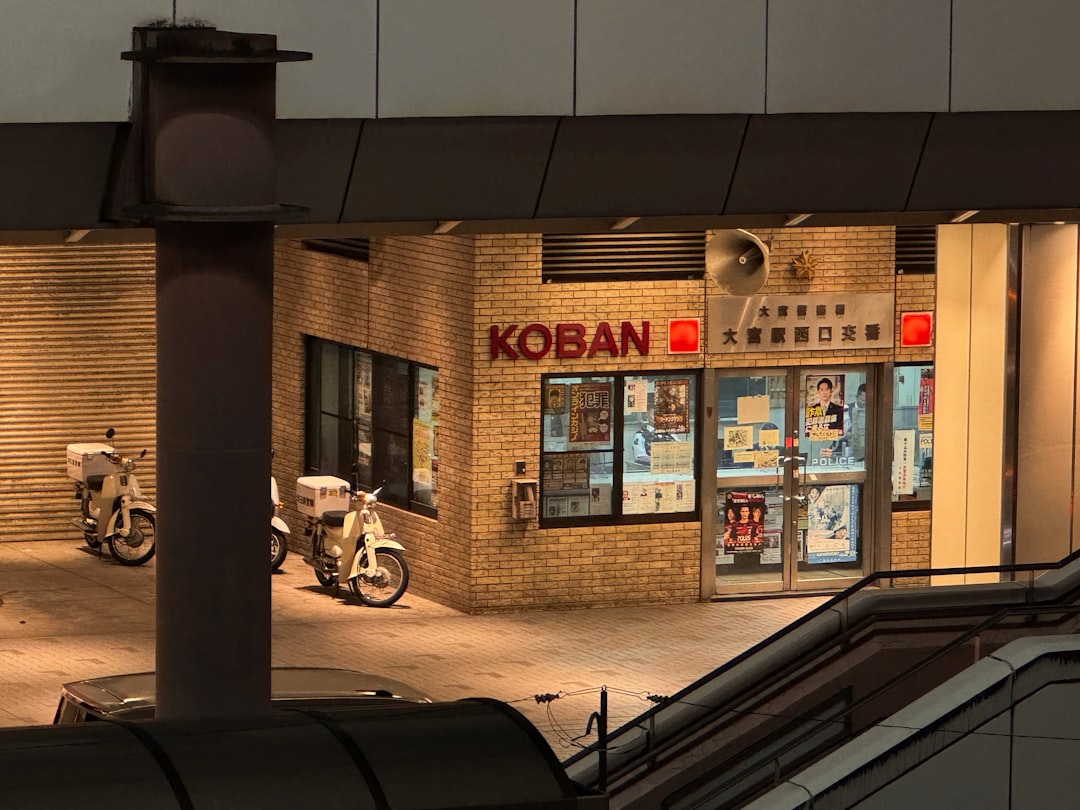
A koban is a small neighbourhood police post, typically a one- or two-room building with a red lamp outside, staffed around the clock. There are thousands of them, concentrated near stations, major intersections, and busy districts.
They are not a place of last resort. Walking into one to ask a question is entirely ordinary and officers expect it.
Lost Property
This is the koban’s most relevant function for a traveler, and Japan’s lost property system genuinely works. Staff log and hold handed-in items, and they often return wallets with the cash still intact.
Report the loss at the nearest koban to where it happened, or at the station office if it was on a train. You will fill in a form with a description and your contact details. Bring your passport.
If you lose a passport, the koban report is the document your embassy will require before issuing a replacement, so make that stop first.
Directions and General Help
Officers give directions, will call a taxi, and will telephone a hotel to explain where you are. In a country where street addresses are famously unhelpful and few buildings carry a visible number, this is a real service.
We tell travelers who feel lost or unwell but not in danger to look for the red lamp. It is a faster resolution than any phone call.
Emergency Numbers in Japan: Frequently Asked Questions
Is an ambulance free for tourists in Japan?
Yes. Municipal fire departments provide ambulance transport free of charge, regardless of nationality or insurance status. Hospitals, however, charge foreign visitors the full cost of the treatment they receive, and that is where the expenses arise. Some hospitals have introduced fees intended to discourage non-urgent emergency room use, which is a separate matter from the ambulance itself. None of this should factor into a decision to call 119 in a genuine emergency.
What should I do first during an earthquake in my hotel?
Stay inside and get under a desk or table, away from windows and anything that can fall. Do not run outside during the shaking, which is when falling glass and masonry cause most injuries. Do not use lifts. Once the shaking stops, open the room door to prevent it from jamming in the frame, put shoes on, and wait for instructions — Japanese hotels have staff trained for this and will announce whether to evacuate. Most earthquakes you feel in Japan require no action beyond sitting still. The Safety Tips app will tell you the magnitude and whether a tsunami advisory applies.
How do I tell a 119 dispatcher where I am?
Japanese addresses are hard to convey, so use landmarks and infrastructure instead. The most reliable identifiers are the nearest station name, a convenience store with its chain name and branch name on the sign, or the number printed on a vending machine or utility pole — both carry location identifiers that dispatchers can look up. In a hotel, give the hotel name and room number. Read out anything written in Japanese character by character if you can, or hold the phone to a member of staff. Dropping a pin in a maps app and reading the coordinates works as a last resort.
Related Tours

Conclusion
Three entries in your phone cover almost everything: 110 for police, 119 for fire and ambulance, and 050-3816-2720 for the JNTO hotline that handles the large space between an inconvenience and an emergency.
Install Safety Tips tonight rather than on the plane. It is the only item here that can tell you something before it happens, and the seconds it buys before an earthquake arrives are the only seconds in this article you cannot get any other way.
Plan Your Japan Trip with Local Experts
Our team has guided 40,000+ travelers across Japan. Tell us about your trip and we’ll get back to you within 24 hours.