In this article:
- What ICOCA Actually Is
- Buying and Recharging a Physical Card
- Digital ICOCA on Your Phone
- Paying for Things That Are Not Trains
- Refunds and What to Do With It at the End
- ICOCA Card: Frequently Asked Questions
Introduction
The first thing most visitors to Kansai get wrong is trying to buy individual tickets.
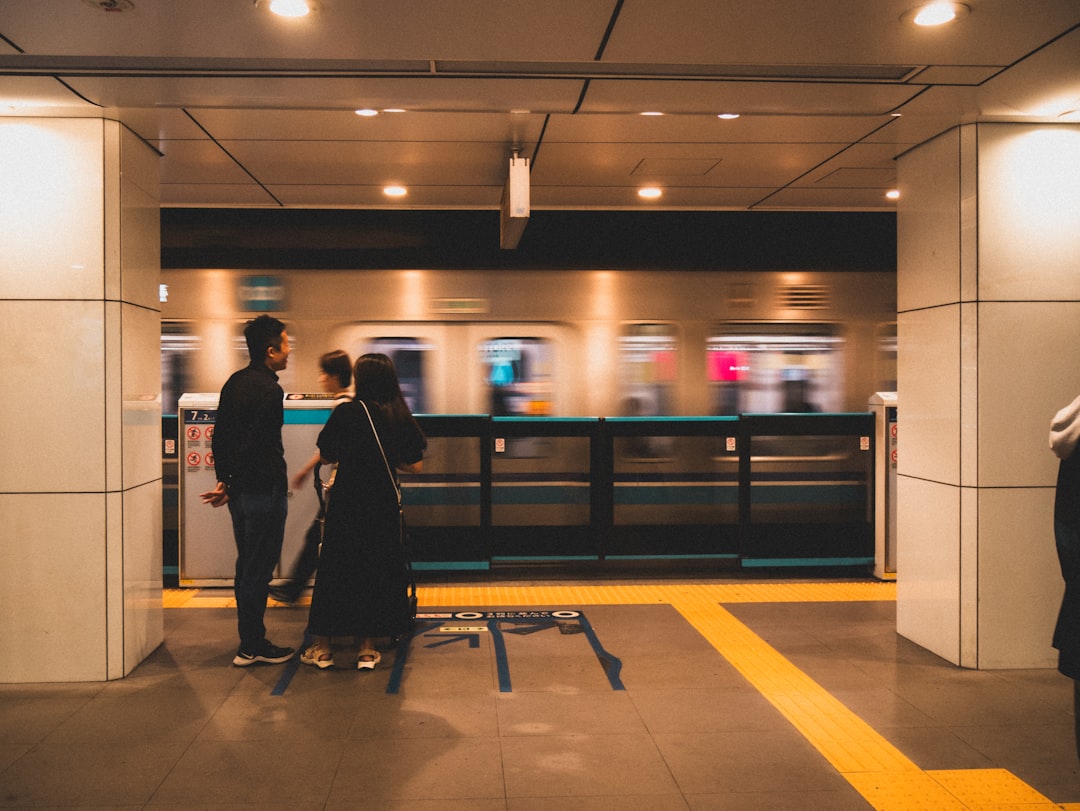
Kyoto Station on a weekday morning has queues at the ticket machines and no queue at all at the gates. Everyone who lives here taps a card and walks through. The fare comes off automatically, the transfer between JR and the subway needs no thought, and the machine that would have taken you four minutes to operate in English is irrelevant.
ICOCA is that card in western Japan. It is issued by JR West, it costs ¥2,000 to start (¥500 of which is a returnable deposit and ¥1,500 of which is money you spend), and it removes essentially every friction point in local transit. We put one in the hands of every traveler we work with in Osaka and Kyoto before they do anything else.
What ICOCA Actually Is
ICOCA is a stored-value card with a chip in it. You load yen onto it, you tap it against a reader, and the correct fare is deducted. There is no zone to select and no ticket to lose.
Trains, Subways, and Buses on One Card
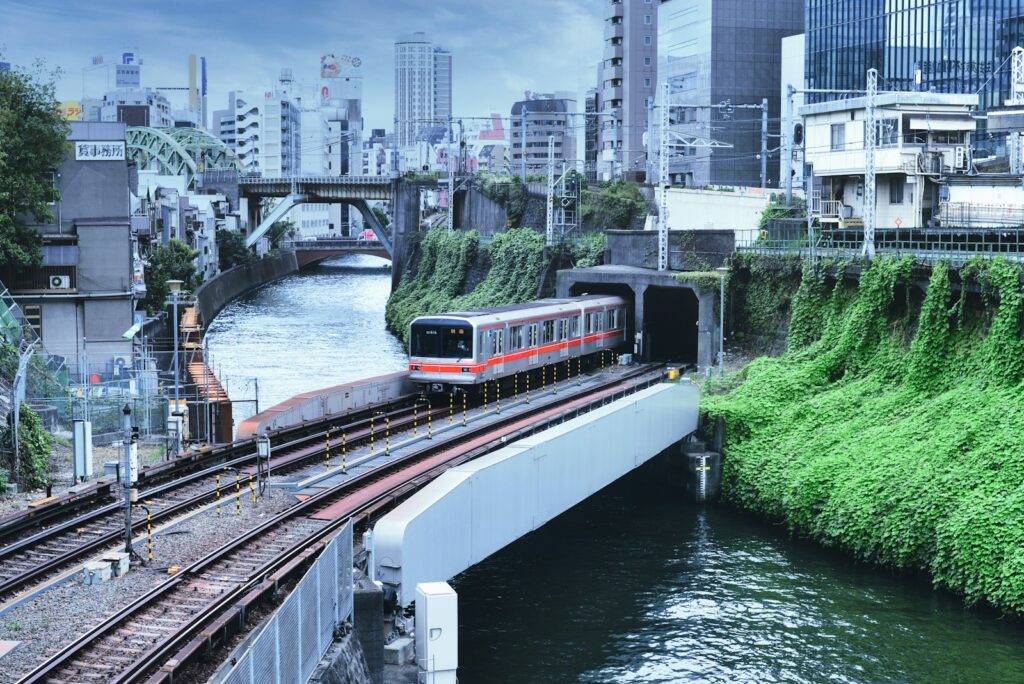
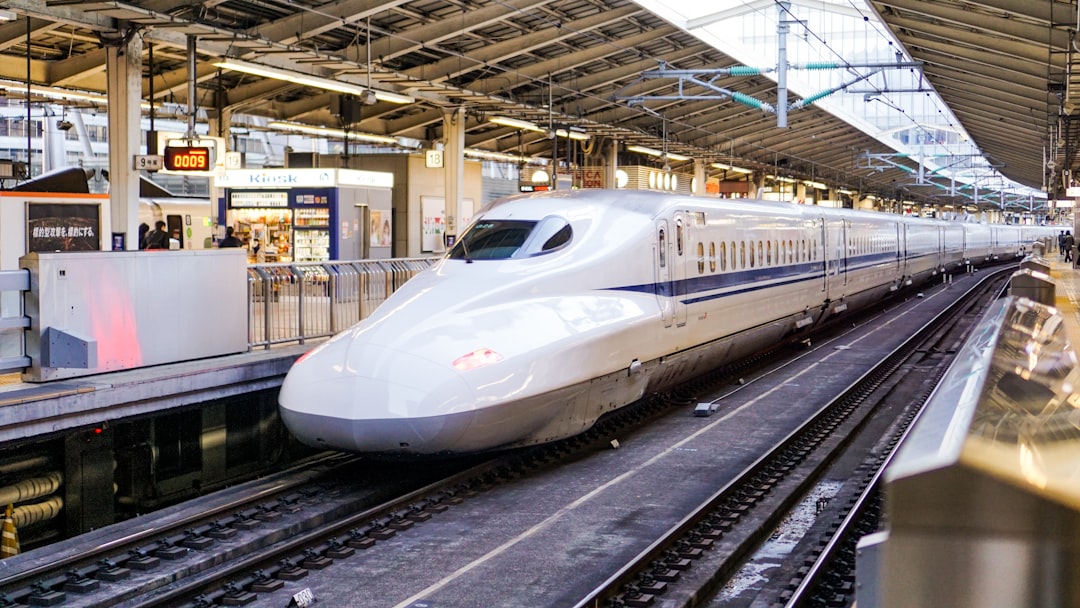
The card works across operators, which is the part that matters. In Kyoto you can ride a JR line to Nijo, transfer to the Tozai subway, and finish on a city bus, all on the same card, with no ticket purchased at any point.
Osaka is the same across JR, the Osaka Metro, and the private railways — Hankyu, Keihan, Kintetsu, Nankai. Those companies compete with each other and still accept the same card. For a visitor moving between Osaka, Kyoto, Nara, and Kobe in a week, this covers nearly every journey you will make.
The exception is long-distance travel. Shinkansen tickets and reserved limited-express seats are bought separately, and ICOCA is not a substitute for a Japan Rail Pass or a reserved seat.
It Works Far Beyond Kansai
Japan’s ten major transit IC cards have been mutually interoperable since 2013. That means an ICOCA bought in Osaka opens the gates in Tokyo, Fukuoka, Sapporo, Sendai, Nagoya, and Hiroshima without any registration or conversion.
In practice you can buy one card at Kansai Airport on day one and use it for a three-week trip that ends at Haneda. This is worth knowing because a lot of older travel advice still treats the cards as regional.
Coverage is not universal in rural areas. Some local bus companies and small private lines remain cash-only, and a few regional cities run their own separate systems. Assume it works in any city large enough to have a subway, and carry some cash outside those.
ICOCA or Suica: Does It Matter?
Functionally, almost not at all. Suica is JR East‘s card, ICOCA is JR West’s, and for a traveler tapping through gates the experience is identical.
The one real difference is refunds. You can only refund an ICOCA at a JR West station, and only refund a Suica at a JR East station. If you buy an ICOCA in Osaka and fly home from Tokyo, you cannot get your ¥500 deposit and remaining balance back — the counter in Tokyo will decline it.
Our advice is to stop treating this as a decision. Buy whichever card is sold at the airport you land in, and plan to keep it rather than refund it.
Expert Tip
Physical unregistered IC cards have been subject to intermittent supply shortages in Japan since 2023 due to a semiconductor chip shortage, and availability at machines has varied by region and by month. If you have an iPhone, add a digital ICOCA in Apple Wallet before you leave home and the question disappears entirely — there is no physical card to be out of stock.
Buying and Recharging a Physical Card
Buying one takes about ninety seconds at a machine, and every machine has an English button.
At the Ticket Machine
Look for the blue JR West ticket machines, press the English language button, and select the ICOCA option. The standard purchase is ¥2,000: ¥500 deposit plus ¥1,500 of usable balance.
The machines take cash. Many also take credit cards for the initial purchase, though this varies by machine and station, so arrive with a few thousand yen in notes rather than relying on it.
Kansai International Airport has machines and a JR ticket office in the arrivals area, which is the natural place to do this. It is also where you would buy the Haruka express ticket into Kyoto or Osaka, so you can handle both at once.
Adding Money
Recharging is done at any ticket machine, at the fare adjustment machines inside the gates, and at the register of any convenience store. The convenience store option is the one most visitors overlook and the one we use most — hand the cashier the card and the cash, say “charge”, and it is done in ten seconds.
Machines top up in ¥1,000 increments and take cash only. The maximum balance is ¥20,000.
There is no penalty for a low balance. If you tap out with insufficient funds the gate closes, you walk to the fare adjustment machine a few metres away, add money, and go through. It is a mild inconvenience, not a problem.
Tourist Versions and Bundles
JR West and the Kansai railways have periodically offered tourist-specific IC cards sold only to visitors on short-stay visas, sometimes bundled with discount vouchers for attractions. The KANSAI ONE PASS is the best-known of these.
These products come and go, and terms change. If you want to check whether one is running during your trip, look at the JR West and Kansai Railway Pass sites directly rather than at travel blogs, which tend to describe discontinued versions.
For most travelers the standard ICOCA is the simpler choice. The discounts on tourist cards are real but modest, and they add a purchase step at a counter with fixed opening hours.
Digital ICOCA on Your Phone
A digital ICOCA in Apple Wallet is, for most travelers, straightforwardly better than the plastic version. It cannot run out of stock, it recharges from your credit card at any moment, and you can set it up in your living room a month before departure.
Adding It to Apple Wallet
On an iPhone, open Wallet, tap the plus button, choose Transit Card, and find ICOCA in the Japan section. You do not need a Japanese Apple ID, a Japanese phone number, or a Japanese address.
Android users with an Osaifu-Keitai handset can use the Mobile ICOCA app instead. Standard international Android phones sold outside Japan generally lack the required FeliCa hardware, so this route works for far fewer visitors than the iPhone one does.
Apple Watch works as well, paired to the same iPhone. Tapping a gate with your wrist is genuinely faster than digging a phone out of a pocket.
Topping Up From Abroad
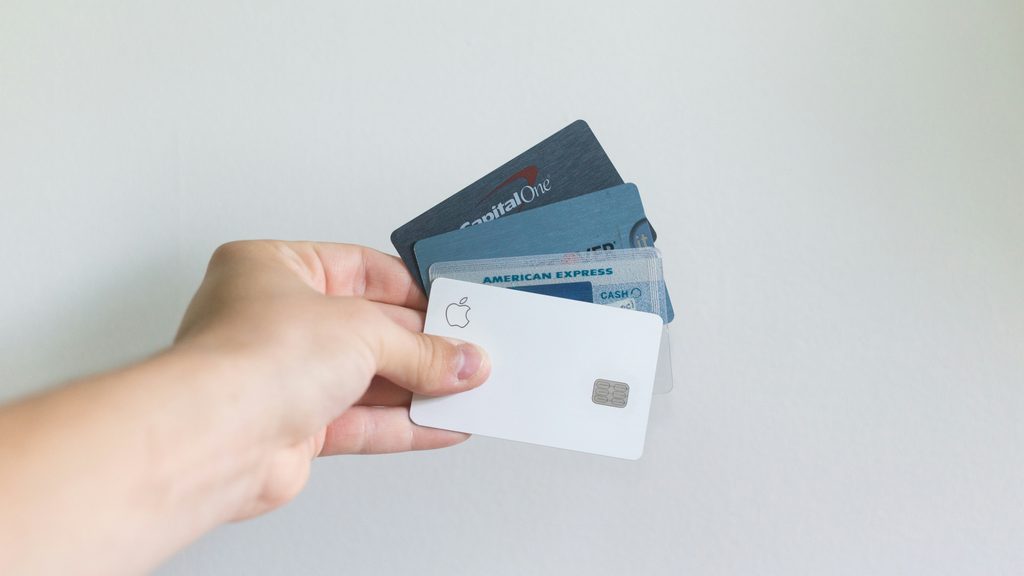
The digital card recharges through Apple Pay using a credit card already in your Wallet. Visa cards have historically had compatibility problems with Japanese transit top-ups; Mastercard and American Express are more reliable. Add a second card as a backup before you fly.
You can top up mid-journey while standing on a platform, which is the practical advantage over plastic. There is no walking back to a machine.
Express Transit Mode
Turn on Express Transit for the card in Wallet settings. This lets you tap the gate without unlocking the phone or authenticating with Face ID, which is how it needs to work when there are twenty people behind you at Umeda.
One caveat worth planning around: Express Transit needs battery. iPhones hold a small power reserve that keeps transit cards working for several hours after the phone shuts down, but do not rely on it. Carry a power bank, which you would want in Japan anyway.
Paying for Things That Are Not Trains
Roughly half the value of an IC card in Japan has nothing to do with transit.
Shops and Restaurants
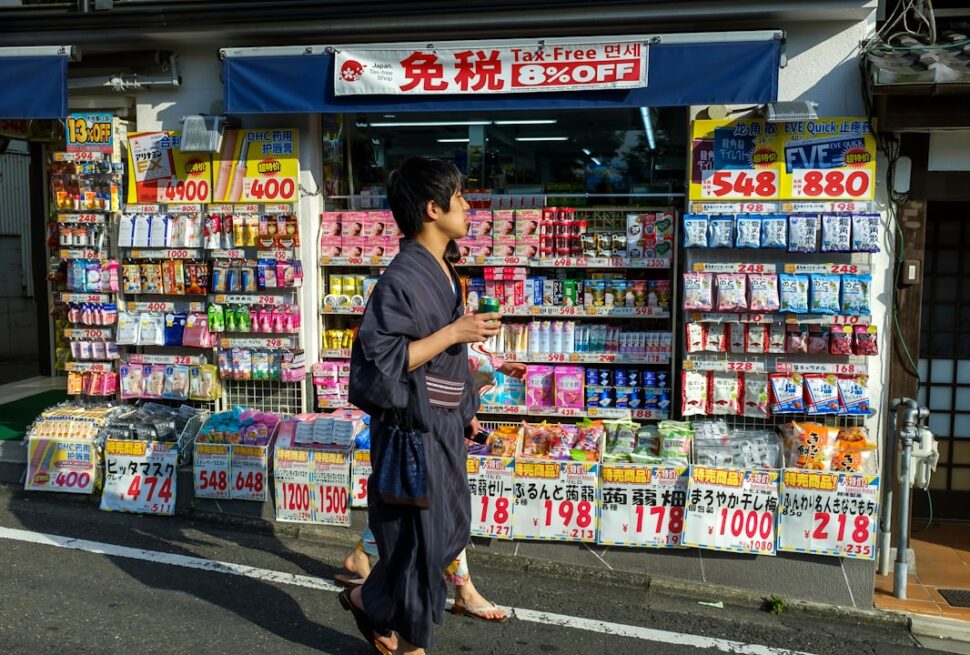
Every major convenience store chain, most drugstores, many chain restaurants, and a large number of supermarkets accept IC card payment. Look for the reader on the counter and say “ICOCA de” when the cashier asks how you are paying.
The transaction is faster than a credit card and involves no signature or PIN. For small purchases it is the most efficient payment method in the country.
Independent restaurants and small bars are much less likely to accept it. Japan remains meaningfully cash-dependent outside chains, and this has not changed as much as visitors expect.
Vending Machines and Lockers
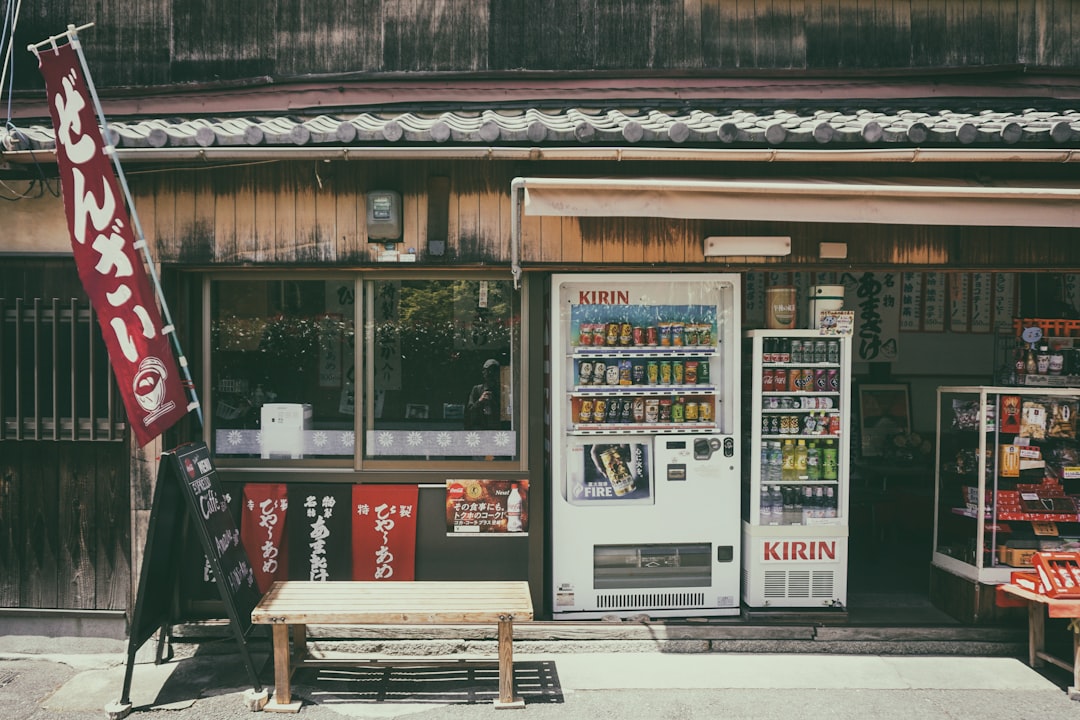
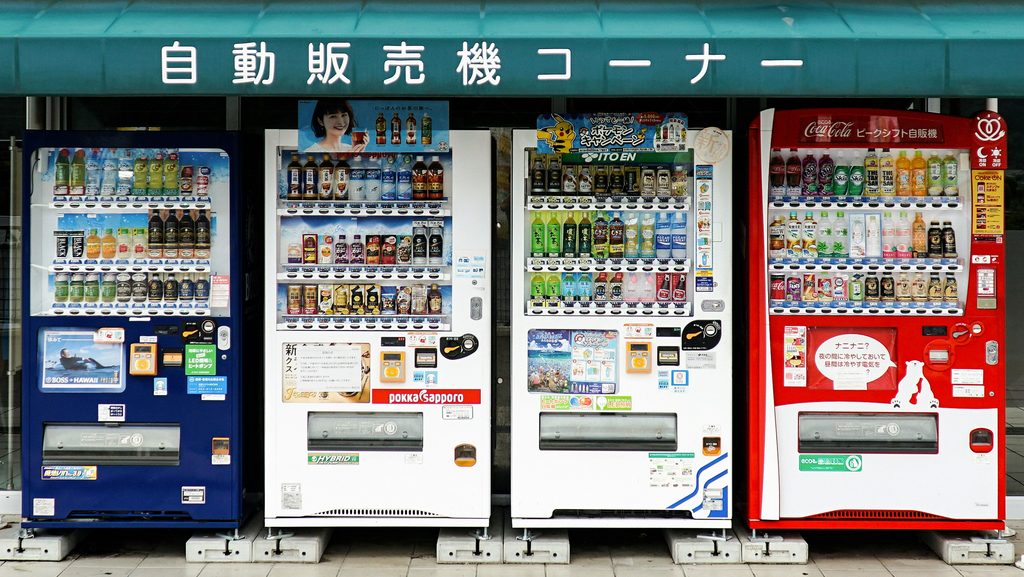
Platform vending machines with an IC reader take the card directly, which is useful when you have no coins. Station coin lockers increasingly work the same way, and the IC-enabled ones are better than the coin versions because the card itself becomes your key — there is no physical key to lose.
Tap to lock, tap the same card to open. If you are moving between cities with luggage, this alone justifies keeping a small balance on the card.
Expert Tip
Load more than you think you need in the first week, then let it run down toward the end. Fares in Kansai are small — most local journeys are ¥170 to ¥400 — so a ¥3,000 balance covers several days of ordinary movement. Repeatedly topping up in ¥1,000 increments at machines wastes more time across a trip than one larger charge on arrival.
Refunds and What to Do With It at the End
This is where most of the practical confusion sits, and the answer for most travelers is simpler than the rules suggest.
Where You Can Refund
Physical ICOCA cards are refunded at JR West ticket offices — the green Midori-no-Madoguchi counters — inside the JR West service area. Kansai Airport, Shin-Osaka, Kyoto, and Osaka stations all have them.
You cannot refund an ICOCA in Tokyo, Nagoya, or Fukuoka. The card works there, but the refund is a JR West transaction and only JR West will process it.
Digital ICOCA in Apple Wallet follows a different process handled in the app rather than at a counter, and the terms differ from the plastic card. Check the current procedure in the Wallet card details rather than assuming it mirrors the physical version.
The Fee, and Why It Usually Is Not Worth It
On refund you get your ¥500 deposit back, plus your remaining balance minus a ¥220 handling fee.
Run the arithmetic before queueing. If you have ¥300 left, you receive ¥580 in total and spend twenty minutes at a counter to get it. If you have ¥40 left, the fee is waived on some balances but the total is still trivial.
We tell travelers to spend the balance down at a convenience store on the way to the airport instead. Buy water, snacks, or a souvenir, then keep the card.
Keeping It
An ICOCA stays valid as long as it is used at least once every ten years. If there is any chance of a return trip to Japan — and among the travelers we work with there usually is — the card in your drawer is worth more than the ¥500 you would recover.
It also removes the entire buying process from your next arrival. You land, you top up at a machine, you go.
ICOCA Card: Frequently Asked Questions
Can I use a physical ICOCA on the Tokyo subway?
Yes. Mutual interoperability covers JR East, Tokyo Metro, Toei, and the private railways in the Tokyo area, so the card opens gates there exactly as it does in Osaka. You can also use it in convenience stores nationwide. The only thing you cannot do in Tokyo is refund it.
Where do I get my ICOCA deposit refunded if I am flying out of Tokyo?
You cannot. The refund must happen at a JR West station before you leave the Kansai region, most conveniently at Kansai Airport or Shin-Osaka on your way through. If your itinerary ends in Tokyo, plan on spending the balance down and keeping the card.
Can I reload a physical ICOCA with a foreign credit card?
Generally no. Recharging a physical card at machines and convenience stores is a cash transaction almost everywhere, and foreign cards are not reliably accepted even where a card slot exists. Digital ICOCA in Apple Wallet is the exception and tops up from an overseas credit card without difficulty, which is one of the stronger arguments for the digital version.
Related Tours
Conclusion
Buy the card, or add it to your phone, before you attempt anything else in Kansai. Every subsequent decision about how to move around Osaka and Kyoto gets simpler once the gate question is settled.
If you have an iPhone, do it now rather than at the airport. Setting up a digital ICOCA in Apple Wallet takes four minutes at home, sidesteps the stock question entirely, and means you walk off the plane at Kansai and straight onto the Haruka.
Plan Your Japan Trip with Local Experts
Our team has guided 40,000+ travelers across Japan. Tell us about your trip and we’ll get back to you within 24 hours.