In this article:
- What Hanamikoji Street Actually Is
- When to Walk It
- The Rules on Hanamikoji, and Why They Exist
- What Sits at Either End of the Street
- Hanamikoji Street: Frequently Asked Questions
Introduction
Hanamikoji Street is a short run of stone paving, wooden lattice and closed doors, and on a September evening there will be several hundred people standing on it holding phones.
That is the first thing to understand. The street is not a secret and has not been one for a century. What it is, still, is a working part of Gion Kobu — the district where geiko and their apprentices actually live, train and go to appointments — rather than an open-air museum built to look that way.
The gap between those two facts is where most visits go wrong. People come expecting a film set and treat it accordingly, or they come, see a crowded lane, take one photograph and leave within eight minutes. Both readings miss it. We walk this street several nights a week with travelers, and the version of Hanamikoji worth crossing an ocean for depends almost entirely on when you arrive and what you know to look at.
What Hanamikoji Street Actually Is
Hanamikoji-dori runs north to south through Gion, crossing Shijo-dori roughly at its midpoint. The full length of the street is often given as around a kilometre, but the part visitors mean when they say “Hanamikoji” is much shorter than that.
North and South of Shijo Are Two Different Streets
North of Shijo, Hanamikoji is an ordinary Kyoto street. Concrete, signage, chain restaurants, a few bars. Nothing you would photograph.
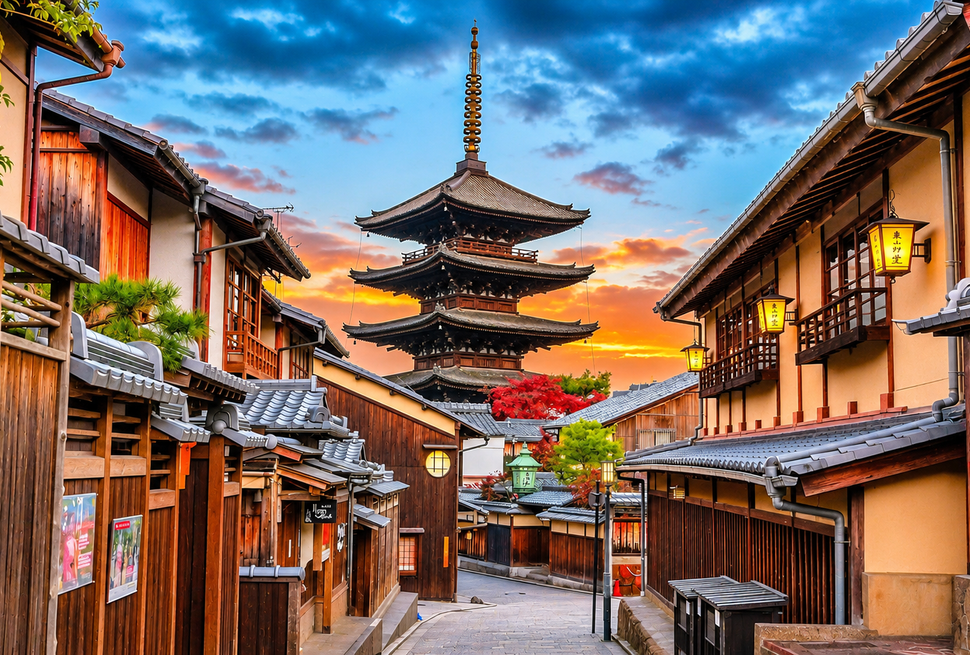
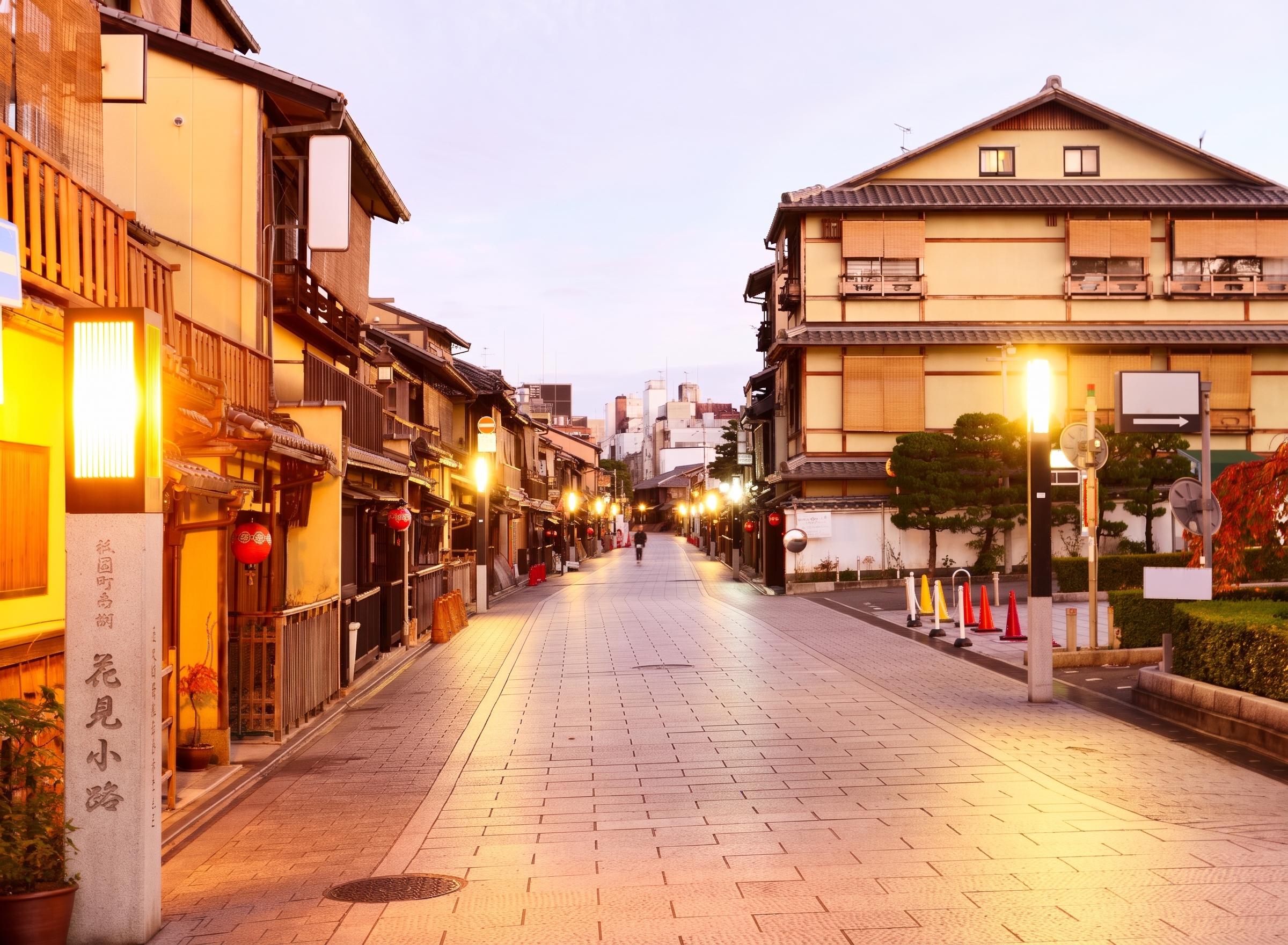
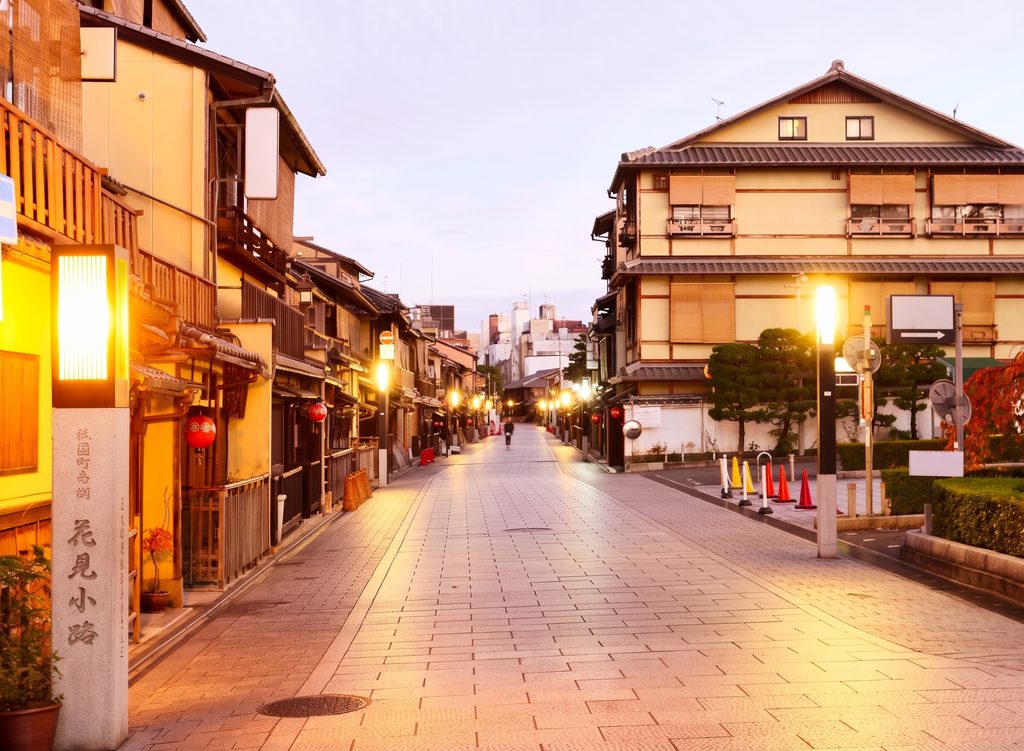
South of Shijo is the stretch that matters. The paving changes to stone, the buildings drop to two storeys of dark timber, and the power lines disappear. It runs from the Shijo intersection down toward Kennin-ji, and you can walk it end to end in under ten minutes without hurrying.
If a guidebook sends you to “Hanamikoji” and you find yourself outside a convenience store, you are on the wrong side of Shijo. Cross it and keep going south.
The Machiya, the Ochaya, and What Is Behind the Doors
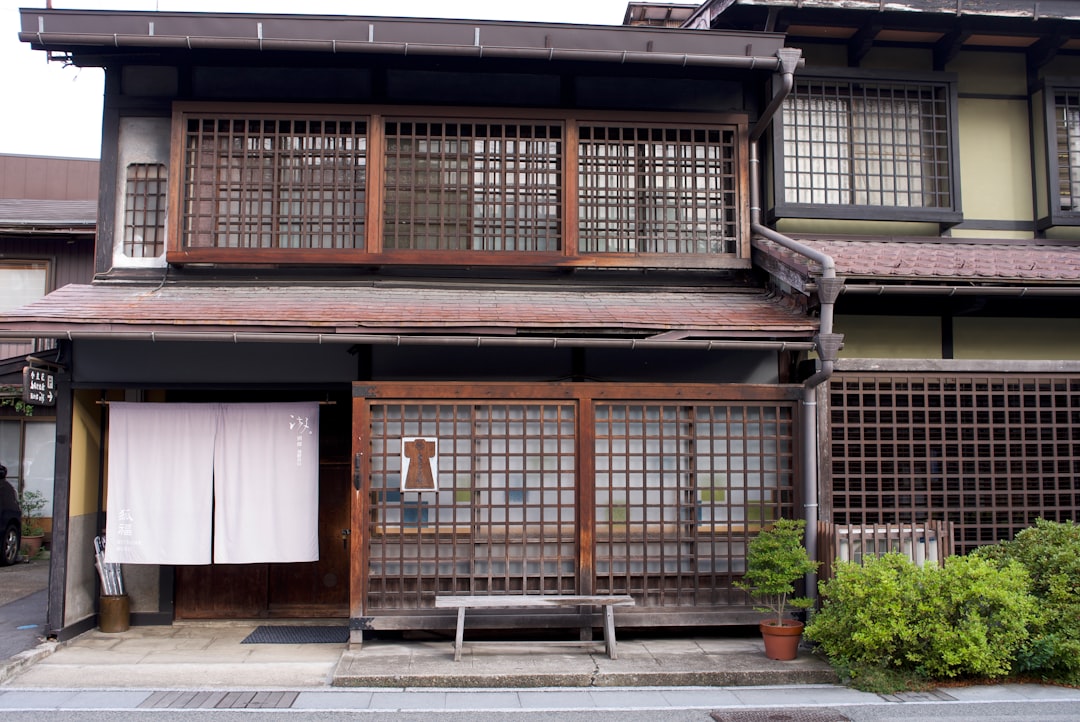
The wooden buildings lining the southern stretch are machiya — narrow-fronted townhouses that run a long way back from the street. Many of them are ochaya, the teahouses where geiko and maiko are engaged for an evening.
An ochaya does not advertise. There is no menu in the window, no English sign, often nothing but a small wooden nameplate and a noren curtain. The traditional system is introduction-based: an established customer vouches for a new one, and without that introduction you are not getting through the door, regardless of budget. This is the source of the phrase visitors hear as “no first-time customers.”
So the closed doors are not decoration. They are the actual operating condition of the street. Once you know that, the facades read differently — you stop looking for a way in and start noticing the details, which is a better use of the walk.
A Working District, Not a Preserved One
Gion Kobu is one of Kyoto’s five remaining hanamachi, and the buildings along Hanamikoji sit inside a designated preservation district. That status protects the streetscape. It does not turn the street into an attraction with opening hours.
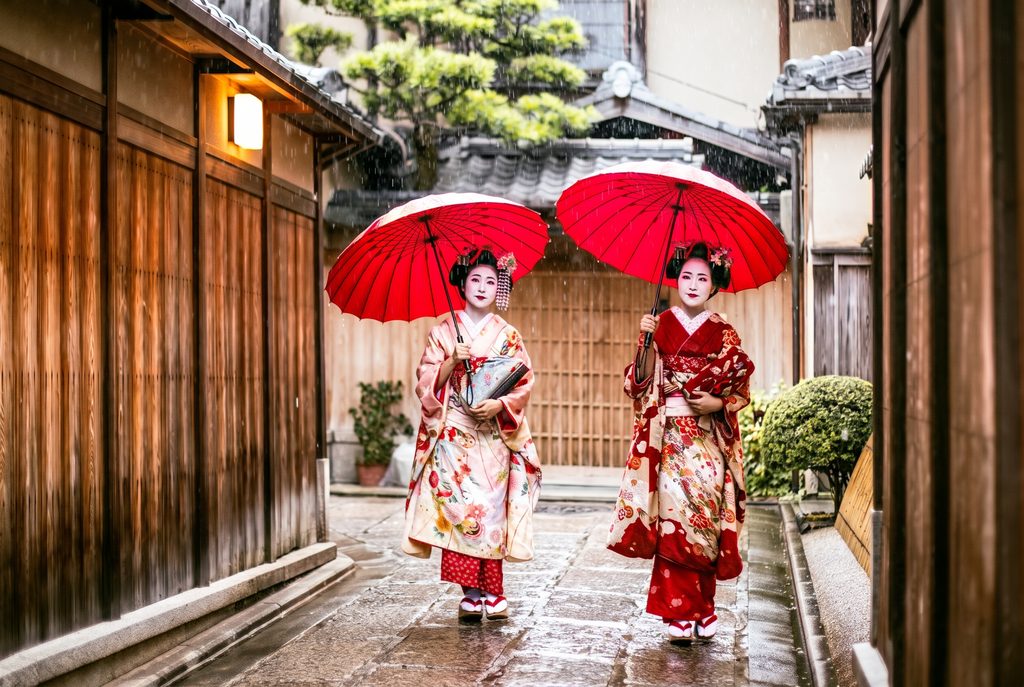
People live here. Deliveries happen here. A woman in full maiko dress hurrying down the lane at 5:50pm is not part of a performance — she is late for work, in okobo sandals that are difficult to walk fast in, with a booking to keep. Our guides say a version of this sentence most evenings, and it changes how the rest of the walk goes.
Expert Tip
The single best-value ten minutes in Gion is not on Hanamikoji at all. Walk two blocks north to the Shirakawa canal, where willows hang over the water and the machiya back onto a stone-lined stream. It is a public lane, the light is better, and on most evenings there are a tenth as many people standing in it.
When to Walk It
Time of day changes this street more than season does. Autumn leaves and cherry blossom do very little for a lane with almost no trees on it; the hour on the clock does almost everything.
Early Morning: The Street Without Anyone On It
Between roughly 6:30 and 8:00am, Hanamikoji is close to empty. Shutters down, lanterns off, cleaners sweeping the stone in front of their own entrances. This is the only realistic window for a photograph of the street itself rather than of other people’s backs.
What you will not see is anyone in kimono. Nothing is open and nothing is happening. If the architecture and the emptiness are what you are after, this is the hour; if you want the district alive, it is the wrong one. Many of the travelers we work with do both, on different days, and consider the early visit the better of the two.
Dusk: The Hour That Actually Matters
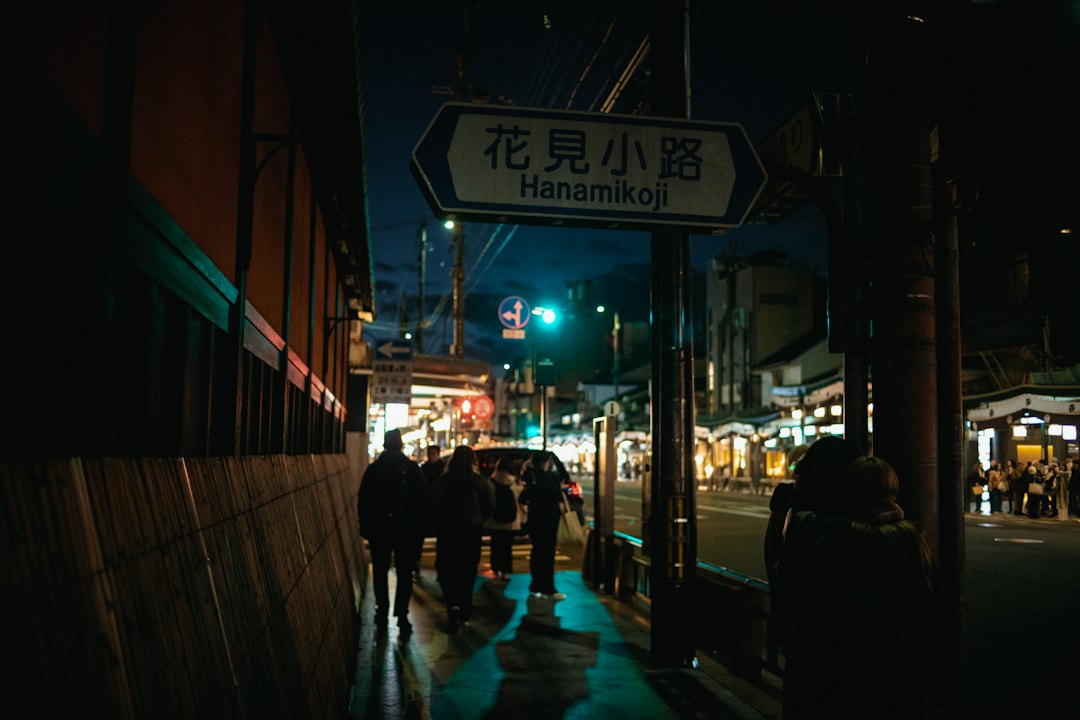
From about an hour before sunset until roughly 7pm, the lanterns come on, the ochaya open, and the street fills. This is when maiko and geiko move between appointments, usually briefly and usually at speed.
It is also when the crowd is at its worst. Both things are true at once, and there is no version of Hanamikoji where you get the atmosphere without the people. Our advice is to accept the crowd, stand still somewhere off the centre line, and let the street work around you rather than walking up and down looking for something.
Sightings are not guaranteed and should not be the point. On a given evening you may see three, or none. Treating the walk as a hunt produces exactly the behaviour that got parts of this district closed off.
After Dinner: Quiet Returns
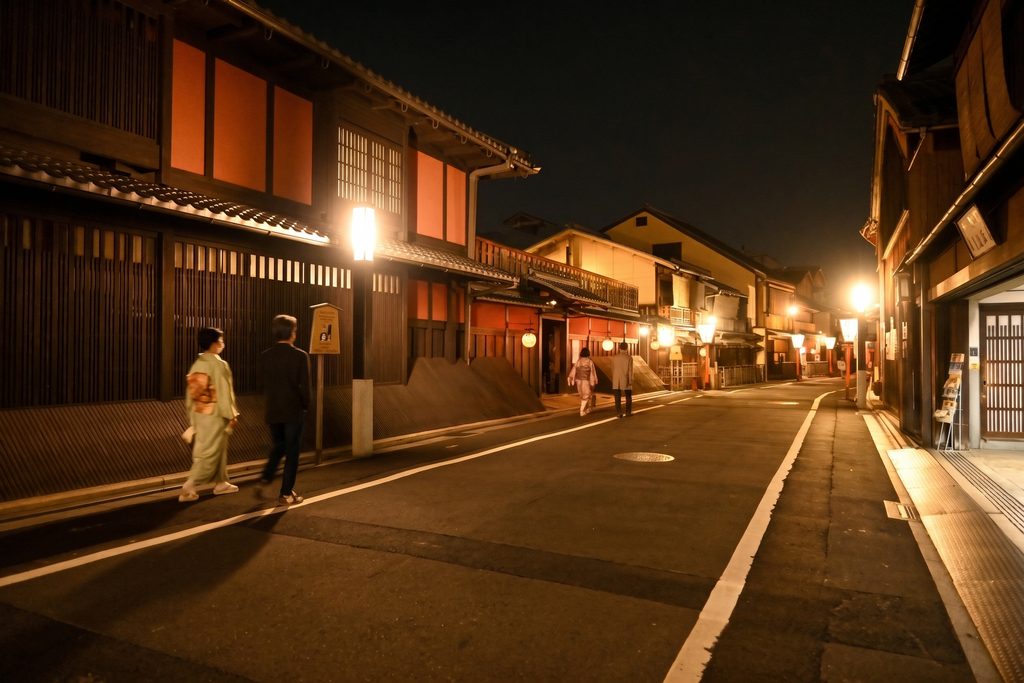
By 9pm most of the day visitors have gone. The lanterns are still lit, the doors are still closed, and the street is quieter than at any point since morning. Taxis idle at the Shijo end waiting for customers to finish.
This is our favourite hour on the street and the one almost nobody plans for. It costs nothing but a late dinner nearby. Pontocho, fifteen minutes west across the Kamo River, is the obvious place to spend the intervening hours.
The Rules on Hanamikoji, and Why They Exist
Gion has a set of restrictions that visitors regularly break without realising, and the reason they exist is not abstract. Residents’ associations pushed for them after years of tourists chasing maiko for photographs, blocking doorways and entering private property.
Public Street Versus Private Lane
Hanamikoji itself is a public road and remains open. The narrow lanes branching off it are a different matter — many are privately owned, and since 2019 photography on those private alleys has been prohibited, with a ¥10,000 penalty attached.
In 2024 the district went further and put multilingual no-entry signs at the mouths of private lanes, again with a ¥10,000 penalty for unauthorised entry. The main street was deliberately left open.
The practical problem is that the boundary is not obvious. A private lane looks exactly like a public one. Read the signs at the entrance of any side alley before you step into it, and if there is no sign and no through traffic, treat it as somebody’s front path.
Photographing Maiko and Geiko
On the public street, photography is permitted. Photographing a maiko or geiko without her consent is not, and the distinction catches people out because the two things happen in the same place.
The failure mode is always the same: someone sees a maiko, raises a phone, steps into her path, and a woman on her way to work has to walk around a stranger. Kimono have been pulled. That is what the signage and the cameras came from.
Our own tours are explicit about this. On our Gion and Pontocho food tour, the guide sets out where photography is and is not acceptable before the group reaches Hanamikoji, which removes the ambiguity entirely.
What Good Behaviour Looks Like
Keep to one side. Do not block entrances — the doorways are in use. Lower your voice after dark, because these are houses. Do not follow anyone.
None of this is difficult, and it is worth saying that the overwhelming majority of visitors get it right. The rules exist because of a minority, and the cost of that minority has been borne by the women who work here.
What Sits at Either End of the Street
Hanamikoji on its own is a ten-minute walk. What makes it a half-day is what it connects to, and most visitors leave before reaching either end.
Kennin-ji at the Southern End
Walk south to the bottom of Hanamikoji and you arrive at Kennin-ji, Kyoto’s oldest Zen temple. It is open from 10:00 to 17:00 with last entry at 16:30, and admission for adults is ¥800.
The contrast is the point. Ninety seconds after leaving a crowded lane you are sitting on a wooden veranda in front of a dry garden with perhaps a dozen other people in the entire complex. The temple gets a fraction of the foot traffic that passes its gate.
We send travelers here specifically in the early afternoon, when Hanamikoji has nothing to offer and Kennin-ji is at its quietest.
Gion Kobu Kaburenjo and the Spring Dances
Near the southern end of the street stands the Gion Kobu Kaburenjo, the theatre belonging to the district. Each April it stages the Miyako Odori, the seasonal dance programme performed by the geiko and maiko of Gion Kobu.
If your trip falls in April, this is the most straightforward way to see the district’s performers properly — seated, on a stage, for an announced price, rather than glimpsed for four seconds in a lane. Tickets are sold in advance and the popular slots go early. Check the current season’s dates and prices on the official site rather than on aggregator pages, which often carry last year’s schedule.
Outside April, the Gion Corner theatre in the adjoining Yasaka Hall runs a short programme of traditional performing arts aimed at visitors. It is an introduction rather than a deep experience, and we say so plainly.
Eating On and Around Hanamikoji
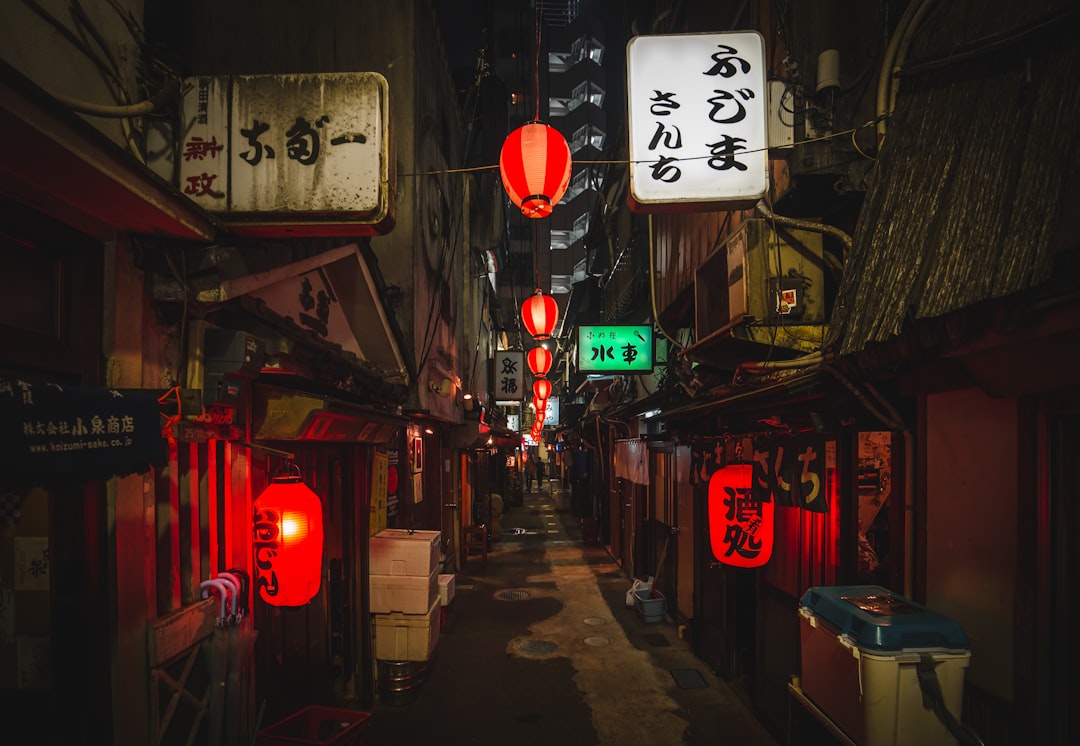
Restaurants directly on the southern stretch skew expensive and formal — kaiseki counters, traditional Kyoto cooking, reservations expected. That is not a criticism, but it is not a walk-in situation on a Friday night.
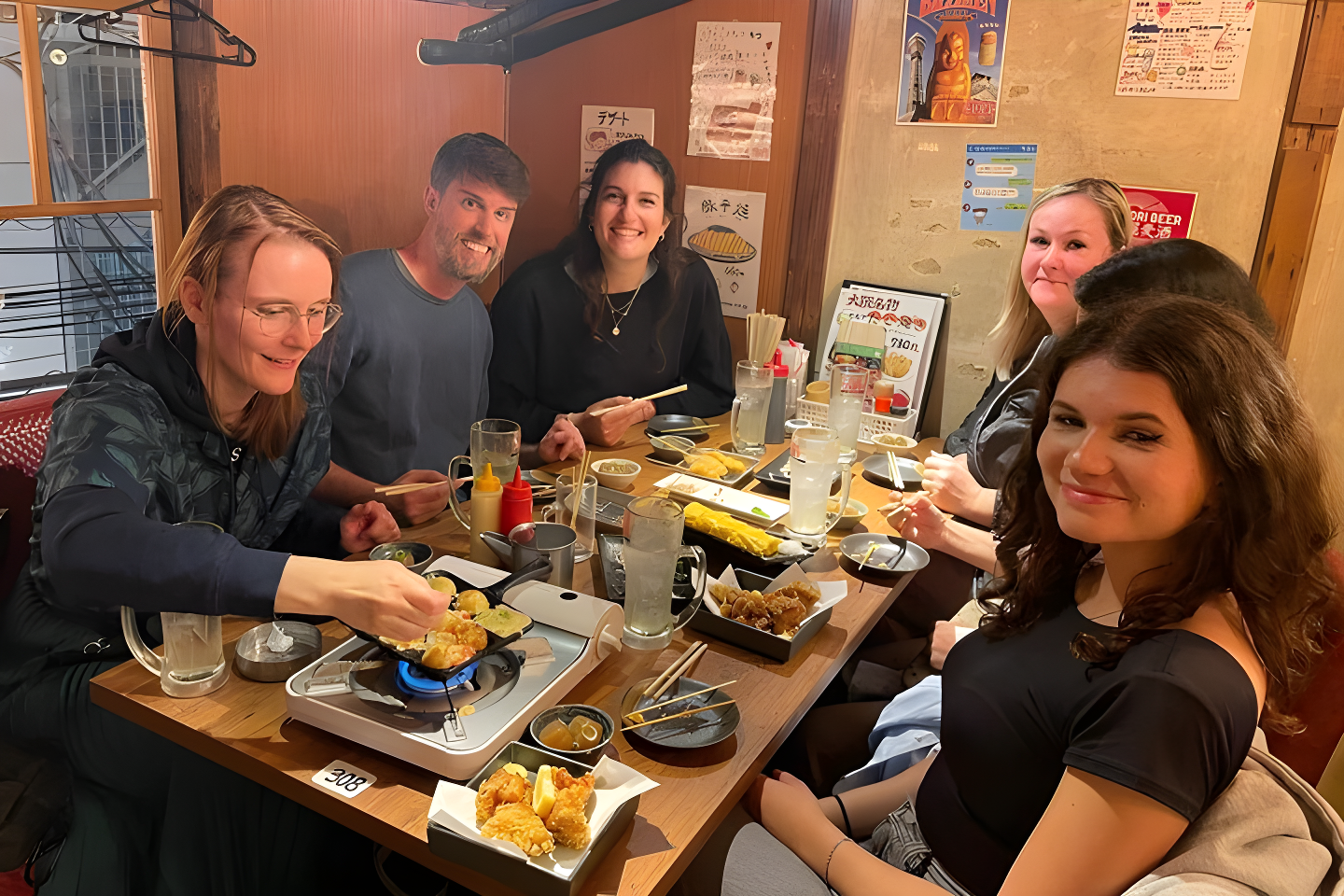
The more practical eating is one street off, in the lanes toward the Kamo River and around Gionmachi Kitagawa, where izakaya and small restaurants take walk-ins at normal prices. Our own evening in the area starts at Yasaka Shrine once the lanterns are lit, crosses Hanamikoji, and then sits down for thirteen dishes split between a restaurant and an izakaya that Kyoto residents use.
For a wider look at what the district holds beyond this one lane, see our guide to visiting Gion.
Expert Tip
Get to Hanamikoji from Gion-Shijo Station on the Keihan line — it is a walk of a few minutes from Exit 6, and you arrive at the Shijo end facing south, which is the right direction. Kyoto-Kawaramachi on the Hankyu line is roughly ten minutes away on foot and means crossing the Kamo River, which is a pleasant approach but adds time you may not have at dusk.
Hanamikoji Street: Frequently Asked Questions
What time of day is best for Hanamikoji Street?
Two windows are worth it, for different reasons. Before 8am the street is empty and photographable but entirely inactive. From an hour before sunset until about 7pm the lanterns are lit and the district is working, with the crowds that come with it. Midday is the weakest time — the street is busy, flat in appearance and nothing is happening in it.
Am I allowed to take photographs on Hanamikoji Street?
On the main street, which is public, yes. Photography on the privately owned side alleys has been prohibited since 2019 with a ¥10,000 penalty, and since 2024 many of those lanes have carried no-entry signs with the same penalty for entering at all. Photographing a maiko or geiko without her permission is not acceptable anywhere, public street included.
Can I go inside one of the teahouses on Hanamikoji?
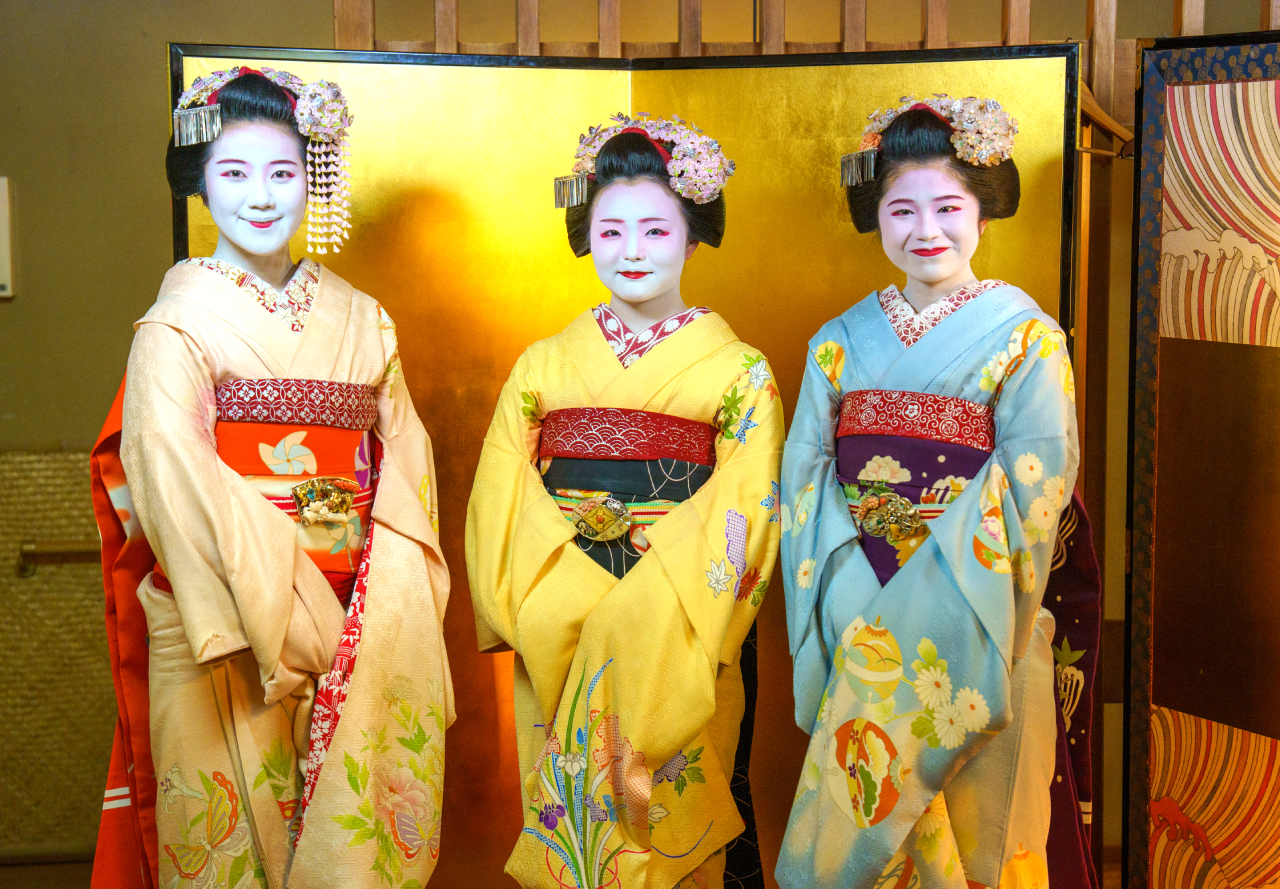
Not by walking up to the door. Ochaya operate on an introduction system, and an existing customer has to vouch for you. The realistic routes for a visitor are an arranged experience where a maiko performs and takes questions, a seat at the Miyako Odori in April, or a ryotei dinner booked through someone with the relationship to make it happen.
Related Tours
Conclusion
Plan Hanamikoji as two short visits rather than one long one. Walk it before 8am for the street itself, come back at dusk for the district at work, and put Kennin-ji or a meal in between. The whole thing costs you less than an hour of actual walking and produces a far better result than the single midday pass most itineraries schedule.
The second point is harder to put in an itinerary. This lane is somebody’s commute and somebody else’s front door, and the restrictions on it exist because enough visitors forgot that. Stand to one side, read the signs at the mouth of any alley, and put the phone down when someone in kimono comes past. If you want to properly understand who she is and what the training involves, arrange to meet a maiko and ask her yourself — an hour of that is worth more than a month of standing on the street hoping.
【画像を入れる場所】 内容:Zen dry landscape garden at Kennin-ji temple in Kyoto with wooden veranda altテキスト:kennin-ji zen garden at the southern end of hanamikoji street
Plan Your Japan Trip with Local Experts
Our team has guided 40,000+ travelers across Japan. Tell us about your trip and we’ll get back to you within 24 hours.