In this article:
- Hara Sankei and the Making of the Garden
- The Outer Garden: Pagoda, Pond, and a Farmhouse From Gifu
- The Inner Garden: Rinshunkaku and Choshukaku
- Planning Your Visit: Hours, Admission, Getting There, and Seasons
- Sankeien Garden: Frequently Asked Questions
Introduction
Most visitors to Yokohama see the harbour, Chinatown, and the red-brick warehouses, then take the train back to Tokyo. Very few visitors make the short bus ride south to Sankeien Garden. That is a pity.
It is one of the most complete places in the Kanto region to experience historical architecture. Here, you can see how traditional builders meant old Japanese structures and their surrounding landscapes to work together.
The garden is large, about 175,000 square metres, and it holds seventeen historic buildings. The Japanese government designates ten of them as Important Cultural Properties. Builders constructed none of them here. The garden features three distinct historical structures: a fifteenth-century pagoda from Kyoto, a daimyo villa from Wakayama, and a thatched farmhouse from a flooded valley in Gifu. Workers took them all apart and carried them to Yokohama. There, they rebuilt them among tranquil ponds and wooded hills.
Have you already visited Tokyo’s major temples and want something quieter and more cohesive? We think Sankeien is a far better use of a half day than most alternatives closer to the city. What follows is how it came to exist, what to look at, and how to fit it into a trip.
Hara Sankei and the Making of the Garden
Sankeien exists because one man had a great deal of money and a clear idea of what Japan was about to lose.
A Silk Fortune Spent on Buildings Other People Were Losing
In the late nineteenth and early twentieth centuries, Yokohama’s thriving port channeled the raw silk trade that built Hara Sankei’s fortune. He was also a serious collector of art and a patron of painters. The garden was the largest of his projects, and he opened it to the public in 1906.
His method was unusual. Rather than commissioning new buildings, he bought old ones that their owners neglected or left under threat. He then had carpenters dismantle them and reassembled them on his land in Honmoku. The result is closer to a curated collection than a single estate. He placed each structure with its sightlines in mind. As a result, a pagoda appears framed in a window, or a roofline sits perfectly against a particular slope.
That intention is what separates Sankeien from an open-air museum. Someone with an eye for landscape arranged the buildings, and it shows.
Outer Garden, Inner Garden: How the Site Is Laid Out
The site divides into two parts. Hara opened the outer garden to the public. It forms a broad, open landscape around the large pond, with the pagoda rising on the hill above. The family kept the inner garden for themselves, and it holds the more refined residential buildings and tea houses.
Today both are part of a single visit on one ticket. The inner garden is smaller and denser. The outer garden is where the long views are.
We suggest walking them in that order: outer garden first while your legs are fresh, inner garden after. The inner garden rewards slow attention, and you reach it best once the urge to cover ground has worn off.
The Outer Garden: Pagoda, Pond, and a Farmhouse From Gifu
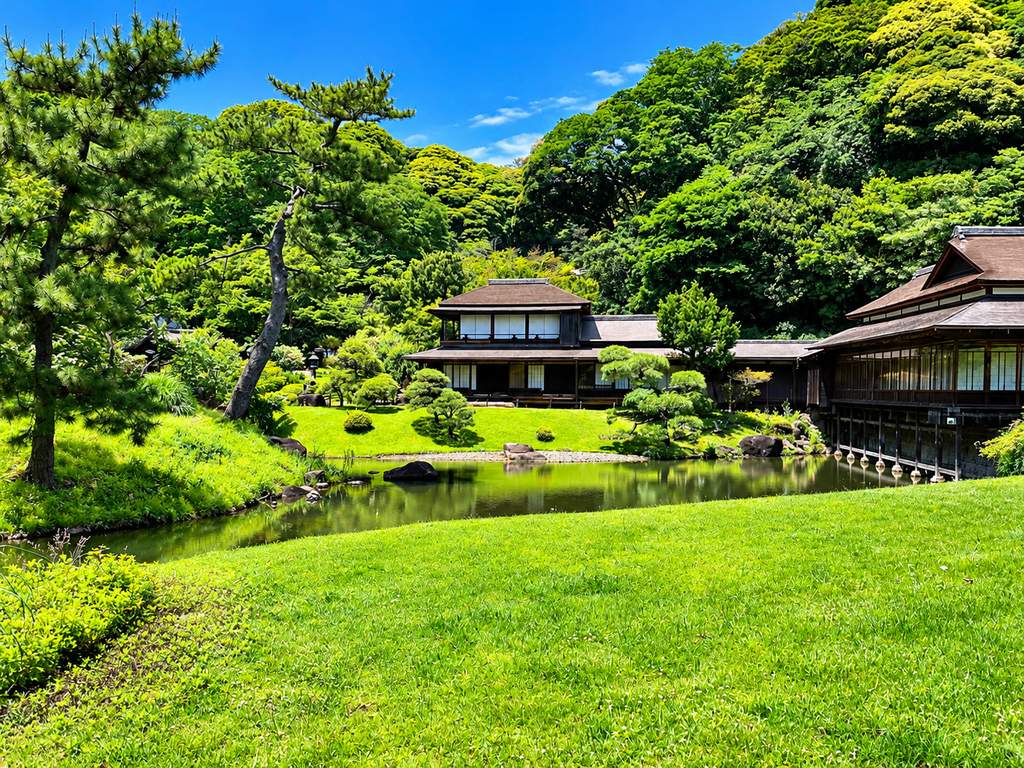
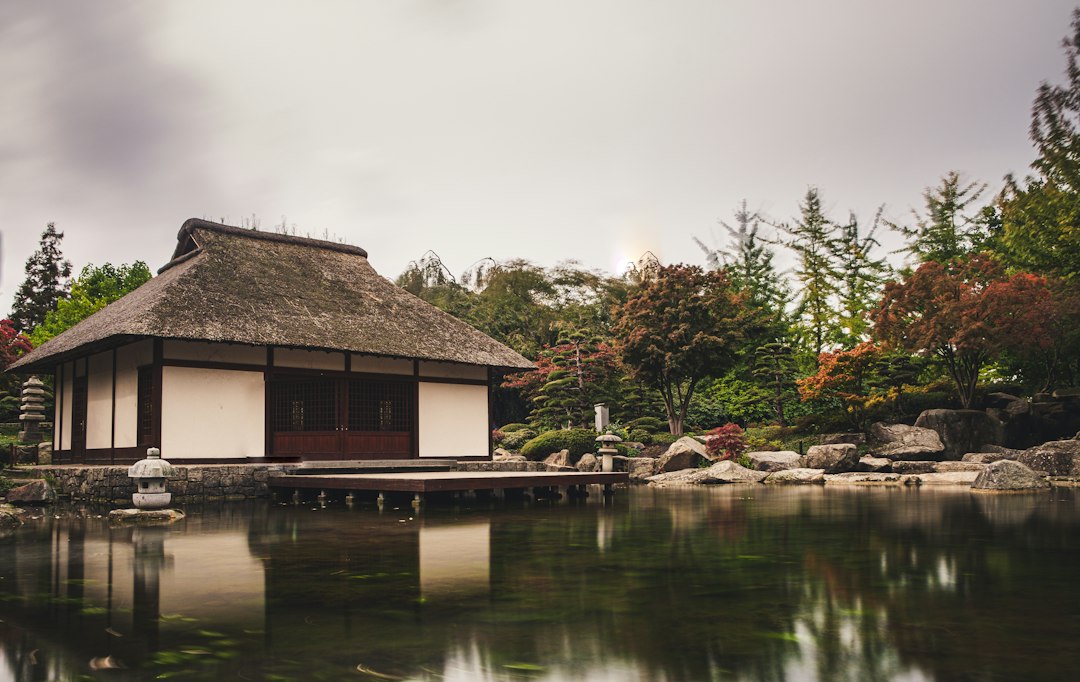
The first view from the main gate is across the large pond toward the pagoda, and it is the image most people know the garden by.
The Former Tomyoji Pagoda and the Coming Restoration
The three-storied pagoda was built in 1457 at Tomyoji, a temple in Kyoto, and moved to Sankeien in 1914. It is described as the oldest surviving wooden pagoda in the Kanto region. Its slim, dark-timbered silhouette above the trees is visible from most of the outer garden, and much of the layout below was arranged around it.
There is a timing issue worth knowing about. The garden has begun a multi-year conservation project for the pagoda. Seismic surveys are already underway.
Dismantling and repair work is scheduled to start around 2027, with completion projected for around 2030.
Schedules for this kind of work tend to shift, so check the official site before you go. That said, if seeing the pagoda whole matters to you, a visit in the next year or so is the safer choice.
The climb to it is short but steep in places. It is worth it for the view down over the pond, and few visitors make the effort.
The Yanohara House: A Gassho-Style Farmhouse Saved From a Dam
On the far side of the pond is the former Yanohara residence, a large gassho-zukuri farmhouse of the type associated with Shirakawa-go. It stood in a part of Gifu Prefecture that was to be submerged by a dam, and it was moved to Sankeien in 1960.
Inside, when it is open, you find the dark, smoke-blackened beams, the sunken hearth, and farm tools gathered from the Hida region. It is a useful counterpoint to the aristocratic buildings elsewhere in the garden. This is how most people lived.
The steep thatched roof is being renewed in a project scheduled to run from January 2026 to the end of March 2027. Expect scaffolding or covering during that period, and check whether the interior is open on the day.
Walking the Pond and the Hillside Paths
Between the major buildings, the outer garden is a network of paths around the pond, over small bridges, and up into wooded slopes. The pace changes quickly. One minute you are on an open lawn by the water; the next you are in shade under old trees with only the sound of a stream.
A Buddhist hall from Tokeiji in Kamakura stands here as well, which pairs naturally with a visit to Kamakura’s temples on another day. Allow at least an hour for the outer garden alone if you intend to walk the hill paths.
The Inner Garden: Rinshunkaku and Choshukaku
The inner garden is where Sankeien becomes something more than a pleasant park.
Rinshunkaku: A Daimyo Villa Moved From the Kinokawa River
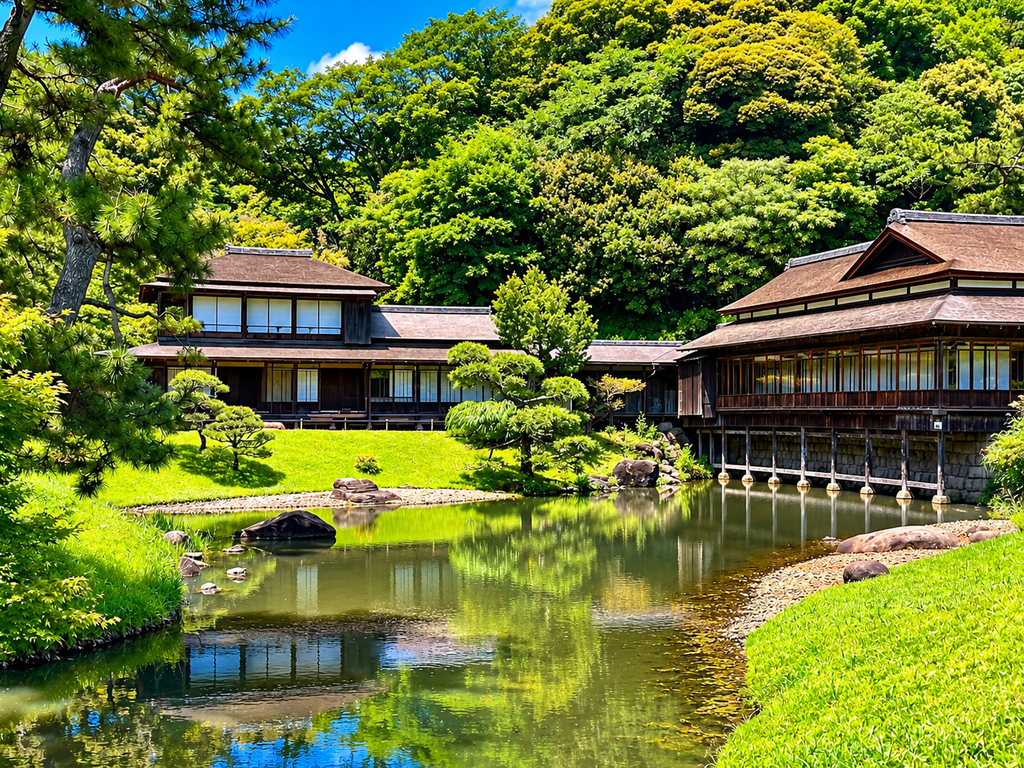
Rinshunkaku is a villa associated with Tokugawa Yorinobu, the first lord of the Kishu domain, and is dated to 1649. It originally stood along the Kinokawa River in Wakayama and was moved to Sankeien in 1917. Its three connected wings follow the edge of a pond, and the buildings are oriented so that the garden, and the pagoda beyond, are seen from inside as composed views.
Even from outside the effect is clear. Low eaves, pale timber, and the water close against the foundations make the villa look lighter than its size suggests. In our view this is the single most rewarding building in the garden to stand and look at for ten minutes without moving on.
The interiors of the inner-garden buildings are generally viewed from outside. Some are opened on particular dates, so look at the official event calendar if seeing a room from the inside is important to you.
Choshukaku and the Smaller Tea Houses
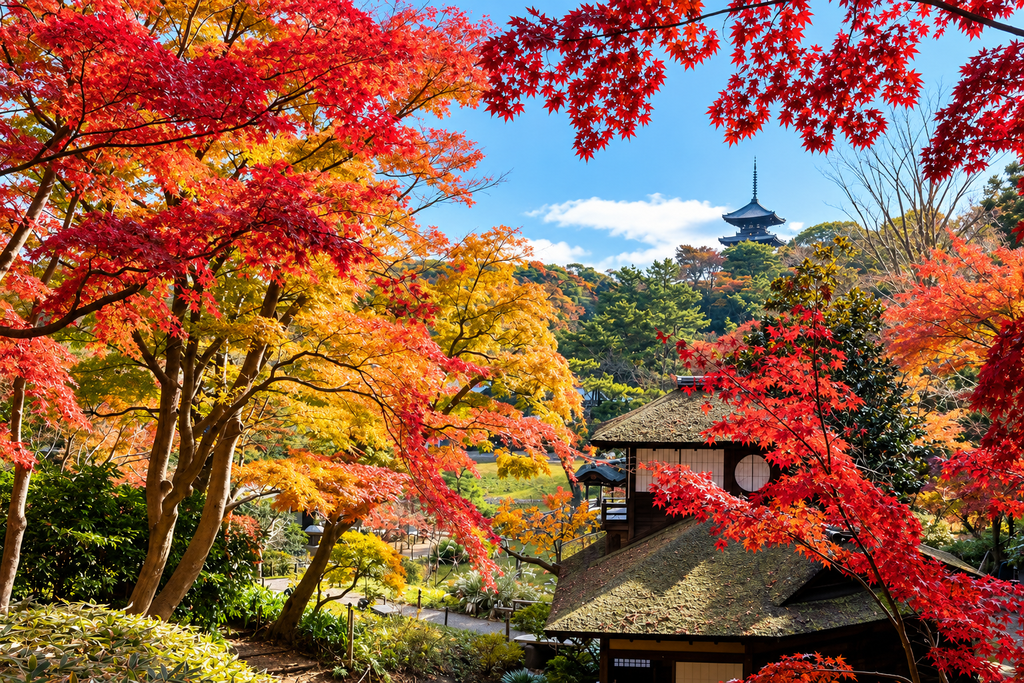
Choshukaku is a small two-storey pavilion from the early Edo period, said to have stood originally at Nijo Castle in Kyoto. It sits in a fold of the valley among maples, and its irregular roofline is one of the most photographed views in Sankeien in autumn.
Around it are several tea houses, including Shunsoro, built on a far smaller and more austere scale. They are a good illustration of how tea architecture deliberately plays down wealth. If you are curious about what actually happens in rooms like these, our guide to tea ceremony etiquette explains the sequence.
The Free English Guided Walk
Volunteer guides run a free English-language walk at 13:30, lasting about an hour, starting from the map board near the main gate. There is no booking; you turn up.
For first-time visitors without their own guide, we recommend it. The buildings make far more sense once someone has pointed out which windows the architect designed to frame which view, and the signboards do not explain that.
Expert Tip
Visit the inner garden last, and time it for the late afternoon if you can. The garden is usually quieter after the midday peak, and softer light suits the pale timber of Rinshunkaku. With last entry at 16:30 and closing at 17:00, arriving around 13:00 gives you the free English walk and then the inner garden in its best light.
Planning Your Visit: Hours, Admission, Getting There, and Seasons
Sankeien is easy to visit once you know that no train goes to its gate.
Hours, Fees, and What Is on Site
The garden is open from 9:00 to 17:00, with last entry at 16:30. It closes from December 26 to December 31. Adult admission is ¥900 for high school age and above, and ¥200 for elementary and junior high school children.
Free coin lockers sit near the main gate reception, which helps if you are carrying a day bag you would rather not take up the hill. Wheelchairs can be borrowed free of charge at the main and south gates, though the hill paths to the pagoda are steep and unpaved in places. There are tea houses and a small restaurant inside the garden, so you do not need to plan lunch outside unless you want to.
Getting There From Tokyo and Central Yokohama
Buses to the garden leave from Yokohama Station’s East Exit, Sakuragicho Station, Motomachi-Chukagai Station, and Negishi Station. From Yokohama Station the ride is the longest of these, roughly half an hour or more depending on traffic, while Negishi is closer and a short bus or taxi ride away. Bus routes and stop names change from time to time, so check the Yokohama Municipal Bus information before you set out. IC cards such as Suica work on the buses.
From central Tokyo, the train to Yokohama takes around half an hour, and our Tokyo to Yokohama guide covers the line options. Altogether, budget an hour and a half door to door from a Tokyo hotel.
For small groups, a taxi from Negishi or Motomachi is often the least tiring option. In practice, it removes the one confusing part of the trip, which is finding the right bus stop on the way back.
When to Go: Plum, Lotus Mornings, and Late Autumn Colour
Each season changes the garden more than you might expect. Plum blossoms are usually at their best from February into early March, and the garden holds a plum-viewing event around that time. Cherry blossoms follow in spring.
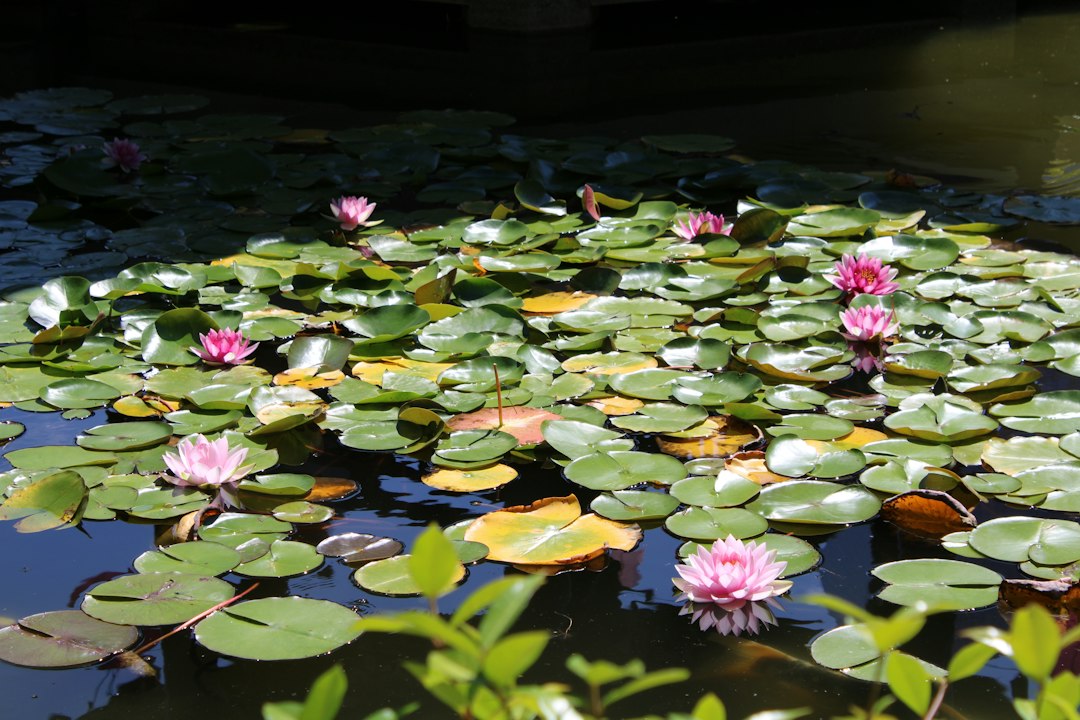
Summer brings the lotus in the ponds. Because lotus flowers open at dawn and are at their best in the early morning, the garden has in recent years opened at 7:00 on selected summer weekends for early-morning lotus viewing. Autumn colour usually peaks from late November into early December, with the maples around Choshukaku the focal point; our autumn leaves guide explains why exact peaks vary from year to year.
Our honest preference is a weekday morning in late November, arriving at 9:00. The colour is there, the paths are still quiet, and on a windless morning the pond holds reflections. Weekends in peak season are busier, and the garden itself warns of heavy traffic around the gate during plum, cherry, and autumn seasons.
Expert Tip
Sankeien pairs well with Motomachi and the Yamate Bluff district, which are a short bus or taxi ride away. Spend the morning in the garden, then have a late lunch in Motomachi and walk up through Yamate in the afternoon. It turns a single sight into a full Yokohama day without any backtracking to the station.
Sankeien Garden: Frequently Asked Questions
How long do you need at Sankeien Garden?
Plan on two to three hours. That gives you time to walk the pond, climb to the pagoda, see the farmhouse, and spend unhurried time in the inner garden. Visitors who try to do it in an hour usually skip the hillside and the inner garden, which are the two best parts.
Is Sankeien Garden worth the trip from Tokyo?
For travelers interested in traditional architecture and garden design, yes. Tokyo has excellent gardens, but none brings together this many historic buildings from so many regions in a single landscape. If your interest is mainly seasonal flowers, a garden in central Tokyo may be a better use of the time.
Can you go inside the historic buildings?
Some, at some times. The Yanohara farmhouse has normally been open inside, though its roof is being renewed until spring 2027. Rinshunkaku and other inner-garden buildings are usually seen from outside and opened on specific dates. Check the official Sankeien website for the current schedule before you go.
Related Tours

Conclusion
Arrive at 9:00 on a weekday, walk the outer garden and the pagoda hill first, and leave the inner garden for later. That single decision about order makes more difference to how Sankeien feels than any choice of season.
Check two things on the official site before you go: whether the pagoda restoration has started, and whether the farmhouse roof work is finished. Then leave the afternoon open. Motomachi and Yamate are close by, and an unplanned walk there after the garden is how many of the best Yokohama days we have seen have ended.
Plan Your Japan Trip with Local Experts
Our team has guided 40,000+ travelers across Japan. Tell us about your trip and we’ll get back to you within 24 hours.