In this article:
- When is the best time to see autumn leaves in Japan?
- Best places to see autumn leaves in Tokyo
- Best places to see autumn leaves in Kyoto
- Top destinations beyond Tokyo and Kyoto
- How to experience momijigari like a local
- Autumn travel in Japan: frequently asked questions
Introduction
The photographs don’t lie, but they do mislead. Japan’s autumn foliage — koyo (紅葉) — is genuinely as striking as it looks in images. What the images don’t convey is how much the experience depends on timing, and how badly it can go if you get that wrong.
Unlike spring’s cherry blossoms, which peak in a single week and collapse almost overnight, the koyo season moves across the country over roughly ten weeks. Hokkaido’s mountain ranges go first, in late September. Tohoku and Nikko follow through October. Tokyo and Kyoto reach peak colour in November. By early December, Hiroshima and parts of Kyushu are still turning. This long window is the season’s great advantage — and its great complication. With cherry blossoms, travelers accept that timing is everything and plan accordingly. With autumn leaves, the assumption is often that any trip in October or November will catch the colour. That assumption has disappointed a lot of people.
We’ve been guiding Western travelers through Japan’s autumn season for years. The visitors who have the best experiences are almost always those who understood one thing: the koyo front is directional and elevational. Know which way it moves, and you can position yourself perfectly.
When is the Best Time to See Autumn Leaves in Japan?
Understanding the Koyo Zensen (Colour Front)
The koyo zensen — the “autumn colour front” — descends from north to south and from altitude to lowland. This is the opposite of spring’s cherry blossom front, which moves northward. It means that in October, while central Tokyo’s leaves are still green, you can find full peak colour in Hokkaido, at 2,000m in the Japanese Alps, or in the forests around Nikko.
Unlike sakura, koyo doesn’t collapse in days. Peak colour at a given location typically holds for ten days to two weeks, giving you a reasonable window once you’ve identified where the front is sitting. The catch is that “peak” means different things: maples tend to hold their colour longer than ginkgo, which drops its leaves almost simultaneously. A temple garden with mostly maple will look good for two weeks; a ginkgo avenue may have a four-day window.
Expert Tip
Elevation is your best tool for adjusting to timing. If you arrive in Tokyo in late October and the city hasn’t turned yet, take the Keio Line 90 minutes west to Mt. Takao (599m). Peak colour there typically arrives two to three weeks before central Tokyo. The same principle works in Kyoto — the hillside temples at Kurama, Kibune, and Ohara consistently peak before the valley floor.
General Timeline by Region
These dates are averages — an unusually warm autumn pushes the front back by a week or more; a cold snap in early October can accelerate it.
Hokkaido (Daisetsuzan): Late September – early October Tohoku / Nikko: Mid–late October Japanese Alps: Late October Tokyo: Mid–late November Kyoto / Nara: Mid-November – early December Hiroshima / Kyushu: Late November – December
Check the Japan Meteorological Corporation’s koyo forecast (updated weekly from October) for current-year projections.
Useful Resources for Forecasts
The Japan Meteorological Corporation publishes a koyo forecast map updated weekly through the season. Weathernews Japan has an interactive map worth bookmarking. For real-time conditions at specific spots, Instagram hashtags like #紅葉 (koyo) and location tags for individual temples often give you the most current read — more useful than any official forecast two weeks out.
Best Places to See Autumn Leaves in Tokyo
Tokyo isn’t the first city people think of for autumn foliage, but it has several spots that are genuinely worth planning around.
Top Foliage Spots in Central Tokyo
Rikugien (六義園) in Bunkyo ward produces one of the more dramatic single images in the city: a large weeping cherry tree — yes, the same tree celebrated in spring — that turns deep crimson in autumn. Evening illumination sessions run through November, admission around 1,000 yen. The Edo-period strolling garden is small enough to cover in an hour, but the design, built around a central pond, frames the colour at almost every angle.
Shinjuku Gyoen’s advantage is variety. Japanese maple, ginkgo, and cherry trees all turn at slightly different rates across its 58 hectares, which extends the overall season. The English landscape section in the south offers open views across the garden that most visitors miss.
Meiji Jingu Gaien is worth visiting for one specific thing: its 300-metre avenue of 146 ginkgo trees, which turn a uniform gold in mid-November. Give it 30 minutes. In the right light, it earns them.
Scenic Autumn Day Trips from Tokyo
Mt. Takao (高尾山) is the obvious choice for a reason. Fifty minutes from Shinjuku on the Keio Line, accessible at any fitness level, peak colour in late October to early November. The main paved path is fine but uninspiring. Trail 6, the streamside course (沢沿いコース), runs along a creek through beech and maple and is significantly more atmospheric.
For something less obvious: the Watarase Keikoku Railway, a small regional line through a river valley between Kiryu and Mato in Gunma, passes through autumn forests that rival Nikko’s at a fraction of the crowds.
Hidden Gems Near the City
Todoroki Valley (等々力渓谷) sits in Setagaya ward and most Tokyo residents haven’t been. It’s a one-kilometre gorge with a walking path, a small waterfall, and enough tree cover to feel removed from the city above. The colour here — mostly zelkova and ginkgo — is subtle, but finding a forested canyon inside a residential neighbourhood at no cost is its own reward.
Best Places to See Autumn Leaves in Kyoto
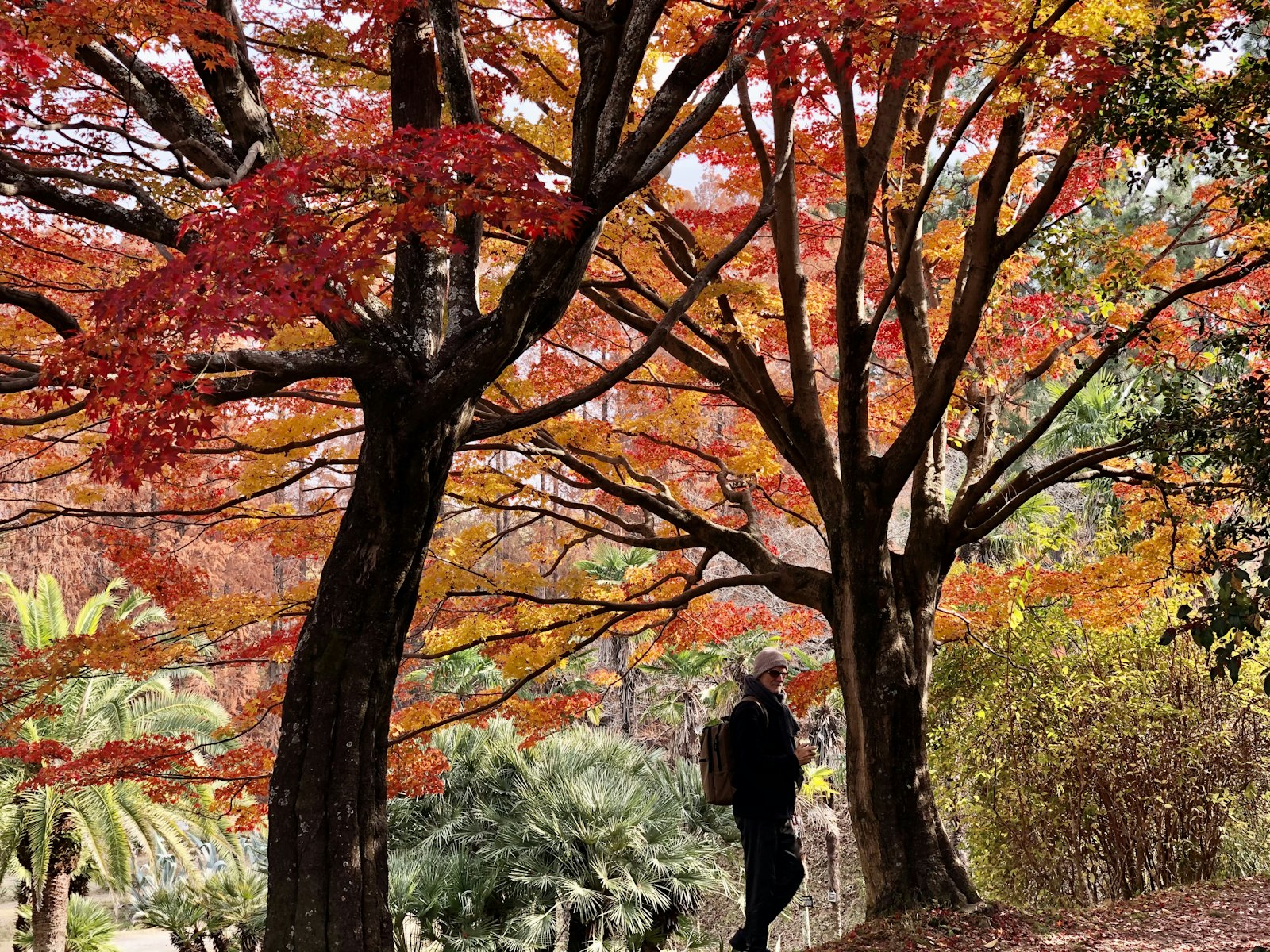
Kyoto is where autumn foliage travel in Japan reaches its highest expression, and also its most logistically fraught. Mid-November to early December is peak for most of the city. Specific timing shifts by a week or so each year.
Iconic Temples with Fiery Maples
Tofukuji (東福寺) is, at peak, the single most visually concentrated autumn foliage experience in Japan. The Tsutenkyo covered bridge looks over a valley filled with several thousand Japanese maple trees. When the colour is full — roughly mid-November — the view is overwhelming. The problem: everyone knows this. On peak weekends, the queue for the bridge starts before 8am.
The solution we give most of our travelers: come on a weekday before 8am and stand at the free viewpoint on the opposite side of the valley (Gaunkyo bridge, no admission required). You get the same view, no queue, and the light is better.
Eikando (永観堂) charges a premium during koyo season — around 2,000 yen — and earns it. The pagoda visible above the maple canopy from the upper pond creates one of the classic autumn compositions in Kyoto.
Kiyomizudera’s main hall at night, surrounded by lit maples, is worth the special evening admission (typically 400 yen over the standard ticket). During the day in peak season, the terrace crowds make the experience difficult.
Off-the-Beaten-Path Spots
Daitokuji’s Koto-in sub-temple (高桐院) has a stone path lined with maples leading to a quiet raked-gravel garden. Closed for renovation for several years, it reopened in 2022. Crowds haven’t fully returned. Admission 600 yen.
Jojakko-ji (常寂光寺) in Arashiyama is passed over by visitors doing Tenryuji next door. It’s steeper, smaller, and has a pagoda visible through the maples from the upper courtyard. 500 yen.
Expert Tip
Book Kyoto accommodation for koyo season at least three months in advance — ideally more. The city sells out completely, particularly smaller ryokan and boutique hotels. If you’re travelling mid-November and accommodation is gone, consider basing yourself in Osaka (30 minutes by Shinkansen) or Nara (45 minutes) and day-tripping. Pricing and availability will be significantly better.
Kyoto Botanical Gardens
The metasequoia avenue in the garden’s northern section doesn’t get mentioned in most foliage guides. In late November, around 200 trees turn a deep rust-orange simultaneously. Garden admission 200 yen, free for the avenue itself. Completely uncrowded.
Top Autumn Foliage Destinations Beyond Tokyo and Kyoto
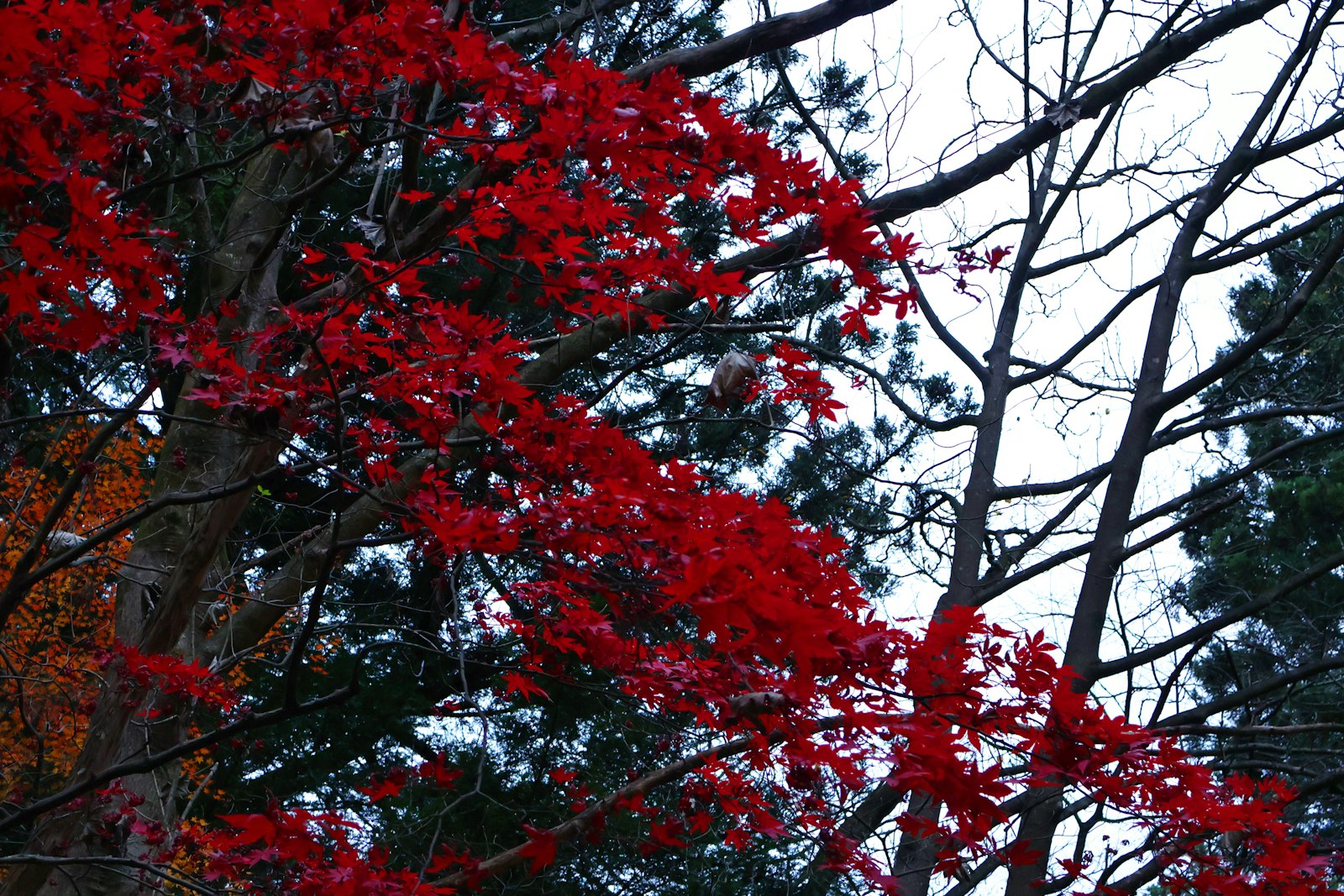
Nikko (Tochigi)
Nikko peaks in mid-to-late October, several weeks ahead of Tokyo. The combination of Edo-period shrine and temple complexes — Toshogu, Rinnoji, Futarasan — set within dense stands of maple, beech, and cryptomeria cedar produces something photographs struggle to capture. The Irohazaka switchback road, 48 hairpin turns ascending to Lake Chuzenji, is worth knowing about if you’re renting a car.
One practical note: stay overnight. Day-trippers from Tokyo dominate the site from 10am to 4pm. The mornings belong to people who slept there.
Hakone and Yoro Valley
Hakone peaks slightly later than Nikko — late October to mid-November. The combination of colour and potential Mt. Fuji views makes it a natural autumn base. Owakudani’s volcanic landscape, stripped of vegetation, provides an odd visual contrast against the coloured forests below.
Yoro Valley in Chiba — less than two hours from Tokyo — is unknown to most foreign visitors. The maple-lined valley walk is narrow and quiet, with a waterfall at the end. Peak is late November.
Hokkaido and Tohoku
For travelers willing to go further north, Daisetsuzan National Park in central Hokkaido sees Japan’s earliest peak in late September. The mountains at scale produce a kind of landscape that doesn’t exist in Honshu, and Hokkaido’s autumn harvest makes the food exceptional at this time of year.
Oirase Gorge (奥入瀬渓流) in Aomori is a 14-kilometre streamside walking path lined with maples, oaks, and birch. Peak is mid-October. One of the most undervisited national parks in Japan.
How to Experience Momijigari Like a Local
Combine Foliage with an Onsen and Seasonal Meal
The Japanese frame koyo as an outdoor activity best followed by warmth. The combination of a full day walking through autumn forests, a long onsen soak, and a kaiseki dinner built around autumn’s specific ingredients — matsutake mushrooms, sanma (Pacific saury), chestnuts, persimmon — is one of the few seasonal experiences in Japan that genuinely doesn’t translate elsewhere. Budget ryokan in Nikko and Hakone make this accessible at around 15,000–20,000 yen per person for dinner and a room.
Early Morning Above Everything
The single most effective change most travelers can make is shifting their start time. Tofukuji at 7:30am is a different experience from Tofukuji at 10am. The light is cooler and more directional, the crowds are a fraction of what they’ll be in two hours, and the experience of walking through the maples in near-silence is closer to what the place actually is.
Scenic Trains and Slow Routes
The Sagano Scenic Railway (嵯峨野観光線) in Arashiyama runs through a river gorge between Saga-Torokko and Kameoka — 25 minutes, best with advance reservations in autumn. The Watarase Keikoku Railway in Gunma, largely unknown to foreign visitors, passes through foliage that rivals anything in Nikko.
Pampas Grass and Autumn Wildflowers
Susuki (Japanese pampas grass) peaks in late September to October, ahead of the maples. The Sengokuhara pampas grass field in Hakone is the most famous, but Sonohara on the Kirigamine highlands in Nagano offers the same silver-gold grasslands with far less pressure. Paired with the early mountain koyo, October in the Japanese highlands has a particular quality separate from the red-maple experience of November.
Autumn Travel in Japan: Frequently Asked Questions
Is September too early to see autumn leaves? For central Honshu — Tokyo, Kyoto, Osaka — yes. September is still summer in these cities. Hokkaido’s high mountains start in late September; Tohoku and areas above 1,500m start in early October.
Do I need to book night illumination events in advance? For Eikando and Kiyomizudera’s night sessions in Kyoto, advance tickets sell out before peak. Book as soon as dates are announced in late October.
What should I pack for autumn weather in Japan? The temperature range is wider than most travelers expect. Tokyo in early November can be 20°C at midday and 8°C by evening. Kyoto in late November adds wind. Layering is essential. A packable umbrella is worth carrying every day.
Related Tours

Conclusion
The visitors who have the best experiences with Japan’s autumn leaves are almost always those who committed to one region and planned their timing carefully. Choose a base, understand when that specific area peaks, and give yourself enough days to be flexible if the forecast shifts.
Plan Your Japan Trip with Local Experts
Our team has guided 40,000+ travelers across Japan. Tell us about your trip and we’ll get back to you within 24 hours.