In this article:
- Reaching and Navigating the Mountain Town
- Volcanic Wonders and Scenic Mountain Rides
- Cruising Lake Ashi and the Floating Torii
- History and Nostalgia on the Old Tokaido Road
- Where Art Meets Nature: Hakone’s Museums
- Soaking in Hakone’s Hot Springs
- Visiting Hakone: Frequently Asked Questions
Reaching and Navigating the Mountain Town
Hakone works best when you treat the transport as part of the sightseeing, because here it is. The classic route loops you through the mountains on a sequence of trains, cable cars, ropeways, and boats, each a small experience in itself. Get the logistics right and the day flows; get them wrong and you spend it queueing.
The Odakyu Romancecar from Shinjuku
The most comfortable way in is the Odakyu Romancecar, a reserved-seat limited express that runs from Shinjuku directly to Hakone-Yumoto, the gateway town, in around ninety minutes. Book a seat at the front for the panoramic windows. It is a smoother, more scenic start than changing trains, and worth the modest reservation fee to begin the day relaxed rather than standing.
The Hakone Freepass
Buy the Hakone Freepass. This single all-in-one ticket covers the entire loop — the mountain train, cable car, ropeway, sightseeing boat, and the local buses — and saves both money and the friction of buying separate tickets at each leg. It pays for itself quickly over a full loop and lets you hop on and off freely. For nearly every visitor doing the standard circuit, it is the obvious choice.
The Counter-Clockwise Strategy
Here is the insider move: ride the loop counter-clockwise rather than the default clockwise direction most guidebooks describe. The crowds cluster clockwise, and going against them means shorter queues at the ropeway and boat bottlenecks that otherwise swallow an hour. Start by bus up to Lake Ashi or Owakudani and work back down by rail. It is the single easiest way to improve a Hakone day.
Volcanic Wonders and Scenic Mountain Rides
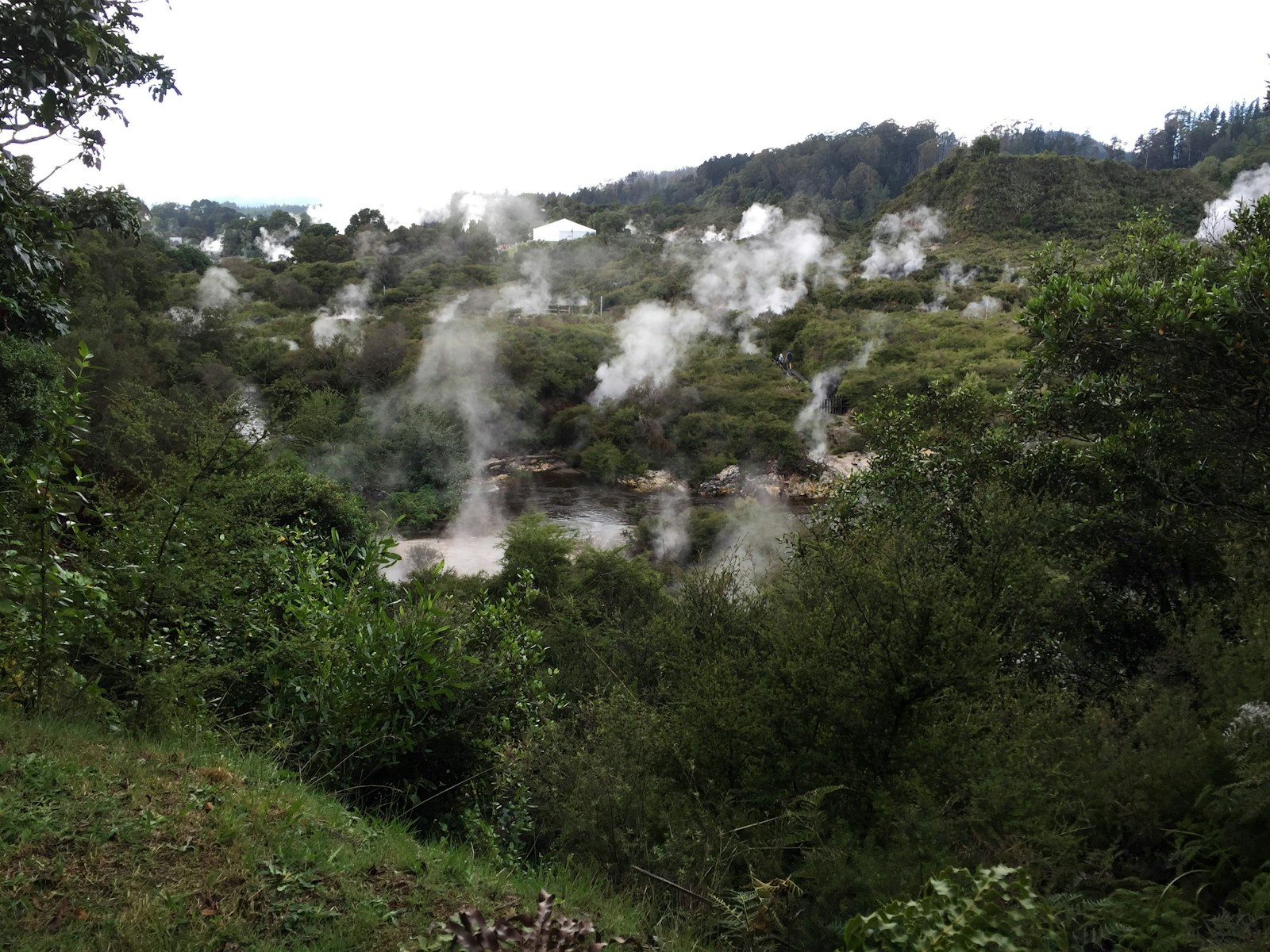
The middle of the loop is where Hakone earns its scenery — a historic mountain railway, a ropeway floating over live volcanic vents, and, on a clear day, Mount Fuji filling the horizon.
The Hakone Tozan Railway
The Tozan Railway is Japan’s oldest mountain railway, a small red train that climbs steep grades by switchbacking — reversing direction at several points to gain height, with the driver and conductor swapping ends each time. It winds through forest and past hydrangeas that make early summer its prettiest season. The ride from Hakone-Yumoto up to Gora is short but genuinely charming, more experience than mere transport.
The Hakone Ropeway
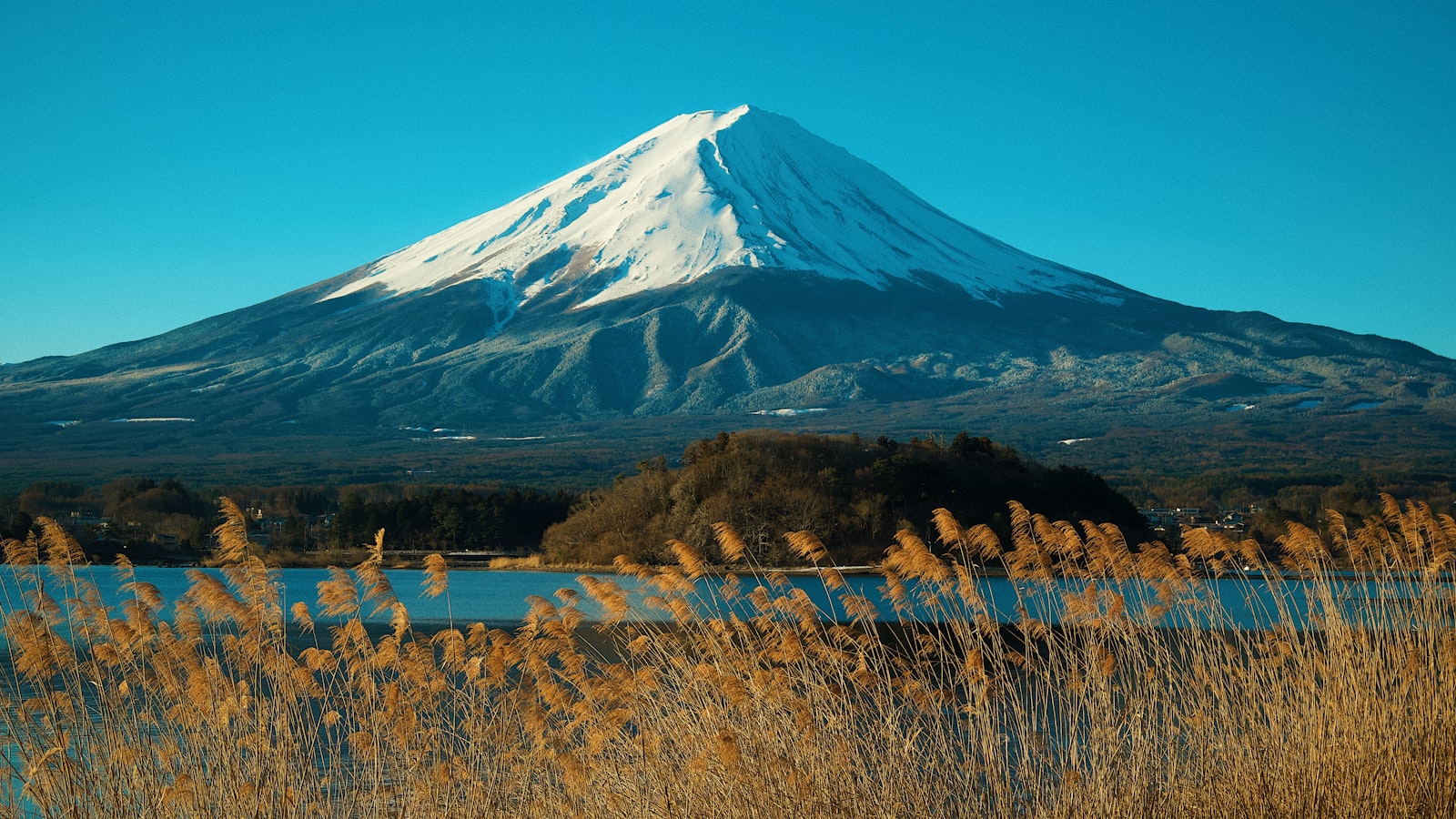
From Sounzan the ropeway lifts you high over the mountains in a glass gondola, and on a clear day Mount Fuji appears across the valley, huge and sudden. The cabins run continuously, so there is no timetable to catch, only a queue to manage — another reason to go counter-clockwise. Midway it descends toward Owakudani, and the smell of sulfur reaches you before the doors even open.
Owakudani and the Black Eggs
Owakudani, the “Great Boiling Valley,” is a raw volcanic landscape of steaming vents and sulfur-yellow rock, the remnant of an ancient eruption. The local ritual is to eat a kuro-tamago — an egg boiled in the sulfurous hot springs until its shell turns coal-black — which legend says adds seven years to your life. The taste is just a normal hard-boiled egg; the point is the setting and the small absurd theatre of it.
Cruising Lake Ashi and the Floating Torii
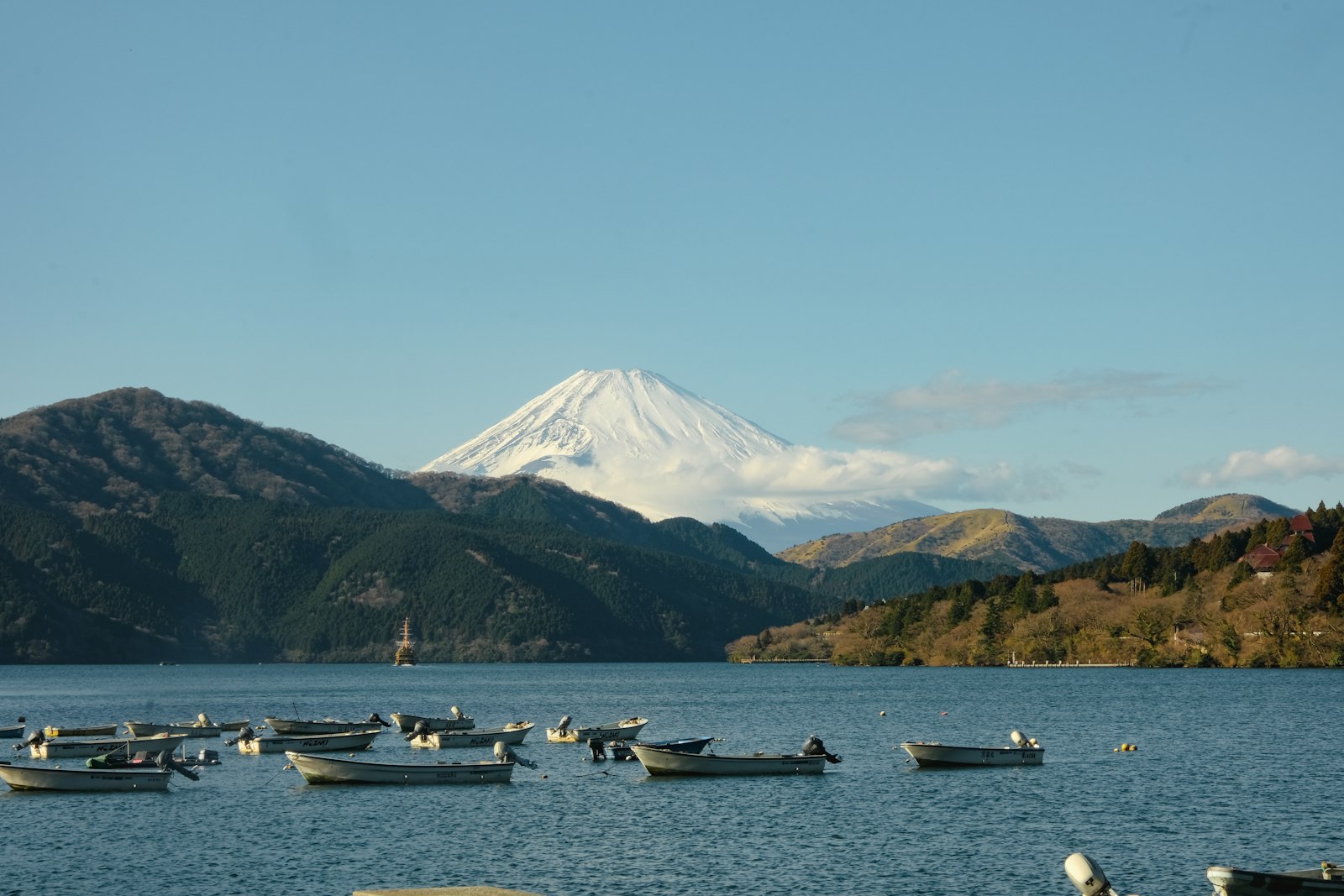
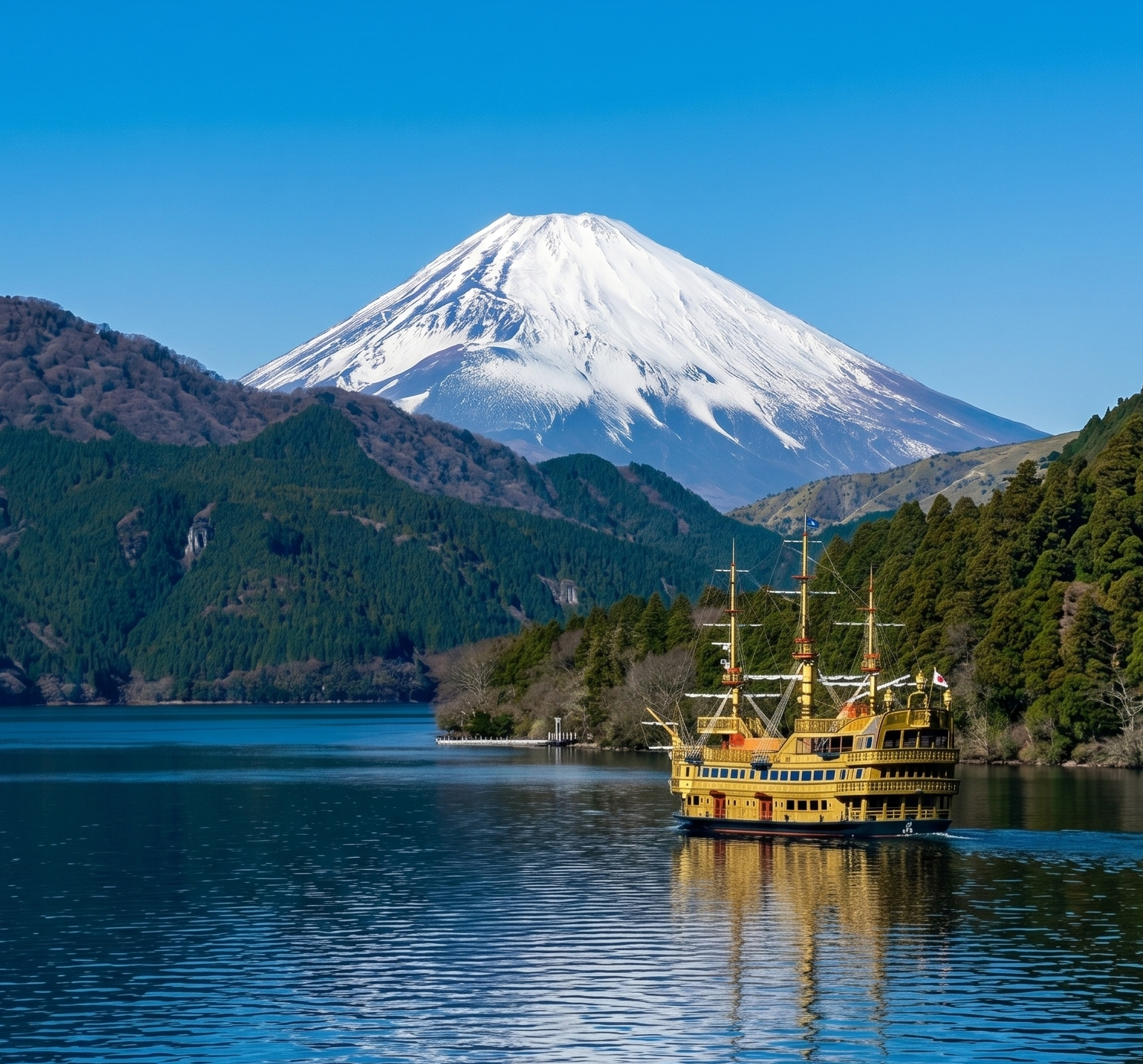
Lake Ashi sits in the caldera of an ancient volcano, and crossing it by boat is the loop’s calm centrepiece — still water, forested slopes, and, when the weather cooperates, Fuji mirrored on the surface.
The Pirate Ship Cruise
The sightseeing boats across Lake Ashi are gaudy European-style galleons, all gilt and cannon replicas, which sounds ridiculous and mostly is — but the crossing itself is lovely, and the Freepass covers it. Sit on the open upper deck for the best views back toward the mountains. It is a twenty-odd-minute glide from one end of the lake to the other, and a restful counterpoint to the queues elsewhere.
Hakone Shrine and the Torii of Peace
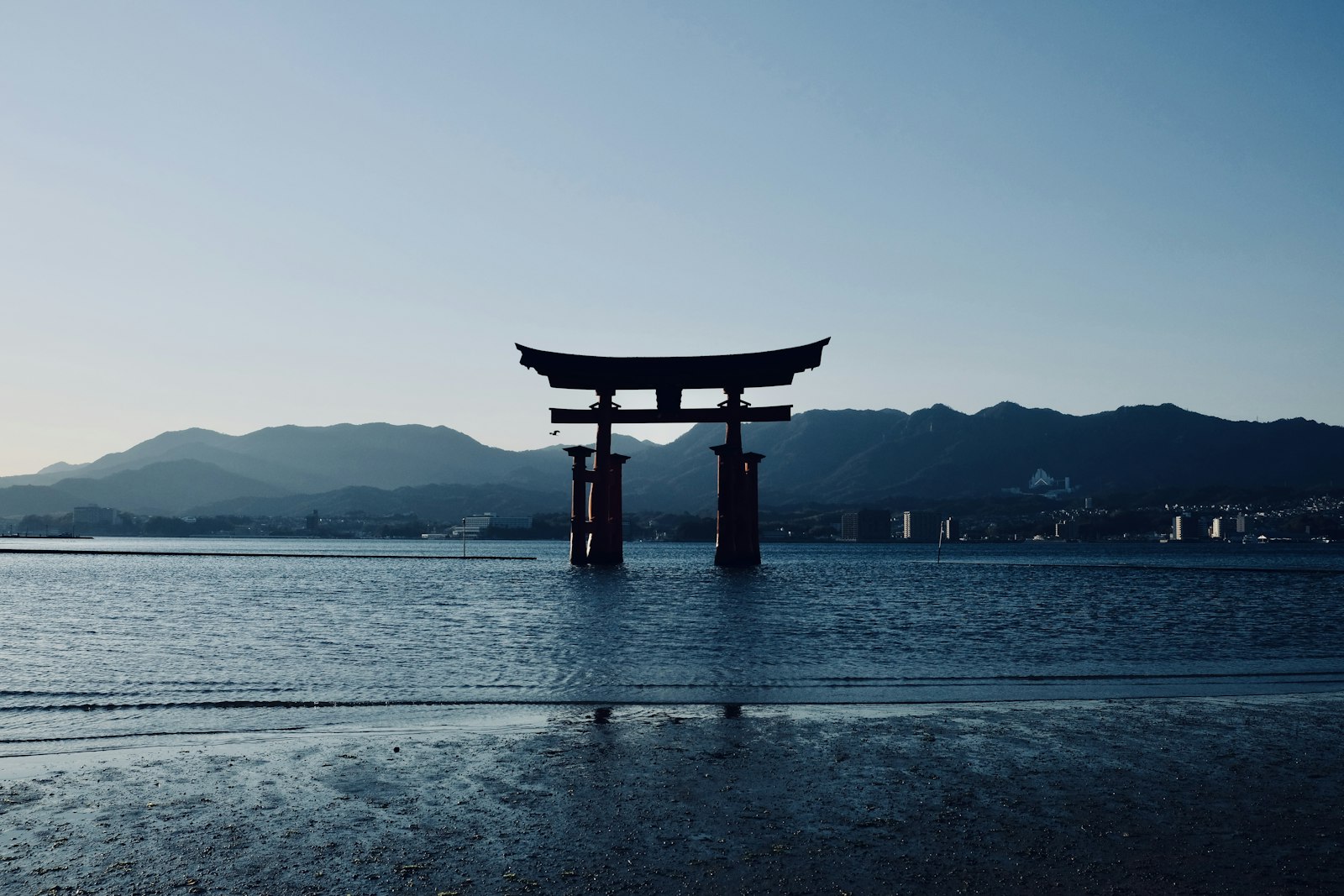
On the wooded lakeshore stands Hakone Shrine, reached up a moss-flanked stone path under towering cedars, and its most famous feature sits out in the water: a red “Torii of Peace” that appears to float on Lake Ashi. The queue to photograph yourself beneath it can be long, but the shrine itself, quiet under old trees, rewards the short walk up. Go early in the morning for both the light and the shorter line.
History and Nostalgia on the Old Tokaido Road
Long before it was a resort, Hakone was a checkpoint on the Tokaido, the great Edo-era highway between Tokyo and Kyoto, and traces of that history survive along the lake’s southern shore for those who want a quieter, more historical hour.
Amasake Chaya Teahouse
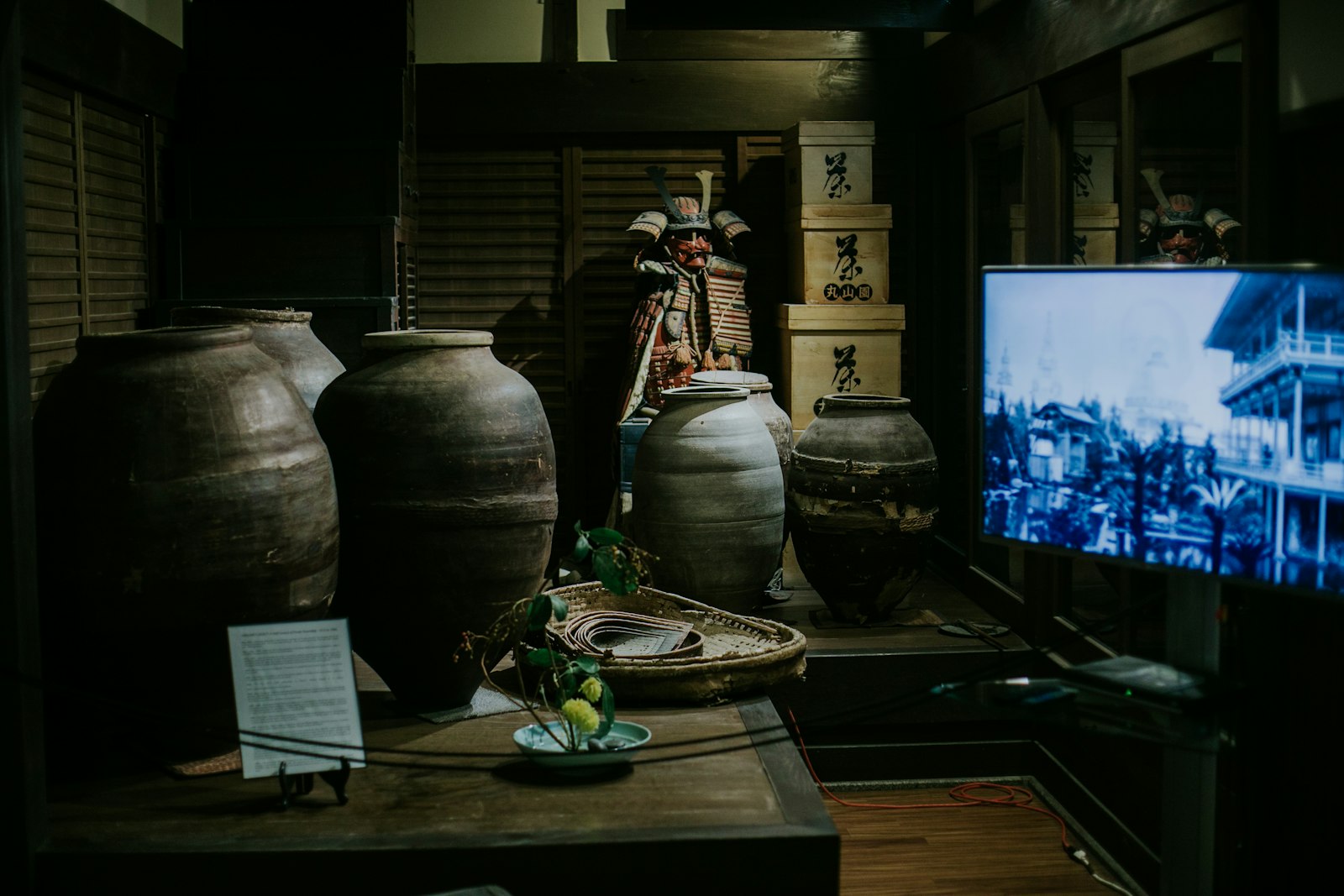
Amasake Chaya is a thatched-roof teahouse that has served travellers on this road for some four centuries, and it still pours the same thing: amasake, a warm, sweet, non-alcoholic rice drink, served with chewy mochi in a dim, smoke-scented room around an open hearth. Stopping here, off the tourist loop, is the closest Hakone comes to time travel. It is a genuine survival, not a reconstruction.
The Ancient Cedar Avenue and the Checkpoint
Beside the lake runs a preserved stretch of the old highway lined with cedars planted four hundred years ago, their trunks now wide enough to shelter under. Nearby, the reconstructed Hakone Checkpoint shows how the shogunate controlled movement along the road, with restored guardhouses and prison cells. Together they make an easy walking detour that grounds the resort in the harder history it grew out of.
Where Art Meets Nature: Hakone’s Museums
Hakone has an unusually strong concentration of art museums, most designed so that the landscape is part of the exhibit. Two stand out.
The Hakone Open-Air Museum
The Open-Air Museum sets major sculpture — Henry Moore, a dedicated Picasso pavilion, a climbable stained-glass tower — across a green mountainside, so that you view the work with valleys and sky behind it. There is a hot-spring footbath fed by the local springs where you can soak your feet mid-visit, and play areas that make it genuinely good for children. It is the one museum in Hakone we would tell almost anyone to prioritise.
The Venetian Glass Museum
In Sengokuhara, the Glass Forest museum shows Venetian glass indoors and stages shimmering glass sculptures outdoors, including trees hung with crystal that catch the light on a bright day. It leans romantic and a little kitsch, but the garden setting is lovely and it pairs well with the nearby pampas-grass fields of Sengokuhara in autumn. A gentler stop than the Open-Air Museum, good for slowing the pace.
Soaking in Hakone’s Hot Springs
The reason Hakone exists as a destination is under your feet: hot spring water, drawn up all over these mountains, and the reward at the end of the loop is a soak in it.
The Day-Trip Onsen
You do not need to stay overnight to bathe. Many ryokan and public bathhouses open their baths to day visitors for a few hours in the afternoon, so even a day-tripper from Tokyo can end the loop in an outdoor rotenburo with a mountain view. Bring a small towel, or rent one on site, and go before the late-afternoon rush. For the full experience, though, an overnight at a ryokan with kaiseki dinner is what Hakone is truly built for.
Footbaths Along the Way
If a full soak does not fit the day, Hakone scatters free or cheap ashiyu footbaths across the loop — at the Open-Air Museum, at cafés, and at stations — where you roll up your trousers and rest your feet in hot spring water while you pause. It is a low-commitment way to feel the point of the place between the trains and boats.
Expert Tip
Mount Fuji is shy — it hides in cloud for much of the year, and there is no guaranteeing a view on any given day. Your best odds are a clear, dry morning in the colder months (roughly November to February), before midday cloud builds. If Fuji stays hidden during your ropeway ride, do not despair: the volcanic valley, the lake, and the onsen are the day’s real substance, and the mountain is a bonus rather than the point.
What Is the Hakone Loop? The Route, Leg by Leg
The Hakone Loop is a circuit of five connected rides that carries you from Hakone-Yumoto up into the mountains, across Lake Ashi and back down again. Locals and rail companies call it the Hakone Round Course; you will also see it described as the Hakone circuit or the Hakone sightseeing loop. Whatever the name, the logic is the same. Every leg is a different mode of transport, and the scenery changes with each one.
Here is the standard order, starting and finishing at Hakone-Yumoto, with approximate riding times:
– Hakone Tozan Railway, Hakone-Yumoto to Gora: about 35 minutes – Hakone Tozan Cable Car, Gora to Sounzan: about 10 minutes – Hakone Ropeway, Sounzan to Togendai via Owakudani: about 30 minutes – Hakone Sightseeing Cruise, Togendai across Lake Ashi to Hakone-machi or Moto-Hakone: about 30 minutes – Hakone Tozan Bus, Moto-Hakone back to Hakone-Yumoto: about 35 minutes
Add it up and the riding alone comes to roughly three and a half hours. That figure is misleading on its own, though. Waiting for the boat, queueing at Sounzan and stepping off at Owakudani easily double it, which is why the loop fills a full day rather than a morning.
Clockwise or Counter-Clockwise: Untangling the Direction
Search for the Hakone Loop clockwise and you will find guides that contradict each other. Traced on a map, the rail-first route above runs counter-clockwise: north-west from Yumoto to Gora, west over Owakudani, south across the lake, then east back down. Even so, plenty of blogs and tour listings use the opposite label. We suggest ignoring the words and deciding by the first leg.
Rail-first is the route most visitors follow, so it carries the heaviest crowds at the cable car and the Sounzan ropeway queue. Bus-first starts with the bus from Hakone-Yumoto to Moto-Hakone, crosses the lake by boat and climbs by ropeway, which is the against-the-flow approach we recommend above for shorter lines. There is one trade-off. Rail-first puts you on the ropeway in the late morning, and Fuji tends to be clearer before midday cloud builds.
Our view: if the forecast promises a clear morning and the Fuji view matters most, go rail-first and leave early. On any other day, go bus-first and spend the time you save at Owakudani or in a bath. For more on the ropeway leg itself, including closures for wind and volcanic gas, see our Hakone Ropeway guide.
A Hakone Loop Day Trip from Tokyo: Timing and Tickets
A Hakone Loop day trip is realistic, but only with an early start. Allow six to eight hours in Hakone itself for the full circuit with a stop at Owakudani and a short walk at Lake Ashi. Leave Shinjuku on a morning Romancecar and you reach Hakone-Yumoto in around ninety minutes. Aim to be on the first leg of the loop by mid-morning at the latest.
After that, the day depends on how you spend the gaps. A realistic shape is the climb and ropeway before lunch, a late lunch near Togendai or on the far side of the lake, the cruise in the early afternoon, and the bus back down by late afternoon. That leaves time for a soak before the evening train. Try to add the Open-Air Museum as well and the day starts to feel like a timetable exercise; we would save it for a second day.
What the Hakone Freepass Costs
The Hakone Freepass is sold in two-day and three-day versions; there is no single-day pass. From Shinjuku, the two-day pass costs ¥7,100 for adults and ¥1,600 for children, including the Odakyu Line round trip. Travelers already holding a rail ticket to Odawara can buy the pass from there for ¥6,000.
The pass covers every leg of the loop, including the Tozan buses on designated routes. However, it does not include the Romancecar limited express fee, which is ¥1,200 one way for adults between Shinjuku and Hakone-Yumoto. If you plan to stay the night, the second day is already paid for, and a morning in Hakone’s hot spring baths is the best use of it.
Related Tours
Visiting Hakone: Frequently Asked Questions (Q&A)
Can I do the whole Hakone Loop as a day trip from Tokyo? Yes, the full loop fits into a long day trip, and many people do exactly that with a Romancecar out in the morning and back in the evening. To make it work, start early, buy the Freepass, and ride counter-clockwise to dodge the worst queues. That said, Hakone is fundamentally an onsen town, and staying one night at a ryokan turns a rushed circuit into the restful escape the place is meant to be.
What if Mount Fuji is hidden by clouds during my visit? Accept it and enjoy the rest — the mountain is never guaranteed. The Owakudani vents, Lake Ashi, the museums, and the hot springs all stand on their own without a Fuji view. If a clear sighting matters to you, build in flexibility and aim for a dry winter morning, when your chances are highest, rather than committing to a fixed cloudy date.
Do IC cards like Suica work on the Hakone transport? Partly, but the Hakone Freepass is the better answer here. IC cards work on some connections, but the loop’s mountain railway, ropeway, boat, and buses are exactly what the Freepass is designed to bundle, and using it is simpler and cheaper than tapping through piecemeal. Buy the Freepass at Shinjuku or Hakone-Yumoto and stop worrying about individual fares.
Conclusion
Hakone is one of the best day trips or overnights from Tokyo precisely because the getting-around is the attraction — a switchback train, a ropeway over steaming vents, a boat across a caldera lake, and a hot spring to finish. Ride it as a loop, let each leg be part of the pleasure, and do not over-invest in the Fuji view you cannot control.
Plan Your Japan Trip with Local Experts
Our team has guided 40,000+ travelers across Japan. Tell us about your trip and we’ll get back to you within 24 hours.