In this article:
- Udon vs Soba: The Core Differences
- How Udon and Soba Are Served
- Where to Eat Udon, Where to Eat Soba
- Choosing Between Them: Allergies, Gluten, and the Occasion
- Udon vs Soba: Frequently Asked Questions
Introduction
Ask a Japanese friend about udon vs soba and you will rarely get a neutral answer. People grow up on one side of the question, usually depending on where they grew up, and they defend it with the seriousness other countries reserve for football.
For a visitor the stakes are lower but the confusion is real. Both noodles sit on the same menus, share the same toppings, and arrive in similar bowls of dark, fragrant broth. Yet one is a soft, heavy strand of wheat that barely tastes of anything on its own, and the other is a thin, grey, faintly nutty noodle made from a seed most Western kitchens never use. They are not interchangeable, and ordering the wrong one for the moment is a small but avoidable disappointment.
This guide sets out the differences plainly, then goes further than most comparisons do. We cover how each is served, where in Japan each is at its best, and the allergy question that matters far more than calories. By the end you should be able to walk into a noodle shop and order with a reason.
Udon vs Soba: The Core Differences
Start with the flour, because almost everything else follows from it.
Udon: Wheat, Water, and Salt
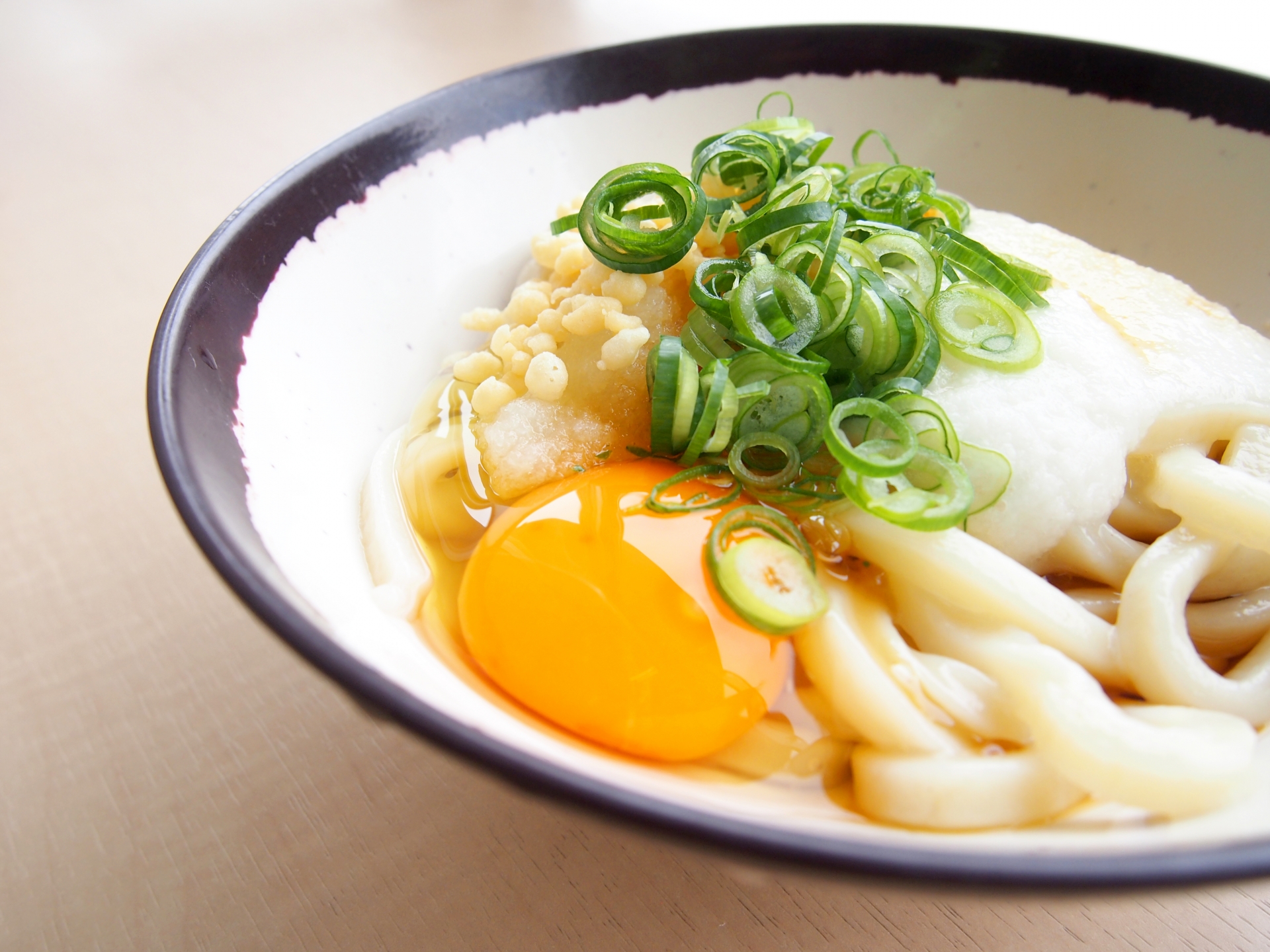
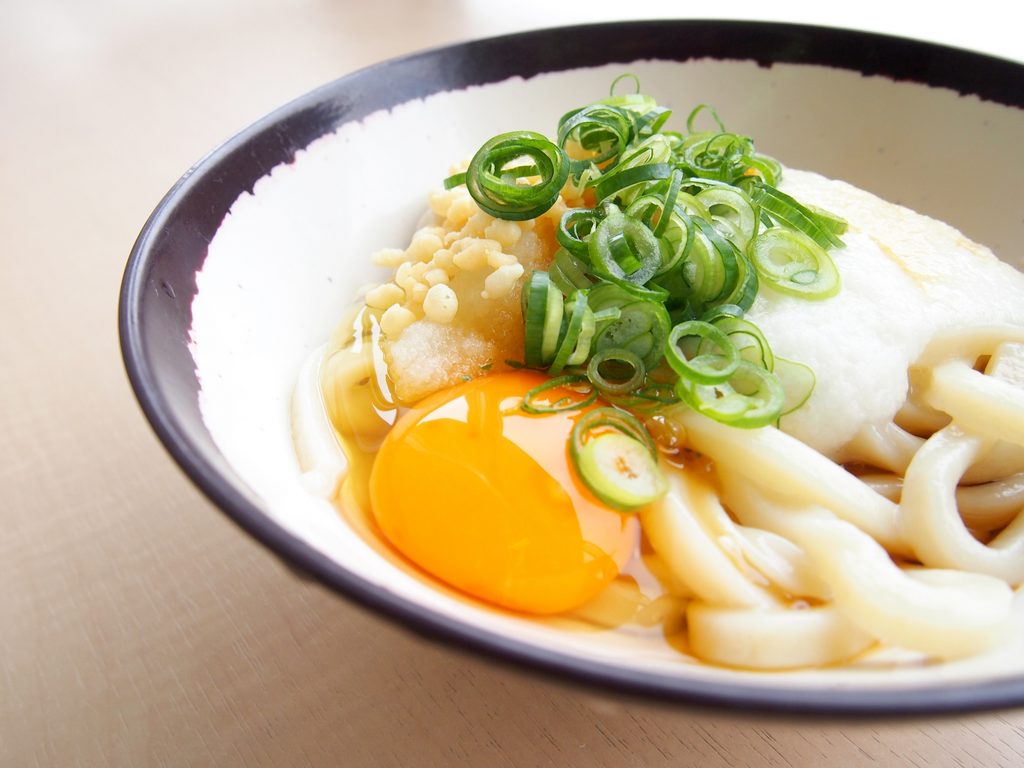
Udon is made from wheat flour, water, and salt. That is the whole list. The dough is kneaded hard, rested, rolled, and cut into thick strands that are white, glossy, and square-edged when fresh.
The simplicity is deceptive. A good udon depends on the kneading and resting, which build the elastic chew Japanese diners call koshi. Poor udon is soft and flabby. Good udon pushes back against your teeth and then gives way, and once you have eaten it fresh from a shop that makes its own, the packaged version in a supermarket abroad seems like a different food.
Soba: Buckwheat and the Question of Ratio
Soba is made from buckwheat flour, usually with some wheat mixed in to hold the dough together. Buckwheat has no gluten, so a pure buckwheat dough is fragile and hard to work. That is why ratio is the first thing a soba enthusiast looks at.
The most common blend is nihachi, meaning two-eight: two parts wheat to eight parts buckwheat. Noodles made from buckwheat alone are called juwari, also read towari, meaning ten-tenths. Juwari soba is darker, more fragile, and more pronounced in flavor. Many specialist shops print the ratio on the menu or the noren curtain at the door.
At the other end of the scale, Japan’s industry labeling rules for fresh noodles allow a product to be called soba with as little as 30 percent buckwheat. Cheap soba, in other words, can be mostly wheat. You taste the difference immediately.
Texture, Flavor, and What Each Does to a Broth
Udon is thick, soft, and neutral. It takes on the flavor of whatever it sits in, which makes it the better noodle for rich or heavily seasoned broths, curry, and toppings that need something substantial underneath them.
Soba is thin and firm, with an earthy, slightly grassy taste of its own. That flavor is the point, and it is easily buried. In our view soba is at its best with as little interference as possible, which is why the most respected way to eat it is cold, plain, and dipped.
Expert Tip
Look at the shop before you look at the menu. A place that specializes in soba often has a small glass-walled room near the entrance where noodles are rolled and cut by hand, and the menu will name the ratio. At a shop like that, order the plainest cold soba first. The toppings can wait for a second visit.
How Udon and Soba Are Served
Both noodles use the same basic vocabulary of dishes. Learn five or six words and most noodle menus in Japan become readable.
Hot Bowls: Kake, Kitsune, and Tanuki
Kake is the base: noodles in hot broth, usually with nothing more than sliced green onion. Kake udon and kake soba are the cheapest items on any menu and the truest test of the broth.
Kitsune adds a sheet of sweet, simmered fried tofu. The dish is credited to an Osaka shop, Matsubaya, now Usamitei Matsubaya, which opened in 1893 and began serving the tofu on top of the udon after customers kept adding it themselves. Kitsune udon remains one of the definitive Osaka meals.
Tanuki is topped with crunchy scraps of tempura batter, which soften into the broth as you eat. Names and toppings drift between regions, so the same word can mean something slightly different in Tokyo and Osaka. That variation is part of the fun, not a problem to solve.
Cold Noodles and the Dipping Sauce
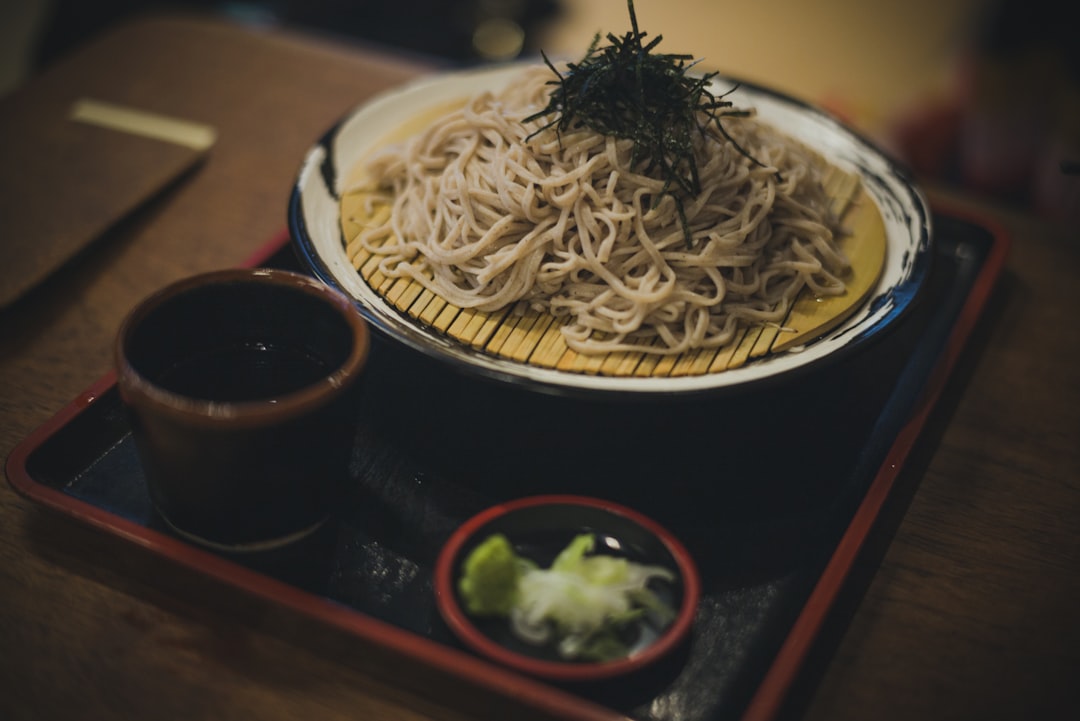
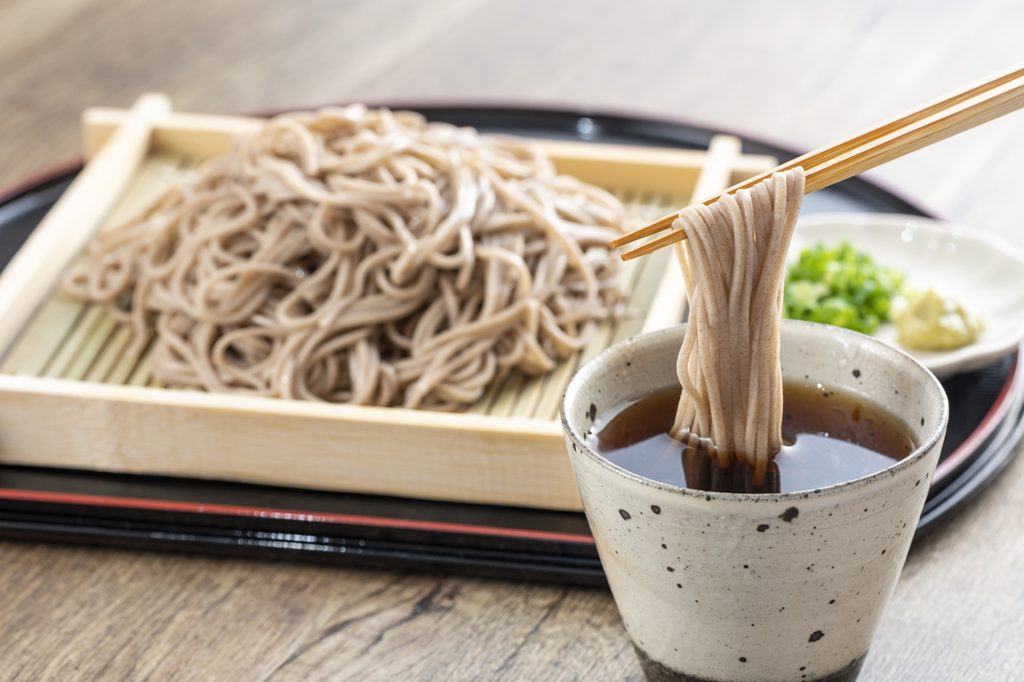
Cold noodles served on a bamboo tray are called zaru or mori, and they come with a small cup of concentrated dipping sauce, a dish of green onion, and wasabi. You add the condiments to the sauce, lift a mouthful of noodles, dip the lower part, and eat.
Cold soba is the classic form. Cold udon exists and can be excellent, especially in summer, but its thickness and weight suit hot broth better. When travelers tell us they did not understand what the fuss about soba was, it almost always turns out they ordered it hot, in a heavy broth, at a station counter.
Sobayu: The Step Most Visitors Skip
Toward the end of a cold soba meal, a lacquered pot often arrives at the table. Inside is sobayu, the cloudy water the noodles were boiled in.
Pour it into what remains of your dipping sauce, stir, and drink it like a thin soup. It softens the salt and carries the flavor of the buckwheat. Most visitors leave it untouched because nobody told them what it was. We think it is the quiet finish that makes a soba meal feel complete.
Where to Eat Udon, Where to Eat Soba
The old generalization is that eastern Japan eats soba and western Japan eats udon. It is too tidy to be fully true, but it still points in a useful direction, and several regions have built their identity around one noodle or the other.
Udon Country: Kagawa, Osaka, and Akita
Kagawa Prefecture on Shikoku markets itself as the Udon Prefecture, and it has earned the name. Sanuki udon, named after the old province, is thick, square-cut, and firmly chewy. Many of the famous shops are plain, fast, and cheap, and some ask you to serve yourself from the counter. A morning spent eating two or three small bowls at different shops is one of the more distinctive food days in Japan.
Osaka takes a different approach. The udon is softer and the attention goes to the broth, which is built on kombu and seasoned with a pale soy sauce. The result is lighter in color and gentler than the dark broths of Tokyo. Our guide to Osaka food covers the rest of what the city does well.
In Akita, in the far north, Inaniwa udon goes the other way entirely. The noodles are hand-stretched and thin, closer in width to some soba than to Sanuki udon, with a smooth, almost silky surface.
Soba Country: Nagano, Izumo, and Iwate
Nagano’s cool highlands suit buckwheat, and soba from Togakushi, in the mountains north of Nagano city, is among the most celebrated in the country. It is usually served cold in small bundles on a round bamboo tray. After the walk up to Togakushi Shrine, a tray of cold soba is the obvious lunch.
Izumo in Shimane serves its soba in stacked, round lacquer dishes, pouring the sauce directly over the noodles rather than dipping. The noodles are made from buckwheat ground with the husk, which gives them a darker color and a stronger taste.
Iwate has wanko soba, which is less a style than a performance. Servers drop small mouthfuls of soba into your bowl, one after another, until you close the lid. It is entertaining once. We would not plan a trip around it.
Kyoto and Tokyo: Nishin Soba and the Standing Counter
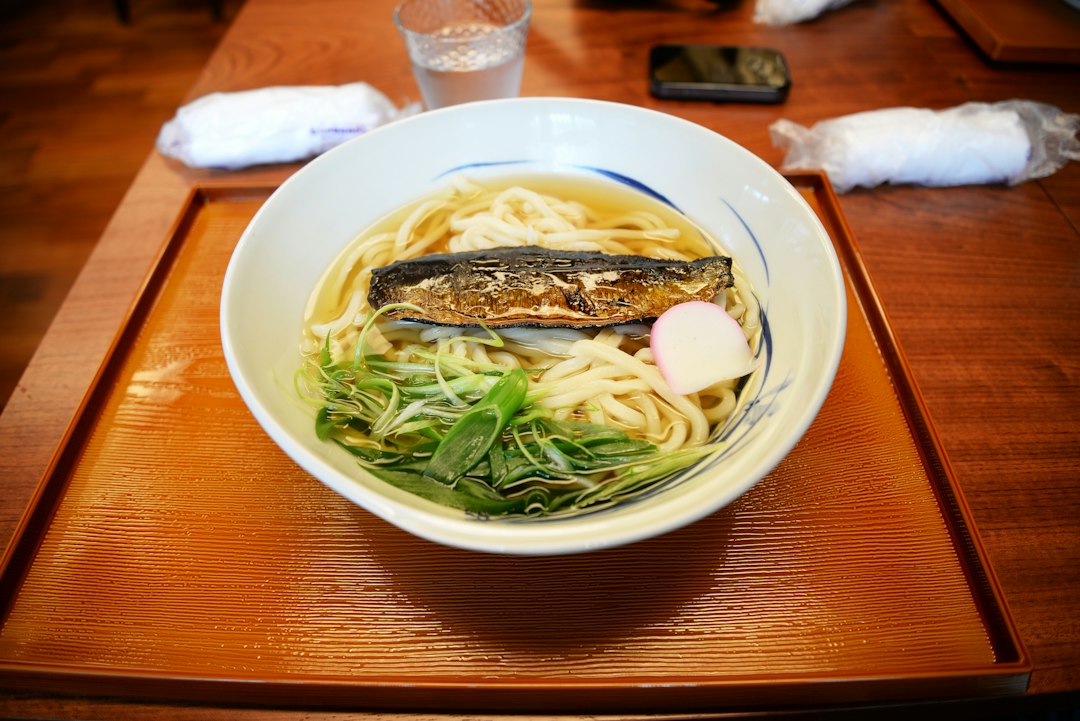
Kyoto is landlocked, and for centuries the fish that reached it arrived dried or salted. Nishin soba, hot soba topped with a sweet, soy-simmered fillet of dried herring, comes out of that history. It is credited to Matsuba, a shop near Minamiza theater in Gion that opened in 1861; the second-generation owner is said to have created the dish in 1882. The fish is sticky and rich against a light broth, and it is one of the few hot soba dishes we recommend over the cold version.
Tokyo leans toward soba, with darker, soy-forward broths. Its most honest expression is the standing soba counter found in and around major stations, where commuters order from a ticket machine, eat in a few minutes, and leave. The quality varies. The experience of eating shoulder to shoulder with office workers at seven in the morning does not.
Choosing Between Them: Allergies, Gluten, and the Occasion
For most travelers the choice is a matter of taste and weather. For some it is a matter of safety, and this is the part most udon vs soba comparisons skip.
Buckwheat Allergy and the Shared Pot
Buckwheat allergy can be severe, and Japan treats it seriously: buckwheat is one of the ingredients that must be declared on packaged food labels. The difficulty is in restaurants.
At many noodle shops, udon and soba are boiled in the same water. Buckwheat flour can also be in the air where noodles are made. Ordering udon at a soba shop is therefore not a safe workaround for someone with a real buckwheat allergy. If this applies to anyone in your group, eat udon at a dedicated udon shop and carry a written allergy card. Our guide to food allergies in Japan explains how to prepare one.
Soba Is Not Automatically Gluten-Free
Buckwheat itself has no gluten, which leads many visitors to assume soba is a safe choice for coeliacs. It usually is not. Most soba contains wheat, and the dipping sauce and broth are made with soy sauce, which is brewed with wheat.
Juwari soba avoids the first problem but not the second. Unless a shop can confirm both the noodle and the sauce, treat soba as a wheat-containing dish.
Our Rule of Thumb
In hot weather, or when you want to taste the noodle itself, order cold soba. In cold weather, when you are hungry, or when the broth and toppings are the point, order hot udon.
Beyond that, follow the region. Udon in Kagawa and Osaka, soba in Nagano, Izumo, and Tokyo, and nishin soba in Kyoto. The noodle a place is famous for is almost always the one its cooks make best.
Expert Tip
Check the ticket machine before you queue. At standing noodle counters around Tokyo stations, most dishes appear twice, once as udon and once as soba, and the machine usually has a separate button or a choice screen for the noodle. If there is no English, a staff member will switch it for you when you hand over the ticket. Saying “udon de” or “soba de” is enough.
Udon vs Soba: Frequently Asked Questions
Is soba healthier than udon?
Slightly, in most comparisons. Buckwheat carries more fiber and protein than refined wheat flour, and soba portions tend to be lighter. The difference shrinks once you add tempura or a heavy broth, and a cheap soba that is mostly wheat offers little advantage. Choose on taste and occasion; the nutritional gap is not large enough to decide it.
Is it rude to slurp udon or soba?
No. Slurping is normal with both, and it is common enough at noodle counters that nobody will notice. It cools the noodles and, with soba, carries the aroma of the buckwheat. You do not have to slurp, but you do not need to avoid it. Our guide to ordering food in Japan covers the rest of the counter routine.
Why do Japanese people eat soba on New Year’s Eve?
The custom is called toshikoshi soba, year-crossing soba. The long, thin noodles are commonly said to represent a long life, and because soba breaks easily, eating it is also said to cut off the hardships of the passing year. Queues at soba shops on December 31 are part of the season, alongside the temple bells and shrine visits that follow at midnight.
Related Tours

Conclusion
The udon vs soba question has a practical answer rather than a correct one. Soba rewards attention: eat it cold, at a shop that names its ratio, and finish with the sobayu. Udon rewards appetite: eat it hot, in a broth you can taste, in the places that built their reputation on it.
If you have room for only one serious noodle meal, let the season decide. A tray of cold soba on a humid July afternoon and a steaming bowl of kitsune udon on a January evening in Osaka are both exactly right, and neither would be as good the other way around. If anyone in your group has a buckwheat allergy, settle that first, and eat udon only where soba never touches the pot.
Plan Your Japan Trip with Local Experts
Our team has guided 40,000+ travelers across Japan. Tell us about your trip and we’ll get back to you within 24 hours.