
In this article:
- Choosing Your Side of the Mountain
- A Realistic Kawaguchiko Day, Hour by Hour
- Getting There and Back in One Day
- Weather, Seasons, and the Cloud Problem
- Mt Fuji Day Trip: Frequently Asked Questions
Introduction
Most people who plan a Mt Fuji day trip from Tokyo think of it as a trip to the mountain. It is better understood as a trip to a viewpoint: chosen in advance, reached early, and hoped for.
The summit is not really where you are going on a day like this. What you actually visit is one of the areas around its base — the lakes to the north, the volcanic valleys of Hakone to the south-east, or the road that climbs partway up the northern flank. Each gives you a different Fuji. Each also takes most of a day once you count roughly two to two and a half hours of travel in each direction.
We run Fuji days from Tokyo every week, by coach and by private van, and the pattern is consistent. Travelers who pick one area and give it the whole day come back content. Travelers who try to cover everything spend the day looking at the inside of a vehicle. What follows is how we would plan it.
Choosing Your Side of the Mountain
Choose the area first. Everything else, from transport to departure time, follows from that decision.
Kawaguchiko and the Northern Lakes: The Closest Views
Lake Kawaguchi is the default for good reason. It is the most accessible of the Fuji Five Lakes from Tokyo, the mountain rises directly across the water, and the best-known viewpoints sit within a short drive of each other. Our Lake Kawaguchiko guide covers the area in more depth if you are weighing an overnight stay.
For a single day, this is the side we recommend to most first-time visitors. You spend the hours looking at Fuji rather than looking for it. The stops are short walks from the vehicle rather than a chain of connections.
The trade-off is crowds. Kawaguchiko is where almost every day tour goes, and the famous viewpoints are busy from mid-morning onward.
Hakone: A Volcano Day With Fuji in the Background
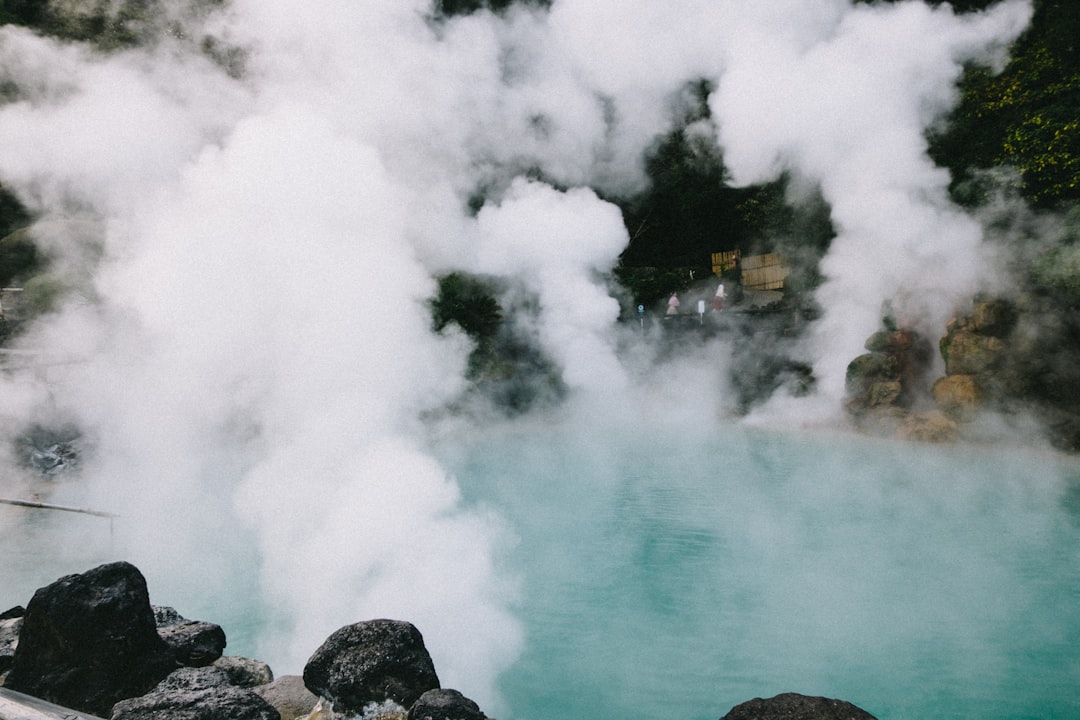
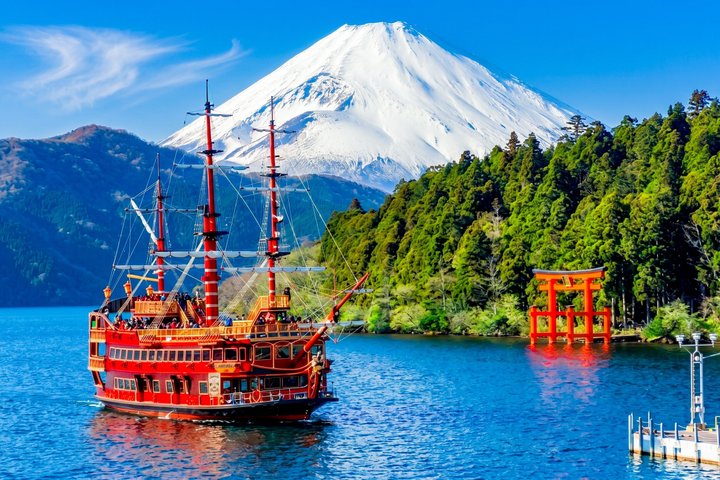
Hakone is a different kind of day. Fuji is present, but as a backdrop rather than the subject. The real content is the landscape of an active volcano: steam rising from the slopes of Owakudani beneath the ropeway, the sharp smell of sulphur, the vermilion torii of Hakone Shrine standing in the water, and a boat crossing Lake Ashi.
We suggest Hakone for travelers who have seen Fuji before, or who care more about the texture of a place than about one particular photograph. It also holds up better under cloud, because nothing at Owakudani depends on seeing the summit. For how the area’s mountain trains, ropeway, and boats fit together, see our piece on the Hakone loop.
One caution. Owakudani closes at short notice when volcanic activity rises, so a Hakone day needs enough slack to absorb a change of route.
The Fifth Station: Height Without the Postcard
The Fuji Subaru Line Fifth Station, at around 2,300 metres on the northern side, is the highest point most day visitors reach. Standing on the mountain has its own appeal. The air is thinner, the ground is dark volcanic scree, and on a good morning the clouds sit below you rather than above.
However, you lose the view of Fuji itself, because you are standing on it. The station area is also largely shops and restaurants. In our view it works as a short add-on to a Kawaguchiko day rather than the focus of one.
Access changes with the season. The Subaru Line closes to private cars for much of each summer climbing season, when visitors switch to shuttle buses, so check the current rules before building a day around it.
Expert Tip
If you cannot decide between Kawaguchiko and Hakone, let the forecast decide for you the evening before. A clear forecast for the Fuji Five Lakes area favours Kawaguchiko, where the whole day is about the view. A cloudy one favours Hakone, where the volcanic valley and the lake carry the day on their own.
A Realistic Kawaguchiko Day, Hour by Hour
A good Kawaguchiko day is built backward from the light. Visibility around Fuji tends to be better in the early morning than in the middle of the day, so the order of stops matters more than the number of them.
Morning: Leave Early, Go to the Lake First
Our group coach leaves the LOVE sculpture in Nishi-Shinjuku at 8:30, and it leaves at 8:30. A private departure can go earlier, which we recommend if the forecast is marginal. An hour gained at the start of the day is often the difference between seeing the summit and seeing a white wall.
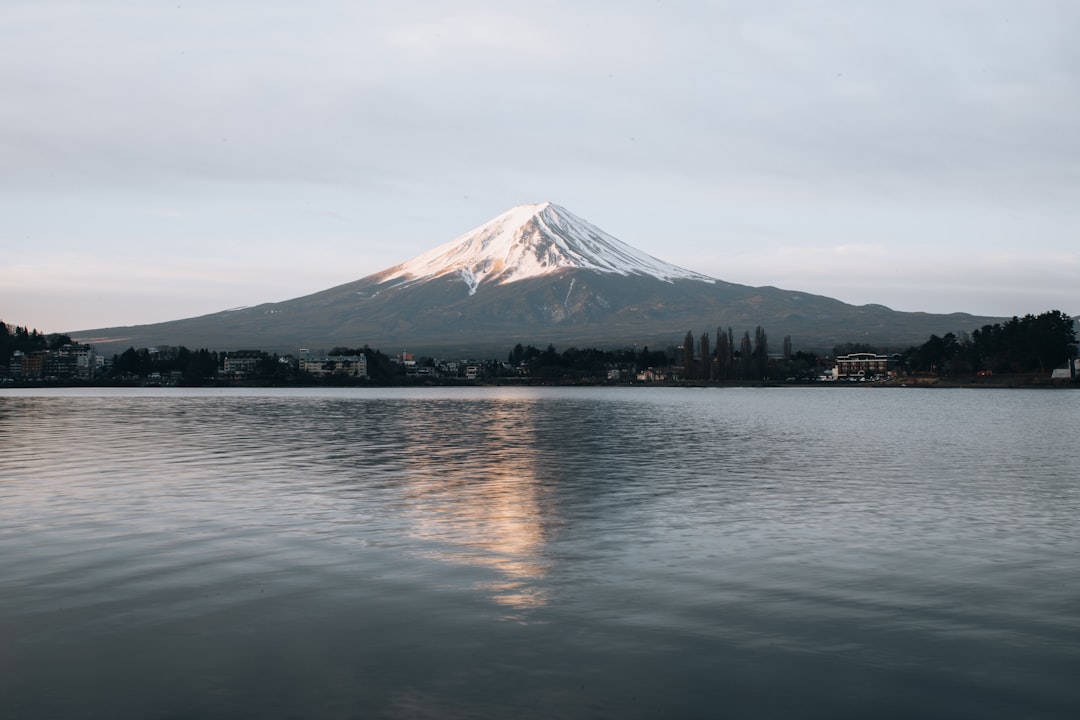
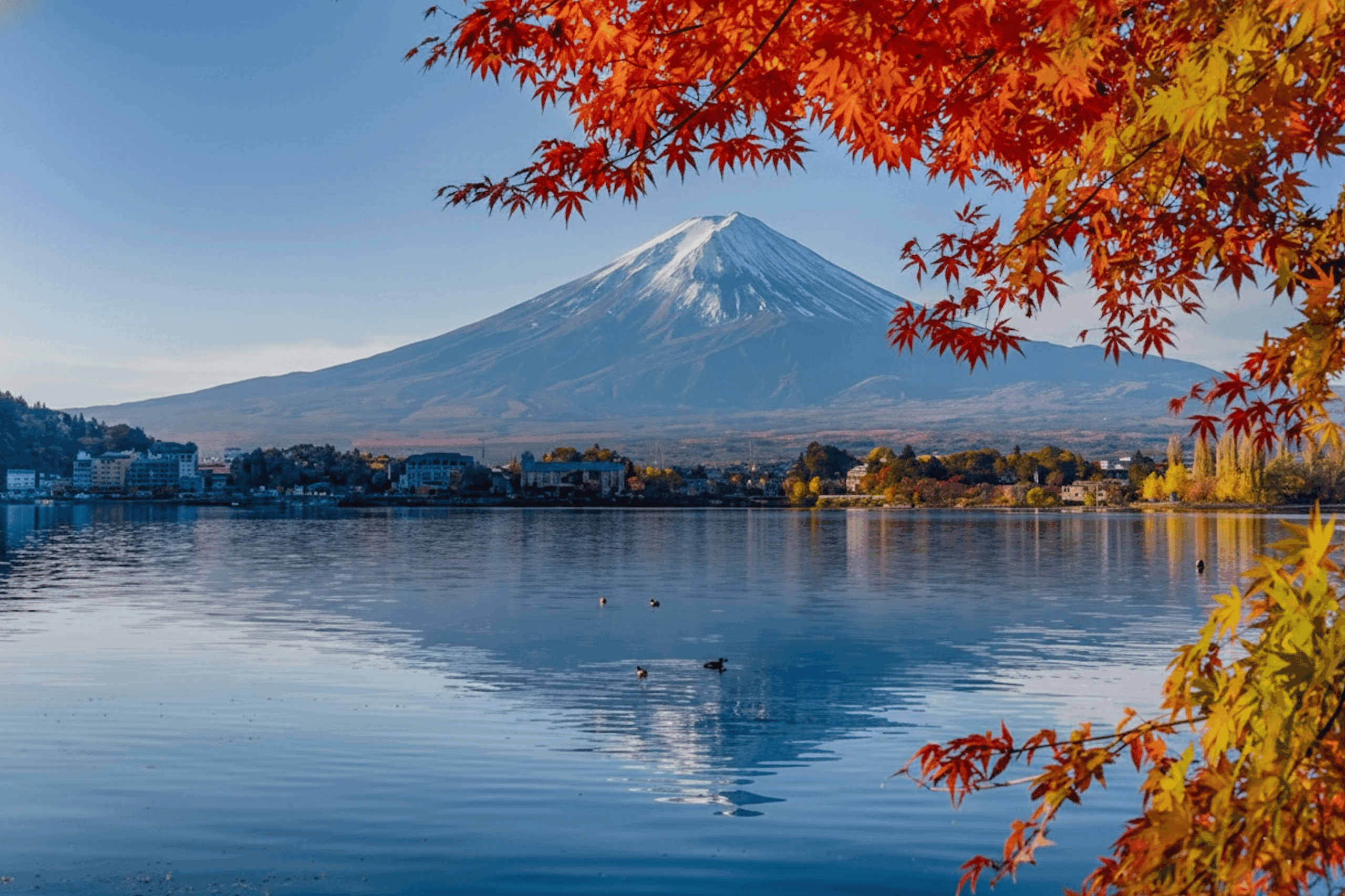
Go straight to the lakeshore. Lake Kawaguchi gives you the version of Fuji most people carry in their heads: the cone across flat water, sometimes doubled in reflection when the wind has not yet risen. The north shore generally has the more open view. Arrive, walk, and take your photographs before doing anything else.
Midday: Oshino Hakkai and Lunch
By late morning, move to Oshino Hakkai, a small village built around ponds fed by Fuji’s snowmelt. The water has filtered through volcanic rock for years before surfacing here, and it is startlingly clear — you can count the stones on the bottom of pools several metres deep.
It is also the natural place for lunch. Stalls and small restaurants sell snacks and simple lunches, though the village is heavily visited and the lanes narrow quickly around midday. That said, the ponds are worth the crowd. Stay long enough to see why pilgrims stopped here for centuries on their way to the mountain.
Afternoon: Arakurayama, 398 Steps, and the Convenience Store View
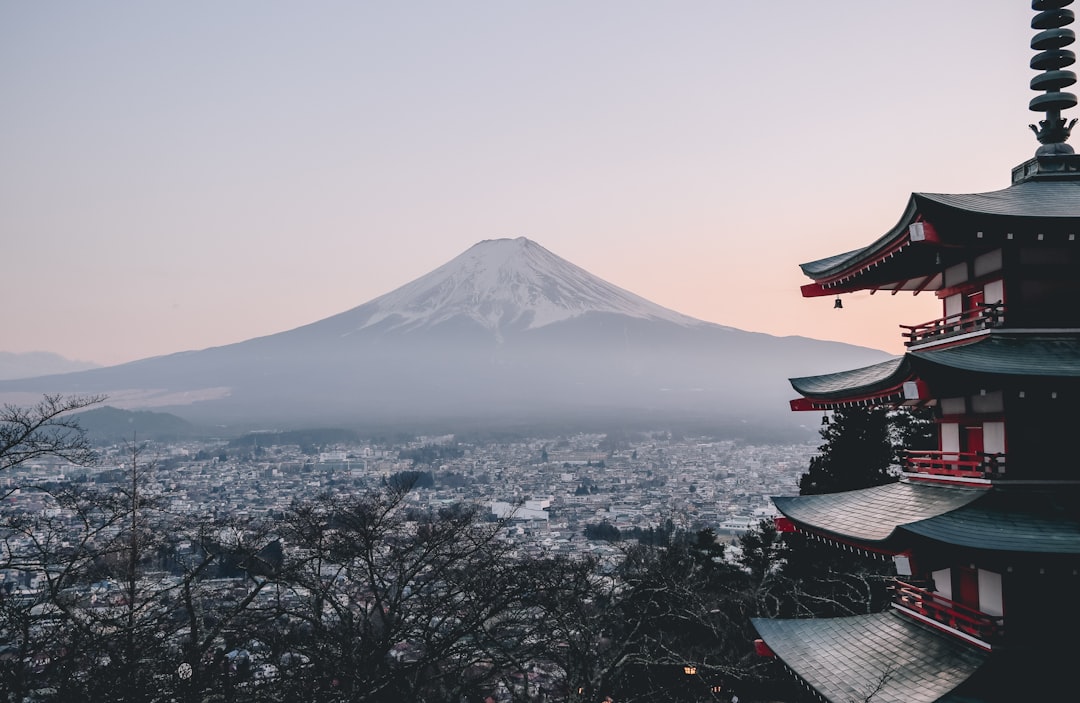
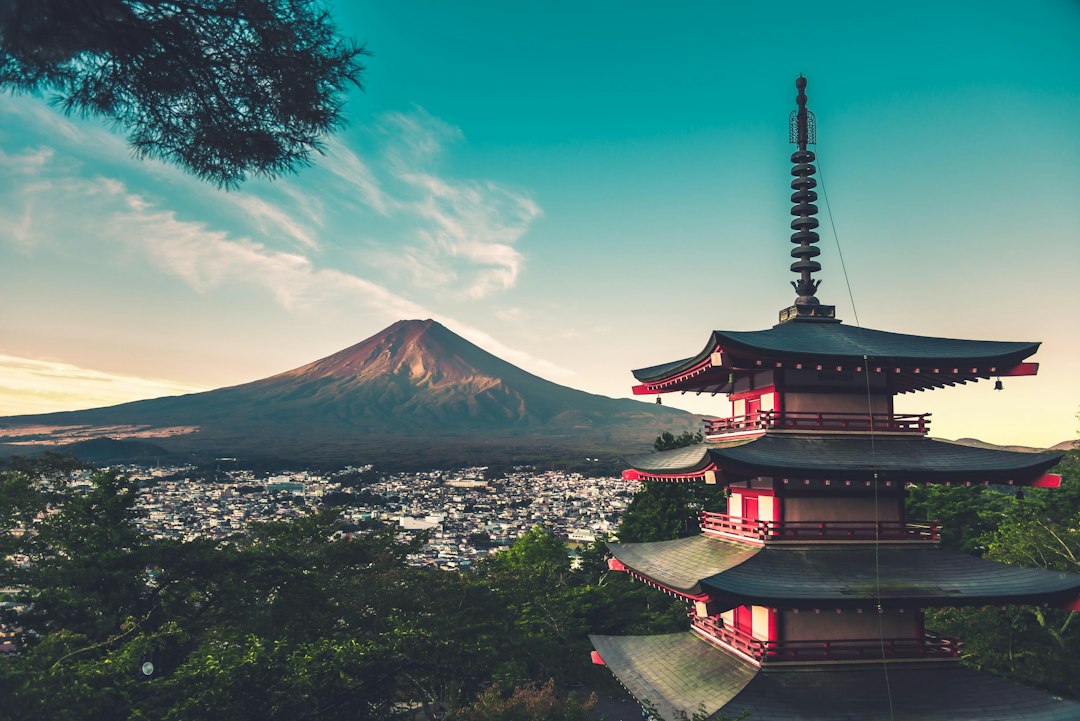
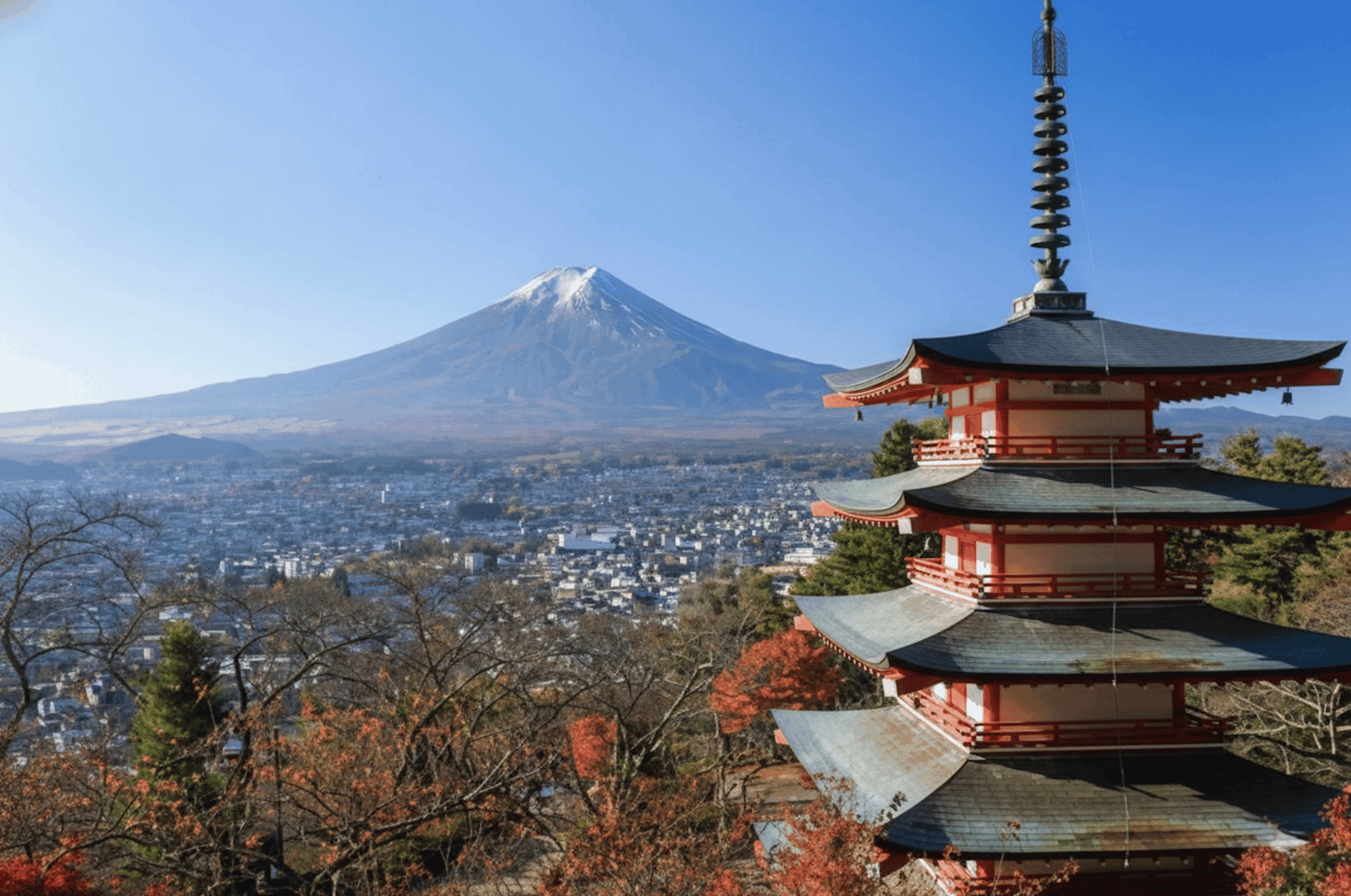
Arakurayama Sengen Park is where the five-storey Chureito Pagoda sits against Fuji, one of the most reproduced images of Japan. Reaching the viewing platform means climbing 398 steps. It is not a technical climb, but it is steady, and on a warm afternoon it is real work. Anyone who would rather not can wait at the bottom, and on our tours several guests usually do.
Spring is the hardest season here. Fujiyoshida City cancelled its cherry blossom festival at the park for 2026, citing the strain that crowds placed on residents, and managed visitor flow during the peak weeks instead. If you are visiting in early April, expect guides and marshals and plan for queues.
The last stop on most Kawaguchiko days is the Lawson convenience store where an ordinary blue-and-white shopfront sits against the mountain. It became famous for the contrast rather than for any history. A low barrier now keeps people off the road opposite, and we ask travelers to take the photograph from the pavement and move on. Residents live here.
Getting There and Back in One Day
Transport decides how much of your day is actually spent at Fuji. We cover every route in detail in our comparison of trains, buses, and routes from Tokyo to Mt Fuji, so here we focus on how each option shapes a single day.
By Train: The Fuji Excursion From Shinjuku
The Fuji Excursion limited express runs directly from Shinjuku to Kawaguchiko Station in about two hours, with no change of train. Services are few and seats sell out, particularly on weekends, so book as early as reservations open.
The train gets you to the lake, but not around it. Once at Kawaguchiko you rely on local buses and taxis to reach Oshino Hakkai and Arakurayama, and each connection costs time. In practice, independent travelers manage two or three stops comfortably. Four becomes a scramble.
By Highway Bus or Group Coach Tour
Highway buses from Shinjuku are the cheapest way to reach Kawaguchiko, and they are straightforward. Traffic is the variable. The return journey on a Sunday afternoon can run well over schedule.
A group coach tour removes the connection problem entirely. Our Kawaguchiko coach day covers the lakeshore, Oshino Hakkai, Arakurayama, and the Kawaguchiko convenience store view in one loop, returning to Tokyo in the early evening. Our Hakone coach day does the same for the ropeway, Owakudani, Hakone Shrine, and Lake Ashi, with the ropeway (2,000 yen) and the boat (1,700 yen) paid separately on the day in cash if you want them.
The limitation of any coach is the schedule. You stay as long as the itinerary allows, not as long as the light is good.
By Private Van: When It Makes Sense
A private van and driver changes the day more than any other option. The drive is around two and a half hours each way, so you still spend roughly five hours on the road. What you gain is control over the other hours. If cloud sits on the northern lakes, you move to another angle. If the light is good at the pagoda, you stay.
For one or two travelers, a coach is the more economical choice. For a group of three or more, the gap narrows considerably, and pick-up from your hotel removes the early walk to Shinjuku. We think a private day is the right answer for families, for photographers, and for anyone who wants to combine the lakes with Hakone without rushing both.
Expert Tip
Whatever transport you choose, carry cash. Lunch stalls at Oshino Hakkai, the Hakone ropeway and boat, and many small entry fees around the lakes are simplest to pay in yen, and not every counter takes cards. Withdraw what you need in Tokyo the night before, not on the way to the meeting point.
Weather, Seasons, and the Cloud Problem
Fuji is hidden by cloud far more often than first-time visitors expect. No operator can promise a view, and anyone who does is not being straight with you.
When the Mountain Is Most Likely to Show
The colder months, roughly late October through February, generally give the clearest air and the sharpest outline, with snow on the upper slopes. Summer is the hardest season. Humidity and haze often reduce the mountain to a faint shape, or erase it altogether, even on days that feel bright in Tokyo.
Time of day matters as much as season. Mornings tend to be clearer than afternoons, and cloud often builds around the summit as the day warms. This is the practical reason for leaving early, and it is why we put the lakeshore first in almost every itinerary we plan.
Spring and autumn sit in between. Late November, when the maples around Kawaguchiko turn, is our favourite window: cool mornings, a good chance of clear sky, and colour at the water’s edge.
What to Do When Fuji Stays Hidden
Check the forecast and live camera views the evening before and again at breakfast. If the Fuji area is under solid cloud, you have two sensible choices: postpone if your schedule allows, or switch to Hakone, where the day stands on its own.
If you are already committed, the day still has substance. Oshino Hakkai’s ponds, the cedar forest around Hakone Shrine, and the steam at Owakudani do not depend on the summit. Our guides tell guests honestly in the morning what the odds look like, and in our experience that expectation-setting matters more to how the day feels than the weather itself.
Build a spare day into your Tokyo plans if Fuji is a priority. Keeping one day loose and choosing it the night before is the single most effective thing you can do.
Mt Fuji Day Trip: Frequently Asked Questions
Is a Mt Fuji day trip from Tokyo worth it, or should I stay overnight?
A day trip is worth it if you choose one area and leave early. You will see the main viewpoints and be back in Tokyo by early evening. An overnight stay at Kawaguchiko or in Hakone gives you a second morning, which doubles your chance of a clear view and lets you see the mountain at dawn without a 7am departure from Shinjuku. If Fuji is the reason for your trip, we would stay a night.
Can I see both Kawaguchiko and Hakone in one day?
Technically, yes. Realistically, it means a long day with limited time at each stop, because the two areas are on opposite sides of the mountain. A private van makes it workable, since there are no timetables to wait on. On public transport or a coach, we recommend picking one.
Can I climb Mt Fuji as a day trip?
Not in any way we would recommend. The official climbing season runs through the summer months, and most climbers stay overnight in a mountain hut and reach the summit for sunrise. Attempting the climb and descent in a single push from Tokyo is exhausting and carries a real risk of altitude sickness. For a day trip, the Fifth Station is as high as you should plan to go.
Related Tours
Conclusion
Decide on one side of the mountain, then protect the morning. Those two choices account for most of the difference between a day spent at Fuji and a day spent in traffic within sight of it.
If your dates are fixed, pick Kawaguchiko for a clear forecast and Hakone for a doubtful one, and leave Tokyo as early as you reasonably can. If your dates are flexible, keep one day in your Tokyo week unassigned and make the call the night before. The mountain does not reward persistence. It rewards timing.
Plan Your Japan Trip with Local Experts
Our team has guided 40,000+ travelers across Japan. Tell us about your trip and we’ll get back to you within 24 hours.




