In this article:
- What Saba Sushi Actually Is
- Kyoto’s Bo-zushi and the Mackerel Road
- Saba in Tokyo: The Counter and the Market
- Eating Saba Sushi Well: Season, Safety, and Takeaway
- Saba Sushi: Frequently Asked Questions
Introduction
Saba sushi is the piece most visitors skip, and in our experience it is the one they end up talking about afterwards.
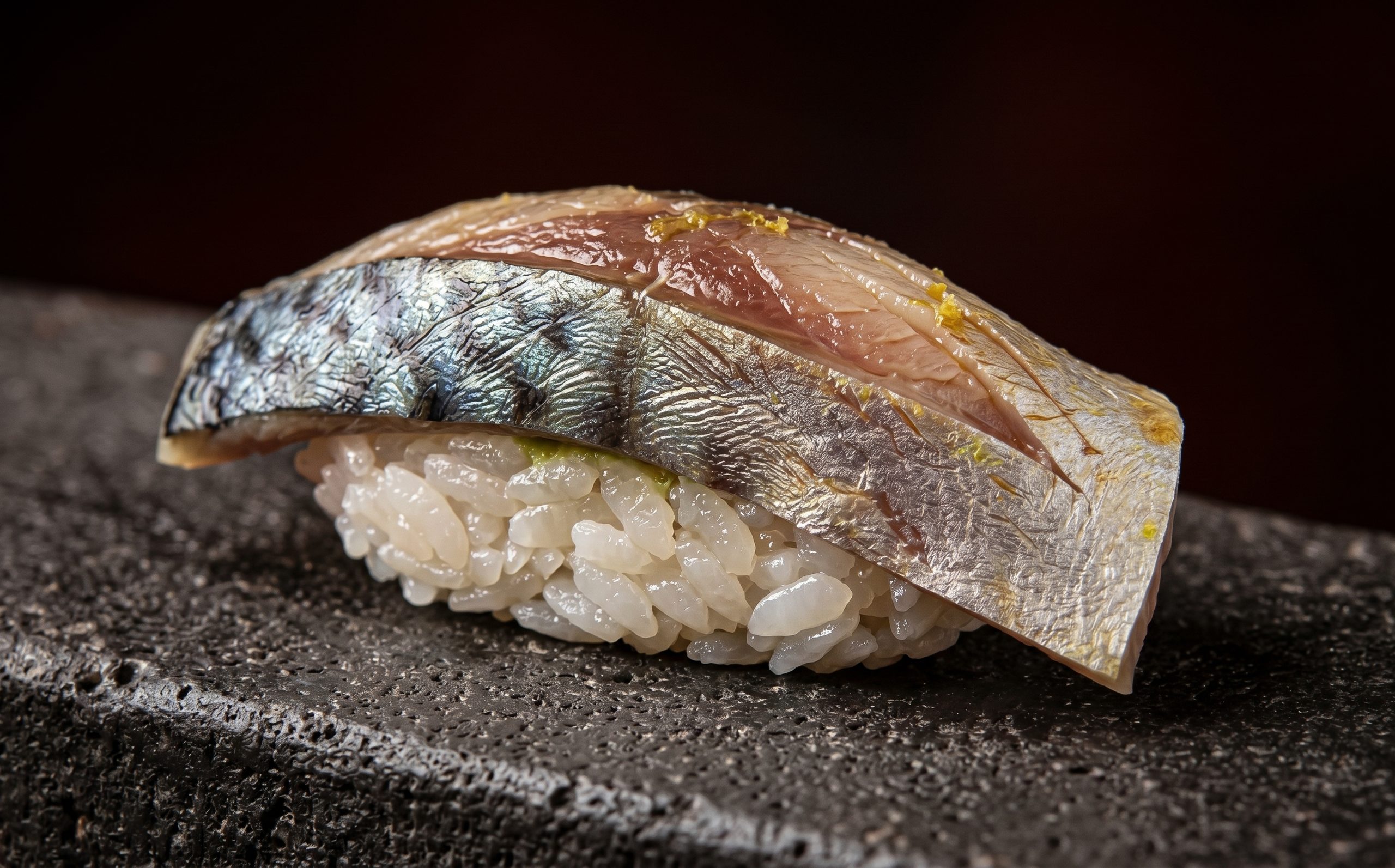
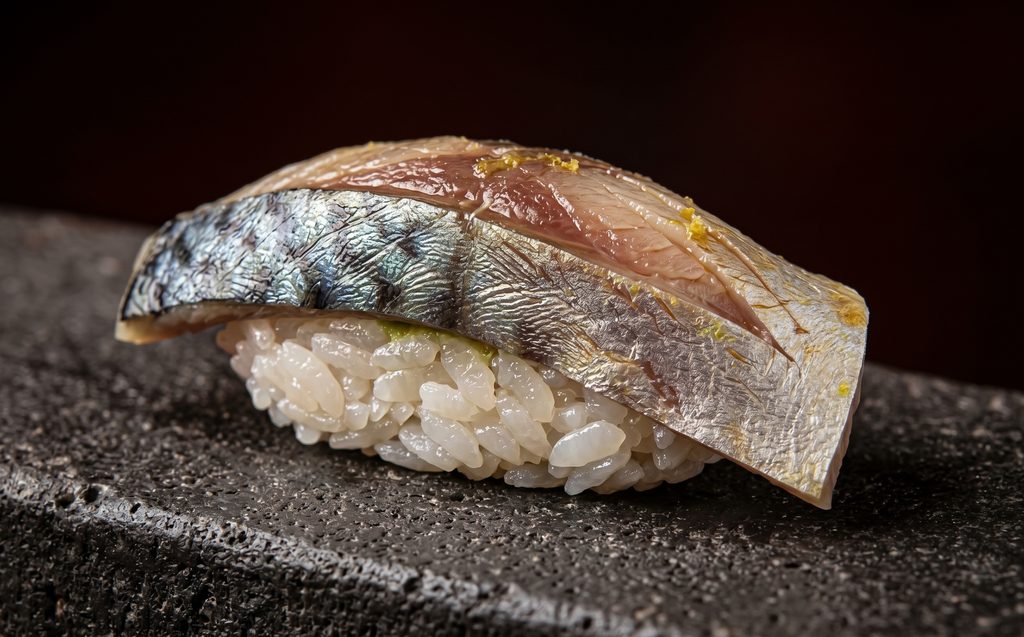
Mackerel does not photograph as well as tuna. Its skin is silver and blue, the flesh is pale and slightly opaque from the cure, and the flavour is assertive: rich, oily, sharpened by vinegar. That said, when a traveler on one of our food walks finally tries a properly made slice, the reaction is usually the same. They had assumed it would taste fishy. Instead it tastes clean, sweet at the edges, and more complex than the raw fish they ordered first.
There is also a story attached that no other sushi can match. Kyoto sits in a basin surrounded by mountains, far from the sea, and yet it is the city most closely associated with mackerel sushi in Japan. The reason is a network of old trade roads, a lot of salt, and several centuries of practice. Understanding that history changes how the fish tastes — and it connects directly to the markets in Tokyo and Kyoto where we spend much of our time.
What Saba Sushi Actually Is
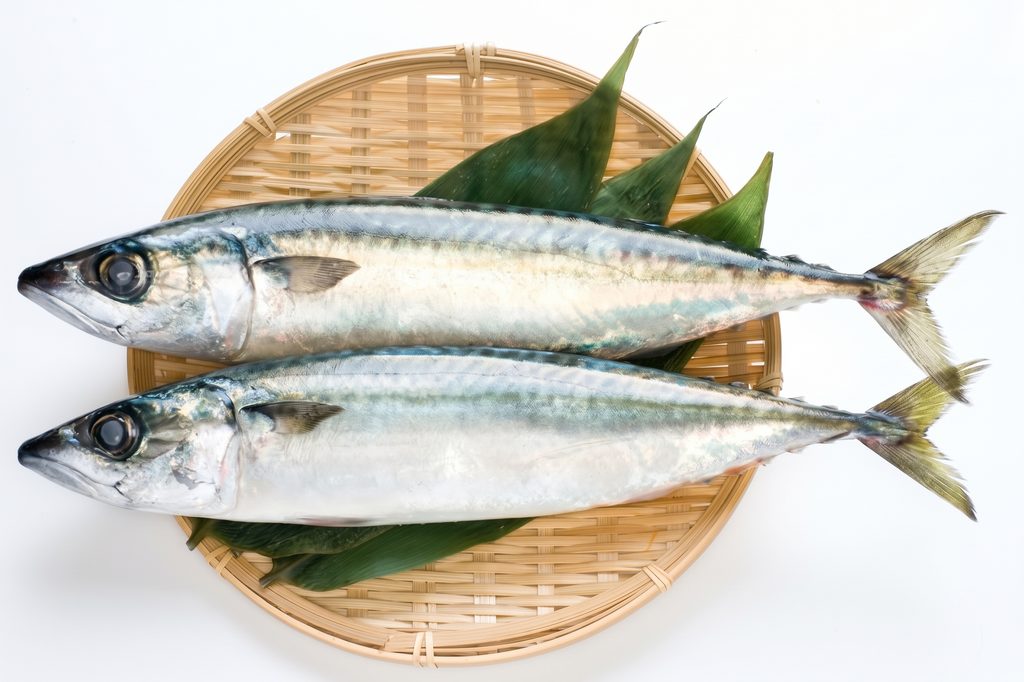
Saba is the Japanese word for mackerel, and saba sushi is any sushi made with it. Almost always, the fish has been cured first.
Shime Saba: The Cure Behind Every Version
The standard preparation is called shime saba. A fillet is packed in salt, which draws out moisture and firms the flesh, then rinsed and soaked in rice vinegar. The result is a fish that is neither raw nor cooked in the usual sense. The outer layer turns pale and slightly firm, while the centre stays soft and close to raw.
How long each stage lasts is a matter of house style. Some Tokyo sushi chefs cure lightly, so the centre of the fillet is still deep pink. Kyoto-style mackerel for pressed sushi is often cured more firmly, because it was designed to keep. Neither is correct. They are answers to different questions.
Four Forms You Will Meet
Nigiri is the simplest: a slice of cured mackerel over a hand-formed mound of rice, usually with a little grated ginger or chopped scallion on top instead of wasabi alone.
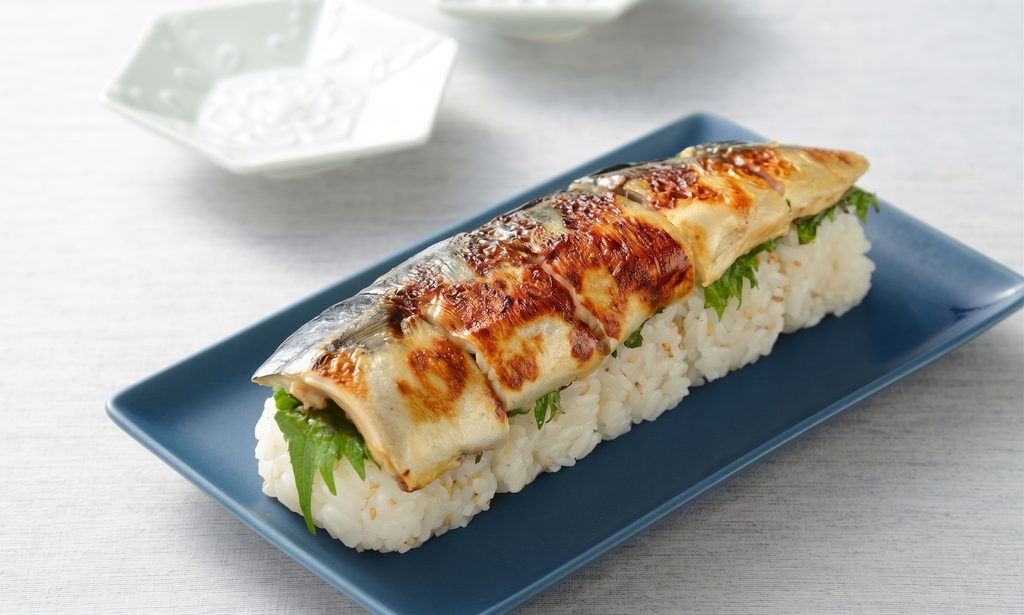
Bo-zushi is the Kyoto form. A whole cured fillet is laid along a long bar of rice, wrapped tightly — traditionally in kombu and a sheath of bamboo — and left to rest before being cut into thick slices. Sugata-zushi keeps the head and tail on, so the fish is presented in its whole shape; Japan’s agriculture ministry lists it alongside bo-zushi and nigiri as a regional form in western Japan.
Battera is Osaka’s version, pressed in a rectangular wooden box and topped with a paper-thin sheet of kombu. We cover it separately below, because it is the one most often confused with the others.
Battera: Osaka’s Boxed Cousin
Battera was created in Osaka in the late nineteenth century. The name comes from the Portuguese word for a small boat, which is what the original topping looked like. That original fish was not mackerel at all but gizzard shad, then plentiful in Osaka Bay. When the shad became expensive, mackerel took its place, and it has stayed there.
The practical difference is shape and thickness. Battera is flat, neat, and machine-cut into small rectangles, with thinner fish and a translucent layer of kombu on top. Bo-zushi is taller and heavier, with a thick fillet that dominates the rice. We prefer bo-zushi for a first taste, because it shows what the fish is actually like. Battera is the better choice for a train journey, since it is lighter and easier to eat from a box on your lap.
Why Mackerel Tastes the Way It Does
Mackerel is an oily fish, and oil carries flavour. Raw, it is soft and can turn quickly, which is why a cure was developed in the first place. The vinegar tightens the texture and cuts the richness, so the fat reads as sweetness rather than weight.
In practice, this makes saba one of the most rewarding things to order once you have tried the obvious pieces. It has a clear identity. You will know exactly which slice was mackerel.
Kyoto’s Bo-zushi and the Mackerel Road
Kyoto is roughly as far from the sea as a major Japanese city can be, and it built a sushi tradition around a sea fish anyway.
From Wakasa Bay to the Capital
The fish came from Wakasa, the old province around Wakasa Bay on the Sea of Japan coast, in what is now Fukui Prefecture. From around the eighth century, a network of mountain routes carried mackerel and other seafood from the port of Obama south to the capital. Collectively they are known as the Saba Kaido, the Mackerel Road. It was never a single road — there were several, and the oldest and steepest reportedly took about two days on foot.
Fresh mackerel would not survive that walk. Salted mackerel would, and the salt had time to work on the way. By the time it reached Kyoto it was well seasoned and ready for vinegar and rice. The Wakasa area and its Mackerel Road heritage are now recognised under Japan’s national Japan Heritage program.
We find this the most useful single fact for anyone eating their way through Kyoto. The city’s food is shaped by distance. Pickles, dried goods, preserved fish, tofu — so much of what fills Nishiki Market exists because fresh ingredients were hard to get. Bo-zushi is the clearest example of that logic on a plate.
Izuu and the Gion Tradition
The name most closely tied to Kyoto mackerel sushi is Izuu, in Gion, founded in 1781. It began by delivering sushi to the teahouses and restaurants around it and only later added seats for dining in. The whole-mackerel sushi it still makes is the reference point for the style.
Kyoto families have long associated sabazushi with festivals and celebrations, which is part of why it feels less like restaurant food and more like something from a household table. You will find it in many forms across the city, from long-established specialists to department store food halls.
Our view is that one sitting with the real thing is worth more than several casual slices elsewhere. Order it on its own, not as part of a mixed platter, and eat it slowly. The rice matters as much as the fish here.
Along the Road: Heshiko and Grilled Mackerel
The coast at the other end of the road has its own mackerel traditions, and they are worth knowing about even if you never go to Fukui. Heshiko is mackerel pickled in rice bran for months, intensely salty and savoury, usually eaten in thin slices with sake or over rice. Yaki-saba sushi uses grilled mackerel with shiso and ginger instead of a vinegar cure.
Both show the same instinct as Kyoto’s bo-zushi. Preserve the fish, then make it delicious.
Expert Tip
If you are spending a day in central Kyoto, walk the Kiyamachi and Pontocho area in daylight and then head into Nishiki Market. That short route runs from the old canal district into the covered arcade where the city has bought its food for centuries, and it gives the mackerel story a physical shape: this is a town that learned to eat well a long way from the sea.
Saba in Tokyo: The Counter and the Market
Tokyo treats mackerel differently. Here it is not a special-occasion bar of pressed sushi but one piece in the rhythm of a meal at the counter.
Hikarimono: The Shiny Fish
At an Edomae sushi counter, saba belongs to a group called hikarimono, the silver-skinned fish. Gizzard shad, horse mackerel, and sardine sit in the same family. These are the pieces where a chef’s curing work shows most clearly, and many sushi lovers judge a counter by them rather than by its tuna.
A chef will usually cure mackerel in-house and slice it to order. The skin is sometimes scored so it bites cleanly. If you are working through an omakase meal in Tokyo, the mackerel tends to appear in the middle of the sequence. It is a good moment to ask the chef how long they cured it — most are happy to explain, and the answer tells you a lot about their style.
Around the Tsukiji Outer Market
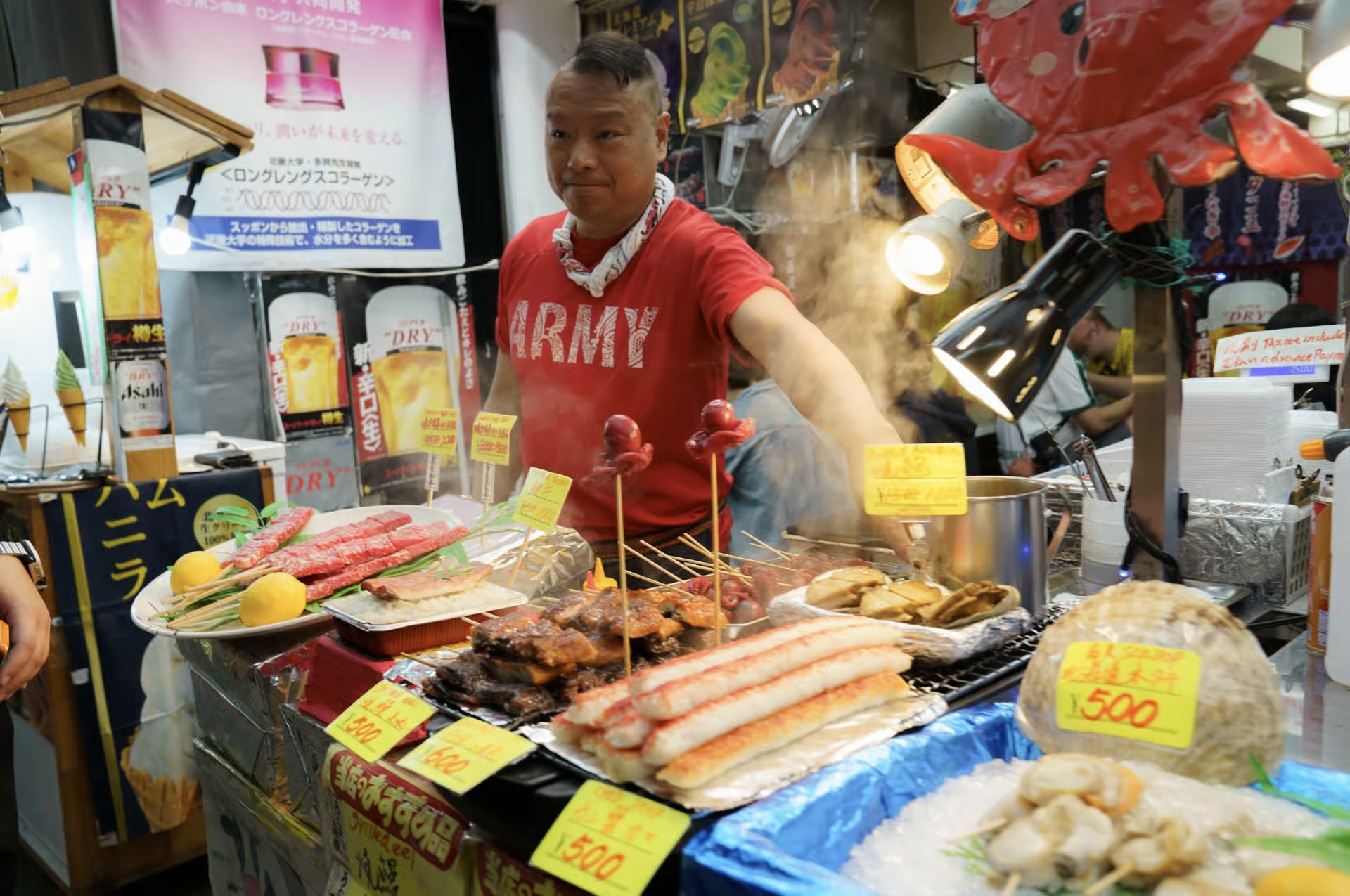
The wholesale market moved to Toyosu, but the outer market at Tsukiji stayed, and it remains where a good part of Tokyo’s restaurant trade shops for knives, dried fish, and seafood. Walking it, you see the supply side of the same culture. Stalls sell cured and dried fish by the piece, small counters serve sushi to whoever turns up, and the neighbourhood’s shops still cater to working cooks.
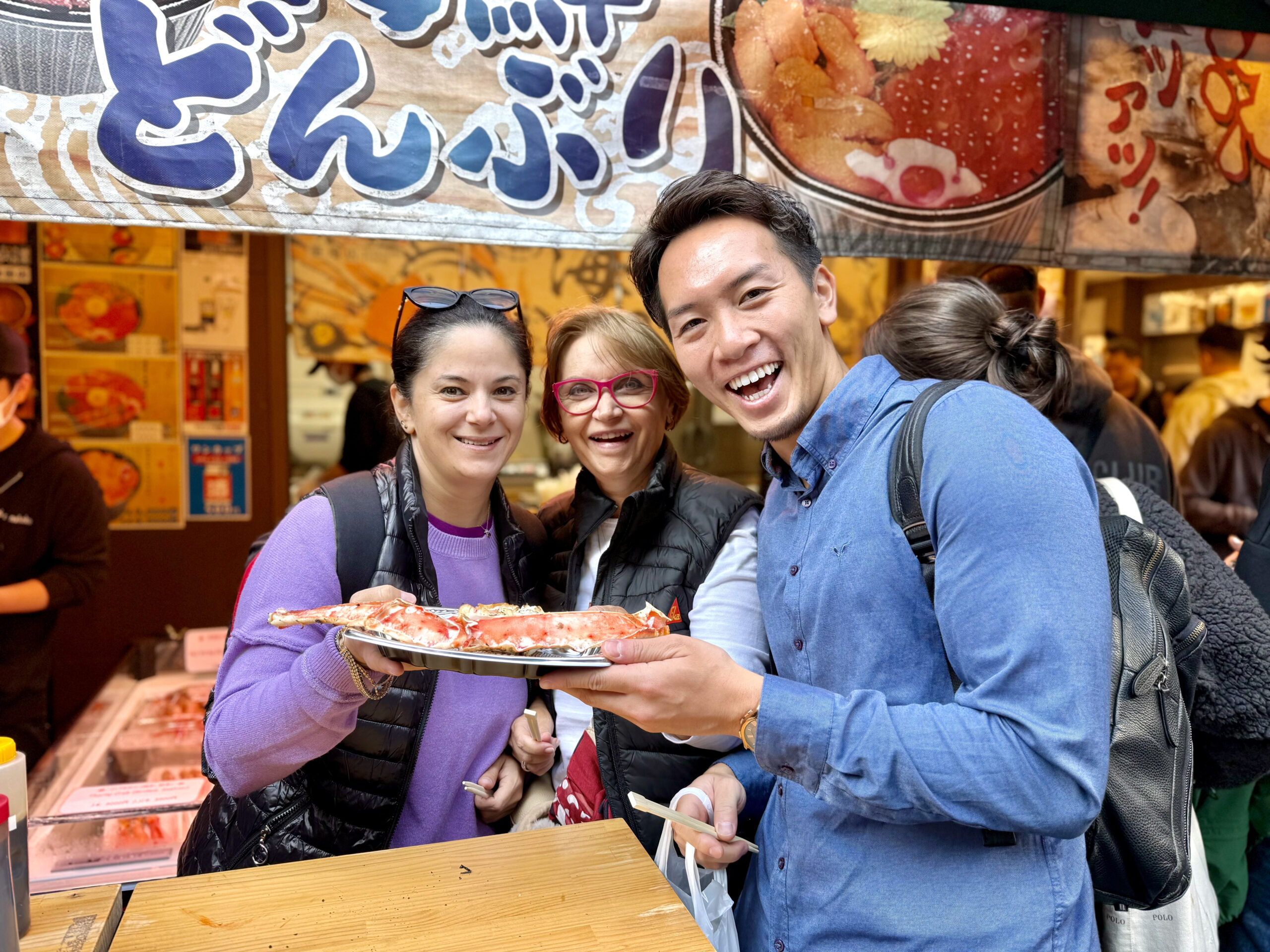
On our Tsukiji food tour we start at Tsukiji Hongwanji, the Indian-style temple at the edge of the market, and then walk the outer market lanes for about two hours, eating standing up at the counters the guide chooses that day. Mackerel is not guaranteed on any particular morning. What you will get is a clear sense of why Tokyo’s sushi culture treats fish as something prepared rather than just served. Our guide to what to eat at Tsukiji Outer Market covers the stalls in more detail.
Bring cash. Most stalls do not take cards, and the queues move faster when you have coins ready.
Eating Saba Sushi Well: Season, Safety, and Takeaway
A few practical points make the difference between a forgettable piece of mackerel and a memorable one.
The Colder Months Are Best
Mackerel puts on fat as the water cools. Japanese chub mackerel is generally considered at its richest from late autumn through winter, and that is when saba sushi is at its most rounded. Summer mackerel is leaner and can taste sharper under the vinegar.
Still, the cure evens out a lot of seasonal variation, and good shops make bo-zushi all year. If you are in Kyoto in November or December, though, this is the time to order it.
Anisakis and Why Curing Is Not Freezing
Mackerel is one of the fish most associated with anisakis, a parasite that can cause sharp stomach pain if swallowed alive. Japanese health authorities are clear that vinegar, salt, soy sauce, and wasabi do not kill it. Freezing does: Japan’s health ministry advises holding fish at minus 20°C for at least 24 hours, and cooking works too.
In practice, reputable restaurants and sushi specialists in Japan handle mackerel with this in mind, through careful inspection, freezing, or both. The risk sits mainly with home-cured fish and very casual outlets. We would not let this stop you ordering saba at a serious counter, but it is a good reason not to cure raw mackerel yourself after a market visit unless you know how to freeze it properly.
Buying Bo-zushi to Take Away
Kyoto-style bo-zushi was made to travel, and buying a bar to eat later is entirely normal. Specialists and department store food halls sell it wrapped, often in a box you can carry on the train.
Ask the shop how long it keeps and how to store it. The rice in pressed sushi hardens in a cold refrigerator, so it is usually best eaten the same day or soon after. We like to buy one in the morning and eat it on the Shinkansen back to Tokyo — the lightly cured fish, the pressed rice, and the view out of the window make a better lunch than anything from the station kiosks.
Saba Sushi: Frequently Asked Questions
Is saba sushi raw?
Not exactly. The mackerel is cured in salt and then vinegar, which firms the outside and changes the texture, but it is not cooked with heat. The centre of a lightly cured fillet is still close to raw. If you are avoiding raw fish entirely, treat saba sushi as raw.
What is the difference between saba sushi and battera?
Battera is one type of saba sushi. It is the Osaka style, pressed flat in a wooden box and topped with a thin sheet of kombu. Kyoto’s bo-zushi uses a thicker fillet shaped into a long bar, and nigiri is a single slice on hand-formed rice. All three usually use cured mackerel.
Where is the best place to try saba sushi in Kyoto?
For the classic whole-mackerel style, Izuu in Gion, founded in 1781, is the traditional reference. Department store food halls around central Kyoto are a convenient second option if you want a boxed bar for later. We suggest trying it after a walk through Nishiki Market, when the city’s preserved-food logic is fresh in your mind.
Related Tours

Conclusion
Saba sushi rewards a little context more than almost any other piece of sushi. Once you know that the salt was a way to carry fish over the mountains, that battera started life as a different fish in Osaka Bay, and that a Tokyo chef’s cure is a signature, the silver slice on your plate stops being the one to skip.
Order it twice if you can. Try a thick slice of bo-zushi in Kyoto, ideally in the colder months, and a lightly cured nigiri at a Tokyo counter. The contrast between them says more about how Japan’s two great food cities think than any guidebook can.
Plan Your Japan Trip with Local Experts
Our team has guided 40,000+ travelers across Japan. Tell us about your trip and we’ll get back to you within 24 hours.