In this article:
- Senso-ji and the Approach to It
- The Streets Around the Temple
- The River Side of Asakusa
- When to Go and How to Pace the Day
- Things to Do in Asakusa: Frequently Asked Questions
Introduction
Most lists of things to do in Asakusa start and end at the same red lantern. Stand outside the Starbucks at Kaminarimon on any weekday at eleven and you will watch the pattern repeat: a group arrives, photographs the gate, walks the length of Nakamise, looks at the main hall from the steps, and is back on the subway within the hour.
That is a reasonable visit to a landmark. It is not a visit to Asakusa. The neighbourhood is Tokyo’s oldest temple town, and most of what makes it interesting sits a few metres to either side of the route everyone walks: the lanes behind the souvenir stalls, the izakaya streets to the west, the river to the east, and the temple itself after the crowds have gone.
We run walking and food tours here most days of the week, and the same starting point, that Starbucks by the lantern. What follows is what we would tell a friend with a free day in Asakusa, in roughly the order we would suggest doing it.
Senso-ji and the Approach to It
Senso-ji is the reason Asakusa exists. According to the temple’s own history, two fishermen brothers pulled a small statue of Kannon, the bodhisattva of compassion, out of the Sumida River in 628, and the temple grew up around it.
The current buildings are mostly post-war reconstructions, which disappoints some visitors. It should not. Senso-ji was never a museum. It is a working temple that has been rebuilt every time Tokyo burned, and the people lighting incense in front of the main hall at seven in the morning are there for the same reasons people were four hundred years ago.
Kaminarimon and Nakamise: Walking the Approach Properly
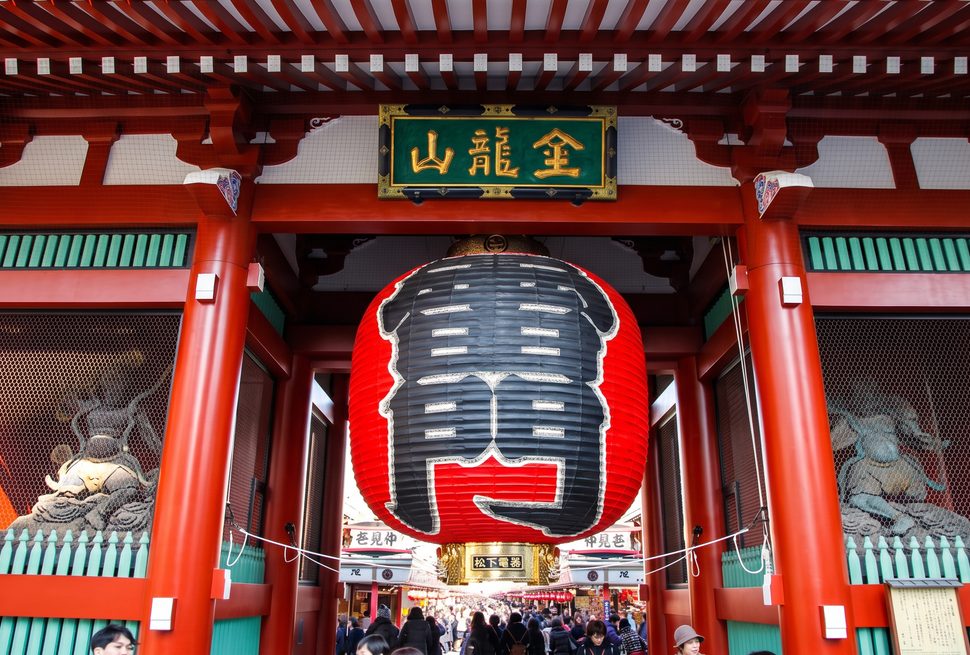
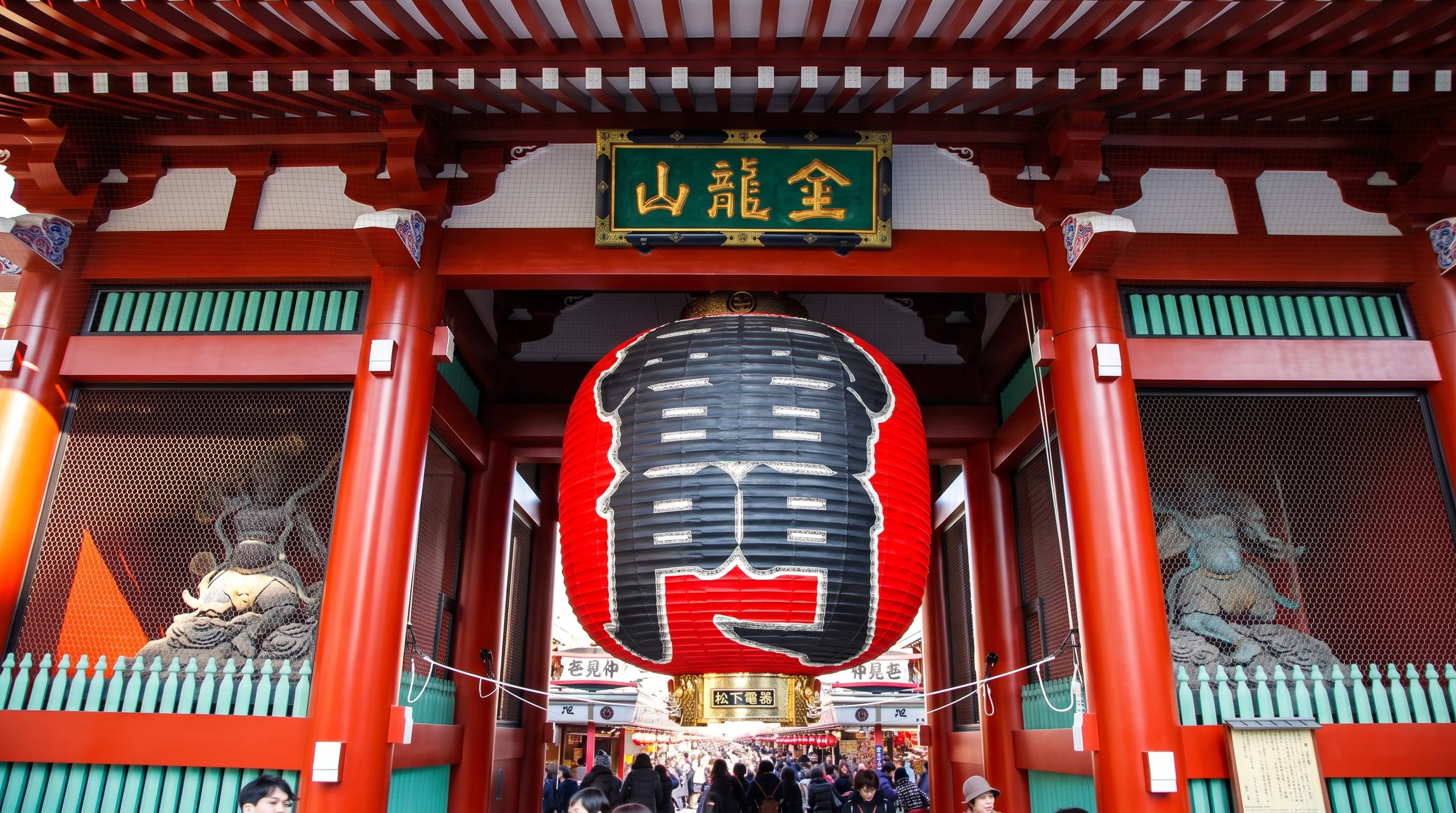
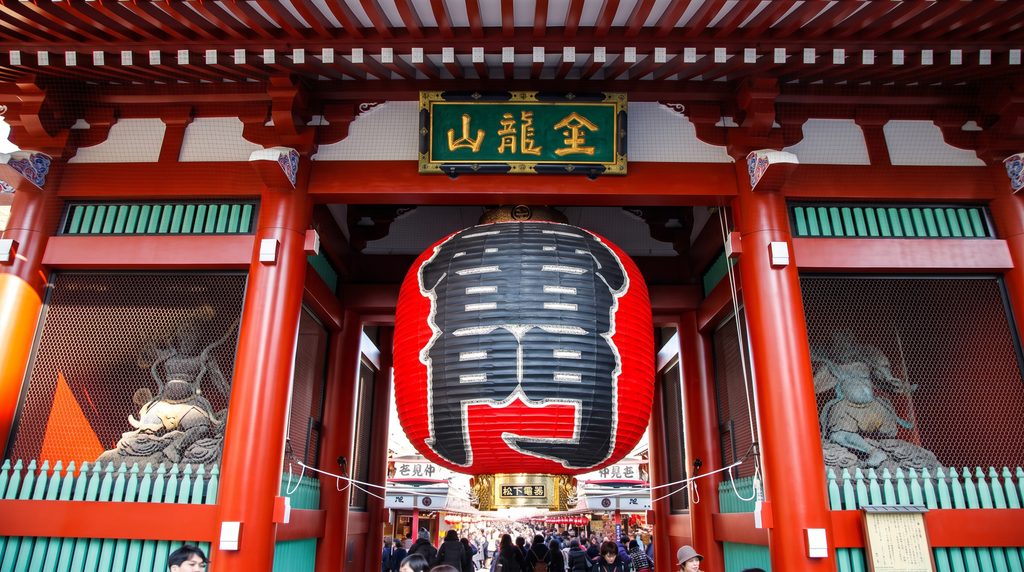
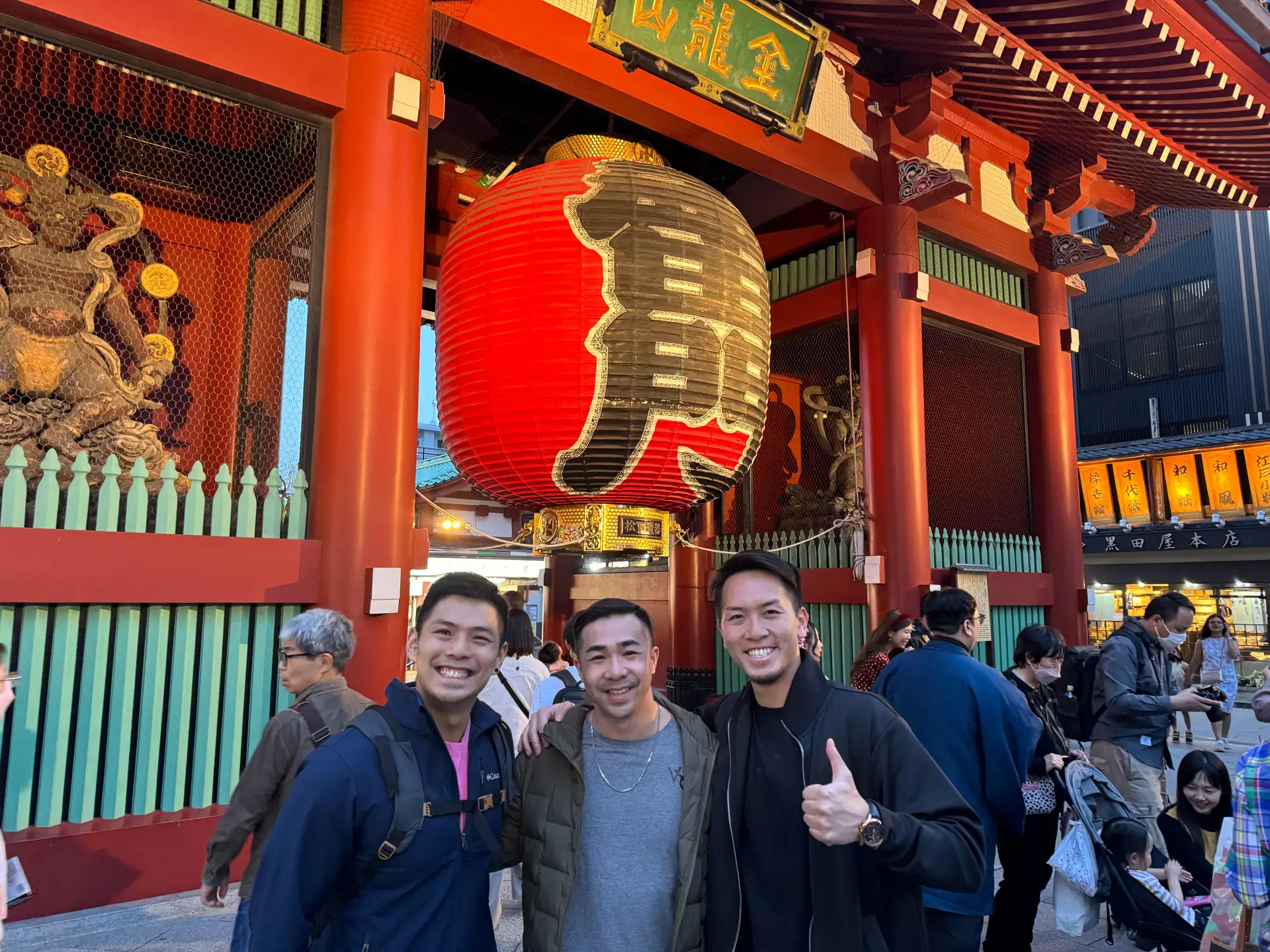
Kaminarimon, the Thunder Gate, is the outer entrance. The lantern is the photograph; the two guardian figures on either side, the gods of wind and thunder, are what the gate is named for, and very few people look at them.
Beyond it runs Nakamise, a shopping street of roughly two hundred and fifty metres that leads straight to the second gate. The stalls sell rice crackers, ningyo-yaki cakes, fans and hairpins, and some of the families running them have been here for generations. Our guide to Asakusa street food covers what is worth buying.
One point of manners here. Nakamise asks visitors not to eat while walking, and most stalls have a spot beside the counter where you can stand and finish what you bought. It is a small thing, and locals notice it.
The Incense Burner, the Water Basin, and the Main Hall
Pass through Hozomon, the second gate, and you reach the large bronze incense burner in front of the main hall. People waft the smoke toward themselves, traditionally toward whatever part of the body needs healing. Near it stands the water pavilion, where you rinse your hands and mouth before approaching.
At the main hall itself, drop a coin into the offering box, put your palms together, bow, and pray quietly. Do not clap. Clapping belongs at Shinto shrines, and the difference between the two is one of the most common confusions visitors bring to Japan; our piece on shrines versus temples explains why.
This is where our walking tour starts in earnest. Guests who have done the smoke and the water basin with someone showing them, rather than copying the person in front, tell us the rest of the walk reads differently. That short lesson carries over to every temple for the rest of the trip.
Senso-ji is also known for omikuji, paper fortunes drawn from a numbered box. Its fortunes have a reputation for being blunt, and a bad one is not something you keep: tie it to the rack provided and leave it at the temple.
Asakusa Shrine and the Five-Storied Pagoda
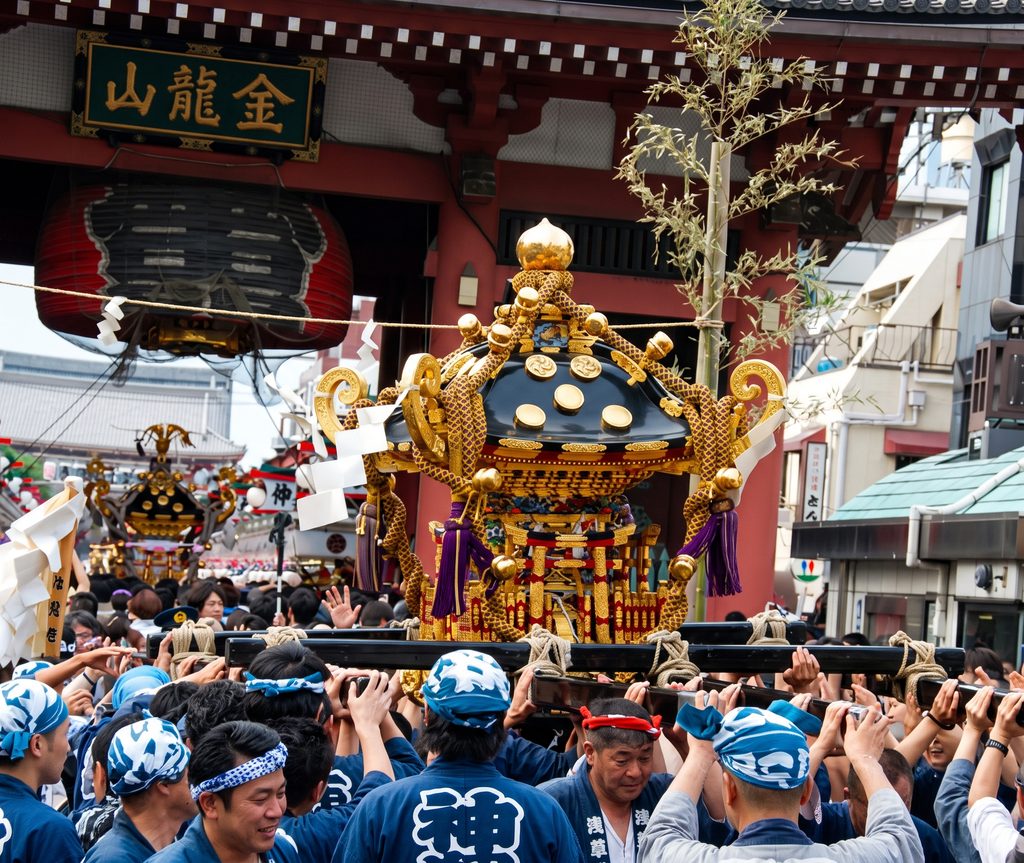
To the right of the main hall, and easily missed, is Asakusa Shrine. It dates from the Edo period and survived the 1945 air raids that destroyed most of the temple complex, which makes it one of the older structures you will see here. Its festival, Sanja Matsuri, is the loudest weekend in the Asakusa calendar.
The five-storied pagoda on the left side of the grounds was rebuilt in 1973. You cannot go inside, but the view of it from the garden side, with the main hall roof behind, is better than the view from the front.
Expert Tip
The temple grounds are open around the clock, but the main hall doors keep their own hours: 6:00 to 17:00 from April to September, and 6:30 to 17:00 from October to March. If you want to see inside the hall with prayers under way and almost nobody else present, arrive before eight.
The Streets Around the Temple
The best of Asakusa sits one street away from the main route. Nakamise is the front room; the lanes around it are where the neighbourhood lives.
Denboin-dori and the Lanes Behind Nakamise
Denboin-dori crosses Nakamise about two-thirds of the way up, and its shopfronts have been dressed to look like an Edo-period street. Turn left or right here rather than continuing straight, and the crowd thins almost at once.
Behind the stalls on both sides are narrow streets of family-run shops that sell to Asakusa rather than to visitors: tenugui cloth, brushes, wooden combs, tabi socks, sembei baked in the window. Prices are often lower than on Nakamise and the goods are made for use. In our experience, this is the half hour guests remember from a walk here, more than the gate.
Look up as well as along. Small shrines wedged between buildings, carvings above old doorways and the crests painted on shop curtains are the details our guides stop for most often, and they are invisible if you are walking at crowd pace.
Kappabashi: Kitchen Knives and Plastic Food
West of Senso-ji, Kappabashi is a street of restaurant supply shops running for close to a kilometre. This is where Tokyo’s chefs buy their knives, pots, lacquerware, noren curtains and the plastic food models that sit in restaurant windows.
For anyone who cooks, it is the most useful shopping in Asakusa. Knife shops here will engrave your name on a blade and explain how to care for it in English. Plan it for a weekday or Saturday: according to the shopping street’s own association, only about thirty percent of shops open on Sundays.
Hoppy Street and Old Entertainment Asakusa
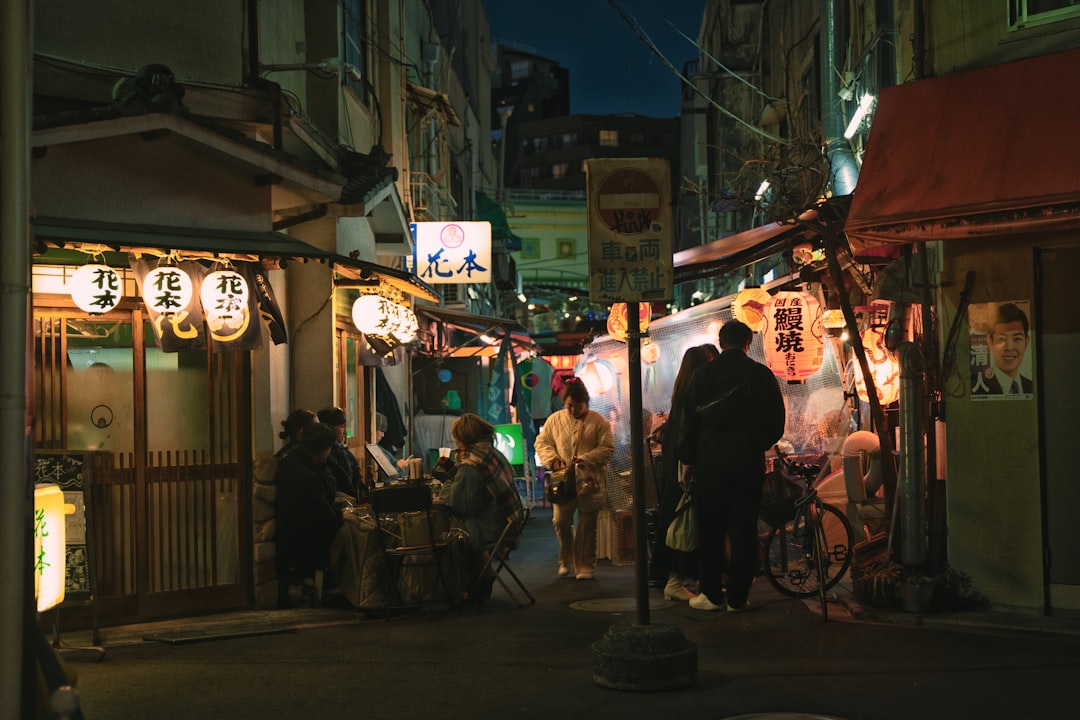
On the west side of the temple, Hoppy Street is a row of open-fronted izakaya where plastic stools spill onto the pavement and beef-tendon stew simmers from the afternoon. The name comes from Hoppy, a low-alcohol beer-flavoured drink mixed with shochu that has been poured here since the post-war years. If izakaya are new to you, read our guide to ordering at an izakaya first.
Nearby is the old entertainment quarter. Hanayashiki, a small amusement park that traces its origins to 1853, still runs a roller coaster from the 1950s past the backs of neighbouring houses. Asakusa Engei Hall stages rakugo, the seated art of comic storytelling, through the day. You will not follow the Japanese, but the rhythm of the room is worth half an hour.
The River Side of Asakusa
Walk five minutes east of Kaminarimon and you reach the Sumida River, which most temple visitors never see. The river is how the Kannon statue arrived, and for centuries it was how people arrived too.
Azumabashi Bridge and the View Toward Skytree
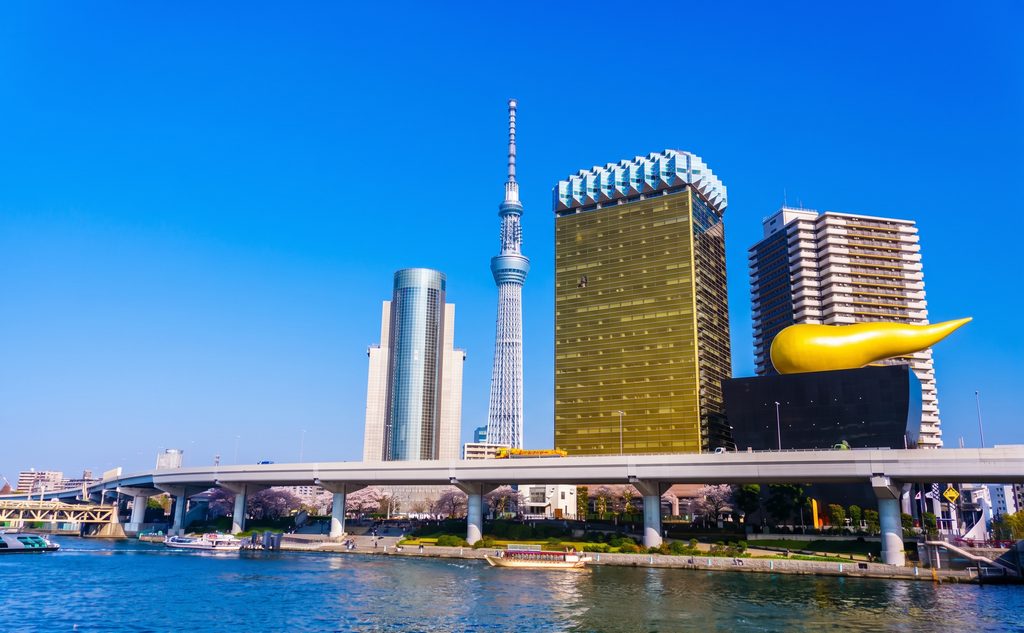
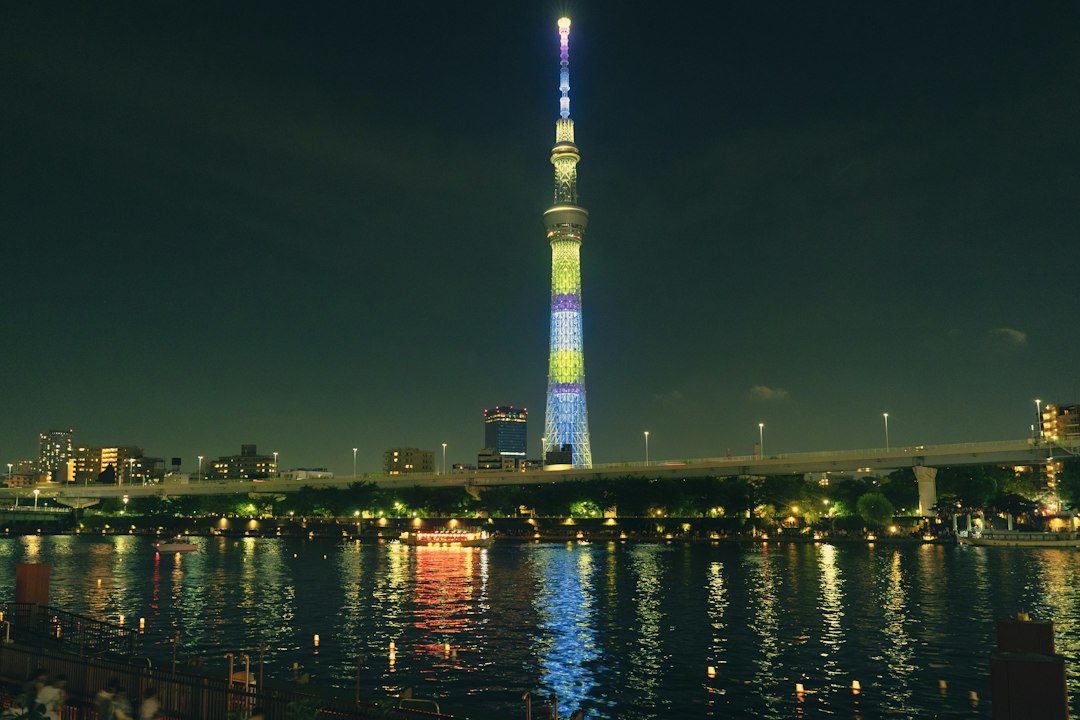
Azumabashi, the red bridge over the Sumida, gives the clearest view across the water to Tokyo Skytree and the Asahi Group headquarters with its gold sculpture by Philippe Starck. Late afternoon is the time, when the light comes from behind you.
If you plan to go up Skytree, it is a twenty-minute walk across the river or one stop on the train. Our Skytree guide covers the observation decks and tickets.
Sumida River Water Buses
Water buses leave from a pier near Azumabashi, a few minutes from Asakusa Station, and run down the river toward Hinode Pier and Odaiba. Some boats are the futuristic Hotaluna and Himiko models designed by the manga artist Leiji Matsumoto.
We suggest the boat as a way of leaving Asakusa rather than arriving. You pass under a string of bridges, see the city from water level, and step off in a different part of Tokyo without using the subway at all.
The Free Rooftop at the Culture Tourist Information Center
Opposite Kaminarimon stands the Asakusa Culture Tourist Information Center, the stacked timber building designed by Kengo Kuma. Its eighth-floor terrace is free and looks straight down the length of Nakamise to the main hall.
It is open until 22:00, later than the temple, which makes it the best free viewpoint in Asakusa after dark. Go up once in daylight to understand the layout, and again at night if you can.
Expert Tip
“Asakusa Station” is really several stations. The Ginza Line, the Toei Asakusa Line and the Tobu line all stop close to Kaminarimon, while the Tsukuba Express station sits several minutes further west on Kokusai-dori. If you are meeting someone, name the exit or the gate, not just the station.
When to Go and How to Pace the Day
Timing changes Asakusa more than any other part of Tokyo. Between roughly ten and four, the approach to Senso-ji is one of the most crowded streets in the city. Outside those hours it belongs to the people who live here.
Early Morning, Before the Shops Open
Before the Nakamise shutters go up, you see what the stalls hide: painted shutter art along the length of the street, and locals cutting through on their way to work, stopping for a short prayer at the main hall. It is the only time the temple feels its age.
Start at seven, walk the temple and the backstreets, and have breakfast when the cafes open. By the time the tour groups arrive, you can be crossing the river or heading to Kappabashi.
After Dark, When the Temple Empties
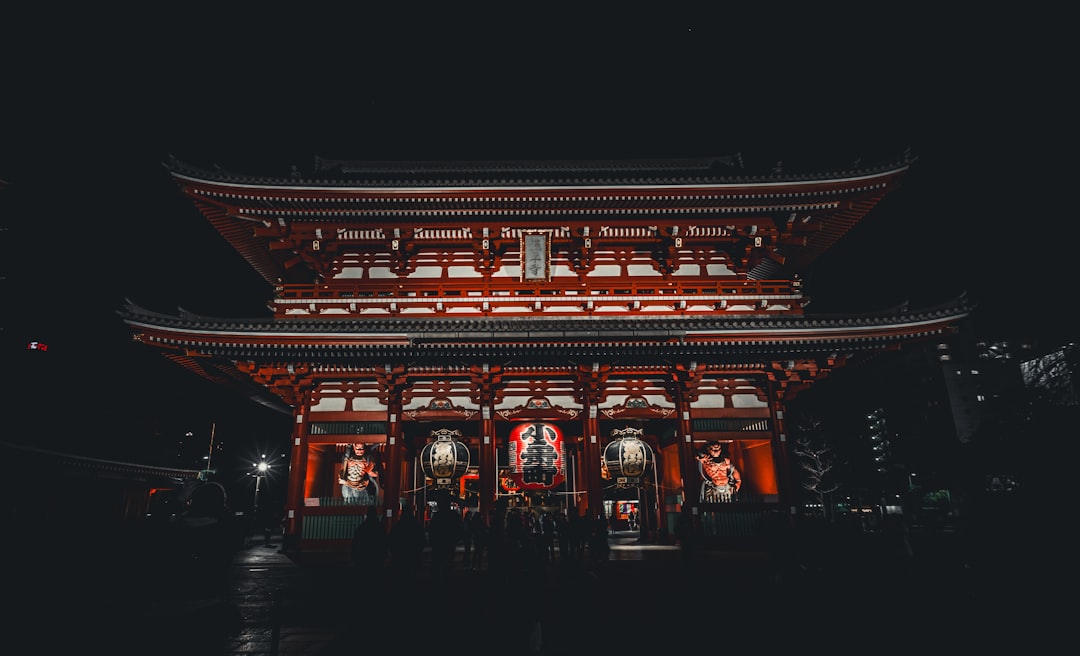
Once the day visitors leave, Senso-ji is lit from below and nearly empty. The main hall doors are shut, but the grounds stay open, and the pagoda and Hozomon under lights are quieter and more striking than at noon.
This is when our Asakusa food tour begins: a walk through the temple after dark, then Hoppy Street, a small bar one street back, and a final counter on Tanuki Street, with fifteen dishes along the way and a guide ordering in Japanese. You can do a version of it alone. The difficulty is knowing which door to open.
Festivals and Seasons
Sanja Matsuri takes over the neighbourhood over a weekend in mid-May, with portable shrines carried through the streets. It is exhilarating and very crowded; if you want a quiet Asakusa, avoid it, and if you want to see the neighbourhood at full volume, plan around it.
Late March and early April bring cherry blossoms to Sumida Park along the river. The Sumidagawa Fireworks Festival in late July fills the riverbanks, and hotels with a river view sell out long before. Autumn and winter are the most comfortable seasons for walking here; the heat of a Tokyo summer makes a full day on foot hard work.
Things to Do in Asakusa: Frequently Asked Questions
How much time do I need in Asakusa?
Half a day covers Senso-ji, Nakamise and the backstreets at a comfortable pace. A full day lets you add Kappabashi, the river and an evening meal on Hoppy Street. We suggest splitting it: an early morning at the temple, and a return after dark, with the middle of the day spent elsewhere.
Is Senso-ji free to visit?
Yes. There is no admission fee for the grounds or the main hall. Incense, omikuji fortunes and offerings cost a small amount each, so carry some coins. Most stalls on Nakamise also prefer cash.
Is Asakusa worth visiting at night?
Yes, and in our view it is the better half of the day. The temple is lit and quiet, the Culture Tourist Information Center terrace stays open until 22:00, and Hoppy Street and the surrounding izakaya are at their busiest. The shops on Nakamise close in the early evening, so shop earlier.
Related Tours
Conclusion
Asakusa is small. You can walk from the river to Kappabashi in twenty minutes, and the whole of Senso-ji in less. What makes the difference is not how much you cover but when you are there and whether you step off the main line of the crowd.
Our practical advice is to visit twice on the same day. Come early, before eight, for the temple and the backstreets, then leave for lunch somewhere else in Tokyo. Return after dark for the lit pagoda, the view from the Kuma rooftop and dinner on Hoppy Street, and you will have seen the two Asakusas most visitors never realise are there.
Plan Your Japan Trip with Local Experts
Our team has guided 40,000+ travelers across Japan. Tell us about your trip and we’ll get back to you within 24 hours.