In this article:
- How Jimbocho Became Tokyo’s Book Town
- The Bookshops Worth Your Time
- Curry, Coffee, and the Hours Between Shops
- Planning Your Visit
- Jimbocho Book Town: Frequently Asked Questions
Introduction
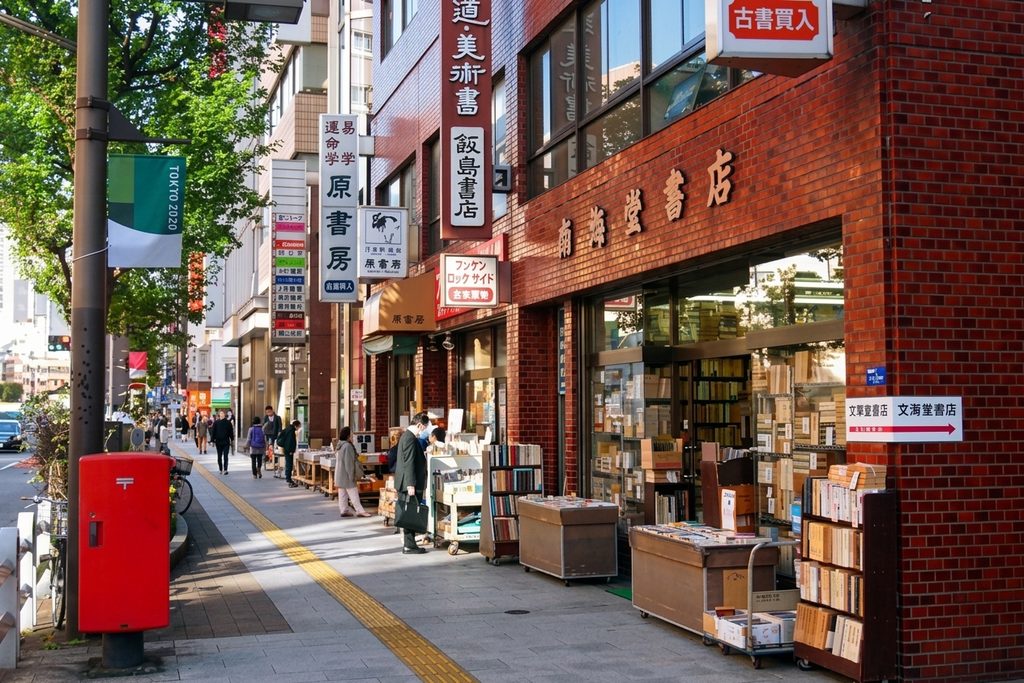
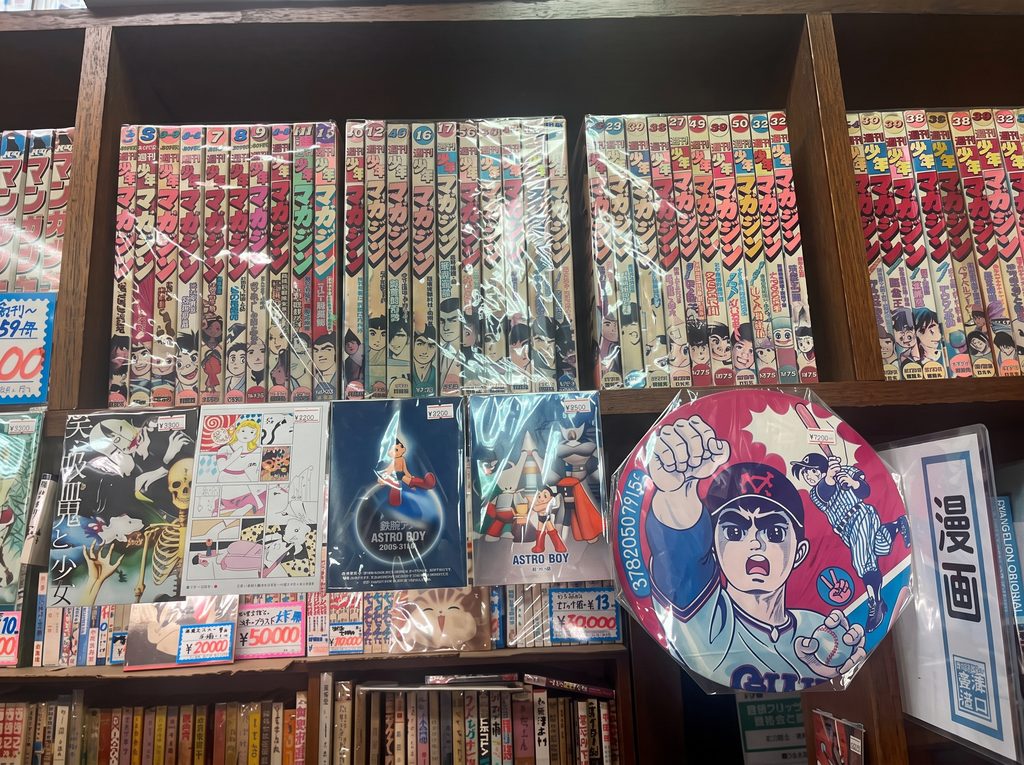
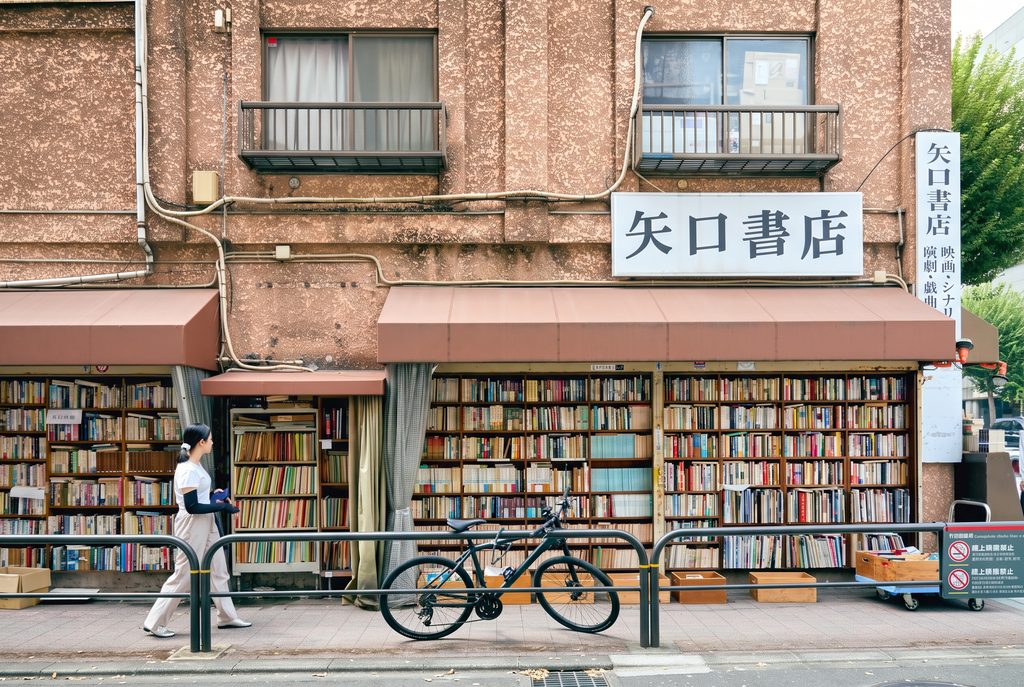
Jimbocho Book Town smells of paper before you see a single shop. Walk out of the subway onto Yasukuni-dori on a weekday morning and the first thing in front of you is a row of wooden carts: paperbacks at a hundred yen, faded art magazines, bundles of postcards tied with string. Behind them, the shelves go up to the ceiling.
No other neighbourhood in Tokyo is built around a single object like this. Well over a hundred secondhand bookshops sit within a short walk of Jimbocho Station, and many specialise so narrowly that the owner can tell you which drawer holds the map you want. Most of the stock is in Japanese. That matters less than you might expect, because the prints, maps, photobooks and old magazines need no translation at all.
We send travelers here who want an afternoon of Tokyo that is quiet, specific, and nothing like Shibuya. The ones who enjoy it most come with a loose idea of what they are after and leave with something they could not have found anywhere else. Here is how to do the same.
How Jimbocho Became Tokyo’s Book Town
The book trade followed the students.
Universities First, Then the Booksellers
After the Meiji Restoration of 1868, universities began opening campuses in and around Kanda. Meiji, Nihon, Hosei and Senshu universities still have campuses in the area, and from the start their students and professors needed textbooks. Booksellers opened to supply them, bought the books back at the end of term, and sold them again.
Publishers came next. Iwanami Shoten, one of the country’s most respected publishing houses, began as a bookshop here in 1913, and Shogakukan and Shueisha still have their headquarters in the district. That mix of readers, sellers and publishers in a few city blocks is what turned an ordinary student quarter into a destination.
Several of the shops you can walk into today are older than most of the buildings around them. Takayama Honten dates to 1875 and Ohya Shobo to 1882. In many of these shops the family running the counter is the third or fourth generation to do so.
Where It Sits and How It Is Laid Out
Jimbocho is in Chiyoda ward, a short distance north of the Imperial Palace grounds and downhill from Ochanomizu. The core of the district runs along the south side of Yasukuni-dori, east and west of the crossing with Hakusan-dori. Jimbocho Station, on the Hanzomon, Mita and Shinjuku subway lines, puts you in the middle of it.
The main road is where the rare-book dealers cluster. One block south, Suzuran-dori and Sakura-dori are narrower, lower and more relaxed, with new bookshops, cafes and a few curry counters. We suggest starting on the main road while you are fresh and drifting into the back streets as the afternoon goes on.
Many of the shops on Yasukuni-dori face north, so the afternoon sun never lands on the shelves. It is a practical choice rather than a romantic one. Even so, it gives the whole street an even, dim light that suits the place.
The Bookshops Worth Your Time
Trying to see every shop is the fastest way to leave with nothing. Pick two or three categories you care about, find the specialists in those, and let chance handle the rest.
English and Foreign Books
Kitazawa Shoten, founded in 1902, is the obvious first stop for English readers. The second floor is a wood-panelled room holding more than ten thousand volumes on the humanities, with an emphasis on British and American literature. It looks like a university library that someone forgot to close, and it is priced accordingly, which is to say fairly for what it is.
On the ground floor of the same building, Book House Cafe sells children’s books and picture books and serves coffee between the shelves. For families, it is the easiest place in the district to spend an hour.
Beyond Kitazawa, a handful of shops carry Western titles, vintage foreign magazines and art books. However, do not arrive expecting an English-language book town. The great majority of shelves you pass will be Japanese, and the point is to look at things you cannot read as much as to buy things you can.
Woodblock Prints and Old Maps
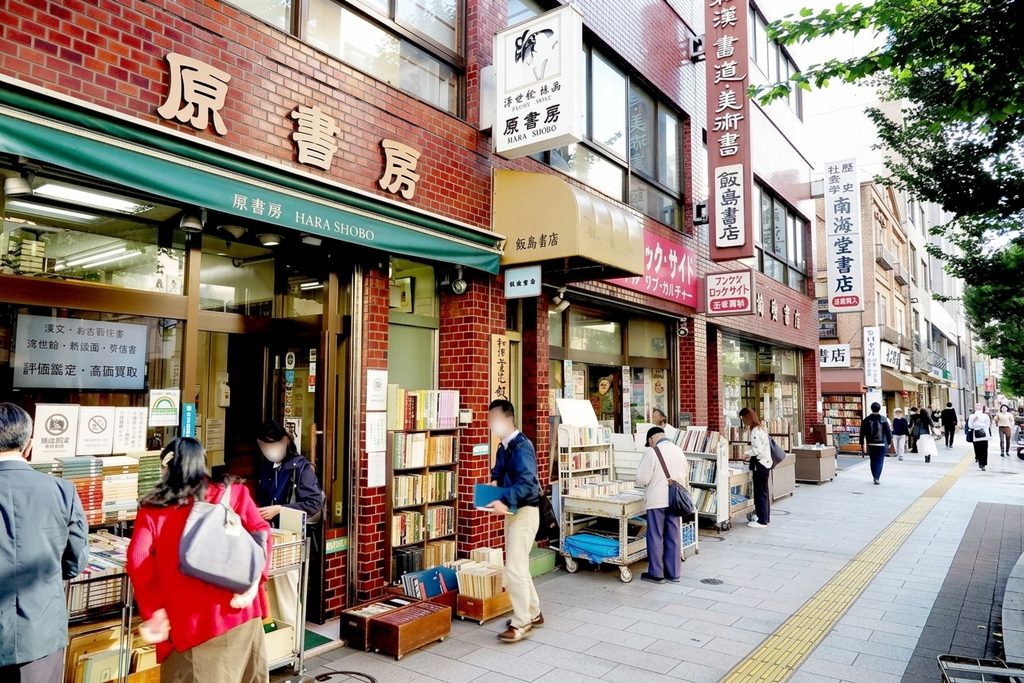
This is where Jimbocho earns a place on a serious itinerary. Ohya Shobo has sold Edo-period books, ukiyo-e prints and old maps since 1882, and the shop is stacked floor to ceiling with bound volumes that were printed from carved wooden blocks two centuries ago. You can ask to see things, and the staff will bring them out.
Isseido, founded in 1903, handles traditional Japanese books and old maps as well as foreign titles. Shinsendo, from 1907, has a deep collection of old maps and a specialty in books on railways and industrial history.
In our experience, a single original print or an Edo-period map of Tokyo is the purchase travelers remember longest. Prices vary enormously with age, condition and edition. Tell the shop your budget at the start. It saves everyone time, and nobody here will be offended by a small number.
Specialists: Film, Manga, Cats, and Everything Else
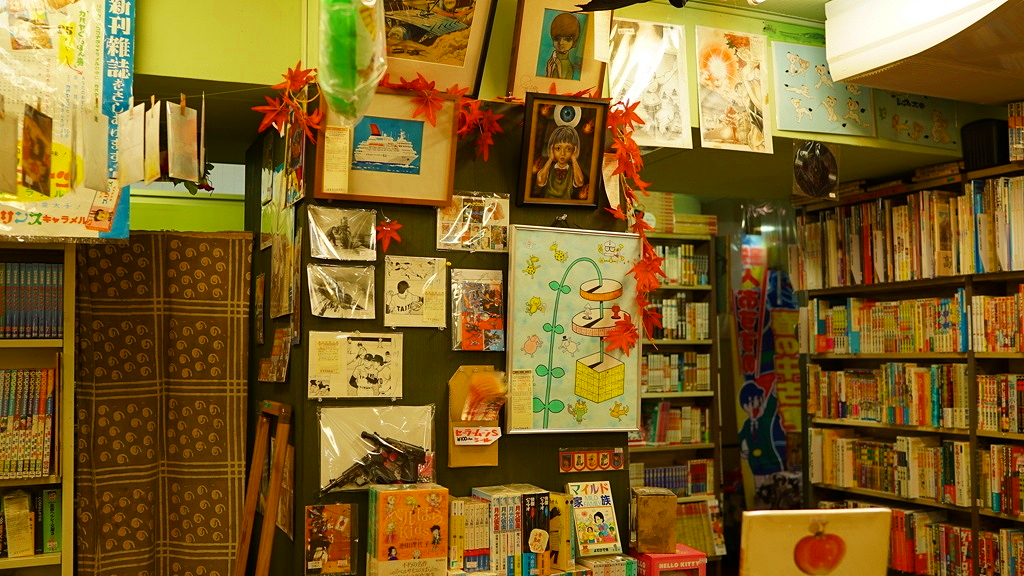
The narrower the specialty, the more fun the shop tends to be. Yaguchi Shoten is known for its film and theatre titles. Sawaguchi Shoten runs several branches, one of them focused on manga. Anekawa Shoten keeps more than six hundred books about cats, and the shop is as small and particular as that sounds.
Takayama Honten covers traditional theatre, martial arts and food writing. If you have one interest that is hard to shop for at home, ask your hotel concierge to write it on a card in Japanese and show it at a few counters. In our experience, owners here will often point you to a neighbour down the street.
Sanseido, Back on Its Corner
Sanseido’s flagship at the Jimbocho crossing closed in 2022 for rebuilding and reopened in a new building on 19 March 2026. It sells new books rather than old ones, with a cafe on the third floor, and it is a useful anchor: clean toilets, a place to sit, and a clear landmark to meet at if your group splits up.
Expert Tip
The hundred-yen carts outside the shops are not only for cheap paperbacks. Old postcards, exhibition catalogues and illustrated magazines from the postwar decades turn up in them constantly, and they make better small gifts than anything sold as a souvenir. Carry coins, because the carts are paid for at the counter inside and a ten-thousand-yen note for a hundred-yen item is an awkward start.
Curry, Coffee, and the Hours Between Shops
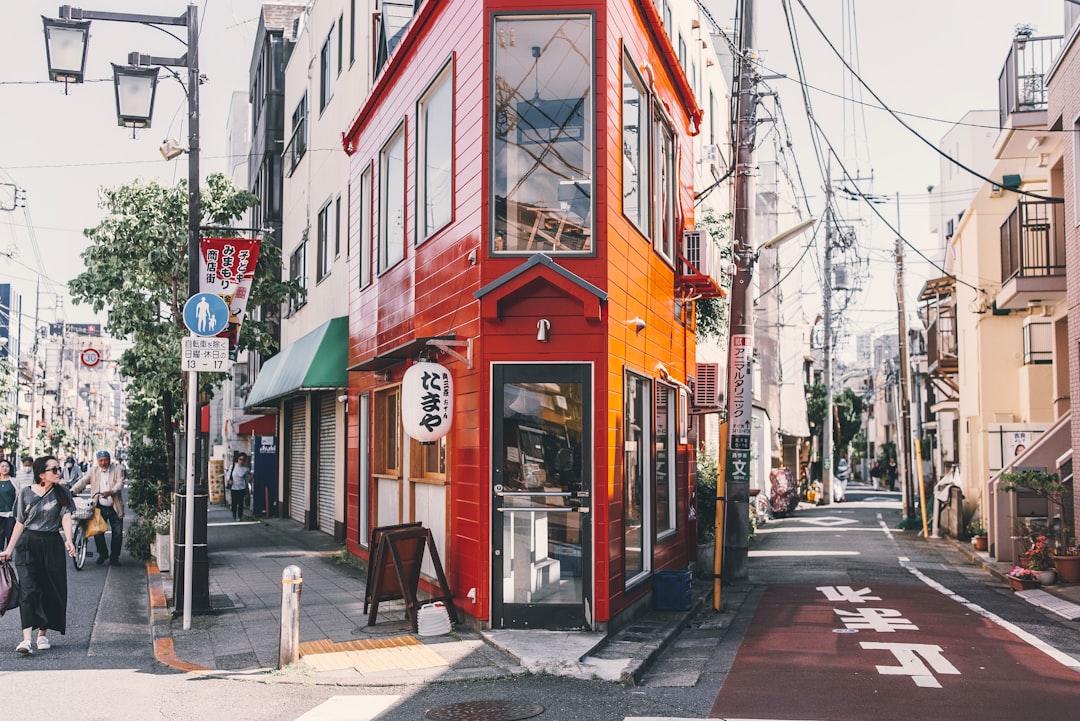
Jimbocho has as strong a reputation for curry as it does for books, and the two are connected. Curry is something you can eat with one hand while holding a book with the other, or so the local explanation goes. Whether or not that is true, curry counters are almost as easy to find here as bookshops.
Why a Book Town Runs on Curry
Bondy, on the second floor of the Kanda Kosho Center building, has served European-style curry since 1973. The sauce is dark, rich and built on a French-style brown sauce rather than anything Indian. Expect a queue at lunchtime.
That said, Bondy is one style among many. Within a few minutes’ walk you will find Indian, Thai, Nepali and soup curry, as well as the plain Japanese curry rice served at counters where office workers eat in eight minutes flat. We tell travelers to choose on smell as they walk past. It is a more reliable guide in this neighbourhood than any ranking.
Kissaten for Reading What You Bought
The second half of a good Jimbocho day happens sitting down. Sabouru, opened in 1955 near exit A7 of Jimbocho Station, is the best-known of the district’s old coffee houses: low wooden ceilings, a mezzanine, and a menu of cream sodas and thick pizza toast that has barely changed in decades.
Other long-running kissaten in the back streets have their own following, some with classical records playing, some with jazz. None of them are fast. Order a coffee, open whatever you bought, and stay as long as you like. In practice, this is the hour travelers tend to mention first when they tell us about Jimbocho afterwards.
Planning Your Visit
Timing decides more about a day in Jimbocho than the list of shops does.
The Sunday Problem
Many Jimbocho bookshops close on Sundays and national holidays, including several of the rare-book dealers on the main street. Hours vary shop by shop, but most open around 10 or 11 in the morning and close in the early evening. Arrive on a Sunday and you will find a street of shutters.
We place Jimbocho on a weekday or a Saturday for every traveler who asks about it, and move Sunday to Asakusa or the parks. Saturday is the better choice if you want some atmosphere and a busier street. Weekdays are quieter and give you more of the owners’ attention, which matters if you are buying prints or maps.
The Kanda Used Book Festival
Every autumn, the district moves its stock onto the pavement. The 66th Kanda Used Book Festival runs from 23 October to 1 November 2026, from 10:00 to 18:00, with rows of carts lining Yasukuni-dori in what locals call the corridor of books. In 2025, more than a hundred carts and around 120 participating shops took part.
A separate street event, the Jimbocho Book Festival, takes over Suzuran-dori and Sakura-dori for one weekend during the same period; in 2025 it ran on 25 and 26 October. The festival is the busiest time of year in the district. If you prefer browsing slowly, come on a weekday morning within those dates rather than on the weekend.
Buying, Browsing, and Shop Manners
Many of the older shops still prefer cash, particularly for small purchases, so bring enough for the day. Larger dealers generally take cards for expensive items, but it is sensible to ask before you choose.
Rare-book dealers often do not allow photographs inside. Ask before you take out your phone, and handle old volumes with clean, dry hands. If you are carrying a large bag, keep it close to you in the narrow aisles, where a swinging backpack can take a stack of books down.
For the walk onward, Jimbocho connects well to the rest of central Tokyo. Akihabara is reachable on foot via Ochanomizu, and our Akihabara guide covers the retro game and manga shops there, which pair well with a morning of old paper.
Expert Tip
If you are hunting for one particular thing, spend your first twenty minutes at the counter of a single specialist rather than walking the whole street. Tell them what you want and what you want to spend. The owners in this district know each other’s stock well, and one good conversation often saves an afternoon of searching.
Jimbocho Book Town: Frequently Asked Questions
Are there English books in Jimbocho?
Yes, though they are a small share of the total. Kitazawa Shoten on Yasukuni-dori has the largest selection of secondhand English-language books in the humanities, and a handful of other shops carry foreign titles and vintage magazines. The woodblock prints, maps and photobooks that most visitors buy need no Japanese at all.
Are Jimbocho bookshops open on Sundays?
Many are not. A large number of shops close on Sundays and national holidays, including several of the best-known antiquarian dealers. Plan your visit for a weekday or a Saturday, and check the hours of any specific shop you want to visit before you go.
When is the Kanda Used Book Festival in 2026?
The 66th Kanda Used Book Festival runs from 23 October to 1 November 2026, from 10:00 to 18:00 each day, along Yasukuni-dori and the surrounding streets. Expect the main road to be lined with carts and considerably busier than usual.
Related Tours


Conclusion
Give Jimbocho a weekday or a Saturday, not a Sunday, and give it most of a day rather than an hour. Decide on two or three things you are looking for before you arrive, whether that is a print, a map, a film poster or a secondhand novel in English, and let the owners send you from one shop to the next.
Book lunch in your head as curry and the afternoon as a kissaten, and leave the rest open. If you are in Tokyo in late October, move the visit into the festival dates and come on a weekday morning. For more on how Jimbocho fits alongside the city’s other shopping districts, our Tokyo shopping guide covers the neighbourhood specialties, and our piece on seeing Tokyo with a private guide explains how a day like this gets built.
Plan Your Japan Trip with Local Experts
Our team has guided 40,000+ travelers across Japan. Tell us about your trip and we’ll get back to you within 24 hours.