In this article:
- What Nanzenji Is and Why It Ranks Above the Rest
- The Four Places Worth Your Time
- Planning a Visit: Fees, Hours, and Timing
- Building a Half Day Around Nanzenji
- Nanzenji Temple: Frequently Asked Questions
Introduction
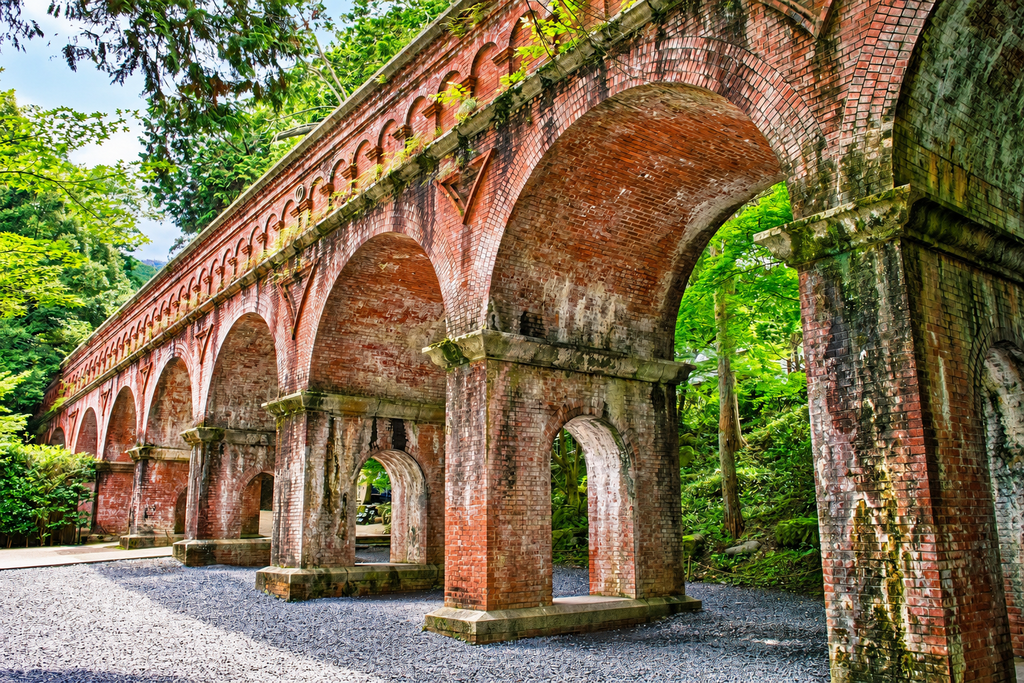
Walk past the abbot’s hall at Nanzenji Temple and you reach something no one expects to find in a Zen precinct: a run of red-brick Romanesque arches, moss in the joints, with water moving quietly along the top. It was built by Meiji-era engineers, not monks, and it sits a few minutes from a dry garden laid out more than two centuries earlier.
That contrast is the reason Nanzenji works so well for the travelers we guide. Most of Kyoto’s famous temples ask you to admire one thing. Nanzenji gives you a gate you can climb, a garden you sit beside, a piece of industrial history you can walk along, and a wooded hillside behind it all, inside a single precinct that is mostly free to enter.
It is also more spacious than Kinkaku-ji or Kiyomizu-dera, which matters. Even on a busy day there is room to stand still. What follows is how we approach it: what to prioritise, what has changed in 2026, and when to arrive.
What Nanzenji Is and Why It Ranks Above the Rest
Nanzenji is not one of Kyoto’s Five Mountains. It sits above them.
An Emperor’s Villa Turned Zen Headquarters
The temple began in 1291, when the retired Emperor Kameyama converted his detached villa at the foot of the Higashiyama hills into a Zen temple. Within a century it had been placed above the Gozan, the ranked system of great Zen temples in Kyoto and Kamakura, a status no other temple held.
Today it is the head temple of the Nanzenji branch of Rinzai Zen, with a network of affiliated temples across Japan. That institutional weight explains the scale. The approach is wide, the buildings are large, and the grounds feel organised for monks and administrators rather than for visitors.
Fires destroyed much of the original complex in the fifteenth century. Most of what you see today dates from the early 1600s, when the Tokugawa-era elite rebuilt it generously.
How the Complex Is Laid Out
The precinct itself costs nothing to enter. You can walk under the Sanmon gate, past the Hatto lecture hall, and up to the aqueduct without buying a ticket.
Three areas charge admission: the upper floor of the Sanmon gate, the Hojo (abbot’s quarters) with its gardens, and Nanzen-in, the sub-temple where the founding emperor’s villa once stood. Around the edges sit smaller sub-temples such as Tenju-an and Konchi-in, each with its own garden and its own entry fee.
Our view is that the Hojo is the one paid area to prioritise if time is short. The gate is the second. Everything else depends on the season and your stamina.
The Four Places Worth Your Time
A first visit to Nanzenji rarely needs more than these four. Done in the right order, they take about two hours.
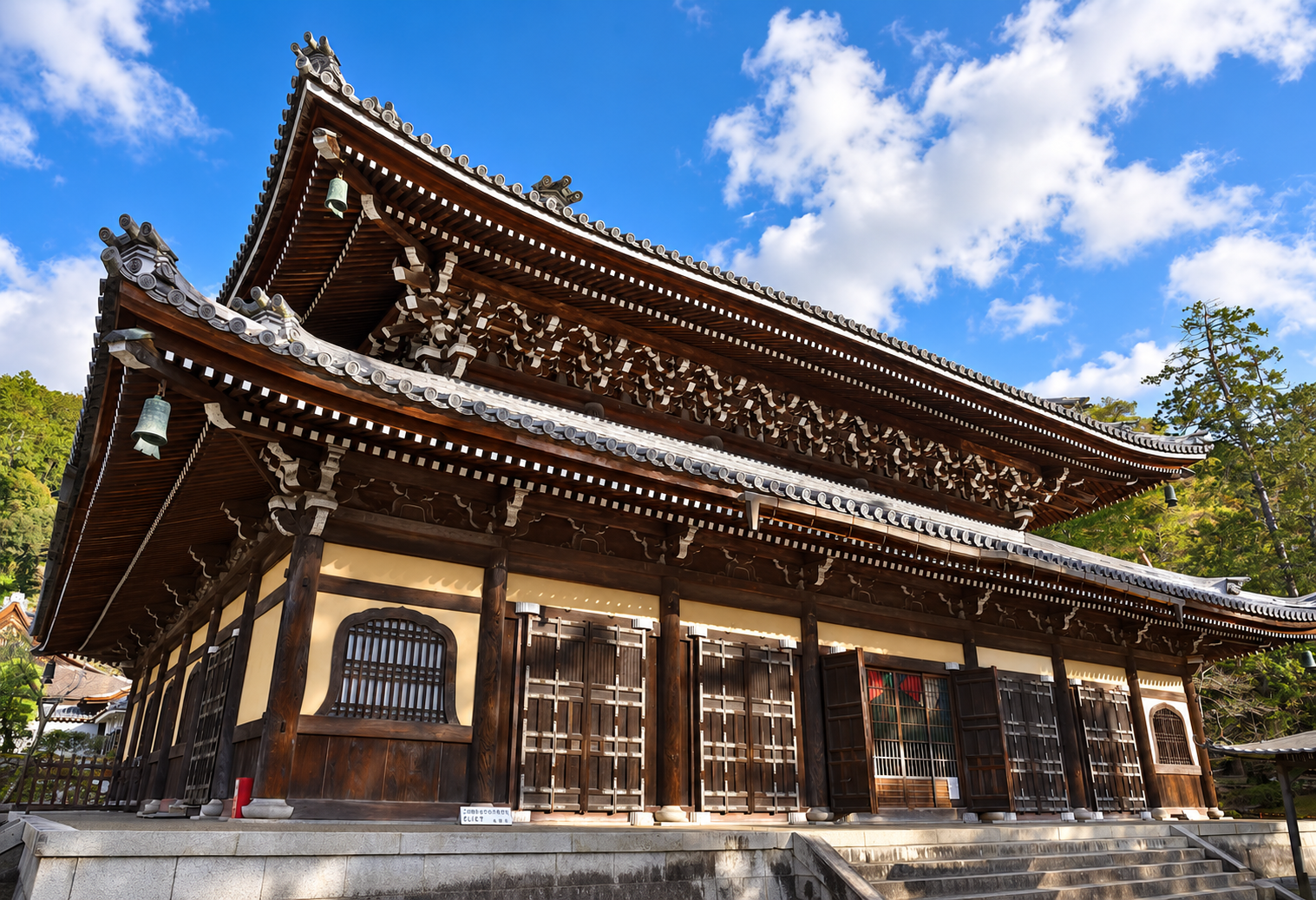
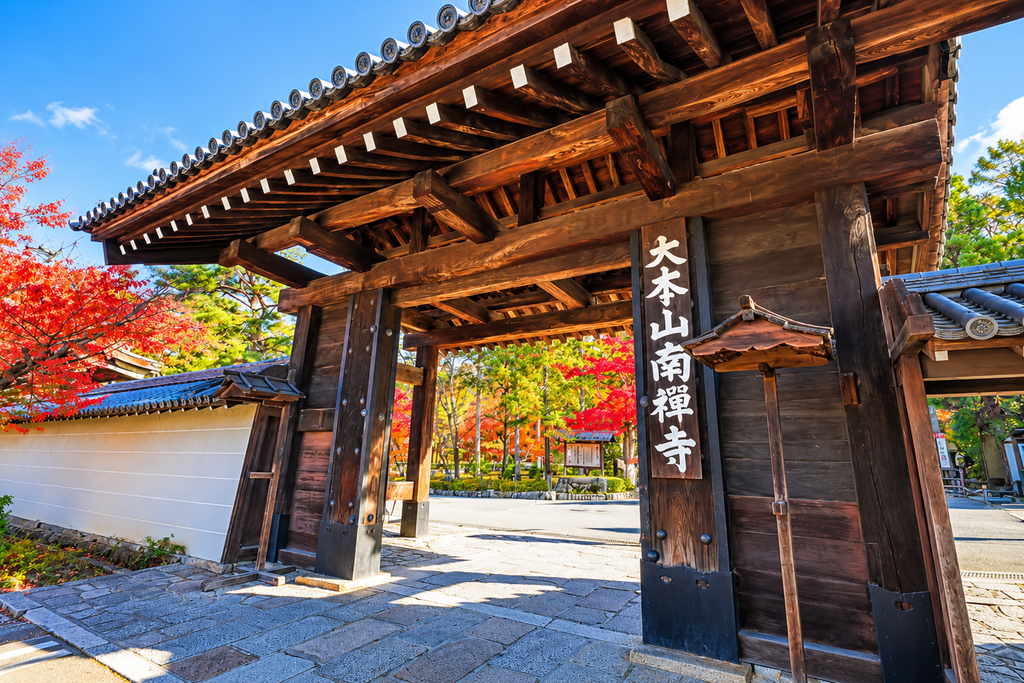
The Sanmon Gate
The Sanmon is the first thing you see and the hardest thing to ignore. It stands about 22 metres tall, and the present structure was rebuilt in 1628 by the feudal lord Todo Takatora in memory of soldiers who died in the Osaka campaign. It is a nationally designated Important Cultural Property.
Climbing it is worth the effort, though the effort is real. The wooden staircase is steep enough that most people use their hands, and the balcony at the top is narrow. From there you look west over the rooftops of Kyoto and east into the cedar and maple of the hillside.
The gate also carries a famous piece of kabuki folklore. In the play Sanmon Gosan no Kiri, the outlaw Ishikawa Goemon stands on this balcony and declares the view worth a fortune. Japanese visitors know the line, which is one reason the balcony fills up by late morning.
The Hojo and the Leaping Tiger Garden
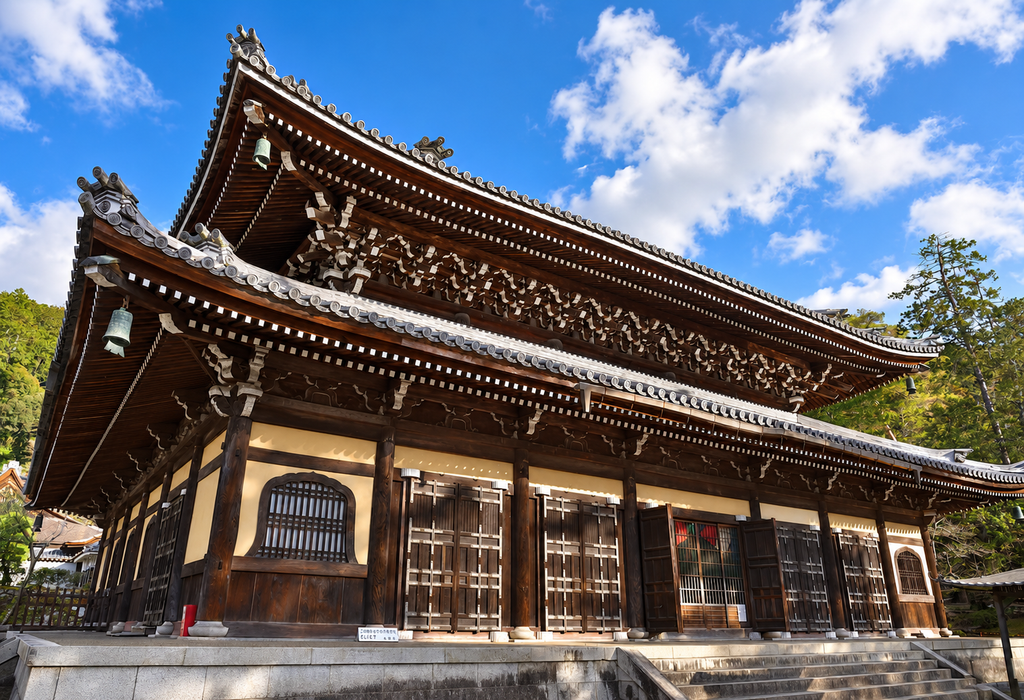
The Hojo is a national treasure, and its main hall was moved here from the imperial palace grounds in 1611. Inside are sliding-door paintings by the Kano school. Many originals have been moved into storage to protect them and replaced with faithful reproductions, so do not feel you are missing something.
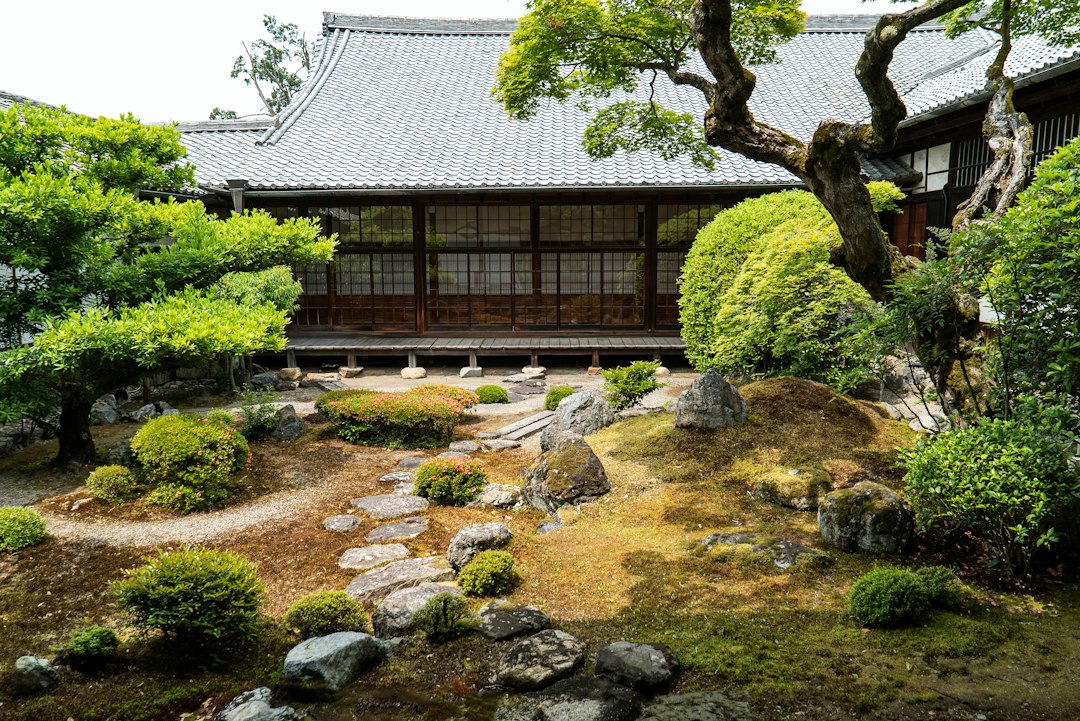
The garden in front of the main hall is the reason to come. Attributed to the tea master and designer Kobori Enshu, it is an early Edo-period dry landscape of raked white sand, large stones set low along a pale earthen wall, and a few clipped shrubs. Its popular name, the Leaping Tiger Garden, comes from the reading of one stone group as a tigress carrying her cubs across water.
Sit on the veranda for ten minutes before you decide what you think of it. Smaller gardens wrap around the building as well. Nyoshin-tei, laid out in 1966, arranges its stones to suggest the character for heart or mind, while the Rokudo garden sets stones in a carpet of moss. In the smaller hall, a set of tiger paintings attributed to Kano Tanyu is the other highlight.
Expert Tip
Do the Hojo first, at 8:40 when the gates open, and the Sanmon second. The gate is the first thing people reach from the approach, so most visitors climb it first, and starting with the garden puts you a step ahead of them. By the time they reach the veranda, you are on the balcony of the gate with room to move.
Suirokaku, the Brick Aqueduct
Suirokaku is the brick aqueduct behind the Hojo, and it belongs to the Lake Biwa Canal, the Meiji-era project that brought water from Shiga Prefecture into Kyoto when the city’s future looked uncertain after the capital moved to Tokyo. The engineer credited with the design, Tanabe Sakuro, was in his twenties at the time.
Running a canal through the grounds of the most senior Zen temple in the country was controversial. The arched design was the compromise: a structure that lifts the water over the precinct rather than cutting through it. More than a century later the brick has weathered to the colour of old terracotta, and it no longer looks like an intrusion.
Most visitors photograph the arches from below and leave. Instead, follow the path up the slope beside the aqueduct to the channel on top. You can walk along the water as it runs through the trees, and almost no one does.
Nanzen-in and the Restoration Closure
Nanzen-in is the oldest part of Nanzenji, standing on the site of Emperor Kameyama’s original villa, with a pond garden set against the wooded slope. It is the quietest place in the complex.
It is also currently closed. The temple has suspended visits to Nanzen-in for restoration work, and its notice gives spring 2027 as the expected end of the closure. The exception is November 2026, when the Nanzen-in garden opens for a month-long special viewing.
If you are visiting in November, take the opportunity. At any other time before spring 2027, check the official Nanzenji website before you plan around it.
Planning a Visit: Fees, Hours, and Timing
Nanzenji is easy to visit on your own. The planning that matters is mostly about timing.
Admission and Opening Hours
Admission is ¥600 for adults at both the Hojo gardens and the Sanmon gate, bought separately at each. Nanzen-in, when open, is ¥500. High school students and younger children pay reduced rates.
The paid areas open at 8:40. Closing is 5:00 PM from March to November and 4:30 PM from December to February, and ticket sales stop twenty minutes before closing. The temple does not admit general visitors from 28 to 31 December, but it stays open over the New Year.
Bring cash in small notes. Temple ticket windows in Kyoto are not reliably set up for cards, and having exact change for two separate counters keeps things moving.
Beating the Crowds
Nanzenji is busiest from late morning through mid-afternoon, and from mid-November into early December, when the maples around the Sanmon turn. During that peak, the difference between arriving at 8:40 and at 11:00 is enormous.
For autumn 2026 the temple also runs a reserved early-morning viewing on selected November dates, starting at 7:30 and lasting about fifty minutes. It costs ¥3,000, covers rooms in the Hojo and the inner sanctuary of the Sanmon that are not normally shown, and is capped at thirty people. Reservations close three days before each date, so treat it as something to book ahead rather than decide on the morning.
In practice, a weekday visit in early November or late spring gives you most of the beauty with a fraction of the crowd. Rainy days are underrated here as well. Wet moss and dark brick photograph better than dry ones.
Getting There
The nearest station is Keage on the Tozai subway line, about a ten-minute walk away. The temple recommends a shortcut through the Nejiri-mampo, a short brick tunnel under the old canal incline whose bricks are laid in a twisting spiral.
That route also takes you past the Keage Incline, the disused railway slope that once hauled boats up and down the canal. It is lined with cherry trees and makes a good prelude in spring. Buses also stop nearby, but the subway is more predictable during the autumn peak, when traffic on the east side slows to a crawl.
Expert Tip
Shoes come off inside the Hojo, and the wooden floors and verandas are cold from late autumn through early spring. Wear socks you are happy to be seen in and shoes that slip on and off easily. If you plan to climb the Sanmon as well, leave large bags at your hotel; the staircase is steep and leaves no room for luggage.
Building a Half Day Around Nanzenji
Nanzenji sits at the southern end of one of the best walking routes in Kyoto, and it is a mistake to treat it as a stand-alone stop.
Pairing It With the Philosopher’s Path
From the temple, a short walk north takes you past Eikando, famous for its autumn colour, to the start of the Philosopher’s Path. The path follows a branch of the same canal that runs over Suirokaku, which gives the morning a thread worth following.
At the far end is Ginkaku-ji. Our guide to Ginkakuji Temple covers that end of the walk. Done at an unhurried pace with stops, Nanzenji to Ginkaku-ji fills a morning comfortably and finishes close to lunch.
Nanzenji is also known for yudofu, simmered tofu served in a clay pot, and several long-established restaurants near the temple serve it. It is a gentle, quiet meal that suits the area well, especially on a cold day.
Where a Guide Changes the Visit
Nanzenji is one of the stops we fold most often into a private day in Kyoto, usually as the calm counterweight to somewhere busier. On our private tours there is no fixed route, so a guide can place it at the start of the day when the Hojo garden is empty, or late in the afternoon when the light turns warm on the brick.
The bigger value is pacing. A guide who knows the precinct will tell you where to sit, which part of the gate to skip if your knees object, and when to walk up past the aqueduct. Three places done properly beat six done in passing, and Nanzenji rewards that approach more than most temples.
The same thinking runs through our early-morning walk, which covers Gion Shirakawa, Yasaka Shrine, and Kinkaku-ji before the coach groups arrive. It finishes with most of the day still ahead, which makes Nanzenji a natural next stop on your own. Our article on why early mornings work so well in Kyoto explains the reasoning in more detail.
Nanzenji Temple: Frequently Asked Questions
Is Nanzenji free to visit?
The grounds are. You can walk the precinct, pass under the Sanmon gate, and see the Suirokaku aqueduct at no cost. The Hojo gardens and the upper floor of the Sanmon each charge ¥600 for adults, and Nanzen-in charges ¥500 when it is open.
How long should I spend at Nanzenji?
Allow about two hours to see the Hojo, climb the Sanmon, and walk up beside the aqueduct without rushing. If you are short on time, an hour covers the Hojo garden and the aqueduct. Add more if you plan to visit a sub-temple or continue north toward the Philosopher’s Path.
Is Nanzenji worth visiting in autumn despite the crowds?
Yes, if you go early. The maples around the Sanmon and along the approach are among the best in eastern Kyoto, and the grounds are large enough to absorb more people than smaller temples can. Arrive at opening time on a weekday, do the Hojo first, and you will see the colour without fighting for a view.
Related Tours

Conclusion
Nanzenji is at its best when you give it time and an early start. The garden asks you to sit, the gate asks you to climb, and the aqueduct asks you to walk a little further than everyone else. None of that works in a twenty-minute stop squeezed between two bigger names.
If you are planning now, check whether your dates fall in November 2026, when Nanzen-in reopens briefly and the reserved early viewing runs. Otherwise, arrive at 8:40, go straight to the Hojo, and leave the walk north toward the Philosopher’s Path for when the crowds arrive behind you.
Plan Your Japan Trip with Local Experts
Our team has guided 40,000+ travelers across Japan. Tell us about your trip and we’ll get back to you within 24 hours.