In this article:
- What Shimogamo Shrine Is, and Why It Predates the City
- Tadasu no Mori: The Forest Approach
- Inside the Precincts: Kawai, Aioi, and Mitarashi
- Planning a Visit: Festivals, Access, and Where It Fits in a Day
- Shimogamo Shrine: Frequently Asked Questions
Introduction
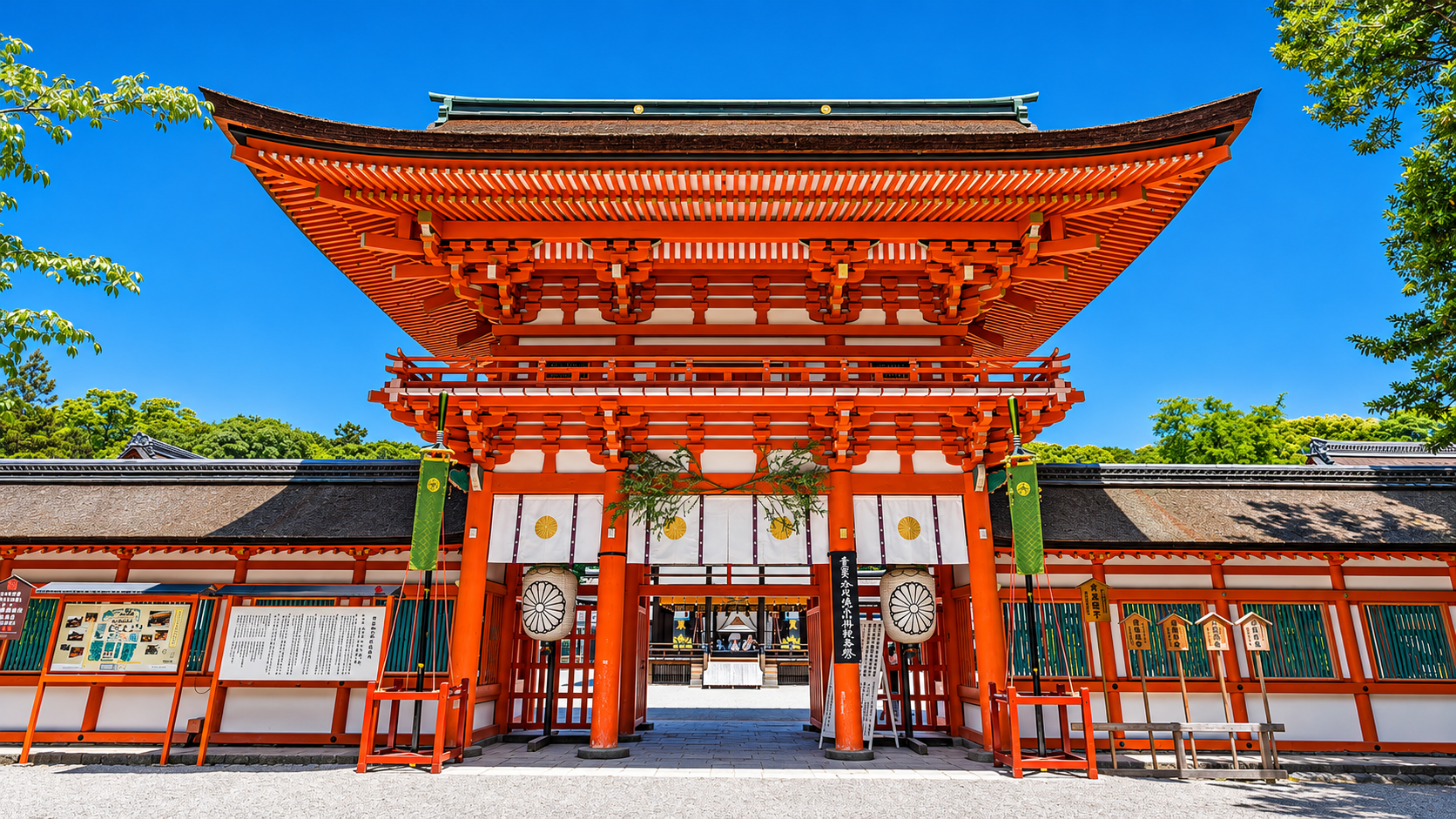
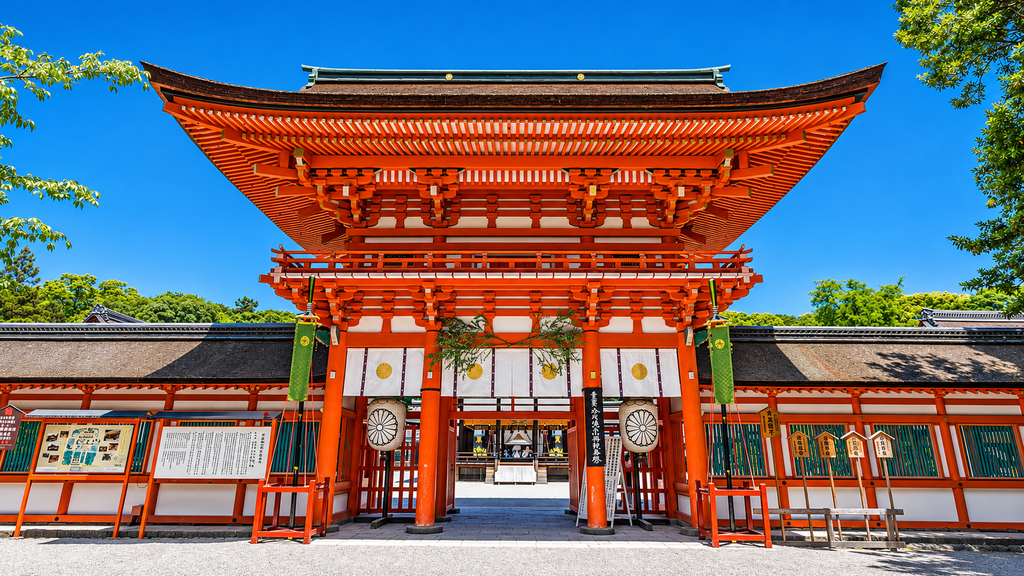
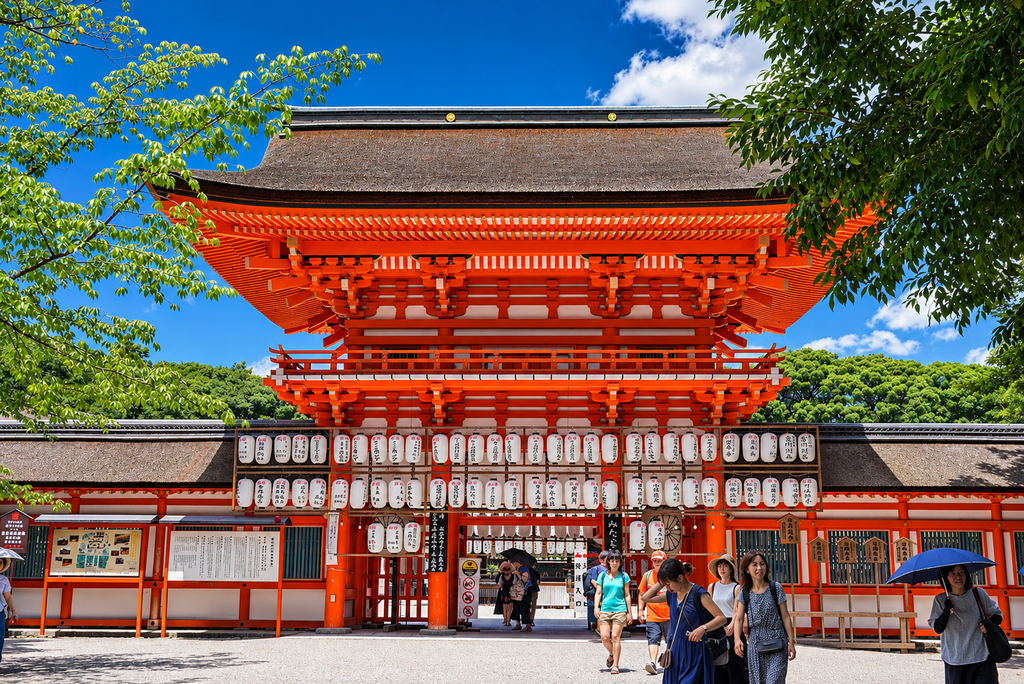
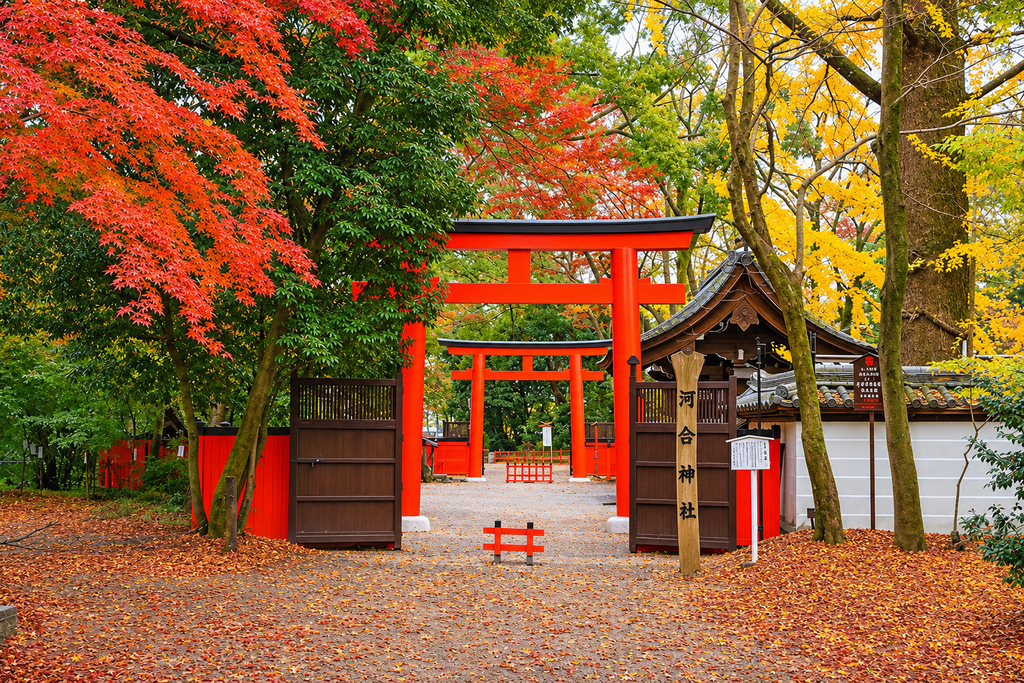
Most visitors meet Shimogamo Shrine through its forest before they ever see a building. You leave the traffic on Shimogamo Hondori, step onto a wide gravel path, and the temperature drops by a few degrees under the zelkova and hackberry canopy. The vermilion gate does not appear for several minutes.
That walk is the reason we bring travelers here. Fushimi Inari and Kiyomizu-dera are famous for good reasons, but by mid-morning they are about managing crowds. Shimogamo, by contrast, still feels like a place people come to pray, jog, and walk the dog. It is one of the oldest Shinto sites in Kyoto, it sits inside a UNESCO World Heritage listing, and it rarely feels crowded outside festival days.
For travelers who want to understand what a Shinto shrine is for, rather than only photograph one, it is one of the best places in the city to start. What follows is how we approach it on the ground.
What Shimogamo Shrine Is, and Why It Predates the City
Shimogamo was a sacred site long before Kyoto became the capital in 794. Its formal name is Kamo-mioya-jinja, and it honors Tamayori-hime and her father, Kamo Taketsunumi, the ancestral deities of the Kamo clan who controlled this river basin before the court arrived.
The Kamo Clan and the Twin Shrines Upriver
Shimogamo is one half of a pair. Kamigamo Shrine stands a few kilometres north along the Kamo River, and together the two are known as the Kamo Shrines. The names translate loosely as Lower Kamo and Upper Kamo.
The relationship is family rather than rivalry. Kamigamo enshrines Tamayori-hime’s son, while Shimogamo enshrines the mother and grandfather. When the emperor Kanmu moved the capital here, the court adopted these shrines as protectors of the new city, and imperial messengers have been part of their ritual life ever since.
If you have a full day in northern Kyoto, visit both. If you have a morning, choose Shimogamo for the forest.
World Heritage Status and the National Treasure Halls
Shimogamo is one of the seventeen sites that make up UNESCO’s Historic Monuments of Ancient Kyoto, inscribed in 1994. The East and West Main Halls, which stand side by side behind the inner gate, are designated National Treasures.
Those two halls are built in the nagare-zukuri style, with a long sweeping roof that extends forward over the steps. Once you have seen it here, you will recognise it at shrines all over Japan. If the difference between a shrine and a temple is still blurry, our guide to shrines versus temples covers the structural clues.
Rebuilding on a Cycle: What You Are Actually Looking At
The main halls you see were rebuilt in 1863. That surprises people who expect something visibly ancient, but it is the point. Shinto shrines were traditionally rebuilt or renewed on a cycle, roughly every twenty-one years at Shimogamo, so that the structure stays fresh while the form stays unchanged.
The age that matters here is the site and the ritual, not the timber. We find that once travelers understand this, they stop looking for weathered wood and start noticing the precision of the joinery and the bright, clean surfaces.
Tadasu no Mori: The Forest Approach
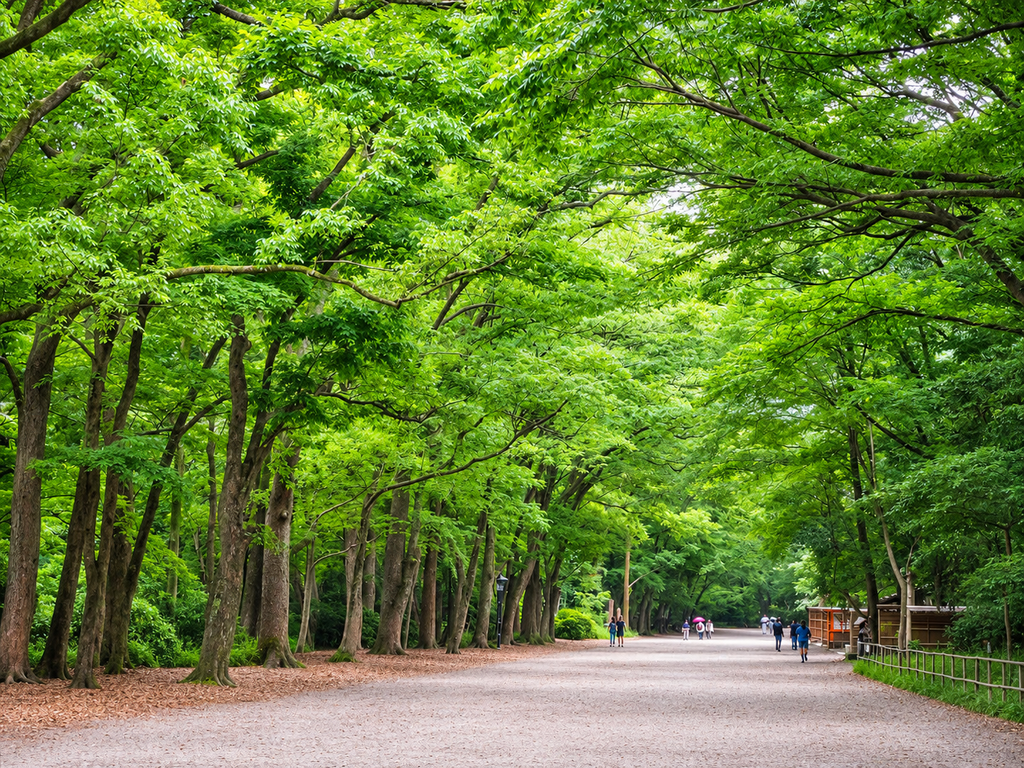
Tadasu no Mori is the reason to come. The forest covers around twelve hectares and is described as the last remnant of the woodland that once filled the plain where Kyoto now stands.
Walking the Long Approach From the South
Enter from the south end, not from the bus stop on the west side. The southern approach starts near the Kawai Shrine and runs north for roughly half a kilometre to the main vermilion tower gate. Walking the full length is the experience; arriving by the side entrance means you skip most of it.
The path is wide gravel with a small stream running alongside for part of the way. In summer the canopy keeps it noticeably cooler than the city. In late autumn the leaves turn later here than in the eastern hills, often into early December, which makes it a useful fallback once Tofuku-ji and Eikan-do have peaked.
Wear shoes you can walk on gravel in. Thin sandals make the half-kilometre feel twice as long.
Two Rivers, One Delta
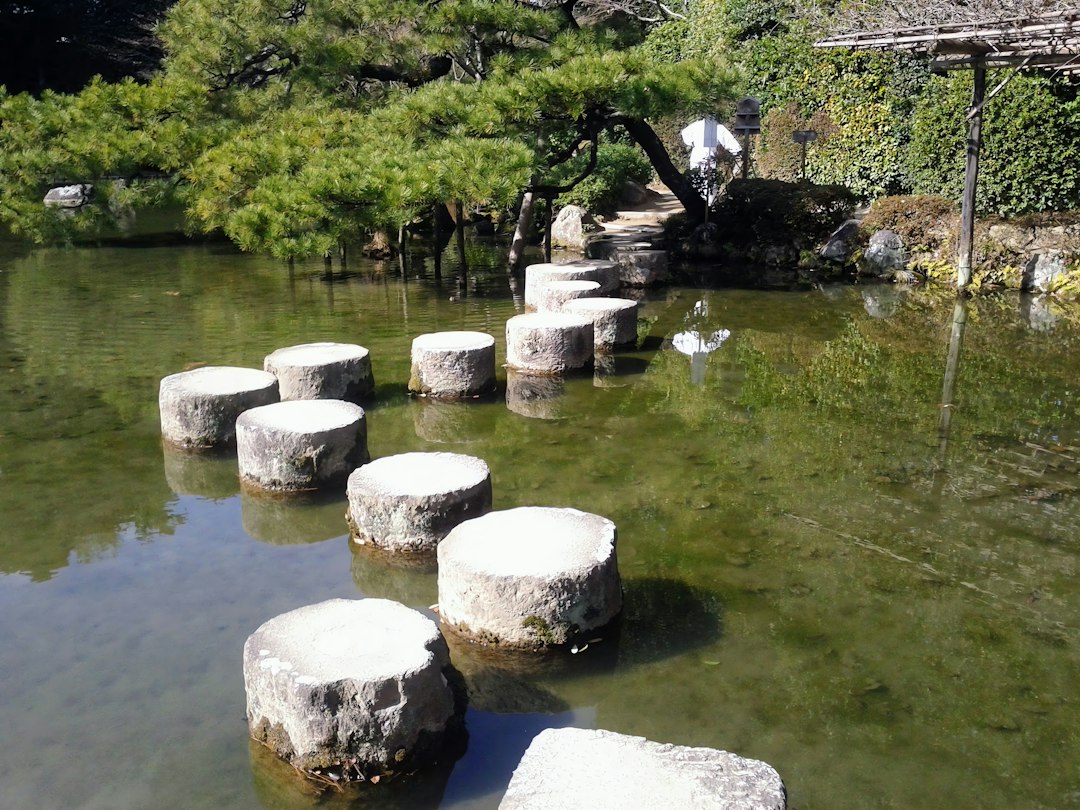
The shrine sits on the triangle of land where the Takano River joins the Kamo River. Walk south out of the forest and you reach the Kamogawa Delta at Demachiyanagi, where students sit on the banks and visitors hop across the turtle-shaped stepping stones.
That geography explains the shrine. Water is everywhere in its ritual life, from the stream that runs through the precincts to the purification pond at Mitarashi-sha. Standing at the delta first, then walking north into the trees, puts the whole site in context.
When the Forest Is Quietest
Early morning is best. Before nine, the people on the path are mostly locals walking to work, older residents stopping to bow at the gate, and the occasional runner. Tour groups tend to arrive mid-morning.
In our experience, travelers who time this visit for the first hour or two after opening describe it as the calmest part of their stay in Kyoto. The light comes through the canopy at a low angle, and the gravel has usually just been raked.
Expert Tip
Start at the Kamogawa Delta at Demachiyanagi, cross the stepping stones, and walk north through the entire forest rather than taking a bus to the shrine’s west gate. It adds about fifteen minutes and turns a shrine visit into a proper walk. On the way back, Demachiyanagi Station gives you the Keihan Line south and the Eizan Railway north to Kurama.
Inside the Precincts: Kawai, Aioi, and Mitarashi
The main halls get the attention, but the smaller shrines inside and around the precincts are where Shimogamo becomes personal. Three are worth your time.
Kawai Shrine and the Mirror Ema
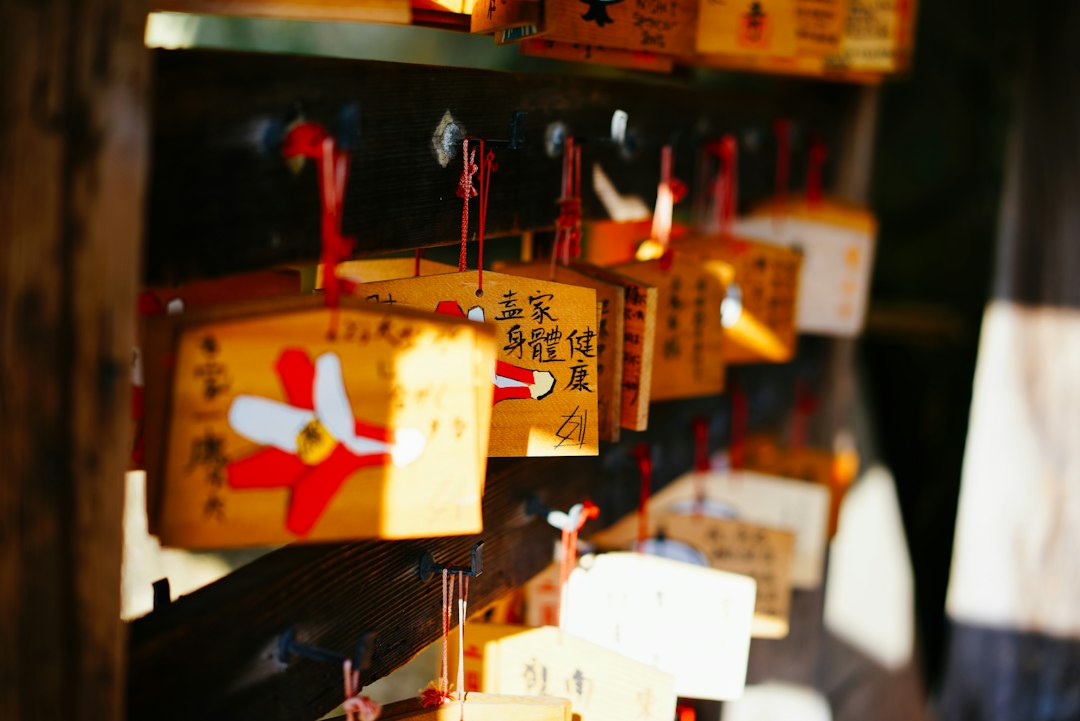
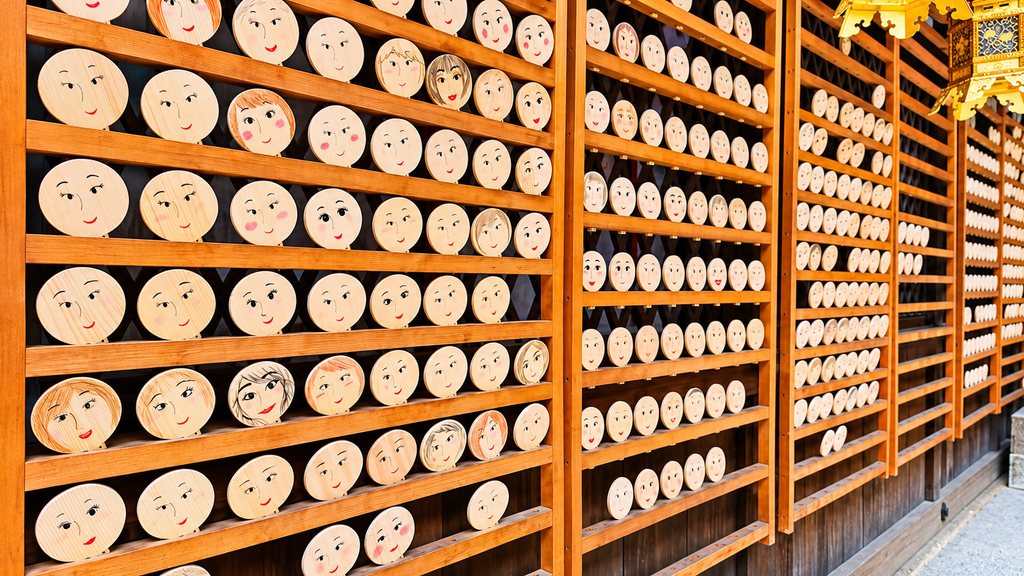
Kawai Shrine sits near the southern start of the forest path, so you pass it first if you follow our route. It honors Tamayori-hime as a goddess of beauty, and it is known for the kagami-ema, a wooden votive plaque shaped like a hand mirror with a blank face drawn on it.
Visitors draw or apply makeup to the face to reflect how they hope to look, then write a wish on the back. Some use their own cosmetics; coloured pencils are available for everyone else. It is one of the few shrine rituals that first-time visitors take part in without hesitation, and the rows of painted faces hanging together make it easy to see why.
Also in the Kawai grounds is a reconstruction of the small hut of Kamo no Chomei, the twelfth-century writer whose essay Hojoki is one of the classics of Japanese literature. He was the son of a Kawai Shrine priest. Few visitors stop for it, and it rewards two quiet minutes.
Aioi-sha and the Joined Trees
Aioi-sha, just inside the main gate area, is a shrine for marriage and relationships. Beside it stand the Renri no Sakaki, two sacred sakaki trees that have grown together into one.
Couples come here for obvious reasons. For everyone else, it is a clear example of how Shinto treats natural forms as sacred in themselves. Nothing has been built to make the trees meaningful. Their growth is the point.
Mitarashi-sha and the Dango Connection
At the back of the precincts, Mitarashi-sha stands over a small pond fed by spring water. The water rising through the pond bottom in bubbles is said to have inspired mitarashi dango, the skewered rice dumplings in sweet soy glaze sold all over Japan.
Kamo Mitarashi Chaya, a tea house a short walk from the shrine, claims to be where the dango originated and still serves them. We usually stop there after the shrine. A plate of dango and a cup of tea is the right pace after the forest.
Planning a Visit: Festivals, Access, and Where It Fits in a Day
Shimogamo is easy to reach and easy to underestimate. Most people allow thirty minutes and leave wishing they had allowed ninety, and the shrine calendar can change the visit entirely: on most days the forest is quiet, while on a handful of days it hosts some of the oldest ceremonies in Kyoto.
Aoi Matsuri on May 15 and Yabusame on May 3
The Aoi Matsuri, held on May 15, is one of Kyoto’s three great festivals. A procession in Heian-period court dress walks from the Imperial Palace to Shimogamo and then on to Kamigamo, with participants wearing hollyhock leaves, the aoi of the name.
The better event for most travelers is the Yabusame Shinji on May 3, a preliminary ritual for the Aoi Matsuri. Archers in hunting costume ride at full gallop down a course laid along the Tadasu no Mori path and fire at wooden targets. It is fast, loud, and over in seconds per rider. Arrive early for a spot along the course; the crowds stack several deep.
The Mitarashi Festival in Late July
In late July, around the hottest days of the year, the shrine holds the Mitarashi Festival. Visitors take off their shoes, roll up their trousers, and wade through the cold spring-fed pond at Mitarashi-sha carrying a candle to offer at the shrine, a ritual believed to ward off illness.
It is participatory, it happens after dark as well as during the day, and the water is shockingly cold in July heat. Bring a small towel and shoes that slip off easily. Check the shrine’s official site for exact dates, since they shift with the calendar each year.
Getting There by Keihan or Bus
The simplest route is the Keihan Line to Demachiyanagi, the northern terminus, then a walk of around ten minutes north across the delta and into the forest from the south. This is also the approach we recommend, because it gives you the full length of Tadasu no Mori.
City buses 4 and 205 stop at Shimogamo-jinja-mae on the west side, a few minutes’ walk from the main gate. Bus 205 is convenient from Kyoto Station but slow and often crowded; we use the train whenever we can. An IC card covers both, so there is no need to buy tickets.
Hours, Fees, and the Special Visit
The grounds open early in the morning and close around 5pm, and entry to the precincts and the forest is free. Hours can change on ceremony days.
A separate paid special visit gives access to inner buildings that are otherwise closed, during set daytime hours. For most first-time visitors the free grounds are enough. If you are interested in shrine architecture, the special visit is the only way to see the interiors close up.
Bring some cash. Offerings, ema, and amulets are usually paid for in yen at the counter, and the tea houses nearby are small, traditional businesses.
Building Shimogamo Into a Kyoto Day
Shimogamo works best as the start of a northern Kyoto day rather than a detour from the south. From the shrine you can continue to Kamigamo, take the Eizan Railway to Kurama and Kibune, or head south along the Kamo River toward the Imperial Palace grounds.
On our private Kyoto day tours, which have no fixed route, Shimogamo often replaces one of the famous southern-Kyoto stops for travelers who tell us they want quiet over landmarks. Your guide will time it for early in the day and pair it with somewhere nearby rather than sending you back across the city. One practical point from those tours: entry fees and transport for your guide are paid on the day, so carry enough cash for two.
Early starts change Kyoto more than any other decision you make here. Our early morning Kyoto guide explains why, and our crowd-free morning walking tour applies the same idea to Gion Shirakawa, Yasaka Shrine, and Kinkaku-ji. If you are building a short itinerary, our two-day Kyoto itinerary shows how to balance the north of the city against the busier south.
Expert Tip
At the purification fountain near the main gate, rinse your left hand, then your right, then pour a little water into your cupped left hand to rinse your mouth, and never drink straight from the ladle. Before the main halls, the usual pattern is two bows, two claps, one bow. Nobody will mind if you get it slightly wrong; what people notice is whether you pause before the gate at all.
Shimogamo Shrine: Frequently Asked Questions
Is Shimogamo Shrine free to visit?
Yes. The grounds, the main hall area, and the Tadasu no Mori forest are free to enter. A paid special visit opens some inner buildings during set hours, and offerings such as the mirror ema at Kawai Shrine carry their own small fees.
How long should I spend at Shimogamo Shrine?
Allow an hour and a half if you walk the forest from the south, stop at Kawai Shrine, and see the main precincts properly. Add thirty minutes for dango at the tea house nearby. Thirty minutes is enough only if you arrive by bus at the west gate and skip the forest, which we do not recommend.
Should I visit Shimogamo or Kamigamo Shrine?
If you only have time for one, choose Shimogamo. The forest approach and the smaller shrines give it more to experience, and it is easier to reach from central Kyoto. Kamigamo is quieter still and has its own distinctive cone-shaped sand mounds, so add it if you have a full day in the north.
Related Tours

Conclusion
Shimogamo Shrine is easy to treat as a box to tick, and that is the way to miss it. The buildings are handsome, but the forest, the water, and the small shrines along the way are what give the place its weight.
Take the Keihan Line to Demachiyanagi, cross the stepping stones at the delta, and walk north through Tadasu no Mori in the first hour after the gates open. Stop at Kawai Shrine on the way in, Mitarashi-sha on the way out, and the tea house for dango before you head on. That order, at that hour, is the version of Shimogamo we would choose for ourselves.
Plan Your Japan Trip with Local Experts
Our team has guided 40,000+ travelers across Japan. Tell us about your trip and we’ll get back to you within 24 hours.