In this article:
- How Yoyogi Park Fits Together
- Pairing Yoyogi Park With Meiji Shrine
- Yoyogi Park Through the Year
- Sundays, Bicycles and Picnics
- Yoyogi Park: Frequently Asked Questions
Introduction
Most first-time visitors reach Yoyogi Park by accident. They come out of Meiji Shrine, or wander off the end of Takeshita Street, and find themselves on a lawn so wide that the city seems to have stepped back.
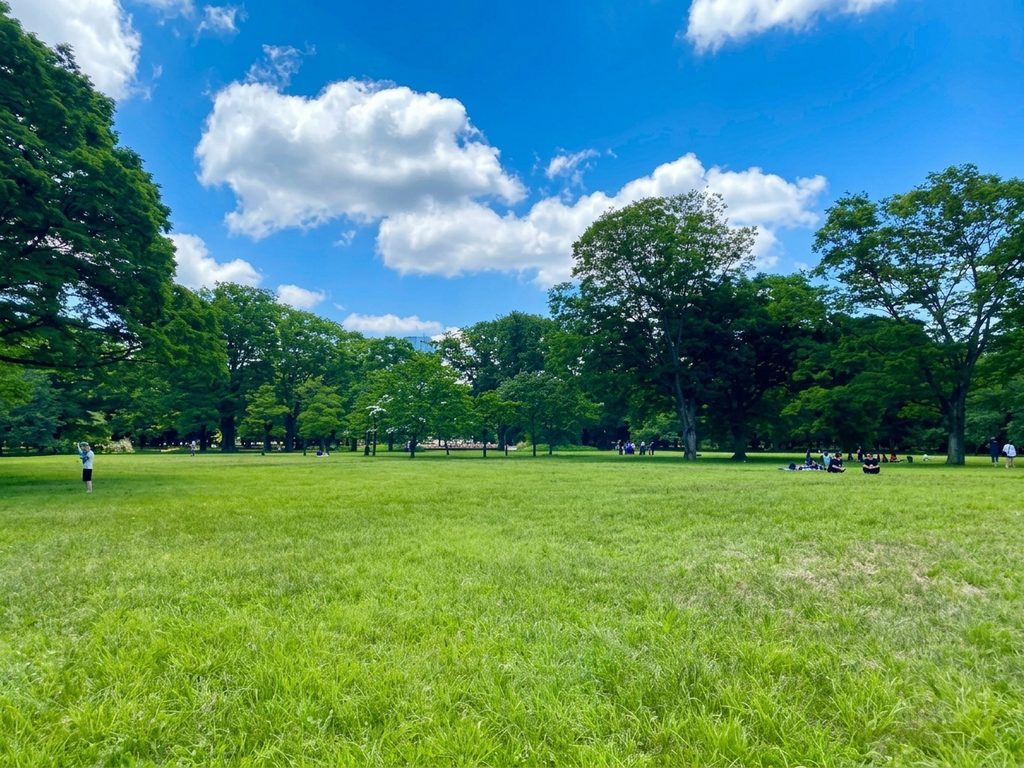
That is the real appeal. Tokyo has grander gardens and more famous cherry blossom spots, but few places where you can see this much open sky a few minutes from one of the busiest stations on the Yamanote Line. On a Sunday afternoon the park fills with dancers, drummers, dog walkers, and families spreading out lunch. On a weekday morning it belongs to joggers and crows.
We walk past it on almost every Meiji Shrine tour we run, and the question travelers ask most is not what to see there. It is how to fit it around the shrine without spending half a day doing neither properly. That is what this guide is built around.
How Yoyogi Park Fits Together
Yoyogi Park covers 54.1 hectares in Shibuya ward. Entry is free, there is no gate to close, and nobody checks your bag.
Its layout makes more sense once you know what the land was used for before it became a park.
From Parade Ground to Olympic Village
The site has had an unusually busy century. In December 1910 it was the launch point for the first powered aircraft flight in Japan. It then served as an army parade ground, and after the Second World War it became Washington Heights, a housing compound for United States military personnel during the occupation.
The land was returned for the 1964 Tokyo Olympics and turned into the athletes’ village. The park opened in 1967, which explains why it feels so different from older Tokyo gardens. There are no stone lanterns or carefully pruned pines here. Instead, there are big Western-style lawns, broad paths, and a fountain.
A trace of the Olympic years remains. One of the athletes’ lodging buildings, used by the Dutch team, still stands and reopened as a cafe in 2025. Just south of the park, Kenzo Tange’s Yoyogi National Gymnasium, built for the same Games, is still the most striking piece of architecture in the neighborhood.
Getting In: Harajuku, Yoyogi-koen and Meiji-jingumae
Three stations put you within a few minutes’ walk. JR Harajuku Station on the Yamanote Line is the obvious one. Meiji-jingumae Station on the Chiyoda and Fukutoshin subway lines sits at the same crossroads, and Yoyogi-koen Station on the Chiyoda Line brings you to the quieter western side.
For most visitors we suggest Harajuku. The main park entrance is a short walk from the station, and the entrance to Meiji Shrine is right beside it, which is the whole point of coming here.
If you are driving, there is a paid car park, but on weekends and holidays the park itself asks visitors to use public transport. Take the advice.
Section A and Section B
A road divides the park into two parts. Section A, on the Harajuku side, is the park most people picture: woodland, lawns, ponds, the fountain, and the cycling course.
Section B, across the road to the south, is given over to sports facilities and the Event Plaza with its outdoor stage. Most of the large weekend festivals happen here, not on the lawns.
On an ordinary day you will spend almost all your time in Section A. Check what is on in Section B only if you are visiting on a weekend and want food stalls and live music.
Pairing Yoyogi Park With Meiji Shrine
The shrine and the park share a border, a station, and a canopy of trees. They are still two very different places, and the order you visit them in makes a real difference.
Shrine First, Park Second
Meiji Shrine opens its gates at sunrise and closes them at sunset, so its hours shift through the year. The park never closes. That alone settles the order: go to the shrine while it is open and quiet, and leave the park for later.
In practice, the shrine is at its best in the first hour after the gates open. The gravel approach is freshly raked, the tour groups have not arrived, and you can hear your own footsteps. By late morning the main hall is crowded. The park, by contrast, improves as the day warms up and people come out to play.
Our Meiji Shrine walking tour meets near Harajuku Station and takes about two hours. Travelers who book an early start usually finish with the whole afternoon free, and many of them walk straight into Yoyogi Park afterwards with a coffee. It is an easy way to structure the day.
Two Forests That Look Alike and Are Not
From the air, the shrine forest and the park woodland blend into one green block. On foot, they feel nothing alike.
The Meiji Shrine forest was planted by hand in the 1920s, with trees donated from across Japan, and designed to grow into a self-sustaining natural forest over a long period. It was planned to look as though nobody had planned it. The paths are shaded, enclosed, and hushed.
Yoyogi Park was designed for people rather than for a deity. Its sightlines are long, its lawns are open, and it invites you to sit down, stretch out, and stay. Walking from one into the other in the same morning is the best way to understand the difference between a sacred space and a public one in Tokyo.
Yoyogi Park Through the Year
The park changes more than most in Tokyo, because so much of it is open ground. What you find depends heavily on the month.
Cherry Blossoms and Hanami
Cherry blossoms usually peak in Tokyo in late March or early April, and Yoyogi Park becomes one of the city’s busiest hanami spots. It has fewer cherry trees than Ueno Park or Shinjuku Gyoen. What it has instead is space, and a younger, louder crowd that spreads out picnic sheets under the trees from mid-morning until well after dark.
If you want the party atmosphere, come on a weekend afternoon. If you want to see the blossoms themselves, come on a weekday before 8am. Rules for hanami gatherings in Tokyo parks have changed several times in recent years, so check the park’s current notices before you plan anything elaborate. For a wider look at where else to go, see our guide to cherry blossom spots in Tokyo.
Ginkgo Gold in Late Autumn
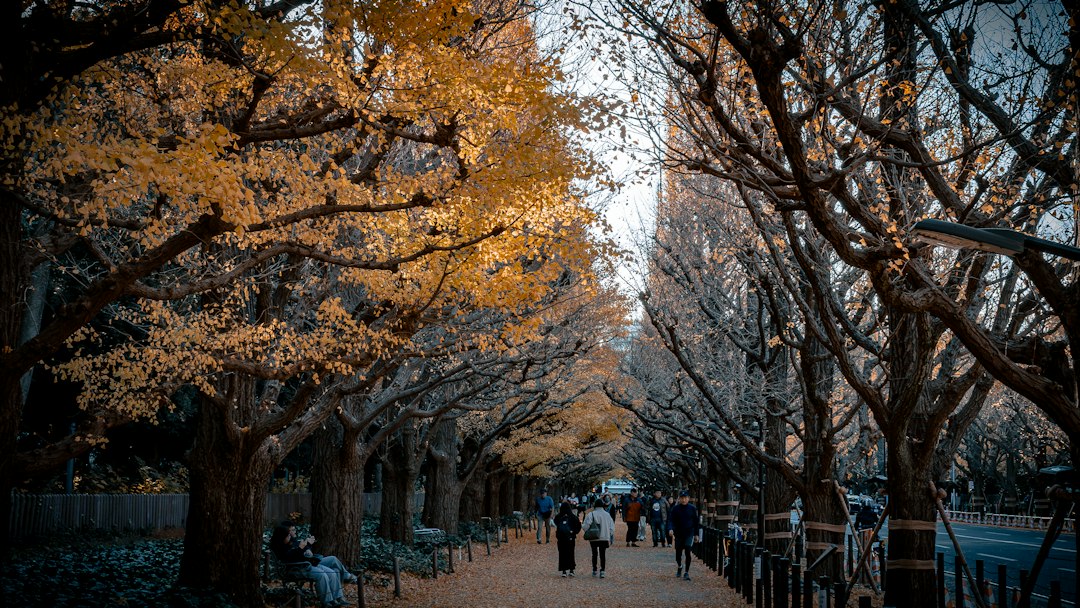
We think autumn is the park’s best season, and it gets far less attention than spring. The ginkgo trees turn a deep, even gold, usually from late November into early December, and the fallen leaves carpet the paths.
Unlike the famous ginkgo avenue at Meiji Jingu Gaien, there are no crowds with tripods here. The air is cool, the light is low and yellow by mid-afternoon, and the lawns are comfortable again after the summer.
Summer Heat and Weekend Festivals
Summer in Tokyo is hot and humid, and the open lawns offer little shade in the middle of the day. Mosquitoes are also active near the ponds and in the wooded areas. Carry repellent from June to September.
Summer, and the months either side of it, is also festival season in Section B. Earth Day Tokyo is held in the Event Plaza in April, and the Thai Festival takes over the area around the outdoor stage in May. Other international food festivals run on many weekends through the warmer months. Entry to most of them is free, and you pay for food and drink at the stalls.
Sundays, Bicycles and Picnics
Weekdays at Yoyogi Park are for walking. Sundays are for watching people, and that is not a lesser experience.
The Rockabilly Dancers
For decades, groups of rockabilly dancers have gathered near the Harajuku entrance on Sunday afternoons. They wear leather jackets, sharply pressed jeans, and pompadours that defy the humidity, and they dance to 1950s rock and roll from a portable speaker.
There is no published schedule, so seeing them is partly a matter of luck. Afternoons are the most reliable time. Photographs are generally fine from a respectful distance, but ask before taking close-ups, and do not step into the circle while they are dancing.
The dancers are only the most famous part of it. On the same Sunday you may pass drum circles, amateur bands, jugglers, and people practising martial arts or dance routines on the lawns. None of it is staged for visitors, which is why it is worth an hour.
Renting a Bike
Section A has a cycling course of about two kilometres, and the rental centre inside the park, now called Pedalico, lends bicycles by the hour. At the time of writing, a standard bike costs ¥300 per hour, and tandems are also available.
The rental centre is open from 9:00 to 16:30 and closes on Mondays. Bikes cannot be taken outside the park. It is a pleasant half hour, particularly with children, but it is not a way to see Tokyo. For that, rent elsewhere.
Putting Together a Picnic
A picnic is the most local thing you can do here. Convenience stores around Harajuku Station sell everything you need: onigiri, sandwiches, fruit, drinks, and a cheap plastic sheet to sit on.
For something better, walk ten minutes up Omotesando before you arrive, or stop at a bakery in the backstreets of Harajuku. Our guide to Harajuku and Omotesando covers the area in more detail.
Bins are scarce, as they are everywhere in Tokyo. Bring a bag and take your rubbish with you when you leave.
Expert Tip
If you are coming for the Sunday atmosphere, do the shrine in the morning, eat lunch in Harajuku, and enter the park around 1pm. By then the dancers, bands, and picnickers are settling in, and you avoid the hottest, emptiest part of the lawns before noon.
Yoyogi Park: Frequently Asked Questions
Is Yoyogi Park free, and when does it close?
It is free, and the park itself is open around the clock every day of the year. Individual facilities keep their own hours: the bicycle rental, for example, closes at 16:30 and does not open on Mondays. Paths through the wooded areas are dark after sunset, so we suggest keeping evening walks to the main routes.
How far is Yoyogi Park from Meiji Shrine?
They are neighbours. The main entrances of both sit a few minutes’ walk apart near Harajuku Station, and the park’s northern edge borders the shrine forest. Walking from the shrine’s main hall back out to the park takes around fifteen to twenty minutes at an unhurried pace.
What is the best day to visit Yoyogi Park?
Sunday, if you want to see the park at its most animated, with rockabilly dancers, musicians, and picnics across the lawns. A weekday morning, if you want space and quiet. For most visitors combining it with Meiji Shrine, a Sunday works well, provided you reach the shrine early before the crowds build.
Related Tours

Conclusion
Yoyogi Park rewards the traveler who stops trying to see it. There is no single sight to tick off, no ticket, no highlight to queue for. What it offers is a rare stretch of open space in central Tokyo, and a view of how the city relaxes when it has room to.
Plan the morning around Meiji Shrine, while the gates are newly open and the gravel is quiet, then walk into the park and let the rest of the day loosen. Bring something to sit on, check whether a festival is running in Section B, and if it is autumn, look up.
Plan Your Japan Trip with Local Experts
Our team has guided 40,000+ travelers across Japan. Tell us about your trip and we’ll get back to you within 24 hours.