In this article:
- Why Japan Makes Fake Food
- Two Ways to Make Food Samples in Asakusa
- Food Sample Making With Children
- Building an Asakusa Day Around the Workshop
- Asakusa Food Sample Making: Frequently Asked Questions
Introduction
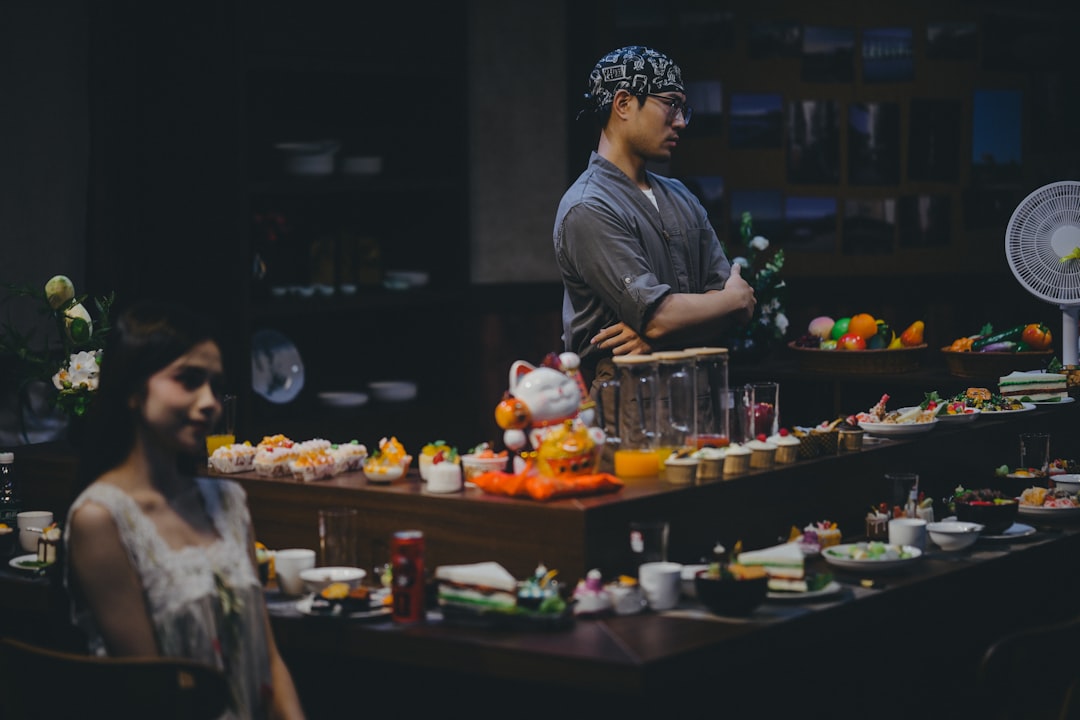
Asakusa food sample making is one of Tokyo’s rare activities that children and grandparents can enjoy equally. You pour warm wax into water. Within seconds, it turns into crisp, lacy shrimp tempura batter. The finished sample looks almost good enough to eat.
Anyone who has walked past a Japanese restaurant has seen the result. Bowls of ramen sit behind the glass. Noodles hang suspended in mid-lift. Beer glasses hold foam that never settles. Tall parfaits stand beside them. These replicas, called shokuhin sampuru, are so ordinary in Japan that locals barely look at them. Visitors, on the other hand, tend to stop and stare.
By making one yourself, you can understand how artisans create them. Asakusa is the natural place to try it. The street that supplies Tokyo’s restaurant trade runs along its western edge. Below, we compare the two workshops most travelers choose between. We also explain how we would plan the day for a family.
Why Japan Makes Fake Food
Food samples solve a practical problem. A diner standing on the pavement can see exactly what arrives, how big the portion is, and what it costs, before sliding open the door.
From a Wax Omelette in Osaka to Every Restaurant Window
People generally credit Takizo Iwasaki, a businessman from Gujo Hachiman in Gifu Prefecture, with founding the industry.. The story he told was that drops of candle wax on a tatami floor gave him the idea. In 1932, one of his wax omelettes went into a display at a department store in Osaka, and the business he built from it is still running today as Iwasaki Be-I.
Wax was the original material. Today, restaurants usually use plastic resin to make their display samples because it withstands the heat of a shop window much better. However, wax has not disappeared. Artisans still use this material to teach the traditional technique, and that is exactly what makes an older-style workshop worth trying.
Gujo Hachiman itself became the center of production, and it remains the place most associated with the craft. For travelers based in Tokyo, though, a day trip to Gifu is a long way to go for a class. Asakusa offers the same hands-on introduction without leaving Tokyo.
Kappabashi, the Street That Supplies the Kitchens
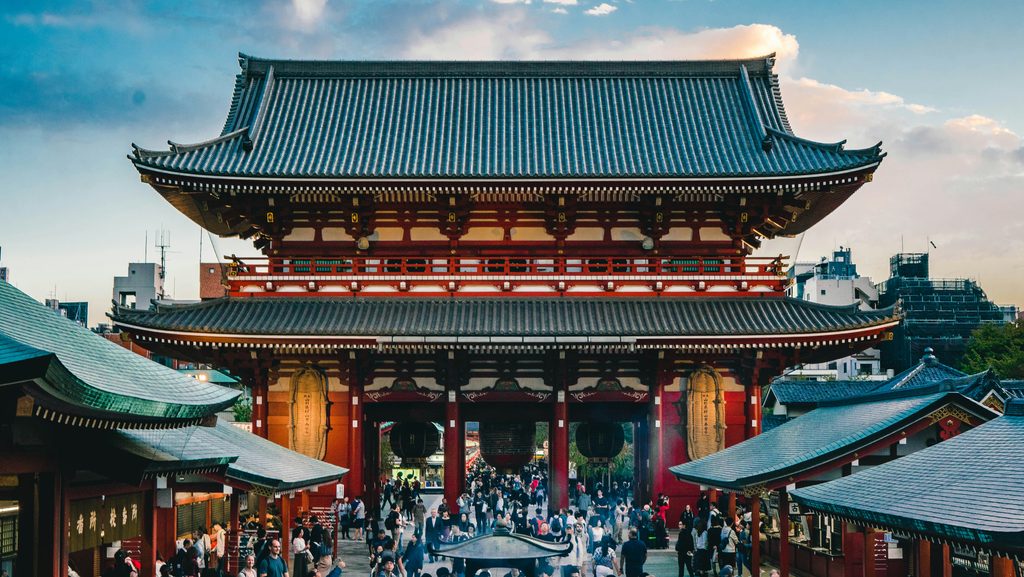
Kappabashi Dougu Street sits between Ueno and Asakusa. The street association describes it as 800 meters long with more than 170 shops, the largest shopping street in Japan devoted to kitchen equipment. Merchants began gathering here around 1912.
Restaurant owners come here for everything: lacquer trays, noren curtains, paper lanterns, rice cookers, chef’s whites, and the food samples for their windows. Walking it is a lesson in how a Japanese restaurant is physically put together. We find that travelers who have spent a few days eating in Tokyo start recognizing objects from the places they ate, which is a surprisingly satisfying experience.
That context is what separates food sample making here from a craft class in a shopping mall. You are learning a trade on the street where the trade is sold.
Two Ways to Make Food Samples in Asakusa
Two workshops account for most English-language searches on this topic, and they suit different travelers. Booking platforms also resell several of these classes under their own titles, so check the provider name before you pay.
Ganso Shokuhin Sample-ya: Wax Tempura and Lettuce on Kappabashi
Ganso Shokuhin Sample-ya is the retail brand of Iwasaki, the company that grew out of that first omelette. Its Kappabashi store is at 3-7-6 Nishi-Asakusa, about a five-minute walk from Exit A2 of Asakusa Station on the Tsukuba Express, and roughly ten minutes on foot from Senso-ji.
The class uses the traditional wax method. You make two pieces of tempura, choosing from options such as shrimp, eggplant, pumpkin, and shiitake, plus a head of lettuce. The tempura is the dramatic part: colored wax is poured into warm water from a height, blooms into a batter-like crust, and is then wrapped around the filling. The lettuce is quieter and more difficult. White and green wax are layered, pulled, and folded into leaves, and it rarely looks right on the first fold.
According to the shop’s official page, the class costs ¥3,300 per person including tax and takes about 40 minutes. Classes hold up to six people, run at set times through the day, and must be reserved online. You take what you made home with you.
Two details matter for visitors. The explanation is given in Japanese, and the shop recommends one interpreter for every four participants. In practice, the demonstration is visual enough that most adults can follow along, although children who cannot yet read instructions may need a translator.
Food Sample Making Cafe: Make the Omurice, Then Eat It
The Food Sample Making Cafe is in Hanakawado, on the east side of Asakusa near the Sumida River, about four to five minutes on foot from the Ginza Line and Tobu Asakusa stations. It opened in 2024 and takes a different approach.
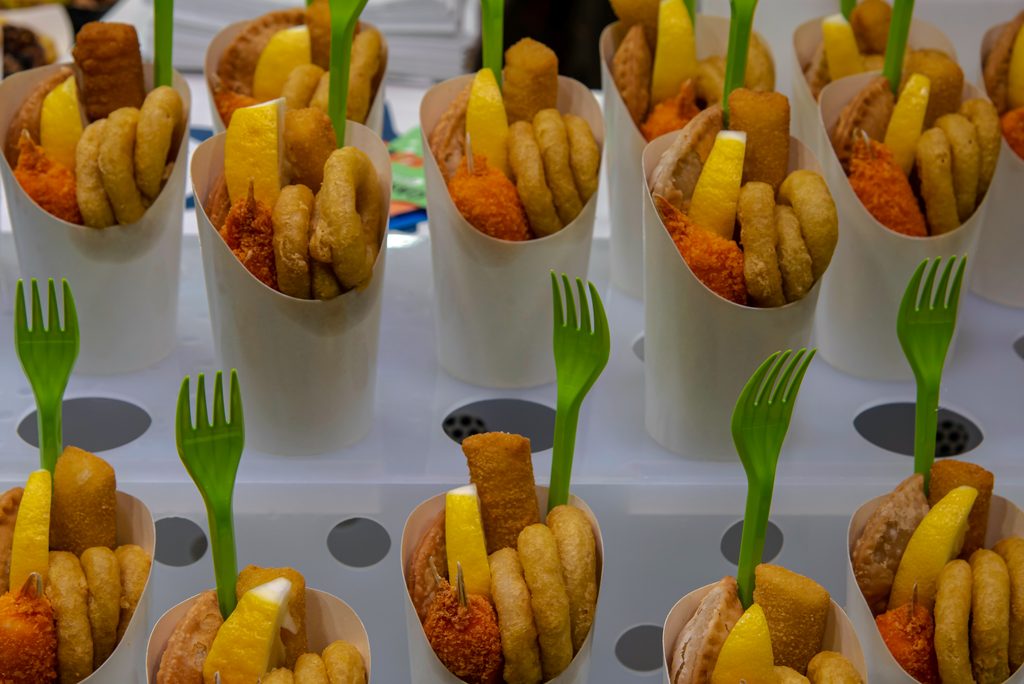
Here you choose one dish to build: omelette rice, spaghetti with meat sauce, a crepe, or a jelly parfait. The materials are pre-cut resin pieces rather than molten wax, so the work is assembly and finishing, not pouring. With the meal course, the kitchen then serves you the real version of the dish you just made, and most people spend the next five minutes photographing the two side by side.
The official price list shows ¥4,600 including tax for the making experience with a drink, taking around an hour, and ¥5,600 with the meal included, taking around 90 minutes. Accompanying guests who are not making anything pay ¥1,000 for a drink or ¥2,000 with a meal. At least one person in each group has to do the workshop, and each participant can bring up to two guests. The cafe notes that halal and vegetarian meals are not currently available.
Reservations are made online through TableCheck, and slots start on the hour. The cafe also says it can close irregularly when bookings are light, which is another reason not to turn up without one.
Which One We Would Book
For most adults, we recommend Kappabashi. Pouring wax is a real technique with a real history, and the 40 minutes pass quickly. It also puts you on the kitchenware street, which is worth an hour of its own.
For families with younger children, the café is the easier choice. The steps are more forgiving, the result reliably looks like the photograph, and lunch is built in. If your group has one keen cook and one reluctant teenager, the café’s accompanying-guest set solves that neatly.
Expert Tip
Book the Kappabashi class for early afternoon rather than first thing. The morning is better spent at Senso-ji before the crowds build, and an early-afternoon class leaves you on Kappabashi Dougu Street while its shops are still open, with time to browse after your tempura has cooled.
Food Sample Making With Children
This is one of the activities we suggest most often to families traveling in Tokyo. Children get something they made with their own hands, and parents get forty minutes indoors in the middle of a long day on foot. For a wider view of how to pace a family trip, our guide to traveling in Japan with kids covers itineraries, strollers, and the attractions that hold up.
Age Limits and What Small Hands Can Manage
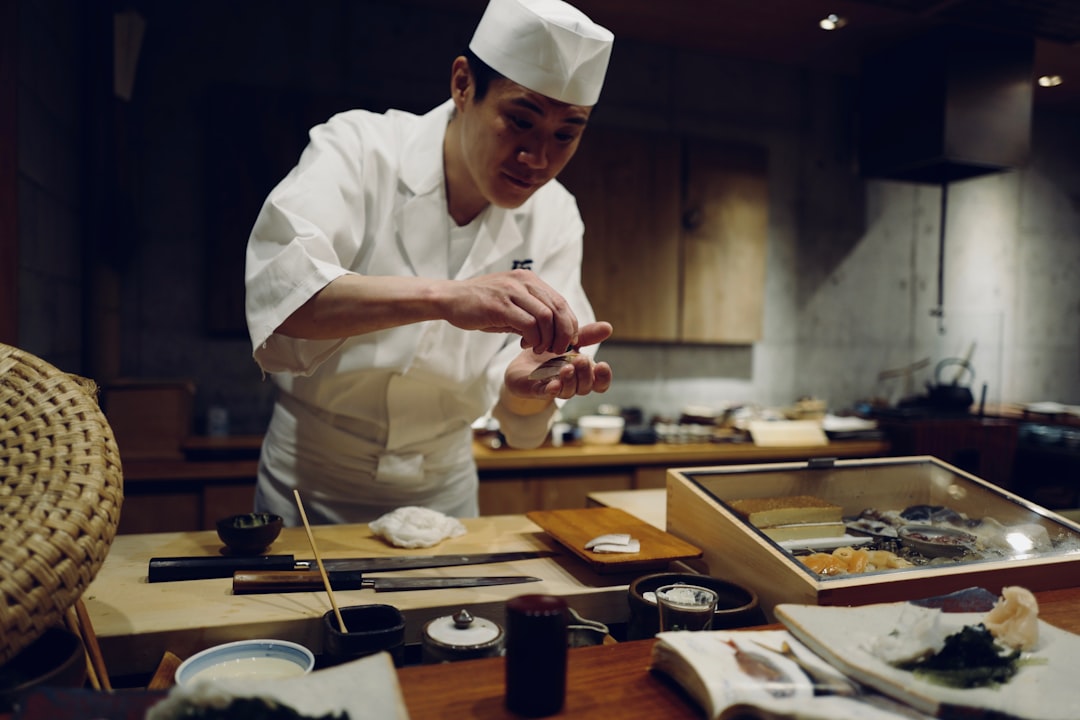
Ganso Shokuhin Sample-ya accepts participants from the first grade of elementary school, which in Japan means around age six. Preschoolers cannot join the class. That rule makes sense once you see the setup, since the wax and the water are warm and the work needs a steady hand.
The café is gentler for small children. Cutting resin pieces and arranging them on a plate is closer to a detailed craft project than a technique, and it produces a satisfying result even when the hands doing it are young. We would still check age conditions with the café when booking, since its official menu page does not state a minimum.
Older children, roughly ten and up, tend to prefer the wax class. The lettuce in particular is difficult enough to feel like an achievement.
Language, Group Size, and Parents Who Want to Watch
At Kappabashi, up to two non-participants can watch each class for an entrance fee of ¥500 each. That works well for a parent who would rather photograph than pour. Video is not allowed, and still photos are fine provided other guests are not in the frame.
Group size is the other constraint. With six places per standard class, a family of five should book as early as possible. Larger groups can ask about reserving a class for themselves.
The language question is real at Kappabashi and much smaller at the café. If you have a guide with you that day, bring them in. Otherwise, the adults in the group can generally follow the demonstration and relay it.
Building an Asakusa Day Around the Workshop
A food sample class is an hour at most. The question is what you do with the rest of the day, and Asakusa makes that easy.
Senso-ji in the Morning, Kappabashi After Lunch
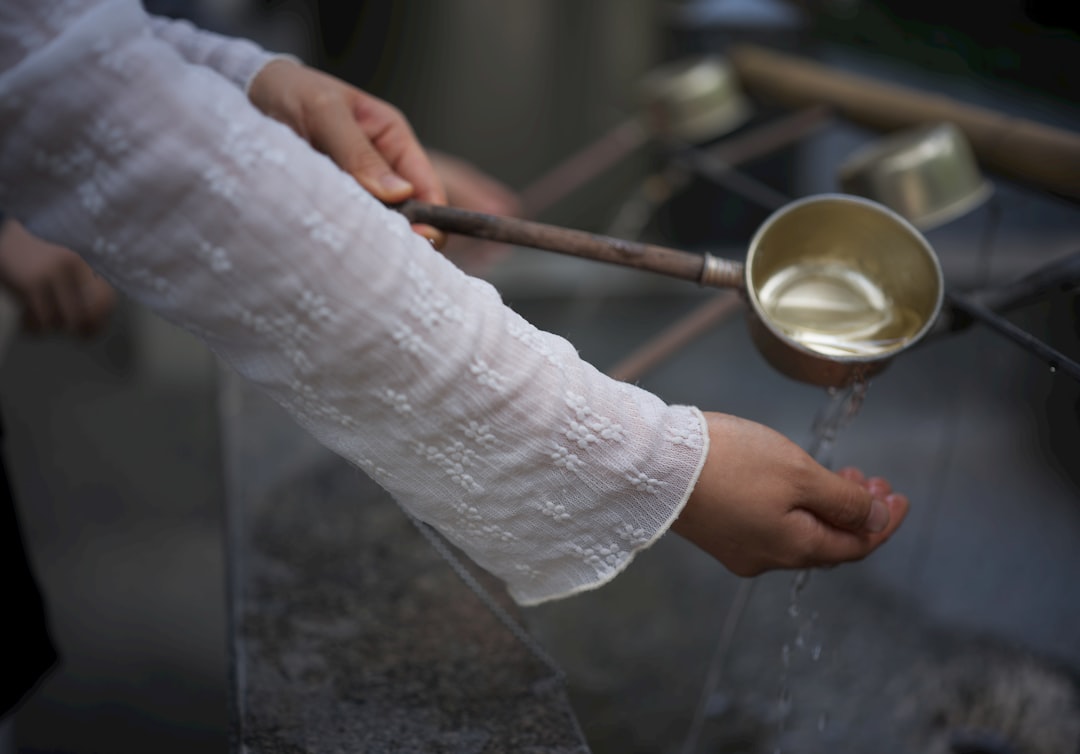
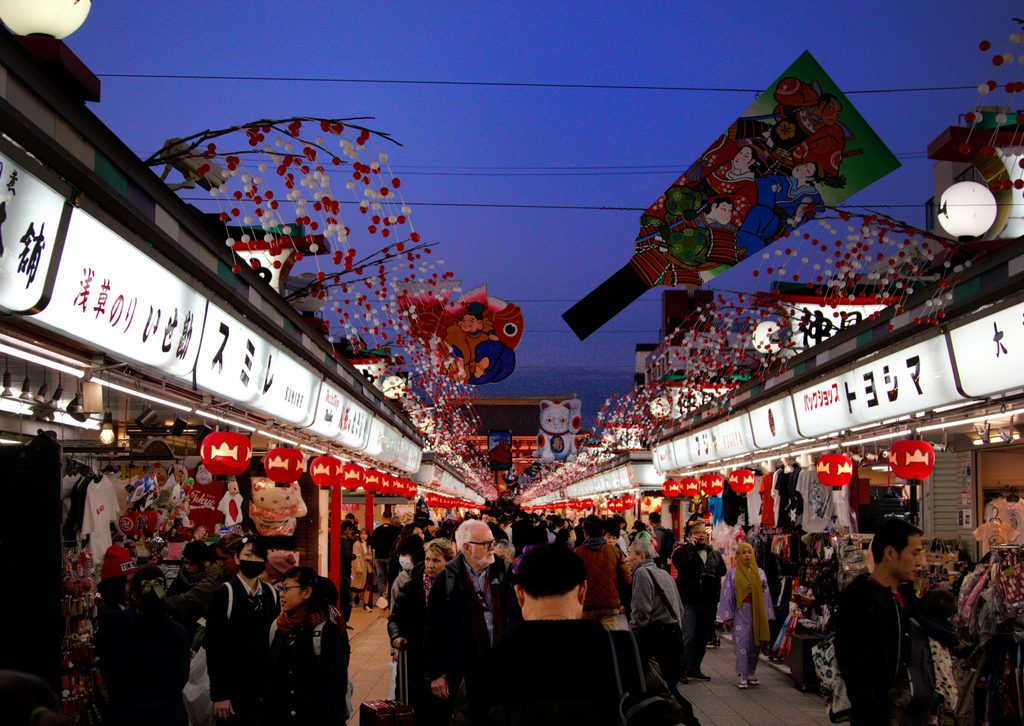
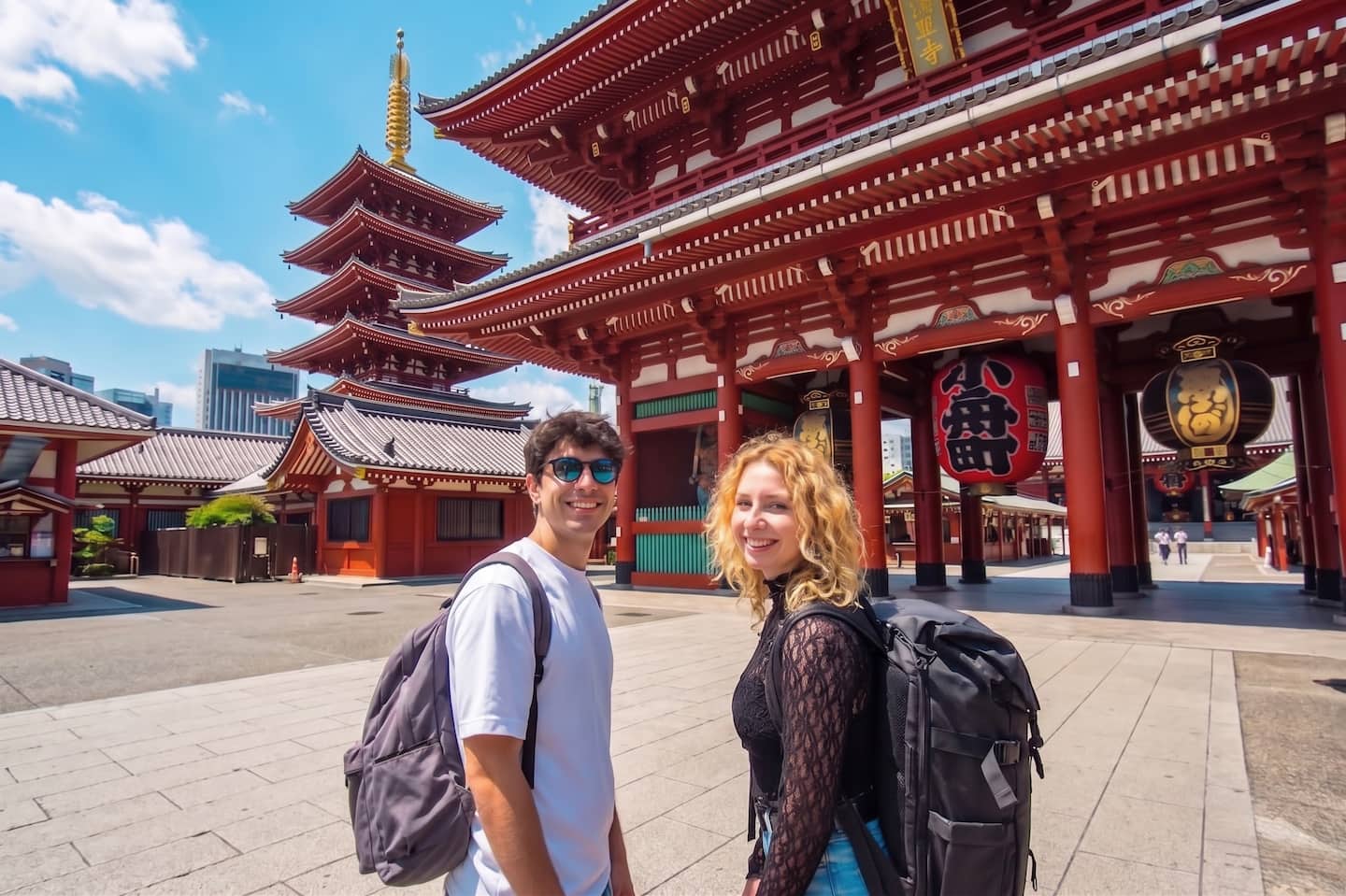
We would start at Kaminarimon. Senso-ji is at its calmest early, before tour groups fill Nakamise, and it is where children first learn what to do with the incense smoke and the water basin. Our Asakusa walking tour guide explains what to look for.
Our own Asakusa walking tour meets at the Starbucks beside Kaminarimon and spends two hours on foot through Senso-ji, Nakamise, and the lanes behind it. The route is flat, which suits children and older travelers alike. When it ends, Kappabashi is a short walk west, and a light lunch along the way still gets you to an early-afternoon class with time to spare.
Lunch itself can be done standing up. The snacks sold around the temple, from ningyo-yaki cakes to menchi-katsu, are covered in our guide to Asakusa street food. That said, if you have booked the café’s meal course, skip the snacks; the omurice is a proper portion.
Shopping the Street Before You Leave
Leave time after the class. The Ganso shop sells finished samples and small replica-food goods, and it is a sensible place to buy one if the workshop has converted you. Prices vary with size and detail, so agree on a budget with children before you walk in.
Beyond that, walk the length of Kappabashi. Knife shops, ceramics dealers, and lacquerware stores sit next to wholesalers selling plastic bowls by the hundred. The Ganso store itself closes at 17:30, and many of the trade shops keep similar daytime hours, so do not leave the shopping until dusk.
Expert Tip
If you plan to try both, do the café first and Kappabashi second, ideally on separate days. Assembling a resin omurice shows you what a finished sample should look like, and the wax class then shows you how much of that realism comes from the pour. Children who have done the easier one first also tend to be more patient with the lettuce.
Asakusa Food Sample Making: Frequently Asked Questions
Do I need to book a food sample workshop in advance?
Yes. Ganso Shokuhin Sample-ya takes reservations online for fixed class times and caps each class at six people, so weekend and school-holiday slots go early. The Food Sample Making Cafe also works on online reservations and accepts same-day bookings when there is space, but it may close on days with few reservations. Book a week or more ahead if your dates are fixed.
Is the class taught in English?
At the Kappabashi store, the explanation is in Japanese, and the shop recommends bringing an interpreter for groups. The demonstration is visual, so most adults manage. The café has English and Japanese menus and staff guide you through each step, which makes it the easier choice if nobody in your group speaks Japanese.
Can I take my food sample home?
Yes, at both workshops. The finished piece is light and goes home with you the same day. Pack it in hand luggage wrapped in a sock or a scarf, because the delicate parts, such as the tempura batter or the lettuce edges, break more easily than the solid pieces suggest.
Related Tours
Conclusion
Choose the workshop by who is in your group. Adults and older children will get more from pouring wax at Kappabashi, where the class is short, the technique is the traditional one, and the street outside is worth exploring. Families with young children, or anyone who wants lunch included, will find the café in Hanakawado less demanding and just as photogenic.
Whichever you pick, reserve it before you land, and plan it for the afternoon. Spend the morning at Senso-ji, eat something from a stall on the way west, and keep an hour after the class for the kitchenware shops. You will leave Asakusa with a piece of tempura that never goes cold, and you will start noticing the samples in every restaurant window for the rest of the trip.
Plan Your Japan Trip with Local Experts
Our team has guided 40,000+ travelers across Japan. Tell us about your trip and we’ll get back to you within 24 hours.