In this article:
- Nakasu Yatai and Hakata Ramen
- Historic Shrines and Temples
- Parks, Shopping, and the Modern City
- The Coast: Fukuoka Tower and Beyond
- Day Trips from Fukuoka
- Visiting Fukuoka: Frequently Asked Questions
Introduction
Fukuoka has an airport twelve minutes by subway from the city centre. That single fact shapes the whole experience — you land, you drop your bag, and you are eating within the hour. No other major Japanese city is arranged this conveniently.
It is also the last place in Japan where street food stalls operate at scale. Roughly a hundred yatai set up along the riverbanks and pavements each evening, and eating at one is a genuinely different social experience from anything in Tokyo or Kyoto.
Travelers tend to allocate a night here in transit to somewhere else. In our experience that is a mistake worth correcting — three days is the number that lets Fukuoka be a destination rather than a connection.
Nakasu Yatai and Hakata Ramen
Fukuoka’s food is the reason to come, and two things dominate.
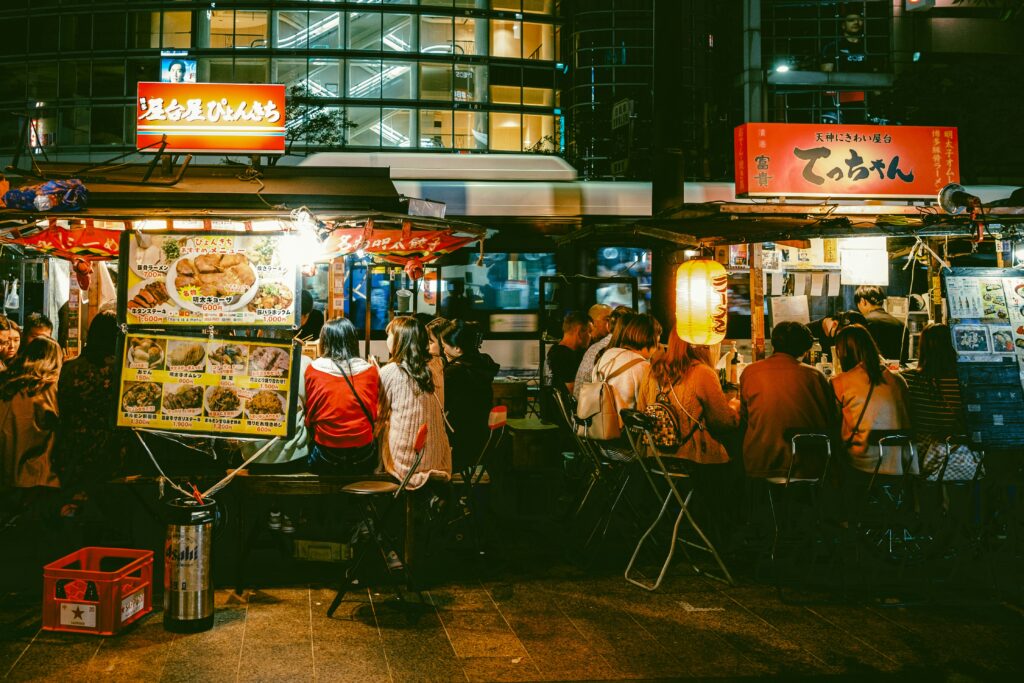
The Nakasu Yatai
The yatai are wooden carts with canvas sides, seating perhaps eight people on stools around a counter. They appear on the Nakasu riverbank around six in the evening and pack down before dawn. Yakitori, oden, ramen, and cold beer are the standards.
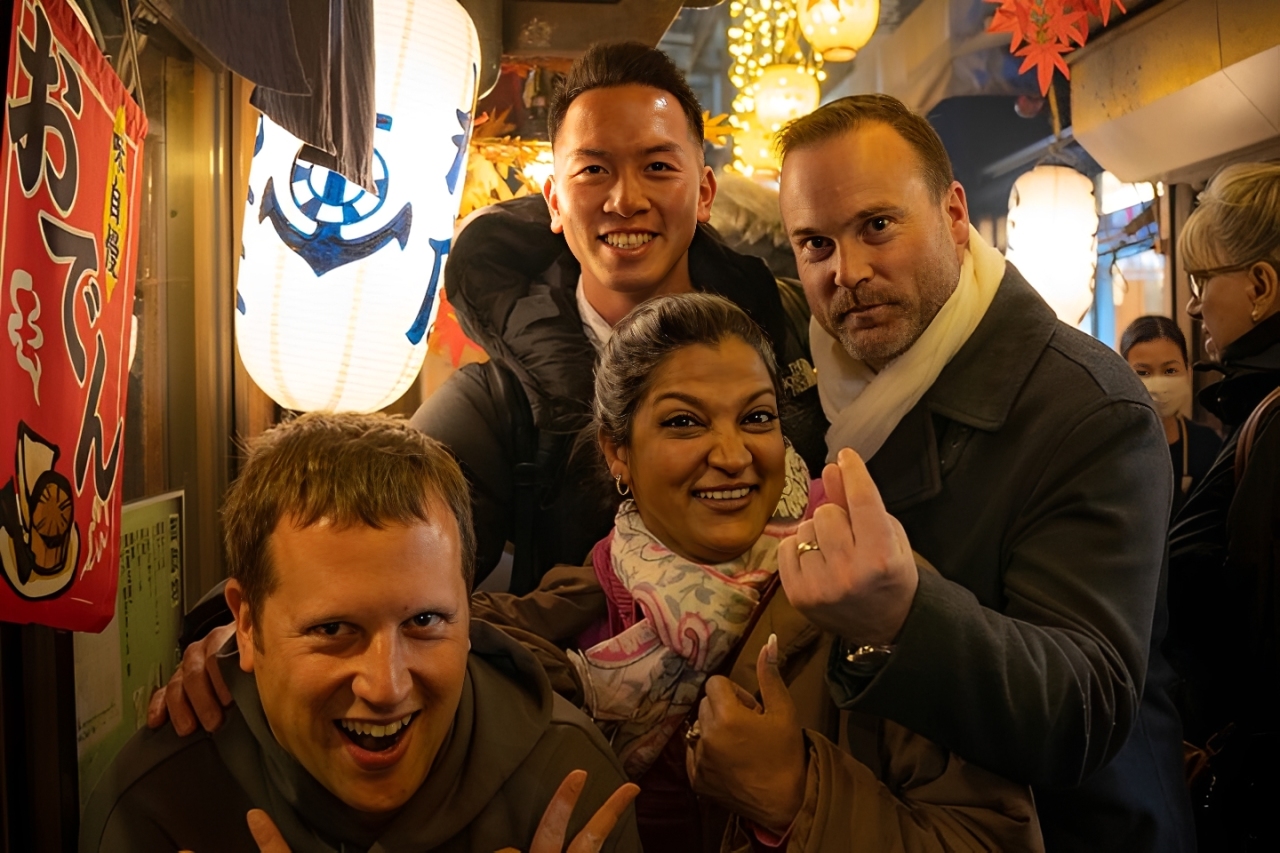
The seating is the point. You will be shoulder to shoulder with Fukuoka office workers, and the small size makes conversation almost unavoidable. We recommend arriving around 7pm on a weekday — by nine on a Friday the queues at the better stalls run twenty minutes.
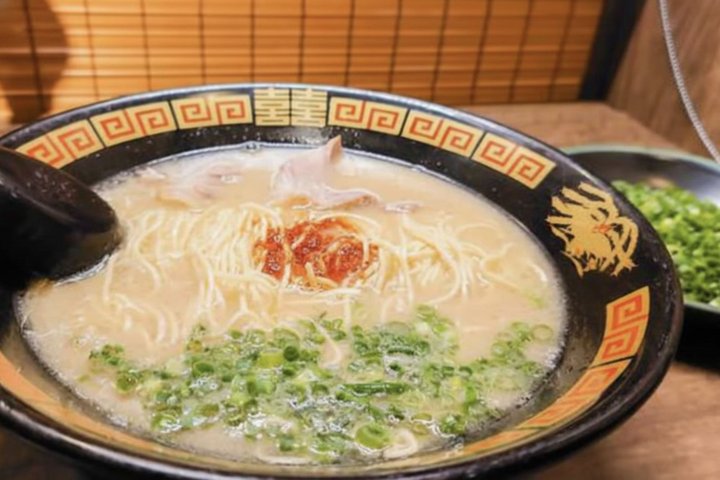
Hakata Tonkotsu Ramen
Hakata ramen is a pork bone broth boiled hard for hours until it turns opaque and heavy, served with very thin, very firm straight noodles. It is richer and more direct than the soy-based ramen most visitors know from Tokyo.
Order kaedama — a second helping of noodles dropped into your remaining broth for a couple of hundred yen — when you are about two-thirds down. Specify barikata if you want the noodles firm, which is how locals eat them.
Motsunabe and Mizutaki
Beyond ramen, two hot pots define local cooking. Motsunabe is beef offal simmered with cabbage and garlic chives in a soy or miso broth, better than that description suggests. Mizutaki is a clear chicken hot pot, subtle where motsunabe is bold.
Both are winter dishes by tradition and available year-round. If you have one non-ramen meal in Fukuoka, we would point you at mizutaki — it is the more distinctive of the two and harder to find elsewhere.
Expert Tip
Yatai are cash-only, seats are limited, and there is an unwritten expectation that you order a drink alongside your food and move on within an hour or so. Do not treat one as a long dinner. The local pattern is two or three stalls in an evening, one dish and one drink at each.
Historic Shrines and Temples
Fukuoka’s religious sites are working places of worship rather than monuments, and they are busiest with locals.
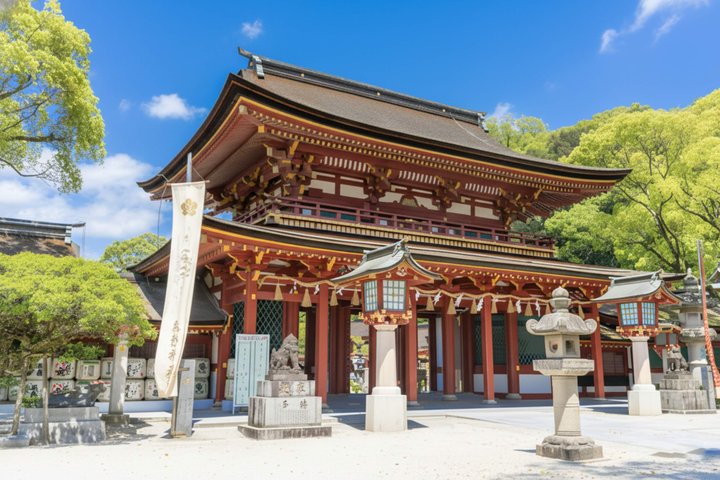
Dazaifu Tenmangu
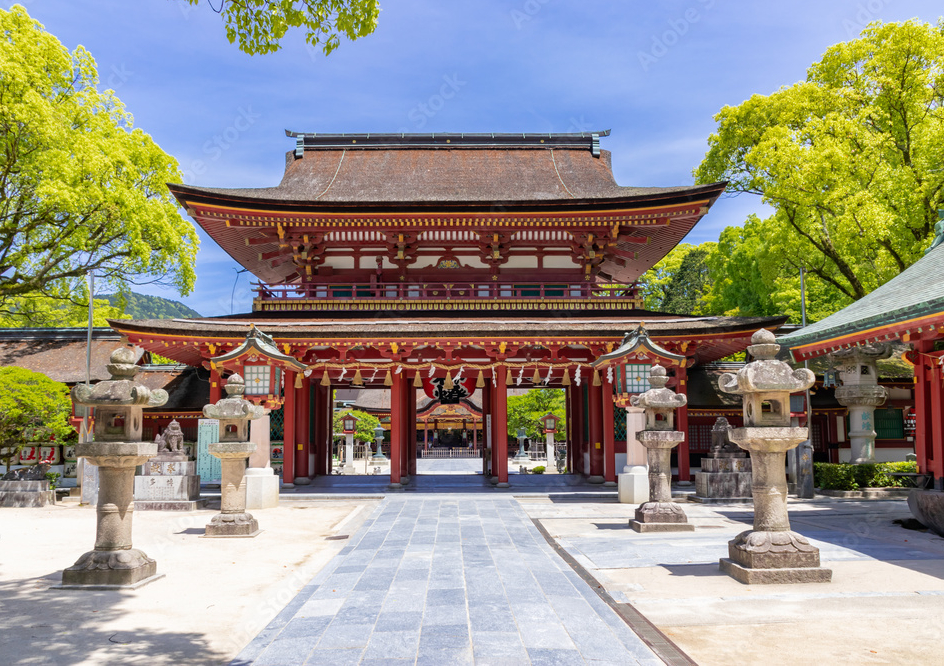
Thirty minutes by train from the centre, Dazaifu Tenmangu is dedicated to Sugawara no Michizane, the deity of learning. In exam season the approach is thick with students buying charms, which gives the place a purpose you can feel.
The approach street is lined with shops selling umegae mochi — grilled rice cakes with red bean filling, stamped with a plum blossom. Eat one hot; they lose most of their appeal within ten minutes.
Kushida Shrine
Kushida sits in the middle of the city and is the spiritual home of the Hakata Gion Yamakasa festival. One of the enormous decorated floats is on display year-round in the grounds, which is the only way most visitors will see one at close range.
The festival itself runs in the first half of July and culminates in a pre-dawn race through the streets. If your dates align, rearrange them to be here.
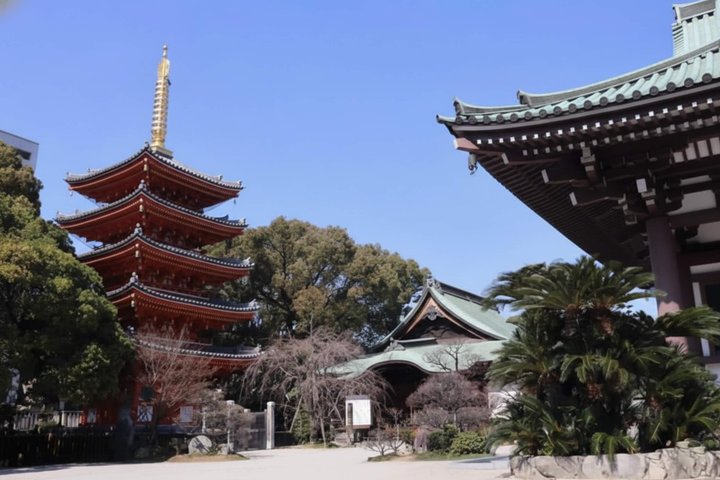
Tocho-ji Temple
Tocho-ji houses Japan’s largest wooden seated Buddha — sixteen metres, carved over four years and completed in 1992. Behind the statue runs a pitch-black passage representing hell and paradise, walked with one hand on the wall.
It takes twenty minutes and receives a fraction of the visitors that Dazaifu does. The darkness passage is genuinely disorienting and worth doing.
Parks, Shopping, and the Modern City
The city centre is walkable and rewards an unstructured afternoon.
Ohori Park
Ohori Park is built around the moat of the former Fukuoka Castle, with islands linked by stone bridges across the water. A two-kilometre path circles the lake, and it fills at dusk with runners and families.
The adjacent castle ruins are modest — foundations and a few gates rather than a keep — but the elevated position gives the best free view over the city.
Canal City Hakata
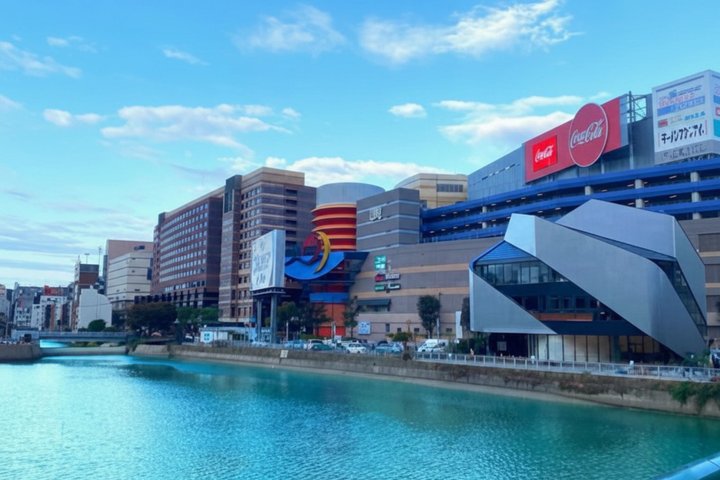
Canal City is a curved, brightly coloured shopping complex built around an artificial canal, with fountain shows running through the day. Architecturally it is a period piece from the mid-1990s and none the worse for it.
The fifth-floor ramen stadium collects eight regional ramen shops in one place, which is a reasonable way to compare Hakata style against Sapporo or Hakodate without leaving Kyushu.
Tenjin and the Underground Mall
Tenjin is the main shopping district, and its underground arcade runs for close to six hundred metres beneath the street with a deliberately European vaulted design. It is genuinely useful in Fukuoka’s wet summer.
Above ground, the department stores are conventional. The interest is in the side streets north of Tenjin, where smaller independent shops and coffee places have collected.
The Coast: Fukuoka Tower and Beyond
Fukuoka sits directly on Hakata Bay, and the waterfront is fifteen minutes from the centre by bus.

Fukuoka Tower
At 234 metres, Fukuoka Tower is the tallest seaside tower in Japan, with an observation deck at 123 metres reached by a glass lift. The view runs along the bay in one direction and back over the city in the other.
Go at dusk. The half hour either side of sunset is the only time the view justifies the entrance fee.
Momochi Seaside Park
Momochi is an artificial beach at the tower’s foot, with pale sand and a wide promenade. Nobody would fly to Japan for it, but as a place to walk for an hour before dinner it does its job.
The Fukuoka City Museum sits at the eastern end and holds the Gold Seal — a small first-century gold artefact given by a Han emperor, and one of Japan’s designated national treasures.
Nokonoshima Island
A ten-minute ferry from Meinohama takes you to Nokonoshima, a small island in the bay planted with seasonal flower fields — rapeseed in spring, cosmos in autumn.
It is a half-day at most and heavily photographed. If you are travelling in October, the cosmos fields against the bay are worth the crossing; outside the flower seasons, skip it.
Day Trips from Fukuoka
Fukuoka works well as a base, with most of northern Kyushu inside ninety minutes.
Itoshima Peninsula
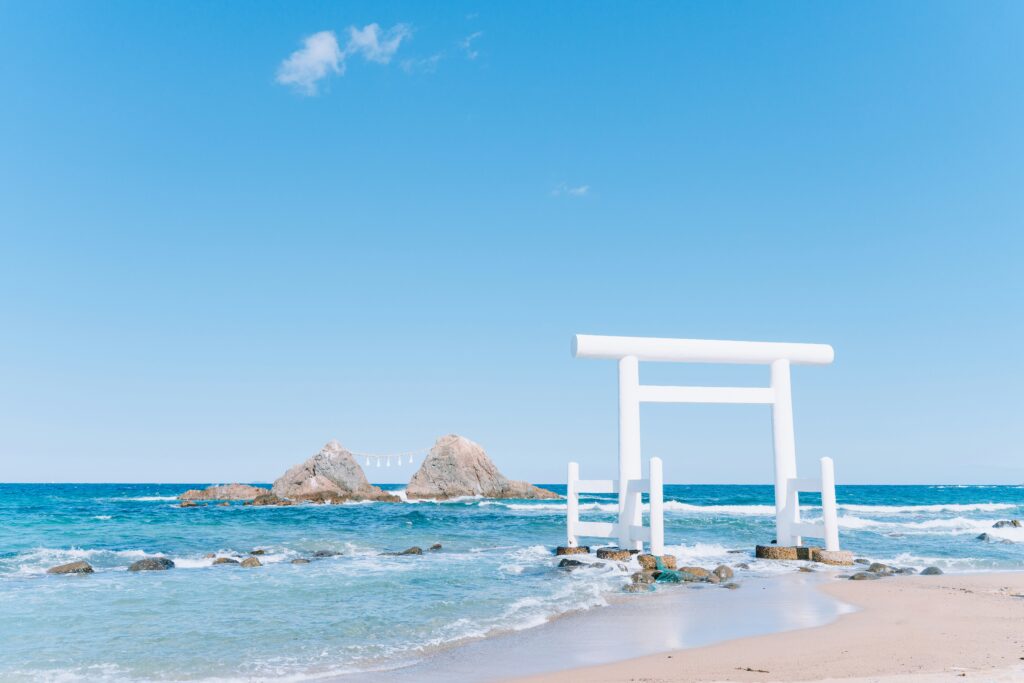
Itoshima, forty minutes west, is a stretch of coastline that has quietly become Kyushu’s most appealing rural drive. The Sakurai Futamigaura “married couple rocks” — two rocks joined by a sacred rope, with a white torii standing on the beach — are the fixed point.
The coast road between them is dotted with small cafes and pottery studios. A rental car makes this trip; public transport does not really serve it.
Yanagawa Canal Cruises
An hour south, Yanagawa is threaded with canals that were once the moat system of a castle town. Flat-bottomed punts poled by a boatman run a slow hour-long circuit under low bridges and past old merchant houses.
The local dish is seiromushi — eel steamed over rice in a bamboo basket — and Yanagawa is the place in Kyushu to eat it.
Getting Around by Train
Hakata Station is the western terminus of the Sanyo Shinkansen and the northern end of the Kyushu Shinkansen, which puts Kumamoto at 40 minutes and Kagoshima at 90.
For a Kyushu-focused trip, the regional JR Kyushu rail pass is significantly better value than the nationwide pass. Buy it before arrival or at Hakata Station on the day.
Expert Tip
Fukuoka’s subway runs only three lines, and the Nishitetsu bus network fills the gaps — including the routes to Momochi and the airport’s international terminal. A rechargeable IC card covers both without any separate ticketing, and the flat 150-yen city-centre bus zone covers most of what a visitor needs.
Visiting Fukuoka: Frequently Asked Questions
How many days should I spend in Fukuoka? Three. Two covers the city itself comfortably, and the third gives you Dazaifu plus either Itoshima or Yanagawa. Beyond four days you are better off moving on to Nagasaki or Beppu.
Are English menus available at the yatai? Some stalls have picture menus or English cards, many do not. Pointing works, and the stall owners are used to visitors. Learning the names of three or four dishes in advance removes almost all the friction.
When is the best time to visit? Late October to early December, and April. Summer is hot and humid, and June is the rainy season. If the Yamakasa festival interests you, the first two weeks of July override all of this.
Related Tours
Conclusion
Build your Fukuoka evenings around the yatai and the days around everything else. The stalls only run at night, they are the thing you cannot do anywhere else in Japan, and one visit is not enough to understand them.
If you have three days, spend the third at Itoshima with a rental car. It is the part of this trip that visitors consistently tell us they did not expect and would repeat.
Plan Your Japan Trip with Local Experts
Our team has guided 40,000+ travelers across Japan. Tell us about your trip and we’ll get back to you within 24 hours.