In this article:
- What Hanazono Shrine Actually Is
- Visiting: Access, Hours, and How to Approach
- Festivals, Markets, and the Red Tent
- The Shrine and the Bars Next Door
- Hanazono Shrine: Frequently Asked Questions
Introduction
Walk east along Yasukuni-dori from Shinjuku Station and you will pass Hanazono Shrine without noticing it. The buildings along the avenue hide almost everything except a run of vermilion gates and a short flight of steps. Then the noise stops.
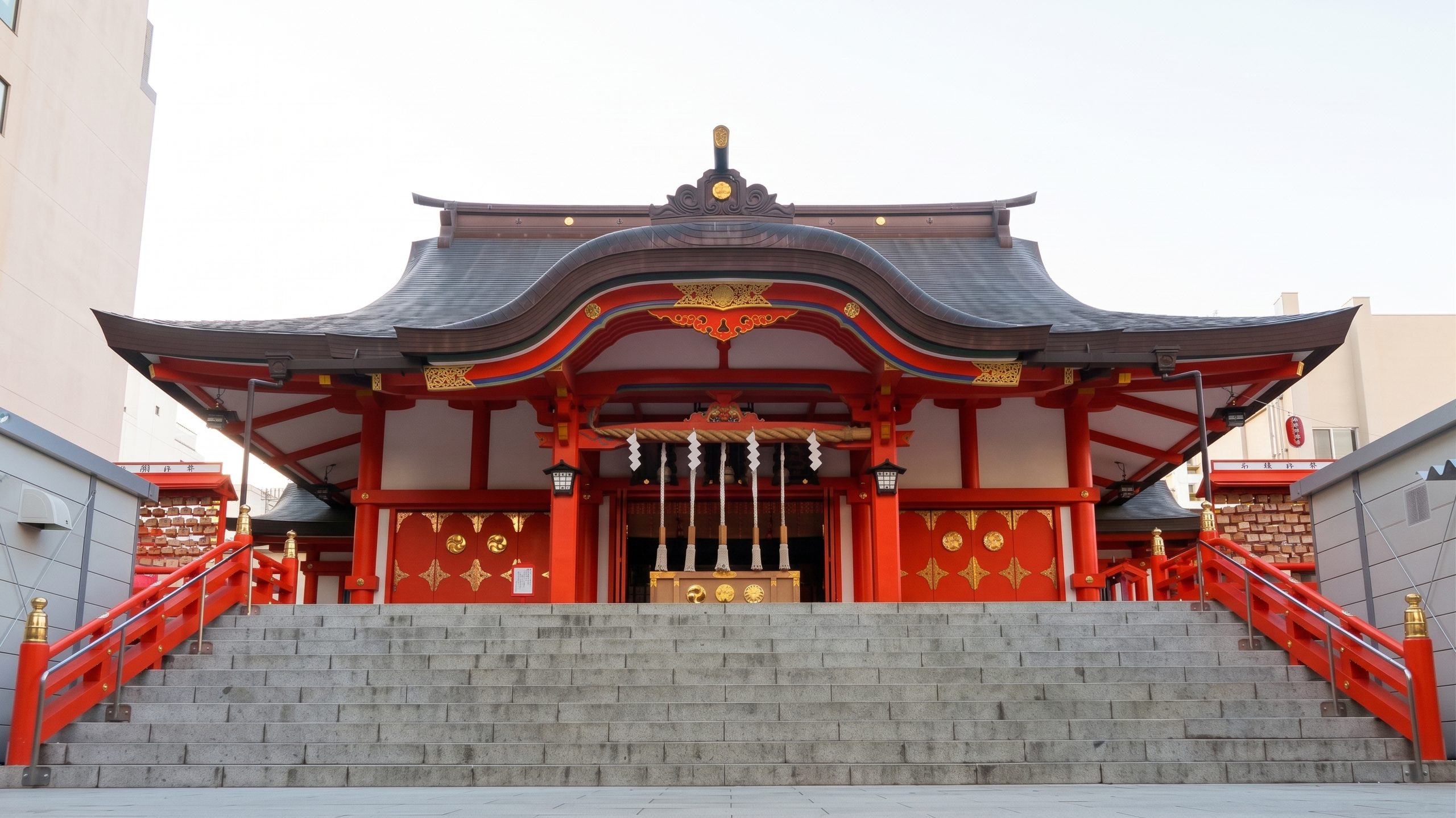
That is the part worth understanding about Hanazono Shrine. It is not a destination shrine like Meiji Jingu. It does not have a forest, a gravel approach, or a twenty-minute build-up. Instead, it is a working neighbourhood shrine. It happens to be wedged between a department store district, Tokyo’s largest nightlife quarter, and two hundred micro-bars. The grounds are maybe a hundred metres across. You can walk them in ten minutes.
We send travelers here constantly, usually in the early evening. We do this because of where it sits, not in spite of it. The contrast between the shrine and what surrounds it is remarkable. It is the clearest illustration of how Tokyo actually works that you can get within a single block.
What Hanazono Shrine Actually Is
Hanazono Shrine is the sochinju of Shinjuku. It is the tutelary shrine responsible for the ward. It protects everyone who lives and trades in it. That title carries real weight here. For example, a new bar might open in Golden Gai, or a shop might open on Shinjuku-dori. When that happens, someone from that business usually comes up these steps.
From Flower Garden to Shinjuku’s Guardian
The founding date is not recorded. However, the shrine is generally described as already standing when Tokugawa Ieyasu entered Edo in 1590. It was not at its current location then. The original site is said to have been a few hundred metres west. It was close to where the Isetan department store now stands.
This happened during the Kan’ei era. This was in the first half of the 1600s. The shrine was moved onto land at that time. That land belonged to the Owari branch of the Tokugawa family. That land had been a flower garden, and the name stuck: hanazono means flower garden. The grounds today have no garden at all, which is a small joke that nobody in Shinjuku seems to mind.
The present name dates only to 1965, when the neighbouring Otori Shrine was merged into it. That merger is the reason the November rake market here is as large as it is.
Inari, and What People Come Here to Ask For
The principal deity is Inari, associated across Japan with rice, harvest, and by extension commerce and worldly success. In a farming village that meant a good crop. In modern Shinjuku it means a business that survives its second year.
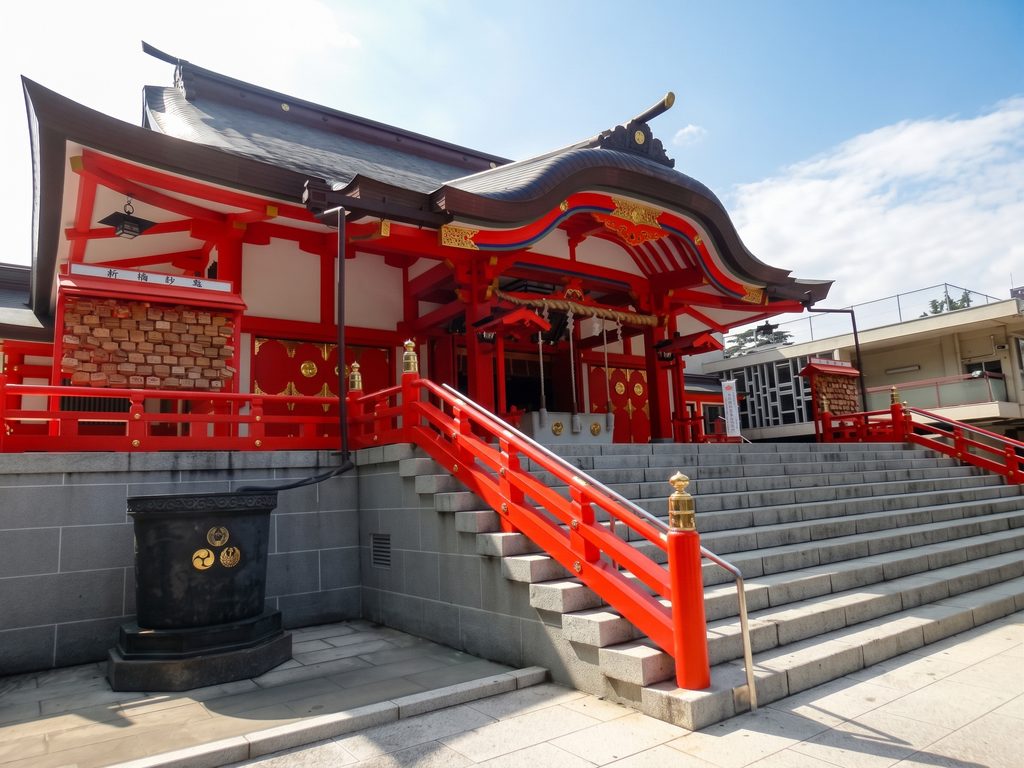
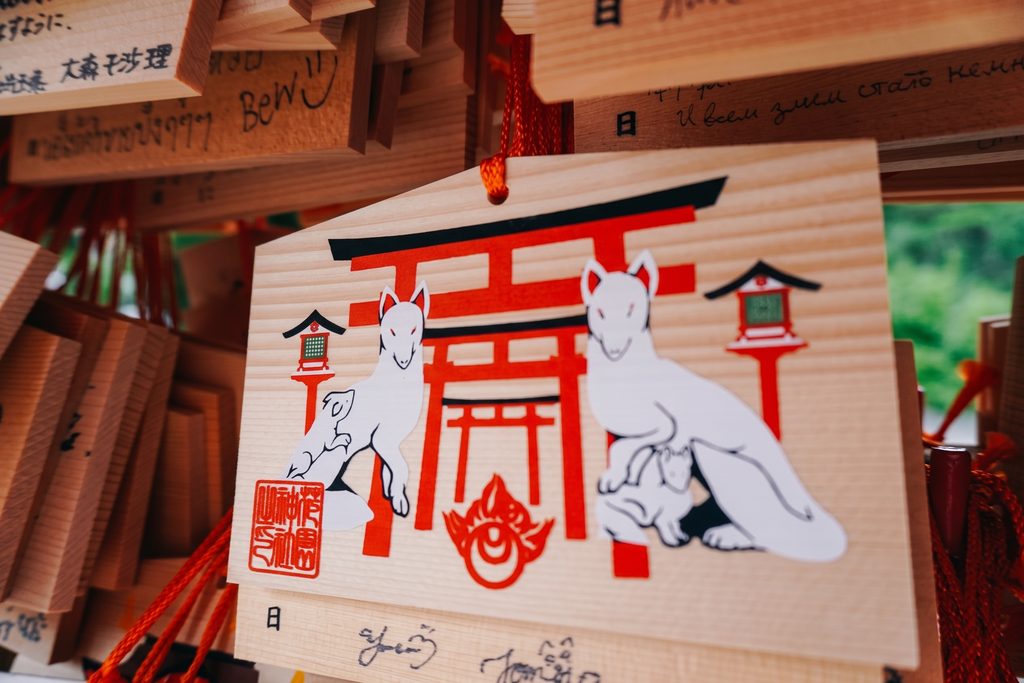
This shapes what the shrine feels like. The ema — the small wooden prayer plaques hanging near the main hall — are not mostly about health or study here. They are about work: auditions, openings, funding, and the specific anxieties of people whose income is unpredictable. If you read Japanese even slightly, spend two minutes at the ema rack. It tells you more about the neighbourhood than any guidebook entry.
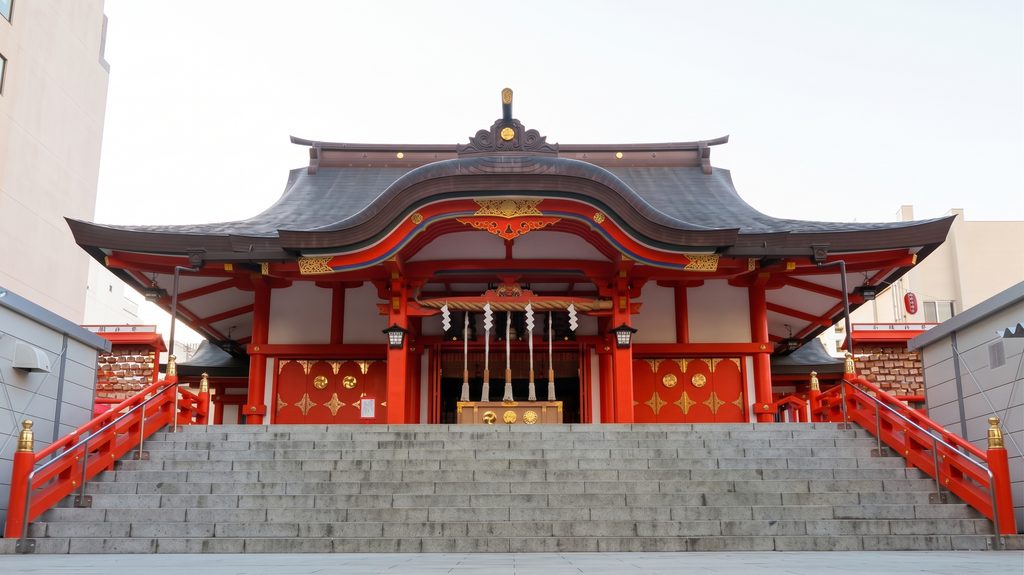
The main hall itself is a reconstruction rather than an Edo original. Shinjuku burned repeatedly, and almost nothing wooden in this part of the city is more than eighty years old. We would not travel across Tokyo for the architecture. You come here for the sub-shrines and for the context.
Itoku Inari and the Corridor of Torii Gates
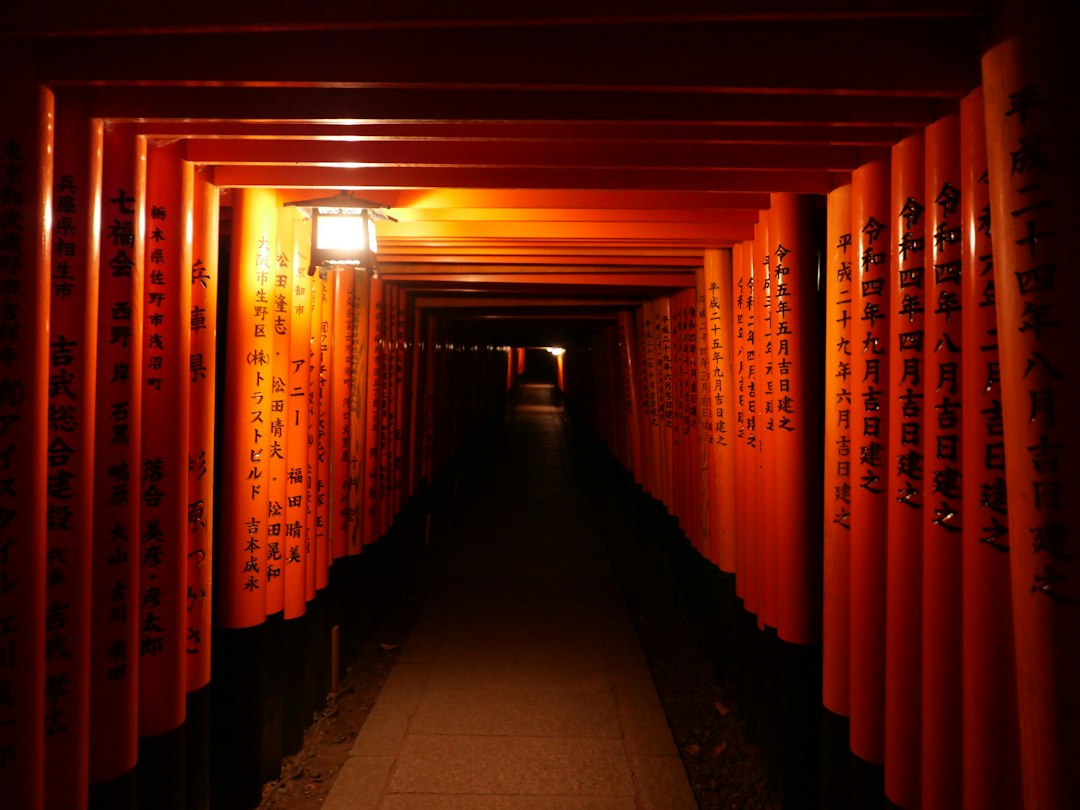
In the corner of the grounds, a passage of small vermilion torii gates stands one behind the other, close enough that you walk through them in single file. This is Itoku Inari Shrine, and it is the most photographed thing on the property.
People come to this sub-shrine for matchmaking, marital harmony, and fertility. The offerings left at the back are more varied than at the main hall, and the atmosphere is noticeably more private. Two things to know before you walk through: it is a place of prayer rather than a photo installation, and there is usually a short queue. Wait, walk through, and take your picture from outside afterwards.
Geino Asama Shrine, Where the Entertainment Industry Prays
The other sub-shrine is the one we always point out. Geino Asama Shrine is dedicated to the fortunes of performers, and the wall of wooden name plaques around it reads like a directory of Japanese entertainment — actors, comedians, singers, and the production companies behind them.
Shinjuku has been the centre of Japanese performance and counterculture since the 1960s, and this small shrine is where that history is still physically recorded. There is also a monument here to the singer Fujii Keiko, whose daughter is Utada Hikaru.
Most visitors photograph the torii corridor and leave without registering that this second sub-shrine exists. It takes ninety seconds to walk over to it, and it is the part of Hanazono Shrine that is genuinely specific to Shinjuku.
Expert Tip
Read the name plaques at Geino Asama Shrine even if you cannot read Japanese. The plaques are grouped and sized by the scale of the donation, so the visual hierarchy tells you which agencies and production houses carry weight without a single word being translated. It is the same information a Japanese visitor takes from it.
Visiting: Access, Hours, and How to Approach
This is one of the easiest shrine visits in Tokyo to fit into a day, because it requires no detour and no ticket.
Getting There from Shinjuku Station
The address is 5-17-3 Shinjuku, Shinjuku-ku. From Shinjuku Station’s East Exit the walk is around seven minutes along Yasukuni-dori, past the Kabukicho entrance on your left.
The faster route is Shinjuku-sanchome Station, served by the Tokyo Metro Marunouchi and Fukutoshin lines and the Toei Shinjuku line. Exit E2 opens essentially at the shrine. If you have already spent an hour lost in Shinjuku Station — and most people do, at least once — take the metro and skip the surface walk entirely.
There is no admission fee and no ticket office. The grounds are open and lit at night, though the shrine office beside the main hall keeps ordinary daytime hours, so anything involving a stamp, an amulet, or a priest needs to happen during the day.
When to Go
Early morning is the quietest the grounds ever get, and on a clear day the light comes across the buildings to the east and lands directly on the main hall. Between roughly nine and six the shrine is busy but never crowded in the Asakusa sense.
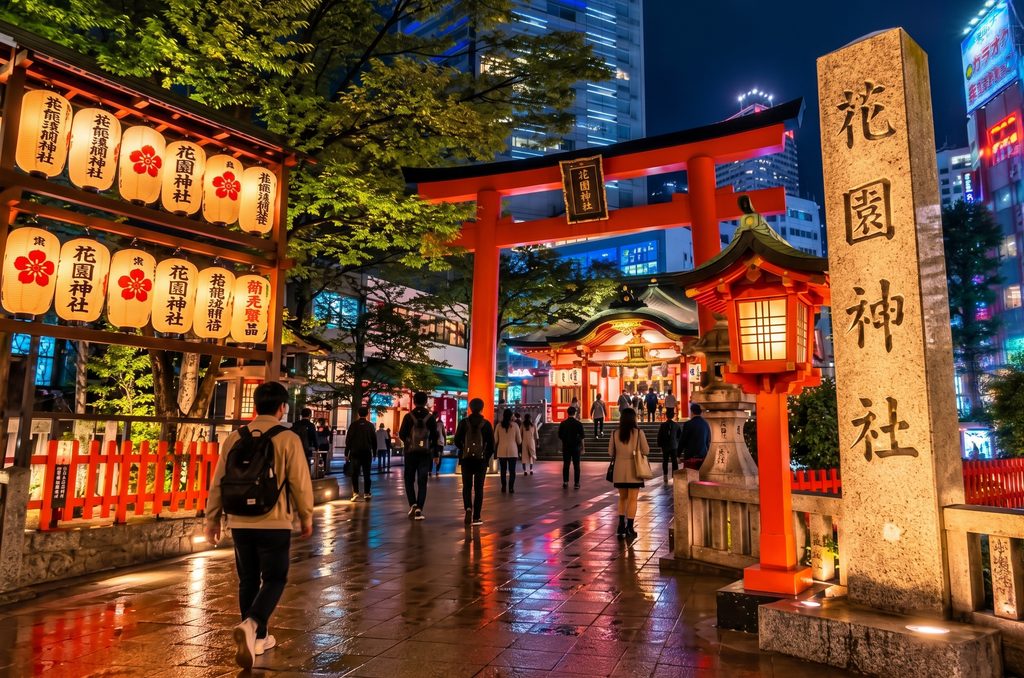
Our own preference is the hour just after sunset. The lanterns come on, the grounds empty out, and Golden Gai is beginning to open one shutter at a time on the far side of the wall. It is a fifteen-minute stop that changes the tone of an evening.
Avoid New Year’s first three days unless queuing is the point. Hatsumode brings serious numbers here, and the approach turns into a managed line.
What to Do at the Main Hall
The sequence is short and the same at almost every Shinto shrine in Japan. Bow once before passing under the torii gate. Walk to the side of the central path rather than down the middle of it.
At the water basin near the entrance, rinse your left hand, then your right, then pour a little into a cupped hand to rinse your mouth, and never drink directly from the ladle. At the main hall, drop a coin into the offering box, ring the bell if there is one, then bow twice, clap twice, pause to make your request, and bow once more.
Nobody will correct you if you get the order wrong, and most Japanese visitors are relaxed about it. Doing it properly takes forty seconds and is the difference between visiting a shrine and using one. If you want the full breakdown, our guide to telling shrines and temples apart covers where the etiquette diverges.
Festivals, Markets, and the Red Tent
Hanazono Shrine runs a heavier events calendar than its size suggests, and the November market is the reason most Tokyo residents know the name.
Tori no Ichi, the November Rake Market
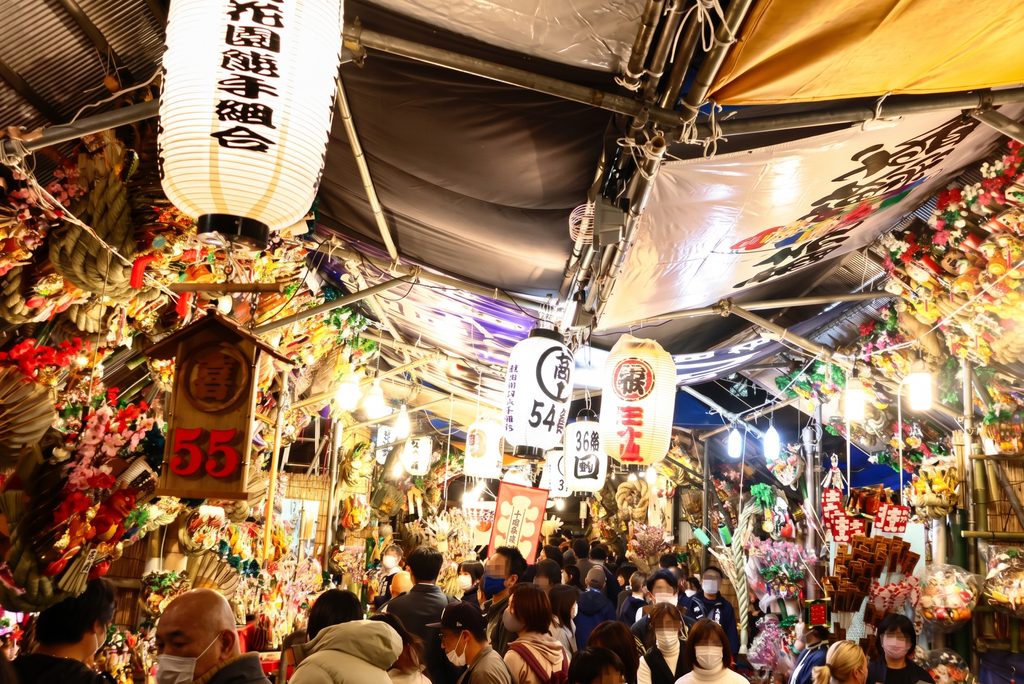
Tori no Ichi is held on the days of the rooster in November, which fall on a twelve-day cycle and therefore land on different dates each year. In 2026 those dates are November 7 and November 19, with an eve-night on the day before each.
What is sold is kumade: ornamental bamboo rakes loaded with gold coins, treasure ships, masks, and cranes, bought to rake in fortune for the coming year. Business owners buy a slightly larger one each year than the one they bought last year. When a sale closes, the stall staff gather and clap out a rhythmic tejime, and on a busy night that sound goes off somewhere in the grounds every few seconds.
Hanazono’s market is usually counted among the largest in the Kanto region alongside Asakusa’s Otori Shrine and Okunitama Shrine in Fuchu, and attendance figures in the hundreds of thousands are reported across the festival days. Expect stalls filling the approach, food from early evening, and a genuine crush around nine. In recent years a misemono-goya — an old-style sideshow tent, one of very few left in Japan — has set up inside the grounds during the festival.
The Sunday Antique Market
On most Sundays the grounds host an open-air antique market from early morning until late afternoon, weather and the shrine’s own calendar permitting. It is small, perhaps a few dozen dealers, and it is not a tourist market.
What turns up is domestic: Imari and Kutani ceramics, lacquerware, old textiles, obi, netsuke, tools, glassware, and boxes of loose items that require patience. Prices are negotiable within reason and cash is expected. Arrive by eight if you want first choice, because the Tokyo dealers who buy here do.
Reitaisai and the Red Tent Theatre
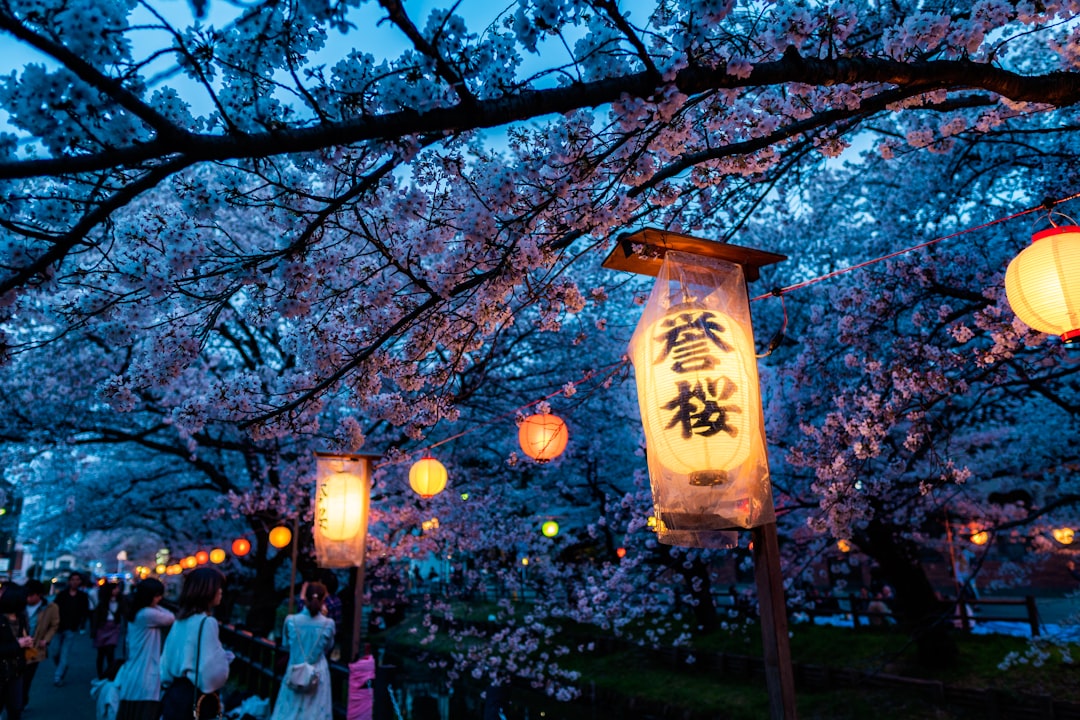
The shrine’s grand festival falls in late May and runs several days, with mikoshi — portable shrines — carried through the surrounding streets and food stalls filling the grounds. It is a neighbourhood festival rather than a spectacle for visitors, which is what makes it good.
The stranger tradition is theatrical. From the 1960s, the avant-garde playwright Kara Juro staged productions in a red tent pitched on these grounds, and the troupe he founded has continued to perform here periodically. A bright red tent in a shrine precinct in central Tokyo is not something you can plan a trip around, but if you see one going up, something interesting is happening that week.
Expert Tip
If you are in Tokyo during Tori no Ichi, come on the eve-night rather than the main day. The eve draws a mostly local crowd, the stalls are fully set up, and the atmosphere is closer to a neighbourhood party than a managed queue. The main day is larger and considerably harder to move through.
The Shrine and the Bars Next Door
The geography here is the point, and it is difficult to grasp from a map.
Golden Gai Shares a Wall With It
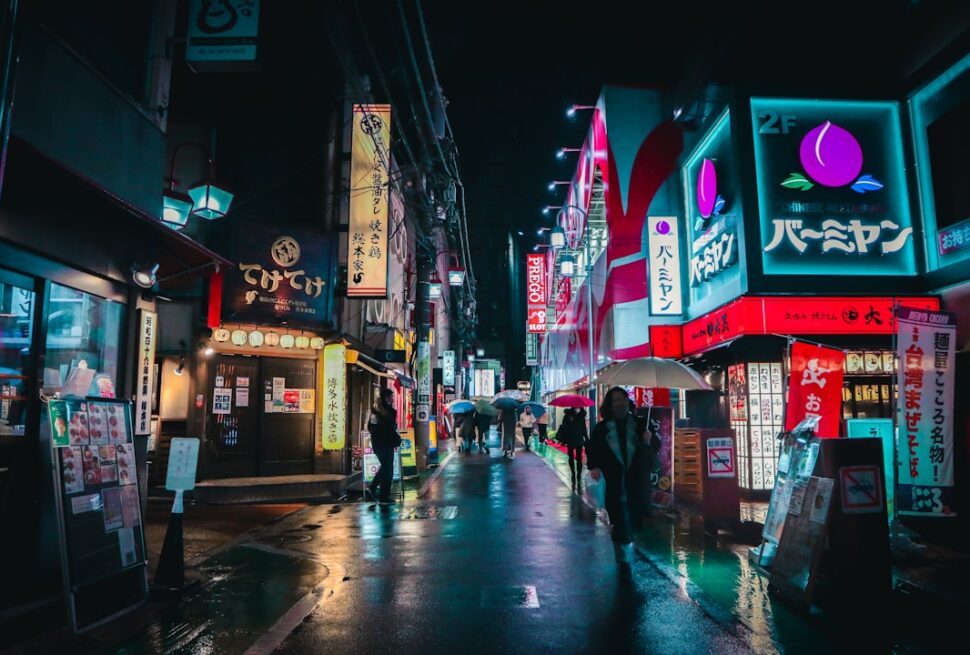
Golden Gai — six narrow lanes holding more than two hundred bars, many seating five or six people — runs directly along the southern edge of the shrine grounds. There is a back exit from the shrine that puts you into the alleys in about twenty seconds.
On the other side, Kabukicho begins a few minutes west. So within a radius of roughly three hundred metres you have Tokyo’s largest nightlife district, its most famous drinking alley, and the shrine that formally protects both. That is not an accident of planning. Entertainment districts in Japan have historically grown up around shrines and temples, because the grounds drew crowds and the crowds drew everything else.
Seeing It at Night
Most people who end up at Hanazono Shrine after dark arrive by accident, cutting through from Golden Gai on the way back to the station. Going in deliberately is better.
Our three-hour Shinjuku bar and izakaya crawl covers Omoide Yokocho, Kabukicho and Golden Gai on foot, and the shrine sits in the middle of that ground. The Omoide Yokocho lanes where both of our Shinjuku evenings begin are a short walk from the shrine gate, which makes the shrine an easy thing to add to the front of the night on your own. A lantern-lit precinct with a wall of neon behind it explains this neighbourhood faster than any amount of talking.
If you are visiting independently, do it in this order: shrine first, bars after. The reverse rarely happens.
Hanazono Shrine: Frequently Asked Questions
Is Hanazono Shrine worth visiting if I have already seen Meiji Shrine?
Yes, because they do different jobs. Meiji Jingu is a national shrine set in a forest, and the visit is about scale and approach. Hanazono Shrine is a working neighbourhood shrine in the middle of a commercial district, and the visit is about seeing that function up close — the business ema, the entertainment-industry plaques, the shopkeepers stopping in on their way somewhere. Fifteen minutes here after a morning at Meiji Shrine gives you both ends of the spectrum.
Do I need to pay or book to enter Hanazono Shrine?
No. Entry is free, there is no ticket counter, and no reservation exists to make. The grounds are open and lit outside office hours, so an evening visit is normal and expected. The only things that require the shrine office to be open are amulets, prayer plaques, and goshuin stamps, and that office keeps daytime hours.
When is Tori no Ichi at Hanazono Shrine, and is it worth planning around?
It falls on the days of the rooster in November, which shift annually — in 2026, November 7 and November 19, each with an eve-night before it. Confirm the dates on the shrine’s own site before building an itinerary around them. If your trip already overlaps, go: it is one of the few large traditional markets in Tokyo that has stayed genuinely local rather than becoming a visitor attraction. If it does not overlap, this is not a reason to move your dates.
Related Tours
Conclusion
Hanazono Shrine rewards a short, deliberate visit rather than a long one. Come up the steps from Yasukuni-dori, pay respects at the main hall, walk the torii corridor at Itoku Inari, then spend two minutes at the entertainment-industry plaques that almost everyone skips. Twenty minutes, properly spent, and you understand something about Shinjuku that the view from the observation decks will not give you.
The timing that matters more than the day of the week is the hour. Arrive around sunset and you get the shrine at its quietest and the surrounding streets at their most alive, in the same fifteen-minute window. Golden Gai is one wall away and opening up as you leave, which makes this the natural first stop of a Shinjuku evening rather than an item ticked off in the afternoon.
If your trip lands in early November, check the rooster-day dates before you finalise anything. A Tori no Ichi night here is a different shrine entirely, and it is the version of Hanazono that Tokyo residents mean when they talk about it.
Plan Your Japan Trip with Local Experts
Our team has guided 40,000+ travelers across Japan. Tell us about your trip and we’ll get back to you within 24 hours.