In this article:
- Why the Bins Went
- Carrying It
- Vending Machine Bins
- Where Bins Actually Are
- Sorting
- Japan No Trash Cans: Frequently Asked Questions
Introduction
Japan is conspicuously clean and has almost nowhere to throw anything away, and visitors correctly identify this as strange before working out that the two facts are connected.
There is no street cleaning fairy. People carry their rubbish home. School children clean their own classrooms, office workers tidy their own floors, and the assumption that you are responsible for what you generate extends from the classroom to the pavement.
The practical consequence for a traveler is that you will spend a fortnight with an empty bottle in your bag. There is a way to make this painless and it takes about ten seconds of preparation each morning.
Why the Bins Went
A specific event, and then several reasons not to reverse it.
1995
In March 1995 the Aum Shinrikyo cult released sarin nerve agent on the Tokyo subway, killing thirteen people and injuring thousands.
In the aftermath, public waste bins were removed from stations and streets across Japan as a security measure — a bin is an unmonitored container in a crowded public space, and the reasoning was straightforward.
They were never systematically restored. Subsequent security concerns, including around major international events, produced further removals rather than reinstatements.
The Practical Reasons
Bins cost money to empty. They attract household waste dumped by people avoiding municipal collection fees, which is a real and persistent problem in Japan. And they attract crows, which are large, numerous, and destructive in Japanese cities.
Once the bins were gone and the streets stayed clean, the case for bringing them back weakened considerably.
Station Bins
Worth knowing because it changed recently: major railway operators removed the remaining bins from stations in the 2020s, citing security and cost.
Older advice that station platforms have bins is now unreliable. Some stations retain them near ticket gates or inside paid areas; many do not.
Check rather than assume, particularly if you are carrying something and planning to dispose of it at the station.
The Recent Reversal
In parts of a few heavily visited areas, bins have been reinstated specifically because visitors were not carrying their rubbish and litter was accumulating.
Nobody in Japan regards this as a good outcome. It is worth knowing simply as an indication that the norm depends on everybody participating.
Expert Tip
Put two small plastic bags in your daypack every morning: one for rubbish and one for anything wet or greasy. This is what Japanese people do and it is the entire solution. Convenience stores will give you a bag, or you can buy a pack of small ones at any hundred-yen shop. Empty them into a bin at your accommodation each evening and start again. Ten seconds a day, and the problem disappears.
Carrying It
The default assumption, and the one to plan around.
The Norm
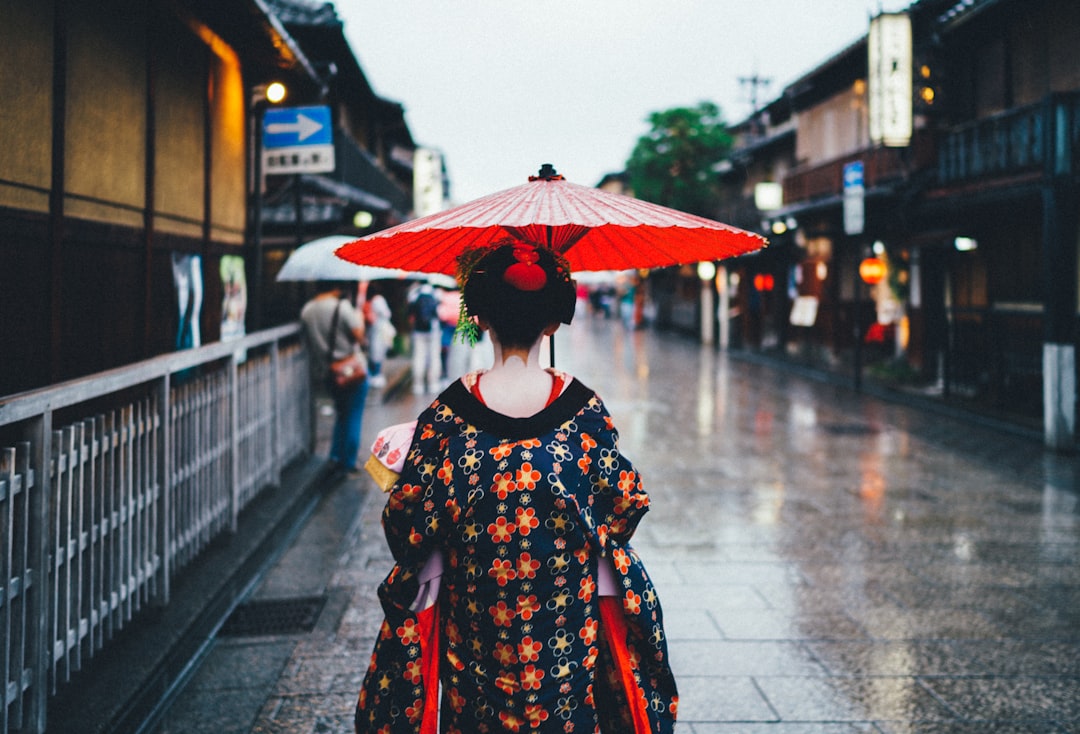
Japanese people carry their rubbish home. Not reluctantly, not as a fallback — as the ordinary expected behaviour, which is why the streets have no litter despite having no bins.
The bag in the daypack is standard equipment. Many people also carry a small cloth or wet wipes.
Adopting this on day one rather than day nine makes the trip considerably easier.
Eating and Walking
The convention is to eat where you bought the food, or at least to finish before moving on, and to dispose of the wrapper with the vendor.
Street food stalls at festivals and markets have bins for their own packaging. Buy, step aside, eat, and hand the stick or the tray back.
Several tourist districts have made this a formal restriction. Kamakura passed a local ordinance discouraging eating while walking, and areas of Kyoto including Nishiki Market have signage asking people not to. Follow it.
What You Will Accumulate
Drink bottles and cans, which have somewhere to go. Food wrappers, tissues, and packaging, which mostly do not. Coffee cups, which are the hardest single item.
For coffee, drinking in the shop rather than taking away solves it. Japanese cafes are pleasant places to sit and there is no rush to leave.
Vending Machine Bins
The most common disposal point on a Japanese street, and the most commonly misused.
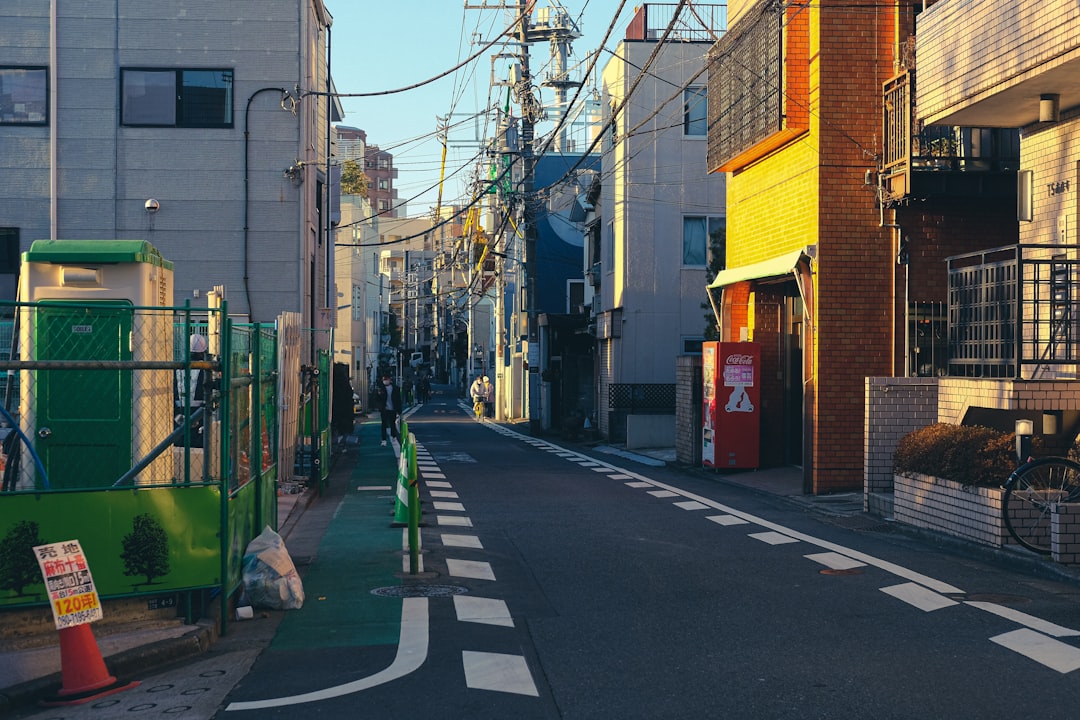
What They Are For
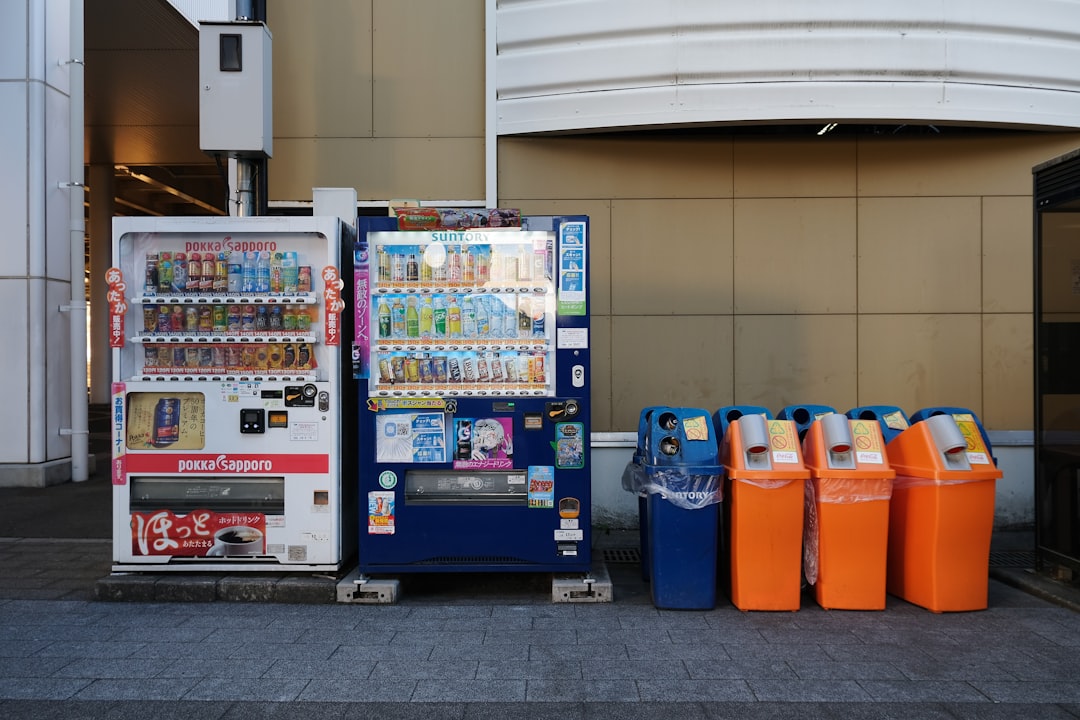
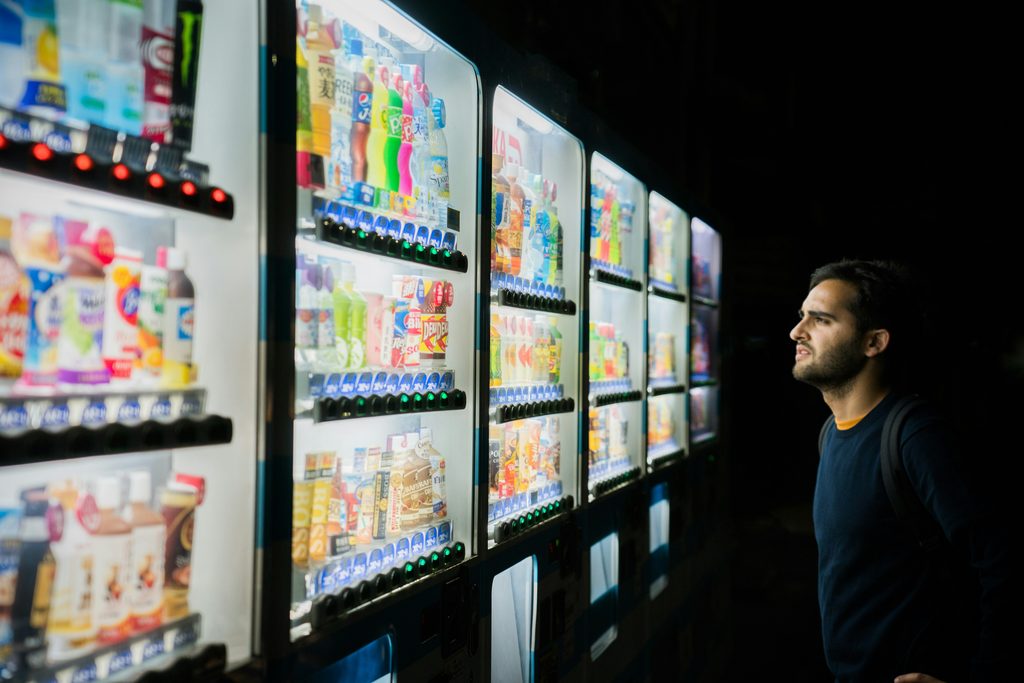
The bins beside a vending machine are provided and emptied by the beverage company that owns the machine, for the containers sold from it.
They take cans and PET bottles. That is all they take.
They are not public waste bins. They look like public waste bins, which is the source of the confusion.
What Not to Put In Them
Food wrappers, tissues, coffee cups, cigarette ends, and general rubbish.
This is a genuine and frequently voiced local complaint about visitors, and it creates a real problem for whoever empties the bin, because contaminated recycling has to be sorted by hand.
If your rubbish is not a drink container you bought from that machine or one like it, it goes in your bag.
Preparing a Bottle
Ideally: drink it, remove the cap and the plastic label, and put the bottle in the PET slot with the cap and label in the plastics bin if one exists.
At a street machine with two slots, putting the whole bottle in is normal and nobody minds. At a station or a building with proper sorting, do it properly.
Rinsing the bottle is the household norm and is not expected of you on the street.
Where Bins Actually Are
There are more than the first day suggests, once you know where to look.
Convenience Stores
The most reliable option. Most convenience stores have sorted bins, either just inside the entrance or immediately outside.
The etiquette: these are for items bought at that shop, and the polite thing is to buy something when you use them. Nobody enforces this and a bottle in the bin when you have just bought a coffee is entirely normal.
Some stores have moved their bins behind the counter or removed them altogether because of household waste dumping. If the bins are inside behind the till, hand your rubbish to the staff and they will take it.
Your Accommodation
The obvious answer and the one people forget. Hotels have bins in every room and a sorted station on each floor.
Empty your day bag when you get back. This is the whole system working properly.
Parks, Malls, and Food Courts
Shopping centres have waste stations, usually well sorted, near food courts and toilets. Department stores have them by the lifts on food floors.
Larger parks have bins. Small neighbourhood parks often do not.
Festival and event sites have staffed sorting stations, frequently with a person standing beside them directing you, which is the most Japanese possible solution.
Stations and Airports
Less reliable than they used to be, as above. Some stations retain bins near ticket gates; many have removed them.
Airports have plenty. So do Shinkansen carriages — there are bins at the end of each car, and the cleaning crews take everything at the turnaround.
Highway service areas and roadside stations have good facilities, which matters if you are driving.
Expert Tip
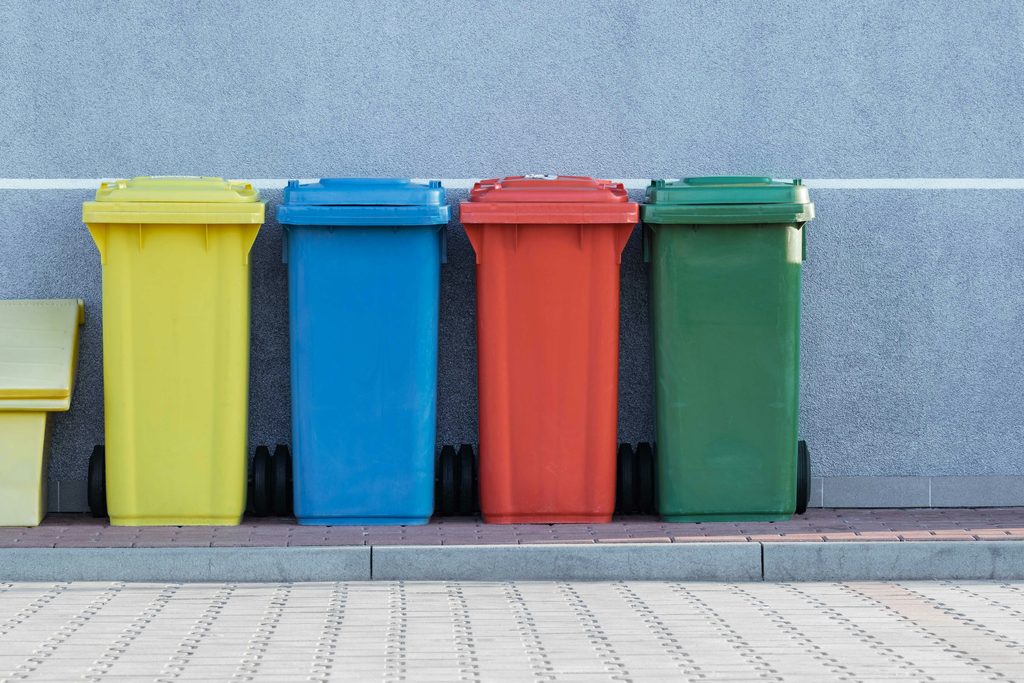
The bins are labelled and colour-coded consistently across the country, and three words cover almost all of them: カン for cans, ビン for glass bottles, and ペットボトル for plastic drink bottles. Anything else is 燃えるゴミ, burnable, which in Japan includes paper, food waste, and soft plastics. Photograph those four terms on your phone and the sorting question is solved for the entire trip.
Sorting
Japanese waste separation is famously detailed, and the version a visitor needs is much simpler than the version a resident does.
The Four You Need
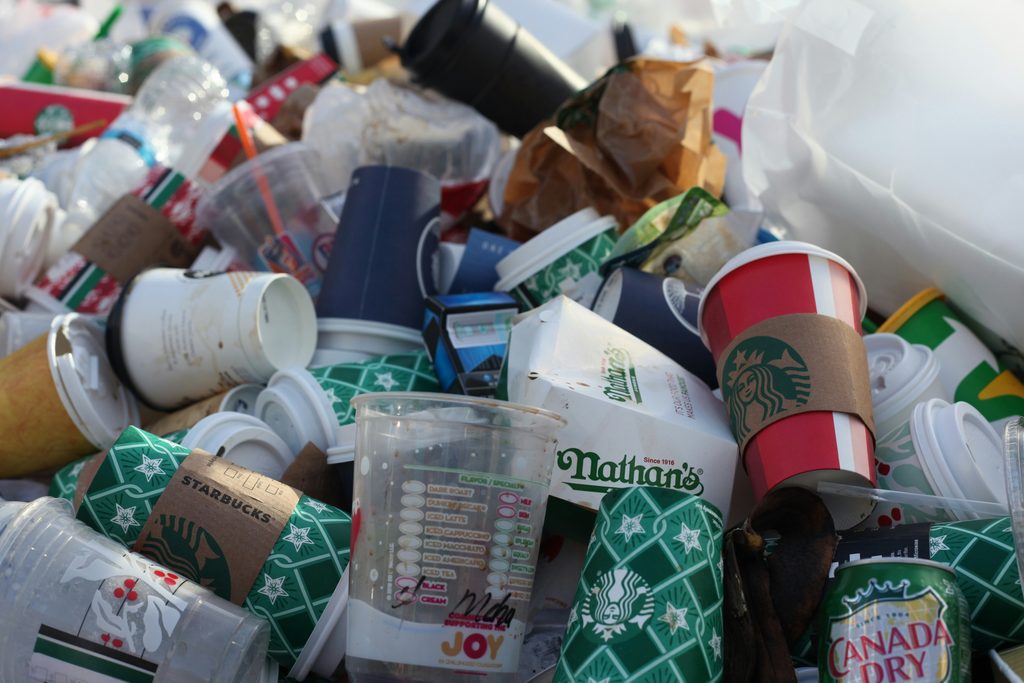
Burnable — moeru gomi — covers paper, food waste, tissues, wooden chopsticks, and most soft plastics and packaging. This is the default category and where most of your rubbish goes.
Non-burnable — moenai gomi — covers metal, ceramics, small hard plastics, and glass that is not a bottle.
PET bottles and cans have their own slots, and glass bottles a third.
How Detailed It Actually Gets
For residents, considerably more so. Municipalities publish sorting calendars with a dozen or more categories, designated bag requirements, and specific collection days for each.
Kamikatsu in Tokushima famously sorts into more than forty categories and has near-total recycling. That is exceptional and not what any city expects of you.
As a visitor at a public bin, four categories is the entire requirement.
Getting It Wrong
Nobody will confront you. Sorting incorrectly at a public bin creates work for someone and is a minor discourtesy rather than an offence.
The exception is putting general waste into a drink recycling bin, which is the specific behaviour that causes complaint. Everything else is forgiven.
Littering
Illegal under national law and under local ordinances, with fines that can reach tens of thousands of yen in designated areas of Tokyo and other cities.
Enforcement against a visitor is unlikely. The reason not to litter in Japan is not the fine.
Japan No Trash Cans: Frequently Asked Questions
Where do I put rubbish if I am out all day in Tokyo?
In a plastic bag in your own daypack, emptied at your hotel in the evening. That is genuinely the answer and it is what everyone around you is doing. Along the way, convenience stores are the most reliable disposal point, vending machine bins take drink containers, and shopping centres, department store food floors, and station areas have sorted stations. Shinkansen carriages have bins at the end of each car. But the plan should be the bag, with everything else as a bonus.
Is littering actually punishable?
Yes. Littering is illegal under Japanese national law, and many municipalities have their own ordinances with fines running into tens of thousands of yen in designated zones — Tokyo wards, Kyoto, and other cities with heavy foot traffic all have them. Cigarette ends are covered by separate smoking ordinances with on-the-spot fines in many districts. In practice, prosecution of a tourist for dropping a wrapper is unlikely. The reason not to do it is that Japan’s streets are clean because forty million people carry their rubbish home, and the norm only survives while everybody keeps to it.
Can I use convenience store bins for rubbish from elsewhere?
Technically the bins are for items bought at that store, and stores have moved bins indoors or removed them because of people dumping household waste in them. In practice, putting a bottle or a wrapper in a convenience store bin while you are shopping there is entirely normal and nobody objects. Buy something. If the bins are behind the counter, hand your rubbish to the staff — they will take it without comment. What is not acceptable is arriving with a full bag of accumulated rubbish and emptying it into a shop’s bin, which is the behaviour the restrictions exist to stop.
Related Tours


Conclusion
Put a plastic bag in your daypack tomorrow morning and the problem is solved for the rest of the trip. Everything else in this article is a refinement of that one habit.
It is also worth understanding rather than merely complying with. A country with no bins and no litter is not an accident of policy — it is forty million people each carrying an empty bottle home because that is what you do, and joining in for a fortnight is the least demanding form of participation available to a visitor.
Plan Your Japan Trip with Local Experts
Our team has guided 40,000+ travelers across Japan. Tell us about your trip and we’ll get back to you within 24 hours.