In this article:
- What Pontocho Alley Is
- Walking the Lane Well
- Choosing Where to Eat
- Dinner Over the Kamo River
- Pontocho Alley: Frequently Asked Questions
Introduction
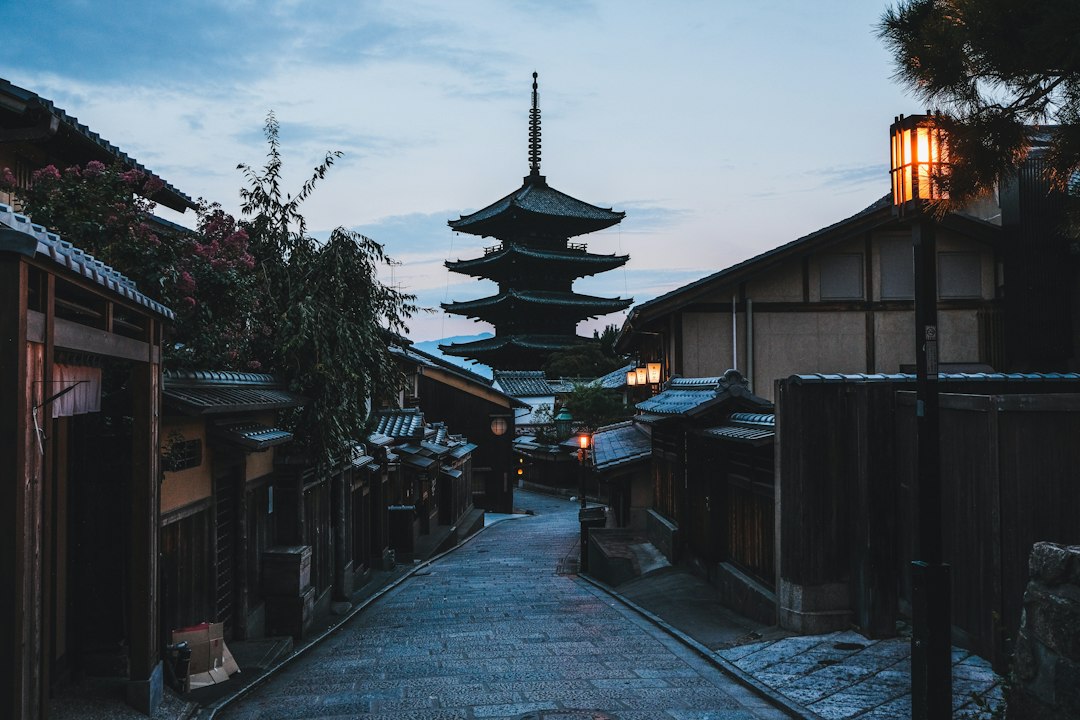
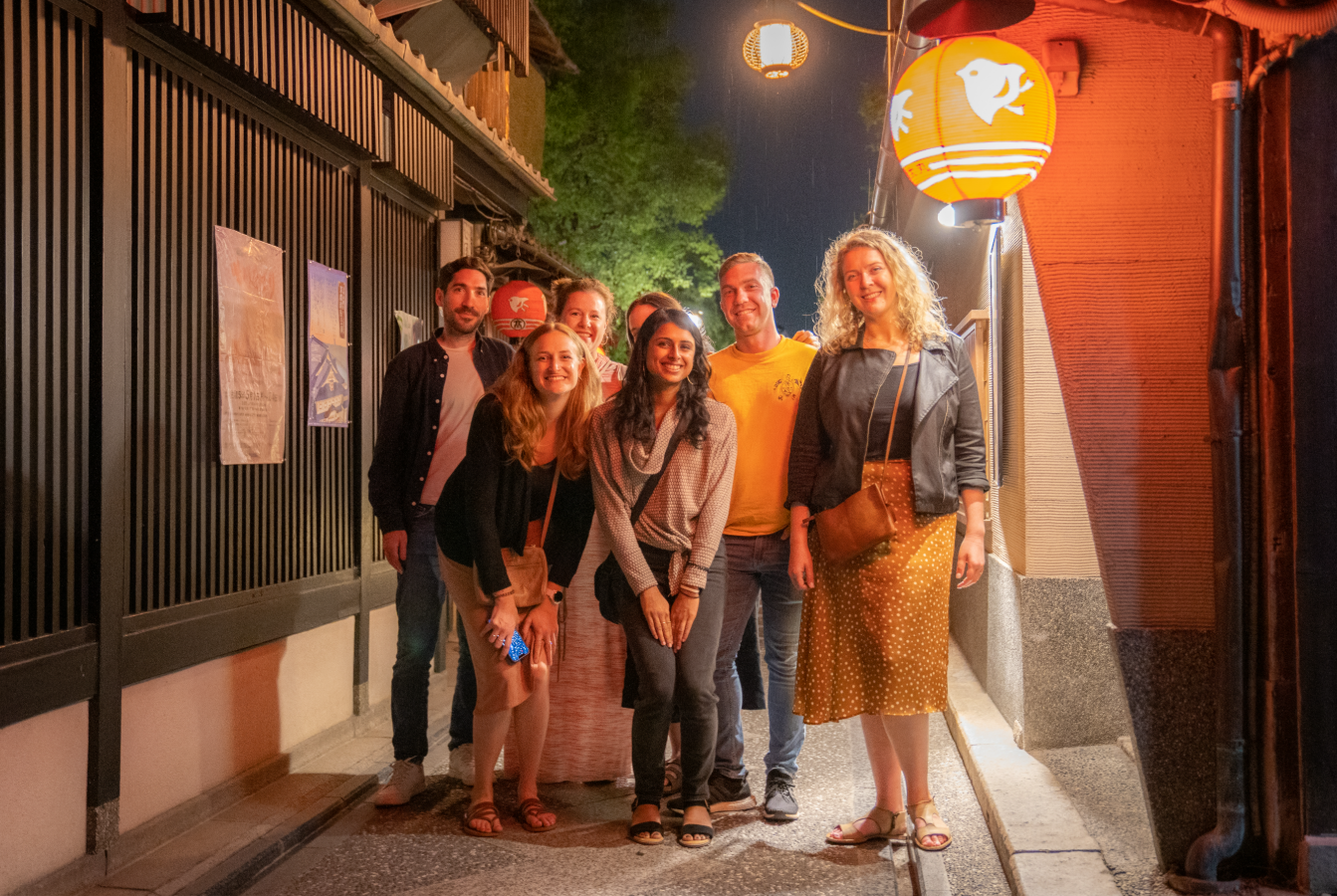
Pontocho Alley is narrow enough that two people walking side by side will turn sideways to let a third pass. Around five in the evening, when the lanterns come on and the first noren curtains go up over the doorways, that narrowness stops feeling like an inconvenience and becomes the reason you came.
The lane runs for about half a kilometre along the west bank of the Kamo River, a few minutes from the Shijo crossing that anchors downtown Kyoto. Within it sit yakitori counters, obanzai bars, formal Kyoto restaurants, a working geisha theatre, and, from May, dining platforms built out over the riverbank.
Most visitors walk it once, photograph the lanterns, and leave without eating. Usually that is because the doorways look closed to strangers. Some are. Most are not, and the difference is readable from the street once you know what to look for.
What Pontocho Alley Is
Pontocho is one street, not a neighbourhood to wander for an afternoon. What makes it worth understanding is how much is packed into that one street, and how little of it shows at first glance.
One Lane Between the River and the Canal
Pontocho-dori runs north to south from Sanjo-dori to Shijo-dori. Restaurants on its east side back directly onto the Kamo River. Those on the west side back onto the Takase canal and Kiyamachi, the other drinking street of central Kyoto, which runs parallel one block over.
Getting there needs no planning. Kyoto-Kawaramachi on the Hankyu line and Gion-Shijo on the Keihan line are both close to the southern end, and Sanjo on the Keihan line sits near the northern end. From Kyoto Station, city buses 4, 5, 17, and 205 run to Shijo Kawaramachi.
We suggest entering from the Shijo end and walking north. You start in the busier stretch, choose where to eat on the way, and finish near the Kaburenjo theatre and Sanjo, where the trains and the riverbank are both a minute away.
A Working Geisha District
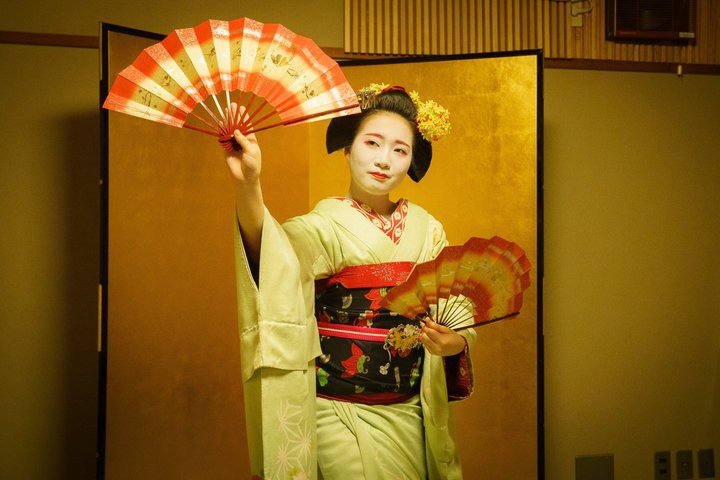
Pontocho is one of Kyoto’s five kagai, the districts where geiko and maiko still train and work. It sits directly across the river from Gion, the larger and more famous of the two. Pontocho is the more concentrated. Its history as an entertainment quarter goes back to 1670, when new embankments along the Kamo created the strip of land the lane now occupies.
Most accounts trace the unusual name to a Portuguese word, which is rare for a Kyoto place name. The district’s emblem is the plover, a small shorebird of the Kamo riverbanks. Once you notice it you see it everywhere: on the lanterns, on shop curtains, and on the signs at the mouths of the side alleys.
Near the northern end stands the Pontocho Kaburenjo, the district’s own theatre. Every May it hosts the Kamogawa Odori, a dance programme that Pontocho’s geiko and maiko have performed since 1872. Tickets are sold to the public, and it is the most direct way to see the district’s performers at work rather than in passing.
Why It Looks the Way It Does
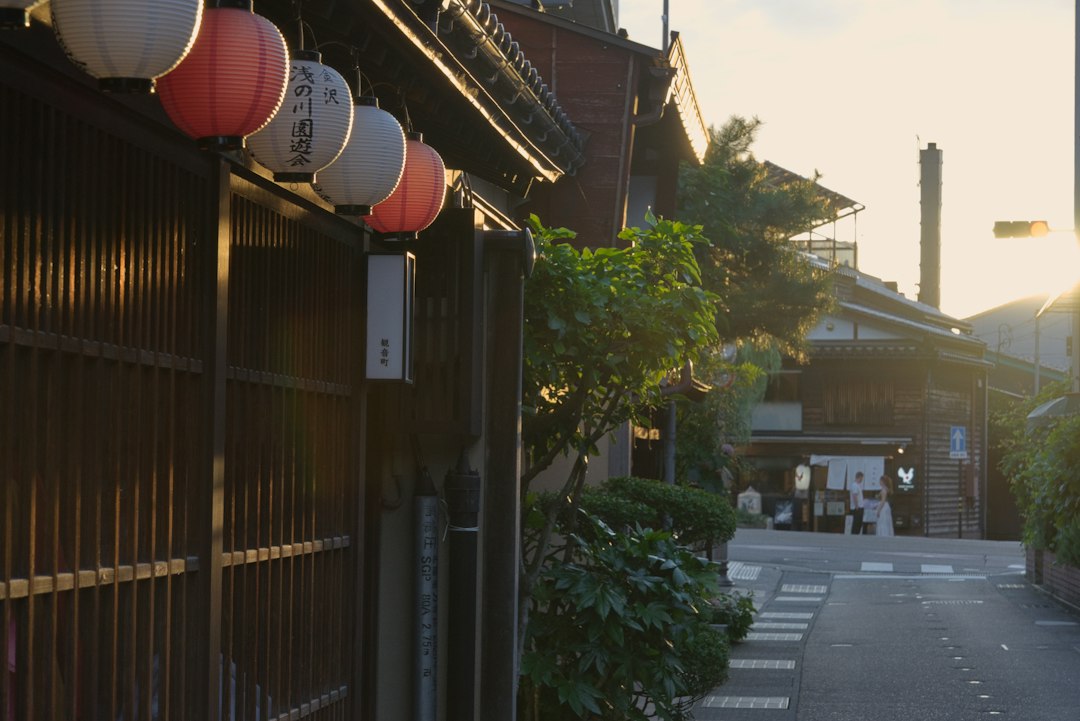
No cars come down Pontocho, and the lane has no utility poles or overhead wires. The poles were pulled out and the cables buried in a city project that reached the lane around 2019 and 2020, which is why older photographs look cluttered next to the street today.
The width is the part that has not changed. Restaurant staff, delivery trolleys, and diners all share the same few metres of stone paving. Keep that in mind the moment you feel the urge to stop for a photograph.
Walking the Lane Well
Timing changes Pontocho more than anything else you control.
When to Go
Most restaurants open around five in the evening and close by about eleven, and only a handful serve lunch. Before five, the lane is a row of shuttered wooden fronts: handsome, but closer to a film set than a working street. We send travelers to walk it just as the lanterns come on, when kitchens are setting up and the ends of the side alleys still hold the last blue light off the river.
Friday and Saturday evenings are the most crowded. If your dates allow, a weeknight is the better choice for a first walk and a first dinner. Walk-in tables are easier to find, and the lane is easier to move through.
The Numbered Side Alleys
Short alleys branch off the main lane, many marked at the entrance by a numbered sign bearing the plover. Some are barely shoulder-width. Several hold restaurants and bars you cannot see from Pontocho-dori at all.
In our view these are the most interesting part of Pontocho, and the least visited. Still, they are working spaces with private doorways. Walk them quietly, do not linger outside entrances, and turn back rather than squeezing past someone who lives or works there.
Etiquette in a Narrow Lane
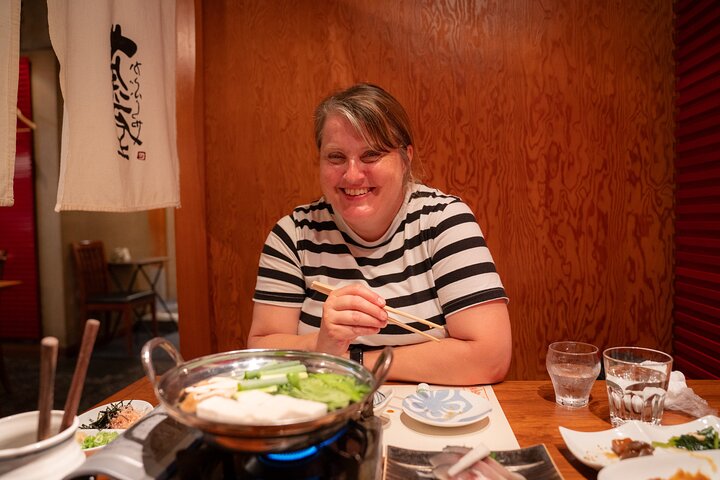
The rules here are ordinary Kyoto manners, applied more strictly because the space is small. Do not stop in the middle of the lane to take photographs; step into a gap between doorways instead. Eat and drink inside the shops rather than walking with food.
If you see a geiko or maiko, give them room. They are usually on the way to an appointment, and following or photographing them at close range without permission is regarded as rude. Our guide to seeing geiko and maiko respectfully in Kyoto covers what is realistic to expect and what is not.
Smoking catches some visitors off guard. Many small bars in Kyoto still allow it indoors, so if smoke bothers you, glance inside or ask before you sit down.
Expert Tip
Walk Pontocho twice: once at dusk to choose where to eat, and once after dinner, when you are no longer scanning menus and can look up at the lanterns and the upper-floor windows. Then walk one block west to Kiyamachi. The bars along the Takase canal there are tiny, some seating six or seven people, and the evening slows down to match.
Choosing Where to Eat
Picking a restaurant in Pontocho has less to do with online reviews than with reading the front door.
Reading a Doorway
A menu posted outside, with prices, is the clearest signal that a place expects walk-in customers. Many of these have English menus too, and some say so on the board. A plain wooden front with a noren curtain, no menu, and no prices is a different proposition.
Some of those are high-end kaiseki restaurants that work by reservation. A smaller number are ochaya and similar establishments that accept guests only by introduction, the Kyoto custom known as ichigen-san okotowari. We advise against trying those doors on your own. The refusal will be polite and it is not personal, but it will also be final.
What Is on the Menu
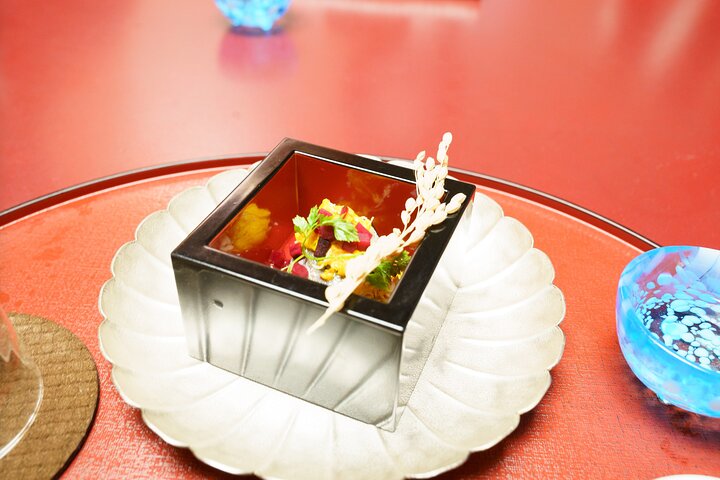
The range runs from yakitori counters and izakaya to obanzai, the home-style Kyoto side dishes set out in bowls along the counter, and up to formal kaiseki. Kyoto ingredients turn up at every level: yuba, fu, the city’s heirloom vegetables, and in summer, hamo, the pike conger Kyoto treats as its signature seasonal fish.
For a first night, we point most travelers toward an izakaya or obanzai counter rather than a kaiseki room. Dishes are small, you order as you go, and the counter puts you across from the person cooking. Kaiseki rewards a return visit, once you know what you are looking at.
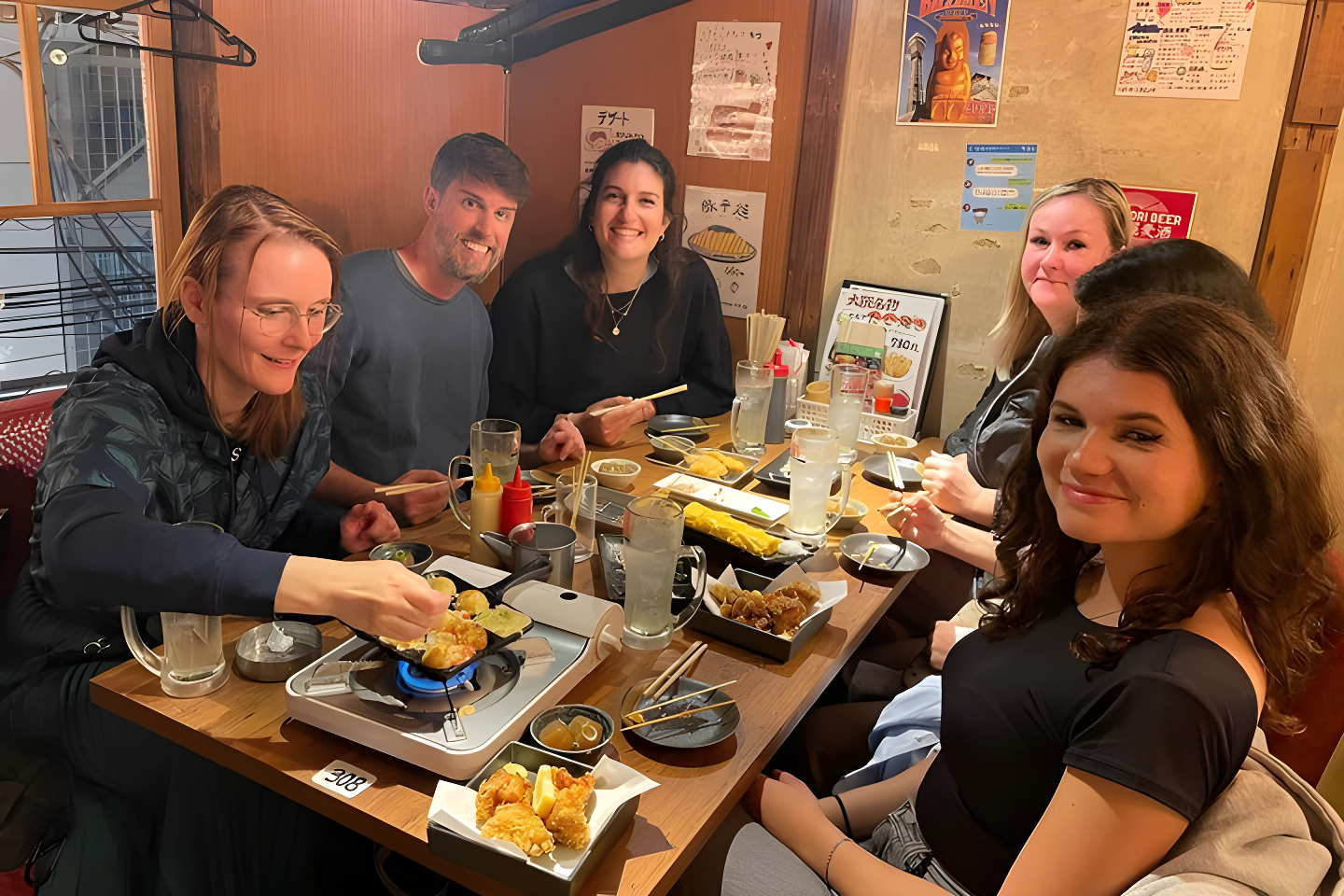
Our Gion and Pontocho food tour takes the same approach. It walks both districts after dark and sits down for thirteen dishes across a restaurant and an izakaya, with the guide ordering and explaining each course. It suits a first evening if you would rather not decode the doorways alone.
Reservations, Cash, and Charges
Reservations matter most on Friday and Saturday nights and during the riverside platform season. For smaller counters, your hotel front desk can usually phone ahead on the day, which also solves the language question.
Carry cash. Plenty of restaurants take cards, but several of the small counters and bars in central Kyoto still do not, and in our experience the smallest places are the ones most likely to be cash-only.
At an izakaya, expect a small dish you did not order to arrive with your first drink. This is the otoshi, a table charge in edible form, and it will appear on the bill.
Dinner Over the Kamo River
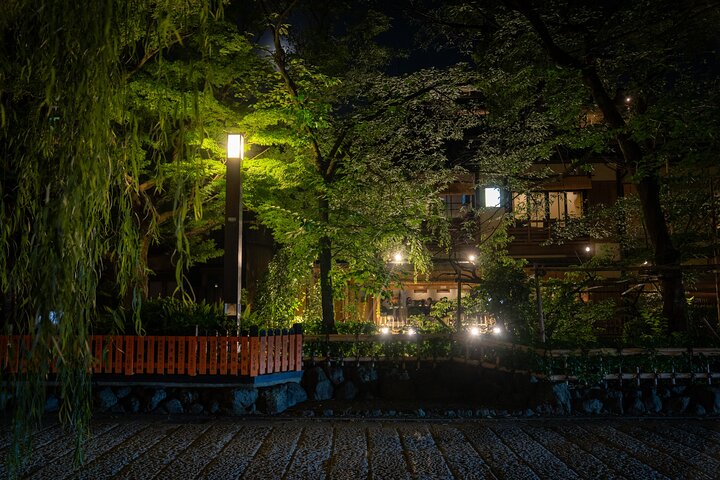
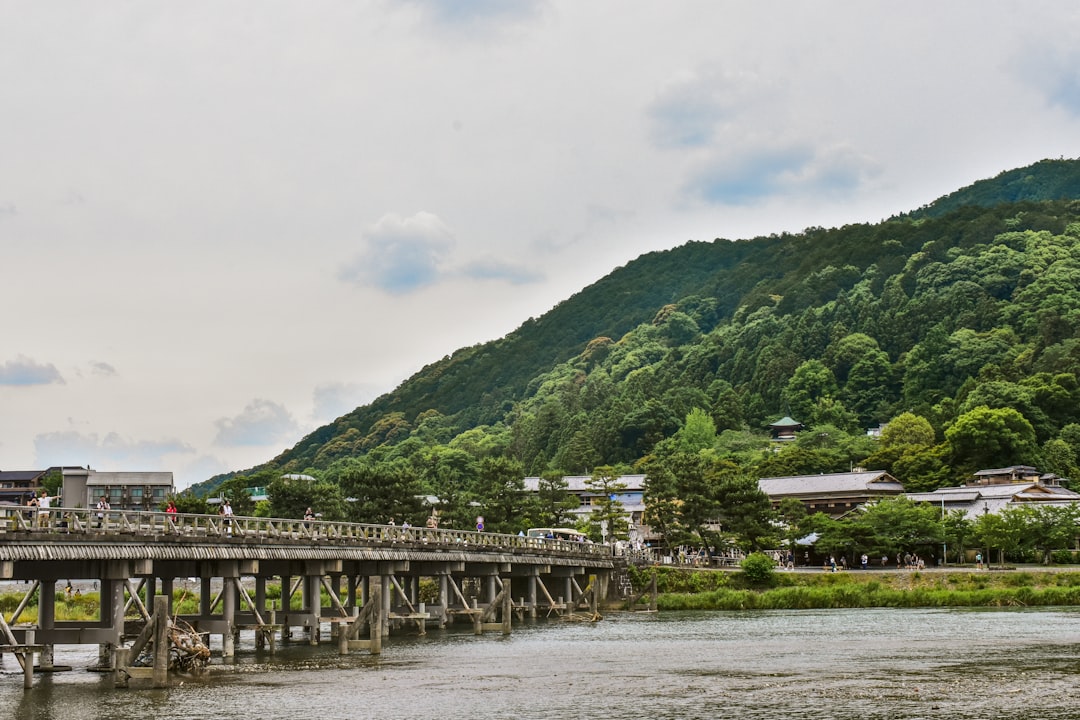
From May, the restaurants on Pontocho’s river side build wooden platforms out over the bank and serve dinner on them. They are called noryo-yuka, usually shortened to yuka, and eating on one is the Kyoto summer ritual most visitors have already seen in photographs.
The tradition is managed by the Kyoto Kamogawa Noryo-Yuka Association, which counted 87 participating establishments in 2026. Pontocho’s platforms are only part of that line, but they are the ones closest to the lanterns.
The Season
The season opens on 1 May. It traditionally ran through September, but the association’s official period now reaches into October, and for 2026 it announced a further extension to the end of the month. Dates can change from year to year, so check the association’s site before planning an autumn platform dinner.
A few restaurants also serve lunch on their platforms, usually in May and September. In the height of summer those places switch to evenings only, which says a good deal about the midday heat in July and August.
When a Platform Is Worth It
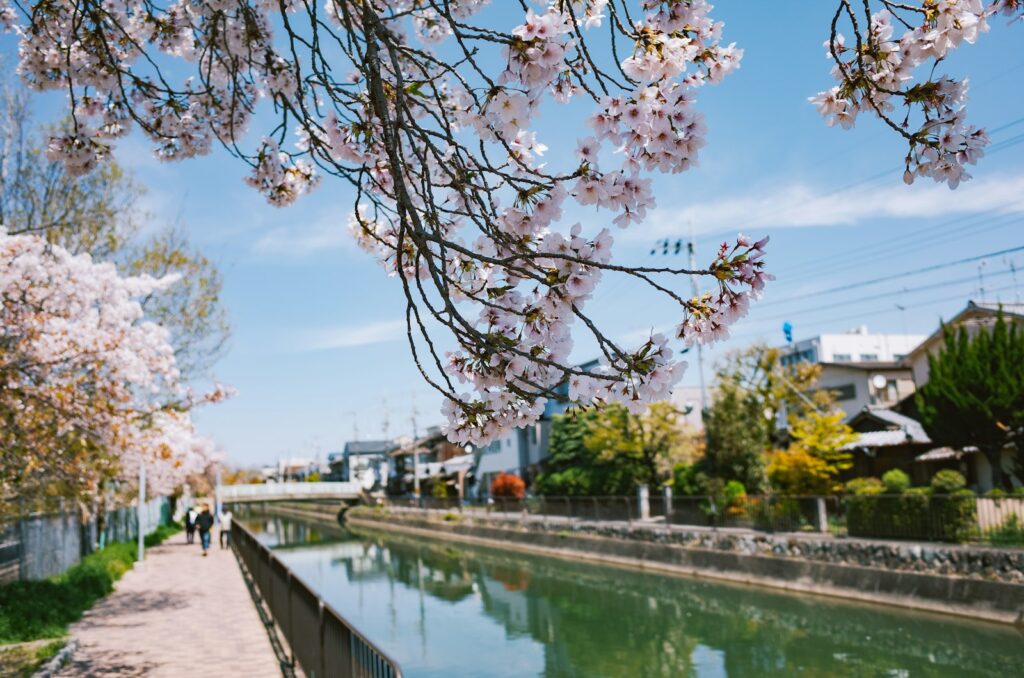
Our view: May and early autumn are the months to book. The evenings are mild, the Higashiyama hills stay visible across the river well into dinner, and you are outside because it is pleasant rather than because you are enduring it.
July and August evenings in Kyoto stay hot and humid after dark. A platform then is still an experience, just a sweatier one than the photographs suggest. Ask when booking whether the platform menu differs from the one served indoors, and what it costs, since the two are not always the same.
Booking a Platform
Reserve ahead, particularly at weekends, and request a platform seat specifically. A booking at a restaurant with a yuka does not automatically mean a table outside. In rain or high wind the platforms may close and diners are moved indoors, so ask how the restaurant handles weather when you confirm.
Expert Tip
Before dinner, walk down to the path along the riverbank below the platforms. From the water’s edge you can see which restaurants have the platforms you want, how high they sit, and how tightly they are packed against their neighbours. A booking-site photograph never shows you that.
Pontocho Alley: Frequently Asked Questions
Is Pontocho Alley worth visiting if I am not eating there?
Yes, for a short walk at dusk. The lane takes about ten minutes end to end at an easy pace, and the lanterns, the plover signs, and the wooden fronts are reason enough to come. That said, you see only half of Pontocho from the outside. A single drink at one counter changes the experience more than an extra hour of walking.
Do I need a reservation to eat in Pontocho?
Not always. Many restaurants with a menu posted outside take walk-ins, especially early on a weeknight. For Friday and Saturday nights, for kaiseki, and for any riverside platform seat during the yuka season, book ahead or ask your hotel to call.
Will I see geisha in Pontocho?
Possibly, and briefly, as geiko or maiko pass between appointments in the early evening. Nothing is guaranteed and nobody is on display. The most reliable way to see Pontocho’s performers is the Kamogawa Odori at the Kaburenjo each May.
Related Tours
Conclusion
Arrive at the Shijo end around half past five on a weeknight, walk the lane once without committing to anything, and then choose a place with its menu posted outside. That order of operations removes most of the hesitation first-time visitors describe about Pontocho.
If you are in Kyoto between May and October, book one platform dinner, ideally in May or September, and leave the other evenings open. After dinner, Kiyamachi is one block west. Our bar and izakaya crawl ends its night at the small counters along the canal there, and the evening does not have to finish when Pontocho’s kitchens close.
Plan Your Japan Trip with Local Experts
Our team has guided 40,000+ travelers across Japan. Tell us about your trip and we’ll get back to you within 24 hours.