In this article:
- What Pachinko Actually Is
- Choosing Your First Machine
- Sitting Down and Playing
- Understanding the Jackpots and the Screen
- Cashing Out: The System Nobody Explains
- Pachinko: Common Questions
What Pachinko Actually Is
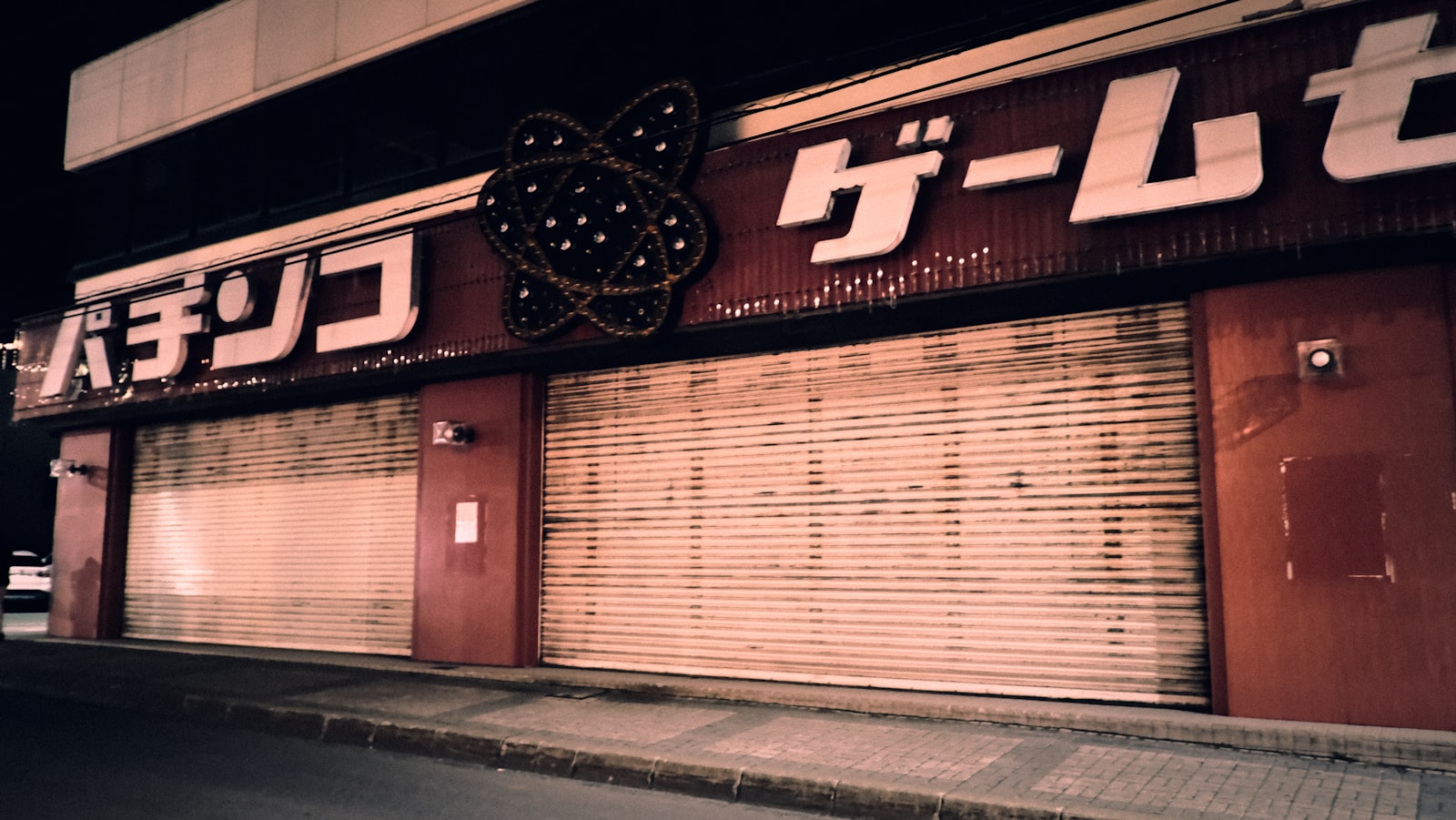
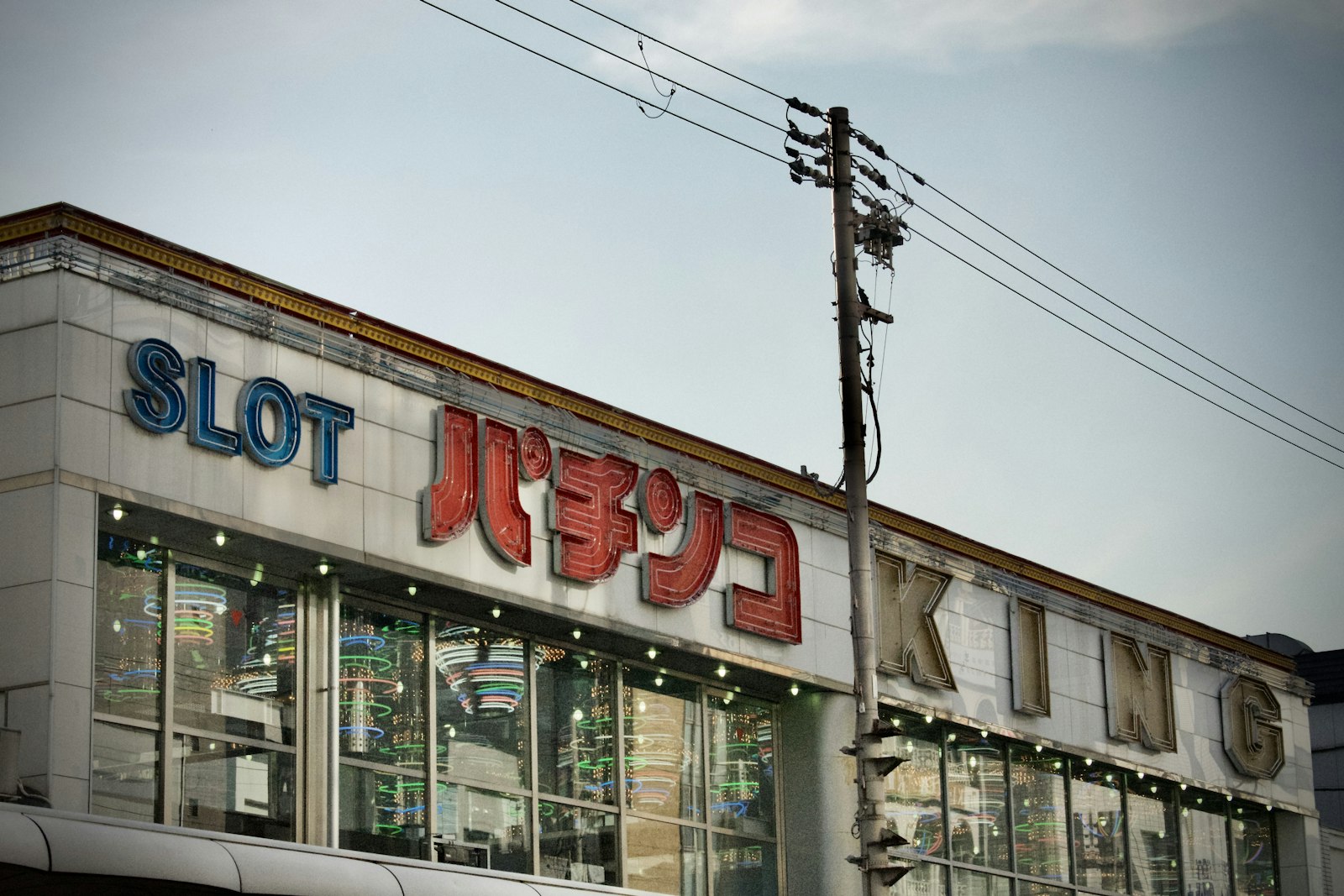
Pachinko is a Japanese game that sits somewhere between a vertical pinball machine and a slot machine, played with small steel balls. You buy the balls, fire them up into a maze of pins, and try to land them in particular pockets, which triggers a digital lottery on a screen. It is the most popular form of gaming in Japan, and the parlours are among the most recognisable — and most baffling — buildings in any Japanese town.
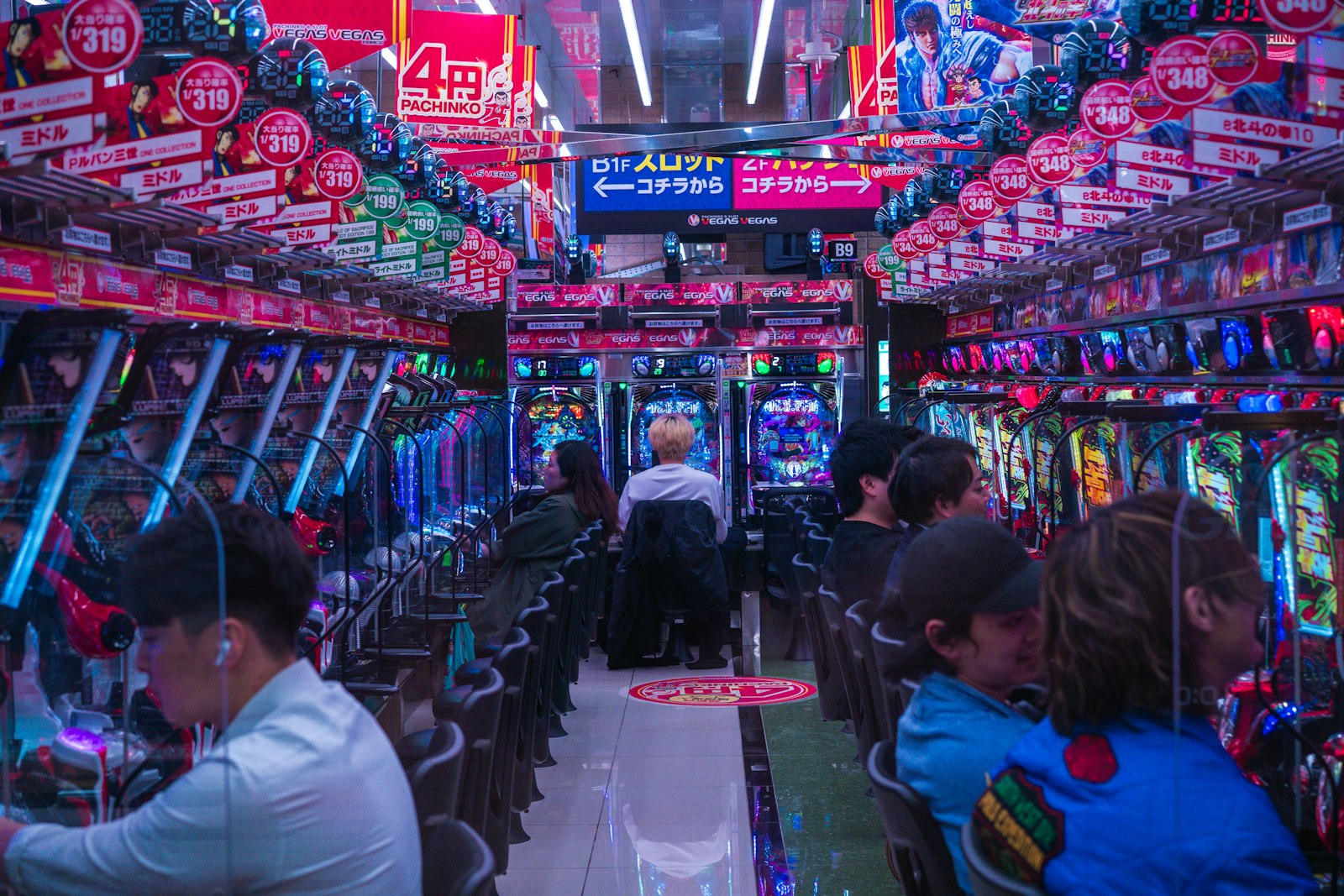
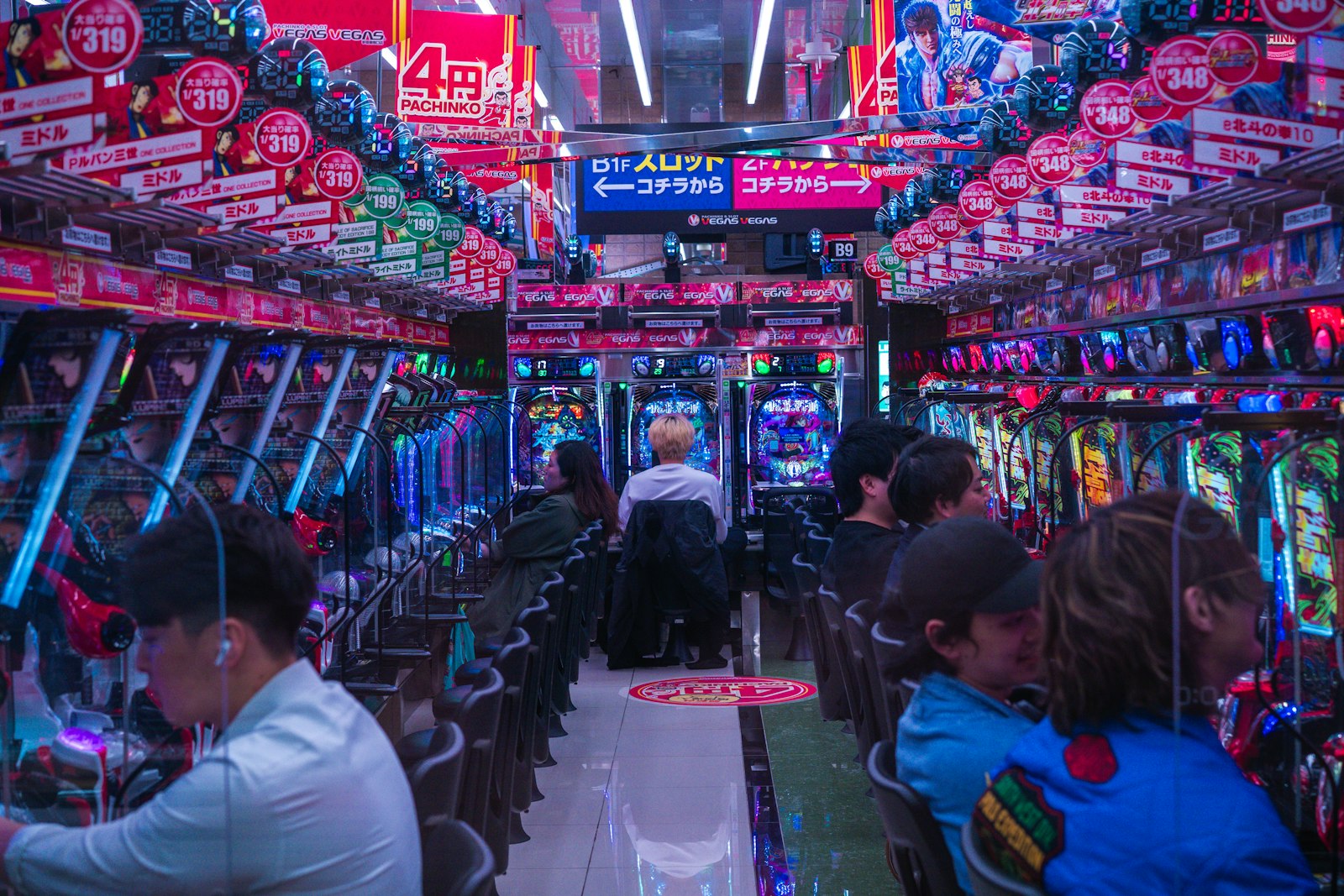
For a visitor, the appeal is not really the gambling. It is the spectacle: the noise, the light, the strange social ritual of a room full of people staring intently at screens while thousands of steel balls rattle around them. Treat a visit as anthropology with a small budget attached, and it becomes one of the more memorable hours of a trip.
Pinball Meets Slot Machine
The mechanical heart of pachinko is the field of brass pins behind the glass. You launch balls into the top, and they cascade down through the pins, most draining away at the bottom, a lucky few falling into a central pocket. Each ball that lands in that pocket spins a digital reel — the slot-machine half of the game. Match the right symbols and you trigger a jackpot, which floods your tray with more balls.
Anime, Films, and Pop Culture
Modern machines are licensed, themed spectacles. Major anime, films, pop stars, and franchises all have their own pachinko machines, with elaborate animated sequences playing out on large central screens. Much of the cost of a machine goes into these productions, and regulars choose machines partly for the show. If you have a favourite Japanese franchise, there is a decent chance a pachinko machine exists for it.
Bracing for the Sensory Assault
Nothing prepares a first-timer for the inside of a parlour. The noise is enormous — a wall of electronic music, jingles, and the metallic roar of millions of balls — and the lights are relentless. Many parlours still permit smoking in designated areas, so the air can be heavy. Step in knowing this, and the shock becomes part of the experience rather than a reason to turn around. Earplugs are not a ridiculous idea.
Expert Tip
Set a strict cash limit before you walk in — say, 1,000 to 2,000 yen — and treat it as the price of the experience, not a stake you expect to grow. Pachinko is engineered for the house to win over time, and the cash-out system is deliberately opaque. The goal for a visitor is to play for twenty minutes, see how it works, and walk out having spent the price of a couple of coffees.
Choosing Your First Machine
The wall of machines looks uniform to a newcomer, but the choices you make before you sit down matter more than anything you do afterward. Two numbers decide how gentle or brutal your session will be.
Find the 1-Yen Section
Parlours are usually divided by the cost of each ball. The standard floor runs at 4 yen per ball, where money disappears fast. Many parlours also have a 1-yen section — look for signs reading 1円 — where the same play costs a quarter as much. For a curious visitor, the 1-yen area is the only sensible place to start. Your budget lasts four times as long, and you see exactly the same game.
Pick Gentler Odds
Machines also differ in their jackpot probability, and this is shown on signage and the machine itself. A “sweet” or light machine might hit its jackpot around 1 in 99 spins; a maximum-type machine might be closer to 1 in 319. The low-odds machines pay bigger but swallow money between hits. As a beginner you want the more frequent, smaller wins of a 1/99-style machine, where something actually happens during your short session.
Don’t Take an Occupied Seat
A machine with a drink on the tray, a small card slotted in, or a folded item on the seat is taken — the player has stepped away briefly, and the seat is theirs. Sitting down at one is a genuine faux pas. Likewise, balls left in the tray belong to that player. Look for a completely clear machine and seat, and if you are unsure, the floor staff will happily point you to a free one.
Sitting Down and Playing
Once you have a clear machine in the 1-yen section, the actual mechanics are simple. There are really only two controls you need.
Feeding the Machine
Insert a 1,000-yen note into the slot on or beside the machine. Then press the ball-lending button — labelled something like 球貸 (kashidama) — to convert your money into a supply of balls, which load into the tray at the bottom. On modern machines your balance may sit on a card rather than dropping as physical balls, but the principle is the same: money becomes playing balls.
The Handle Is the Whole Game
On the lower right is a single round knob. Turn it, and the machine fires balls up into the field; turn it further, and it fires harder. That is the entire physical skill of pachinko. The aim is to find the sweet spot — often around a two-thirds turn — that loops balls up and over so they fall down through the pins toward the centre. Hold it there steadily and watch where your balls land; small adjustments change everything.
Aim for the Centre Pocket
The target is the small pocket in the middle of the field, usually right below the screen — the start pocket. Every ball that drops into it triggers one spin of the digital reels. So your whole job is to adjust the knob until a steady trickle of balls is finding that pocket. You are not aiming each ball individually; you are tuning the flow. The rest is chance and the machine’s animations.
Understanding the Jackpots and the Screen
The screen in the middle of the machine is where the actual game plays out, and learning to read it — even a little — turns the chaos into something you can follow.
The Reels Spin
Each ball in the centre pocket spins the on-screen reels, usually three numbers or symbols. Land three matching numbers and you hit the jackpot. Between spins, the machine fills the wait with animated sequences from its theme — characters, battles, story beats — many of which are hints, or “reach” sequences, that build tension as two of three reels match and the third spins on.
Reading the Signs of a Win
Regulars watch for specific cues that a spin is promising: a shift to a rainbow colour, a gold frame around the screen, a particular character appearing, or the music swelling into a dramatic sequence. These are the machine telling you the odds on this spin have improved. You will not learn them all in one session, but you will quickly notice that some spins feel charged with hype and others pass quietly.
Hitting the Jackpot
When you do hit, the machine enters bonus mode, and this is where the balls pour in. The screen usually instructs you what to do — often to turn the knob fully so balls fire to the right side of the field, into a big open pocket that pays out heavily. Follow the on-screen prompts, even if you cannot read the Japanese; they are usually obvious arrows and directions. Your tray fills, and that is the moment pachinko is famous for.
Cashing Out: The System Nobody Explains
Here is the part that confuses every visitor, and it confuses them by design. Gambling for cash is technically restricted in Japan, so pachinko parlours use a deliberately indirect system to turn your winnings into money. Once you understand it, the strangeness makes sense.
Cash Out Your Balls
When you are done, press the eject or count button, and your balls — or your card balance — are tallied by a machine that issues a receipt or card recording your count. You take this to the parlour’s exchange counter. You do not get cash here. Instead, you exchange your winnings for goods.
Trade for “Special Prizes”
At the counter, modest winnings can be swapped for ordinary items — snacks, tissues, small goods. Larger winnings are exchanged for a “special prize”: a small token, often a sliver of gold or a plastic-encased plate, that exists for one purpose only. The staff will hand it over with no particular explanation. This token is the key to the cash.
The Window Around the Corner
Somewhere near the parlour — often a small, unmarked shuttered window in an alley or adjacent building, legally separate from the parlour itself — is the exchange booth. You slide your special prize through the slot and receive cash in return, usually without a word exchanged. The parlour cannot legally tell you where this window is, which is why staff stay vague. This three-step dance — balls to token to cash, through a nominally independent third party — is the legal fiction that keeps pachinko running. As a visitor, you can simply skip it: take the snacks, or cash out your small winnings, and leave it there.
Pachinko: Common Questions
Are tourists allowed to play? Yes. Pachinko parlours are open to anyone of legal age, including foreign visitors, and you do not need to be a member or speak Japanese to play. The staff are used to the occasional baffled tourist and will help you get started if you ask or simply look lost at a machine. Bring photo ID in case you are asked your age.
What’s the difference between pachinko and pachislot? They sit side by side in the same parlours but play differently. Pachinko is the ball game described here, driven by the knob and the field of pins. Pachislot (or “slot”) machines are closer to Western slot machines — you insert tokens and press buttons to stop spinning reels, with more emphasis on timing and player input. Pachislot tends to appeal to players who want more direct control; pachinko is more about tuning the flow of balls.
Can I use a credit card or phone to play? No. Pachinko runs on cash. You feed banknotes into the machine or a nearby ball-lending unit, and winnings come back as goods or, ultimately, cash — never onto a card. Bring physical yen, and only as much as you have decided to spend. The absence of card payment is, in its way, a useful built-in limit.
Related Tours

Conclusion
Pachinko is best understood as a piece of living Japanese culture rather than a gambling opportunity. The house is built to win, the cash-out system is designed to confuse, and the real reward for a visitor is the experience itself — the noise, the spectacle, and the small thrill of watching your tray fill during a bonus round.
Plan Your Japan Trip with Local Experts
Our team has guided 40,000+ travelers across Japan. Tell us about your trip and we’ll get back to you within 24 hours.