
In this article:
- Omiyage
- Bringing a Gift to Someone’s Home
- Presentation
- Money in Envelopes
- Reciprocity and What Not to Give
- Japanese Gift Giving Culture: Frequently Asked Questions

Introduction
A Japanese colleague returning from a weekend in Kanazawa brings a box of thirty individually wrapped sweets to the office on Monday, and everyone takes one.
That is not a kind impulse. This is omiyage, a custom that is close to obligatory, and people choose boxes with enough individually wrapped pieces for the whole team so everyone can take one and eat it at a convenient time.
The whole system works like that.The gestures look warm and personal, but clear expectations about the occasion, value, presentation, and reciprocity shape the system underneath. Understanding the structure makes the warmth easier to participate in.
Omiyage
The souvenir you bring back for other people, and the most visible gift practice in the country.
Not a Keepsake
Omiyage is not a thing you buy for yourself. The English word souvenir misleads: people bring omiyage back from a trip for colleagues, neighbours, and family, and social custom expects them to do so.
People at work notice when someone returns from a trip empty-handed. This is why every Japanese station, airport, and tourist site has an enormous omiyage hall selling regional confectionery in boxes.
Why It Is Always Individually Wrapped
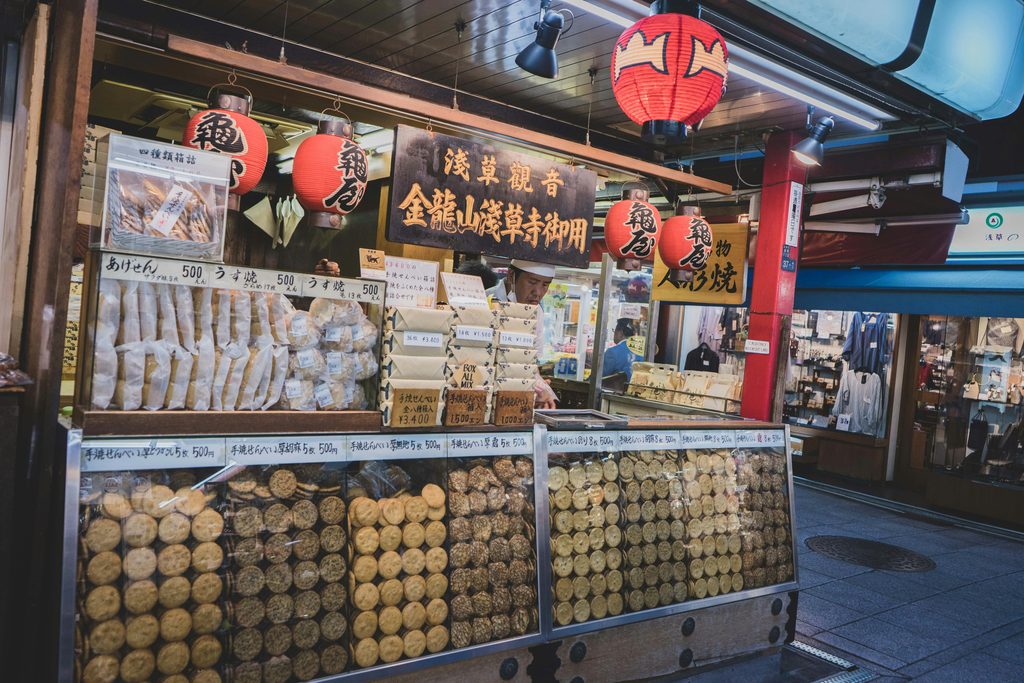
The standard omiyage is a box of identical small items — cakes, biscuits, rice crackers — each in its own wrapper.
The reason is practical: people distribute the items among a group, take them at different times, and do not need to cut or serve anything. A whole cake would be a much worse gift, however nicer it looked.
Count matters. Buy a box with enough pieces for everyone who might reasonably expect one.
Meibutsu
The item should be specific to where you went. Meibutsu — famous local products — are what the omiyage halls sell: Shiroi Koibito from Hokkaido, momiji manju from Miyajima, yatsuhashi from Kyoto, mentaiko from Fukuoka.
The regional specificity is the point. A box of generic biscuits bought at the airport communicates less than an unremarkable local sweet from the town you actually visited.
Boxes carry the place name prominently, which is deliberate.
For Visitors
If you are staying with a Japanese family, working with a Japanese company, or have received hospitality, bringing omiyage back from a trip within Japan makes a good impression and shows that you understand the custom.
It costs a few hundred to a couple of thousand yen. The effort registers far more than the price.
Expert Tip
Bring a gift from your own country if you are meeting anyone in a professional or personal capacity in Japan — and make it something regional and consumable rather than expensive. A good local whisky, a regional preserve, quality tea or biscuits, something with your city’s name on it. The failure mode is over-spending: an expensive gift creates a reciprocal obligation the recipient then has to discharge, which is a burden rather than a pleasure. Modest, specific, and well-presented beats costly every time.
Bringing a Gift to Someone’s Home
Temiyage is the gift you carry when you visit, and the conventions around it are precise.
What to Bring
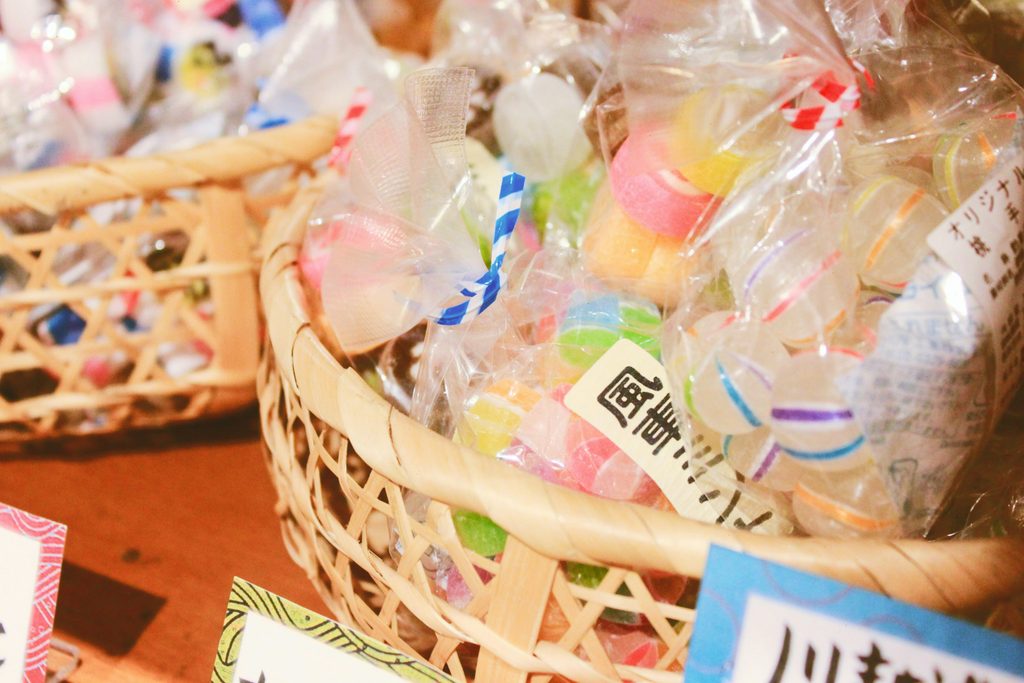
Consumables, almost always. Confectionery from a good department store food hall, fruit, quality tea or coffee, or alcohol if you know they drink.
Department store wrapping carries information — the paper identifies the shop, and a well-regarded shop’s paper signals that thought went into it. This is a real and widely understood layer.
Avoid anything the household then has to keep, display, or find room for.
When to Hand It Over
Not at the door. You enter, remove your shoes, follow your host into the room, exchange greetings, and then present the gift once you sit down.
Take the item out of the shop’s carrier bag first and hand over the wrapped item itself, keeping the bag. The bag is transport, not part of the gift.
What to Say
The traditional formula is tsumaranai mono desu ga — “this is a trifling thing, but” — which is a ritual self-deprecation rather than a description.
Younger people, in particular, increasingly regard it as old-fashioned. Softer alternatives are common: okuchi ni aeba, “if it suits your taste”, or simply naming what it is and saying you hope they enjoy it.
For a foreign visitor, saying the name of the thing and where it is from, with both hands and a small bow, is entirely sufficient and lands better than a memorised phrase.
If You Are Given One
Receive with both hands, thank them, and set it aside rather than opening it.
Japanese recipients traditionally do not open a gift in front of the giver, which avoids any need to perform a reaction. This has relaxed considerably and many people now open gifts if invited to.
If your host says please open it, open it. Otherwise, thank them and put it beside you.
Presentation
People place as much importance on how you present a gift as on the gift itself.
Wrapping
Japanese wrapping is precise, and department stores will gift-wrap anything, free, to a standard that would be a specialist service elsewhere. Say the item is a gift — purezento desu — at the till.
Furoshiki, the cloth wrapping square, is the traditional form and is having a revival for environmental reasons. A gift in a furoshiki, with the cloth reclaimed afterwards or given as part of the present, is a lovely thing to do.
The corollary: an unwrapped gift, or one handed over in a plastic bag, reads as careless in a way that is stronger here than elsewhere.
Both Hands
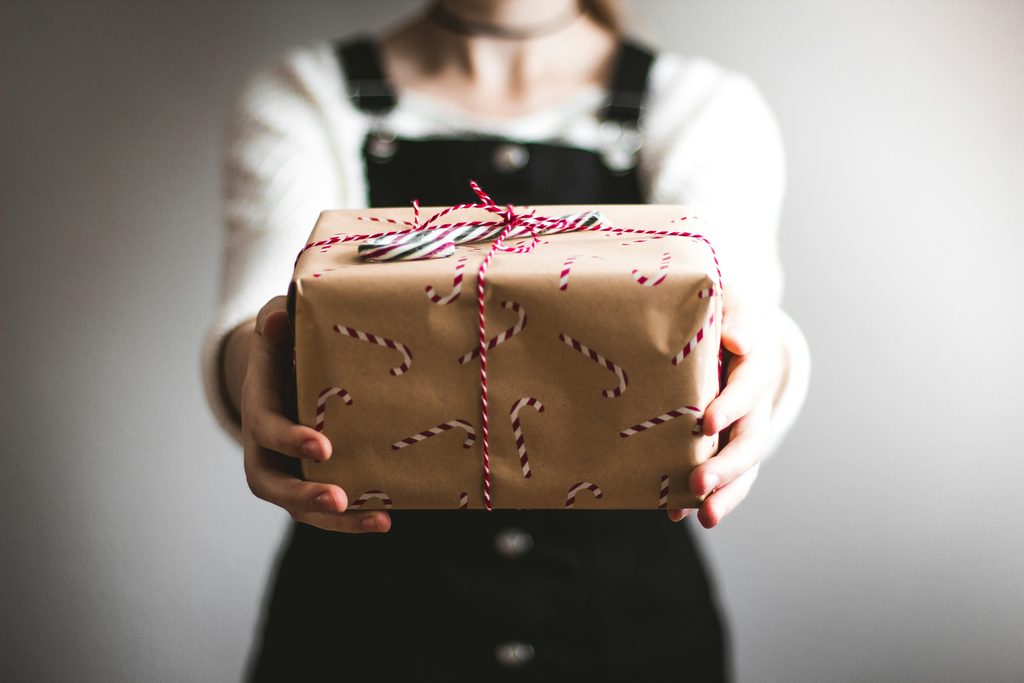
Give and receive with both hands, with a slight bow. This applies to gifts, business cards, money, and change in a shop.
It is the single most transferable piece of Japanese etiquette and it costs nothing to adopt.
Business Cards
The same principle in its most formalised version: present with both hands, card facing the recipient, receive with both hands, read it, and place it on the table in front of you rather than putting it straight in a pocket.
Writing on someone’s card in front of them is poor form. So is putting it in a back pocket.
Money in Envelopes
Cash is a normal and formal gift in Japan, given in a specific envelope with specific rules. Most visitors will not need this, and it is the part of the system most worth understanding.
Weddings
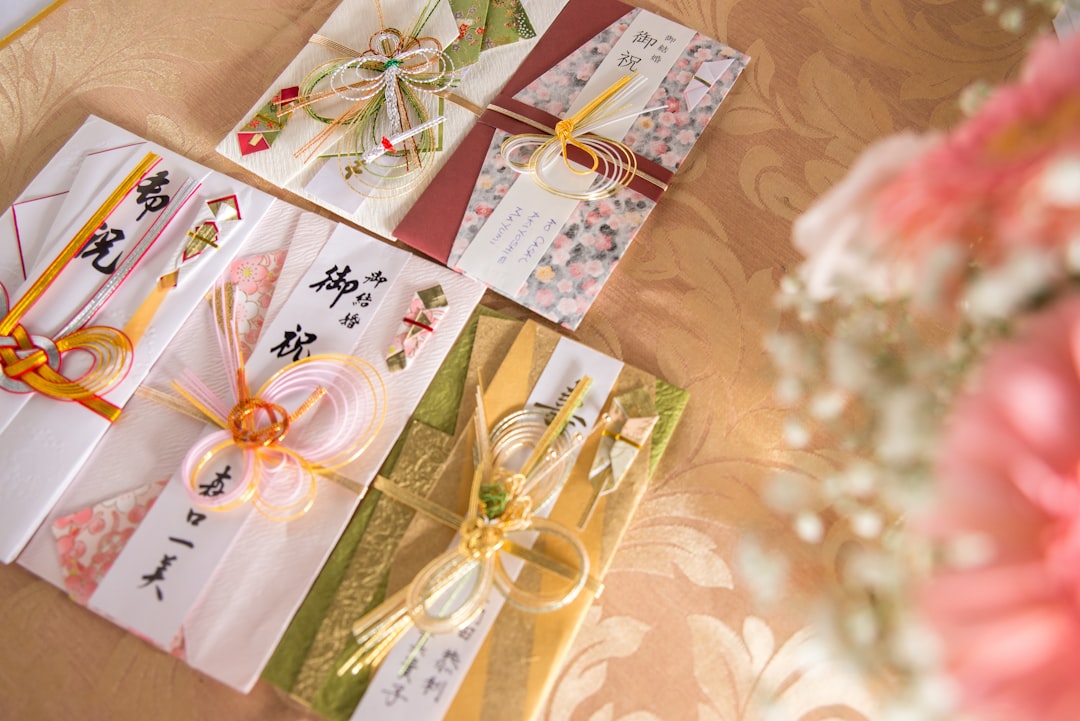
People give money in a shugibukuro—a decorative envelope tied with mizuhiki cord that stationery shops and convenience stores sell everywhere.
The knot matters. People use musubikiri, a tight knot that they cannot retie, for weddings because they hope the occasion will happen only once. They use a butterfly bow, which they can untie and retie, for occasions they hope will recur, such as births and general celebrations.
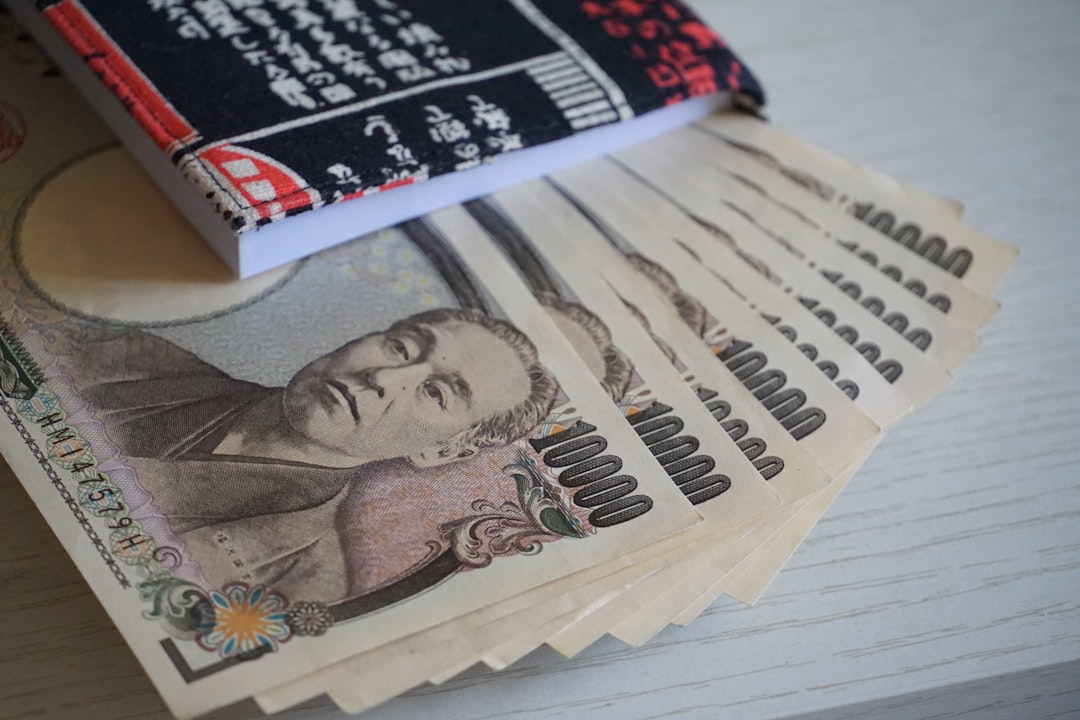
The banknotes must be new and crisp, obtained from a bank, and the amount should be an odd number of notes: ¥30,000 rather than ¥20,000 or ¥40,000. The reasoning is that an even number divides, and a divisible sum is a bad omen at a wedding.
Avoid amounts containing four or nine. The words for both are homophones for death and suffering.
Funerals
Koden, condolence money, goes in a black-and-white or silver-corded envelope.
For funerals, people use older banknotes rather than new ones—the reverse of a wedding. New notes imply you had them ready, which implies you were expecting the death. If you only have new notes, fold them once.
People present the envelope at the reception desk with a short set phrase and a bow. Because the occasion is formal, others notice mistakes in the details.
Other Occasions
Relatives give children otoshidama, or New Year money, in small decorated envelopes. They usually give larger amounts to older children.
Ochugen in midsummer and oseibo at year end are the seasonal gift exchanges between businesses, clients, and families — usually consumables rather than cash, sent through a department store which handles the wrapping and delivery.
Expert Tip
Never give a gift in a set of four, and avoid nine entirely. The number four is pronounced shi, a homophone for death; nine is ku, a homophone for suffering. Sets of four glasses, four plates, or four of anything are avoided in Japan the way thirteen is avoided in parts of the West, and Japanese tableware is routinely sold in sets of five for this reason. If you are buying a gift set, count it.
Reciprocity and What Not to Give
The obligation that runs underneath the whole system.
Okaeshi
A gift creates a return gift. The convention, called hangaeshi, is that the return is worth roughly a third to a half of what was received.
This applies to wedding gifts, condolence money, gifts on the birth of a child, and hospital visits. Department stores run entire services around it, complete with catalogues organised by price band.
The practical implication for a visitor: an over-generous gift imposes a return obligation. Modest is kind.

The Polite Refusal
Gifts are sometimes declined once or twice before being accepted, as a display of modesty, with the giver expected to insist.
This has faded a great deal and among younger people it is largely gone. If someone declines your gift, offer once more, warmly. If they decline again, they mean it.
Similarly, if you are offered something, accepting graciously the first time is entirely fine and will not be thought greedy.
Items to Avoid
Anything sharp — knives, scissors, letter openers — implies severing the relationship.
Handkerchiefs carry a similar association through wordplay and are also linked to funerals. Combs are avoided because the reading kushi contains the sounds for suffering and death.
Potted plants are a poor gift to someone unwell, because a rooted plant suggests a prolonged illness. Cut flowers are fine; white flowers and chrysanthemums specifically are funeral flowers.
Clocks and watches to a superior can read as an instruction to be more punctual. Shoes and socks to a senior person can suggest treading on them.
None of these will end a friendship if you get them wrong, and all are easily avoided.
Tipping
Not part of this system, and not practised. Money left for restaurant, taxi, or hotel staff will be returned to you, sometimes with the staff member chasing you down the street.
The one genuine exception is kokorozuke at a high-end traditional ryokan: a small amount in an envelope, given discreetly to the attendant looking after your room at the start of the stay. Even this is optional and increasingly rare.
Everywhere else: do not tip. Saying gochisosama deshita on leaving a restaurant is worth more.
Japanese Gift Giving Culture: Frequently Asked Questions
What should I bring from my own country?
Something regional, consumable, and moderately priced, well presented. Local whisky, wine, or spirits if you know the person drinks. Regional preserves, honey, chocolate, biscuits, or tea. Something bearing the name of your city or region, which gives it the same meibutsu quality that Japanese omiyage has. Avoid anything large, anything the recipient must display, and anything expensive enough to create a reciprocal obligation. Bring several small ones rather than one big one if you are meeting a number of people, and wrap them before you fly.
Which items or numbers should I avoid?
Avoid the numbers four and nine, which are homophones for death and suffering — no sets of four, and nothing priced or counted in nines. Avoid knives, scissors, and anything that cuts, which suggests severing a relationship. Avoid handkerchiefs and combs, both of which carry unlucky associations through wordplay. Avoid potted plants for someone ill, and avoid white flowers and chrysanthemums generally, which are funeral flowers. Clocks and watches to a senior person can carry an unintended message. If in doubt, good consumables in nice wrapping are safe in every context.
Is tipping a form of gift-giving in Japan?
No, and it is not welcome. Service charges are built into prices, staff are paid a wage, and tipping is read as either confusing or faintly insulting — an implication that the service required extra inducement. Money left on a table will be brought back to you. The single traditional exception is kokorozuke, a small sum in an envelope handed discreetly to the room attendant at a high-end ryokan at the start of a stay, and even that is optional and fading. If you want to express appreciation, say it: gochisosama deshita after a meal, or arigato gozaimashita on leaving, both mean considerably more than cash.
Related Tours
Conclusion
Bring something small, regional, and consumable from home, have it wrapped, and hand it over with both hands. That covers essentially every gift situation a visitor will encounter, and it will be received far better than something expensive.
The instinct to worry about the rules is understandable and mostly misplaced. Japanese people do not expect a foreign visitor to know that new banknotes belong in a wedding envelope and used ones in a funeral envelope. What they notice is that you brought something at all, that it came from where you live, and that you handed it over properly.
Plan Your Japan Trip with Local Experts
Our team has guided 40,000+ travelers across Japan. Tell us about your trip and we’ll get back to you within 24 hours.