In this article:
- Three Castles on One Hill: The History in Brief
- Walking the Grounds: Gates, Stones, and a Moat Seen From the Water
- Inside the Main Tower: What You Get for ¥1,200
- Planning Your Visit: Stations, Timing, and Seasons
- Osaka Castle: Frequently Asked Questions
Introduction
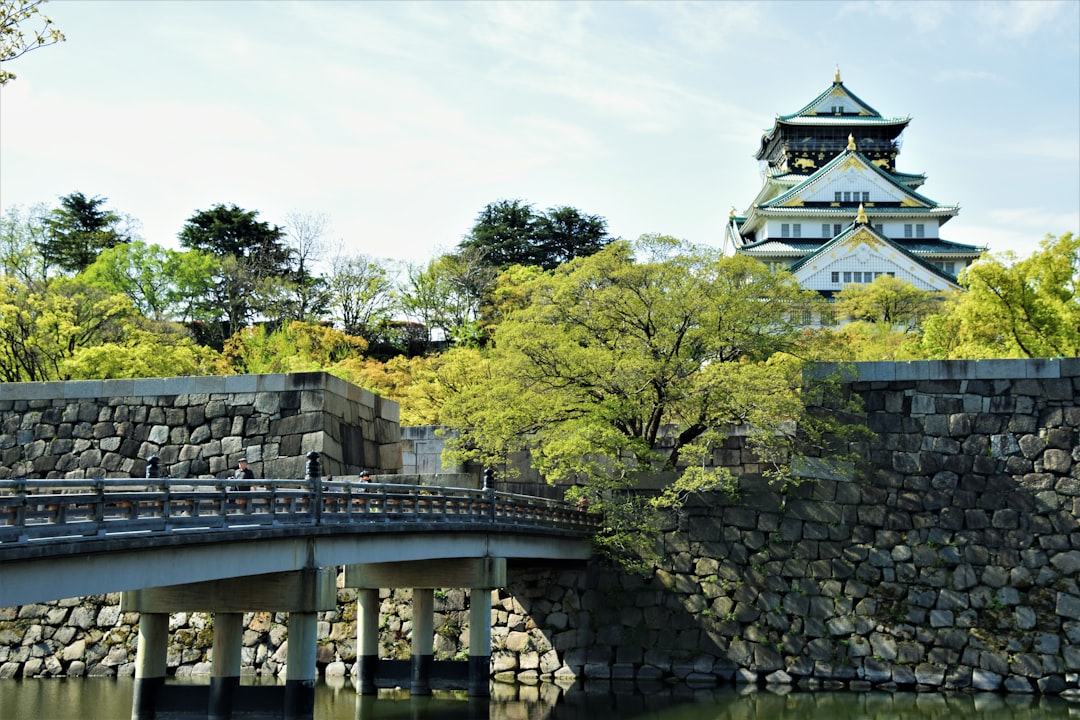
From the eighth-floor deck of Osaka Castle, you can see the Umeda towers to the northwest; Abeno Harukas to the south; and the Ikoma hills along the eastern horizon. The tower you are standing in was completed in 1931 from reinforced concrete, and there is an elevator inside it. The stones it stands on were set in place three hundred years earlier.
That gap explains why opinions of the castle split so sharply. Visitors who arrive expecting the dark timber interiors of Himeji or Matsumoto come away feeling misled. Those who understand that the real castle here is the masonry, the moats, and the layout of the gates. They tend to leave with the opposite impression.
Our Osaka Highlights walk begins at the castle for exactly this reason. A little context changes what people see. By the time they reach the Sakuramon gate, the site has stopped being a backdrop for photographs. What follows is that context: what survives, what was rebuilt, what the ticket buys, and how to fit it all into a day in Osaka.
Three Castles on One Hill: The History in Brief
The hill has carried three different castles. None of them is fully intact, and each left something different behind.
Hideyoshi’s Castle, 1583 to 1615
Toyotomi Hideyoshi began building here in 1583, as he was completing the military unification of Japan. The castle he raised was among the largest of its age. It served as the seat of his power until his death in 1598.
His young heir, Hideyori, held it until the Tokugawa sieges. The winter campaign of 1614 ended in a truce. The summer campaign of 1615 ended with the castle in flames and the Toyotomi line finished.
Those two sieges are the story the tower’s exhibits are built around. They are also why the castle matters in Japanese history far more than its current building would suggest.
The Tokugawa Rebuild and the Walls You Walk Past Today
The shogunate did not repair Hideyoshi’s castle. It buried it. From the 1620s, new earth was piled over the old site. A new castle rose on top. Sections of wall were assigned to feudal lords who supplied the stone and the labour.
The walls you see today are theirs.They are dressed granite blocks fitted without mortar. A few of the individual stones are the size of a small house.
The Tokugawa main tower did not last. Lightning struck it in 1665, it burned, and Osaka Castle stood without a main tower for well over two centuries.
The 1931 Tower, and Why It Is Concrete
The current tower was rebuilt in 1931, paid for by donations from the people of Osaka, and built in reinforced concrete. It has been a museum since the day it opened, went through major renovation in the 1990s, and was registered as a national tangible cultural property in 1997.
We think it is more useful to see it as a public monument of the 1930s than as a failed copy of a samurai building. It says a good deal about how a modern industrial city chose to remember itself.
That said, if standing inside original timber matters to you, the twelve castles with surviving original keeps are the places to go. Himeji is about an hour west of Osaka by train and makes the natural comparison.
Walking the Grounds: Gates, Stones, and a Moat Seen From the Water
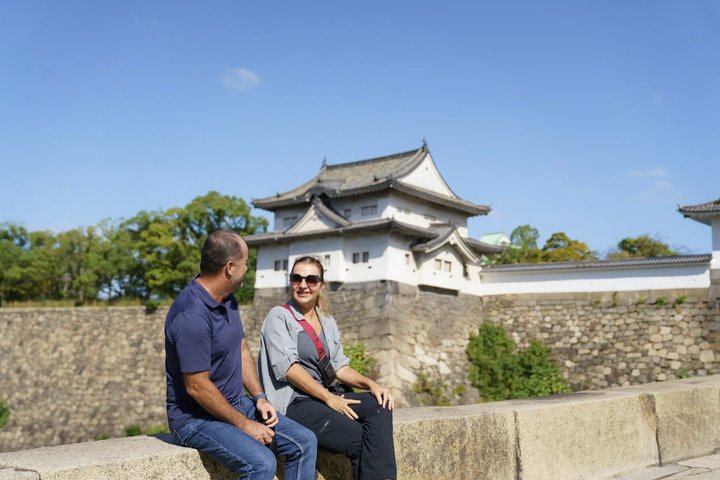
Give the grounds more time than the tower. Osaka Castle Park covers 106 hectares, and nearly everything that survives from the Edo period is outdoors: the walls, the moats, the Otemon gate, and a handful of corner turrets.
Otemon and Sakuramon: Reading the Approach as Defence
Approach from the west, through Otemon, the main gate. Inside it you step into a masugata, a square courtyard boxed in by walls, with a second gate set at a right angle to the first.
An attacking force that broke through the outer gate found itself packed into a confined space, forced to turn, and exposed to fire from the walls above. On our Osaka Highlights walk this is where the guide starts: the walls, the moats, and the approach as a piece of military design rather than scenery. Once someone points out the angles, the whole site looks different.
The Sakuramon gate, closer to the tower, has a masugata of its own, and in it sits Tako-ishi, the largest stone in the castle. The stone weighs an estimated 108 tons and shows nearly 60 square metres of surface. Workers quarried it in Bizen, in present-day Okayama Prefecture, and placed it here in 1624 under Lord Ikeda Tadao.
The name means octopus stone, after a mottled mark in its lower left corner. Photographs flatten it. Stand a metre away and look up, and the question of how anyone moved it more than a hundred kilometres in the 1620s becomes the most interesting thing on the site.
Hokoku Shrine at the Foot of the Castle
Hokoku Shrine, dedicated to Hideyoshi, sits at the foot of the castle within the park. It is modest next to the tower above it, and that is part of its interest.
People honour the man who built the first castle here, beneath walls that the family who destroyed his line later raised. We stop here before the tower on our Osaka Highlights walk because it frames everything that comes after.
Nishinomaru Garden, the Plum Grove, and the Gozabune Boat
Nishinomaru Garden occupies the castle’s western bailey, a wide lawn with several hundred cherry trees and an open view of the tower across the grass. Entry is ¥300, rising to ¥350 in cherry blossom season, when it also stays open into the evening. It is closed on Mondays.
The plum grove is the one we would steer people toward. More than 1,200 trees of around a hundred varieties flower in sequence from late January into early March. In our experience a cold, clear February morning among the plums is far calmer than a weekend under the cherries in April.
The Gozabune is a gold-decorated boat that runs a short loop of the inner moat. The ride takes about twenty minutes, costs ¥1,800 for adults, and the last departure is at 16:30.
Expert Tip
If you have time for only one paid extra beyond the tower, choose the Gozabune over the garden. From the water you sit at the base of the inner walls, and the height of the masonry makes more sense from below than from any path above it. The boarding office is just west of Gokurakubashi Bridge, on the north side of the tower.
Inside the Main Tower: What You Get for ¥1,200
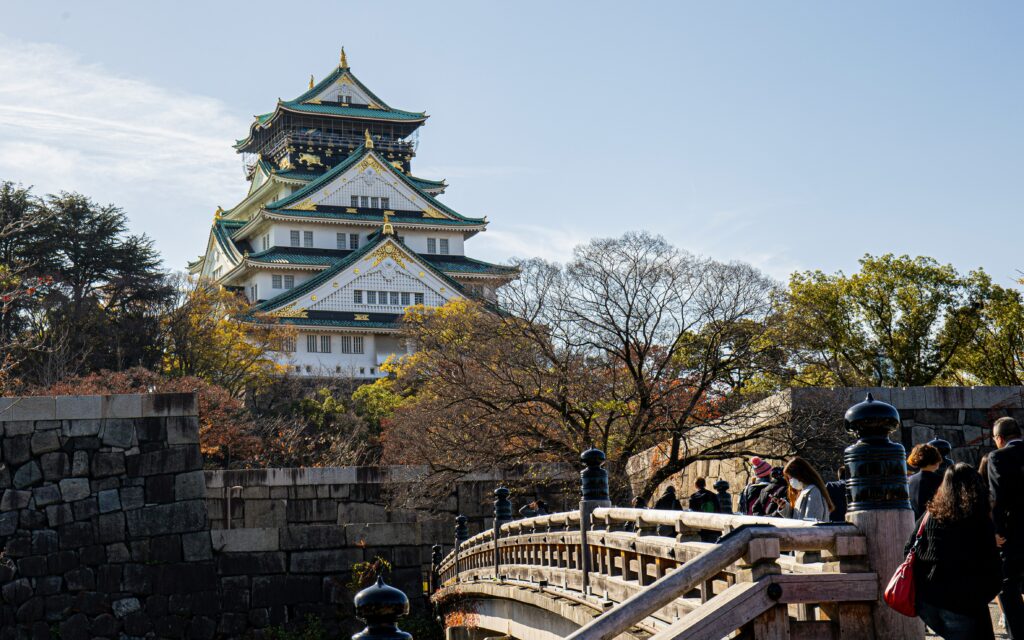
People often ask us whether they should go inside Osaka Castle, and we usually say yes, as long as they adjust their expectations. This is a history museum inside a castle-shaped building, not a castle interior. Judged as that, it is good.
Seven Floors of Exhibits and an Eighth-Floor Deck
Floors one to seven hold the museum, with displays on Hideyoshi’s life, the building of the castle, and the sieges that ended the Toyotomi family. Audio guides are available in four languages. The exhibits are dense, and for most visitors an hour inside is plenty.
The eighth floor is an open observation deck running around the top of the tower. The view is the reason to go up. It gives you the shape of the city, the river curving past to the north, and a clear sense of how large the castle grounds still are.
There is an elevator, but it goes only as far as the fifth floor; above that it is stairs, with staff-assisted access to every floor for wheelchair users. Staff do not allow strollers inside, so visitors can leave them at the entrance. On a busy day we suggest walking up rather than waiting for the elevator.
The Toyotomi Stone Wall Museum
The newest part of the site opened in 2025, next to the tower. It is underground, and it shows a section of Hideyoshi’s original stone wall, uncovered in a 1984 excavation and left as it was found.
Compare it with the Tokugawa walls you passed on the way in. Hideyoshi’s stones are rough and irregular, stacked more or less as they came out of the ground. The later walls are cut, fitted, and far larger.
This is the first castle itself, not a reconstruction of it, and it is the reason we now tell people the ticket is worth buying. Entry is included with the tower ticket, and the hours are the same.
Tickets, Queues, and the Honest Case for Going In
The tower is open from 9:00 to 18:00, with last entry at 17:30, and closes from 28 December to 1 January. Adults pay ¥1,200; high school and university students pay ¥600 with ID; junior high students and younger enter free. The price doubled in April 2025, when the stone wall museum was added to the ticket.
Same-day queues at the ticket office can run past thirty minutes at busy times. Web tickets bought in advance let you skip that line and enter with a QR code, and on a spring weekend or a public holiday we would not go without one.
Our honest view: the building disappoints people who expected an original interior, and our guides say so before anyone goes up. However, the exhibits are solid and the view is excellent. Paired with the stone wall museum, ¥1,200 is a fair price.
Expert Tip
On a spring weekend or a holiday, buy a web ticket the evening before and go in at 9:00, then walk the gates and walls afterwards. In our experience the tower fills steadily through the morning, while the walls are just as good at eleven as they are at nine. The early start matters more than the order.
Planning Your Visit: Stations, Timing, and Seasons
Osaka Castle is easy to reach and easy to underestimate in size. Plan for walking.
Which Station to Use
Three stations are the usual choices. Osakajokoen, on the JR Loop Line, is about ten minutes from JR Osaka Station and brings you in from the northeast. Morinomiya, on the JR Loop Line and the subway, serves the southeast, while Tanimachi 4-chome, on the Chuo and Tanimachi subway lines, sits on the southwest side.
Whichever you use, allow fifteen to twenty minutes on foot to reach the tower. Our preference is Tanimachi 4-chome, because it puts you on the Otemon side and the approach unfolds in the order it was designed to be walked. Tap through with an ICOCA card and you will not need to think about fares.
The Hour and the Month That Change the Visit
Morning is better than afternoon for the tower, and the difference is largest on weekends. The grounds are wide and exposed, so in July and August go early and carry water.
February brings the plum grove. Late March into early April brings the cherries, with Nishinomaru Garden open into the evening, and far larger crowds than the plums ever draw. By contrast, late autumn is cool and clear, and a good season for walking the full circuit of the moats without hurrying.
Fitting the Castle Into an Osaka Day
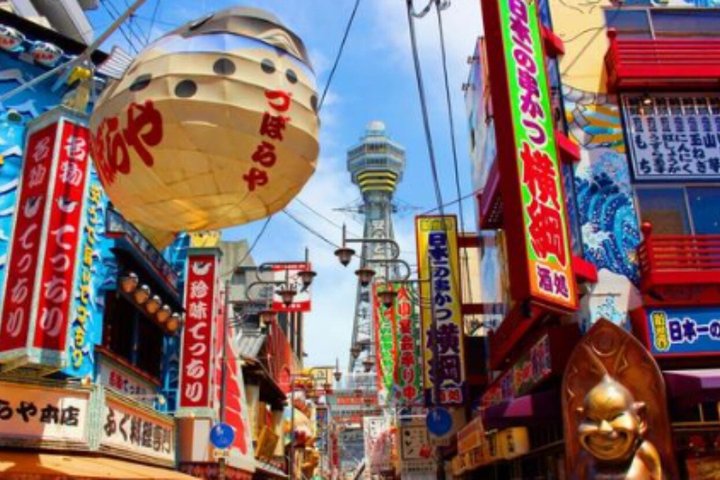
Allow around ninety minutes for the walls and the tower, and half a day if you add the garden, the boat, or the plum grove in season. On our Osaka Highlights walk, which meets at the Lawson store in Osaka Castle Park, about eighty minutes go to the castle, including the tower, before a short subway ride south to Tennoji Park and a finish among the food streets of Dotonbori.
That route works just as well for anyone going independently. The castle gives you the history, the south gives you the city Osaka became, and the evening belongs to Dotonbori’s street food.
If you would rather set the day around your own interests, a private guide can treat the castle as one stop among several, alongside Kuromon Market, Shinsekai, or Namba Yasaka Shrine, and adjust the plan as you go.
Osaka Castle: Frequently Asked Questions
How much time do I need at Osaka Castle?
Around ninety minutes covers the main gates, the Sakuramon stones, the tower, and the stone wall museum. Add an hour for Nishinomaru Garden or the plum grove, and about twenty minutes for the Gozabune boat. In cherry blossom season, allow extra time for queues at every stage.
Is Osaka Castle an original castle?
Only in parts. The main tower is a reinforced concrete reconstruction from 1931. The stone walls, the moats, the Otemon gate, and several turrets date from the Tokugawa rebuilding in the 17th century, and a section of Hideyoshi’s original 16th-century wall can be seen in the underground Toyotomi Stone Wall Museum.
Do I need to buy Osaka Castle tickets in advance?
It is not required, and on a quiet weekday you can buy at the ticket office on arrival. At busy times the same-day queue can exceed thirty minutes, and a web ticket with a QR code lets you skip it. For weekends, public holidays, and the cherry blossom season, we would buy in advance.
Related Tours

Conclusion
Go to Osaka Castle for the walls and the story, and treat the tower as the museum it is. Approached that way, it stops being a disappointing reconstruction and becomes one of the more rewarding historical sites in Kansai.
Buy the web ticket the night before, take the subway to Tanimachi 4-chome, and walk in through Otemon. Stop at Tako-ishi long enough to wonder how it got there. Then go underground to see what Hideyoshi actually built, and only after that, go up for the view.
Plan Your Japan Trip with Local Experts
Our team has guided 40,000+ travelers across Japan. Tell us about your trip and we’ll get back to you within 24 hours.