In this article:
- What Hokanji Temple Is
- Going Inside the Yasaka Pagoda
- Where to Photograph the Pagoda
- Fitting Hokanji Into a Day in Higashiyama
- Hokanji Temple: Frequently Asked Questions
Introduction
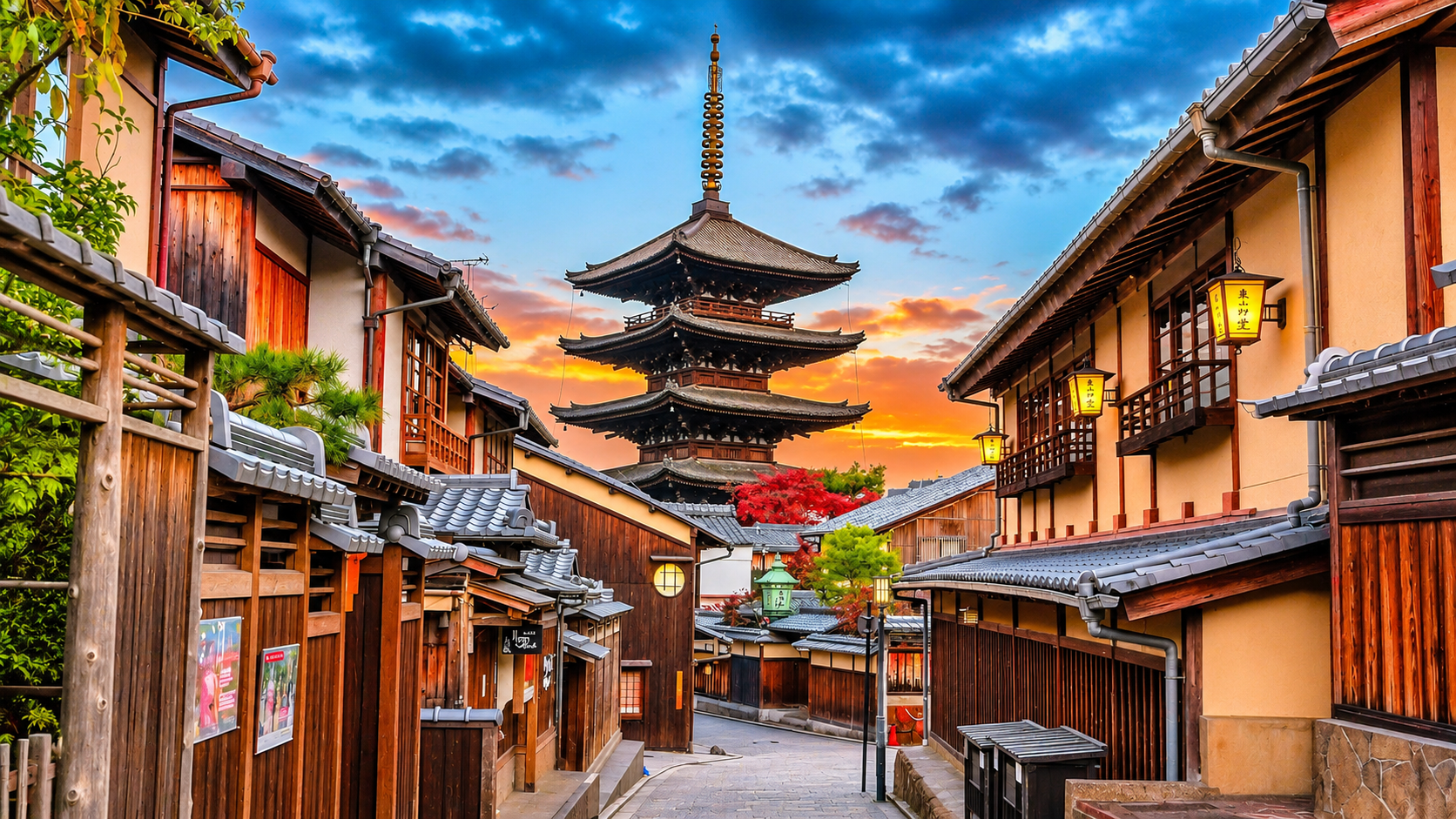
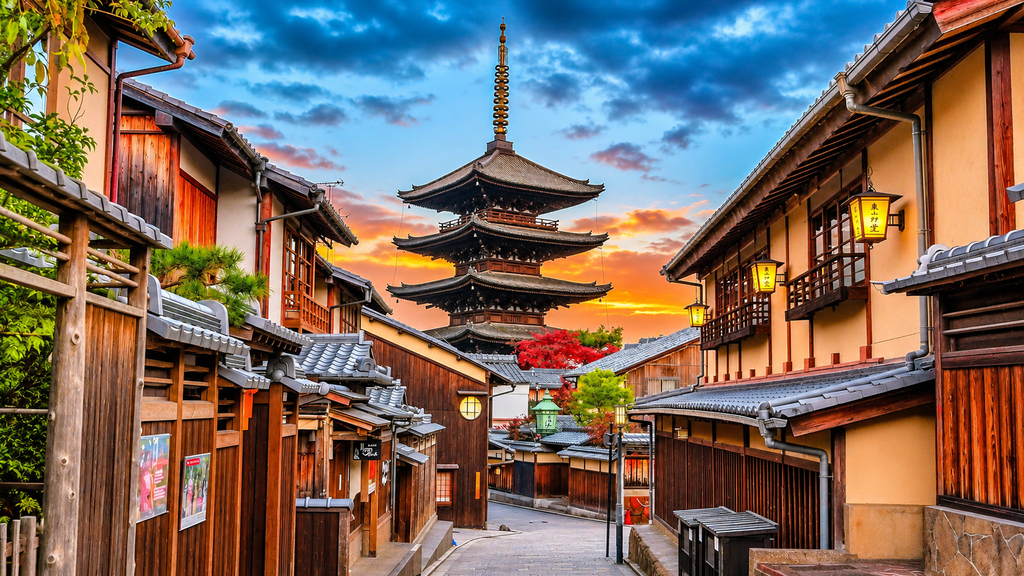
Most people who visit Hokanji Temple never learn its name. They know it as the Yasaka Pagoda, the dark five-tiered tower at the top of a sloping lane in Higashiyama, framed by wooden townhouses and usually by a crowd of people holding up phones.
That is a reasonable way to meet it. The pagoda is the temple, more or less, and the view from the street is the reason it is famous. Still, there is more here than a backdrop. Hokanji is one of the oldest temple sites in Kyoto, the tower has stood in its current form since 1440, and on the days the interior opens you can step inside and look up at the timber structure that has kept it standing.
The travelers we guide through Higashiyama tend to fall into two groups: those who want the photograph and those who want the story. This guide is written for both, with a strong opinion about timing, because at the Yasaka Pagoda timing decides almost everything.
What Hokanji Temple Is
Hokanji is a Rinzai Zen temple belonging to the Kennin-ji branch, and today it consists of little more than its pagoda, a modest gate, and a small reception area. Houses press in on every side. Nothing about the grounds suggests the scale of what once stood here.
A Temple That Is Mostly a Pagoda
The formal name, Hokanji, appears on maps and temple stamps. Locals and guidebooks almost always call the tower Yasaka-no-To, the Pagoda of Yasaka, after the district rather than the temple. If you are asking for directions, the second name will get you further.
The pagoda is about 46 metres tall. That places it among the tallest wooden pagodas in Japan, and in a neighbourhood of two-storey machiya it reads even taller than the number suggests. Both the temple and the tower are designated Important Cultural Properties.
From Prince Shotoku to Ashikaga Yoshinori
Temple tradition credits Prince Shotoku, the sixth-century regent who did more than anyone to establish Buddhism in Japan, with founding Hokanji. Sources give the year as 589 or 592. Either way, the founding predates Kyoto itself by two centuries, which makes the site older than the capital that grew up around it.
Like most wooden buildings in this city, the pagoda burned and was rebuilt more than once. The structure you see today dates from 1440, when it was reconstructed under the shogun Ashikaga Yoshinori. That is older than Kinkaku-ji’s current pavilion by more than five hundred years, a comparison we find helps travelers place it.
How the Pagoda Has Stood for Six Centuries
Japanese pagodas are built around a central pillar, the shinbashira, which runs up through the middle of the tower. The tiers are not stacked rigidly on top of each other. Instead, each one can move slightly, and the pillar is widely credited with helping these structures ride out earthquakes rather than resisting them.
You will not see much of this from the street. Inside, however, the pillar and the bracketing above it are the most striking thing in the room, more so than the statues for many visitors.
Expert Tip
If you only have ten minutes, skip the interior and spend them on the walk up Yasaka-dori instead. If you have thirty, go in. The interior is small and quiet, and on most days the people queuing for photographs outside never think to look for the entrance gate around the side.
Going Inside the Yasaka Pagoda
Most pagodas in Japan are closed to visitors. Hokanji is one of the exceptions, which is the strongest reason to plan a stop here rather than passing by for a photograph.
Irregular Opening, Short Hours
The interior opens on an irregular schedule, and the temple has no fixed weekly closing day. When it is open, listings give hours starting at 10:00 and closing in mid-afternoon, with 15:00 the most commonly cited time. Admission is ¥400, paid in cash; cards are not accepted.
In practice, this means you cannot build a tight itinerary around going inside. We treat it as a bonus. If the gate is open when you pass, go in; if it is not, the exterior is still the reason most people came. Travelers set on seeing the interior can call the temple on the day to check.
What You See on the First and Second Levels
Visitors can enter the ground level and climb narrow, steep stairs to the second tier. The upper levels are closed. On the ground floor, five seated Buddhas are enshrined around the central pillar: Dainichi, Shaka, Ashuku, Hosho, and Amida, the Five Wisdom Buddhas of esoteric Buddhism.
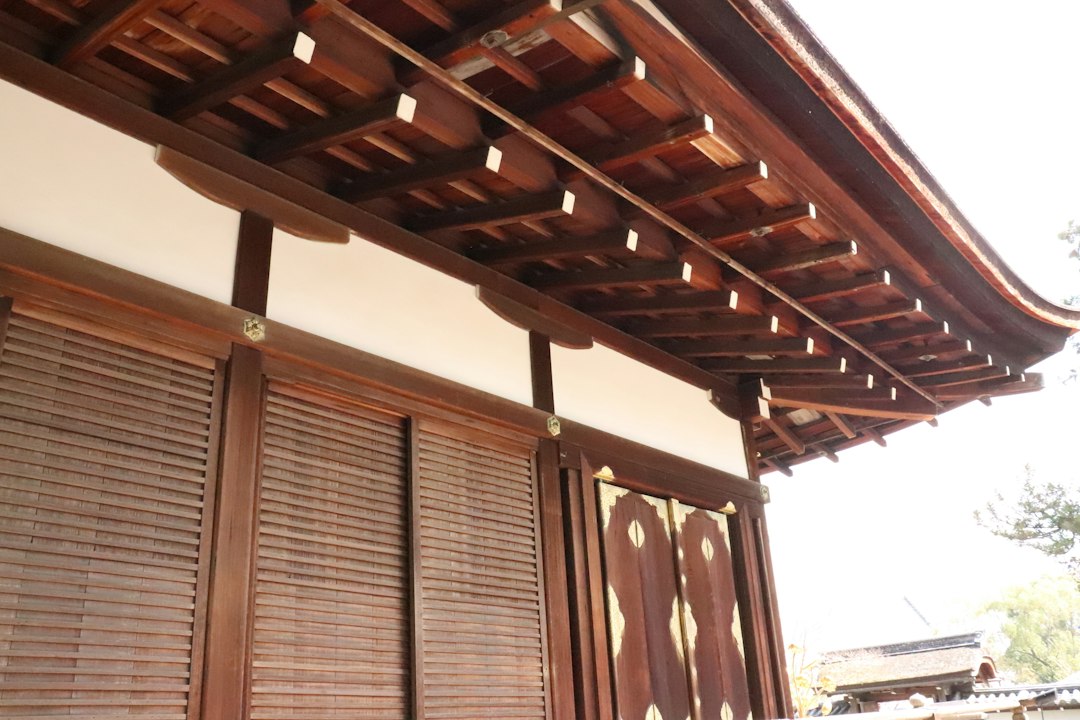
The light inside is dim and the space is tight. Faded paintings survive on the interior surfaces, and the timber has the dry, faintly sweet smell of very old wood. Look up from the second level and you see the underside of the structure, a dense lattice of brackets and beams that makes the engineering suddenly legible.
Who Can Enter
Young children are not admitted to the interior. Sources disagree on the exact cutoff, with some listing elementary school age and others junior high school age, so families should assume children under thirteen may be refused. The stairs are steep enough that the rule makes sense once you see them.
Plan your clothing around the stairs. The climb is awkward in long skirts or kimono, and there is little room to pause halfway.
Where to Photograph the Pagoda
The famous view of the Yasaka Pagoda is taken from below, looking up a sloping street. Almost every good photograph of the tower comes from one of three or four positions within a few hundred metres of each other.
Yasaka-dori from Below
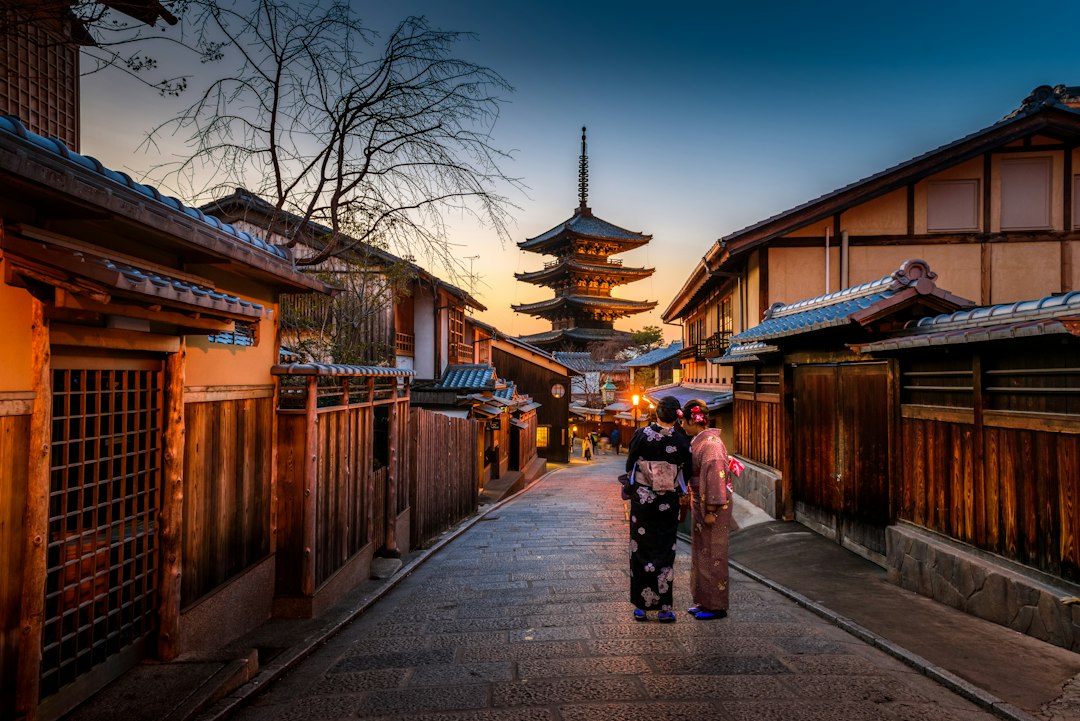
The classic shot is from Yasaka-dori, the lane that climbs east toward the pagoda. Stand partway down the slope and the tower sits at the end of the street, framed by tiled roofs and wooden facades on either side. Move a few metres left or right and the composition changes completely, so walk the slope slowly before committing.
By mid-morning this spot fills with people doing exactly the same thing. That said, you can still get a clean frame at most hours with patience and a longer lens, because the crowd tends to cluster at one point rather than spread along the whole street.
The Approach from Ninenzaka and Sannenzaka
Coming down from Kiyomizu-dera through Sannenzaka and Ninenzaka, the pagoda appears and disappears between rooftops. These partial views are, in our opinion, more interesting than the postcard version. A glimpse of the upper tiers over a teahouse roof says more about how the tower sits in the neighbourhood than a head-on shot does.
A short walk away is Yasaka Koshindo, a tiny temple hung with thousands of brightly coloured cloth balls. It sits just below the pagoda and makes a sharp contrast with the dark timber above it.
Morning Light, Evening Light, and Kimono
Early morning gives you empty lanes. Late afternoon gives you light on the pagoda itself. Those are the two real choices, and the hours between them are the hardest time to photograph anything in Higashiyama.
This is how our photographers plan sessions on the Kyoto portrait tour, which starts at the west gate of Yasaka Shrine and works up through the stone-paved lanes toward the pagoda. Morning sessions are for travelers who want the streets to themselves. Afternoon sessions are for those who care more about the colour of the light.
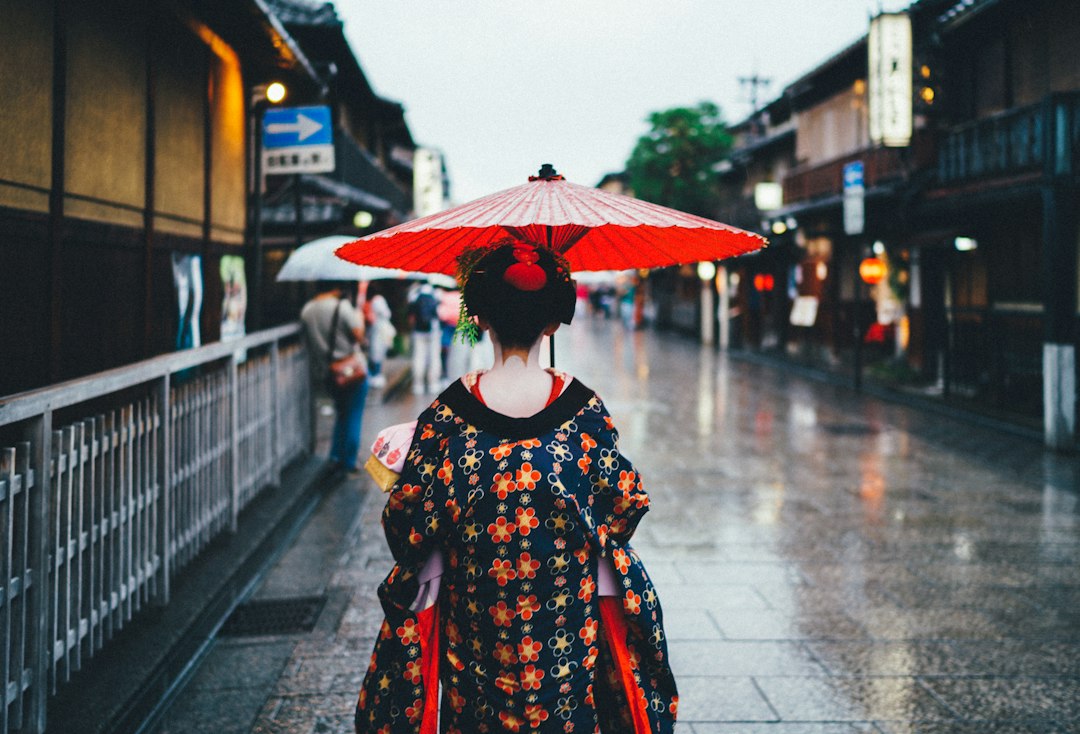
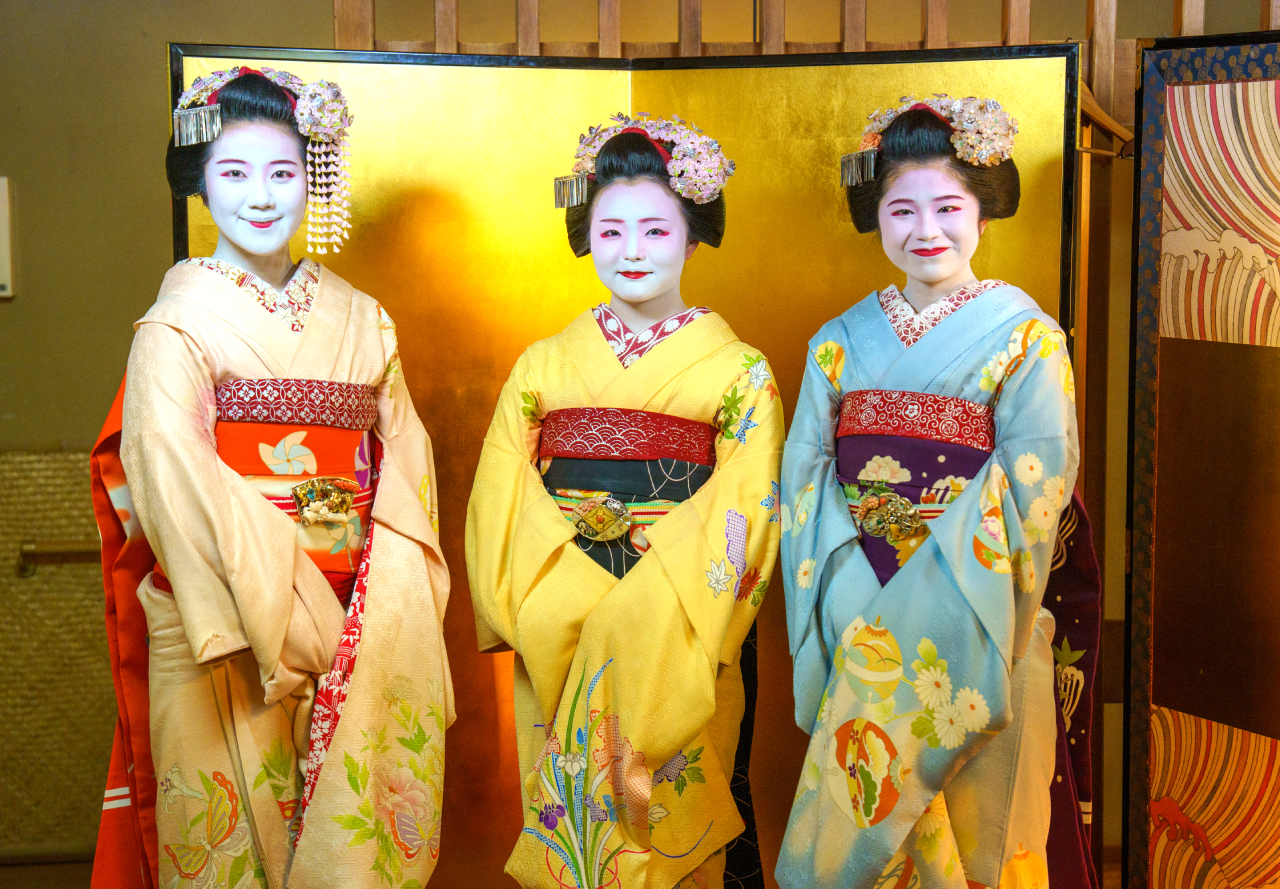
Kimono and the Yasaka Pagoda have become a familiar pairing. If you want to be photographed in one, rent it beforehand from a shop in Gion or near Kiyomizu-dera; our guide to kimono rental in Kyoto covers how to choose a shop. The slopes are paved with uneven stone, so comfortable footwear matters more than most people expect.
Expert Tip
Photographers who know the area rarely shoot the pagoda straight up Yasaka-dori. Instead, they look for the side lanes and stairways off the main slope, where a rooftop or a doorway frames the tower and nobody is standing in the way. These spots change with the light, so ask a local photographer rather than relying on a pin from a map app.
Fitting Hokanji Into a Day in Higashiyama
Hokanji sits roughly halfway between Kiyomizu-dera and Yasaka Shrine, which puts it on the walking route most visitors take through Higashiyama anyway. The question is not whether to pass it but in which direction, and at what hour.
Getting There
The nearest bus stops are Kiyomizu-michi and Higashiyama Yasui, each about five minutes on foot. From Kyoto Station, city buses 100 and 206 run to Kiyomizu-michi, although these buses are often packed by late morning. A taxi from the station costs more and saves a great deal of standing.
From Gion, walking is the better option. The pagoda is close enough that you can reach it from Hanamikoji in well under half an hour on foot, passing through quieter residential streets on the way. There is no parking and there are no coin lockers at the temple, so leave luggage at your hotel or the station.
A Walking Order That Avoids the Worst Crowds
Kyoto is busiest between about ten in the morning and four in the afternoon, and Higashiyama concentrates that crowd into a few narrow lanes. Our recommendation is to start at the top and walk down. Reach Kiyomizu-dera close to its opening, then come down Sannenzaka and Ninenzaka to the pagoda, and finish at Yasaka Shrine and into Gion.
This order keeps you moving against the main flow of visitors, most of whom arrive from below and climb. It also puts you at the pagoda around the time the interior opens. Our piece on early-morning Kyoto explains why starting even earlier changes the experience further.
On a private day with a guide, the Yasaka Pagoda is one of the usual candidates alongside Kiyomizu-dera, Gion, and Fushimi Inari. What a guide adds here is mostly sequencing: knowing which of these to see first on a given weekday, and when to give up on a crowded spot and come back later. For a wider view of the district, our guide to Gion picks up where this walk ends.
Hokanji Temple: Frequently Asked Questions
Is Hokanji the same as the Yasaka Pagoda?
Yes. Hokanji is the name of the temple, and the Yasaka Pagoda, or Yasaka-no-To, is its five-story tower. Since the pagoda makes up most of what remains of the temple, the two names are used almost interchangeably.
Can you go inside the Yasaka Pagoda?
Sometimes. The interior opens on an irregular schedule, generally from 10:00 into the mid-afternoon, and admission is ¥400 in cash. Visitors can see the ground floor, where five Buddhas are enshrined, and climb to the second level. Young children are not admitted, and the upper tiers stay closed.
What is the best time to visit Hokanji Temple?
For photographs of the exterior, early morning, before the surrounding lanes fill. For the interior, shortly after it opens at 10:00 on a day when it is open. Late afternoon gives the best light on the tower, although by then the streets are at their busiest. Weekdays are noticeably calmer than weekends throughout the year.
Related Tours

Conclusion
Hokanji asks very little of you. There is no long approach, no sprawling garden, and on many days no interior to visit. What it offers is a single structure that has stood over this neighbourhood since 1440, seen from streets that have changed far less than most of Kyoto.
Plan the visit around the hour rather than the place. Come down from Kiyomizu-dera early, stop at the pagoda as the gate opens, and if it is closed, walk a few metres down Yasaka-dori and turn around. The view behind you is the reason you came.
Plan Your Japan Trip with Local Experts
Our team has guided 40,000+ travelers across Japan. Tell us about your trip and we’ll get back to you within 24 hours.