In this article:
- What Makes the Ninenzaka Starbucks Different
- Timing Your Visit Around the Higashiyama Crowds
- Two Other Kyoto Starbucks Worth Knowing
- Kyoto Starbucks: Frequently Asked Questions
Introduction
Most people walk straight past it.
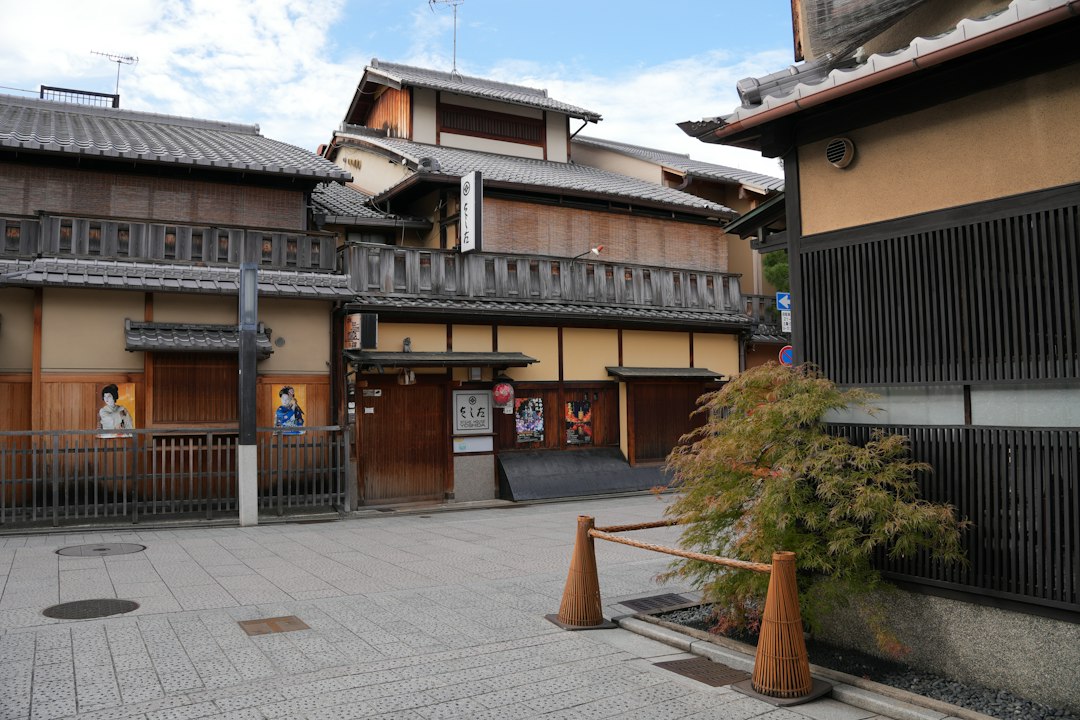
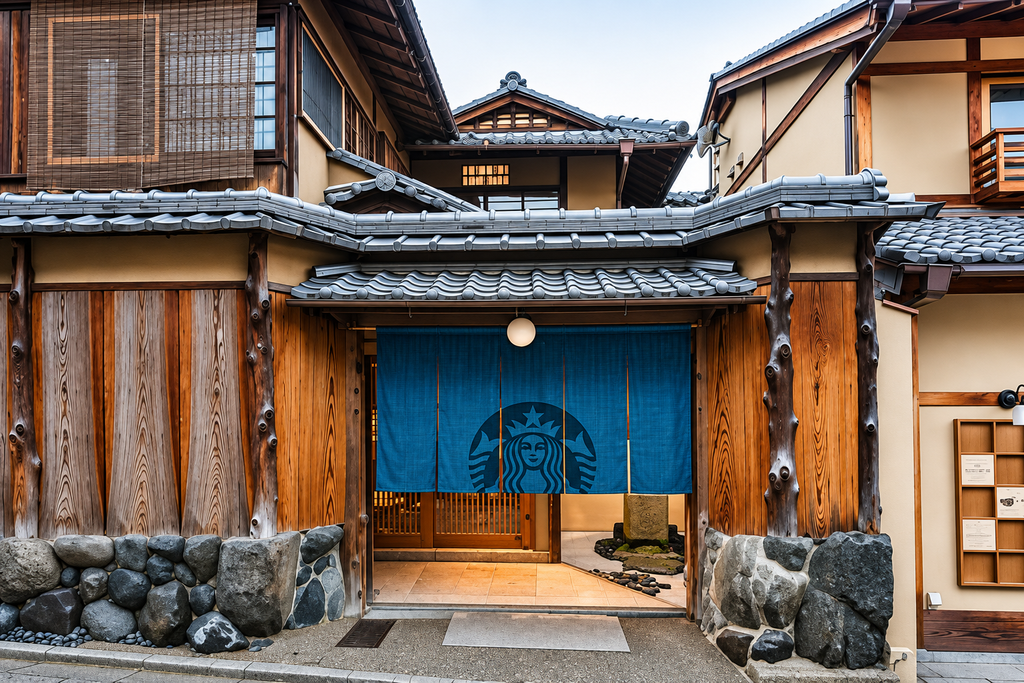
The Kyoto Starbucks on Ninenzaka has no green sign over the door and no illuminated logo. What it has is a dark indigo noren curtain hanging across the entrance of a wooden townhouse. A small mermaid is printed on the cloth. The building shares the same latticed frontage as every other home on the lane.
On a guided walk down from Kiyomizu-dera, we often stop a few metres beyond it and point back. The reaction is nearly always the same. The group had already passed it without noticing.
That restraint is the reason to go. Starbucks Japan opened the store on June 30, 2017. They set it inside a machiya that is over a century old. The company designed it as one of its Regional Landmark Stores. These branches are created specifically to match their local surroundings.
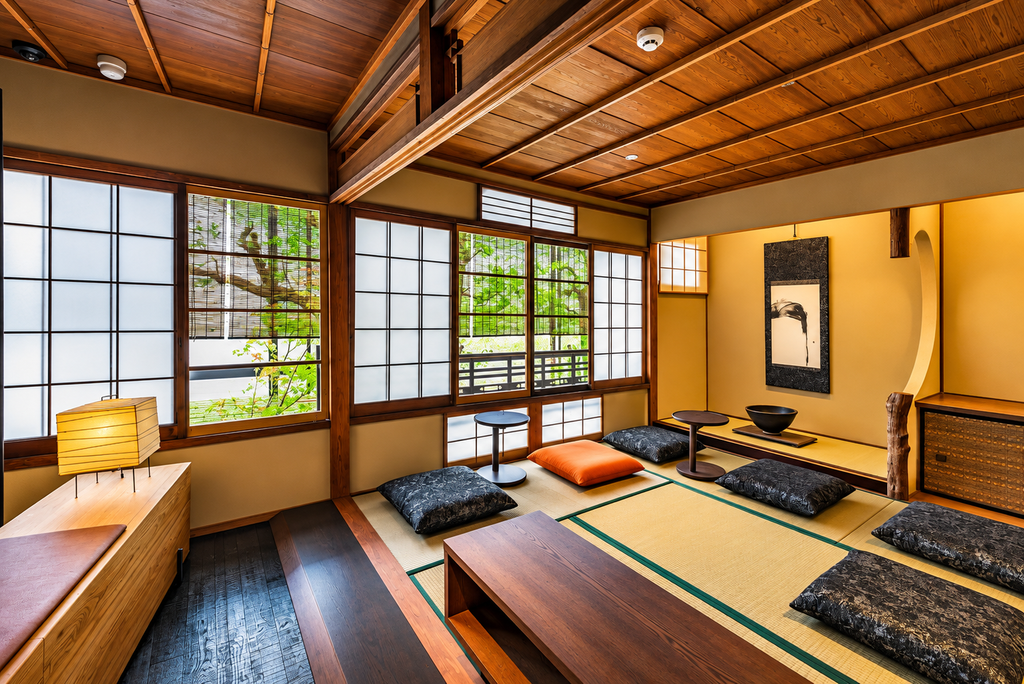
Upstairs, there are traditional tatami rooms. You take off your shoes and enjoy your latte seated on cushions. It may be a chain coffee shop. Still, it offers a great opportunity for a first-time visitor. You can easily spend twenty quiet minutes inside a classic Kyoto house.
Whether that is worth your time depends entirely on when you arrive. Below is what is inside, how the store manages its crowds, and where it fits on a walk through Higashiyama.
What Makes the Ninenzaka Starbucks Different
The store’s official name is Starbucks Coffee Kyoto Ninenzaka Yasaka Chaya, and the building does most of the work.
A Century-Old Machiya on the Road to Kiyomizu-dera
Ninenzaka is a short stone-stepped lane. It links Sannenzaka—the slope descending from Kiyomizu-dera—with the path leading north toward Kodai-ji and Yasaka Shrine.
Both lanes lie within one of Kyoto’s preserved historic districts. Because of this, the area still feels like a quiet row of low wooden homes rather than an ordinary shopping street. Planning rules here shape facades, signage, and colour, and the Starbucks follows them like its neighbours.
The building is a machiya, the narrow, deep townhouse type that once housed Kyoto’s merchant families. City plots in old Kyoto were narrow at the street. Because of this, houses ran long and thin from front to back. The front served as the shop, while a garden sat at the very rear. Walking into one for the first time, the depth surprises people. A building that looks three or four metres wide from the lane keeps going and going.
That layout is what makes this Starbucks interesting. You are not sitting in a themed room built to look old. You are moving through the actual sequence of an old house: shop front, passage, garden, stairs, and the upper rooms.
The Ground Floor: Counter, Corridor, and Small Gardens
You order at a counter near the entrance. From there, a long and narrow passage runs toward the back. It leads past small, enclosed gardens filled with moss and stone. Along the way, you pass a traditional stone water basin.
Drinks are collected further inside. As a result, you walk the full length of the house before you hold your coffee in hand.
Lighting is kept low. In the afternoon, the gardens are brighter than the interior. The effect is like looking out from deep shade into bright green. This is exactly how these houses were meant to feel during a hot Kyoto summer.
We think the ground floor is the best part of the store. Yet, it is also where people linger least. Almost everyone heads straight for the stairs.
There is some table seating downstairs. If the upper floor is full, a seat facing the back garden is a perfectly good consolation.
Upstairs: Tatami Rooms and the Shoes-Off Rule
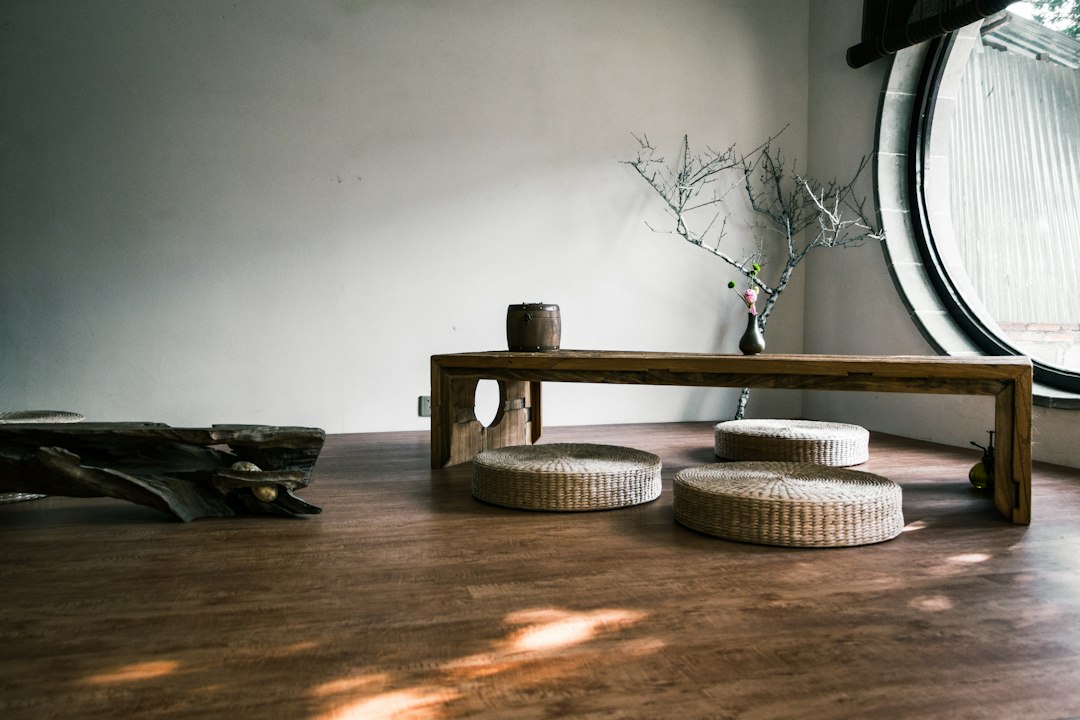
The second floor holds ordinary tables and sofas as well as three tatami areas, including a small four-and-a-half-mat room. Tatami seats are on cushions at floor level, so expect to sit cross-legged or kneel. For travelers with bad knees, the tables upstairs are the more comfortable option and still look out over the gardens.
You remove your shoes before stepping onto the tatami. That is the same rule as in a ryokan, a temple hall, or a private home, and it is not negotiable. Wear socks you are happy to be seen in, and shoes that come off and go back on without a struggle; laced hiking boots on a crowded landing are a small ordeal for you and everyone behind you.
Keep voices low. The rooms are small and the paper and wood carry sound. If you have already read our notes on how to be a good guest at a tea ceremony, the same instincts apply here in a much more relaxed form.
Expert Tip
Go upstairs first, before you order. If every tatami seat is taken and nobody is close to finishing, you can decide to take your drink downstairs into the garden-side seats instead of standing on the landing with a hot cup waiting. Staff will tell you if the upper floor is temporarily closed to new guests.
Timing Your Visit Around the Higashiyama Crowds
Ninenzaka is one of the most heavily walked streets in Kyoto, and the Starbucks sits in the middle of it. Timing decides whether this is a calm coffee in an old house or a wait on a crowded lane.
Why Mid-Morning Is the Worst Hour
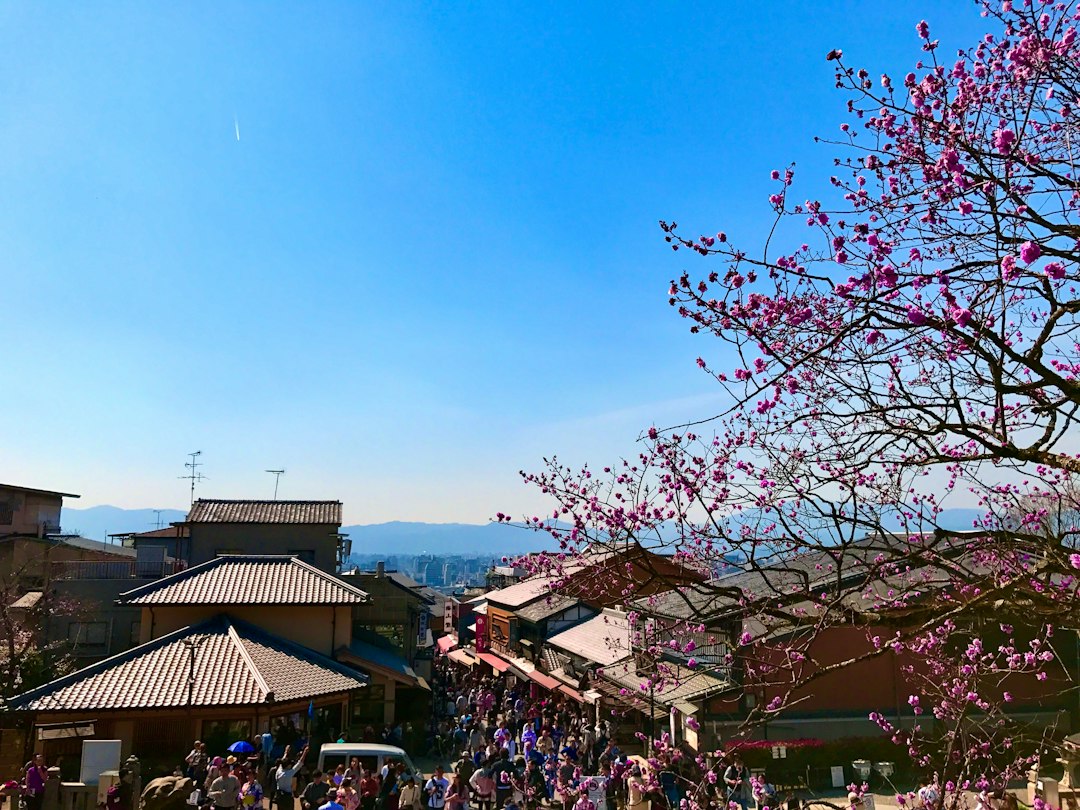
The pattern in Higashiyama is consistent across the year. The lanes are quiet at first light, start to fill when the tour coaches reach the Kiyomizu-dera car parks, and stay full from mid-morning until the late afternoon. Kyoto as a whole is busiest roughly between ten and four, and the slopes below Kiyomizu-dera feel that peak more than almost anywhere else.
Listings give an 8am opening. If you can be on Ninenzaka shortly after that, the tatami rooms are often half empty and the street outside is mostly residents sweeping their doorsteps. By eleven on a weekend in autumn, the same lane can be shoulder to shoulder.
The other good window is late in the day. Once the day-trippers head back toward Gion and the station, the store becomes noticeably calmer, and the low evening light in the gardens is the nicest the building looks. We would choose early morning over evening, mainly because the street itself is worth seeing empty.
The Store’s Own Rules on Queueing and Entry
Because the lane is narrow and shared with residents, the store asks customers not to queue outside the building. When it is full, entry may be limited and you will be asked to come back later. There is no parking of any kind, bicycles included.
In practice this means there is no point arriving at peak time and planning to wait it out. If the door is closed to new customers, walk on, see Kodai-ji or the lanes toward Yasaka, and return.
Please do not stand in the doorway to photograph the noren while people are trying to get in and out. It is the single most common reason the entrance clogs, and the neighbours on either side are working shops.
Fitting It Into a Walk From Kiyomizu-dera to Yasaka
The route we use on our private days runs downhill: Kiyomizu-dera first, then Sannenzaka, then Ninenzaka, then north past Kodai-ji to the Yasaka pagoda and on toward Yasaka Shrine and Gion. Walking downhill saves your legs for the temple steps, and it puts the Starbucks roughly halfway, which is exactly where most people want a coffee.
On our Kyoto private day tour, guests often ask to build the morning around this stretch, and the guide usually times it so that Kiyomizu-dera comes before the coaches and the coffee stop lands just as the lanes start to fill. That is the trade we would recommend to anyone doing it independently too: temple first while it is quiet, coffee second.
If you want the lanes themselves without people in them, an early start matters more than anything else. We have written about why 6am is the best time to see Kyoto, and most of that argument applies directly to Higashiyama.
Expert Tip
If the store is full when you pass, do not wait on the steps. Kodai-ji is a few minutes north, and a slow circuit of its garden takes about as long as the morning rush on Ninenzaka takes to thin. Come back down afterwards and the tatami rooms are often noticeably emptier.
Two Other Kyoto Starbucks Worth Knowing
Ninenzaka gets the attention, but Kyoto has dozens of Starbucks stores, and two others in the centre of the city have something you will not find in the average branch.
Sanjo Ohashi and the Summer Deck Over the Kamo River
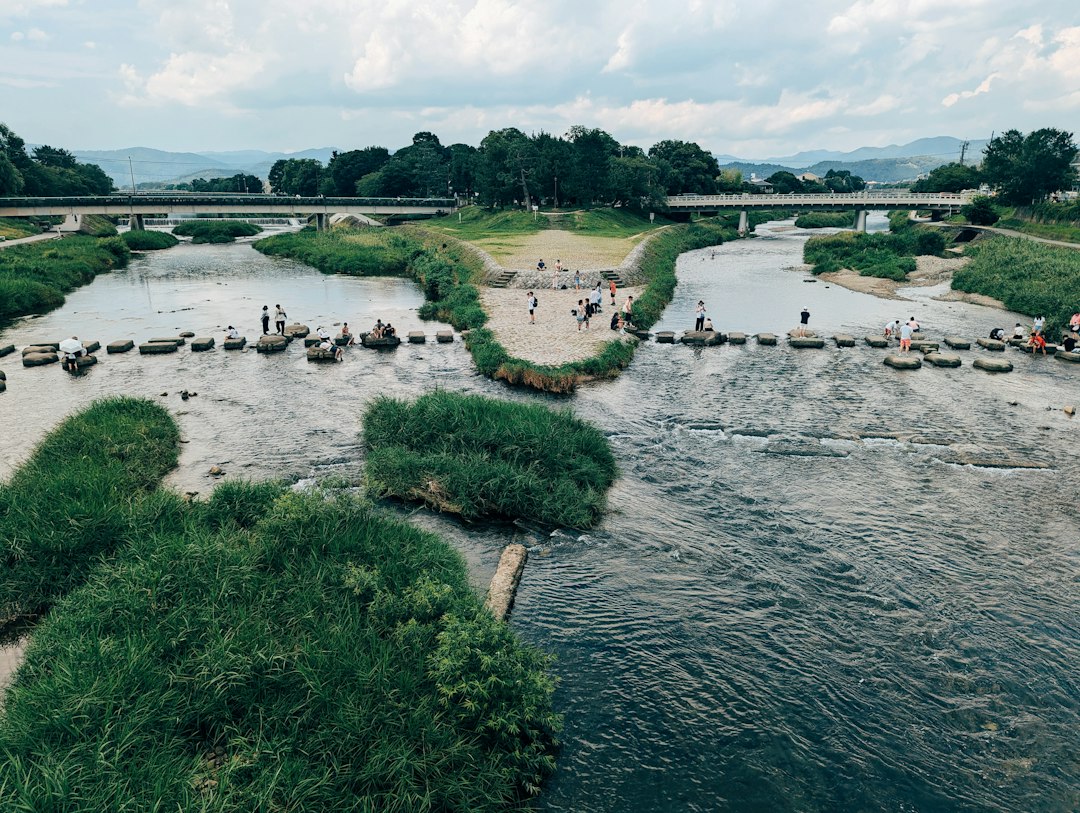
The store beside Sanjo Ohashi bridge, on the west bank of the Kamo River, sets up a wooden noryo-yuka platform in the warmer months. These raised decks over the riverside are a Kyoto summer tradition, used by restaurants along the Pontocho side of the river, and this is one of the few places where you can sit on one for the price of an iced coffee.
The deck season generally runs from May to September, and opening hours on the platform have varied by month and by year. Check before you go if the deck is the reason you are visiting. Evenings are the best time: the river is cooler than the streets, and the light over the Higashiyama hills is the reason people sit there.
In winter the store is an ordinary, well-located Starbucks, and a useful one. It sits between Gion and the Kawaramachi shopping streets, so it works as a meeting point or a warm stop between neighbourhoods. If you are spending an evening in this part of town, our guide to Gion and how to visit it respectfully covers the surrounding streets.
Karasuma Rokkaku and the View of Rokkakudo
A short walk from Karasuma Oike Station, the Starbucks at Karasuma Rokkaku has a full-height glass wall facing Rokkakudo, the hexagonal main hall of Chohoji temple. The temple is a stop on the Saigoku Kannon pilgrimage and is closely tied to the origins of the Ikenobo school of ikebana.
The appeal here is quieter than at Ninenzaka. You sit with a coffee and look straight across a small courtyard at a temple hall that most visitors to Kyoto never see. The front-row seats facing the glass are the ones to aim for, and on a weekday morning they are often free.
We like this store as a pause on a central Kyoto day, between Nishiki Market, the Karasuma business district, and the shops on Sanjo. It has none of Ninenzaka’s crowds and, for some travelers, more of the stillness they came to Kyoto for.
Kyoto Starbucks: Frequently Asked Questions
Can I reserve a tatami seat at the Ninenzaka Starbucks?
Not as far as we know. The store’s published guidance covers queueing and entry limits, not bookings, and in our experience seating works on a first-come basis. When it is full, entry is limited and staff ask customers not to queue outside. The reliable way to get a tatami seat is to arrive soon after opening or late in the day.
How do I get to the Ninenzaka Starbucks?
The closest public transport is the Kiyomizu-michi bus stop, roughly a six-minute walk uphill. From Gion-Shijo Station on the Keihan Line it is a walk of fifteen to twenty minutes through Gion and past Yasaka Shrine, which is the more pleasant route if the weather is good. Taxis can drop you near Kodai-ji, but the lane itself is pedestrian and not somewhere a car can wait.
Can I take my drink out onto Ninenzaka?
You can order to take away, but the store asks that cups be taken home or put in a bin, and public bins in Kyoto’s historic lanes are few. Walking up the stone steps with a hot drink in a crowd is also less pleasant than it sounds. If you have the time, sit down inside; if you do not, drink it at the store and leave the cup at the counter.
Related Tours

Conclusion
Treat the Ninenzaka Starbucks as a house you are allowed into rather than a coffee you are queueing for. The building, the long passage, and the gardens are the point; the latte is a reasonable excuse to sit in them for twenty minutes.
Plan it as a stop on the walk down from Kiyomizu-dera, not as a destination of its own, and put it either at the start of the day or near the end. If you find yourself on Ninenzaka at eleven on a Saturday with the door closed to new customers, keep walking toward Kodai-ji and try the Karasuma Rokkaku store later in the day instead.
Plan Your Japan Trip with Local Experts
Our team has guided 40,000+ travelers across Japan. Tell us about your trip and we’ll get back to you within 24 hours.