In this article:
- Where the Word Tempura Comes From
- From Portuguese Fritter to Edo Street Food
- What Tempura Actually Is: Batter, Oil, and Timing
- How Tempura Is Eaten, and the Words Built From It
- What Does Tempura Mean? Frequently Asked Questions
Introduction
Ask what does tempura mean, and most people expect a Japanese answer. The honest one starts in sixteenth-century Portugal.
The word arrived in Japan with Portuguese traders and missionaries, and it stuck to a cooking method they brought with them: coating food in batter and frying it. Over the next two hundred years, cooks in Edo, the city that became Tokyo, stripped that method down to flour, egg, and cold water, fried fish from Tokyo Bay in it, and sold the result from street stalls. By the time anyone thought to ask where the name came from, tempura was as Japanese as soba.
We get the question often on food walks in Asakusa, usually from someone looking at a menu and wondering why a dish that sounds Italian is written in Japanese. The short answer is that nobody is completely sure. The longer answer, which follows, is more useful at the table.
Where the Word Tempura Comes From
There are two main theories, and both point to Portuguese. Neither can be proven, but one is far more often repeated.
The Ember Days Theory: Latin Tempora and Portuguese Fasting
The best-known explanation traces tempura to the Latin tempora, meaning “times” or “seasons.” In the Catholic calendar, the Ember Days, called Quattuor Tempora in Latin, were short periods of fasting each season when meat was avoided and fish or vegetables were eaten instead.
According to this theory, Japanese observers heard Portuguese Jesuits refer to those fasting times while eating battered, fried fish and vegetables, and attached the word to the food. It is a tidy story. That said, it relies on a word for a calendar period becoming the word for a dish, which is not how most food names travel.
The Seasoning Theory: Tempero and Temperar
The alternative is plainer. Portuguese tempero means seasoning, and temperar means to season or to temper. A cook describing how the food was prepared would have used these words constantly, and they sound close enough to tempura for the borrowing to be straightforward.
Our view is that the second theory is the more likely one, even if the first is the better story. Whichever you believe, the Portuguese link is not in dispute. Japan’s Ministry of Agriculture, Forestry and Fisheries describes the dish’s origin as the fritters of western European cuisine carried to Japan by Portugal in the mid-sixteenth century.
Why the Japanese Spelling Tells You Nothing About the Meaning
On menus in Japan you will see tempura written in hiragana, in katakana, or in a set of three kanji characters. The first of those characters, ten, is the one for “heaven,” which leads some visitors to assume the word means something poetic.
It does not. The characters were chosen for their sound, a common way of writing borrowed words before katakana took over that job. A well-known Edo-era story credits the writer Santo Kyoden with choosing them, though it is usually told as an anecdote rather than established fact. Read the kanji as a phonetic spelling and nothing more.
From Portuguese Fritter to Edo Street Food
The dish the Portuguese brought and the dish you eat in Tokyo today are related, not identical. What happened in between is the reason tempura tastes the way it does.
Nagasaki and the Nanban Traders
Portuguese ships reached Japan in the 1540s, and Nagasaki became the main point of contact. The Japanese called these visitors nanban, “southern barbarians,” and several foods from that period still carry the word, such as nanban-zuke, fried fish marinated in vinegar.
The Portuguese dish usually cited as tempura’s ancestor is peixinhos da horta, “little fish from the garden”: green beans dipped in batter and fried. It is still eaten in Portugal. In Japan, the technique spread gradually from the southwest, and the name went with it.
Edo Stalls, Tokyo Bay Seafood, and the Skewer
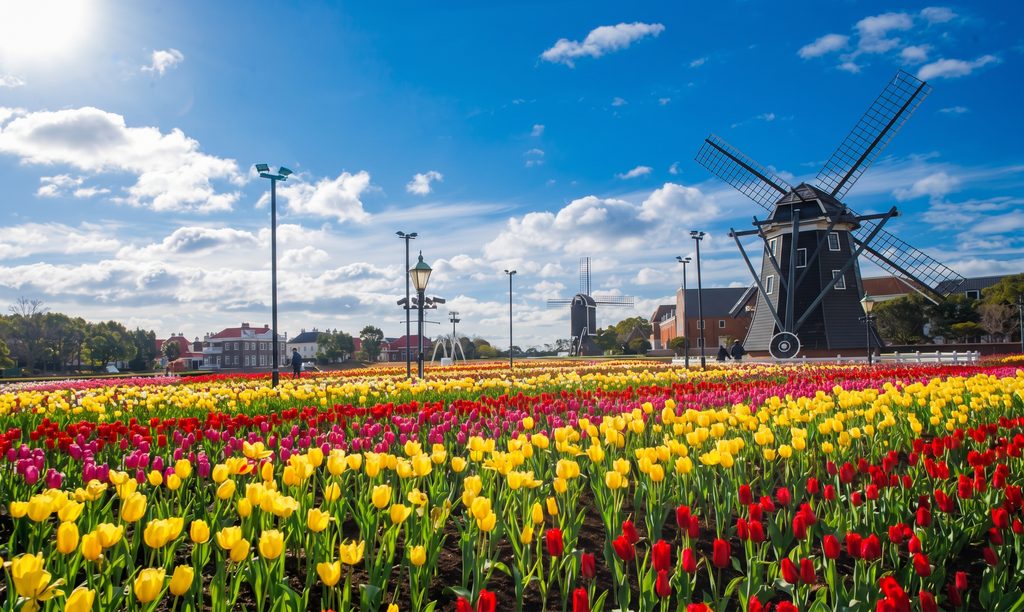
Tempura became the food we recognize in Edo during the seventeenth and eighteenth centuries. The city was full of laborers and samurai living without households, and street stalls selling quick, cheap food flourished. Sushi, soba, and tempura all took their modern shape at these stalls.
Vendors fried whatever came out of Tokyo Bay that morning, with small shrimp and anago, a saltwater conger eel, among the staples. Pieces were served on skewers so customers could eat standing up without greasy fingers, with grated daikon radish alongside to cut the oil. According to MAFF, tempura only became widespread once canola oil production increased during the Edo period, which made frying affordable for ordinary cooks.
This is why Tokyoites still call their style Edomae tempura, “in front of Edo,” after the bay the fish came from. Edo-style shops traditionally fry in sesame oil, which gives a darker color and a nuttier smell than the paler tempura common in Kansai.
Why Tempura Was Cooked Outdoors
Edo was built of wood and paper, and fire was the city’s constant fear. Open flames and pots of hot oil inside ordinary buildings were a serious risk, so frying moved outdoors to the stalls.
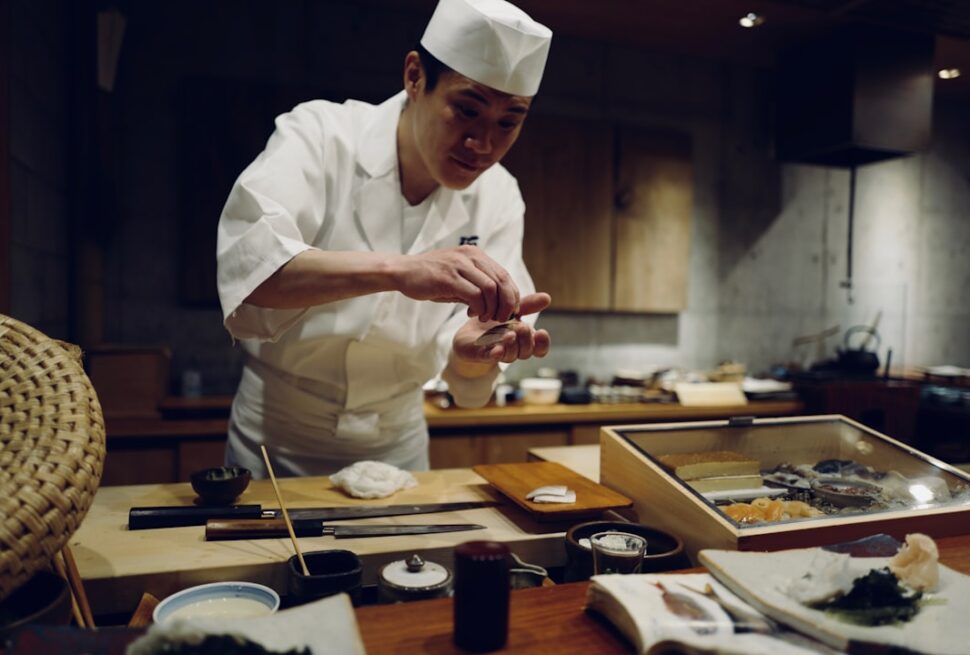
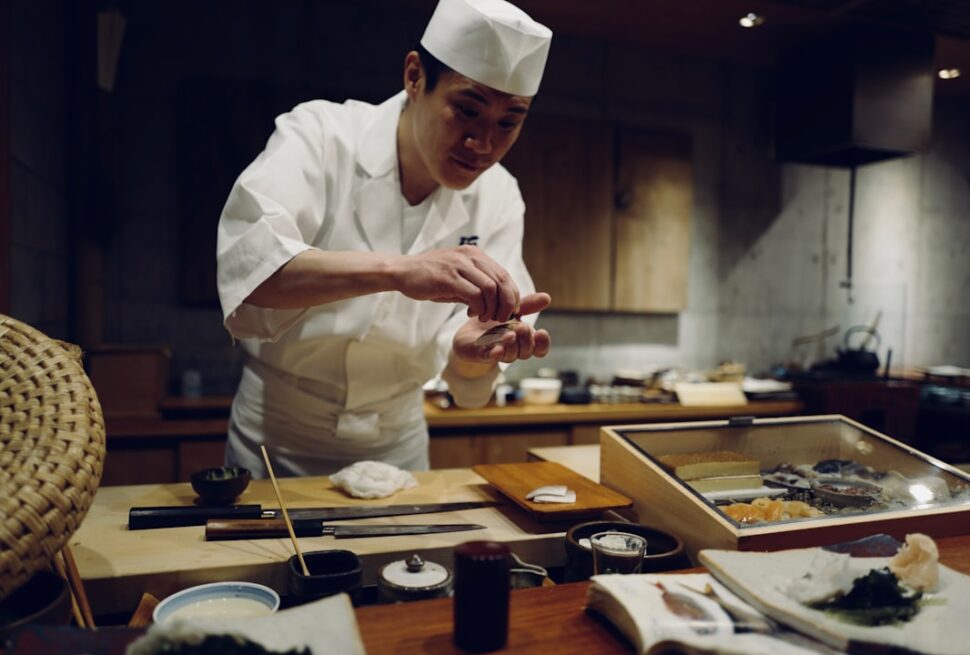
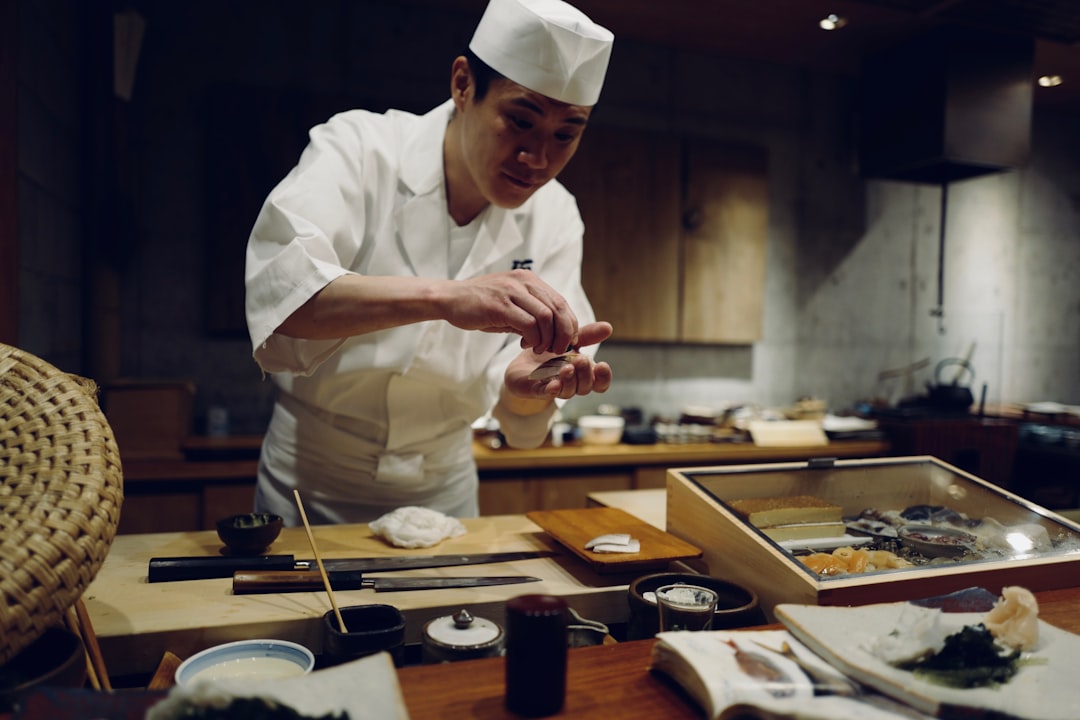
Tempura restaurants with proper interiors came later. Even now, the best counters in Tokyo keep something of the stall about them: a single cook, a pot of oil, and customers eating each piece seconds after it leaves the fryer.
What Tempura Actually Is: Batter, Oil, and Timing
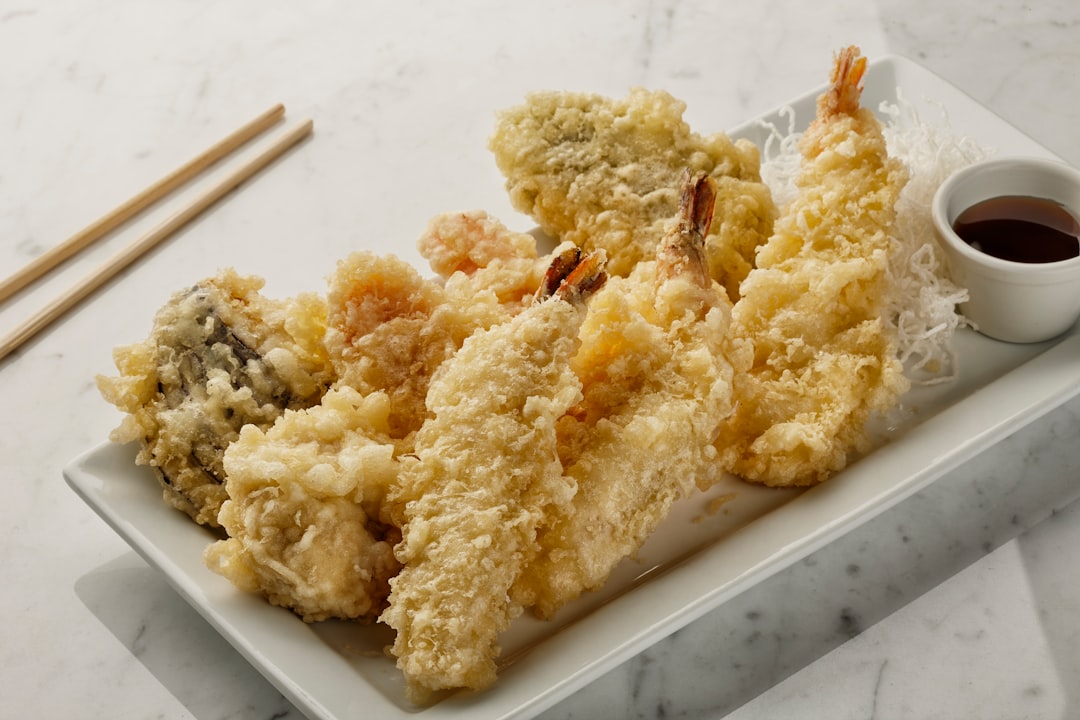
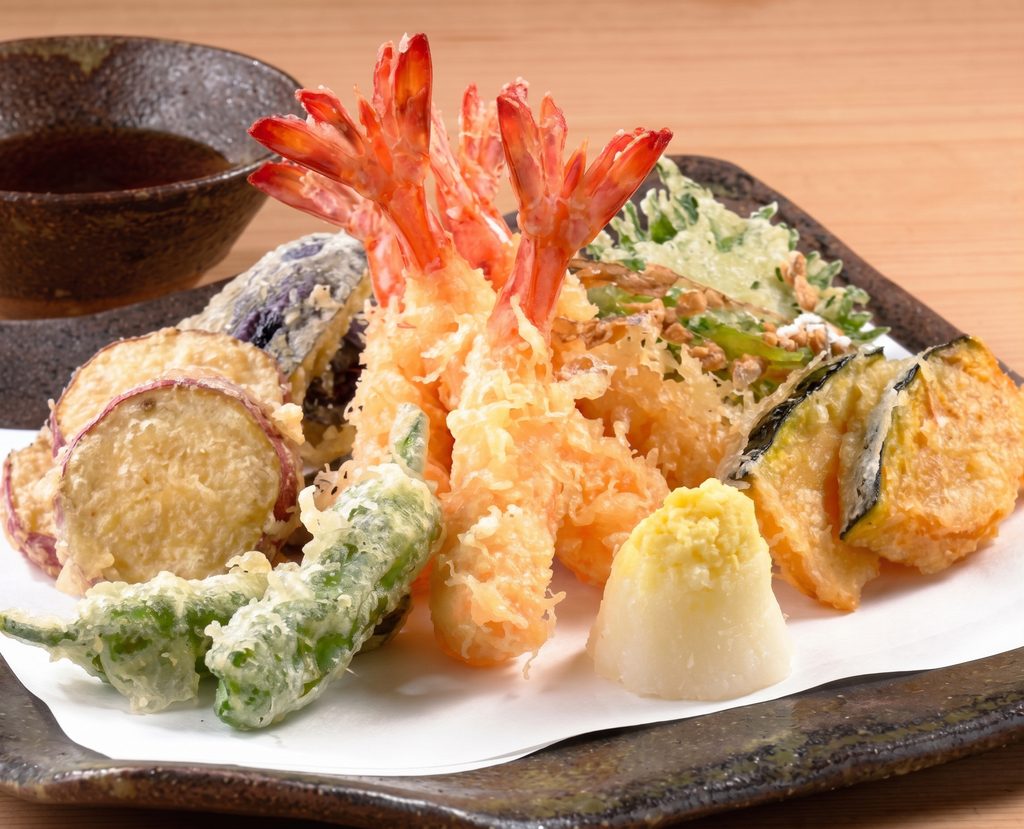
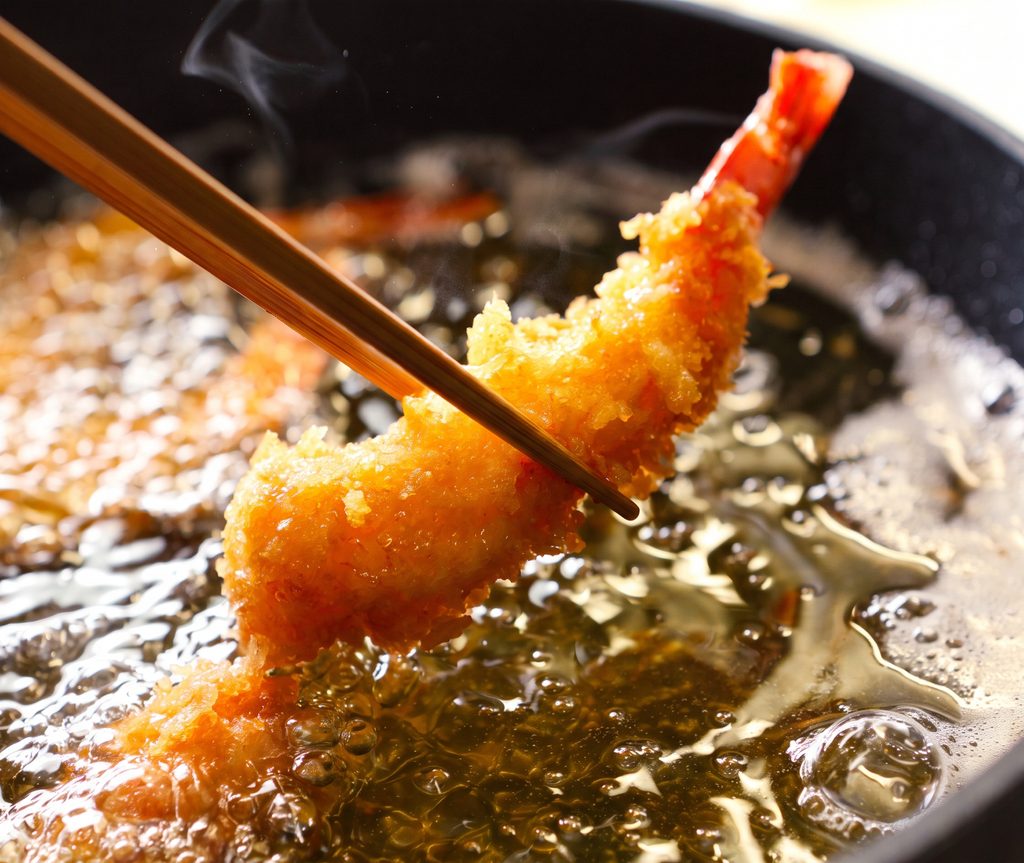
In English, the dictionary definition is simple: seafood or vegetables dipped in batter and deep-fried. In Japan, the word implies a specific result. Good tempura is pale, light, and thin enough that you can see the color of the shrimp or the green of a shishito pepper through the coating.
Cold Water, Flour, Egg, and Barely Any Mixing
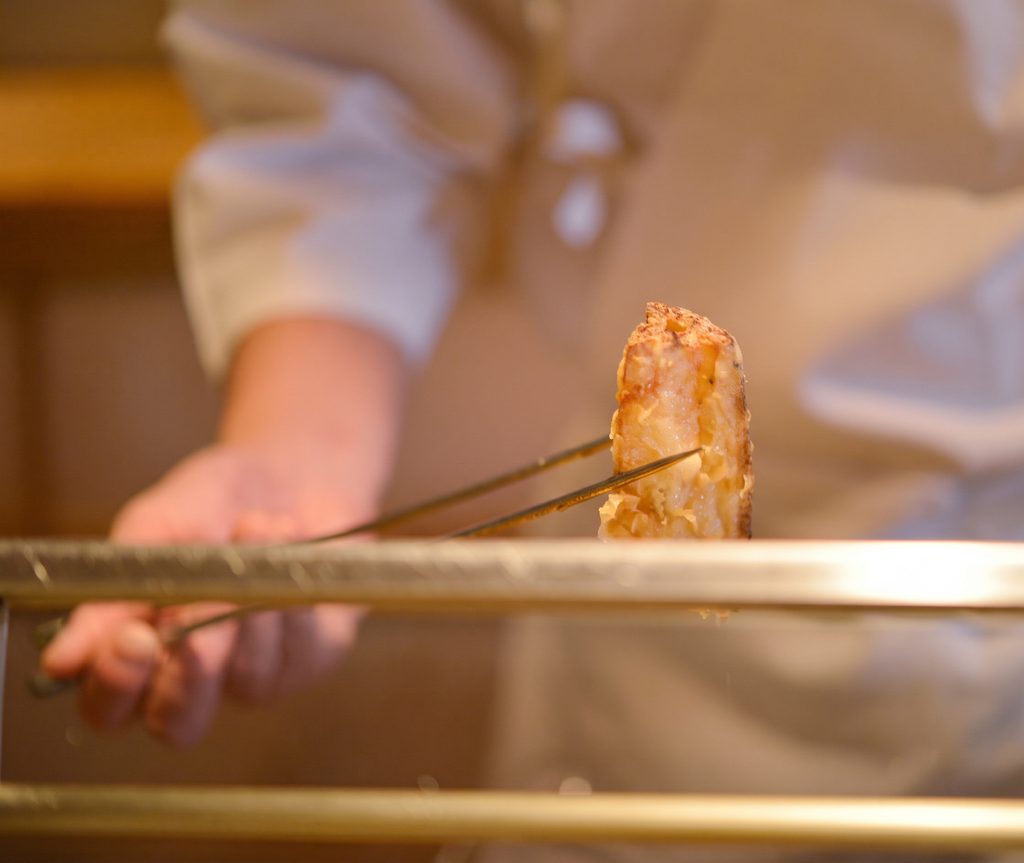
The batter is flour, egg, and ice-cold water, stirred only a few times so that lumps remain. This is deliberate. Cold temperatures and minimal mixing keep gluten from developing, and gluten is what makes batter heavy and bready.
A good tempura cook mixes batter in small amounts and throughout service, rather than preparing a large bowl in advance. At a counter, you can watch this happen. The chef works in a steady rhythm: a quick dip, a few seconds in the oil, onto the rack, onto your plate.
There are no breadcrumbs. That single fact is the clearest line between tempura and most other Japanese fried food.
Tempura vs. Other Fried Food in Japan
Japan has a whole vocabulary of fried dishes, and visitors often lump them together. Karaage is marinated chicken coated in starch or flour, with no wet batter. Tonkatsu and korokke use panko breadcrumbs. Kushikatsu is skewered and breaded, the Osaka counterpart to Tokyo’s tempura stalls.
Tempura sits apart from all of these because the coating is meant to disappear. If the batter is the thing you remember, it was not good tempura.
When “Tempura” Means a Fish Cake
One regional quirk catches out visitors who travel beyond Tokyo. In much of western Japan, including Kansai and Kyushu, the word tempura is also used for satsuma-age, a fried cake of pounded fish paste with no batter at all.
In Tokyo the same product is called satsuma-age, after Kagoshima, its place of origin. If a supermarket in Osaka or a stall in Fukuoka sells you “tempura” that looks like a flat, springy fish patty, nothing has gone wrong. It is the local name. You will also find these fish cakes simmering in oden pots through the colder months.
Expert Tip
At a tempura counter, eat each piece as soon as it lands on your plate, even if your companions are still talking. The chef times each item so it reaches you at its crispest, and a piece left for two minutes absorbs steam and softens. Tokyo’s official gourmet guide gives the same advice: keep pace with the chef.
How Tempura Is Eaten, and the Words Built From It
Once you know what tempura is, half the Japanese menu starts to make sense. Many dishes carry a shortened form of the word, ten, at the front of their names.
Tentsuyu or Salt
The classic dipping sauce is tentsuyu, a warm mix of dashi, soy sauce, and mirin, served with a small mound of grated daikon that you stir in yourself. The daikon is a direct descendant of the Edo stalls, where it was served for the same reason: to lighten the oil.
Salt is the other option, and at better counters it is often the one the chef steers you toward. The general rule, which Tokyo’s official gourmet guide also gives, is salt for vegetables and delicate white fish, where you want the ingredient itself to come through, and tentsuyu for richer items. A squeeze of lemon works well with lighter pieces.
We suggest starting with salt. Most first-time visitors reach for the sauce by habit and drown the batter before tasting it plain.
Tendon, Tensoba, and Kakiage
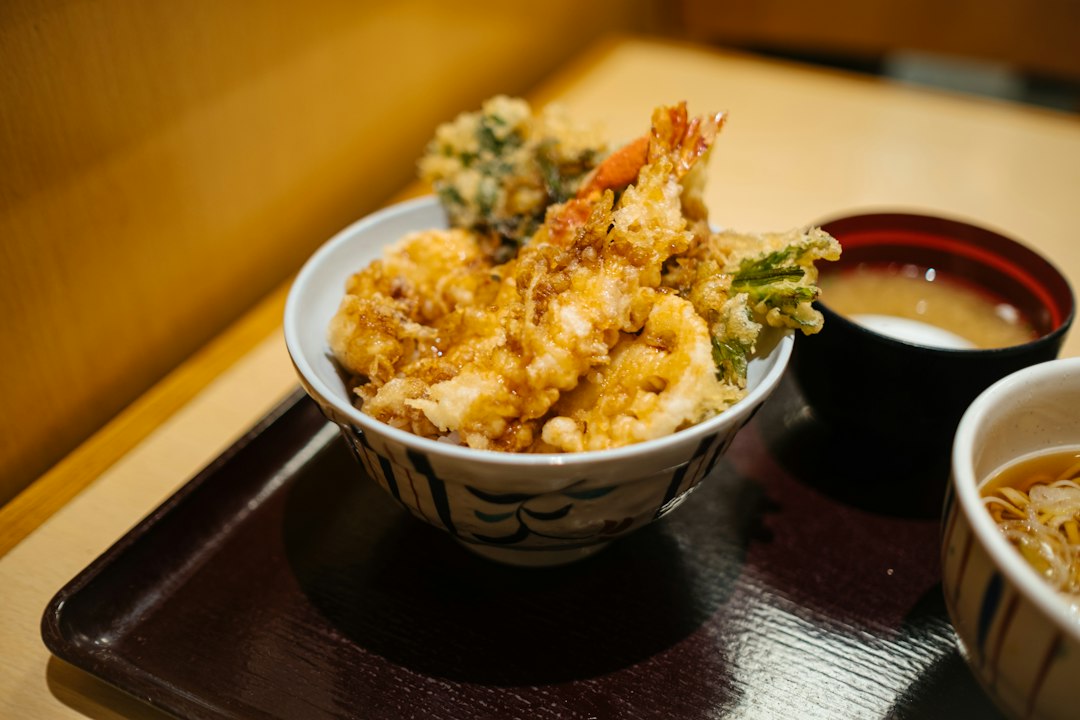
Tendon is tempura over a bowl of rice, finished with a sweeter, thicker version of the sauce. Asakusa is one of the neighborhoods most associated with it, and a tendon lunch near Senso-ji is a good way to try tempura without the price of a full counter course. Our guide to Asakusa street food covers what else to eat on the same walk.
Tensoba and ten-udon are hot noodle bowls topped with tempura. Kakiage is a mixed fritter of thinly sliced vegetables and small seafood fried together into a single loose cake. It is often the last item in a tempura course and, on noodles, one of the most satisfying cheap lunches in Tokyo.
Tenkasu and Tanuki Noodles
Tenkasu are the stray crumbs of batter that the cook skims from the oil between batches. The name combines ten, from tempura, with kasu, meaning scraps. Nothing is wasted: the crumbs become a topping for noodles and a key ingredient in okonomiyaki and takoyaki.
In the Kanto region, soba or udon topped with tenkasu is called tanuki, after the raccoon-dog of Japanese folklore. Why is debated. What matters in practice is that tanuki soba is inexpensive, filling, and on the menu at nearly every standing noodle bar in the city’s train stations.
Reading Tempura on an Izakaya Menu
Most visitors meet tempura first at a specialist restaurant. Locals are just as likely to order it at an izakaya, where fried dishes sit in their own section of the menu, usually headed agemono, “fried things,” next to karaage and other snacks for drinking.
This is the part of Tokyo eating we spend our evenings in. Our Asakusa food tour runs from Hoppy Street’s open-fronted izakaya to a small counter on Tanuki Street, and the Shinjuku route starts in the lanes of Omoide Yokocho. Neither is a tempura tasting. What they offer is a guide who reads the handwritten menu in Japanese and explains what each fried dish is, which is exactly where the tempura, karaage, kushikatsu confusion tends to clear up. If you plan to order alone, our guide to navigating Japanese izakayas explains the otoshi charge and how ordering works.
Expert Tip
If a tempura course is on your list, book lunch rather than dinner. Many Tokyo tempura counters offer a shorter, lower-priced set at midday using the same oil, the same chef, and much of the same seafood. Ask whether seating is at the counter; a table in the back room loses the timing that makes tempura worth the trip.
What Does Tempura Mean? Frequently Asked Questions
Is tempura originally Japanese?
No. The technique of battering and frying arrived with Portuguese traders and missionaries in the sixteenth century, and the word itself is almost certainly Portuguese in origin. What is Japanese is the form it took in Edo: a thin, light batter, Tokyo Bay seafood, and eating each piece straight from the oil. Most Japanese people today regard tempura as fully part of washoku, traditional Japanese cuisine.
What does the “ten” in tendon mean?
It is short for tempura. Tendon is tempura donburi, a rice bowl topped with tempura, and the same abbreviation appears in tensoba, ten-udon, tentsuyu, and tenkasu. The kanji for ten means “heaven,” but that character was chosen for its sound, not its meaning.
Should I eat tempura with salt or sauce?
Either is correct, and a good counter will give you both. As a general guide, salt suits vegetables and light white fish, while tentsuyu with grated daikon suits shrimp and richer seafood. If the chef suggests one for a particular piece, follow the suggestion; they are telling you how that item was meant to be eaten.
Related Tours

Conclusion
Tempura means, in all likelihood, “seasoning” in sixteenth-century Portuguese, or possibly “the fasting times.” Neither meaning survives in the food. What the word describes in Tokyo today is a technique refined by Edo street cooks: the thinnest possible batter, fish from the bay, and no delay between the oil and your mouth.
When you sit down to it, order at a counter if you can, start with salt, and eat each piece the moment it arrives. If you find yourself in an izakaya instead, look for the agemono section of the menu and read the prefixes: ten on the front of a dish name now tells you exactly what you are about to eat. For more on reading the table, our guide to ordering food in Japan covers everything from entering to paying.
Plan Your Japan Trip with Local Experts
Our team has guided 40,000+ travelers across Japan. Tell us about your trip and we’ll get back to you within 24 hours.