In this article:
- What Hakone Shrine Actually Is
- The Torii Gate Standing in the Water
- Walking the Grounds
- Getting There, and How Much Time to Allow
- Hakone Shrine: Frequently Asked Questions
Introduction
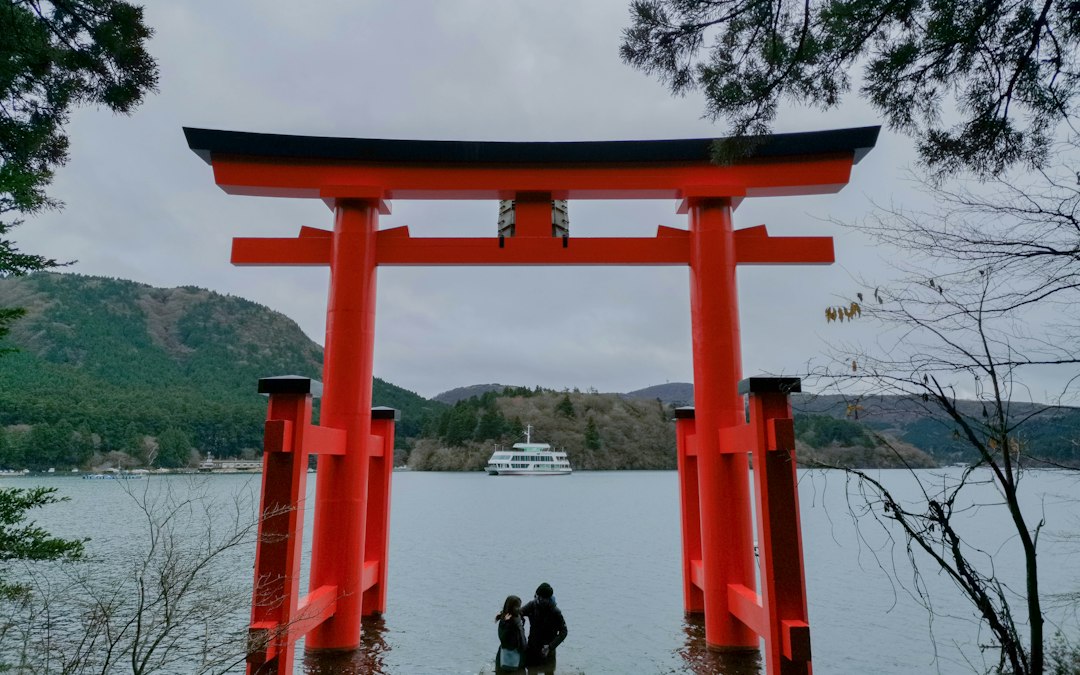
When the sightseeing boat docks at Moto-Hakone, everyone on the deck turns the same direction at the same moment. The red gate is there, ankle-deep in the lake, forty metres off the path. Phones come out before anyone has stepped onto the pier.
That gate is the reason most people search for Hakone Shrine, and it is a fair reason. But the gate was put there in 1952. The shrine behind it was founded in 757. It served as the tutelary shrine of the whole Kanto region under the Kamakura shoguns. Today, it holds Important Cultural Properties that predate almost anything else you will see on a day trip out of Tokyo.
We take travelers here regularly. The pattern is consistent. The people who enjoy it most are the ones who decided their arrival time deliberately. The difference between 8am and 1pm at this particular site is not a matter of degree. It is the difference between a cedar forest with a shrine in it and a queue with a view.
What Hakone Shrine Actually Is
We take travelers here regularly. The pattern is consistent. The people who enjoy it most are the ones who decided their arrival time deliberately. The grounds are open at all hours and there is no admission fee.
Founded in 757, and the Dragon in the Lake
We take travelers here regularly. The pattern is consistent. The people who enjoy it most are the ones who decided their arrival time deliberately.
The same tradition credits Mangan with subduing a venomous dragon that had been terrorising Lake Ashi. That dragon became Kuzuryu Okami, the nine-headed dragon deity. Today, it is enshrined as the guardian of the lake in two separate places. One is inside the Hakone Shrine grounds, and the other is on the far shore.
This is worth knowing before you arrive, because the dragon is everywhere once you look. It is on the water basin and on the amulets. You also see it in the queue of Japanese visitors at a small subsidiary shrine. Most foreign travelers walk straight past it.
The Shrine the Shoguns Came To
Minamoto no Yoritomo, the first Kamakura shogun, took this shrine seriously. He established a formal pilgrimage called the Nisho-mode, a shogunal visit to Hakone and Izusan. His successors then made this visit routine. The shrine came to be regarded as the guardian shrine of the entire Kanto region.
Tokugawa Ieyasu continued the pattern. He granted the shrine a 200-koku estate in 1594 and undertook a major reconstruction of the shrine buildings in 1612.
That political history explains the scale of what you walk through. A local mountain shrine does not get an approach this wide or cedars this old. It got them because the men who ran Japan needed to be seen praying here.
The Three Deities of Hakone Okami
Hakone Okami is not one deity but three. They are Ninigi no Mikoto, Konohanasakuya-hime, and Hikohohodemi no Mikoto. In the imperial creation narrative, they represent a grandfather, his wife, and their son.
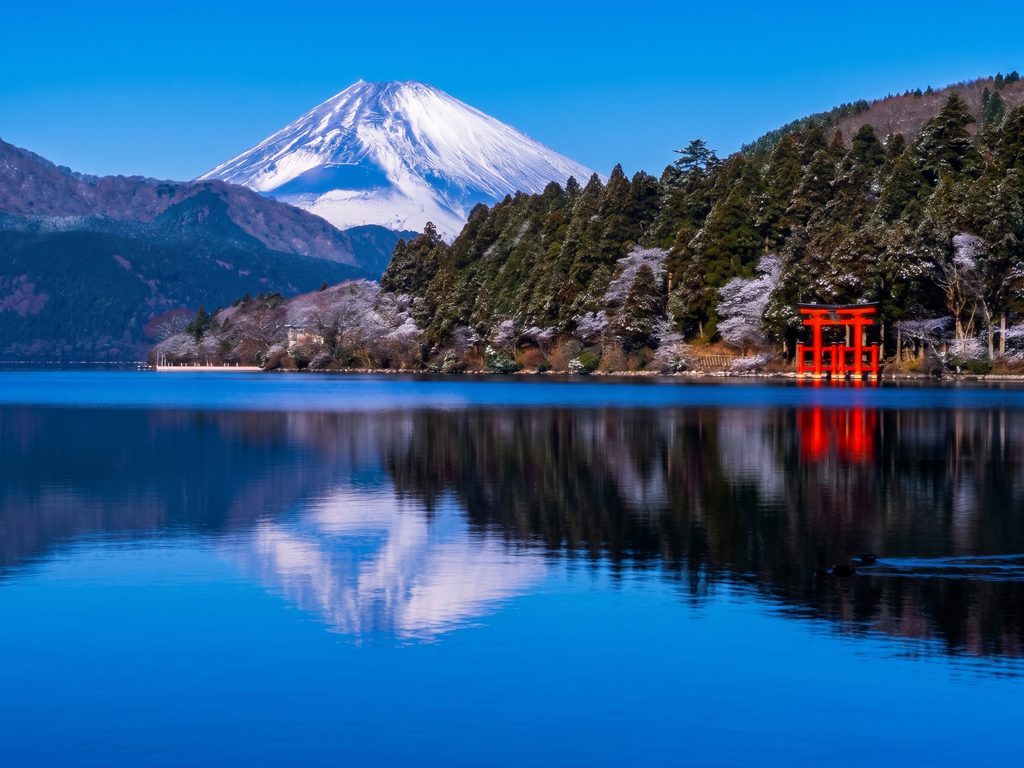
Konohanasakuya-hime is the connection most travelers find useful. She is also the deity of Mount Fuji, enshrined at the Sengen shrines around its base. You are standing at a shrine in a volcanic caldera that venerates the goddess of the volcano next door. That is not a coincidence. Hakone and Fuji are one geological and religious system, and the shrine sits inside it rather than looking at it.
The Torii Gate Standing in the Water
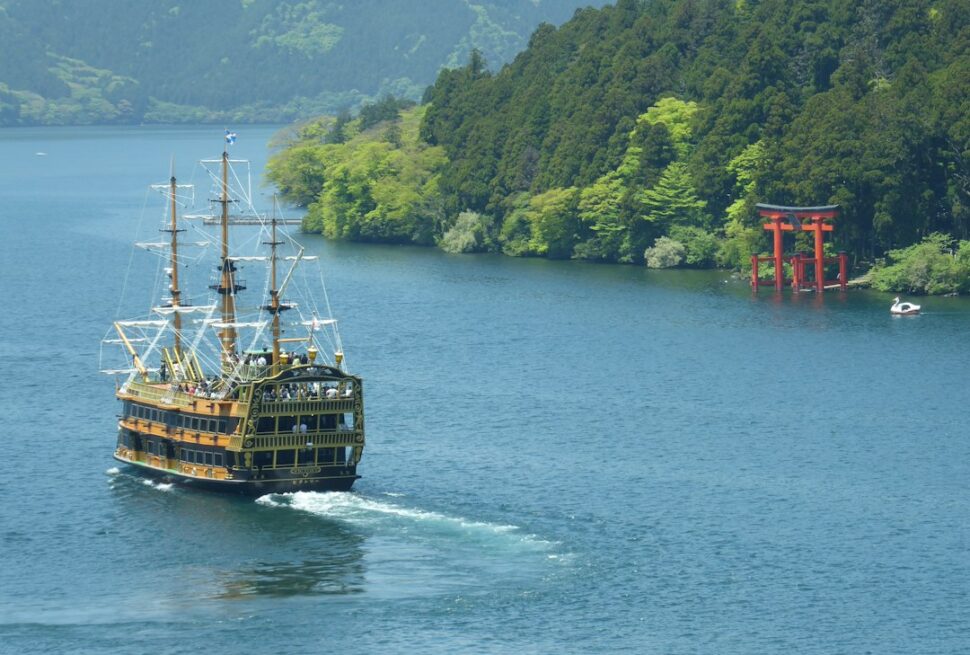
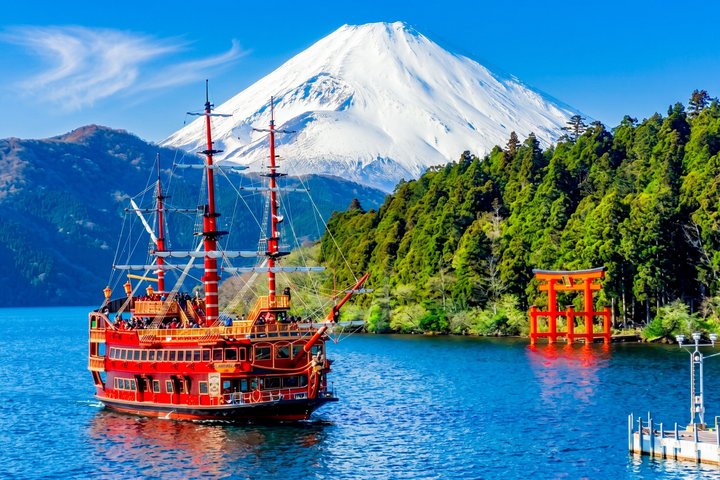
The gate is called Heiwa no Torii, or the Torii of Peace. It is the single most crowded square metre of ground in Hakone.
What the Gate Commemorates
It was erected in 1952. It was built to mark both the investiture of the Crown Prince and Japan’s return to independence after the Occupation. The plaque reading “peace” was added afterwards. It features the calligraphy of former Prime Minister Shigeru Yoshida, who signed the San Francisco treaty.
So the gate is not ancient, and anyone telling you it has stood there for centuries is guessing. What it is instead is a postwar political statement. It is rendered in vermilion and set in a lake. Once you know this, the photograph becomes more interesting, not less.
A torii marks a boundary. You are meant to pass through it, not stand in front of it. This gate stands in the water for a specific reason. The original approach to the shrine came by boat. The grammar of torii gates is consistent across the country once you start reading them.
The Queue, and How to Not Be in It
There is a queue. The queue forms on the short stone path leading down to the gate. It is orderly. In the middle of the day, it commonly runs thirty minutes to an hour for a straight-on shot with the gate framing the lake.
Our guides make a judgement call on this in real time and tell guests whether it is worth joining that day. Sometimes it is four people deep and takes five minutes. Sometimes it is not worth it at all, and the honest advice is to photograph the gate from the side and spend the time in the forest instead.
Before 8am on a weekday the queue is usually negligible. The light is better then too — low, coming across the water, hitting the gate rather than flattening it. Mid-afternoon in summer is the worst combination available: overhead sun, maximum crowd, haze on the lake.
The View From the Boat
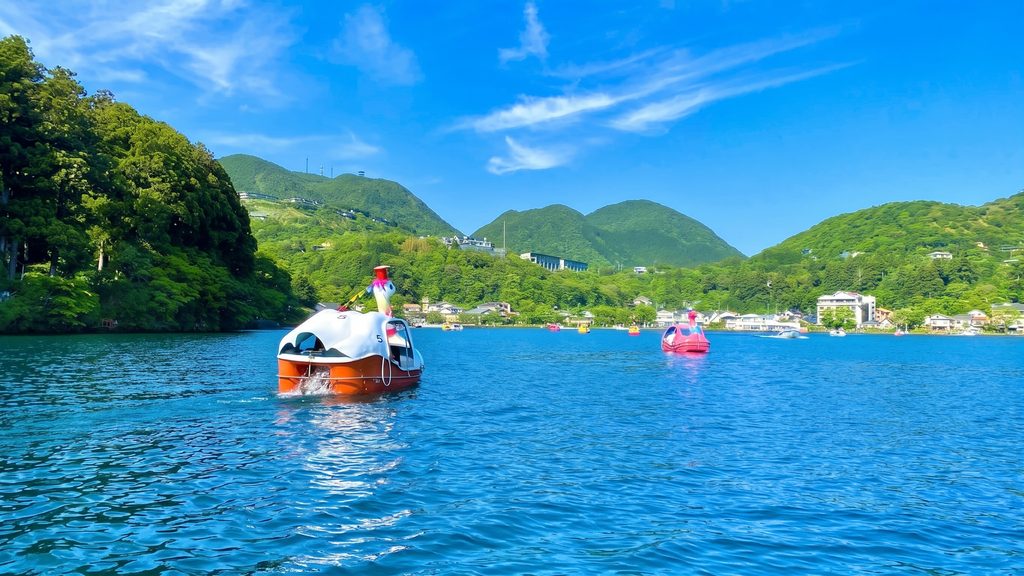
Almost nobody thinks of this one. The Hakone Sightseeing Cruise passes the gate on its way between Moto-Hakone and Togendai, and from the water you get the gate with the cedar forest rising behind it and no one in the frame at all.
It is a different photograph — wider, with the shrine’s setting visible rather than just the gate — and it costs you nothing beyond the boat fare you were probably paying anyway. On our Hakone day tour the lake crossing comes at the end of the day, which puts the gate in afternoon light from a moving deck.
Take the shot as the boat pulls away rather than as it approaches. The angle opens up and the gate separates from the shoreline behind it.
Expert Tip
Do the gate first, then the shrine. Almost everyone does it in the opposite order, because the path from the boat pier reaches the shrine entrance before it reaches the lakeside gate, and the crowd thickens through the morning. Walk past the shrine entrance, photograph the gate while the queue is still short, then double back and go up the steps — the grounds absorb people far better than the waterline does.
Walking the Grounds
Most visitors give the shrine twenty minutes and the gate forty. We would reverse that.
The Approach and the Ninety Steps
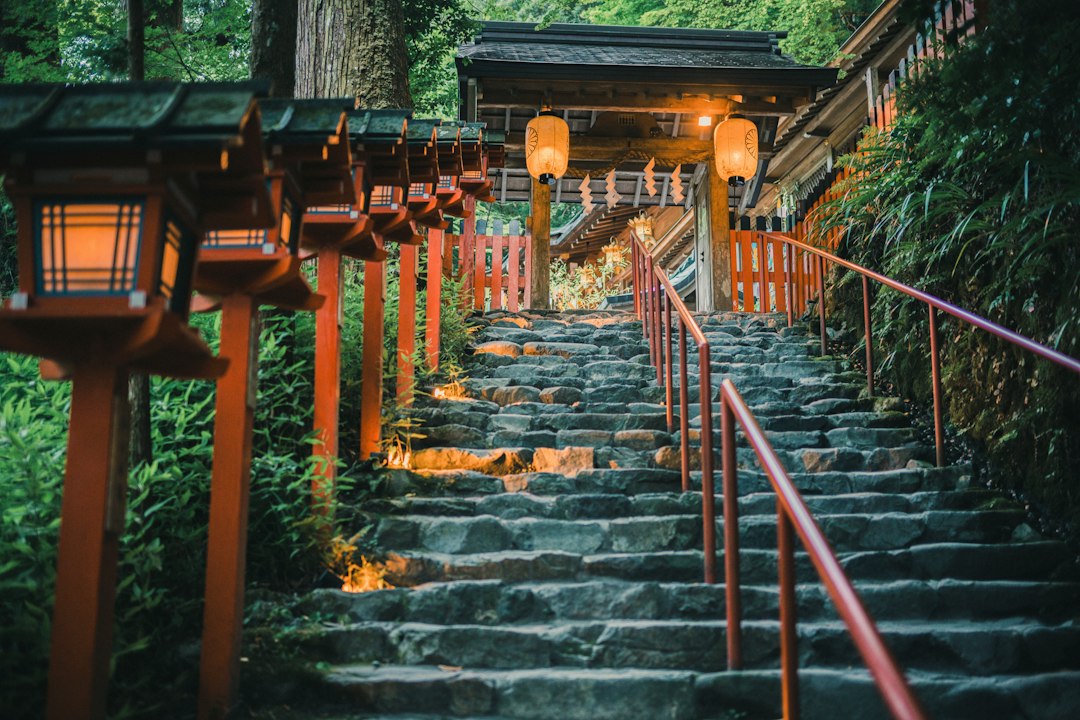
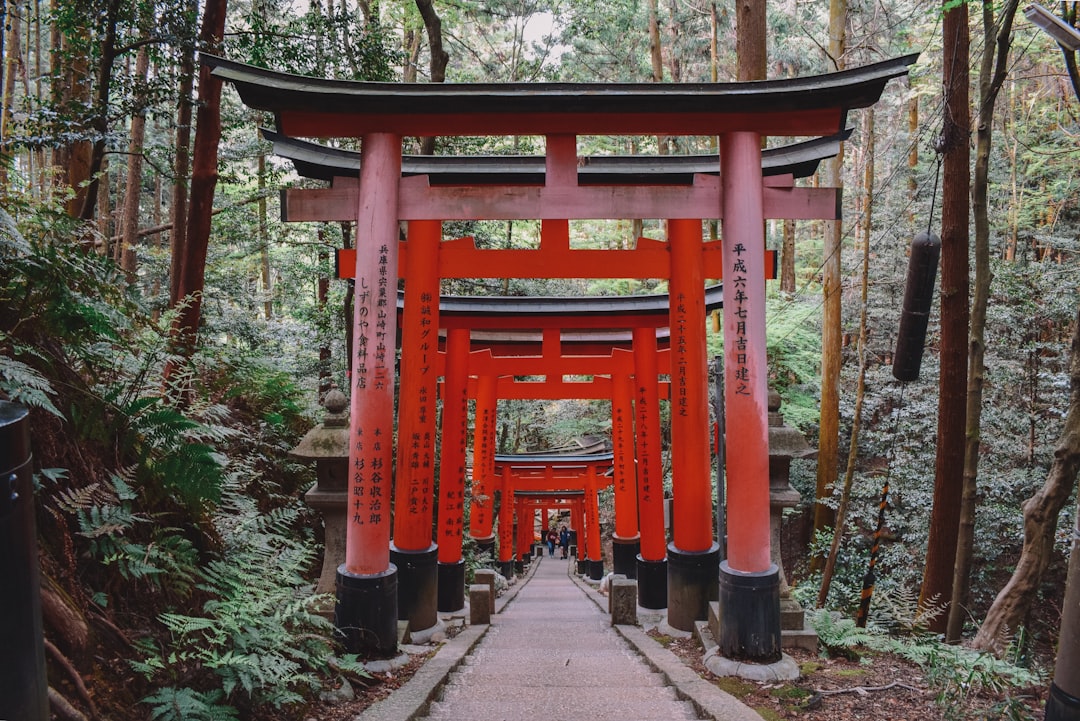
The main approach runs from the second torii gate up a flight of roughly ninety stone steps, flanked by stone lanterns and enclosed by cedars — some of them several centuries old, planted when this was still a shogunal pilgrimage site.
The steps are shallow and evenly spaced, which matters if you are traveling with anyone who finds stairs difficult. This is not a Kumano trail. It is a steady five-minute climb with handrails in places, and there are parking areas on the shrine side of the road if you arrive by car.
What you notice on the way up is the temperature. The canopy is dense enough that the air changes as you enter it, and on a hot August afternoon the approach is several degrees cooler than the lakeshore. The vermilion of the main hall reads very differently under that green light than it does in a photograph.
Kuzuryu Shrine Shingu and the Dragon Water
Immediately to the right of the main hall is Kuzuryu Shrine Shingu, the newer of the two shrines to the dragon deity of Lake Ashi. This is the part of the grounds where the ratio of Japanese to foreign visitors flips hardest.
In front of it, spring water called Ryujinsui runs from a dragon-headed spout. Filling a container is free, the water is drinkable, and bottles are sold at the shrine office if you did not bring one. The queue here is Japanese visitors taking water home, and it moves quickly.
Kuzuryu Okami is petitioned for matchmaking and for fortune, which is why visiting both this shrine and the main hall — the ryosha-mairi, or two-shrine visit — has become a small tradition in its own right. You do not need to believe any of it to find the practice worth watching.
The Treasure Hall
The Homotsuden, the shrine’s treasure hall, is the most skipped building on the site and the one we would send anyone with an interest in Japanese sculpture. Admission is ¥500 for adults and ¥300 for elementary school children, open 9:00 to 16:30 with last entry at 16:00, year-round.
Inside are Important Cultural Properties including seated images of a male and a female deity and a seated portrait of Mangan, the founding monk, along with the Hakone Gongen Engi, the shrine’s own written account of its origins.
Twenty minutes in a quiet room with objects a thousand years old, while several hundred people queue outside for a photograph of a gate built in 1952. The contrast is the point.
The Two Shrines Most Visitors Never Reach
The dragon shrine inside the grounds is the new one. The original, Kuzuryu Shrine Hongu, stands on the northern shore of the lake near Hakone-en and is genuinely difficult to reach on a day trip.
Its monthly festival falls on the 13th of every month, and a dedicated pilgrimage boat runs from Moto-Hakone port at 9:30 that morning, with tickets sold from 8:00 at the pier. If your dates happen to include the 13th and you want the version of this shrine that Japanese pilgrims take seriously, that boat is the way in.
Higher still is Hakone Motomiya, the original mountaintop shrine on the summit of Mount Komagatake, reached by the Komagatake Ropeway from Hakone-en. On a clear day the summit gives you Fuji, the caldera, and the lake in one view. Check the ropeway’s operating status before committing to it — high wind suspends the service without much notice.
Getting There, and How Much Time to Allow
Hakone Shrine is not hard to reach. Fitting it into a day that also includes the ropeway, Owakudani, and a lake crossing is where the planning actually happens.
From Inside Hakone
From the Moto-Hakone boat pier it is a five to ten minute walk along the lakeshore. This is the easiest arrival and the one we recommend if you are already doing the Hakone loop.
By bus, the Hakone Tozan Bus runs from Hakone-Yumoto Station to Moto-Hakone in roughly 35 to 40 minutes for about ¥1,210, several times an hour. The Hakone Freepass covers that bus, the sightseeing cruise, and the ropeway, and if you are moving around the caldera for two days it removes every ticket transaction from the itinerary. Buy it at Odakyu’s own counters rather than through a reseller, and check the current price directly — the fare has been revised since a lot of published guides were written.
The shrine grounds themselves need an hour if you include the treasure hall, ninety minutes if you are unhurried. We build in two hours at Moto-Hakone to absorb the gate queue.
From Tokyo in a Day
A day trip works, and it is how most of our guests see the shrine. The full Hakone loop by public transport is a satisfying puzzle, but it is a puzzle, and it consumes attention you could be spending on the place itself.
Our Mt. Fuji and Hakone coach day tour from Tokyo runs about ten hours and takes in the Hakone Ropeway over Owakudani, the sulphur vents on the valley floor, Hakone Shrine and its torii gate, and a cruise across Lake Ashi at the end. It departs from Tokyo Station or the LOVE sculpture in Nishi-Shinjuku. The ropeway and the cruise are ticketed separately on the day, and Owakudani closes at short notice when volcanic activity rises — when that happens, the time shifts to the shrine and the lake.
If you would rather stay the night, Hakone is one of the few places in Japan where the onsen and the sightseeing are genuinely in the same valley, and an early morning at the gate becomes trivial.
What Is Within Walking Distance
South from the shrine along the lake, the Old Tokaido road survives as a cedar avenue — around 500 metres of it, with more than 400 trees, first planted in 1618 to shade travelers on the highway between Edo and Kyoto.
It ends at the reconstructed Hakone Checkpoint, where the shogunate inspected everyone moving along that road. Walking the cedar avenue takes fifteen minutes and almost nobody does it, which is reason enough.
Together with the shrine, that stretch of lakeshore gives you a coherent half day: a 757 shrine, a 1618 road, a 1952 gate, and a caldera lake. Few places in Japan layer that cleanly.
Expert Tip
Hakone runs colder than Tokyo, and the deck of the lake boat is colder and windier again — bring a layer even in June. Fuji is hidden by cloud on a large share of days and nobody can promise otherwise, so treat the mountain as a bonus and the shrine as the reason you came. If a clear morning matters to you, a private van lets you move the arrival time to match the forecast instead of a coach timetable.
Hakone Shrine: Frequently Asked Questions
Is there an admission fee for Hakone Shrine?
No. The grounds are open at all hours and entry is free, including the approach, the main hall, Kuzuryu Shrine Shingu, and the torii gate in the lake. The only paid element is the treasure hall, at ¥500 for adults and ¥300 for elementary school children, open 9:00 to 16:30. Amulets, shrine stamps, and formal prayer requests are handled at the shrine office during its own posted hours.
What time should I arrive to photograph the torii gate without a queue?
Before 8am on a weekday. The queue for the straight-on shot builds through the morning and commonly reaches thirty minutes to an hour by early afternoon, and the light gets worse as it does. If an early arrival is not possible, photograph the gate from the side rather than head-on, or shoot it from the deck of the sightseeing cruise — there is no queue at all from the water.
Can I visit Hakone Shrine as a day trip from Tokyo?
Yes, comfortably. Hakone-Yumoto is reachable from Shinjuku on the Odakyu line in roughly an hour and a half to two hours depending on the train, and the shrine sits about 35 to 40 minutes further by bus. Doing the shrine, Owakudani, the ropeway, and a lake crossing in one day by public transport is possible but tight, with several connections to make. A guided coach day, at around ten hours door to door, is the version most of our guests choose.
Related Tours
Conclusion
Decide your arrival time before you decide anything else about this visit. Every other variable at Hakone Shrine — the queue, the light, the crowd on the steps, whether the forest feels like a forest — follows from that one choice, and it is the choice most itineraries make by accident.
The sequence we would run is short: reach Moto-Hakone early, walk past the shrine entrance to the gate while the path is still clear, then come back and go up the ninety steps with the morning still on your side. Give the treasure hall twenty minutes. Walk the cedar avenue south afterwards if the weather holds.
Then take the boat. You will pass the gate again on the way out, and from the water, with the forest behind it and no one in the frame, you will understand why it was built facing that direction in the first place.
Plan Your Japan Trip with Local Experts
Our team has guided 40,000+ travelers across Japan. Tell us about your trip and we’ll get back to you within 24 hours.