In this article:
- What Omicho Market Actually Is
- What to Eat, and What Is Actually in Season
- Timing: Hours, Closing Days, and the Noon Queue
- Buying, Eating, and Where Omicho Fits in a Kanazawa Day
- Omicho Market: Frequently Asked Questions
Introduction
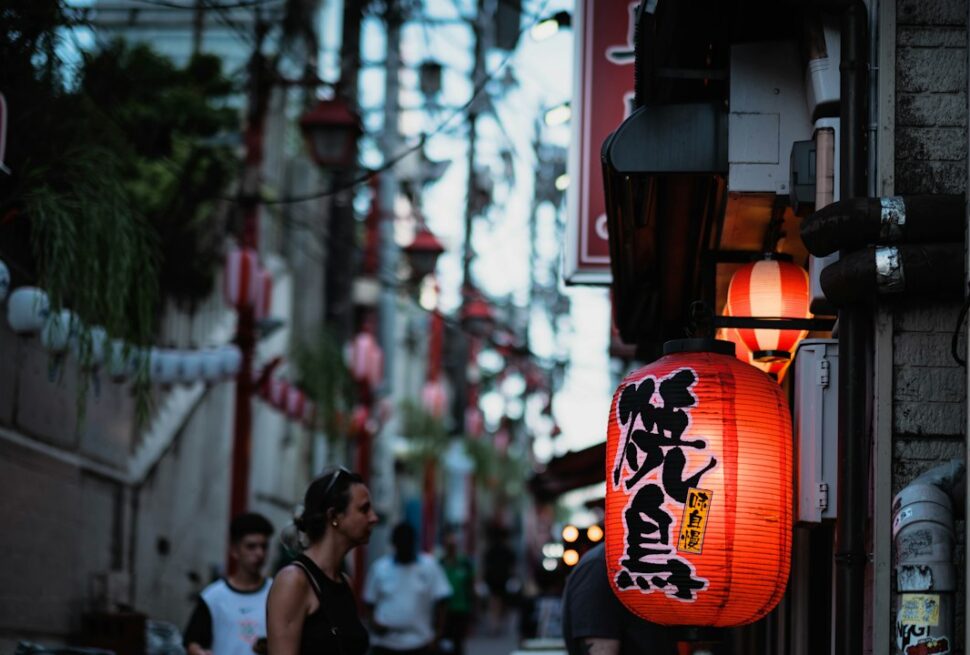
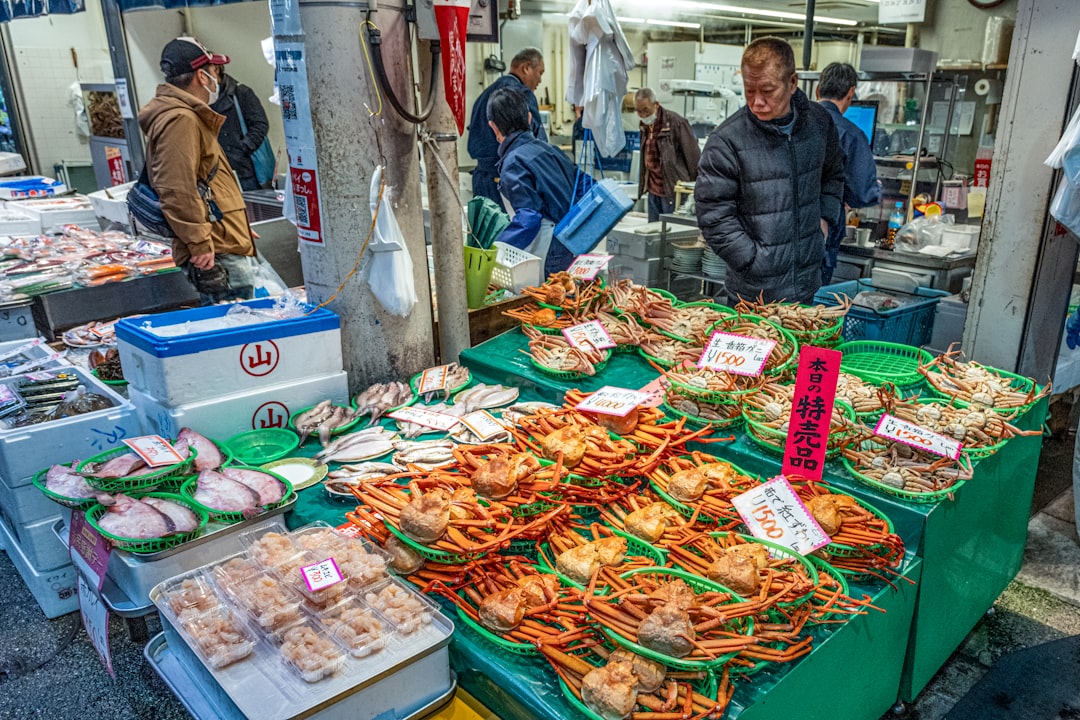
At half past seven on a weekday morning, Omicho Market smells of seawater and cardboard. Traders are hosing down the concrete, a fishmonger is arranging sweet shrimp into rows with the concentration of someone laying out jewellery, and the only queue anywhere is four people deep outside a seafood-bowl counter in the basement of the Ichibakan building.
Come back at half past twelve and it is a different place. The arcade fills with visitors, the queues outside the popular restaurants run thirty and forty minutes, and the vegetable sellers who were busy at eight are sitting on stools waiting out the lunch rush. Neither version is wrong. But travelers who arrive at noon expecting the first one tend to come away thinking Omicho is overrated, and that is a timing problem rather than a market problem.
Kanazawa escaped bombing in the war, which is the fact that explains most of the city, and the market is part of that continuity — restaurants here still buy their fish in these lanes. We bring travelers through Omicho most weeks, and the advice barely changes from one group to the next: come early, know what month it is, and bring cash.
What Omicho Market Actually Is
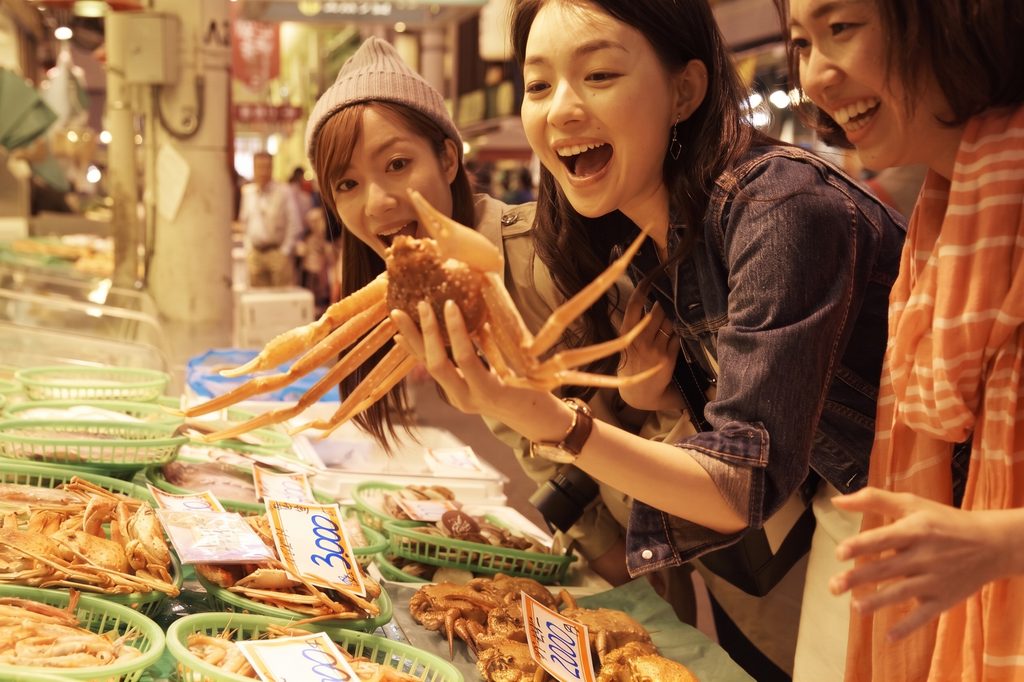
Omicho is a covered retail market of roughly 170 shops occupying a block in central Kanazawa, at the junction called Musashigatsuji. It is about a fifteen to twenty minute walk from Kanazawa Station, or one stop on the Kanazawa Loop Bus, which puts it between the station and everything else you came to see.
A Market That Grew Out of a Fire
The market’s origins are tied to a fire in 1690 that pushed the fish sellers of the Asanogawa district into this block, with a second fish market merged in during the 1720s. Kanazawa was the seat of the Maeda family, who ran the wealthiest domain in Japan after the shogunate’s own lands, and a city that rich needed a supply chain to match.
That history is why locals call Omicho the city’s kitchen rather than the city’s market. The distinction survives in the mix of shops: alongside the seafood you will find a knife sharpener, a shop selling nothing but pickles, several florists, and a stall of work clothes.
About 170 Shops, Plus the Ichibakan Building
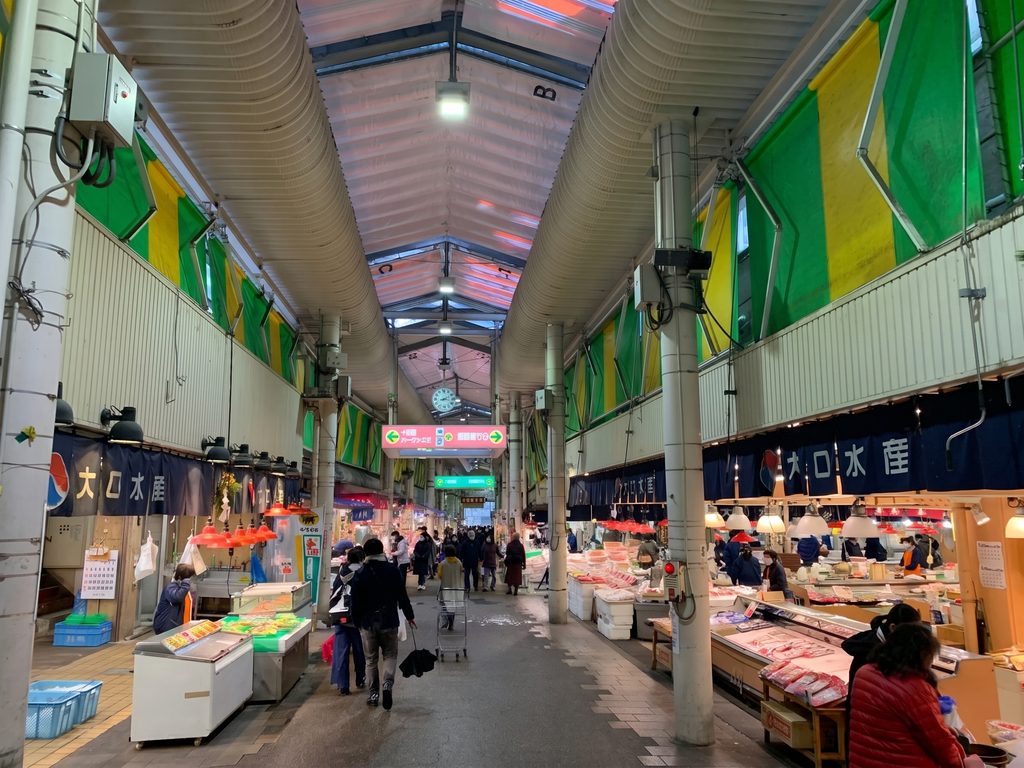
The layout takes ten minutes to understand and is worth the ten minutes. Narrow covered lanes run through the block, with fishmongers at the front of their shops and cash registers deep inside. On one corner sits Omicho Ichibakan, a modern building holding a basement of restaurants, more shops on the ground floor, and a public rest area upstairs.
The Ichibakan is where most of the seated eating happens, and it is also where you go when it rains, which in Kanazawa is often. Beyond that building, restaurants are scattered — main floor, second floors up narrow staircases, and a few tucked behind produce stalls with no English sign at all.
Why It Reads Differently From Tsukiji
If you have walked Tsukiji’s outer market in Tokyo, calibrate your expectations differently here. Tsukiji is a grazing street where much of the trade has reorganised itself around visitors on foot with skewers.
Omicho has plenty of visitors and sells plenty of skewers, but the ratio is different. Households still shop here, which means the produce is priced for people cooking dinner rather than for souvenir buying, and the fishmongers will fillet, shell, and portion things on request because that is what their regular customers want.
The practical consequence is that Omicho rewards curiosity more than a checklist. There is no single famous stall that defines the place.
Expert Tip
Walk the whole block once before buying anything. Prices for the same fish vary between shops within a hundred metres, and the stalls at the edges of the market — the ones with no queue and no English menu — are frequently the ones selling to the people who cook for a living. Ten minutes of looking will change what you order.
What to Eat, and What Is Actually in Season
Kanazawa sits on the Sea of Japan, and the cold water off the Noto Peninsula produces fish that rarely travels far from where it is landed. What follows is what we would actually order, and when.
Kaisendon, and the Counters That Open at Seven
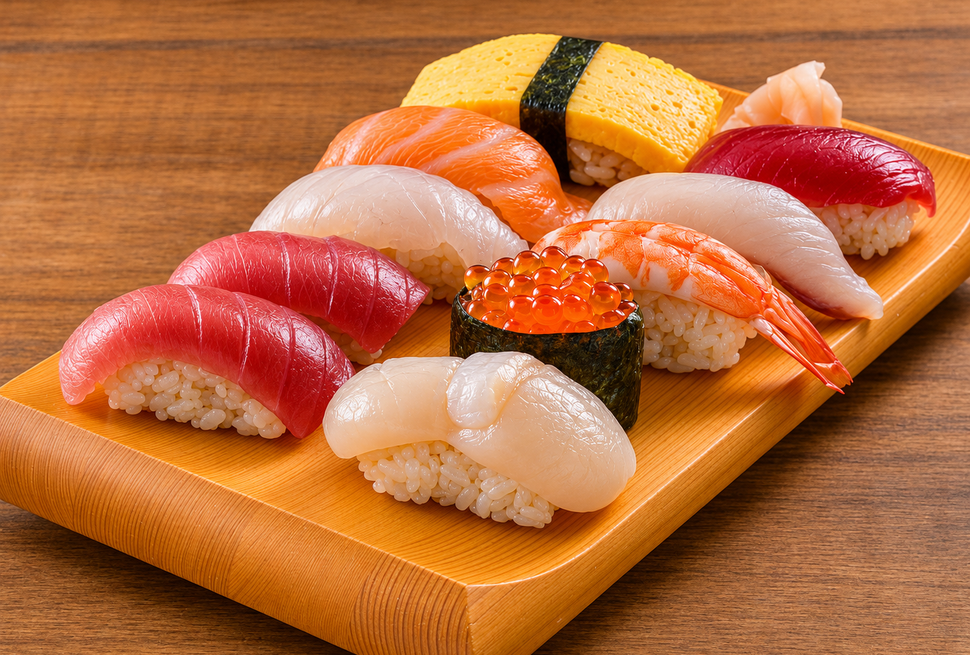
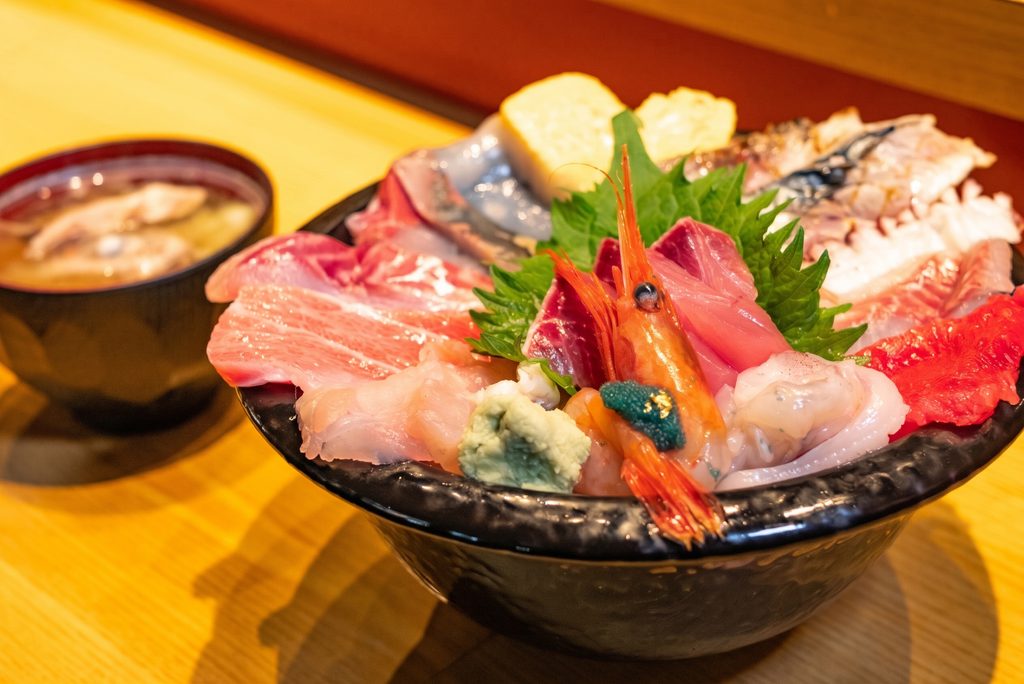
Kaisendon — a bowl of vinegared rice under sliced raw fish — is the dish Omicho is known for, and the good versions are a matter of the fish rather than the technique. Bowls at the market counters generally start somewhere around ¥2,000 and climb steeply with what is on top of them, so read the display before you sit down.
Several counters open far earlier than the market’s retail shops. Iki Iki Tei, inside the Ichibakan, opens at seven in the morning and closes when the fish runs out, usually by mid-afternoon, and takes Thursdays off. Arriving at opening time means a bowl assembled from that morning’s landing and no queue at all.
Our honest view: a seafood bowl at 7:30am is a considerably better meal than the same bowl at 1pm, and not only because of the wait. The best cuts move first.
Crab, and the Two Dates That Decide Your Trip
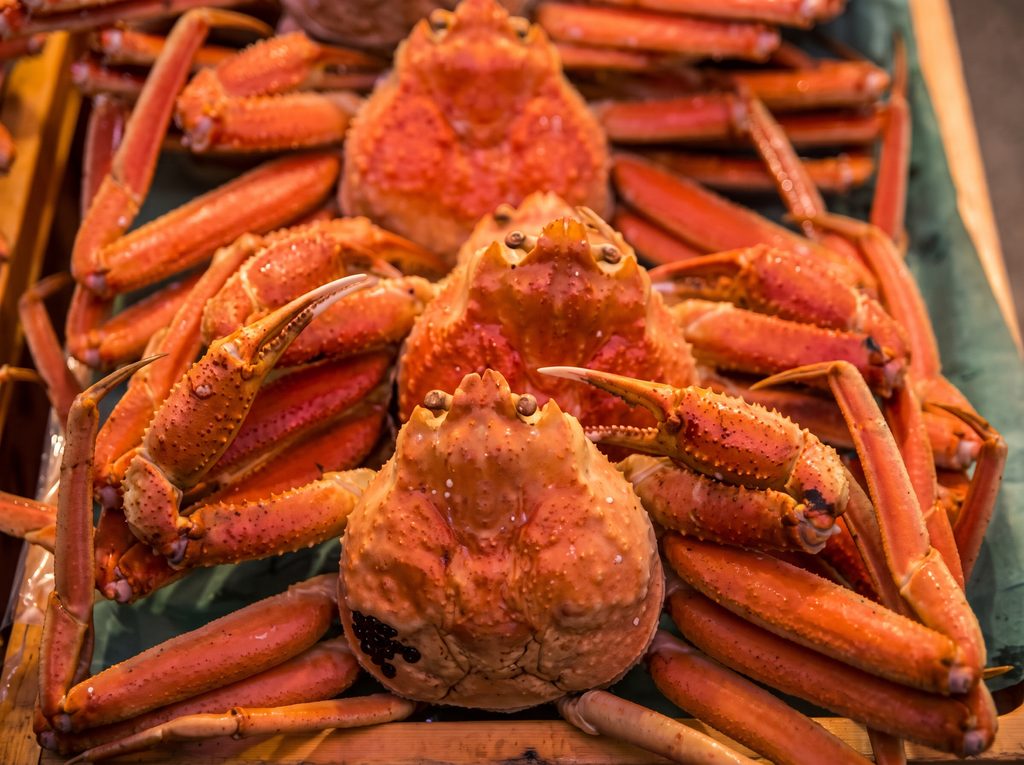
Ishikawa’s snow crab season is defined by regulation, not by weather, and the dates are worth planning around. Male snow crab, sold locally under the Kano-gani brand with a tag showing the landing port, is available from November 6th to March 20th.
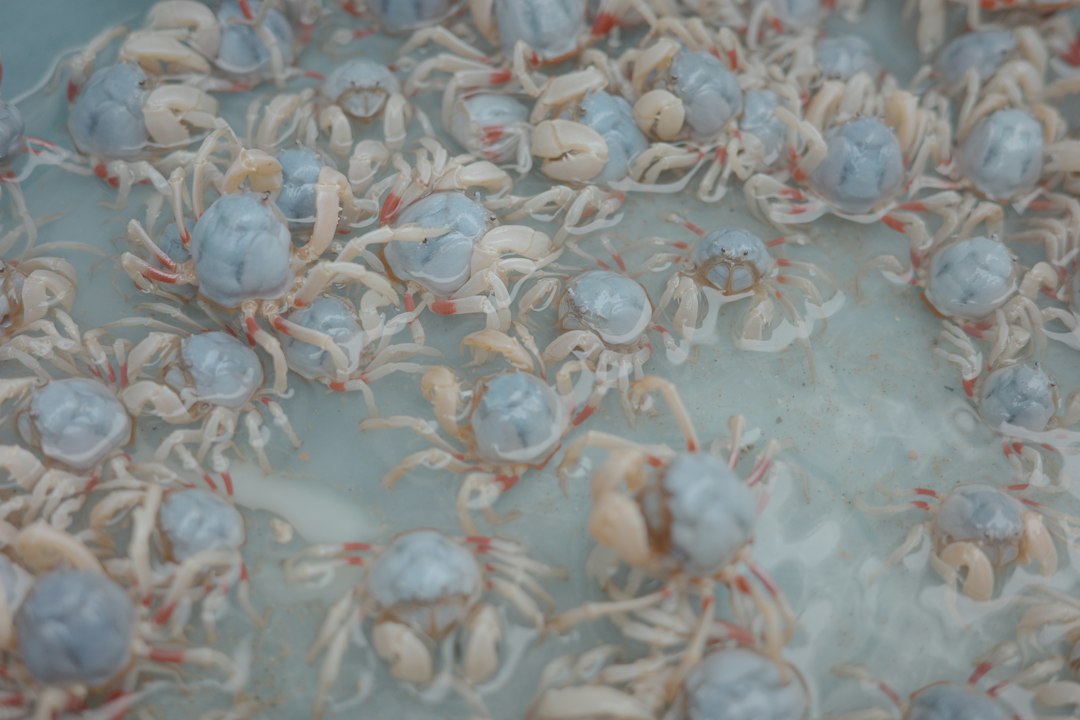
Female snow crab, called kobako-gani, has a far shorter window — November 6th to December 29th in Ishikawa. This is the one we tell travelers about, because it does not exist elsewhere in Japan for most of its short season. The crabs are small, the meat is secondary, and the point is the roe: the orange external roe and the darker internal roe, served packed back into the shell.
A kobako-gani in early December, eaten standing at a stall with a plastic pick, is among the most specific things you can eat in Japan. Outside those seven weeks, asking for it gets you a polite no.
Gasu-ebi, Nodoguro, and the Fish Nobody Exports
Gasu-ebi is a local shrimp with a short shelf life and a texture closer to cream than to the firm sweet shrimp most visitors know. It spoils quickly, which is why it does not leave the region, and why eating it here is the only realistic option.
Nodoguro — blackthroat seaperch, named for its black throat — is the prestige fish of the Hokuriku coast, oily and dense, usually grilled with salt and best treated as a single dish rather than one slice in a bowl. Expect it to cost accordingly.
Beyond those, the seasonal rhythm goes roughly: firefly squid and bamboo shoots in spring, conger eel through summer, mushrooms and saury in autumn, then crab, yellowtail, and oysters from November.
The Vegetable Stalls Most Visitors Walk Past
Kanazawa has fifteen officially designated heirloom vegetables under the Kaga yasai label, a classification covering varieties grown in the area before 1945. Kaga lotus root, Gorojima kintoki sweet potato, and kinjiso — a purple-backed leafy green — turn up regularly in the produce lanes.
You cannot cook them in a hotel room, which is why most visitors glance and move on. But the stalls are the reason to slow down here: seeing the lotus root that appears sliced in your dinner that evening changes how you read the meal. Kaiseki restaurants in the city list these vegetables by name on their menus.
Timing: Hours, Closing Days, and the Noon Queue
More trips are spoiled by arriving on the wrong day than by arriving at the wrong hour, and both are avoidable.
What Time the Market Is Actually Working
Retail shops generally run from around 9am to 5pm, with hours set individually by each business — some pull their shutters earlier once stock is gone. Restaurants do not follow that pattern at all. A handful of seafood counters open at 7am, many restaurants work an 11am to 4pm lunch service, and a few stay open into the evening.
The trading energy peaks in the morning. By three in the afternoon the fish cases are visibly thinner and several shops have stopped restocking, which is fine if you came to eat lunch and disappointing if you came to look at fish.
Wednesdays, Sundays, and Holiday Closures
The market as a whole is open daily apart from the New Year period, but individual shops close on their own schedules, and Wednesdays and Sundays catch out a lot of visitors. Enough restaurants take Wednesday off that the eating options thin out noticeably, and Sunday closures are common among the produce and dry-goods sellers.
We plan Omicho visits for a weekday that is not Wednesday whenever the itinerary allows it. If your only free morning is a Wednesday or a Sunday, go anyway — the market functions — but treat your first-choice restaurant as unlikely and have a second in mind.
The Hour We Tell Travelers to Avoid
Between about 11:30am and 1:30pm, Omicho becomes a queueing exercise. The arcade narrows with people, the popular kaisendon restaurants run long waits, and the experience shifts from watching a market work to standing in a line inside one.
Two workable options. Eat a seafood bowl at 7:30 or 8am and treat it as breakfast, which is what locals visiting the market for a meal tend to do. Or come through at 10am, buy things to eat standing at the stalls, and have your sit-down lunch somewhere else in the city entirely.
Expert Tip
Kanazawa gets a great deal of rain and snow — considerably more than Tokyo or Kyoto — and the market’s arcade covers the lanes but not the approaches. On a wet day, Omicho becomes the best hour of your itinerary rather than a compromise, because the gardens and the samurai district are much harder going in heavy rain. Keep it in reserve as a weather substitution.
Buying, Eating, and Where Omicho Fits in a Kanazawa Day
The mechanics are straightforward once you know them, and getting them right is the difference between being a customer and being an obstacle.
Standing Still to Eat, and Paying in Cash
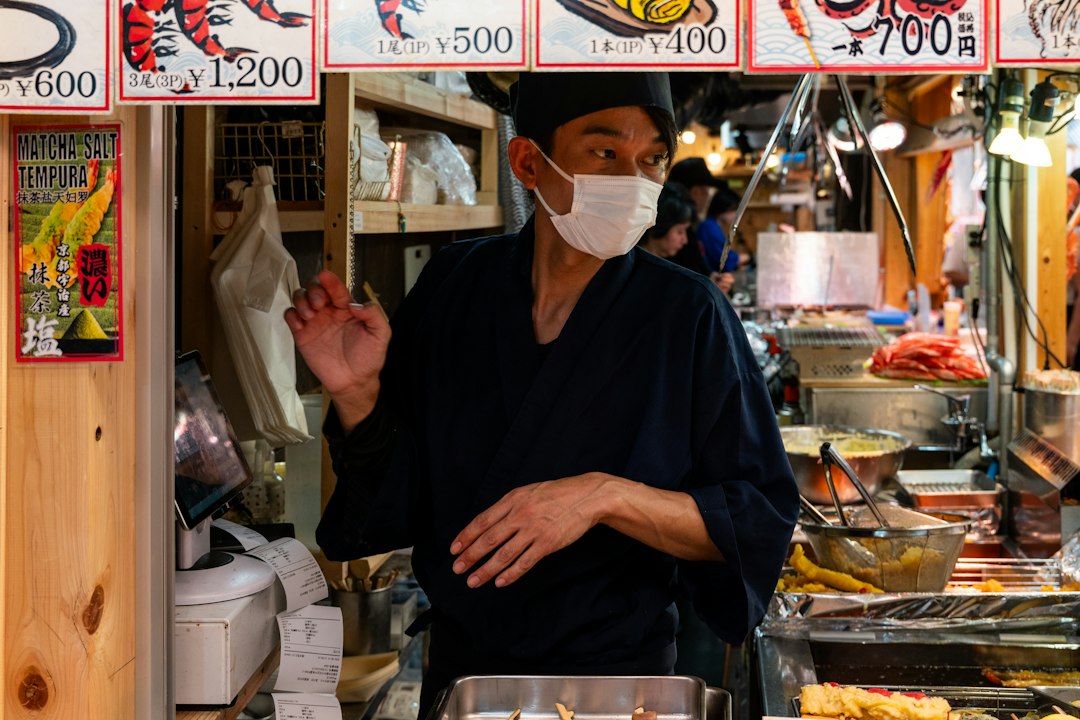
Many stalls that sell grilled scallops, oysters, or crab set out a small counter or a standing area beside the shop. Eat there rather than walking away with the food — the lanes are working corridors with delivery carts in them, and the shops would rather you stayed put and handed the skewer back.
Cash remains the safer assumption. Card and IC payment have spread through the market unevenly, and the smaller vendors are the ones least likely to take them. Carry a few thousand yen in notes and coins and the question never arises.
If you want fish prepared a particular way, ask. Fishmongers here will shell shrimp, open oysters, and cut a whole fish into portions, and the request is ordinary rather than an imposition.
Market First, Kenroku-en Second
Omicho sits between Kanazawa Station and the cultural quarter, which makes the sequencing easy. Market in the morning, then Kenroku-en, then the samurai walls of Nagamachi or the teahouse streets of Higashi Chaya in the afternoon.
That is the order our four-hour Kanazawa walking tour follows, starting at the market and working through the garden into the old districts, and it is the order we would suggest whether or not you walk it with a guide. The market is at its best early and the garden holds up all day, so doing it the other way around costs you the better half of the market.
For travelers who want the day shaped around food specifically, our private Kanazawa tour can build the morning around the market and a seafood counter rather than a fixed route. Either way, the practical detail to note is that entrance fees, transport, and meals are paid as you go in Kanazawa, so the cash you brought for the market covers the rest of the day too.
Taking Something Home, and What Will Not Travel
Dried and preserved goods travel well: kombu, dried fish, pickled vegetables, sake lees, and the small pots of fermented fish products the shops here specialise in. Gold leaf turns up in confectionery and on soft-serve ice cream, which is a Kanazawa habit rather than a tradition — the city produces the overwhelming majority of Japan’s gold leaf, and the market sells the by-product to visitors.
What will not travel is anything raw. Fresh gasu-ebi has a shelf life measured in hours, and crab bought whole needs a kitchen. Shops will pack and ship within Japan, which works if you have a later hotel to send it to and not if you are flying home.
If Kanazawa is one stop on a wider Hokuriku loop — Shirakawa-go is around seventy-five minutes away by highway bus — do the market shopping on your last morning rather than your first.
Omicho Market: Frequently Asked Questions
What time should I arrive at Omicho Market?
Between 7:30 and 9am if you want to eat there, and before 10:30am if you want to see the market working. Several seafood counters open at 7am and serve the morning’s catch without a queue, while the retail shops start at around 9am. The window from 11:30am to 1:30pm is the one to avoid, because the restaurant waits are long and the lanes are crowded enough to be slow going.
Is Omicho Market open on Sundays?
The market itself operates daily except over the New Year holiday, but individual shops set their own closing days and a meaningful number take Sundays off — particularly the produce and dry-goods sellers. Wednesday is the other common closing day, and it affects restaurants more than shops. A Sunday or Wednesday visit still works; expect fewer open shutters and have a backup restaurant in mind.
Can I eat while walking through the market?
Better not to. Stalls selling grilled seafood set out a standing counter or a small eating area, and using it is the normal practice — the lanes are narrow, carts move through them, and eating on the move in a market is not how it is done locally. Bins are scarce as well, so hand the skewer or shell back to the stall that sold it to you.
Related Tours
Conclusion
Check the calendar before you fix the morning. If your Kanazawa dates fall between November 6th and December 29th, Omicho gives you something that is unavailable in the rest of the country for most of the year, and we would build the day around it. Outside that window, the market is still the best ninety minutes in the city for understanding what Kanazawa eats, and the fish is excellent in every month.
Then get the hour right. Arrive at half past seven, eat a seafood bowl before the queues form, walk the full block once to see what the stalls at the edges are selling, and be in Kenroku-en by half past nine. That sequence costs nothing to arrange and changes the whole day. Bring cash, skip Wednesday if you can, and accept that you will want a second breakfast.
Plan Your Japan Trip with Local Experts
Our team has guided 40,000+ travelers across Japan. Tell us about your trip and we’ll get back to you within 24 hours.