In this article:
- What a Torii Gate Actually Marks
- Colour, Material, and What They Mean
- Five Torii Gates Worth Traveling For
- How to Pass Through a Torii Correctly
- Torii Gates: Common Questions
What a Torii Gate Actually Marks
A torii is a threshold. When you walk under one, you are crossing from ordinary space into sacred ground — the territory of a Shinto kami, or deity. It is not a decorative arch or a photo frame, though it functions as both for most of the people who pass beneath it. Understanding what it is changes how the rest of a shrine visit feels.
This matters because Shinto does not announce itself the way other religions do. There is no equivalent of a cathedral facade. The torii, often standing in forest or water with nothing built around it, is the announcement: beyond this point, behave accordingly.
The Boundary Between the Everyday and the Sacred
The space inside the torii is the shrine’s precinct, kept ritually pure. In practical terms, this is why you will see people pause, bow slightly, and adjust their path as they enter. They are acknowledging a transition. You do not have to share the belief to observe the courtesy, and observing it will make the visit feel less like sightseeing and more like the thing it is.
Where the Name Comes From
The etymology is debated, which is itself interesting. The most cited theory reads the characters literally — tori, bird, and i, to be or to perch — making the torii a “bird perch.” This connects to old myths in which birds called the sun goddess Amaterasu out of hiding. Other theories trace the word to tori-iru, “to pass through and enter.” No single account has won. Both are worth knowing, because they hint at how deep and how oral this tradition runs.
The Anatomy of a Torii
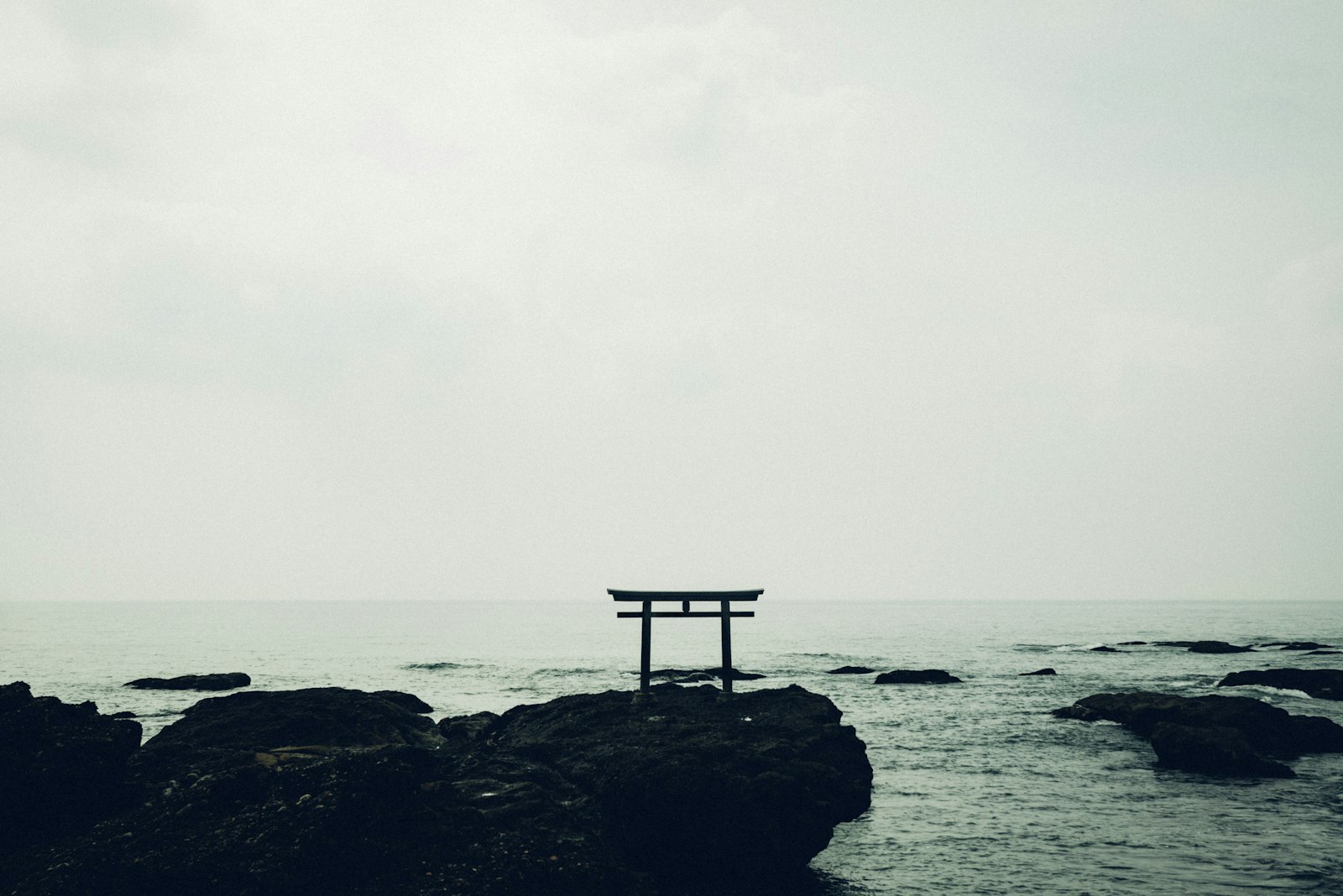
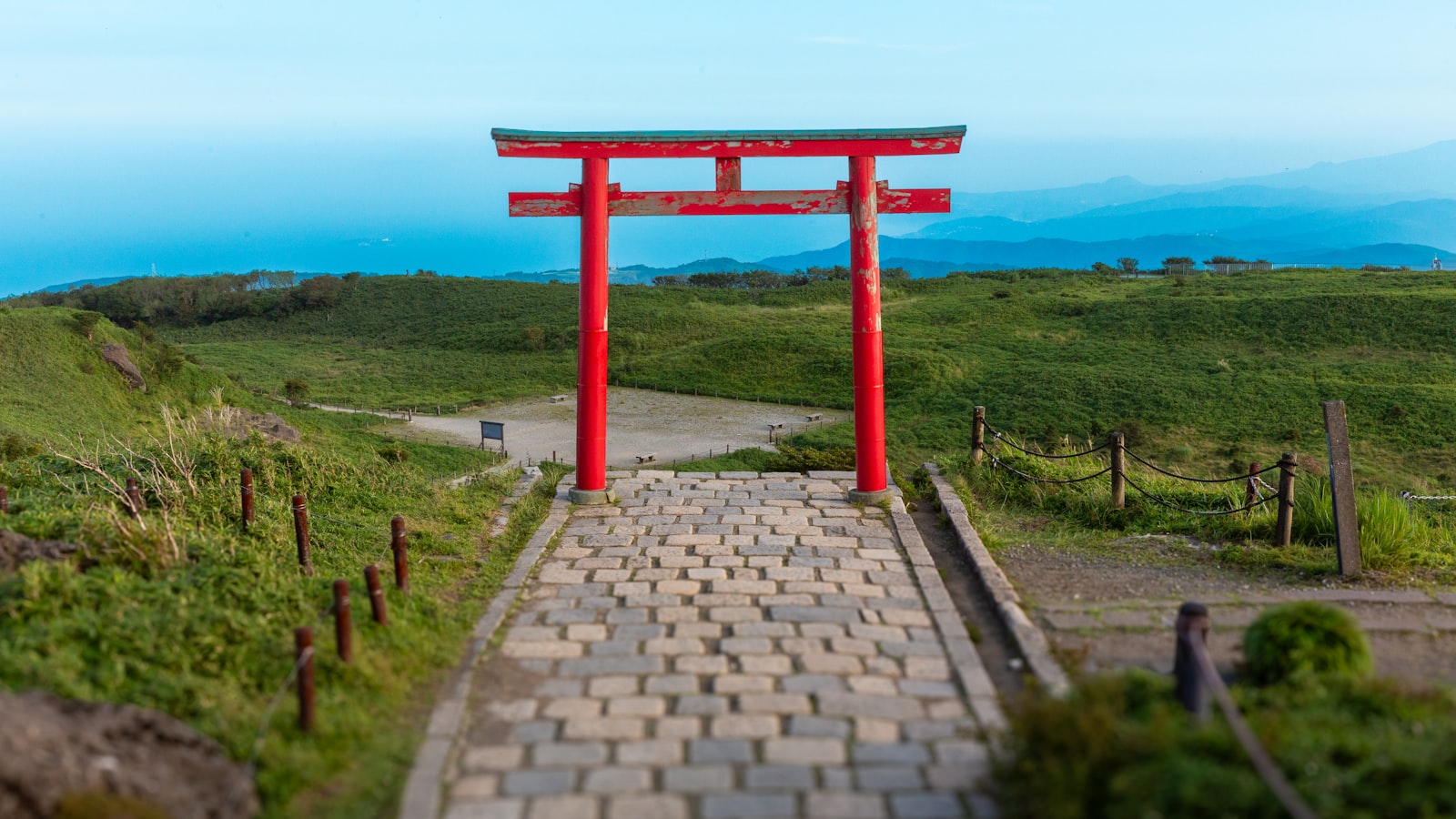
The basic structure is simple and almost always the same: two upright posts supporting two horizontal crossbars. The top bar, the kasagi, often curves gently upward at the ends; below it sits a second beam, the nuki. From this skeleton come dozens of regional and sectarian variations — some with supporting struts, some with a small roof, some perfectly straight, some heavily curved. Once you can see the two-post, two-bar core, you start noticing the differences everywhere.
Expert Tip
The number of crossbars and whether they protrude past the posts can tell you which Shinto tradition a shrine belongs to. A straight-lined, unadorned gate (the Shinmei style) tends to mark the oldest and most austere shrines, like Ise. A curved gate with a wedge and supporting struts (the Myojin style) is the more ornate, more common form. You do not need to memorize the names — just knowing the two families exist makes every gate more legible.
Colour, Material, and What They Mean
The vermilion torii is the image everyone carries, but red is not the rule. Material and colour both carry meaning, and the variation across the country is wider than most visitors expect. A weathered wooden gate in a Tokyo forest and a brilliant orange one in Kyoto are saying slightly different things.
Why So Many Are Vermilion
The bright red-orange of the classic torii is more than aesthetics. Vermilion was traditionally believed to ward off evil and disaster, and the pigment historically contained mercury, which helped preserve the wood against rot. Belief and chemistry reinforced each other. The colour also reads powerfully against green forest and blue water, which is no accident — these gates were always meant to be seen.
Beyond Red: Stone, Black, and Bare Wood
Plenty of torii are never painted at all. Stone gates, grey and lichened, stand at countless local shrines. Some gates are black, or left as raw, unfinished cypress that silvers with age. The most striking of these is at Meiji Jingu in Tokyo, where enormous unpainted logs make a gate that feels older and quieter than any amount of vermilion could. The absence of colour is its own statement.
How the Design Reflects Shinto Itself
Shinto centres on nature, purity, and the presence of the sacred in specific places — a mountain, a waterfall, an old tree. The torii’s restraint mirrors this. There is almost nothing to it: no figures, no scripture carved into the stone, no doors. It frames the natural world rather than competing with it. In that sense the simplest gates are the most faithful to the idea.
Five Torii Gates Worth Traveling For
Some torii are reason enough to change an itinerary. These five are the ones we point travelers toward, each for a different quality — scale, repetition, austerity, setting, and sheer presence.
Itsukushima Shrine, Miyajima
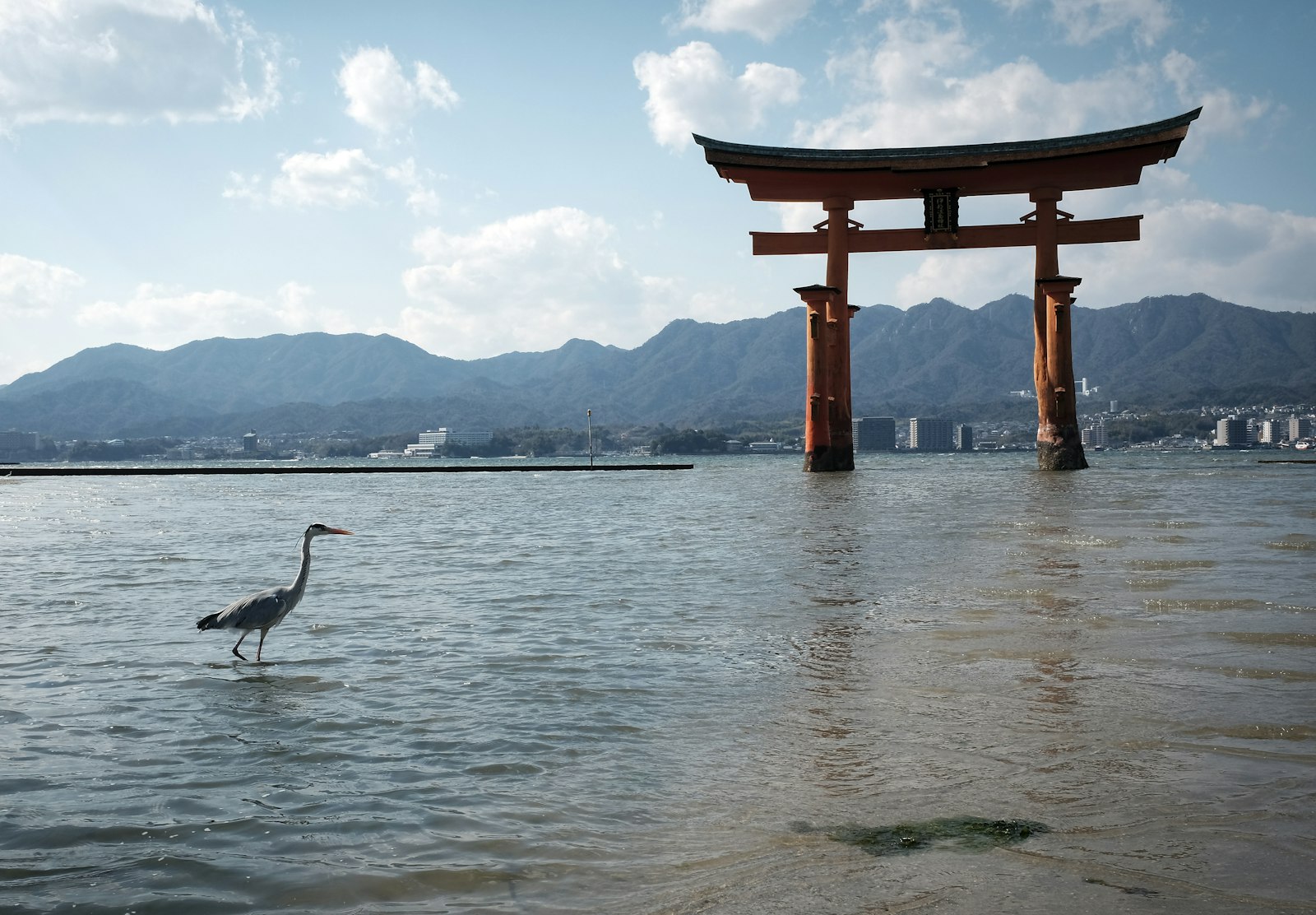
The “floating” torii off the island of Miyajima, near Hiroshima, is the most photographed gate in Japan, and it earns it. At high tide the vermilion gate stands in the sea, apparently rising from the water; at low tide you can walk out across the flats to its base. The trick is to see both. Stay on the island overnight if you can — the day-trippers leave by late afternoon, and the gate at dusk, lit and reflected, is a different thing entirely from the midday crowd shot.
Fushimi Inari Shrine, Kyoto
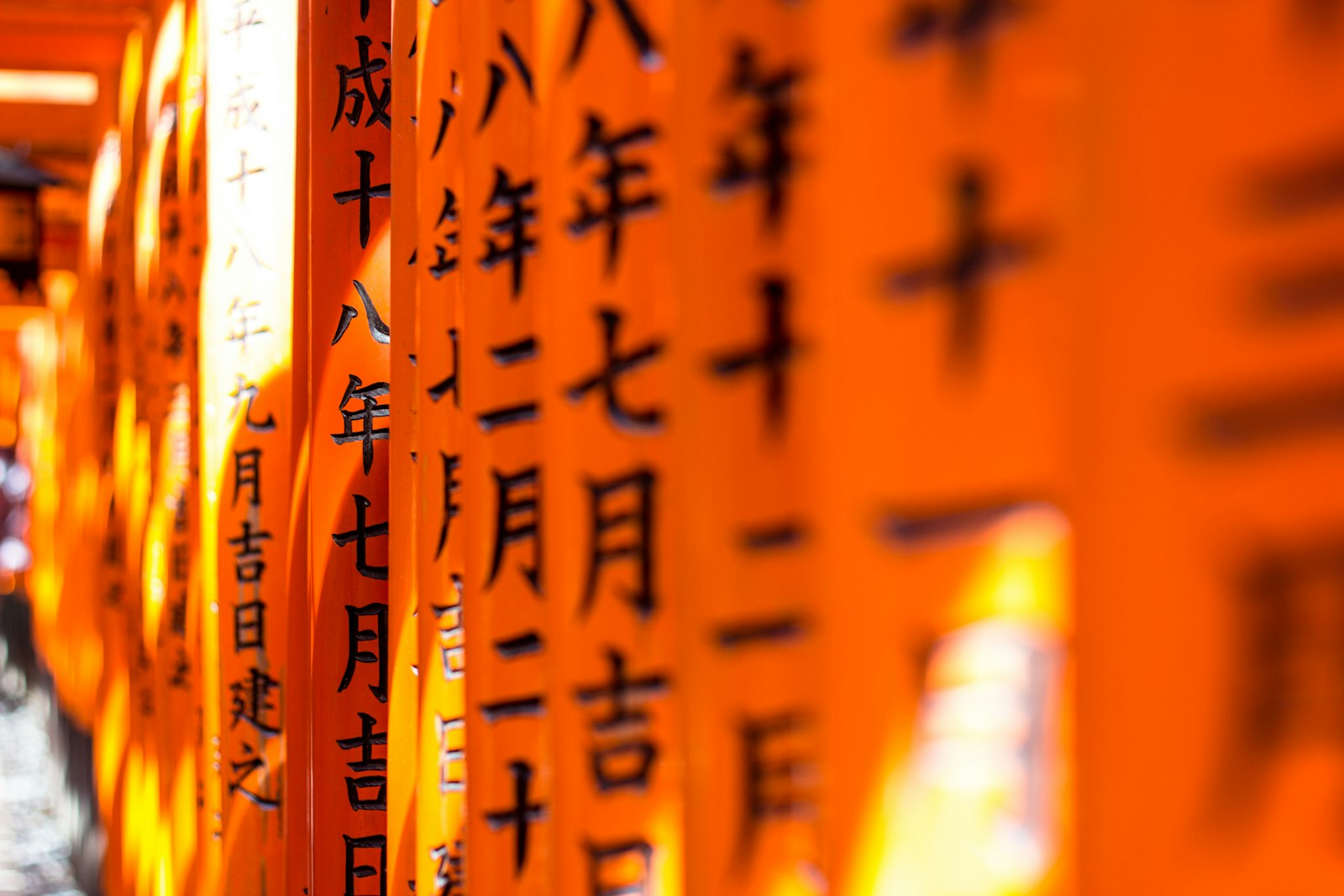
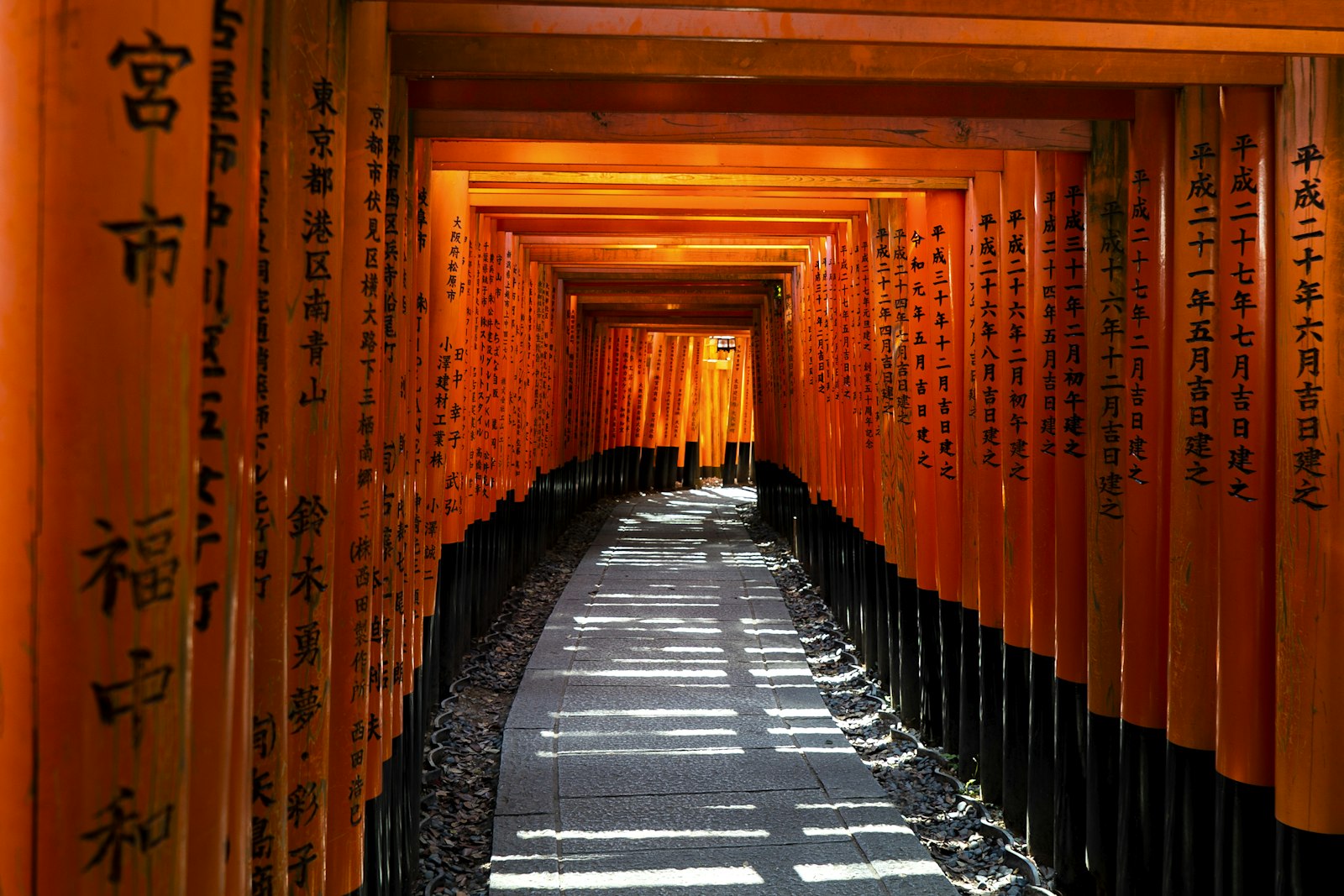
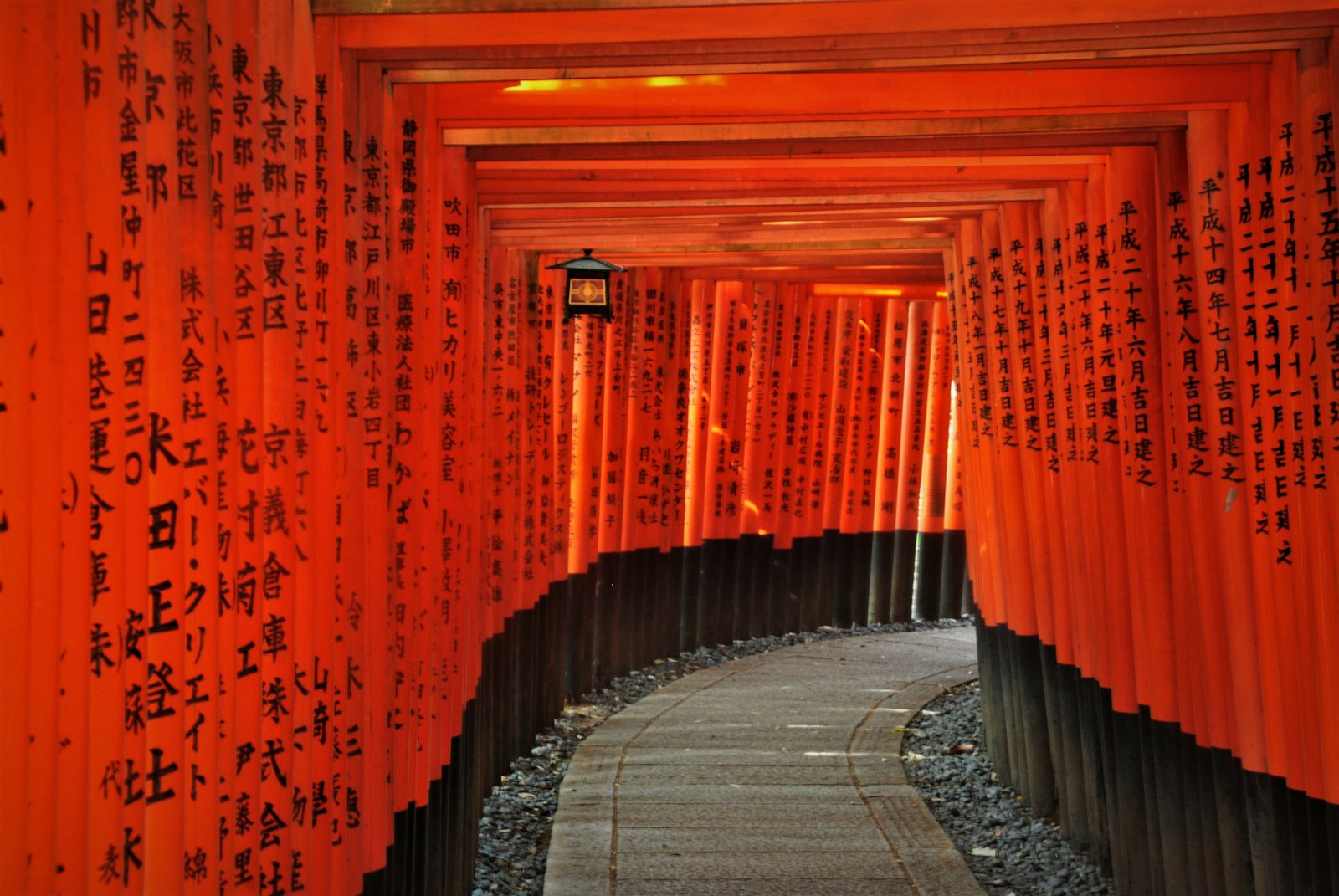
Fushimi Inari is not one gate but thousands. The senbon torii — “thousand torii” — form vermilion tunnels winding up the wooded slope of a sacred mountain, and walking through them is a genuinely strange, hypnotic experience. The crowds at the base are heavy; the solution is simple. Keep climbing. Twenty minutes up, most visitors have turned back, and you have the gates and the forest largely to yourself. Go at dawn if you can manage it.
Meiji Jingu, Tokyo
The great wooden torii at Meiji Jingu are unpainted, vast, and unexpectedly moving. Built from cypress, weathered to a soft grey, they stand at the entrance to a dense forest that was planted by hand a century ago in the middle of Tokyo. Walking the gravel approach from the gate to the shrine, with the city’s noise fading behind you, is one of the best transitions in any Japanese city — and it is free, central, and open daily.
Hakone Shrine, Lake Ashi
The Peace Torii at Hakone rises directly from the edge of Lake Ashi, framed by forest and, on a clear day, by Mount Fuji beyond. It has become one of the most sought-after photographs in the country, which means a queue forms along the small jetty to stand beneath it. Arrive early. The setting — water, mountain, mist — rewards the patience, and Hakone’s hot springs give you every reason to make a night of it.
Heian Shrine, Kyoto
Heian Jingu’s torii is one of the largest in Japan, a colossal vermilion gate straddling the approach road well before you reach the shrine itself. It is a relatively modern shrine, built in 1895, and the scale is deliberately imperial. Standing under it, with traffic passing through, is a lesson in just how big these structures can be — and a useful contrast to the older, humbler gates elsewhere in the same city.
How to Pass Through a Torii Correctly
None of this is complicated, and no one will scold a visitor who gets it wrong. Still, a few small habits will make your visit more respectful, and Japanese visitors will notice and appreciate them.
The Bow
A short, slight bow before passing under the gate, and again on the way out as you turn back to face the shrine, is the standard gesture. It takes a second. Think of it as a greeting and a thank-you to the kami whose ground you are entering and leaving. You will see locals do it almost without thinking.
Walk to the Side, Not the Centre
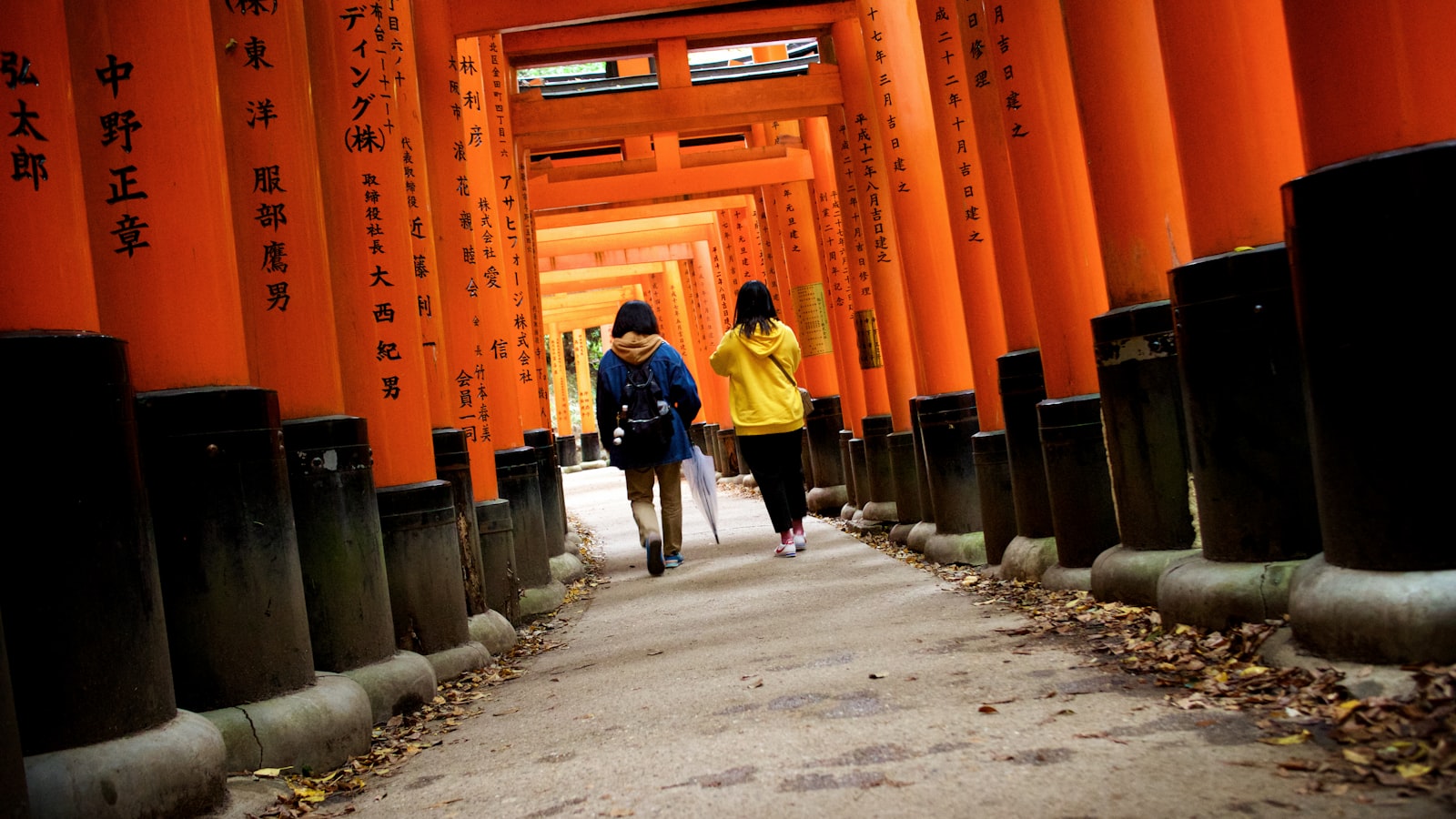
The centre of the path through a torii — the seichu — is considered the route of the kami, not of people. The convention is to walk slightly to one side rather than straight down the middle. It is a quiet courtesy, easy to observe once you know it, and it explains why you will rarely see a Japanese visitor stride dead-centre through a shrine gate.
Photography Manners
Photographing torii is welcome almost everywhere, and these gates were built to be looked at. The exceptions are worth respecting: areas marked off-limits, the inner sanctuaries of some shrines, and ceremonies in progress. Be mindful, too, that at popular gates like Hakone or Fushimi Inari, others are waiting for the same shot — take it and move on rather than staging a long session in the frame.
Torii Gates: Common Questions
Why are some torii built in rivers or the sea? A gate standing in water marks a shrine whose sacred precinct includes the water itself, or one positioned so that worshippers historically approached by boat. At Itsukushima, the island was considered so sacred that commoners could not set foot on it directly, so the gate was placed in the sea as the true entrance. The effect — a threshold with no solid ground beneath it — is deliberate.
Does each gate at Fushimi Inari really bear a donor’s name? Yes. The thousands of torii at Fushimi Inari are donated, most by businesses and individuals seeking the favour of Inari, the deity of rice, prosperity, and commerce. Turn around as you climb and you will see the black inscriptions on the back of each gate: the donor’s name and the date. The whole mountain is, in effect, a ledger of prayers for good fortune.
Can I walk out to the Miyajima torii at low tide? Yes, when the tide is out you can walk across the flats to the base of the Itsukushima gate and stand beneath it. Check a tide table before you go, because the timing changes daily and the two states — gate in water, gate on land — are genuinely different experiences. Many travelers try to catch both in a single overnight stay.
Related Tours

Conclusion
The torii rewards a little knowledge out of all proportion to the effort. Once you understand that it marks a threshold, that its colour and material carry meaning, and that there is a courteous way to pass through it, every shrine you visit afterward reads differently. The gate stops being a backdrop and becomes the point.
Plan Your Japan Trip with Local Experts
Our team has guided 40,000+ travelers across Japan. Tell us about your trip and we’ll get back to you within 24 hours.