In this article:
- What Yasaka Shrine Is, and Why Gion Grew Around It
- Walking the Grounds: Gates, Lanterns, and the Smaller Shrines
- When to Go: Early Morning, After Dark, and the Festival Calendar
- Visiting Well: Access, Etiquette, and Walking On Into Gion
- Yasaka Shrine: Frequently Asked Questions
Introduction
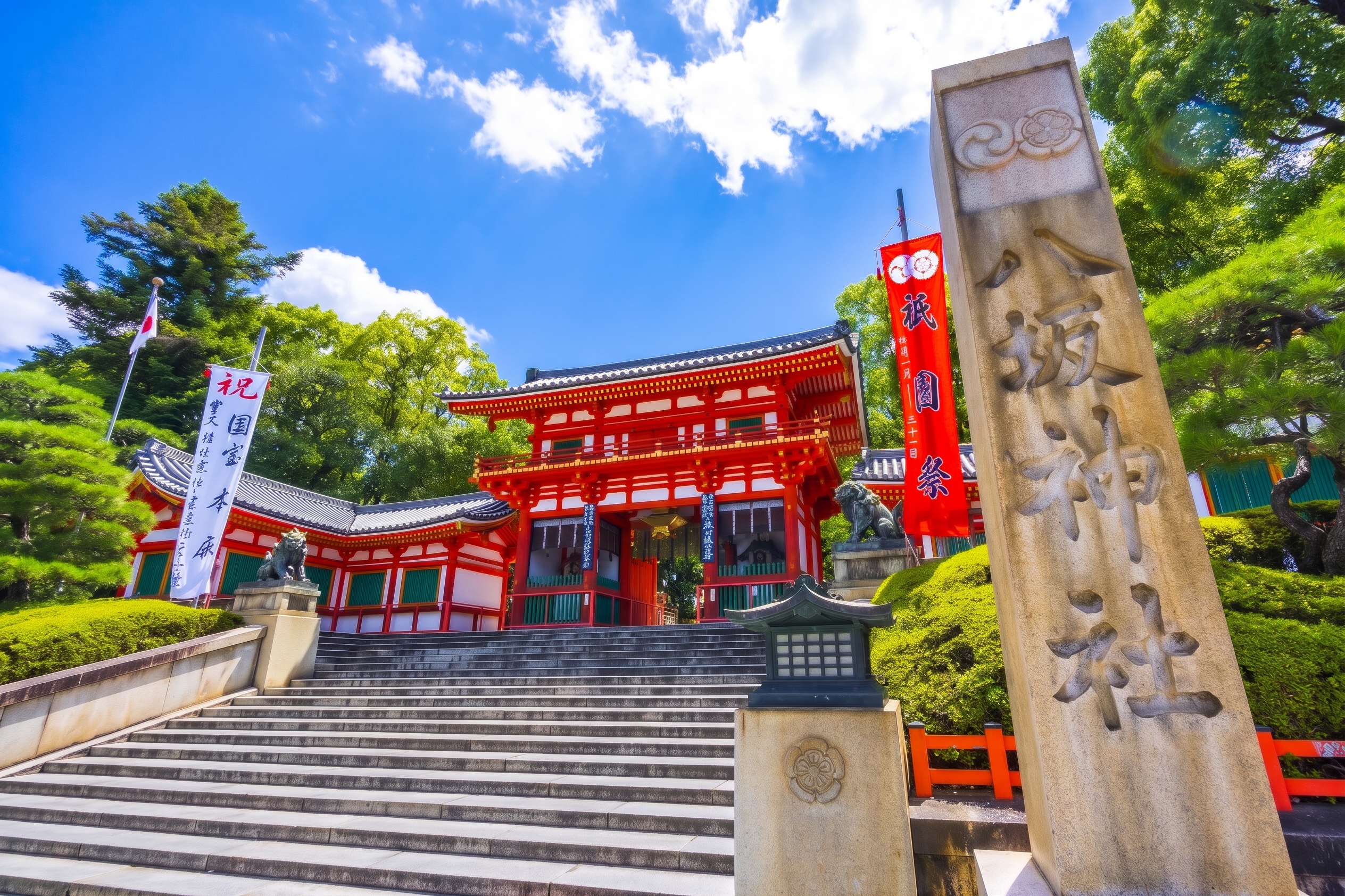
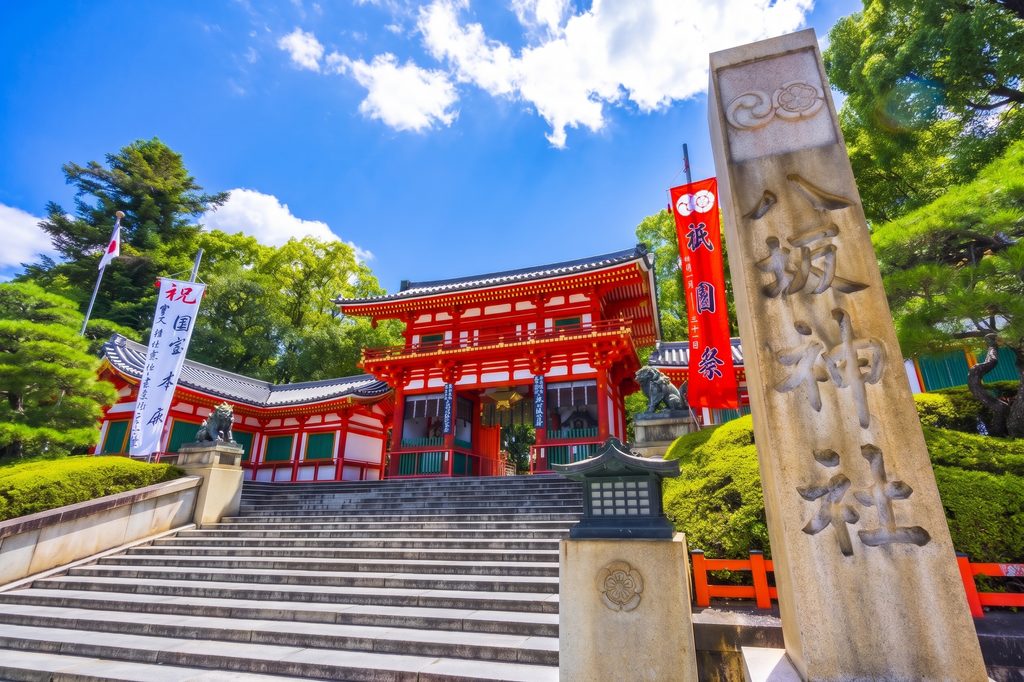
Stand at the Shijo-Kawaramachi crossing and look east, and the street ends in a vermilion gate. That gate belongs to Yasaka Shrine. Nearly everything between you and the gate grew up because the shrine was there first. This includes the teahouses, the lantern-hung restaurants, and even the very name Gion.
Most visitors treat Yasaka Shrine as a quick stop between Kiyomizu-dera and dinner. It is free, it never closes, and a lap of the grounds takes fifteen minutes. That is exactly why it is so often experienced poorly. Visitors arrive at two in the afternoon in the middle of a crowd. They often have no idea what the buildings actually are.
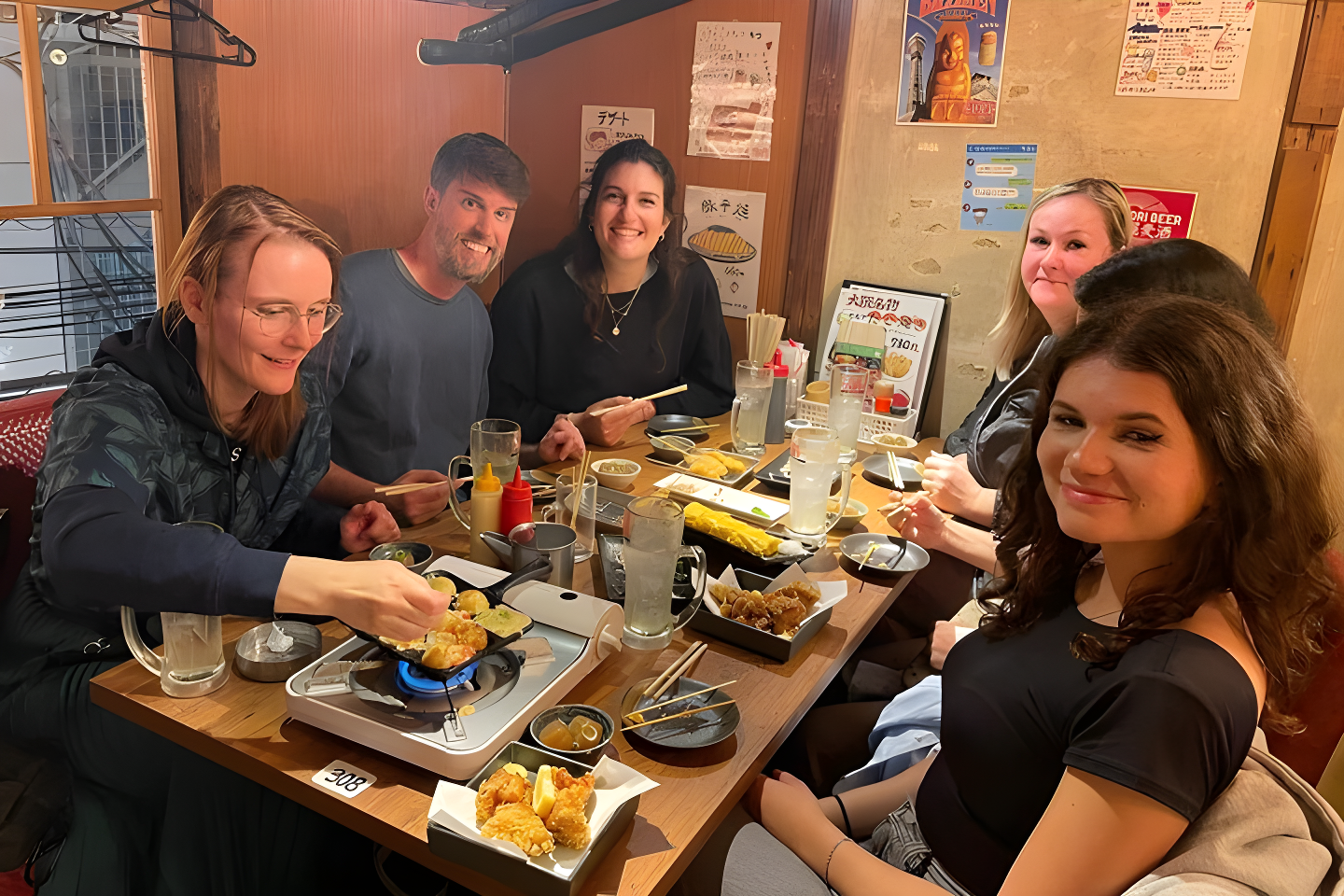
We begin our Gion evening food tour here after dark, when the lanterns are lit. This is the one place where the whole district makes sense all at once. What follows is a guide on how to read the shrine and the best time to go. You will also learn how to walk from here into the rest of Gion without missing what is right in front of you.
What Yasaka Shrine Is, and Why Gion Grew Around It
Yasaka Shrine is one of the oldest and most important Shinto shrines in Kyoto. It is also the shrine that gave the surrounding district its name, and to understand Gion you have to start here.
From Gion Shrine to Yasaka Shrine
Shrine records place its origins in 656, more than a century before Kyoto became the capital. For most of its history it was known as Gion Shrine, and the district outside its gate took that name, first as a precinct of pilgrims and stalls, later as the entertainment quarter it became in the Edo period.
The name changed in the early Meiji era, when the government forced the separation of Shinto and Buddhism. Gion Shrine had long been a mixed institution, and the Buddhist-associated name went. Locals still say “Gion-san” when they mean the shrine. You will hear it from taxi drivers.
Susanoo and the Plague Festival
The principal deity is Susanoo-no-Mikoto, the storm god of Japanese mythology, enshrined with his consort Kushinadahime and their eight children. Before the Meiji reforms the shrine worshipped him in a syncretic form tied to protection from disease.
That association is the key to everything else. In 869, during a severe epidemic, rites were held to appease the spirits blamed for the sickness. Those rites became the Gion Matsuri, and the shrine has been the city’s protector against plague ever since. When you see the floats in July, you are looking at more than eleven centuries of public health ritual.
A Main Hall Under One Roof
The main hall is built in a style called Gion-zukuri, in which the inner sanctuary and the worship hall sit beneath a single sweeping roof. Most shrines separate the two. Here they merge into one long, low building that reads almost like a temple from a distance.
In December 2020 the main hall was designated a National Treasure. The present structure dates from the mid-seventeenth century. Walk around its side rather than stopping at the front: the length of the roof and the depth of the eaves only become clear from an angle.
Inside, you will not be admitted beyond the worship area unless you have booked a prayer ceremony. That is normal for a working shrine. Still, from the front you can often see priests moving through the inner hall, and if a ceremony is underway the sound of the drum carries across the whole precinct.
Walking the Grounds: Gates, Lanterns, and the Smaller Shrines
The precinct is compact, but it holds more than most visitors notice. Give it half an hour rather than ten minutes and the shrine starts to explain itself.
The West Gate Is Not the Main Gate
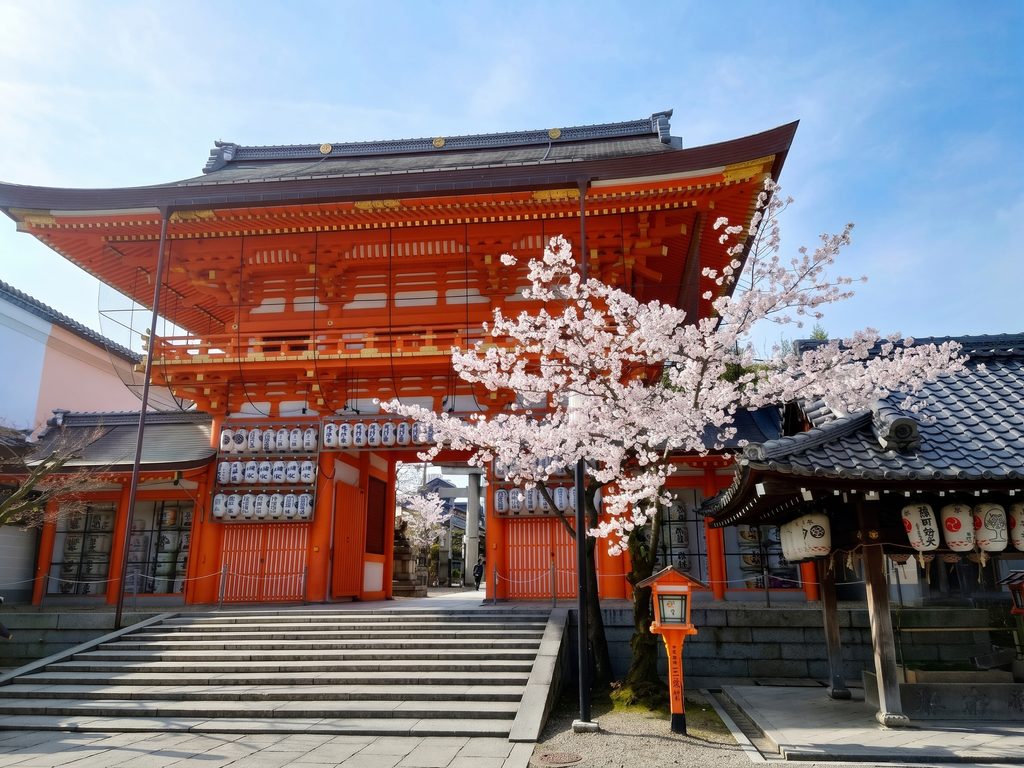
The vermilion Nishiromon, the west gate at the top of the stone steps on Higashioji-dori, is the image on every postcard. It is also the oldest structure on the grounds and an Important Cultural Property. Even so, it is the side entrance.
The formal approach is the Minamiromon, the south gate, which connects to Shimogawara-dori. The portable shrines leave through it during the Gion Matsuri. If you have time, walk in through the south gate at least once. The axis of the precinct, gate to stage to main hall, only lines up from that side, and the approach is much quieter than the steps off Shijo.
The Dance Stage and Its Lanterns
In the middle of the grounds stands the Buden, an open-sided dance stage used for ceremonies, sacred dance, and weddings. During the Gion Matsuri the portable shrines rest here.
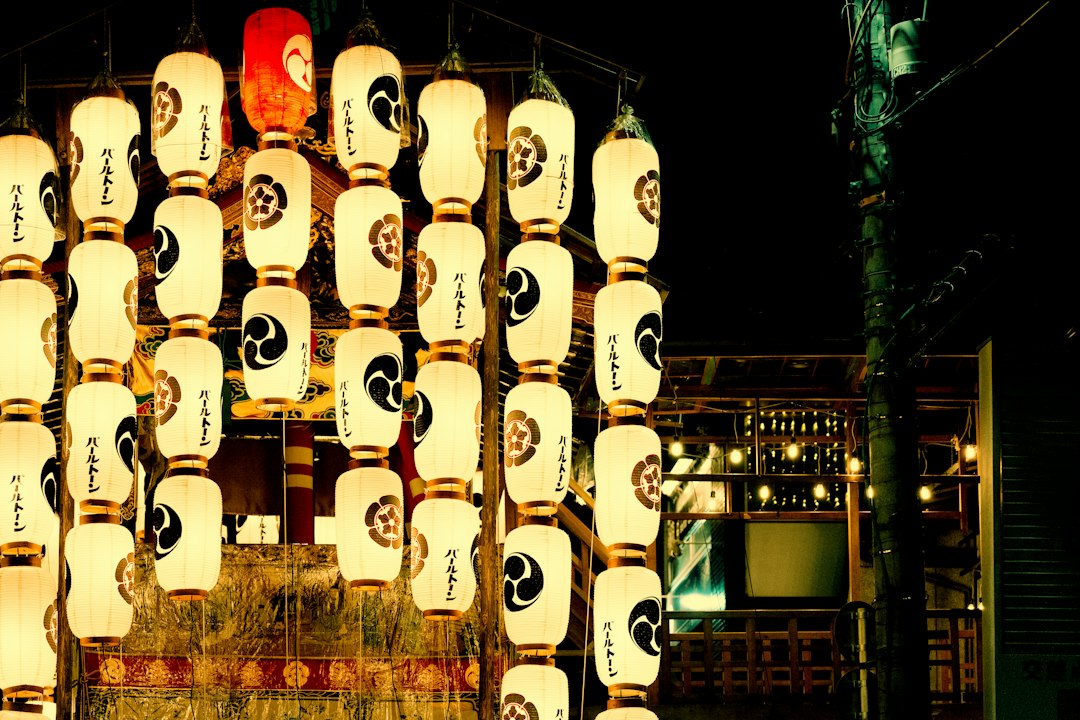
Look up at the lanterns hanging around its eaves. Each carries the name of a donor: okiya where maiko live and train, teahouses, restaurants, and other businesses in the district. That ring of names is the clearest map you will get of how closely the shrine and the geisha quarter are tied together. After dark, when they are lit, it is the single best view in the precinct.
Utsukushi-gozensha and the Beauty Water
East of the main hall is Utsukushi-gozensha, a small sub-shrine dedicated to three goddesses associated with beauty. It has long been visited by geiko and maiko, and today by a steady line of young women from all over Japan.
Beside it is a spring known as the beauty water. The custom is to dab a few drops on your skin before praying. It is not drinking water. Nearby, Okuninushi-sha is visited for matchmaking and good connections, and the north-facing Ebisu shrine for business prosperity. None of these takes more than a minute, and they show how a city shrine functions day to day, as a place people come with specific requests.
Expert Tip
The amulet office keeps fixed hours, roughly 9:00 to 17:00, even though the grounds are open all night. If you want a goshuin stamp or an omamori, visit in daylight. Come back after dark for the lanterns, when there is nothing to buy and far fewer people.
When to Go: Early Morning, After Dark, and the Festival Calendar
Timing changes Yasaka Shrine more than almost any other site in Kyoto. The grounds are open 24 hours, admission is free, and the experience at 7:00 has very little in common with the one at 14:00.
Morning Versus Night
Early morning is for the buildings. Before 8:00 the precinct belongs to priests sweeping gravel and office workers stopping to bow on their way past. You can stand in front of the main hall without anyone in your photographs, and the light falls low across the vermilion.
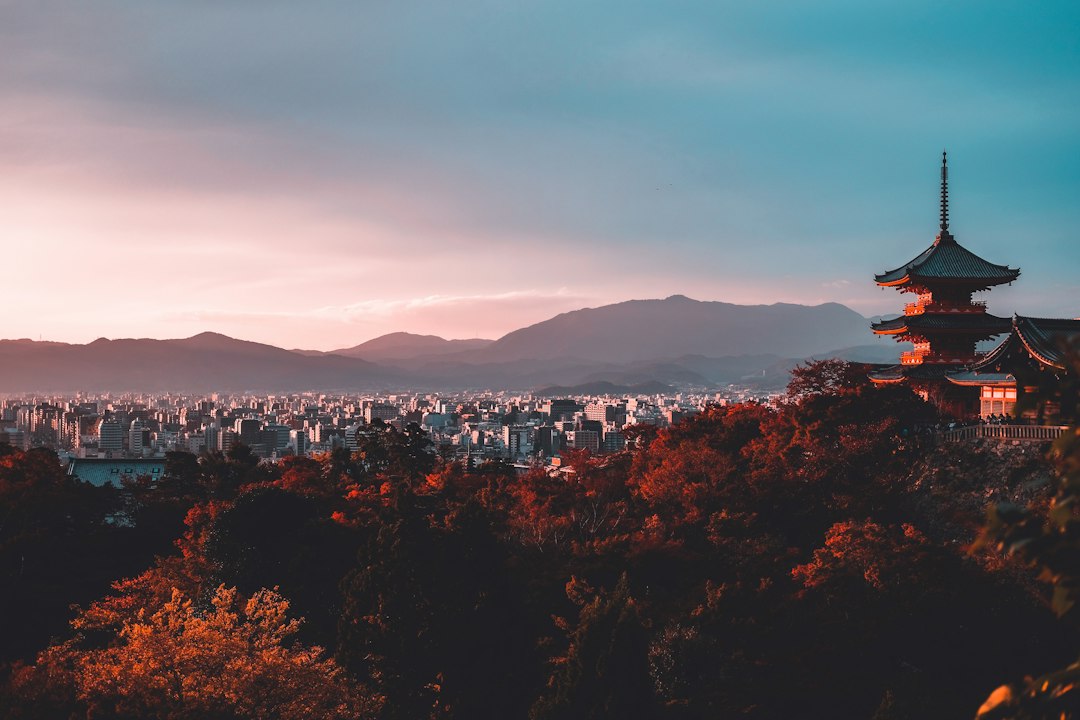
Night is for atmosphere. Once the stage lanterns are lit, the shrine becomes the brightest point at the top of Shijo-dori, and the walk down into Gion begins in the right mood. We would choose night over midday every time. Midday, in our experience, is when the shrine is at its least rewarding: tour groups, rental kimono photo sessions, and stalls, with none of the quiet that makes the place legible.
Season shifts this further. On a cool evening in late October or November the stone underfoot is dry, the trees of Maruyama Park are starting to turn, and the lanterns read warmer against an early dusk. In August the same walk at 19:00 is still hot enough that you will want to keep moving. That said, even in high summer the shrine after dark is more comfortable than any hour in the middle of the day.
July and the Gion Matsuri
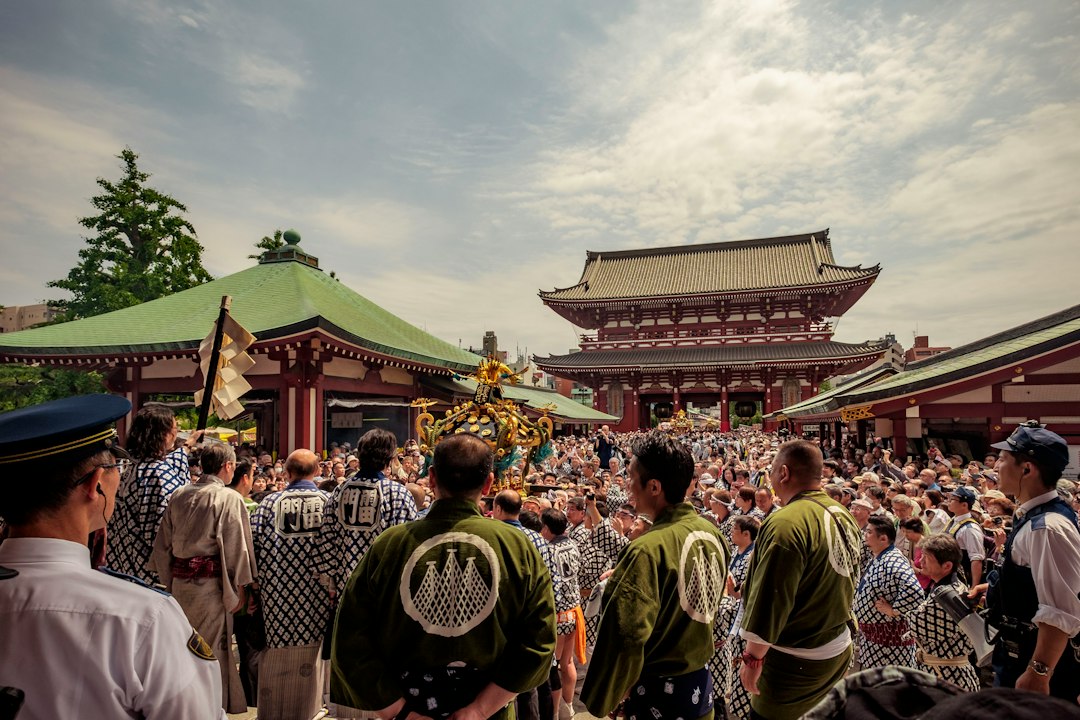
The Gion Matsuri is the shrine’s festival, and it runs for the whole of July. The headline events are the Yoiyama evening on July 16, when the floats stand lit in the streets, and the Yamaboko Junko float processions on the mornings of July 17 and July 24. On the nights of the 17th and 24th, three portable shrines carry the deities out to a temporary shrine downtown and back again.
These are some of the most crowded days of the year in Kyoto. Hotels fill early, and the heat in mid-July is heavy. If you are planning a July trip, our guide to visiting Japan in July covers the festival week in more detail. For the shrine itself, the quieter days early in the month are often the better visit.
New Year, Setsubun, and Spring
On New Year’s Eve the shrine lights the okera fire, kindled earlier in the week by the chief priest, and visitors carry the flame home to bring luck into the new year. Hatsumode, the first shrine visit of the year, then fills the grounds for days. Setsubun on February 2 and 3 brings dances by geiko and maiko from Kyoto’s hanamachi and the scattering of beans.
Spring is the other peak. Maruyama Park opens directly behind the shrine and is among the city’s best-known cherry blossom spots, so in early April the crowds pass through the shrine on their way to it. Expect the same numbers as July, without the heat.
Visiting Well: Access, Etiquette, and Walking On Into Gion
Getting to Yasaka Shrine is easy. Getting the most out of the half mile around it takes a little more planning.
Getting There
The nearest station is Gion-Shijo on the Keihan Line, about five minutes on foot along Shijo-dori. Kyoto-Kawaramachi on the Hankyu Line is a few minutes further and a good choice if you are coming from Osaka-Umeda. From Kyoto Station, city bus 206 stops at Gion, about a minute’s walk from the west gate, though the buses in this part of the city are often full.
On foot, the shrine connects naturally with southern Higashiyama. Many travelers walk down from Kiyomizu-dera through Ninenzaka and Sannenzaka and arrive through Maruyama Park, which takes around 20 to 30 minutes and is the better approach.
At the Main Hall
Shrine etiquette here is the same as anywhere in Japan, and nobody expects a visitor to perform it perfectly. Bow once before passing under a torii, rinse your hands and mouth at the water basin if you wish, and at the main hall drop a coin, ring the bell, then bow twice, clap twice, and bow once more.
If the distinction between a shrine and a temple is still fuzzy, our guide to shrines and temples sets it out. At Yasaka the difference matters, because the shrine spent most of its history as a mixed Shinto and Buddhist institution and only became purely Shinto in the Meiji era.
From the Shrine Into Gion
Walk out through the west gate and down Shijo-dori, and Hanami-koji opens on your left within a few minutes. This is the order in which the district makes sense: the shrine first, then the quarter that grew in its shadow. Our full guide to Gion picks up from that point.
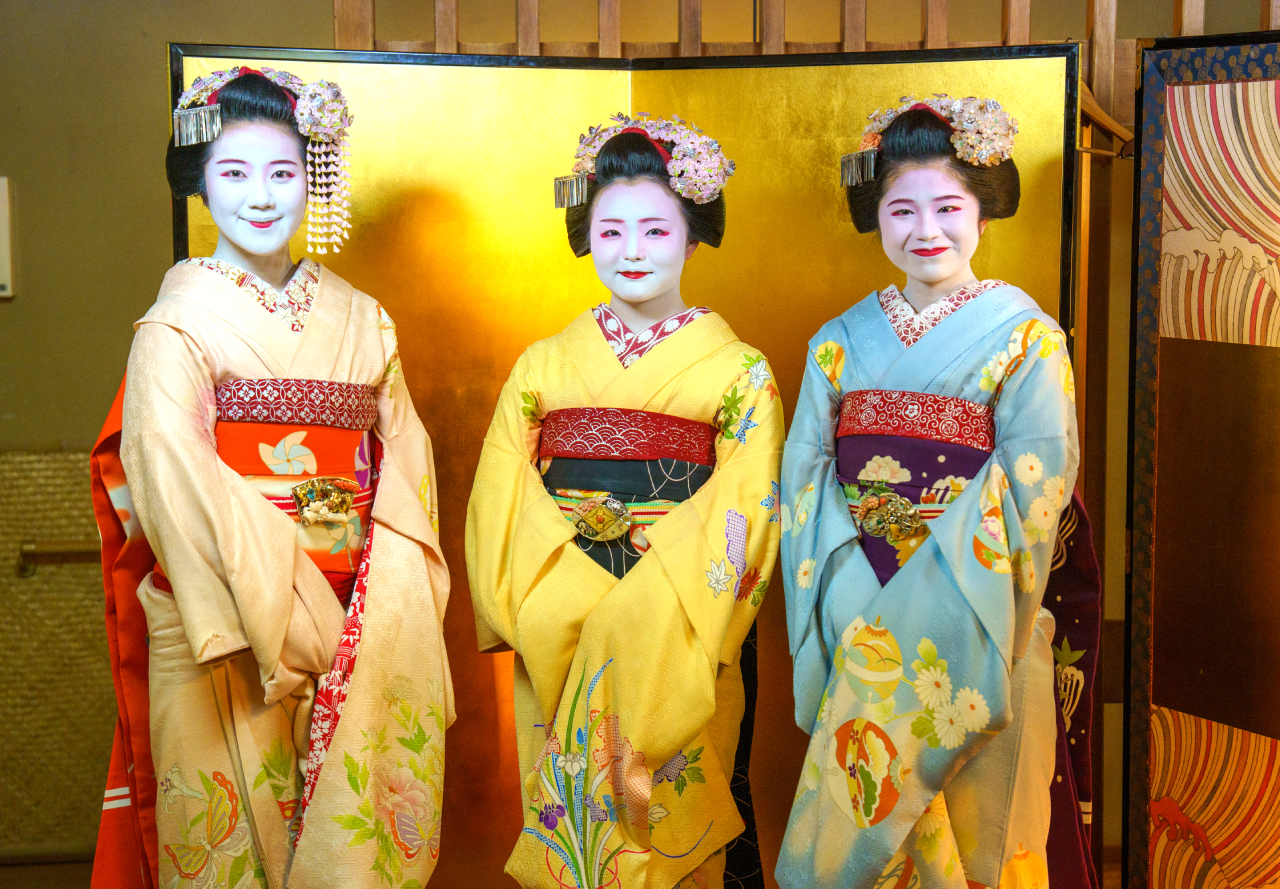
Gion is a living neighborhood, not a set. Photographing maiko on the street without permission is not allowed, and signs at several private lanes ask visitors not to enter. On our Gion food tour we meet at a convenience store a few steps from the shrine, walk up to the lit stage first, and only then head into the restaurants. On the shorter maiko meeting tour, the first hour is a walk through these same lanes before you sit down with a maiko and ask her what you like.
Expert Tip
Come in through Maruyama Park and the east side of the precinct, then leave by the west gate onto Shijo-dori. The view from the top of those steps, looking straight down the length of Shijo toward the Kamo River, is the best framing of how the shrine anchors the city, and very few people stop to take it in.
Yasaka Shrine: Frequently Asked Questions
Is Yasaka Shrine free, and is it open at night?
Yes to both. The grounds are open 24 hours a day and there is no admission fee. The amulet office, where omamori and goshuin stamps are sold, keeps daytime hours of roughly 9:00 to 17:00. The stage lanterns are lit in the evening, and night is when we prefer to visit.
How long should I spend at Yasaka Shrine?
Most visitors spend 15 to 20 minutes. We suggest 30 to 45: enough to enter by one gate and leave by another, walk around the main hall, and stop at the smaller shrines. If you are continuing to Maruyama Park or down into Gion, it fits naturally into a longer walk.
Is Yasaka Shrine worth visiting outside the Gion Matsuri?
Yes, and in some ways more so. During July the shrine is the backdrop to a citywide event and hard to see clearly. On an ordinary evening in October or November, with the lanterns on and a few locals stopping to pray on their way home, you see the shrine as the neighborhood uses it.
Related Tours
Conclusion
If you only have one slot for Yasaka Shrine, make it the evening. The lanterns, the quiet, and the walk down Shijo-dori into Gion give you the shrine as the district actually experiences it. You see it as an anchor, not as an item to tick off between temples.
If you have two, add an early morning. Arrive before 8:00, enter by the south gate, walk the length of the main hall, and stop at Utsukushi-gozensha before the first tour group arrives. Seen in both lights, it stops looking like a quick photo stop at the end of a shopping street and starts to look like what it has been for more than a thousand years: the reason Gion is there.
Plan Your Japan Trip with Local Experts
Our team has guided 40,000+ travelers across Japan. Tell us about your trip and we’ll get back to you within 24 hours.