In this article:
- What Kyoto Ramen Actually Tastes Like
- Takabashi: Two Old Shops Beside Kyoto Station
- Ichijoji and Kitashirakawa: The Student Ramen Belt
- Kyoto Station Ramen Koji and Eating Ramen Downtown
- Kyoto Ramen: Frequently Asked Questions
Introduction
Most people arrive expecting Kyoto ramen to be delicate. It is not.
The city that serves you a single piece of yuba on a lacquer tray at lunch also produces some of the thickest, darkest, most unapologetic bowls of noodles in Japan. The broth at one of the oldest shops by Kyoto Station is close to black. The house style in the university district floats a layer of pork back fat on top. Kyoto’s most famous export, Tenkaippin, serves a soup so dense the company itself describes it as a soup you eat rather than drink.
We think this contrast is one of the more interesting things about eating in Kyoto. Travelers who spend the day on temples and pickles, then sit down at eleven at night to a bowl of kotteri ramen, tend to come away with a fuller picture of the city than the ones who only eat what the guidebooks call Kyoto cuisine. What follows is how the styles differ, where they come from, and where to find each one without wasting an evening in the wrong queue.
What Kyoto Ramen Actually Tastes Like
Kyoto ramen is less a single recipe than a family of three related styles. They share a preference for richness and for soy sauce, and they diverge on what gives the soup its body.
Not the City You Expect
Kyoto’s formal cooking is built on kombu and bonito dashi, light soy, and restraint. Ramen here developed on a different track entirely. It grew out of postwar food stalls, workers’ canteens near the station, and the late-night appetites of a large student population in the north of the city.
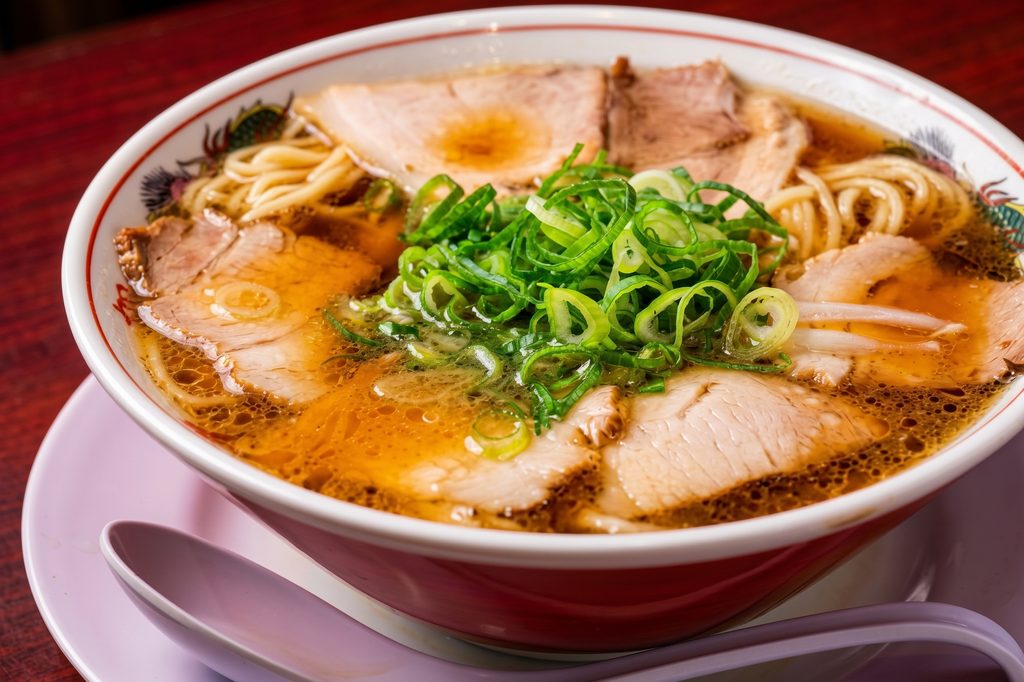
That history explains the flavor. These were bowls made to fill people up cheaply, and the richness was the point. Still, you will usually find a generous handful of sliced green onion on top, which cuts through the fat and is the one visibly local touch most bowls share.
Soy, Pork Bone, and Back Fat
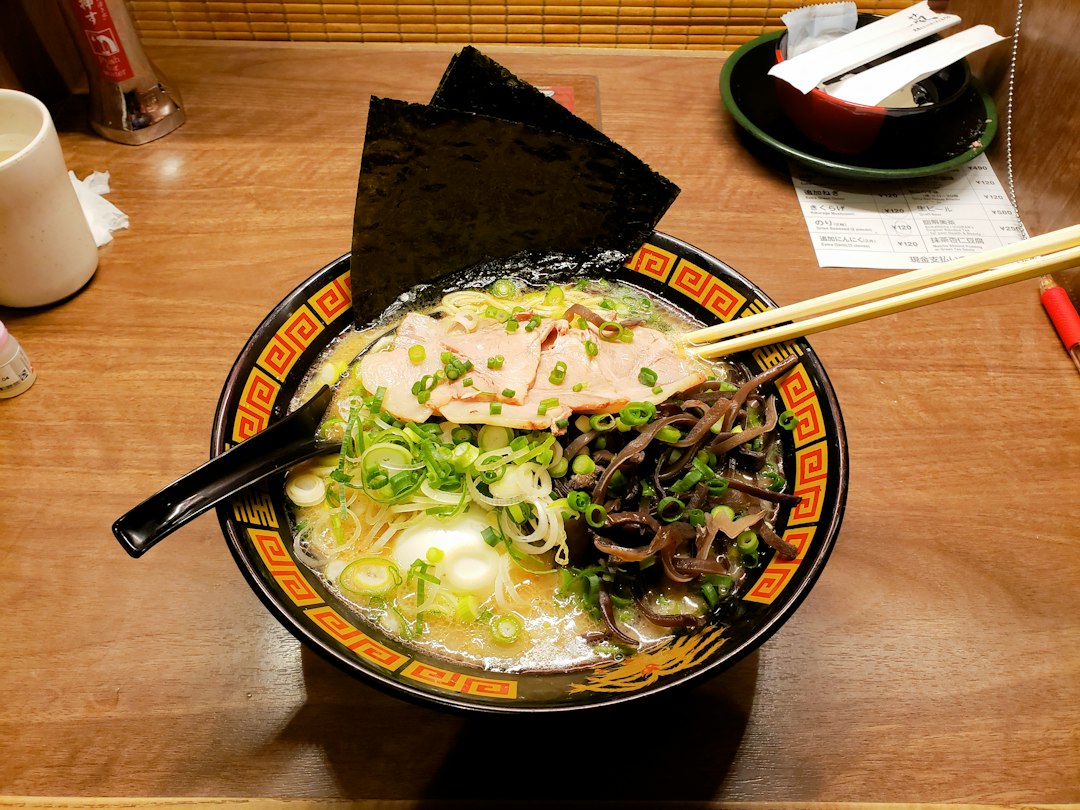
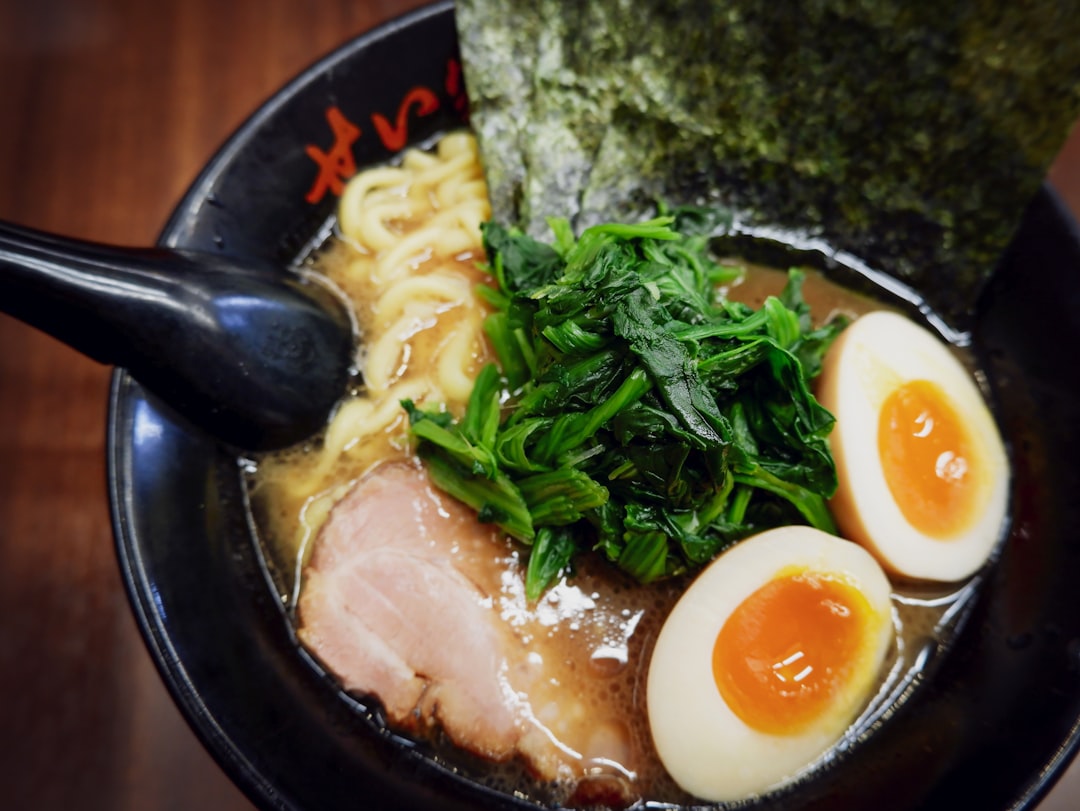
The first two styles are both soy-based. The older one, associated with the Takabashi area just east of Kyoto Station, pairs a soy sauce tare with pork and chicken bone stock. Depending on the shop, the result ranges from a clear, amber soup to one that is nearly opaque and dark as coffee.
The second style comes from Kitashirakawa, near Kyoto University. Here the soy broth is finished with seabura, pork back fat, which is strained or chopped over the bowl so that small white beads float on the surface. It sounds heavier than it tastes. The fat carries the soy flavor and keeps the soup hot, and the bowl is usually less salty than it looks.
Kotteri: The Soup You Eat
The third style is kotteri, and it is the one people outside Kyoto associate with the city. Tenkaippin’s version is built on chicken bones and vegetables simmered for a long time until the broth turns thick, almost like a gravy. It clings to the noodles, and by the end of the bowl there is not much soup left to leave.
This is not a subtle bowl, and we would not order it on a hot afternoon before a temple visit. Late at night, after a few drinks, it makes more sense than anything else in the city.
Takabashi: Two Old Shops Beside Kyoto Station
A few minutes’ walk east of Kyoto Station, two ramen shops sit almost next door to each other and have done so for decades. Between them they define what many people in the city mean by Kyoto ramen.
Shinpuku Saikan and the Black Broth
Shinpuku Saikan traces its history to a food cart in 1938, which makes it one of the oldest ramen businesses in the city. Its soup is the darkest you will see in Kyoto, a near-black soy broth over firm noodles and thin slices of pork.
The color looks alarming, although the taste is rounder and less salty than you would guess. The shop is known as much for its yakimeshi, a fried rice stained deep brown with the same soy sauce. Order both and share them. That combination is the real reason people come.
Honke Daiichi Asahi and the Morning Queue
Next door, Honke Daiichi Asahi began as a general diner in 1947 and turned into a ramen specialist in the following decade. Its bowl is the lighter of the two: a clear soy and pork bone soup, straight medium-thin noodles, plenty of pork, and a pile of sliced green onion.
The shop opens at six in the morning and stays open past midnight, according to its own site, and closes on Thursdays. That early opening is the practical advantage. A queue forms at lunch and in the evening, while a bowl at seven in the morning, before the first train out to Nara or Fushimi, is often a short wait.
Choosing Between Them
If you only have time for one, pick based on appetite. Daiichi Asahi is the easier bowl for a first taste of Kyoto ramen. Shinpuku Saikan is the more distinctive, and the fried rice makes it a proper meal.
We usually suggest the Takabashi pair on arrival day. Most travelers reach Kyoto by Shinkansen, drop bags at a hotel near the station, and have an awkward hour before check-in. That hour is exactly the right size for a bowl of ramen two blocks away.
Expert Tip
Both Takabashi shops are small and turn tables quickly, so the queue moves faster than its length suggests. Go as a pair or alone rather than as a group of five; counters and small tables seat two much more easily, and larger groups often wait while pairs behind them are seated first.
Ichijoji and Kitashirakawa: The Student Ramen Belt
The northeast of Kyoto, around Kyoto University and up toward Ichijoji, has the densest concentration of ramen shops in the city. Locals call the stretch of road through Ichijoji a ramen street, and more than a dozen shops sit within walking distance of the station.
Getting There on the Eizan Line
Ichijoji is on the Eizan Electric Railway, a small local line that starts at Demachiyanagi, where the Keihan line from Gion ends. The ride takes a few minutes. Most of the shops are within a short walk of the station.
Beyond that, this part of Kyoto rewards a half day. Shisendo, a quiet hermitage with a raked sand garden, is up the hill from the ramen street, and Ginkakuji and the Philosopher’s Path are not far to the south. We like to pair a morning at Shisendo with an early lunch in Ichijoji, before the lines start.
Tenkaippin’s Original Shop
Tenkaippin started in 1971 as a food stall in Kitashirakawa and now operates more than two hundred shops across Japan. The original shop is still in Kitashirakawa, at the southern end of the ramen belt.
Eating at a chain’s head shop can feel like a novelty. In this case it is worth doing, because the kotteri soup at the original is the reference point for every rich bowl in the neighborhood. Order it once, standard, before you start experimenting with the lighter assari version or extra toppings.
Masutani and the Back-Fat Bowl
Masutani, in Kitashirakawa a short walk from Kyoto University, has served soy ramen with pork back fat since the late 1940s and is generally credited as an origin of the style. It has long been a Kyoto University student haunt, and it still feels like one: fast, cheap, and without ceremony.
By contrast with Tenkaippin, the soup here is thin and clear under the fat. That makes it the better choice if you want to understand the seabura style without committing to a heavy bowl.
Kyoto Station Ramen Koji and Eating Ramen Downtown
Not every bowl needs a trip across the city. Two other options cover most travelers’ days: the ramen floor inside Kyoto Station, and the ramen that fills the gaps in an evening downtown.
Ten Regional Shops on the 10th Floor
Kyoto Ramen Koji is on the 10th floor of the Kyoto Station Building, reached through the Isetan department store and its south elevator. It houses ten shops from around Japan, and the official site lists opening hours of 11am to 10pm, with last orders at 9:30pm.
Only a few of the ten serve Kyoto-style ramen. The rest are regional: Sapporo miso, Toyama’s dark soy, Hakata tonkotsu, and others. Treat it as a sampler of Japanese ramen rather than a Kyoto experience. If you have a single evening before an early train, it is convenient. If you want Kyoto ramen specifically, walk the five minutes to Takabashi instead.
It is also, at the time of writing, one of the easier places in the city to find a plant-based bowl, since one of the tenants specializes in vegan and gluten-free ramen. Tenants rotate, so check the current list on the station building’s site before relying on it.
Ordering, Slurping, and Ticket Machines
Many ramen shops in Japan take orders through a ticket machine by the door. You insert cash, press the button for your bowl and any extras, and hand the ticket to the staff. Older machines take only notes and coins, so carry a few thousand yen in cash.
Slurping is normal and nobody will notice it. It cools the noodles and is how most people eat ramen here. You can drink the broth or leave it; both are fine. Our guide to ordering food in Japan covers ticket machines and paying in more detail.
The Late Bowl After Kiyamachi
Ramen at the end of a night out is a Japanese habit, and Kyoto’s drinking district makes it easy. Kawaramachi and Kiyamachi, the two quarters along the Takase canal where the city goes out, have ramen shops that stay open late.
On our evening bar and izakaya walk through those quarters, the last stop is a small bar on the Kiyamachi canal, and you are free to stay on after the tour ends. From there, a bowl of noodles is a short walk in almost any direction. It is, in our view, the right time of day to try kotteri for the first time. For the rest of the evening, our Kyoto nightlife guide covers where the city drinks.
Expert Tip
Plan Kyoto ramen by neighborhood, not by ranking. Put Takabashi on arrival day or before an early train, Ichijoji after a morning at Shisendo or Ginkakuji, and the rich bowls after dark downtown. Crossing the city for a single bowl costs an hour you will want back for something else.
Kyoto Ramen: Frequently Asked Questions
Is Kyoto ramen worth eating when the city is known for kaiseki and tofu?
Yes, and we would argue it is a better window into everyday Kyoto than another formal meal. Kaiseki shows you how the city presents itself. Ramen shops by the station and around the university show you how it eats on a Tuesday. One bowl at Takabashi or in Ichijoji costs a fraction of a kaiseki dinner and takes thirty minutes, so there is no real trade-off.
Is there vegan ramen in Kyoto?
There is, though not in the traditional styles. Classic Kyoto ramen is built on pork and chicken stock, and the back fat and kotteri styles are no exception. Your realistic options are dedicated plant-based shops and the vegan tenant at Kyoto Ramen Koji. For broader advice on eating plant-based in Japan, including how dashi hides in unexpected dishes, see our guide to vegetarian food in Japan.
Which Kyoto ramen shop should I try first?
For a first bowl, we suggest Honke Daiichi Asahi. The soup is clear and approachable, it is a short walk from Kyoto Station, and its early opening means you can often avoid the queue. If you want the style Kyoto is known for elsewhere in Japan, go to Tenkaippin’s original shop in Kitashirakawa and order the kotteri.
Related Tours

Conclusion
Eat Kyoto twice. Once light, in the pickles, tofu, and rolled omelette at Nishiki or in a kaiseki room, and once heavy, at a ramen counter with soy-dark broth and back fat. The two meals belong to the same city, and a trip that only includes the first leaves out half of how Kyoto actually eats.
The practical version is short. Carry cash for the ticket machines, go to Takabashi early in the morning, save Ichijoji for a day in the northeast, and leave kotteri for after dark. If you are only in Kyoto for two nights, one bowl at Daiichi Asahi on arrival and one at Tenkaippin’s original shop late on the second night will tell you most of what there is to know.
Plan Your Japan Trip with Local Experts
Our team has guided 40,000+ travelers across Japan. Tell us about your trip and we’ll get back to you within 24 hours.