In this article:
- What Laforet Harajuku Is
- Inside the Building, Level by Level
- Planning Your Visit
- Laforet in a Harajuku Day
- Laforet Harajuku: Frequently Asked Questions
Introduction
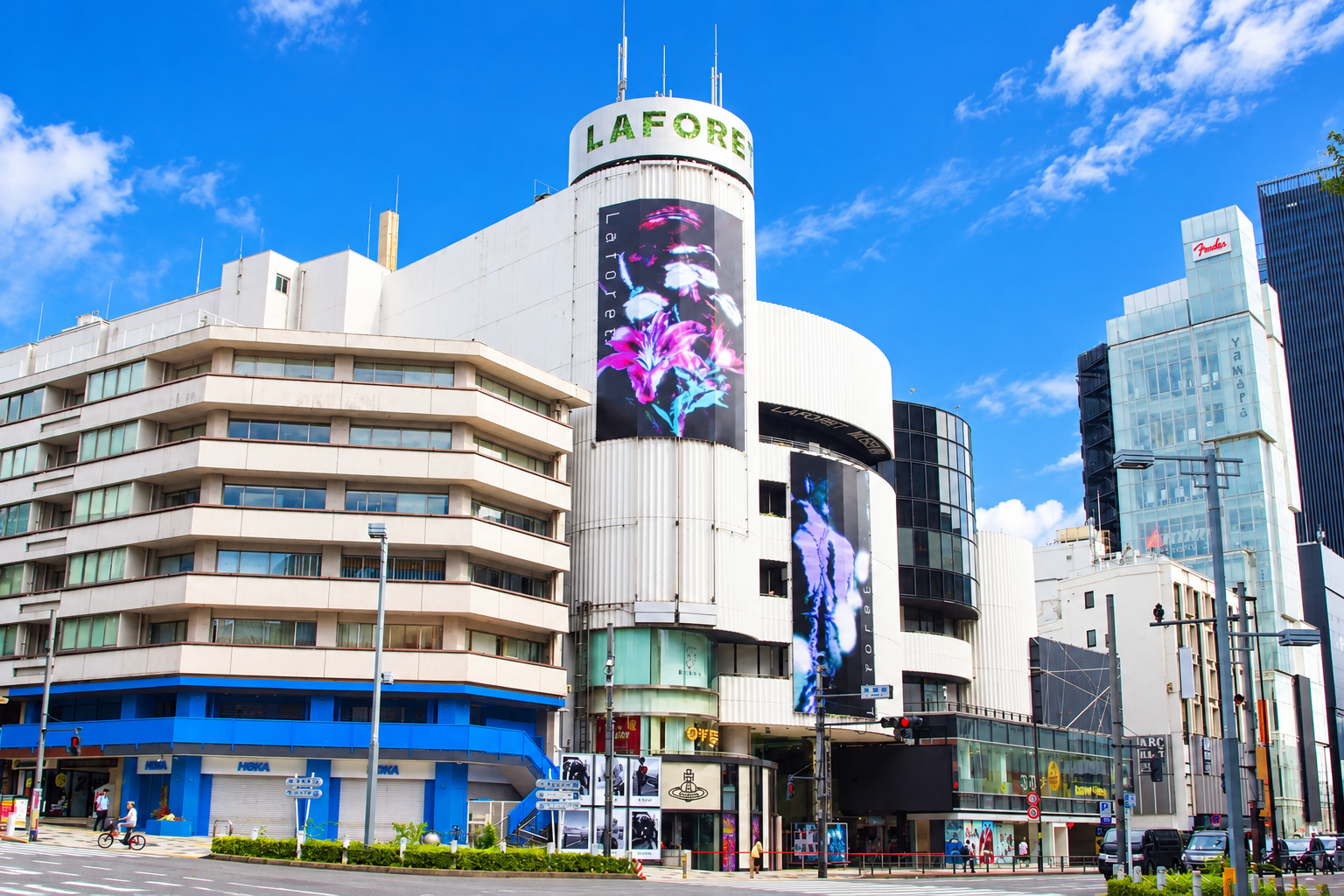
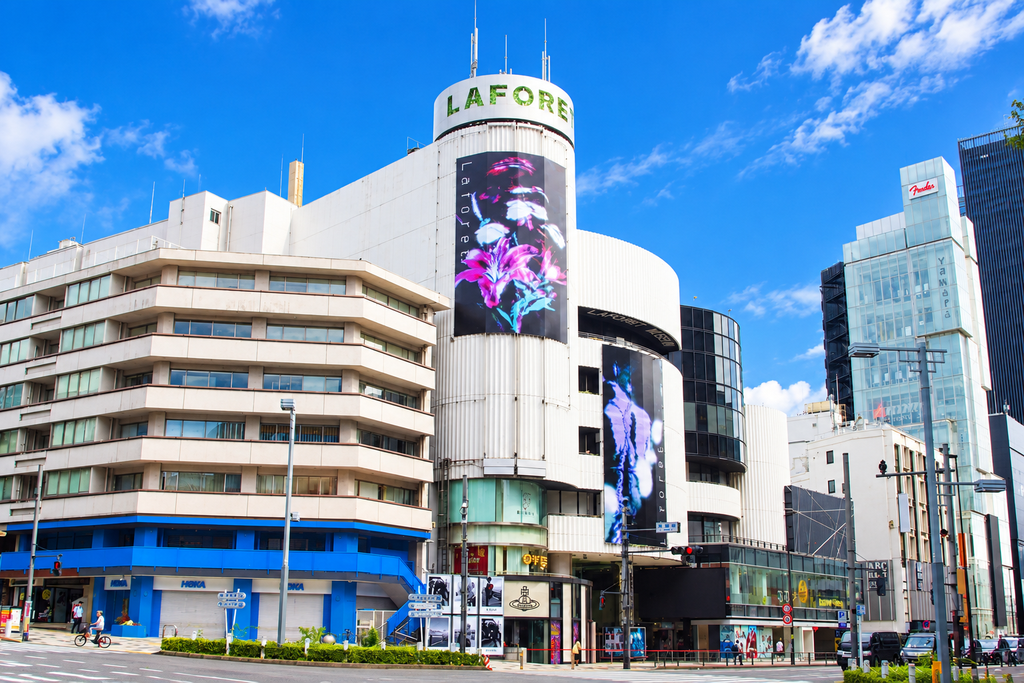
Stand at the Jingumae crossing, where Omotesando meets Meiji-dori, and the building with the cylindrical corner is Laforet Harajuku. It does not look like much from the street. Inside, though, it holds well over a hundred small shops stacked on half-floors, and it has been one of the reference points of Japanese youth fashion for close to fifty years.
Most visitors walk past it on the way from Takeshita Street to Omotesando. That is a mistake if you have any interest in how Tokyo dresses. The luxury flagships further down the avenue show you what global brands think Japan wants. Laforet shows you what young Japanese designers are actually making, often in shops no larger than a hotel bathroom.
It is also not for everyone. We have taken plenty of travelers through Harajuku who would rather spend the hour at the Ota Memorial Museum of Art, and we tell them so. What follows should help you decide which kind of visitor you are, and if Laforet is for you, how to use it well.
What Laforet Harajuku Is
Laforet is a fashion building rather than a department store. There is no single retailer running the floors, no cosmetics hall, and no basement food market. Instead the space is let to independent labels, Japanese brands, and rotating pop-up shops.
A Building Named for a Forest
The building opened in 1978, developed by Mori Building, the company later responsible for Roppongi Hills. The name is a pun. “Mori” means forest in Japanese, and “la foret” is the French for the same thing.
Part of the site was once occupied by Tokyo Central Church, and a newer church still stands directly behind the building. It is a small detail, though it says something about Harajuku: the neighborhood grew up around a shrine forest and a Protestant church long before anyone thought of it as a fashion district.
How Laforet Shaped Harajuku Fashion
The first year was not a success. The early interior was conventional and sales were weak, and the building found its identity only after architects remodeled it with an open central stairwell that let shoppers see across the floors.
From there, Laforet became the place where small labels got their start. Hysteric Glamour opened its first boutique here. Through the 1980s and 1990s the building hosted fashion shows with youth magazines, and its advertising became known for being odd on purpose. When people describe Harajuku as the birthplace of Japanese street style, a good share of that history happened inside these walls.
The building went through a quieter period in the late 1990s and early 2000s, then recovered from around 2006 as a new generation of boutiques moved in. For a broader picture of the styles you will see here, our guide to Japanese fashion styles covers lolita, gyaru, decora, and the rest.

The Half-Floor Layout
Floors at Laforet are staggered in half-levels. You will see signs for 0.5, 1.5, 2.5 and so on, connected by short flights of stairs that spiral around the center of the building.
In practice this means the building is easier to walk than it looks. You never climb a full storey at once, and you pass a new cluster of shops every few steps. However, it also makes it easy to lose track of where you are. We suggest picking a direction, usually from the bottom up, and following the spiral rather than hopping between escalators.
Expert Tip
Start in the basement and work upward. The lower levels are the most distinctive part of the building and the easiest to miss if you enter at street level and head for the escalator. By the time you reach the upper floors you will have a feel for the prices and the range, and you can move faster.
Inside the Building, Level by Level
Tenants change often, so a store-by-store list would be out of date within months. The character of each zone is more stable, and that is what is worth knowing before you go.
The Basement: Gothic and Lolita Labels
The lower levels have long been associated with gothic and lolita fashion. Expect lace, petticoats, platform shoes, and staff who are often dressed in the brand themselves. Even if you have no intention of buying, the craftsmanship on the more serious labels is worth a slow look.
Photography etiquette matters here. Many shops do not want their stock or staff photographed, and a few post signs saying so. Ask first, and accept a no without fuss.
The Middle Floors: Young Designers and Pop-Ups
Above ground, the mix broadens. You will find Japanese casual and street labels, accessory makers, vintage-inspired shops, and character goods. Prices range from inexpensive accessories to designer pieces that cost what you would expect in any international fashion capital.
The building also sets aside dedicated pop-up spaces, including an entrance space on the ground floor and areas on the second and fifth floors, where a different brand or collaboration takes over for a week or two at a time. These are often the most interesting part of a visit. The official Laforet website lists what is on, and it is worth checking the week before you go, since a pop-up for a label you follow can be the reason to come at all.
Laforet Museum Harajuku
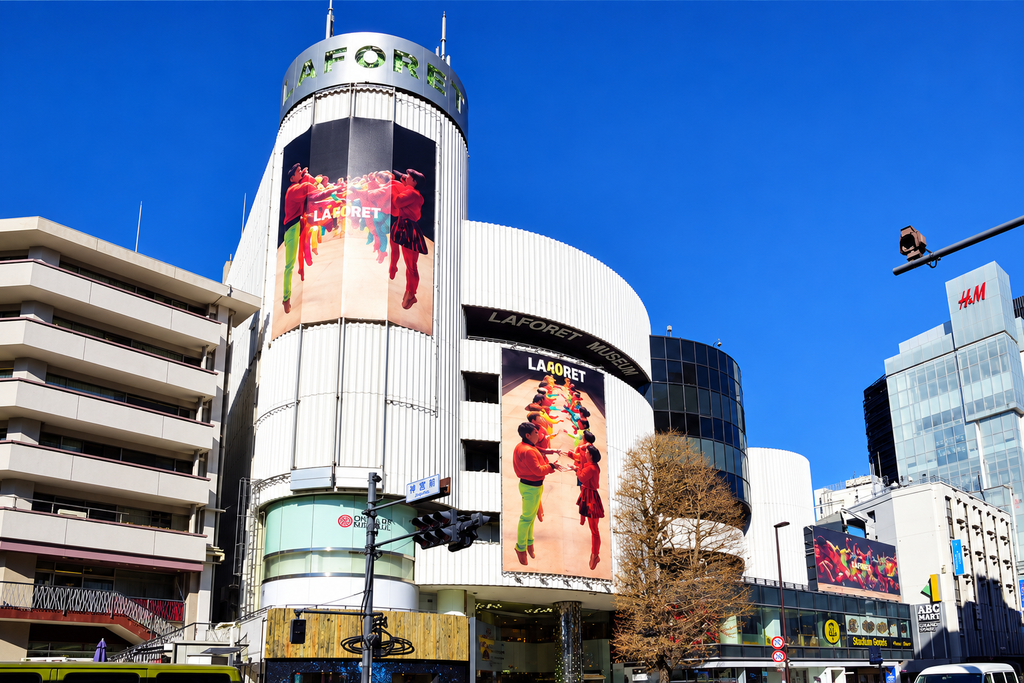
The top of the building is given over to Laforet Museum Harajuku, an event space rather than a permanent gallery. Exhibitions, fashion events, launches, and fan events rotate through it, and some are free while others are ticketed.
There is no fixed collection, so what you find depends entirely on the week. That said, when the program lines up with your interests, it adds a different layer to the visit. Check the schedule on the official site before planning around it.
Planning Your Visit
Laforet is one of the easiest buildings in Tokyo to reach. The harder question is timing, because the building feels very different at 11am on a Tuesday and 3pm on a Saturday.
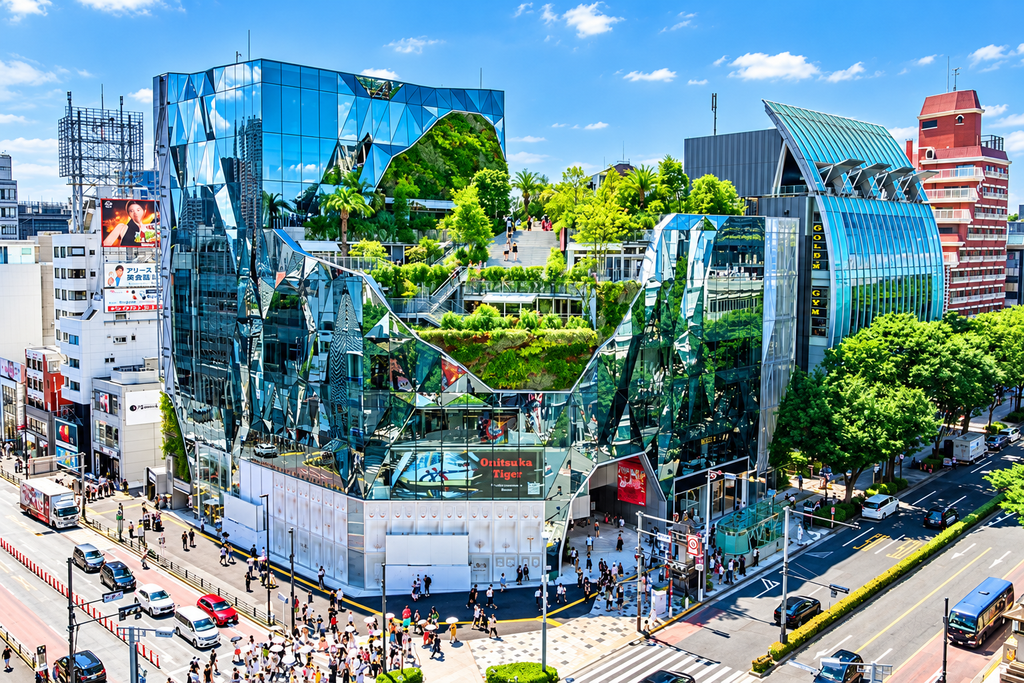
Getting There
The closest station is Meiji-jingumae on the Tokyo Metro Chiyoda and Fukutoshin lines. Exit 5 brings you up next to the building, about a minute’s walk away.
From JR Harajuku Station on the Yamanote Line, use the Omotesando exit and walk downhill along Omotesando for about five minutes. Omotesando Station, on the Ginza, Hanzomon, and Chiyoda lines, is about seven minutes away from Exit A2. If you are coming from Shibuya, the walk north along Meiji-dori takes roughly fifteen to twenty minutes.
Hours and When to Go
Laforet opens from 11:00 to 20:00. Hours can shift with the season, and the building may close on certain days in February and August, so check the official site if you are visiting in either month.
We recommend arriving close to opening on a weekday. The stairs between half-floors are narrow, and on weekend afternoons the building fills to the point where browsing becomes queuing. By contrast, the first hour on a weekday is quiet enough that shop staff will talk you through a collection.
The Grand Bazar Sales
Twice a year Laforet runs the Laforet Grand Bazar, a building-wide sale. The summer edition is held in July, and recent editions have run for around five days, with discounts that some shops push very deep by the final day.
These sales are crowded. Locals queue before opening, and the stairwells become slow-moving. If you happen to be in Tokyo during one and you are hunting bargains, go on the first morning. If you want to browse in comfort, avoid the dates altogether.
Paying and Tax-Free Shopping
Major credit cards are widely accepted, along with UnionPay and Alipay, and cash still works everywhere. Smaller shops may set their own rules, so carry some yen for small accessories.
Tax-free handling varies by shop rather than being centralized. Ask at the till before you pay and have your passport with you. Japan’s tax-free rules have been changing, and our guide to tax-free shopping in Japan explains how the system currently works.
Expert Tip
Fitting rooms in Japanese boutiques work differently. You take your shoes off before stepping in, and many shops hand you a thin face cover to wear when pulling tops over your head so that makeup does not mark the clothes. Ask for one if it is not offered, and wear shoes you can slip off easily on a day you plan to try things on.
Laforet in a Harajuku Day
Laforet sits almost exactly in the middle of Harajuku. That position makes it a natural hinge for the day rather than a destination on its own.
Between Takeshita Street and Omotesando
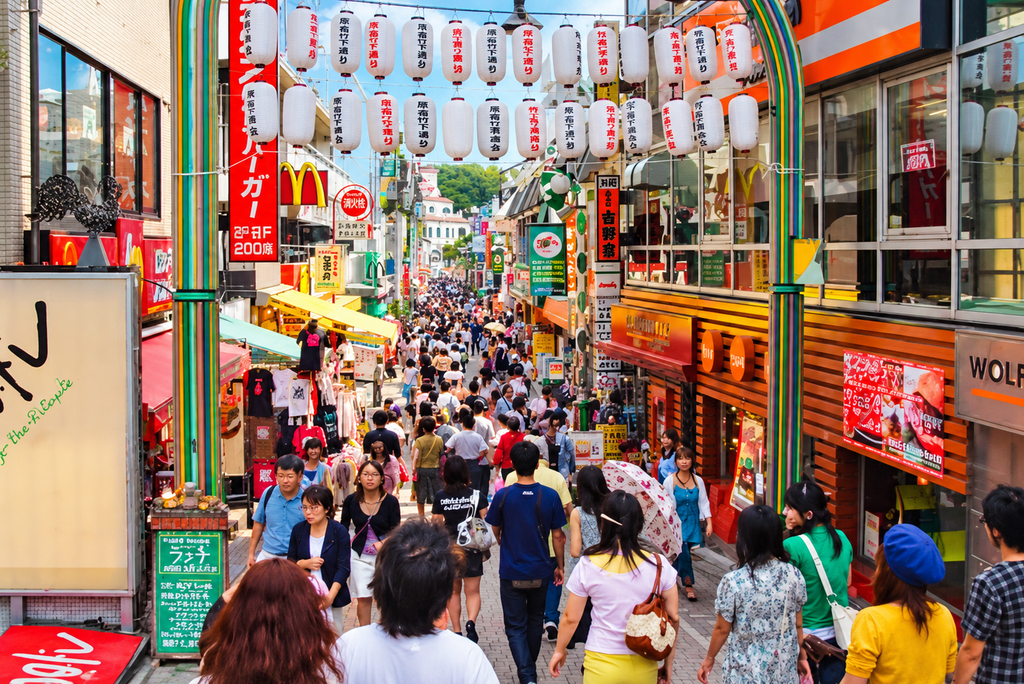
Takeshita Street ends at Meiji-dori a short walk north of the building. Cat Street, the quieter lane of independent and vintage shops, crosses Omotesando a few minutes’ walk to the east. Omotesando itself, with its architecture and flagship stores, stretches downhill from the front door.
The route we find works best runs from Takeshita Street to Laforet, then down Cat Street, then back up Omotesando. It moves from the loudest part of Harajuku to the most composed, and Laforet sits at the turning point. Our Harajuku shopping guide covers each of those streets in more detail.
How We Use It on Tours
On our full-day Tokyo bus tour, the morning starts in the forest around Meiji Shrine and moves straight on to Takeshita Street. The contrast is deliberate: a few minutes on foot separate the quietest ground in the city from its most crowded fashion lane, and Laforet is just around the corner from the end of that street.
On a private day in Tokyo, the plan is built around what each traveler asks for, so Laforet comes in only when it fits. For travelers interested in fashion, a guide can match the floors to their taste and help with conversations in shops where little English is spoken. For those who are not, we steer the time elsewhere.
Who Can Skip It
If your interest in clothing ends at quality basics, or you came to Harajuku for Meiji Shrine and the museums, Laforet can be left out without regret. The building is compact and inward-looking, and it rewards curiosity about fashion rather than general sightseeing.
Families with young children often find the narrow stairs and crowded floors hard going. Still, a quick lap of the ground and basement levels on a weekday morning takes twenty minutes and gives anyone a sense of why the building matters.
Laforet Harajuku: Frequently Asked Questions
What are Laforet Harajuku’s opening hours?
The building is open from 11:00 to 20:00. Hours can change by season, and the building may close on some days in February and August, so check the official Laforet website if you are visiting in those months or around the Grand Bazar sales.
Is Laforet Harajuku expensive?
It depends entirely on the shop. Accessories and character goods can cost a few thousand yen, while designer and lolita pieces are priced like any independent fashion label. The building as a whole sits below the luxury flagships on Omotesando and above the cheaper fast-fashion stores on Takeshita Street.
What is the closest station to Laforet Harajuku?
Meiji-jingumae Station on the Tokyo Metro Chiyoda and Fukutoshin lines. Exit 5 is about a minute’s walk from the building. From JR Harajuku Station, the Omotesando exit is about five minutes on foot.
Related Tours
Conclusion
Laforet Harajuku is easy to walk past and hard to understand from the street. Go in through the corner entrance, take the stairs down rather than up, and give the basement and the pop-up spaces more time than the escalator suggests.
Timing does most of the work. A weekday visit close to 11:00 lets you browse properly and talk to the people who run the shops; a Saturday afternoon or a Grand Bazar morning is a different and more crowded experience. Check the official site for pop-ups and museum events the week before you go, then build the rest of your Harajuku day around that.
Plan Your Japan Trip with Local Experts
Our team has guided 40,000+ travelers across Japan. Tell us about your trip and we’ll get back to you within 24 hours.