
In this article:
- What Tokyo Tower Is, and Why It Still Matters
- Main Deck, Top Deck, and the Open-Air Stairs
- Tickets, Hours, and Getting There
- Looking at the Tower Rather Than From It
- Tokyo Tower: Frequently Asked Questions
Introduction
Most first-time visitors to Tokyo assume Tokyo Tower is the old attraction, the one you skip now that Skytree exists.
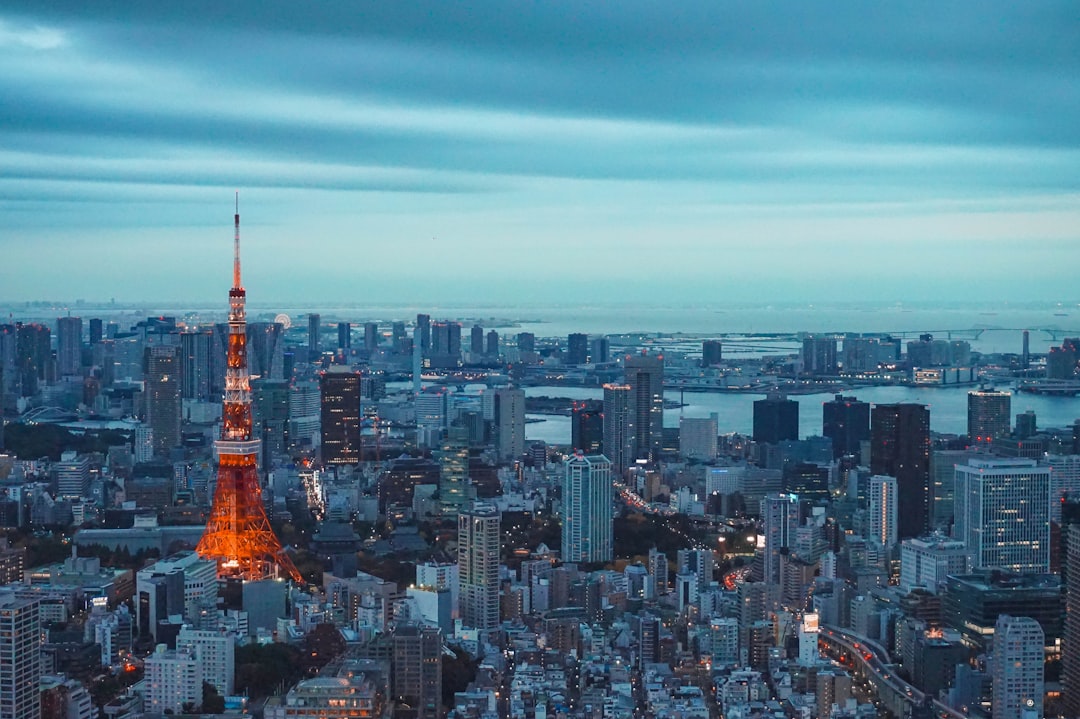
We disagree. Skytree is taller, but Tokyo Tower sits in the middle of the city rather than on its eastern edge, and that changes everything about the view. From 150 metres up in Shiba Park you are looking straight across at the towers of Toranomon and Roppongi, down onto the roofs of Zojoji, and out over the bay toward Odaiba. The city is close enough to read.
It is also the better object. Skytree is a sleek grey needle. Tokyo Tower is a lattice of orange and white girders that glows amber after dark, and the places to stand and look at it — a temple gate, a park lawn, a street corner in Azabudai — are some of the most satisfying ten minutes you can spend in the evening. This guide covers both halves: going up, and looking up.
What Tokyo Tower Is, and Why It Still Matters
Tokyo Tower is a broadcasting and observation tower, opened in December 1958, and for more than fifty years it was the tallest structure in Japan.
333 Metres of Orange and White Steel, Finished in 1958
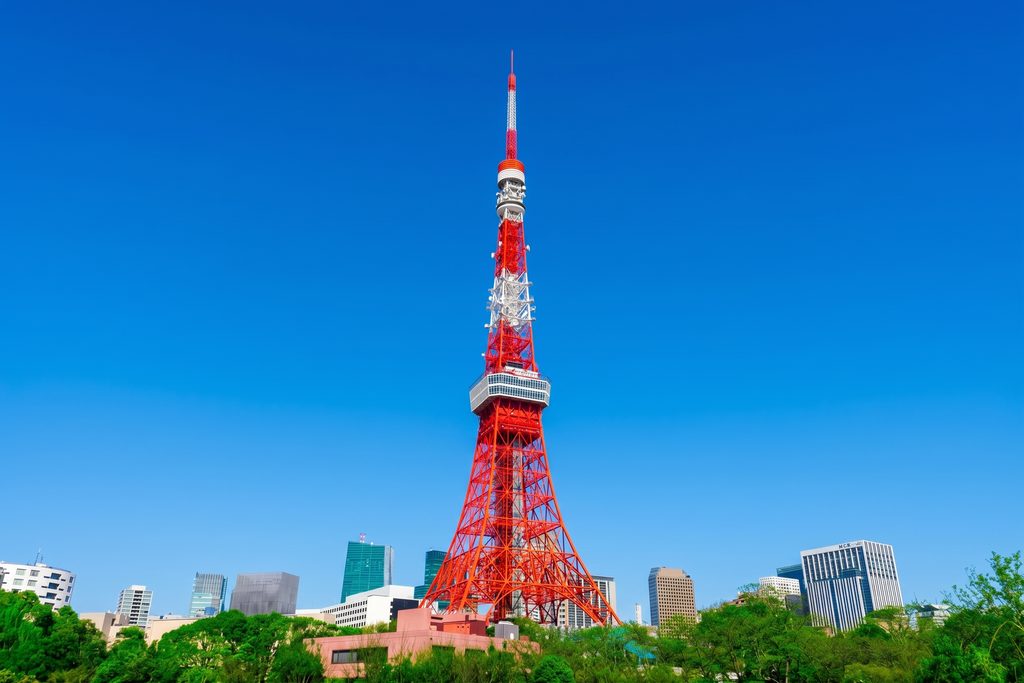
The design borrows openly from the Eiffel Tower, and at 333 metres it finished three metres taller than its model. It is still described as the tallest self-supporting steel tower in the world. The colour scheme is not decorative. Aviation safety rules required the bands of white and what is officially called international orange, and they are why the tower reads so clearly against a grey winter sky.
The timing matters for understanding why Tokyoites are fond of it. The tower went up thirteen years after the end of the Second World War, when much of the city had been rebuilt in a hurry, and it became a symbol of recovery in the way few buildings do.
Much of its broadcasting role passed to Skytree after the newer tower opened in 2012. Even so, the tower remains the image most people in Japan picture when they think of central Tokyo.
Tokyo Tower or Skytree: Which One to Climb
If you only have time for one, choose by what you want to see. Skytree’s decks are far higher, at 350 and 450 metres, and on a clear winter day the reach toward the mountains is remarkable. However, at that height central Tokyo flattens into a grey carpet, and the tower stands in Sumida, well east of the districts most visitors spend their time in. Our Tokyo Skytree guide covers that side in detail.
Tokyo Tower is lower and closer. Buildings keep their shape, streets are legible, and you can pick out the neighbourhood you had lunch in. For a first visit to Tokyo, we recommend Tokyo Tower. For a second visit, or for anyone chasing the widest possible horizon, Skytree.
Main Deck, Top Deck, and the Open-Air Stairs
There are two levels open to visitors, and a third way up that most people never consider.
The Main Deck at 150 Metres
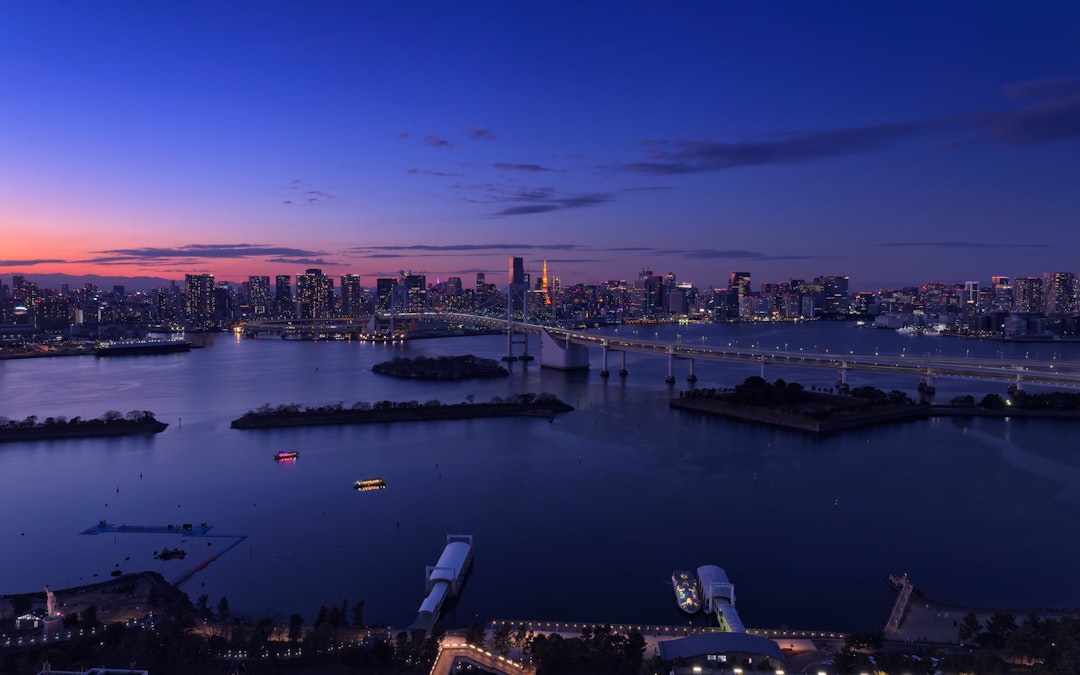
The Main Deck is a two-level ring of windows reached by elevator from the Foot Town building at the base. It is where almost everyone ends up, and for most travelers it is enough. The views run all the way round: Zojoji and the green of Shiba Park directly below, the Rainbow Bridge and the bay to the east, the tower clusters of Roppongi and Toranomon to the west.
The glass floor panels are where the queues form. Stand on one and you look straight down the steel legs to the ground. Children love it; some adults find it less relaxing than expected. If there is a crowd, wait a few minutes and it clears.
The Top Deck Tour at 250 Metres
The Top Deck is reached by a second elevator from the Main Deck and is sold as a separate, guided ticket called the Top Deck Tour. The space is smaller and more designed, with mirrored geometric panels that multiply the city lights after dark, and it feels more like an installation than an observation floor.
At 250 metres you clear the surrounding skyscrapers properly. That is the real reason to pay for it. On a clear day it is the level where distant views, including Mount Fuji to the southwest, become possible.
The Top Deck can close in poor weather or for operational reasons. Check the official site on the day before you commit to the higher ticket.
Climbing the Roughly 600 Outdoor Steps
An open-air staircase of roughly 600 steps runs from the roof of Foot Town up to the Main Deck at 150 metres. Climbing up is only allowed on Saturdays, Sundays, and public holidays, normally from 9:00 to 16:00, while walking down is open every day. There is no separate charge; you pay the ordinary deck admission.
It is steep and open to the air, and there is no elevator at any point along it. In our experience it is worth it in cool weather and unpleasant in July and August, and the stairs close anyway in rain or when a heatstroke warning is issued. Those who make it to the top receive an official climber certificate.
Expert Tip
If the uphill stairs are closed on the day you visit, walk down them instead. The descent is open daily, it takes you through the orange steelwork at close range, and you finish on the roof of Foot Town rather than queuing for a crowded elevator back down.
Tickets, Hours, and Getting There
The practical side is simple, with one quirk in the pricing.
Prices and Where to Buy
There are three ticket types. The Main Deck alone costs an adult ¥1,200 to ¥1,500 depending on where you buy it; at the time of writing the official site lists the ticket counter price lower than the online price. The Top Deck Tour, which includes both decks, is ¥3,300 online and ¥3,500 at the counter.
The third option is the Tokyo Diamond Tour at ¥7,000, which adds a lounge and runs at fixed departure times through the afternoon and early evening. It suits a special occasion rather than a first look.
For the Main Deck, we would not bother booking ahead on a weekday; buy at the counter. For the Top Deck on a weekend evening or during Japanese holiday periods, book online; the ¥200 saving is minor, but you skip the counter queue. Prices change, so confirm on the official site before you go.
The Closest Stations
Tokyo Tower has no station of its own, but several are close. Akabanebashi on the Toei Oedo Line is the nearest, about five minutes on foot. Onarimon on the Toei Mita Line is around six minutes, and Kamiyacho on the Tokyo Metro Hibiya Line about seven.
From JR Hamamatsucho, allow roughly fifteen minutes. That walk is the one we prefer, because it passes Zojoji and puts the tower in front of you for most of the way.
An IC card covers every one of these lines. If you do not have one yet, our Suica card guide explains how to set one up on your phone before you arrive.
When to Go: Daylight, Dusk, or After Dark
The Main Deck is open from 9:00 to 23:00, with last entry at 22:30. The Top Deck Tour runs until 22:45, with the last tour at 22:15. Late opening is the tower’s great advantage over most attractions in the city.
We suggest arriving about forty minutes before sunset. You see the city in daylight, watch it turn blue and then gold, and leave after dark with the lights on below you, all on one ticket. Midday on a weekend is the worst time; school groups and families fill the Main Deck and the elevators queue.
Clear air matters more than hour. Winter, from December to February, gives the sharpest visibility and the best chance of Fuji. Humid summer afternoons often haze the horizon to nothing.
Expert Tip
Look west before you look anywhere else. On clear winter mornings the silhouette of Mount Fuji sits behind the Roppongi skyline, and it is often gone by late morning as the haze builds. If Fuji is the priority, go at 9:00 when the doors open rather than at sunset.
Looking at the Tower Rather Than From It
Some of our favourite evenings in Tokyo involve Tokyo Tower without going inside it at all.
Zojoji Temple and Shiba Park
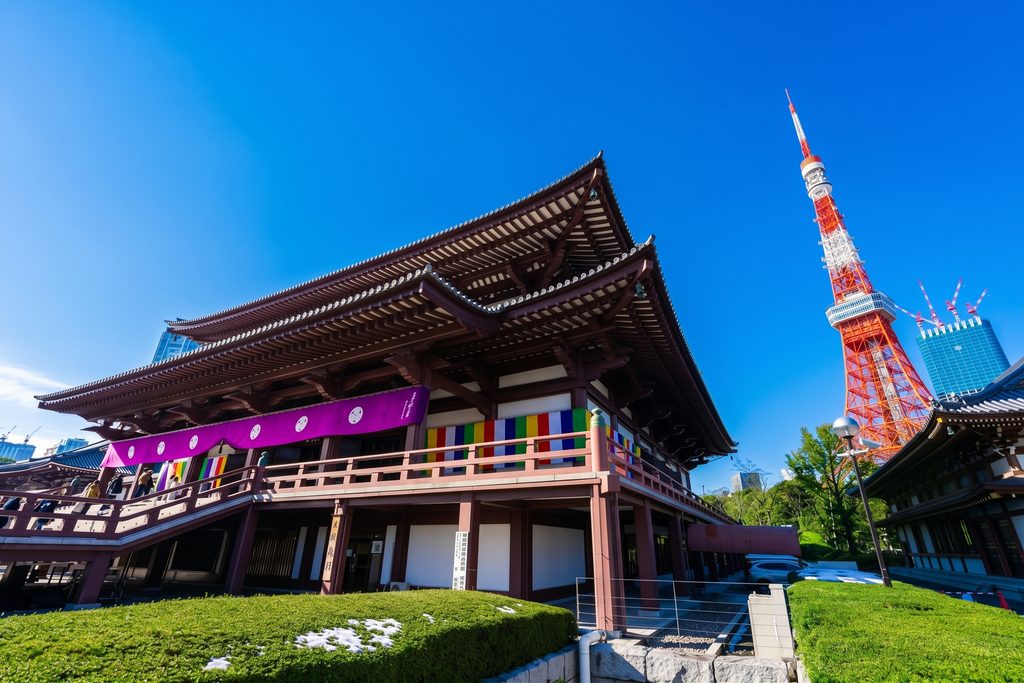
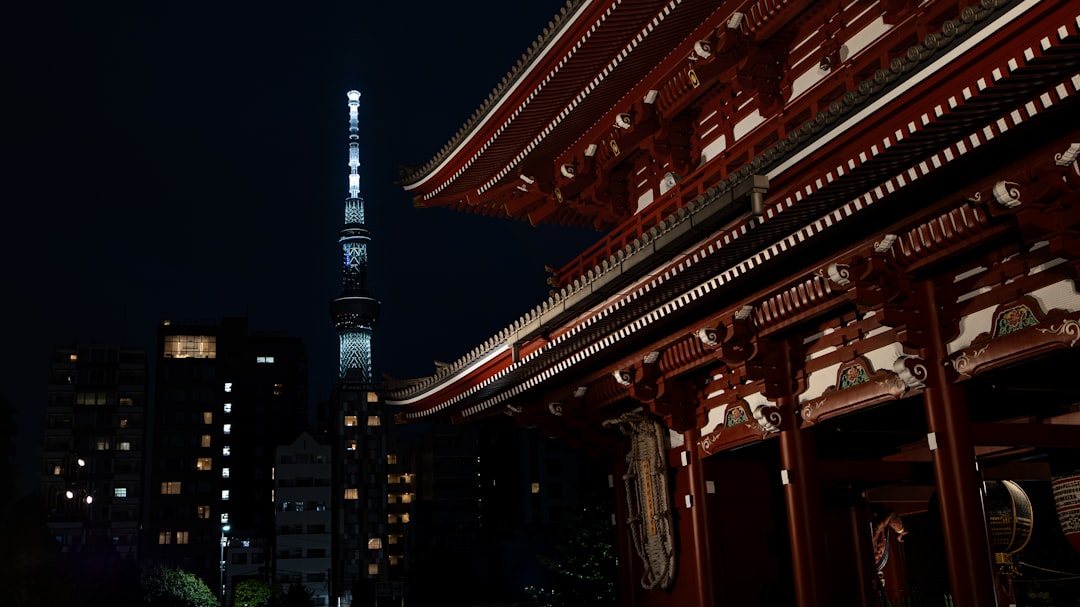
Zojoji sits at the foot of the tower. It was founded in the fourteenth century and later became the family temple of the Tokugawa shoguns, and its great red gate and main hall frame the tower so neatly that the photograph has become a cliché. That said, it is a cliché for a reason. Stand in the main courtyard at dusk, with the hall’s dark roof in front and the lit tower rising behind it, and the contrast between the two centuries is hard to argue with.
Walk round to the side of the temple grounds and you find rows of small stone Jizo statues in red knitted caps and bibs, many with pinwheels that turn in the wind. It is a place of remembrance, so keep your voice down and your camera respectful.
Shiba Park wraps around both. The lawns on the tower side give the cleanest ground-level view of the full structure, legs and all, and they are quiet on weekday evenings.
The Night Lighting: Landmark Light and Infinity Diamond Veil
The standard illumination is called the Landmark Light. It has been used since 1989 and switches with the seasons: a warm orange from around early October through winter, and a cooler white from early July in summer. Most visitors never notice the change, but a winter photograph and a summer photograph of the tower look like two different buildings.
On Monday and Thursday evenings from 20:00 to 22:00, the tower normally switches to the Infinity Diamond Veil, a scheme of 268 LEDs across 17 levels that shifts through colour patterns. Special events bring one-off colours at other times, and the official site notes that the schedule can change without notice.
For viewing the lighting from outside, we like three spots. The Zojoji courtyard, the lawns of Shiba Park, and the streets of Roppongi and Azabudai just to the west, where the tower keeps appearing at the end of the road. Our Roppongi guide covers the observation decks there, which give you Tokyo Tower in the middle of the frame rather than beneath your feet.
Tokyo Tower: Frequently Asked Questions
How long should I plan for Tokyo Tower?
About an hour for the Main Deck, including the elevator queue, and ninety minutes if you add the Top Deck Tour. Add another forty-five minutes for Zojoji and Shiba Park, which we would not separate from the tower visit. If you time it around sunset, two to two and a half hours covers the whole area comfortably.
Can you see Mount Fuji from Tokyo Tower?
Yes, on clear days, looking southwest from the Main Deck or the Top Deck. Your odds are best on dry winter mornings between December and February. In summer, humidity usually hides it entirely, and a sighting is a matter of luck rather than planning.
Is the Top Deck worth the extra cost?
For a first visit, on a clear evening, yes. The extra 100 metres lifts you above the surrounding skyscrapers, and the mirrored interior is at its best after dark. On a hazy afternoon, or if the Top Deck has been closed for weather, the Main Deck gives you most of the experience for a fraction of the price.
Related Tours


Conclusion
Go late in the day. Buy a Main Deck ticket at the counter, arrive forty minutes before sunset, and upgrade to the Top Deck only if the sky is clear. Then walk down the outdoor stairs if they are open and finish at Zojoji, where the tower you have just been standing on rises above the temple roof.
Check two things on the morning of your visit: the weather to the southwest, and the official site for any Top Deck closure or special lighting. If it is a Monday or Thursday, stay outside until 20:00 and watch the lights change.
Plan Your Japan Trip with Local Experts
Our team has guided 40,000+ travelers across Japan. Tell us about your trip and we’ll get back to you within 24 hours.




