In this article:
- What the Nebuta Floats Actually Are
- Planning Around August 2 to 7
- Dancing as a Haneto
- Seeing Nebuta Outside Festival Week
- Aomori Nebuta Festival: Frequently Asked Questions
Introduction
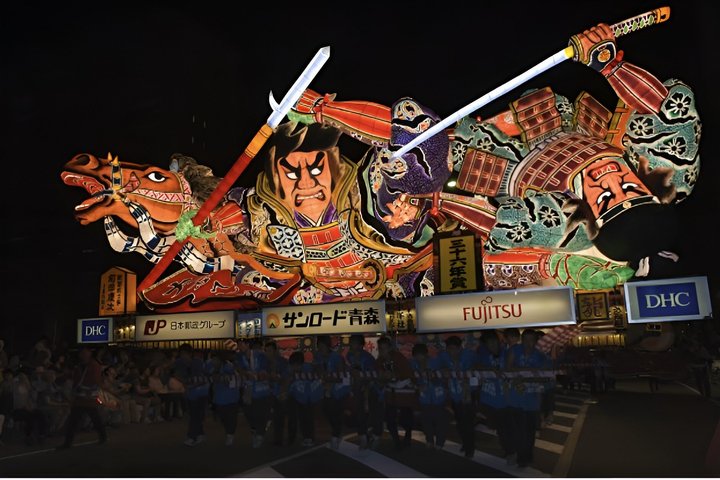
The Aomori Nebuta Festival is the loudest week of the year at the northern tip of Honshu, and it is heard long before it is seen. Taiko drums carry several streets back from the route. Then a warrior’s face, five metres high and lit from inside, turns the corner and the crowd along the kerb goes quiet for a second before it starts shouting again.
That moment is what people travel for. Aomori is a small, practical port city for most of the year, and for six days in August it becomes one of the largest festival stages in Japan. The official organisers put attendance at more than three million people a year, in a city whose hotels were never built for that.
For the travelers we work with, the festival raises two questions. Is it worth structuring a Japan trip around a fixed week in peak summer? And if the dates do not work, is there any way to see the floats at all? We think the answers are yes and yes, and the sections below explain why.
What the Nebuta Floats Actually Are
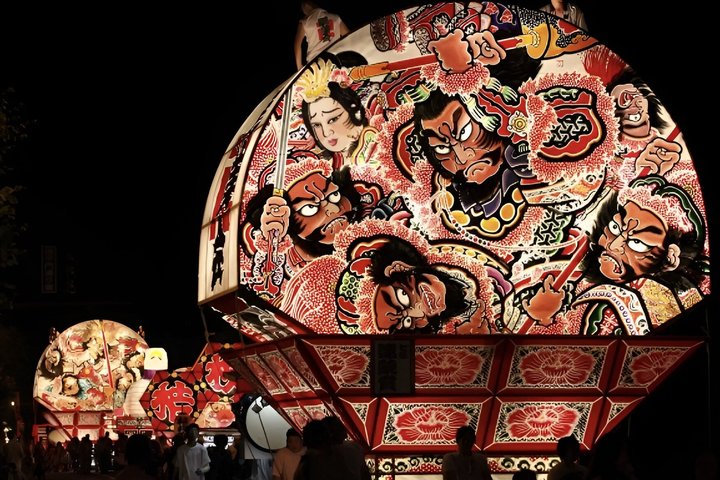
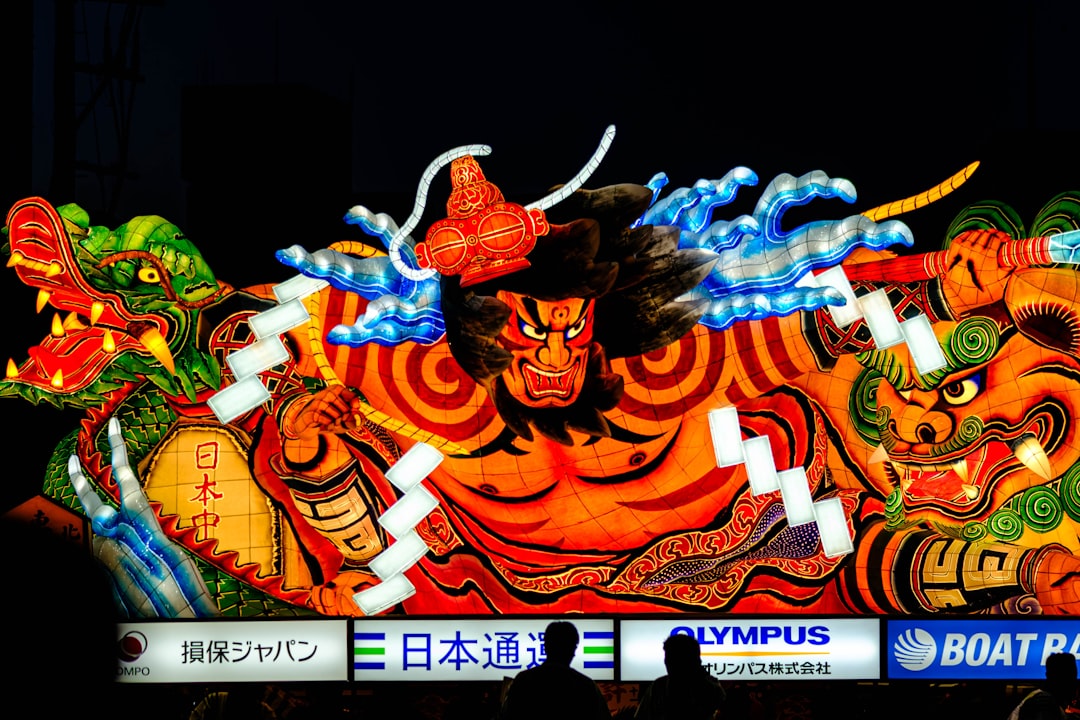
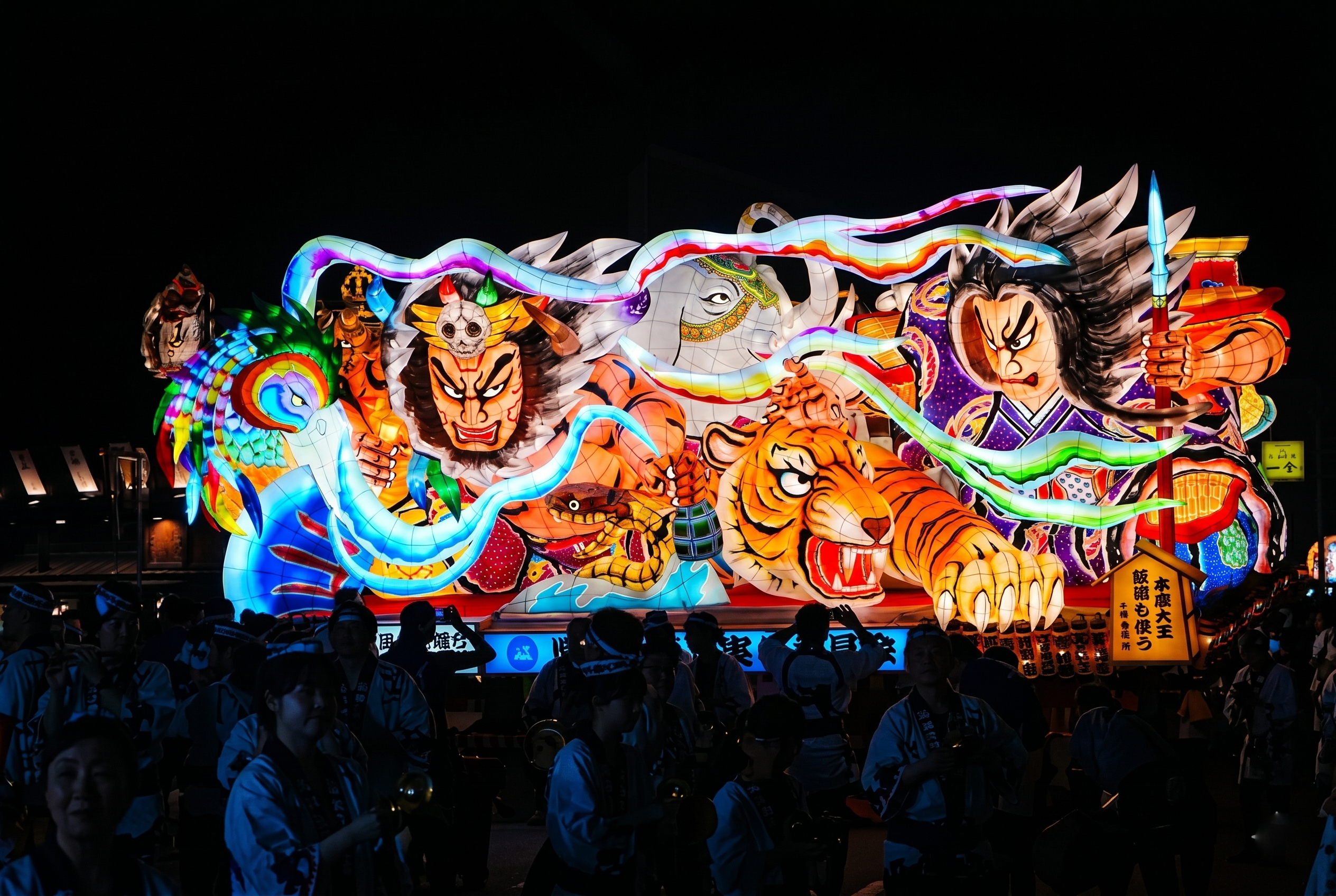
A nebuta is a sculpture, not a vehicle with decorations on it. Each one depicts a scene, usually drawn from kabuki, Japanese and Chinese legend, or history, and the figures lunge out of the frame with swords raised and eyes wide.
The official dimensions give a sense of scale: up to about nine metres wide, seven metres deep, and five metres high. Standing at street level while one passes is closer to watching a building move than watching a parade float.
Paper, Wire, and Light: How a Nebuta Is Built
Older nebuta used bamboo frames lit by candles, which meant they occasionally burned. Modern floats use a wire frame covered in paper, painted by hand, and lit from within by electric light. The result is the thing that makes nebuta distinct from most Japanese festival floats: they glow.
The paper is thin enough that the lighting shows every brushstroke. In daylight the colours look flat and slightly garish. After dark the same float reads as saturated reds and blues with deep black outlines, which is why the evening parades are the ones worth planning around.
Each large float is designed by a specialist maker known as a nebuta-shi. Their names are known in Aomori, and a float is discussed as the work of its maker rather than of the company that sponsors it.
Where the Festival Comes From
Nobody agrees on a single origin. The most common explanation links nebuta to midsummer customs around Tanabata, when lanterns and offerings were sent away to ward off misfortune. A popular local legend credits the ninth-century general Sakanoue no Tamuramaro, though historians treat that as folklore rather than record.
What is on record is the festival’s status. It was designated an Important Intangible Folk Cultural Property of Japan in 1980, which places it among the country’s formally protected living traditions.
The Grand Prize and Why the Sixth Night Matters
The large floats compete. Judges assess them during the festival, and the top award, the Nebuta Grand Prize, is announced before the final evening. On August 6, the prize-winning floats parade with their awards.
That makes August 6 our first recommendation for a single evening. You see the full field of large floats at night, and you know which ones the judges rated. The atmosphere among the teams on that night is noticeably different.
Planning Around August 2 to 7
The dates never move. The festival runs from August 2 to 7 every year regardless of the day of the week, which makes it easier to plan a long way ahead than most Japanese festivals.
For a festival-focused visit, see our wider guide to Tohoku’s summer festivals in August, which sits in the same fortnight as Obon and affects trains and hotels across the country.
The Daily Schedule, Night by Night
August 1 is a festival eve at Nebuta Rasse Land by the waterfront, where the finished floats wait before the parades begin. The festival proper starts the following evening.
On August 2 and 3, the evening parade starts at 7pm with around 25 floats. From August 4 to 6, the start moves to 6:45pm and around 20 large floats take the route. Each evening runs until roughly 9pm along a loop of about three kilometres through central Aomori.
August 7 is different. The floats parade in the afternoon, starting at 1pm, and in the evening a selection of prize-winning nebuta are taken onto boats in Aomori Bay while a fireworks display runs from 7:15pm to 9pm. It is a beautiful end, though if you only have one evening, we would still choose a night parade on land over the bay finale.
Free Viewing or a Reserved Seat
Standing or sitting along the route is free, and most of the three million visitors watch this way. Locals lay out plastic sheets along the pavement in the afternoon, and the good kerbside spots are gone well before the drums start.
Paid reserved seats are sold along sections of the route, with prices starting from a few thousand yen per person. According to the official Aomori tourism site, sales open around the end of June, and the organisers maintain a separate English information page for overseas visitors.
Our view is simple. If you are traveling with older family members or children, or you have a single evening, buy the seat. Two hours standing in a crowd in August humidity is a real cost, and a fixed seat means you can arrive at 6:30pm instead of 4pm. If you intend to dance as a haneto, skip the seat entirely, because you will not be sitting down.
Getting to Aomori and Finding a Bed
The Hayabusa shinkansen reaches Shin-Aomori from Tokyo in roughly three hours. From Shin-Aomori, a local JR train covers the short hop to Aomori Station, and the parade route is within walking distance of the station.
Accommodation is the hard part. Hotels in central Aomori fill months ahead for festival week, and what remains late is rarely well located. If you cannot find a room in the city, look at Hirosaki, Asamushi Onsen, or Hachinohe, and plan on commuting in by train. Check the time of the last train back before you commit, since the parade ends late and the platforms afterwards are crowded.
Expert Tip
Book your Aomori hotel before you book anything else in the itinerary, then build the rest of the trip around it. Travelers who secure the shinkansen and the Tokyo hotels first and leave Aomori for later are the ones who end up commuting from ninety minutes away. A room within walking distance of the route also means you can go back to rest between an afternoon at the market and the evening parade.
Dancing as a Haneto
Most Japanese festivals are something you watch. Nebuta is one you can join, and this is the single best reason to go rather than watching a video of it.
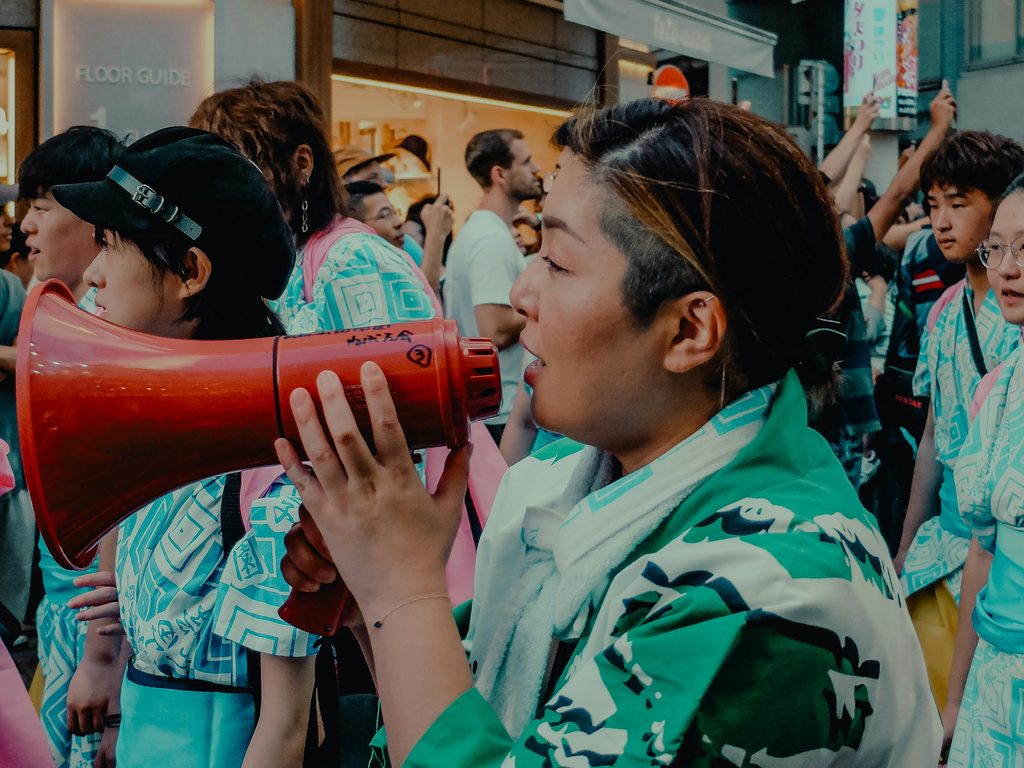
The dancers around each float are called haneto, and the festival organisers are explicit that anyone can take part, regardless of nationality or experience. There is no registration. The only real requirement is that you wear the proper costume.
Renting or Buying the Costume
The haneto costume is a white yukata-style robe with a coloured sash and trimmings, a flower-covered hat called a hanagasa, and small bells that jingle as you jump. Rental sets are widely offered in the city during the festival for around ¥4,000, and buying a full set costs considerably more.
We recommend renting rather than buying for a single night. The costume is tied in a specific way, and it is easier to have help than to work it out from a diagram in a hotel room. Wear comfortable shoes or the rented sandals with tabi socks, and expect them to be soaked with sweat by the end.
How to Join a Group on the Night
Haneto join the parade groups on the spot. In practice, you walk to the starting point of a group’s float shortly before the parade begins, and you fall in with the dancers behind it.
The participation rules forbid joining after drinking alcohol, and dangerous behaviour is not tolerated. That rule exists for good reason: the crowd of dancers is dense, the float is enormous, and the evening is hot. Drink water before you start, not beer.
Rassera: The Chant and the Step
The dance is a hopping step, landing on alternate feet, repeated for the length of the route. The chant is “Rassera, rassera, rasse, rasse, rassera”, shouted in rhythm with the drums.
Nobody expects you to get it right. Watch the dancers next to you for a minute, copy them, and keep going. After ten minutes the step becomes automatic. After an hour, you are no longer a spectator, and that shift is the reason to do it.
Seeing Nebuta Outside Festival Week
Most trips to Japan do not land on the first week of August, and many of the travelers we work with avoid the summer heat altogether. That does not mean missing the floats.
Nebuta Museum WA RASSE
Nebuta Museum WA RASSE stands a two-minute walk from JR Aomori Station, on the waterfront. Its main hall displays full-size nebuta that were actually used in recent festivals, and it is open all year, from 9am to 7pm between May and August and 9am to 6pm from September to April. Adult admission is ¥620.
The experience is more intimate than the parade. You can walk right up to a float, look at how the paper is joined over the wire, and see the brushwork up close in a way that is impossible from the kerb. There is also a hands-on area where visitors can beat the festival drums.
One detail catches people out. WA RASSE closes on August 9 and 10 each year to change the displays, so anyone planning to visit the day after the festival should check before going.
A Day in Aomori Built Around the Floats
Our private Aomori day tour starts at the FamilyMart in front of Aomori Station and goes to WA RASSE first, which is the right order: seeing the floats in the morning gives the rest of the city its context. From there it is a short walk to Furukawa Fish Market, where you buy a sheet of tickets, collect a bowl of rice, and exchange tickets at the stalls for scallops, tuna, sea urchin, or squid on top.
The afternoon goes to the Aomori Museum of Art, a white building set partly below ground beside the Sannai-Maruyama Jomon site, with a large dog sculpture by Yoshitomo Nara, who comes from the prefecture. The Hakkoda mountains or the coast can be added depending on the season, though Hakkoda needs a vehicle. That combination, in our experience, gives a much fuller picture of Aomori than the festival alone.
The Other Tsugaru Festivals in the Same Week
Aomori is not the only city in the prefecture lighting floats in early August. Hirosaki holds its Neputa Festival from August 1 to 7, with fan-shaped floats and a slower, more solemn mood. Goshogawara holds the Tachineputa Festival from August 4 to 8, with standing floats that rise over twenty metres.
If you have three or four days in the region, seeing two of these gives you a sense of how differently neighbouring towns treat the same tradition. For travelers coming up from Tokyo, a stop in Sendai breaks the journey well. Because the festival also falls just before Obon, trains out of Tohoku get busier in the days after August 7.
Expert Tip
If you arrive in Aomori on August 1, walk down to Nebuta Rasse Land by the bay that evening. The finished floats are gathered there before the parades begin, and you can see them lit at close range without the crowds of the parade nights. It is also the easiest way to work out which floats you want to watch for on the route.
Aomori Nebuta Festival: Frequently Asked Questions
Do I need tickets to watch the Nebuta parade?
No. Watching from the pavement along the route is free, and that is how most visitors see it. Paid reserved seats exist along parts of the route and go on sale in early summer. They are worth buying if you have limited mobility, young children, or only one evening, because the free kerbside spots fill hours before the parade starts.
Can foreign visitors dance in the parade?
Yes. Anyone wearing a proper haneto costume can join the dancers behind a float, with no registration needed. Rent a costume in the city, arrive at a group’s starting point shortly before the parade, and follow the dancers around you. You must not join after drinking alcohol.
What is the best night to go?
We recommend August 6. The large floats parade at night, and the prize winners are already known, so the teams carry their awards. August 4 and 5 are close alternatives. The final day, August 7, has an afternoon parade and fireworks over the bay, which is memorable but less intense than the evening parades on land.
Related Tours

Conclusion
If you can be in Aomori between August 2 and 7, go, book the hotel first, and plan on dancing at least one night rather than only watching. The difference between standing at the kerb and hopping behind a float with a few thousand strangers shouting “rassera” is the difference between seeing a festival and taking part in one.
If your dates do not fit, the floats are still there. Put Aomori on a spring or autumn itinerary, start the day at WA RASSE, and eat lunch at Furukawa. You will understand what the festival is before you ever see it, and you will have a reason to come back in August.
Plan Your Japan Trip with Local Experts
Our team has guided 40,000+ travelers across Japan. Tell us about your trip and we’ll get back to you within 24 hours.