In this article:
- Beer and the Highball: What Most of Japan Actually Drinks
- Sake: Reading the Menu Without a Guide
- Shochu, Awamori, and the Drinks Built on Them
- How Japanese Drinks Are Ordered and Shared
- Japanese Alcoholic Drinks: Frequently Asked Questions
Introduction
Most visitors arrive expecting to drink sake, and most of them order a beer first. That is not a failure of nerve. It is what the people at the next table are doing too, because the landscape of Japanese alcoholic drinks is much wider than rice wine, and sake is rarely the first glass of the night.
Pick up the drink menu at a neighbourhood izakaya and you will find a draft lager, a whisky highball, three or four kinds of shochu, a column of sours in flavours from lemon to green tea, umeshu served several ways, and then, somewhere near the bottom, a short list of sake by brewery name. Without Japanese, the list is close to unreadable. With a little context, it becomes one of the more rewarding menus in the world.
We spend a lot of evenings at these counters with travelers, and the same questions come up every night. What is the difference between a sour and a chuhai? Why is the sake served in a glass sitting in a wooden box? What is the small dish that arrived before anyone ordered? This guide answers those questions in the order you will meet them.
Beer and the Highball: What Most of Japan Actually Drinks
Beer is the most popular alcoholic drink in Japan, and it sets the rhythm of an evening out. The highball has become its closest rival.
The Big Four Lagers and the First-Round Beer
Four companies dominate: Asahi, Kirin, Sapporo, and Suntory. Their flagship beers are crisp, pale lagers of around 5 percent alcohol, built to be drunk very cold alongside salty, fried food. That is exactly how they taste best.
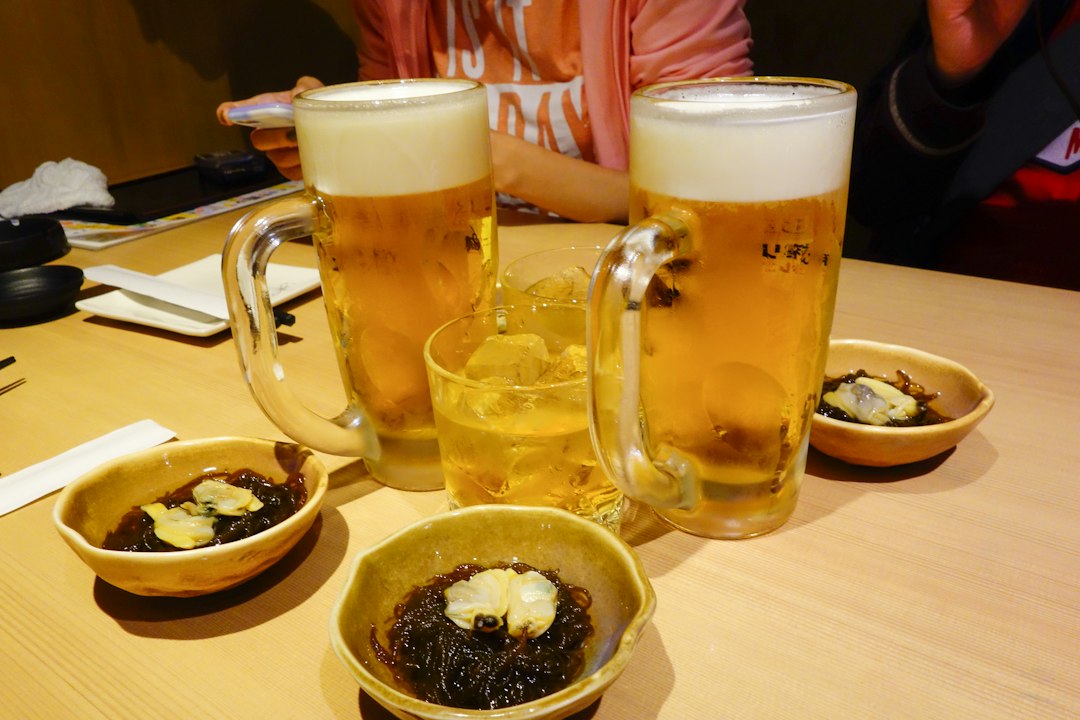
In a group, the first round is often beer for everyone. Someone says “toriaezu biru” — beer for now — and the order goes in before anyone has opened the food menu. You are not obliged to join in. Still, if you want the table’s drinks to arrive together for the toast, a draft beer is the path of least resistance.
Bottled beer is common for sharing at the table, with small glasses that people fill for one another. Draft beer usually comes in a mug, and sizes vary by bar. For a closer look at the brands and the craft scene behind them, we have a separate guide to Japanese beer.
Happoshu, Third-Category Beer, and the October 2026 Tax Change
Convenience store shelves carry cans that look like beer but cost noticeably less. These are happoshu, a low-malt drink, and so-called third-category beer, which replaces malt with other ingredients. Both existed largely because Japanese liquor tax was calculated on malt content.
That gap closes this month. Under a reform phased in since 2020, the tax on beer, happoshu, and third-category drinks is unified in October 2026. Brewers have already been reformulating budget lines into full beer. In practice, the cheaper cans will not disappear overnight, but the price logic behind them is ending.
For a visitor, our advice is straightforward. If the label says beer and the price seems low, check the small print. Happoshu is drinkable, although it tastes thinner, and most travelers prefer the real thing once they compare.
The Whisky Highball and Japanese Whisky
A highball is whisky and soda water over ice in a tall glass, usually somewhere between 5 and 10 percent alcohol. It is the drink many Japanese office workers order with dinner, and it pairs with grilled and fried food better than wine does.
Its current popularity is recent. In 2008, facing years of falling whisky sales, Suntory began a campaign promoting the Kakubin highball in izakaya, and the drink has been an everyday order ever since. Many bars now pour highballs from a dedicated tap.
Japanese whisky itself has a serious international reputation, and names such as Yamazaki and Hakushu are harder to find than they were a decade ago. If whisky is the reason you are coming, a day at a distillery is worth planning; our guide to Japanese whisky distilleries covers the visits. For an ordinary evening, the house highball is the better order.
Expert Tip
When you want a stronger highball, ask for “koime” — a richer pour of whisky. Not every bar offers it, and some add a small charge, but it is the easiest way to taste the whisky rather than the soda. The opposite, “usume”, gets you a lighter one.
Sake: Reading the Menu Without a Guide
Sake is the drink visitors come for, and the one they are least equipped to order. In Japanese it is usually called nihonshu. The word sake on its own can mean alcohol in general.
What Sake Is Made From, and How Strong It Is
Sake is brewed from rice, water, koji mould, and yeast. The koji converts the rice starch into sugar while the yeast turns that sugar into alcohol, in the same tank at the same time. Most sake finishes at around 15 percent alcohol, stronger than wine but far below spirits.
Every region brews its own, and small local sake, called jizake, is often the most interesting thing on a menu outside the big cities. In Niigata the house style tends to be clean and dry. In other regions it can be richer and rounder.
Junmai, Ginjo, Daiginjo: The Grades That Matter
Premium sake falls into official designations, and two ideas explain most of them. The first is polishing. Before brewing, rice is milled to remove the outer layer, and the percentage left is printed on the label. Ginjo grades use rice polished to 60 percent or less of its original weight; daiginjo goes to 50 percent or less. More polishing generally means a lighter, more fragrant sake.
The second idea is added alcohol. Junmai means pure rice, with no distilled alcohol added. Honjozo and non-junmai ginjo include a small amount, which brewers use to lift aroma and lighten the body. Neither is inferior. Grade tells you about style, not quality, and a good junmai can easily outshine a mediocre daiginjo.
Our recommendation is to ignore the hierarchy at first and taste across it. A sake bar that lets you compare two or three side by side will teach you more in half an hour than any chart.
Hot, Cold, or Room Temperature
Sake is one of the few drinks served across a full range of temperatures. Hiya can mean chilled or room temperature depending on the bar, while atsukan is served hot. Aromatic ginjo styles are usually served cool, while fuller junmai often opens up when warmed.
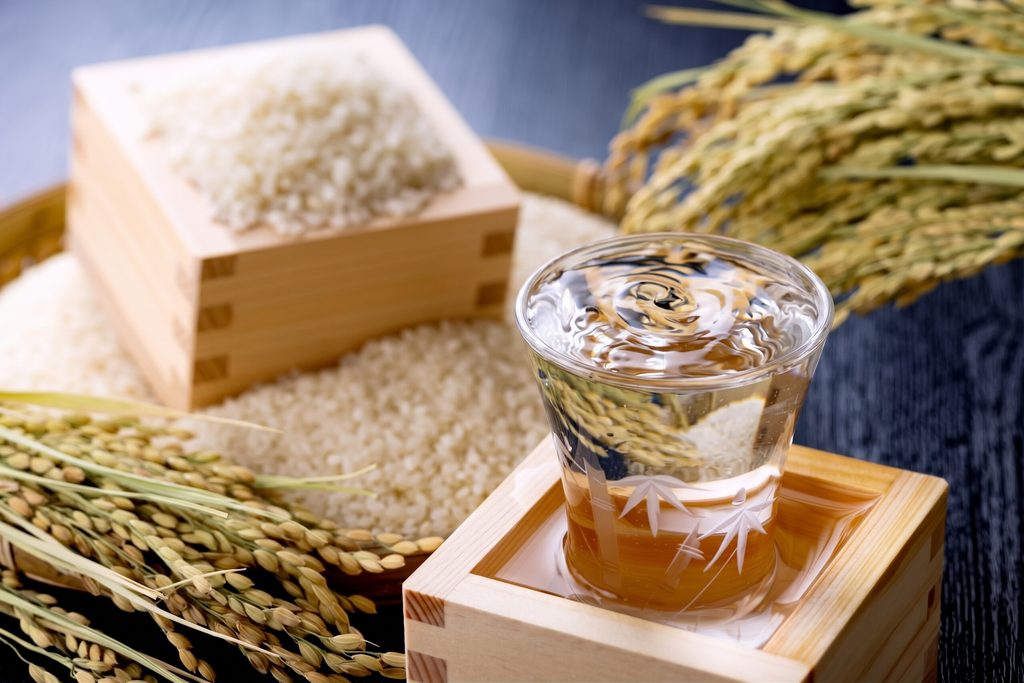
Glasses sometimes arrive standing in a small wooden box or saucer, with the sake poured until it overflows. That is a gesture of generosity. Drink a little from the glass first, then tip the overflow back in or drink it from the box.
In our Shinjuku evenings, the second stop is a sake bar where the staff choose pours against what the group has already eaten. Most guests arrive with no opinion on sake and leave with a clear preference, usually for something they would never have picked from a label. For more detail on grades and regions, see our sake tasting guide.
Shochu, Awamori, and the Drinks Built on Them
Shochu is the drink most visitors have never heard of and most Japanese adults drink regularly. It is also the base of half the menu.
Shochu: Barley, Sweet Potato, Rice
Shochu is a distilled spirit, usually between 20 and 40 percent alcohol, made from a single main ingredient. Barley shochu, called mugi, is light and easy. Sweet potato shochu, imo, is earthy and pungent, and strongly associated with Kagoshima in southern Kyushu. Rice shochu, kome, sits somewhere between.
The better bottles are honkaku shochu, distilled only once so the base ingredient comes through, and bottled at 45 percent or less. Cheaper multiple-distilled shochu is neutral in flavour and ends up in mixed drinks.
Japanese drinkers rarely take shochu neat. Mizuwari is shochu cut with cold water; oyuwari is cut with hot water, which is how imo shochu shows its aroma best. On the rocks is common too. If you drink whisky with a splash of water, start with mugi mizuwari.
Awamori, Okinawa’s Own Spirit
Awamori is Okinawa’s version of shochu, made from long-grain Thai-style rice and a black koji mould. It tends to be stronger and more robust than mainland shochu. Aged awamori, called kusu, can be mellow and complex. You will see it on menus in Tokyo, but it is at its most natural in Okinawa with Okinawan food.
Chuhai and Sours
Chuhai started as shorthand for shochu highball: shochu, soda, and flavouring. Most bars now call the same kind of drink a sour, and the lemon sour is the default. Grapefruit, ume, lime, and green tea versions are common, and many izakaya offer a squeeze-it-yourself version with half a fruit and a hand juicer at the table.
A bar-poured sour is usually a moderate drink. Canned chuhai from convenience stores is a different matter. Some sell at 9 percent alcohol in a sweet, fruity format that hides the strength, and they are the drink that most often catches travelers out.
Umeshu, the Plum Liqueur
Umeshu is made by steeping unripe ume fruit in a base spirit, usually shochu or sake, with sugar. It is often translated as plum wine, although it is closer to a liqueur. The result is sweet and tart, with an almond-like note from the fruit stone.
Order it on the rocks, with soda, or as an umeshu sour. For guests who find sake too dry and shochu too sharp, umeshu is often the drink they return to all evening, and there is no shame in that.
Expert Tip
When the sake and shochu lists are written only by producer name, do not try to decode them. Point at what you are eating and ask for “osusume”, the house recommendation. Staff at small bars take the question seriously, and it usually produces a better glass than guessing from the label.
How Japanese Drinks Are Ordered and Shared
Knowing the drinks is half of it. The other half is how the evening around them works.
Kanpai and Pouring for Others
Nobody drinks until everyone has a glass and someone has said “kanpai”. Wait for it, even if your beer arrives first.
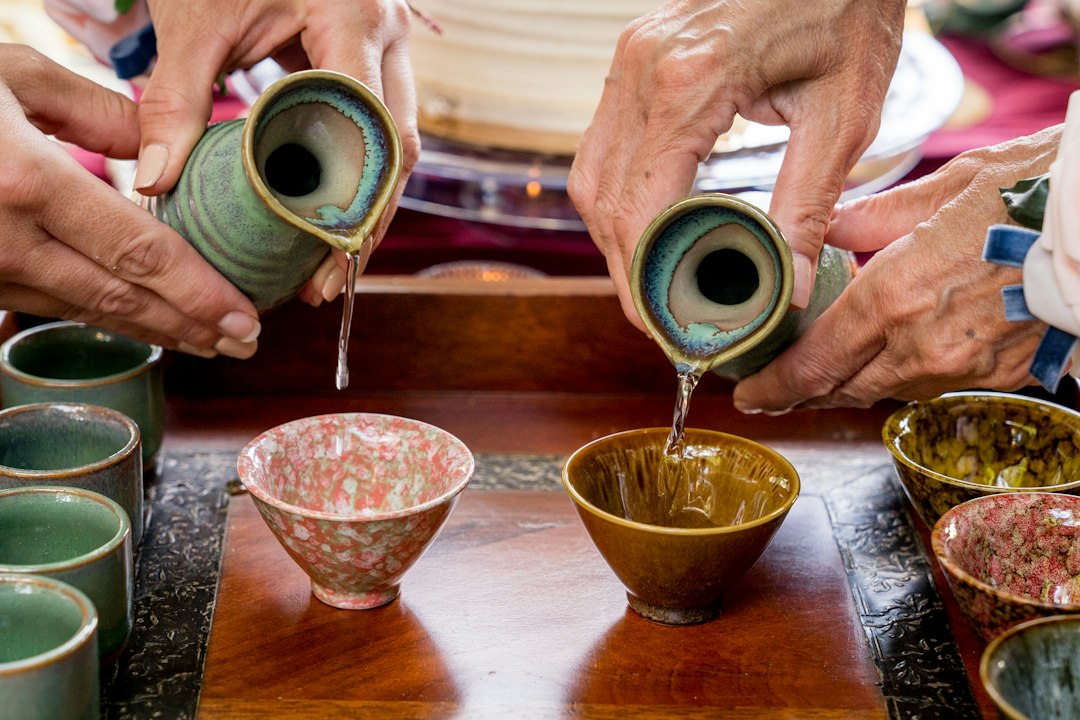
With shared bottles, the general custom is to fill other people’s glasses rather than your own, and to hold your glass up slightly when someone pours for you. If you have had enough, leave your glass full. An empty glass tends to get refilled.
Otoshi and Nomihodai
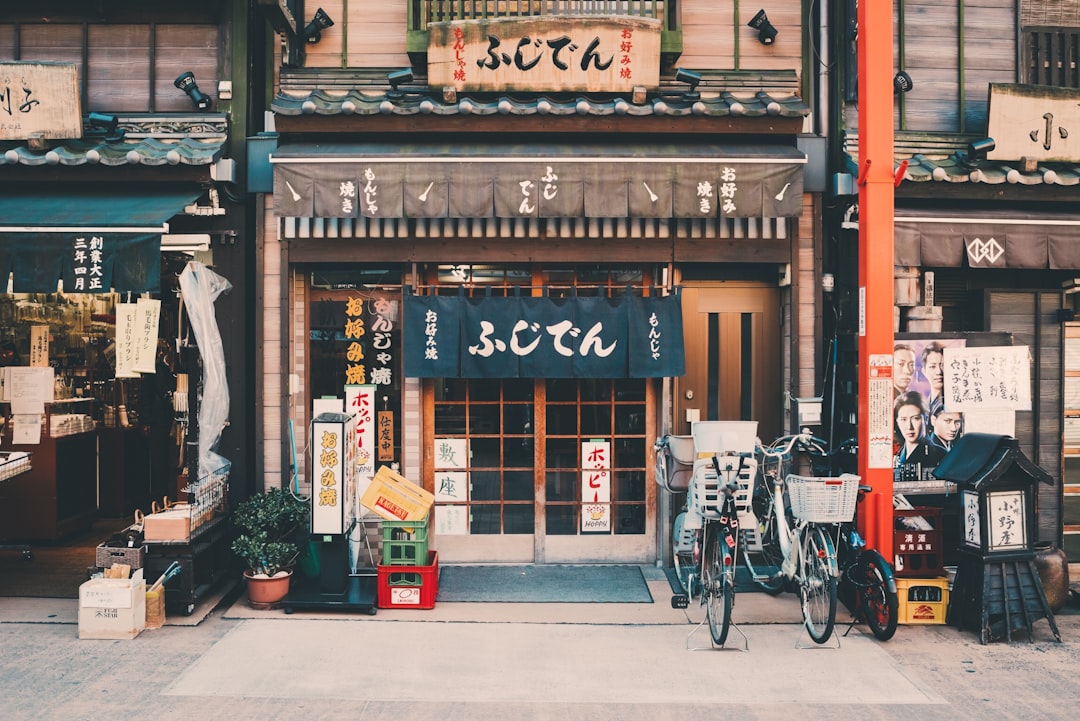
Shortly after you sit down at many izakaya, a small dish arrives that you did not order. This is otoshi, a small appetiser that doubles as a table charge, and it appears on the bill. It is not a mistake and it is not a scam. We explain it in more detail in our guide to navigating Japanese izakayas.
Nomihodai is all-you-can-drink for a fixed price over a set time, often 90 minutes or two hours. It usually covers beer, highballs, sours, and a basic sake and shochu, but not premium bottles. For a group that drinks steadily, it is good value. For two people who want to taste carefully, ordering by the glass is better.
Payment is another practical point. Small bars, standing counters, and many izakaya still prefer cash, so carry more than you think you need.
Convenience Stores, Vending Machines, and the Drinking Age
The legal drinking age in Japan is 20. Convenience stores, supermarkets, and liquor shops all sell alcohol, and self-checkouts ask you to confirm your age on screen.
Convenience store alcohol is inexpensive and varied, and a can of chuhai with onigiri on a hotel windowsill is a legitimate part of the Japanese drinking experience. That said, drinking while walking through busy streets is frowned on in many places, and some districts have introduced local restrictions. Drink where you bought it, or in your room.
Japanese Alcoholic Drinks: Frequently Asked Questions
What is the most popular alcoholic drink in Japan?
Beer. The large lager brands from Asahi, Kirin, Sapporo, and Suntory account for most of what is drunk. Among younger drinkers, highballs and lemon sours have become just as common an order at izakaya, while sake is drunk far less often than most visitors expect.
What is the difference between sake and shochu?
Sake is brewed, like beer or wine, and usually sits at around 15 percent alcohol. Shochu is distilled, like vodka or whisky, and usually sits between 20 and 40 percent. Sake is almost always made from rice, while shochu can be made from barley, sweet potato, rice, and other ingredients. Shochu is often diluted with water before drinking; sake is not.
Can I join a bar crawl in Japan if I don’t drink much?
Yes. Izakaya serve oolong tea, soft drinks, and non-alcoholic beer, and ordering them draws no attention. On our own bar crawls in Shinjuku and Osaka, every stop has non-alcoholic options and the price is the same. Many guests come mainly for the food and the rooms.
Related Tours

Conclusion
The most useful thing to know about Japanese alcoholic drinks is that the menu is built for pacing. Beer or a highball opens the evening, sours and shochu carry the middle, and sake arrives when the food becomes more delicate. Follow that order and you will be drinking the way the tables around you are.
On your first night, order one thing you already understand and one you do not. Try a lemon sour against a mugi mizuwari, or a cold ginjo against a warm junmai. Ask the staff what they would drink with the dish in front of you. The answer is usually better than anything on the menu’s first page.
Plan Your Japan Trip with Local Experts
Our team has guided 40,000+ travelers across Japan. Tell us about your trip and we’ll get back to you within 24 hours.