In this article:
- What Kuromon Market Is Today
- When to Go
- How to Eat at Kuromon
- Is Kuromon Market Worth It?
- Kuromon Market: Frequently Asked Questions
Introduction
At nine in the morning, Kuromon Market in Osaka smells of the sea and of charcoal that has only just caught. Fishmongers are still breaking down tuna on steel counters, a man is wheeling polystyrene boxes of shellfish toward a restaurant van, and the grills that will later feed a queue of visitors are warming up with nobody in front of them.
By one o’clock it is a different place. The aisle is shoulder to shoulder, the scallops are on sticks, and the cooks who buy here have long since gone back to their kitchens.
Both versions are real, and which one you get is mostly a question of timing. We send travelers to Kuromon often, because it is the easiest way to understand how seriously Osaka takes its food. However, we also tell them plainly how to use it, since a badly timed visit leaves a lot of people wondering what the fuss was about.
What Kuromon Market Is Today
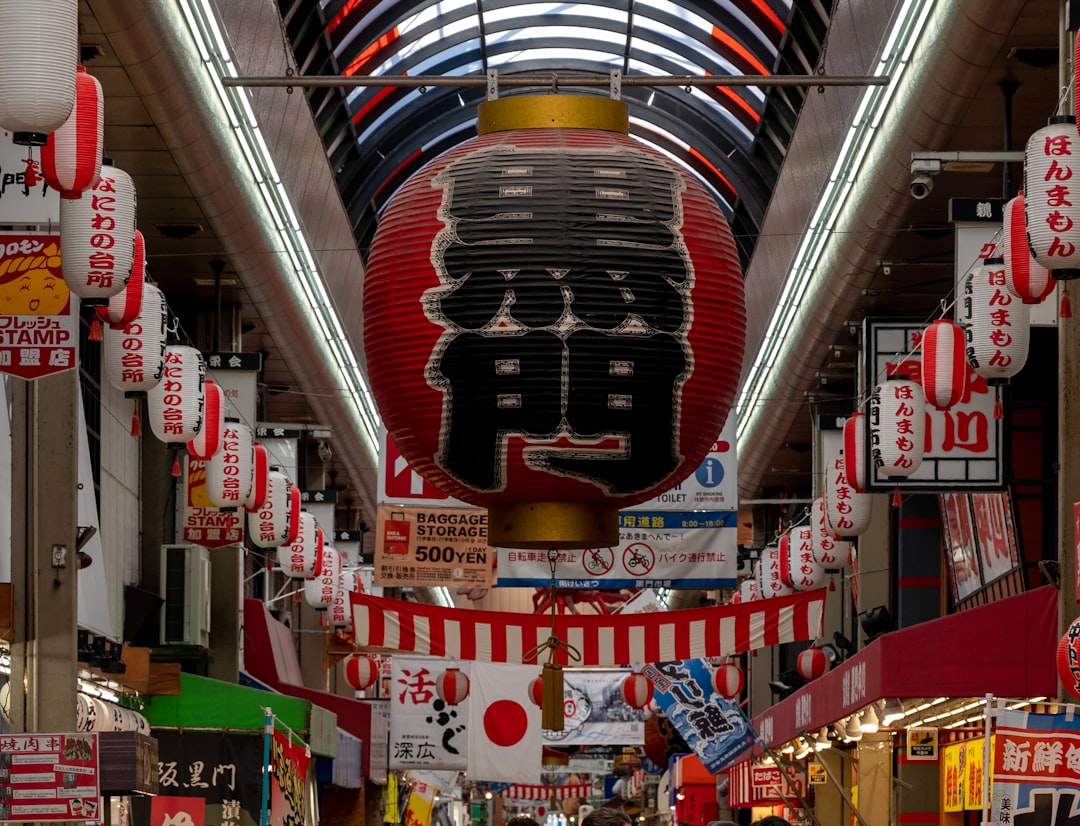
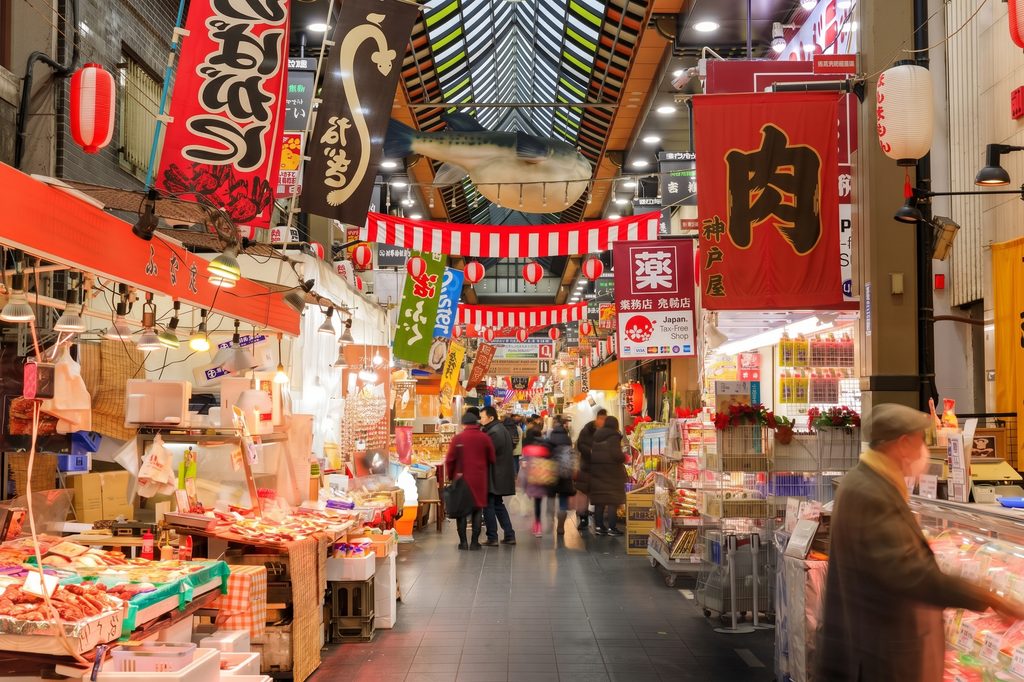
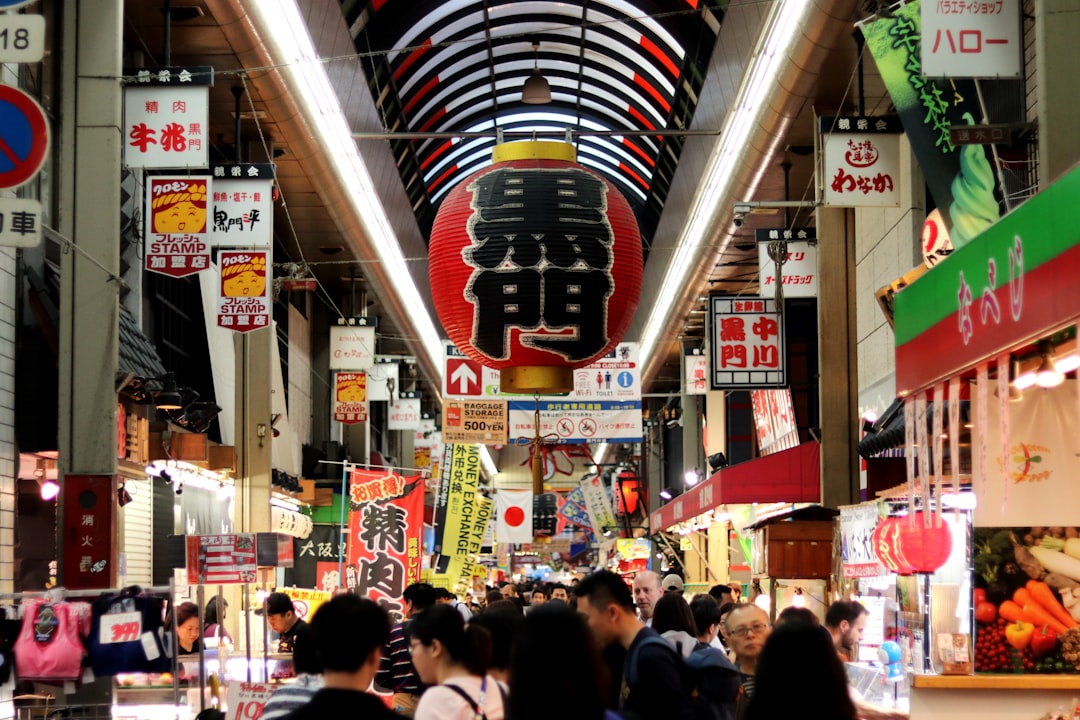
Kuromon is a single roofed arcade of about 580 metres in the Nipponbashi district, running parallel to Sakaisuji avenue on the eastern edge of Minami. Around 150 shops line it, and most of them sell fish, meat, produce, pickles, dried goods, or sweets.
It is not large. You can walk end to end in ten minutes if you do not stop, which nobody does.
From Enmyoji Market to the Black Gate
The market’s origins go back to the early 1820s, when merchants gathered near a temple called Enmyoji to sell fish brought in from Sakai and the Kishu coast. For most of the nineteenth century it was known as Enmyoji Market.
The temple had a black gate, and when the temple burned in the great Namba fire of 1912, the name that survived was the gate’s. Kuro means black and mon means gate. The market was destroyed again in wartime air raids and rebuilt after 1945, which is why almost nothing you see today looks old, even though the trade itself is.
That history matters for one practical reason. Kuromon grew up as a wholesale-leaning market for the city’s kitchens, not as an attraction, and that original trade has not disappeared.
A Chefs’ Market That Learned to Feed Visitors
Look past the grills and you will still see the older market. Shops selling whole fish on ice, fugu specialists, dried kelp and bonito flakes in bulk, and pickles by weight are there because Osaka restaurant cooks buy from them. The Osaka tourism office still describes the market as frequented by the itamae, the counter chefs of Japanese restaurants.
Over the past decade or more, however, many stalls have shifted toward ready-to-eat portions for visitors: a single grilled scallop, a cup of sea urchin, a skewer of beef. That shift is what most online criticism of Kuromon is about, and we will come back to it.
In practice, the market now runs on two tracks at once. The more interesting one is quieter and closes earlier.
Getting There From Namba and Nipponbashi
The nearest station is Nippombashi, on the Osaka Metro Sakaisuji and Sennichimae lines, and the market begins a few steps from its exits. From Namba Station it is roughly a ten-minute walk east, and from the far end of Dotonbori it is closer than most visitors expect.
That proximity is the whole case for building Kuromon into a Minami day rather than treating it as a separate outing. Den Den Town, Osaka’s electronics and anime street, sits just to the south if anyone in your group needs a reason to keep walking.
When to Go
Timing decides almost everything at Kuromon. Arrive at the wrong hour and you meet either shuttered stalls or a crowd so dense you cannot see what is being sold.
The Hours That Matter
Opening hours are set shop by shop, but most run roughly from 8am to 6pm. The market is at its liveliest from about 10am to 3pm, and many stalls begin packing away well before closing time.
Our recommendation is to arrive between 9am and 10am. The fishmongers are fully stocked, the grills are lit, and the aisle is still walkable. You see the working market and the eating market overlap, which is the version worth seeing.
Late afternoon is the worst choice. Travelers who come after a morning at Osaka Castle often find half the counters closing and the remaining ones picked over. Kuromon is a morning and lunchtime market, not an evening one.
Hamo in Summer, Fugu in Winter
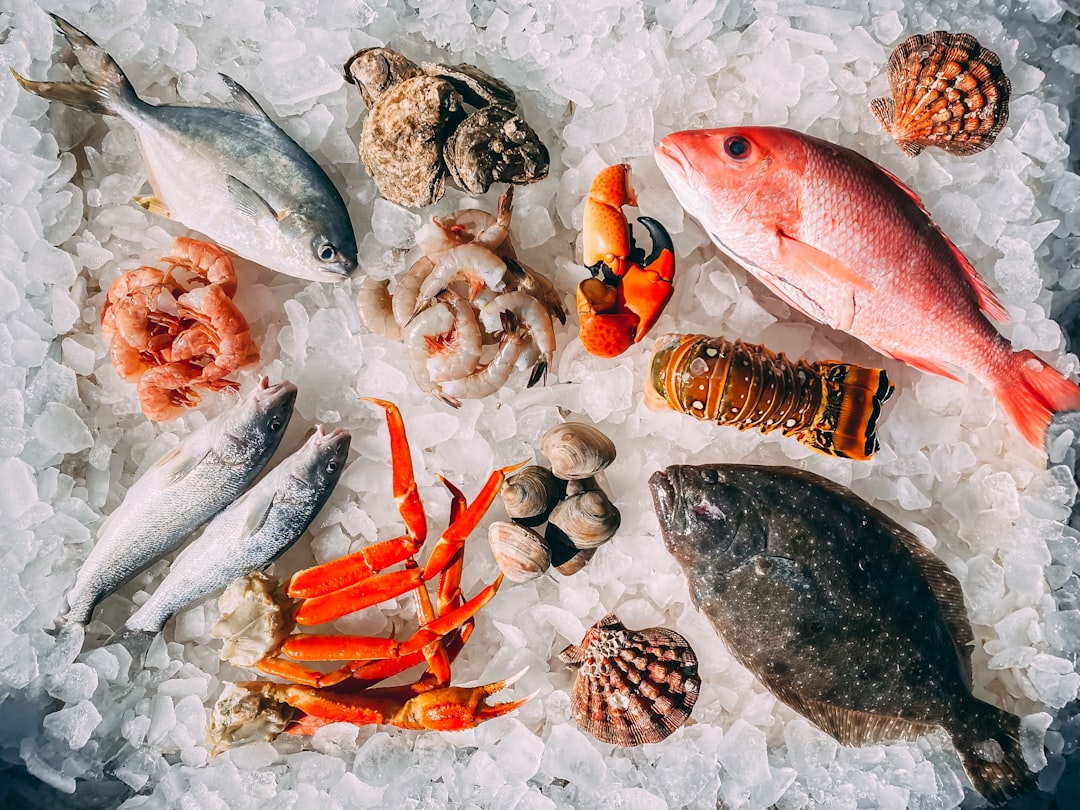
The market’s own guidance points to two seasonal fish above all. In summer it is hamo, pike conger, a bony eel-like fish that Kansai cooks score finely with a knife so the bones can be eaten, then blanch or grill. In winter it is fugu, the pufferfish, which several shops here specialise in.
Fugu must be prepared by licensed cooks, and at Kuromon you will see it sold both raw for restaurants and prepared for eating. If you are here between late autumn and early spring, this is the thing to try that you cannot easily find elsewhere at a market counter.
Soft-shelled turtle, suppon, is the other Kuromon speciality. It is mostly eaten in the colder months, usually as a rich hot pot, and it is one of the clearest signs that restaurant cooks still shop here.
Sundays and the End of December
A considerable number of shops close on Sundays and national holidays. The market still operates, but a Sunday visit shows you mainly the visitor-facing stalls, with the older trade shuttered. Weekday mornings are better on every count.
The last days of December are a separate case. Osaka households come to Kuromon to buy for New Year, and according to the Osaka tourism office daily visitor numbers at year-end rise to around 150,000, against roughly 18,000 on an ordinary weekday. It is one of the few times the market feels fully local again, and also one of the hardest times to move through it.
Expert Tip
Walk the full length of the arcade once before you buy anything. The first stalls near the Nippombashi end see the heaviest foot traffic, and the same scallop or skewer is often on offer further in, with a shorter queue and a counter to stand at. Ten minutes of looking will save you from spending your appetite on the first grill you pass.
How to Eat at Kuromon
Osaka has a word for eating as you go, tabe aruki, and the market uses it in its own publicity. Still, the way it works on the ground is more specific than the phrase suggests.
Eat Where You Buy
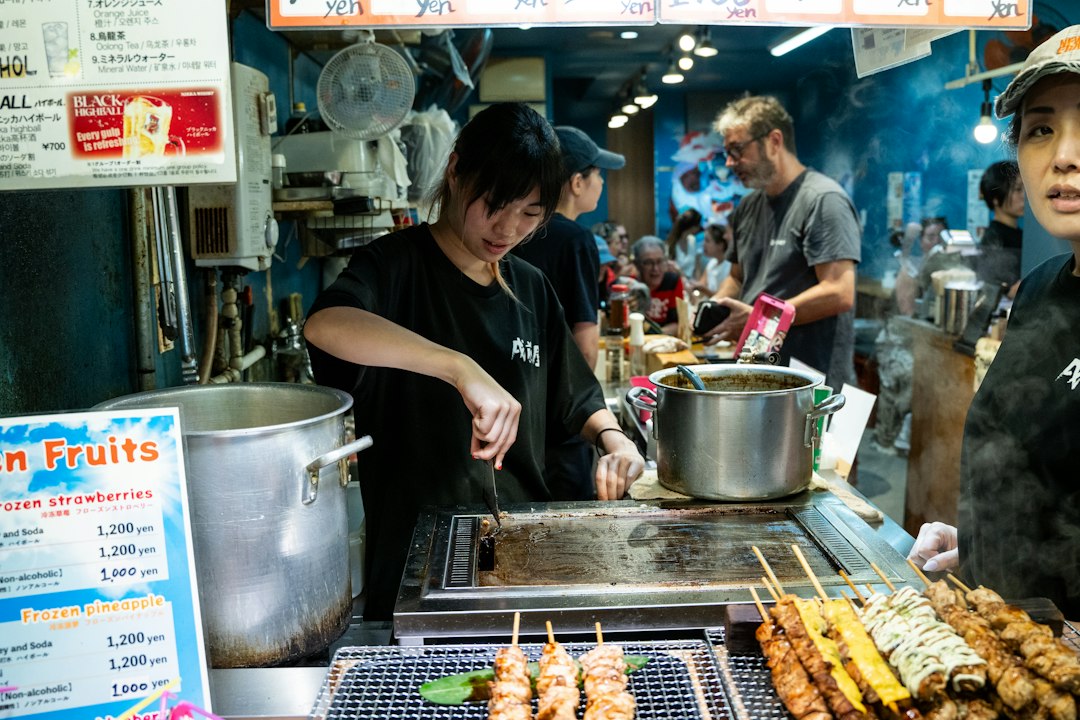
Do not walk while eating. The market asks visitors to step aside rather than stopping in the middle of the aisle, and to hand food waste back to the shop it came from. In practice that means eating at the stall where you bought the food, and most counters selling prepared food have a small ledge or standing space for exactly this purpose.
This is less about etiquette for its own sake than about the physical space. The aisle is narrow, the crowds are dense by late morning, and a skewer of grilled beef held at shoulder height is a hazard to the person behind you.
Photographs are generally fine, but ask before pointing a camera closely at a vendor or their work. And do not bargain. Prices are fixed, as they are almost everywhere in Japan.
What to Order
The market’s strength is seafood, and that is where we suggest you spend most of your appetite. Grilled scallops, crab legs, oysters, sea urchin, and tuna sashimi or sushi are all widely available, along with grilled eel. The fishmongers are the reason the market exists, so the quality here is at its most reliable.
Beyond seafood, you will find grilled beef skewers, yakitori, takoyaki, pickles, and cut seasonal fruit. Strawberries in late winter and peaches in summer are worth the price if you have not had Japanese fruit before, although neither is cheap.
We would skip the takoyaki here. Osaka’s best octopus balls are made at dedicated stalls elsewhere in Minami, and our takoyaki guide explains what separates a good one from a tourist version.
The Information Center and Paying
The Kuromon Market Information Center has a free rest area where you can sit and eat what you have bought, along with toilets, sorted rubbish bins, paid luggage storage, and a currency exchange machine. It opens from 9am to 6pm with no regular closing day.
That rest area changes the experience considerably. Buy three or four things along the arcade, carry them unopened, and sit down with them together instead of eating each one standing at a separate stall.
Carry cash. Some larger shops accept cards, but many small counters do not, and the gap between a card-friendly stall and a cash-only one is not visible from the aisle.
Is Kuromon Market Worth It?
Yes, with conditions. Kuromon is worth an hour for a traveler who goes in the morning, eats seafood, and treats the market as the start of a day in Minami rather than the main event of it.
The Tourist-Price Question
The criticism you read online is fair as far as it goes. Many ready-to-eat stalls now price for visitors, portions are small, and a plate of grilled seafood here costs more than the same money would buy at a sit-down lunch a few streets away. Some Osaka residents who shopped here for years say they now go elsewhere.
That said, the criticism usually comes from visitors who arrived at one in the afternoon, ate at the first grill they saw, and left. The fishmongers, pickle shops, and dried-goods merchants who supply restaurants are still trading, and their quality has not dropped. Kuromon has not stopped being a real market. It has added a second one on top.
Our view is that the premium is worth paying for a small number of things done well, such as a cup of good sea urchin or a plate of winter fugu. It is not worth paying for a full meal assembled from snacks.
Fitting It Into a Day in Minami
The day we build most often starts at Kuromon at 9:30am, moves west on foot to Dotonbori for the canal and the signage, and leaves the evening for the backstreets. On our private Osaka tour, Kuromon is one of the usual candidates for lunch, although the guide makes the final call on the day depending on what looks good and how crowded the arcade is.
Evenings are for elsewhere. Kuromon closes early, and the city’s serious eating after dark happens in Ura-Namba, the tangle of lanes behind Namba Station. Our Dotonbori food tour ends up there, with thirteen dishes across a takoyaki stall, an izakaya, and a standing bar where you eat on your feet among people just off work.
Taken together, the morning market and the evening backstreets show you Osaka’s food culture from both ends. For a broader picture of what to eat across the city, see our guide to Osaka food.
Expert Tip
If you are staying in Osaka for several nights, go to Kuromon on your first or second morning, not your last. The fishmongers and pickle sellers will point you toward what is in season that week, and that tells you what to order at dinner for the rest of your stay.
Kuromon Market: Frequently Asked Questions
What time does Kuromon Market open and close?
Each shop sets its own hours, but most operate from about 8am to 6pm, and many start closing earlier in the afternoon. A considerable number close on Sundays and national holidays. For the best balance of open stalls and manageable crowds, arrive on a weekday between 9am and 10am.
Can you eat while walking at Kuromon Market?
No. Walking while eating is discouraged here, and the usual practice is to eat at the stall where you bought the food. If you want to sit down, the free rest area at the Kuromon Market Information Center is the place to take what you have bought.
Is Kuromon Market better than Nishiki Market in Kyoto?
They are different markets. Kuromon is the stronger of the two for seafood and has more room to eat on the spot, while Nishiki leans toward Kyoto’s pickles, tofu, and preserved foods. Our guide to Nishiki Market covers the Kyoto side, and if you are visiting both cities, both markets are worth a morning.
Related Tours

Conclusion
Kuromon Market is not a place to eat a full meal, and it is not a place to visit in the late afternoon. It is a working fish market with a visitor market layered on top, and it shows its best side to people who come early and buy selectively.
Go on a weekday morning, walk the length of the arcade before spending anything, and put your money into seafood. Carry cash, eat at the stall or in the rest area, and be back out on Sakaisuji before the midday crowd arrives. Then leave your appetite for Ura-Namba after dark.
Plan Your Japan Trip with Local Experts
Our team has guided 40,000+ travelers across Japan. Tell us about your trip and we’ll get back to you within 24 hours.