In this article:
- Minami After Dark: Dotonbori, Hozenji, and Uranamba
- Kita: Kitashinchi, Tenma, and the Alleys Around Umeda
- Shinsekai, Shinsaibashi, and the Late End of the Night
- How an Osaka Night Actually Runs
- Osaka Nightlife: Frequently Asked Questions
Introduction
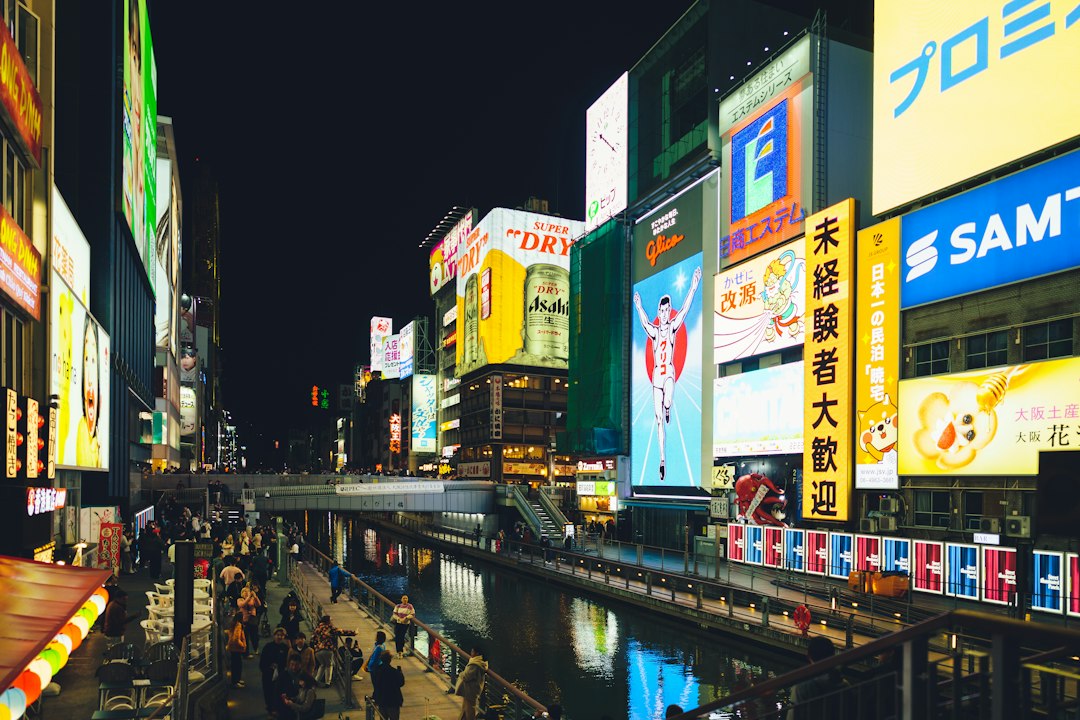
Most guides to Osaka nightlife start and end on the bridge over the Dotonbori canal, under the Glico running man. That is the right place to begin and the wrong place to stay.
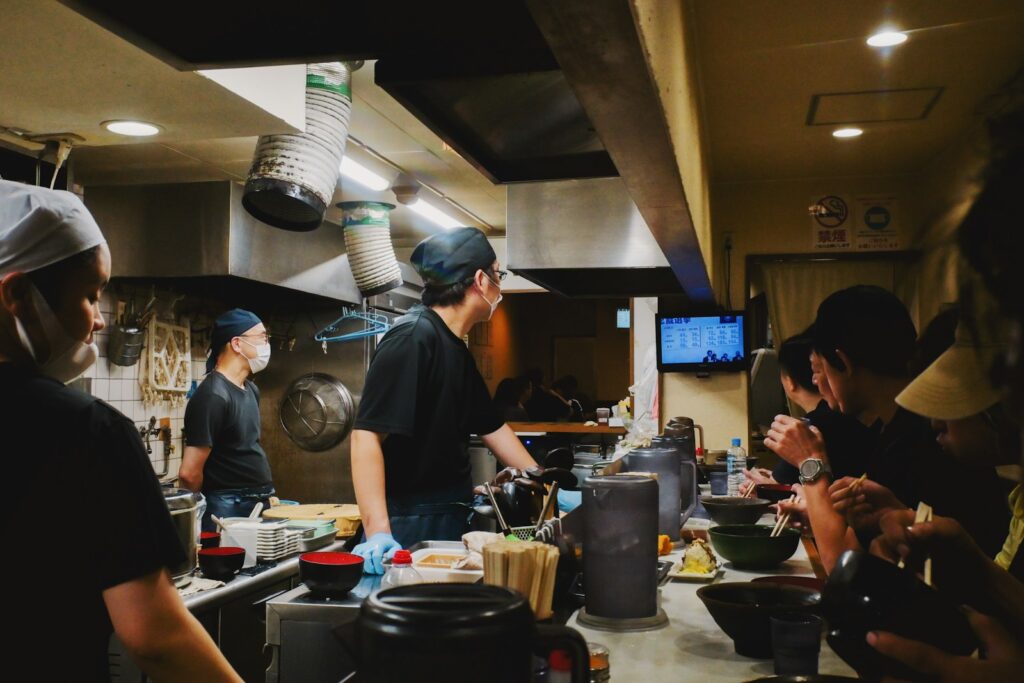
A few minutes away, past a statue furred in green moss and down a lane of paper lanterns, the city behaves differently. Office workers stand at counters with a highball and a plate of fried skewers. The man behind the grill remembers what your neighbor ordered last week. Strangers talk to each other, which in Tokyo would be unusual and in Osaka is more or less the point.
Osaka grew up as a merchant city, and it still drinks like one: early, cheaply, loudly, and always with food. For the travelers we work with, people who know the cocktail bars of London and the wine bars of Paris, the appeal is not glamour. It is a city unusually willing to let an outsider sit down and join in. What follows is how the districts differ, and how a night here actually works.
Minami After Dark: Dotonbori, Hozenji, and Uranamba
Minami, the southern half of central Osaka, is where most visitors spend their evenings, and with good reason. The three places a first night should include are all within walking distance of Namba Station, and each shows a different side of the city.
Dotonbori: See It, Then Leave
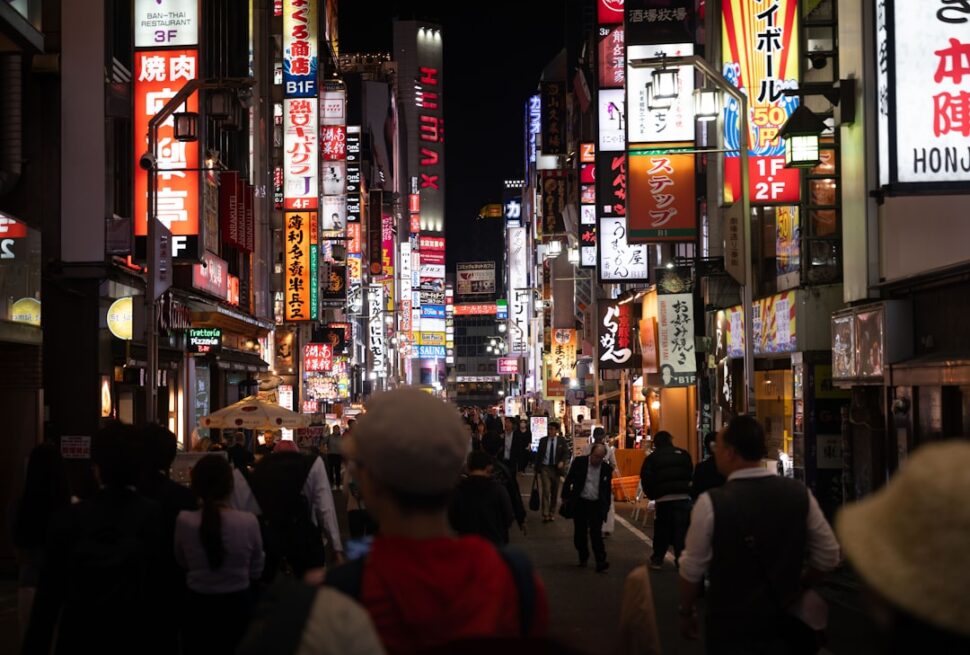
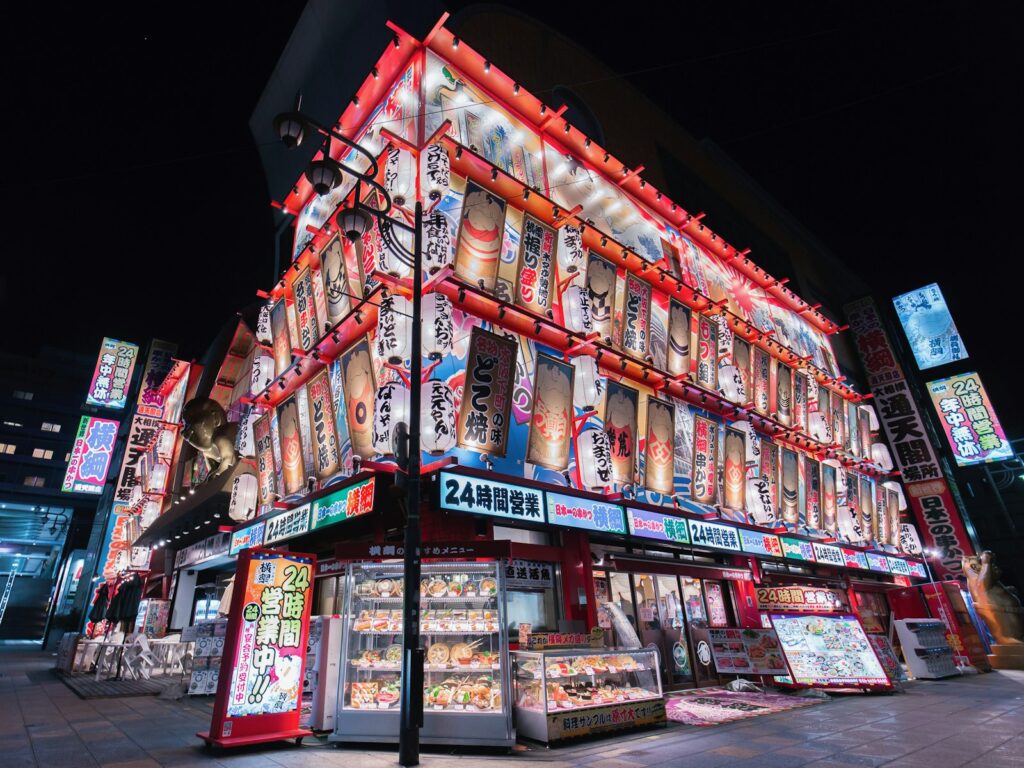
Dotonbori is the canal-side strip of giant mechanical crabs, takoyaki stands, and illuminated signs stacked up the building fronts. After dark it is exactly as loud as the photographs suggest. Walk it once, eat something from a stall, and read our guide to Dotonbori’s street snacks first if you want to know which queues are worth joining.
That said, few people who live in Osaka drink on the main strip. The rents are high, the menus are built around photographs, and the room is full of other visitors. The better evening begins when you turn off it.
Hozenji Yokocho
A short walk from the canal is Hozenji, a small temple whose statue of the deity Fudo Myoo is covered almost entirely in moss. The moss is there because worshippers splash water on the statue instead of leaving offerings, and have done so for long enough that it has grown thick and green. People still stop on their way to dinner: a ladle of water, a brief bow, and on they go.
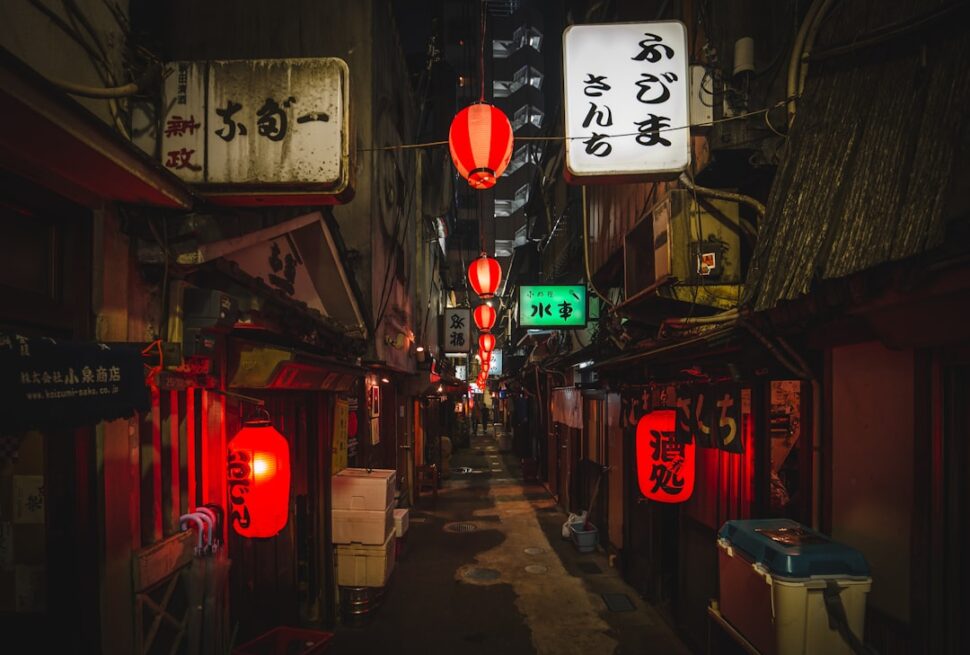
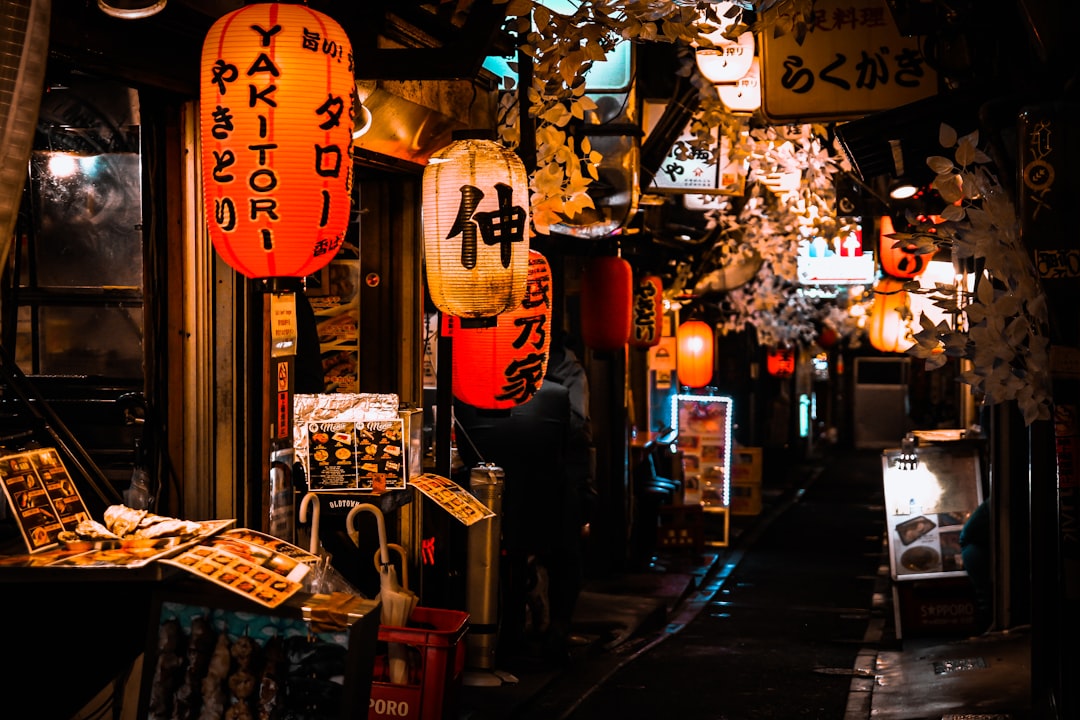
Behind the temple runs Hozenji Yokocho, a narrow stone-paved lane with about sixty bars, izakaya, and restaurants. It is lantern-lit and noticeably quieter than the streets around it. We treat it as a place for a proper sit-down dinner rather than somewhere to wander in for one drink, and we book ahead.
Uranamba, Where Osaka Drinks
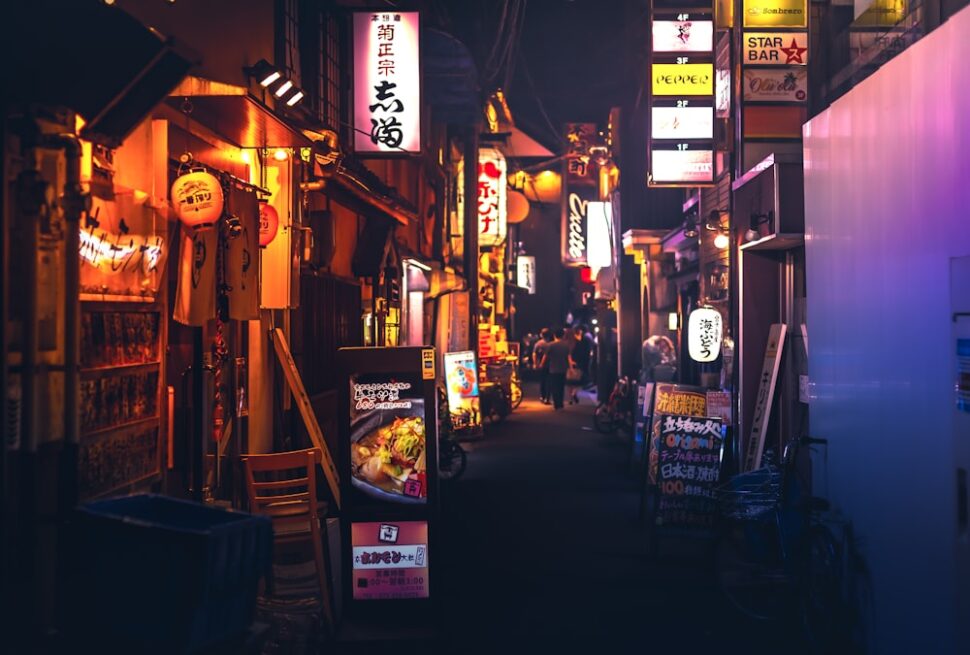
Uranamba means “behind Namba”, and the name is literal. It is a loose tangle of lanes behind Namba Station, running off the Doguyasuji kitchenware arcade, filled with standing bars, yakitori counters, oyster bars, and izakaya so small that a group of ten fills them.
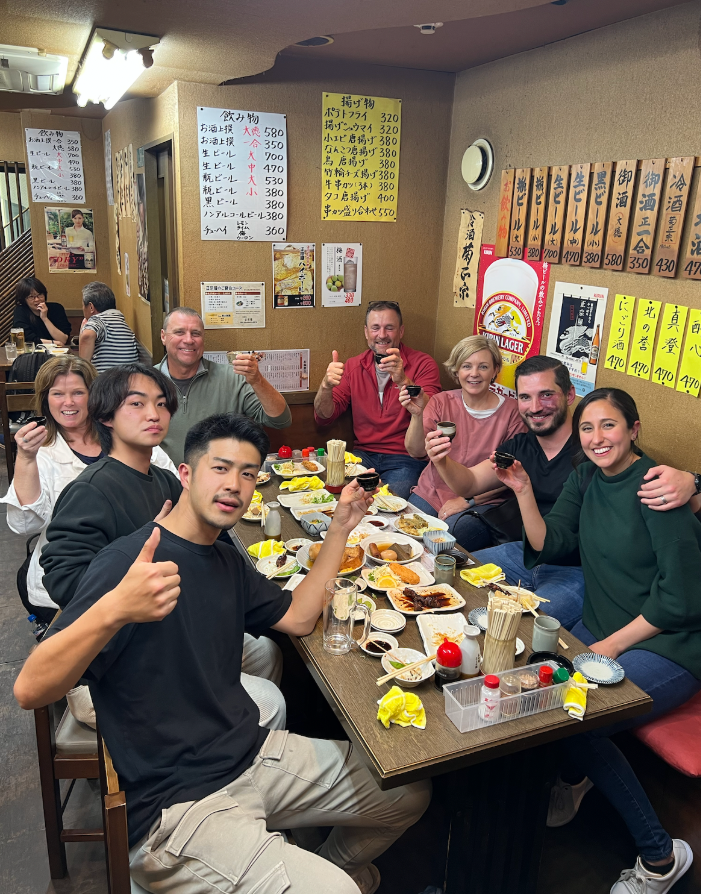
If a traveler had one night in Osaka, this is the district we would choose. The rooms are cramped and smoky in places, the prices are modest by Tokyo standards, and the regulars tend to be curious rather than territorial. A plate of chicken skewers, a highball, and a conversation with the person on your left is an ordinary weeknight here.
Our Osaka bar crawl follows roughly this route. It meets near the Glico sign, stops at Hozenji, then spends most of its three hours in Uranamba, moving from a first izakaya to a second room nearby. Food and drinks are paid at each counter, and the guide suggests budgeting around ¥7,000 per person, in cash.
Expert Tip
Walk through Uranamba once at around 6pm before you commit to anywhere. The counters already full of office workers, with a handwritten menu on the wall, are the ones worth coming back to at 8pm. Anyone on a street corner offering to take you to a cheap bar is worth ignoring.
Kita: Kitashinchi, Tenma, and the Alleys Around Umeda
North of the river, Osaka’s evenings split into two very different moods. Kitashinchi is expensive and discreet. Tenma is cheap, crowded, and cheerful, and most visitors never find it.
Kitashinchi
Kitashinchi, a short walk south of Osaka Station, is the city’s formal drinking district. Its blocks of narrow buildings hold serious cocktail and whisky bars, high-end sushi counters, and a large number of hostess clubs, many of them on upper floors with only a small sign at street level.
It is the one area in Osaka where we tell travelers to dress up a little and to ask about charges before sitting down. Seat charges are common in the smaller bars. Hostess clubs price by the hour and by the bottle, on terms that have little to do with the cost of a drink, and they are not what most visitors are looking for.
For a considered evening around one very good whisky, or a bartender who treats a single drink as a craft, Kitashinchi is where to look. A reputable bar will tell you its cover charge when you ask. If the answer is vague, leave.
Tenma and the Lanes Behind the Arcade
Tenma is the opposite. The district grew up around Osaka Tenmangu Shrine and Tenjinbashisuji, a covered shopping street that runs for about 2.6 kilometres and is billed as the longest in Japan. Once the shops close, the lanes around Tenma Station fill with small izakaya, seafood counters, and standing bars.
In our experience, far fewer overseas visitors drink here than in Minami, and that is much of the appeal. Prices are lower, English menus are rarer, and the clientele is overwhelmingly local. Tenma rewards the traveler on a second visit to Osaka who has already done Dotonbori and wants the same kind of evening without the crowd.
Ohatsu Tenjin Urasando and Nakazakicho
Closer to Umeda, Ohatsu Tenjin Urasando is a covered lane barely sixty metres long, lined with bars and small restaurants and about five minutes on foot from Osaka Station. It works well for a drink before dinner if you are staying in the north of the city.
One subway stop from Umeda, Nakazakicho is quieter again. Old wooden houses there have been turned into cafes, small bars, and vintage shops. It is not a place for a big night. It is a place for one glass of wine and a long conversation.
Shinsekai, Shinsaibashi, and the Late End of the Night
Two more districts complete the picture, and they could hardly be less alike. One is at its best at 5pm, the other at 2am.
Shinsekai and the Kushikatsu Counters
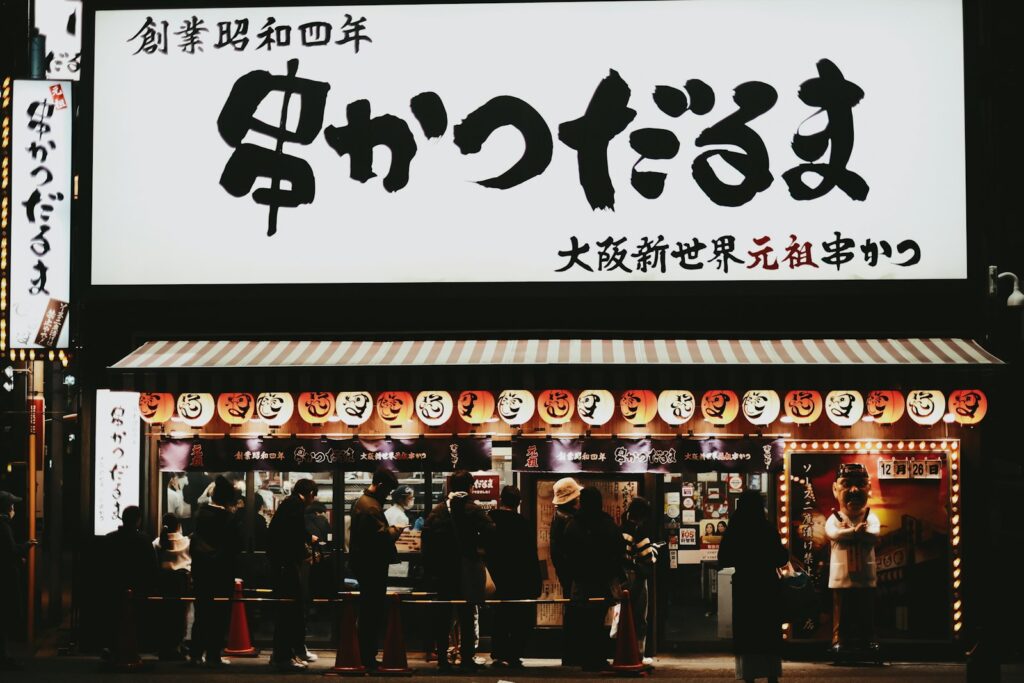
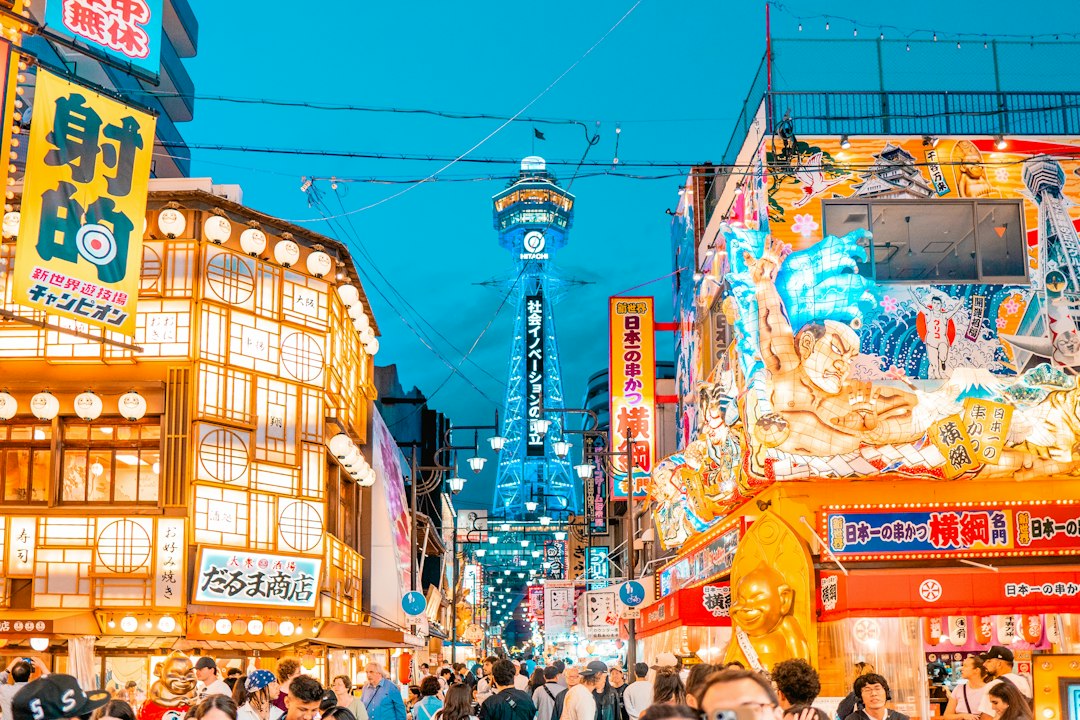
Shinsekai grew up around Tsutenkaku Tower more than a century ago, and it still looks the part: faded neon, old game halls, and Janjan Yokocho, a narrow arcade lined with kushikatsu counters. Kushikatsu is meat, seafood, and vegetables, battered, deep-fried, and served on skewers. A plate of them with a cold beer is the classic Shinsekai evening.
The rule everyone learns here concerns the sauce. The metal pot of thin, dark sauce on the counter is shared, so you dip each skewer once, before you bite, and never again. If you want more, use a piece of the free raw cabbage as a scoop.
We send travelers here early rather than late. Some of the older shops keep restaurant hours rather than bar hours, so check before you go, and think of Shinsekai as the opening act of an evening rather than its finale.
Shinsaibashi and Amerikamura Clubs
If the night is going to involve a dance floor, it will almost certainly be in Shinsaibashi or neighboring Amerikamura, where most of Osaka’s larger clubs sit within a few blocks of each other. Amerikamura is the city’s youth-culture quarter: secondhand clothing, street art, and a small concrete plaza, Triangle Park, where people gather before heading inside.
Clubs here do not fill until well after midnight, and they check photo ID at the door. Bring your physical passport, since a photograph of it on your phone is unlikely to be accepted. The legal drinking age in Japan is 20.
We will be direct about this. The club scene is not why our travelers come to Osaka, and it is not where the city is most itself. The counters are.
Expert Tip
Split the evening between two districts. Start in Shinsekai or Tenma at around 5pm, when the counters fill with people coming straight from work, then take the subway to Namba and move on to Uranamba from 8pm. Moving from one place to the next is how Osaka drinks anyway, and it gives you two quite different versions of the city in a single night.
How an Osaka Night Actually Runs
The mechanics of an evening here are simple once you know them. Almost none of them are written down anywhere in English.
Timing and the Second Room
Izakaya open from around 5pm, and the first wave of customers is people leaving the office. Bars fill from about 8pm. Few Osaka nights have a single destination: one drink and two plates, then on to the next counter, is completely normal.
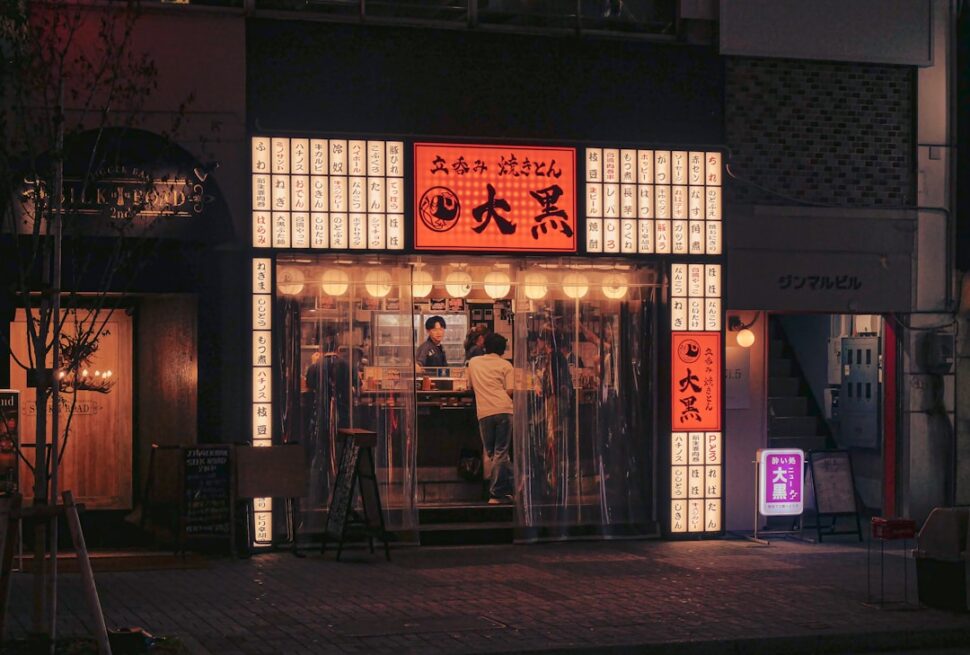
The easiest entry point for a first night is a tachinomiya, or standing bar. There are no seats and no reservations, the plates are cheap, and nobody expects you to stay long. Our Dotonbori food tour ends in one, after takoyaki at a stall and a round at an izakaya, with thirteen dishes and two drinks spread across the three stops.
Cash, Cover Charges, and the Dish You Did Not Order
Bring cash. Card acceptance has improved at chains, but the small counters in Uranamba and Tenma are still often cash-only. A few thousand yen in notes per stop solves the problem.
Many izakaya also serve a small appetizer, the otoshi, as soon as you sit down, and add a charge of a few hundred yen per person for it. It is effectively a seat charge, not a mistake on the bill. Our izakaya guide explains how it works and what to order after it. Tipping, by contrast, is not expected anywhere in this article.
Smoking
Osaka’s rules here are counterintuitive. Since January 2025, smoking on the street has been banned across the whole of Osaka City, vapes included, and patrols can issue a ¥1,000 fine. Indoors, a prefectural ordinance has pushed larger restaurants to go smoke-free or move smokers into enclosed rooms.
The result is that the pavement outside is smoke-free, while many small bars still allow smoking inside. If smoke matters to you, ask at the door before you sit down. Most places will tell you straight away, and it is a perfectly ordinary question.
Last Trains and Taxis
The subway stops around midnight. At the time of writing, the last Midosuji Line train from Namba toward Umeda leaves at about ten past midnight, and some other lines and directions stop earlier. Check the timetable before your final round, not after it.
After that you are in a taxi. Most Osaka taxis add a 20 percent late-night surcharge between 10pm and 5am. Even so, the ride between Namba and Umeda is short, and for two or three people sharing it is a reasonable way to end the night.
Osaka Nightlife: Frequently Asked Questions
Is Osaka nightlife better than Tokyo’s?
It is different rather than better. Tokyo has more of everything, including more high-end cocktail bars and a larger club scene. Osaka is cheaper, more food-led, and more sociable, and the person on the next stool is far more likely to start a conversation. For a traveler who wants to meet a city rather than observe it, we would choose Osaka.
Is Osaka safe at night?
Central Osaka is safe by international standards, including the busy drinking districts late at night. The risk visitors actually meet is financial: touts in parts of Minami and Kitashinchi who offer to take you to a cheap bar that turns out to be anything but. The pattern is the same one we describe in our Tokyo nightlife safety guide: decline, choose venues yourself, and ask about cover charges before sitting down.
Can I enjoy Osaka nightlife if I do not drink?
Yes. Izakaya and standing bars serve tea, soft drinks, and usually non-alcoholic beer, and ordering them draws no comment. Much of an Osaka night is about the food in any case. Takoyaki, kushikatsu, and grilled skewers carry the evening just as well without a beer beside them.
Related Tours

Conclusion
Plan an Osaka night by district rather than by venue. Choose one area in Minami and one in Kita or Shinsekai, start the first at around 5pm, and leave the second open. Specific bar names matter less here than in Tokyo, because the good rooms are small, change often, and are found by walking.
Before you head out, put ¥10,000 in notes in your pocket, check the time of the last train back to your hotel, and carry your passport if the night might end in a club. Then walk past the Glico sign, turn off at the moss-covered statue, and take the first free stool at a counter that looks full.
Plan Your Japan Trip with Local Experts
Our team has guided 40,000+ travelers across Japan. Tell us about your trip and we’ll get back to you within 24 hours.