
In this article:
- Kakunodate and Lake Tazawa: The Center of Gravity
- Nyuto Onsen: Seven Inns in a Beech Forest
- The Oga Peninsula and the Namahage
- Akita City, the Table, and the Seasons
- Akita Prefecture: Frequently Asked Questions
Introduction
Akita Prefecture is one of the least visited corners of Honshu, and most of its appeal follows from that fact. It is the sixth largest prefecture in Japan by area and home to fewer than a million people, spread along the Sea of Japan coast and up into the Ou Mountains.
Walk the samurai street in Kakunodate on a weekday in June and you may share it with a handful of other people. The black board fences run unbroken for several hundred metres, the moss under the maples is undisturbed, and the only sound is gravel. Compare that with a Kyoto temple district on the same morning and you understand why the travelers we work with keep asking about the north.
That said, Akita rewards planning more than most regions. The highlights sit far apart, buses run a few times a day, and winter reshapes everything. This guide is about how to fit the pieces together, not a list of every sight.
Kakunodate and Lake Tazawa: The Center of Gravity
If you have one day in Akita, spend it here. Kakunodate and Lake Tazawa sit close to each other in the eastern half of the prefecture, and both are stops on the Akita Shinkansen.
The Samurai Street and Its Six Open Houses
Kakunodate was laid out as a castle town in 1620, split into a samurai quarter and a merchant quarter. The castle is long gone. The samurai quarter was never redeveloped, however, and the wide main street still runs between the dark wooden gates and walls of the original residences.
Six of the houses are open to visitors: Aoyagi, Ishiguro, Iwahashi, Kawarada, Matsumoto, and Odano. Aoyagi is the largest, a compound of several buildings with collections of armor, swords, and household objects, and it can easily absorb an hour. Ishiguro is smaller and more affecting, because the family still lives in part of the house.
Our view is that two houses are enough. Choose Aoyagi for breadth and Ishiguro for atmosphere, then spend the rest of your time walking the side lanes, which are where the town feels lived in rather than displayed. The samurai district is about a fifteen-minute walk from Kakunodate Station.
Lake Tazawa, Gozanoishi Shrine, and the Tatsuko Statue
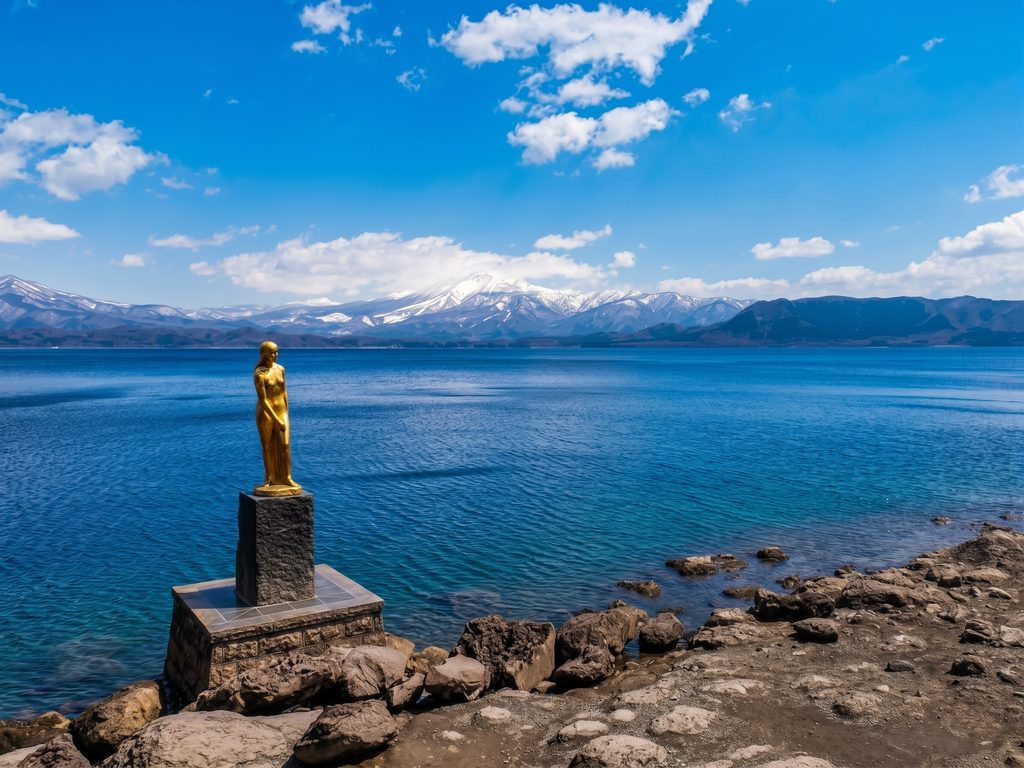
At 423 metres, Lake Tazawa is the deepest lake in Japan. That depth gives the water its color. At midday under a clear sky, the center of the lake turns a dense, almost ink-like blue that photographs never quite reproduce.
Gozanoishi Shrine stands on the northern shore, with a red torii set at the water’s edge. The shrine is dedicated to Tatsuko, a local woman who, according to legend, wished for eternal beauty and became the dragon of the lake. On the western shore, a gilded bronze statue of her from 1968 stands in the shallows.
The road around the lake is about the right length for an unhurried drive with a few stops. We prefer the northern side in the late afternoon, when the light comes low across the water and the tour buses have left.
Pairing the Two in One Day
Kakunodate and Lake Tazawa fit comfortably into a single day with a vehicle. On public transport it is still possible, though you will spend more of the day watching timetables than looking at samurai houses.
This pairing is the core of our private Akita day tour, which adds Senshu Park in Akita City and adjusts the order to the season and the weather. For most travelers, it is the right shape for a first day in the prefecture.
Expert Tip
Kakunodate’s weeping cherries flower in late April, and the town fills accordingly. If you want the samurai street without crowds, go in June for fresh green maples or in late October for autumn color. The fences and gates are the real subject, and they look better without a thousand people in front of them.
Nyuto Onsen: Seven Inns in a Beech Forest
Nyuto Onsen is the reason many of our guests come to Akita at all. It is a cluster of seven small inns scattered through beech forest at the foot of Mount Nyuto, above Lake Tazawa, each with its own source and its own water.
The seven are Tsurunoyu, Taenoyu, Kuroyu, Ganiba, Magoroku, Okama, and the Kyukamura national park resort. None of them is large. Several still use wooden bathhouses, and the water ranges from clear to cloudy white to faintly blue depending on the spring.
Tsurunoyu and the Milky-White Water
Tsurunoyu is the oldest of the group. Lords of the Akita domain stayed here during the Edo period, and the thatched-roof main building still houses guests. Its outdoor bath, milky white with fresh spring water bubbling up from the stones beneath, is the image that appears on almost every poster for the region.
That bath is mixed-gender, which surprises some visitors. There are separate indoor baths for men and women. Still, if you are uncomfortable with mixed bathing, consider Taenoyu or Kuroyu instead, both quieter and no less beautiful. Our onsen etiquette guide covers the basics that apply at all seven.
Getting There and the Yumeguri-cho Pass
Buses from Tazawako Station take about 45 to 50 minutes and run only a few times a day. Check the schedule before you commit to an arrival time, and plan to stay overnight rather than day-tripping.
Staying overnight also unlocks the Yumeguri-cho, a pass sold only to guests of the seven inns. At ¥2,500 it gives one bath at each inn plus rides on the small shuttle that links them. We think it is the best-value purchase in the prefecture.
Book early. Tsurunoyu in particular fills months in advance, and its reservations open about six months out.
The Oga Peninsula and the Namahage
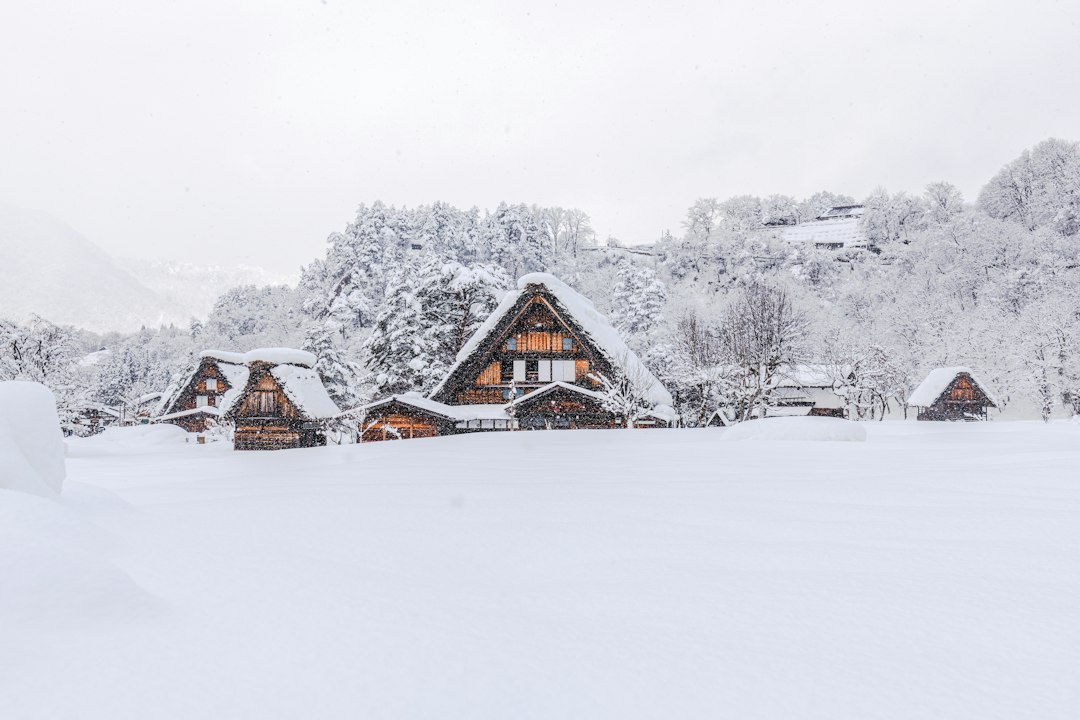
The Oga Peninsula juts into the Sea of Japan northwest of Akita City, and it is the home of the Namahage. It lies in a separate direction from Kakunodate and Lake Tazawa, so treat it as its own day rather than an add-on.
What the Namahage Actually Are
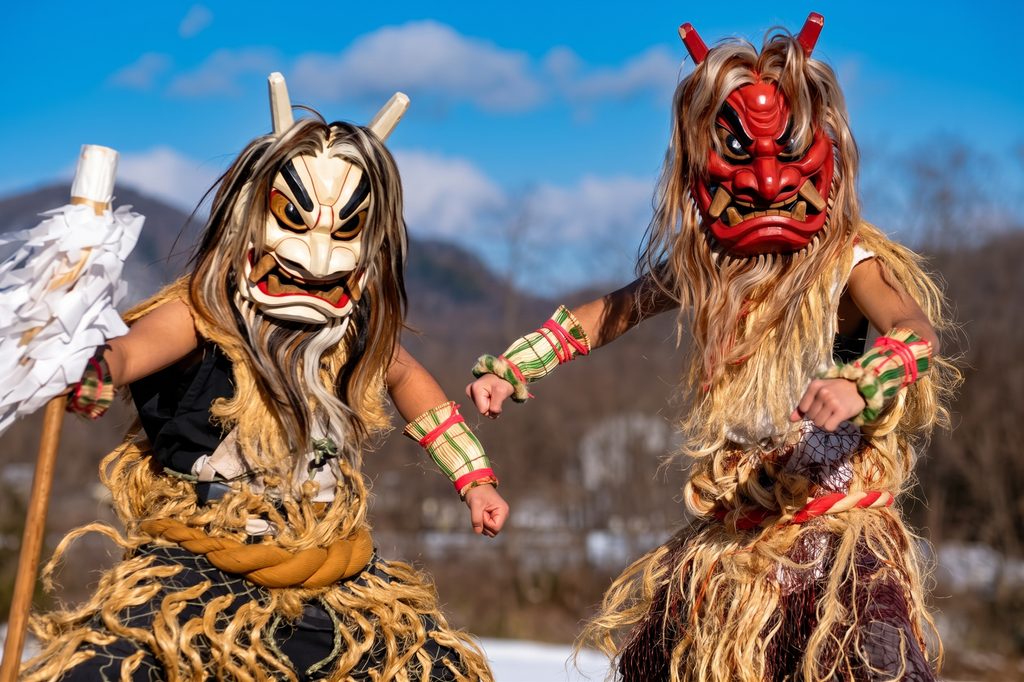
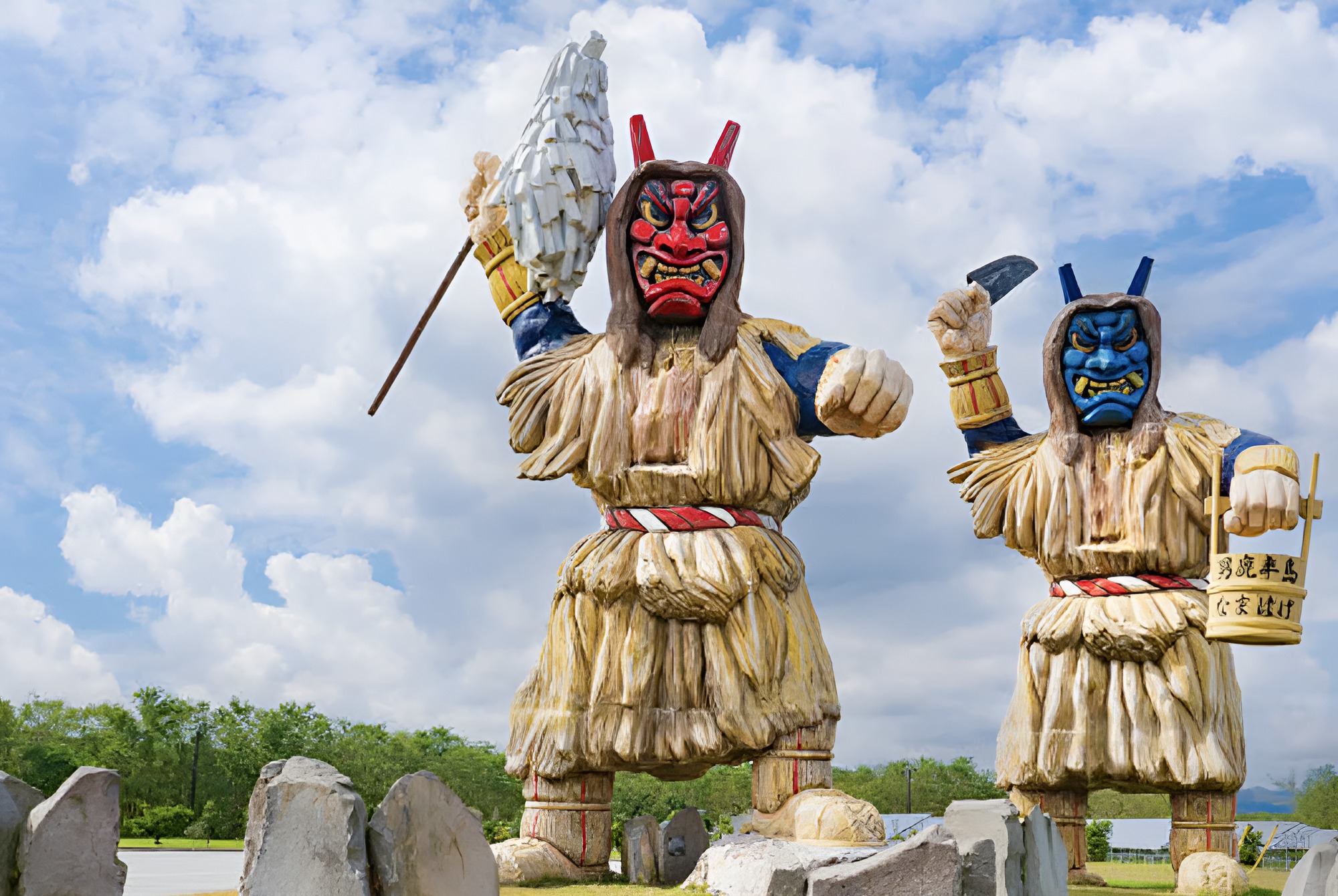
On New Year’s Eve, young men in Oga put on demon masks and straw capes and go from house to house, stamping and shouting. They look for children who have been lazy or disobedient, and for adults who have spent too long sitting by the fire. The household head calms them with sake and food, and they leave with a blessing for the coming year.
The tradition is recognized by UNESCO as intangible cultural heritage. It is also, in our experience, the part of Akita that visitors remember most vividly. Folklore here is not a museum subject. People in Oga still talk about the Namahage as something that happens, not something that happened.
Seeing Them Outside New Year’s Eve
Most travelers will not be in Oga on December 31, and the house visits are not staged for outsiders. Instead, go to the Namahage Museum and the Oga Shinzan Folklore Museum next door. The museum displays masks from districts across the peninsula, and no two are alike.
The folklore museum is the stronger of the two. In a traditional L-shaped farmhouse, performers recreate the New Year visit in front of you, and the noise of it is startling. Sessions run through the day, hourly from April to November and less often in winter.
The Namahage Museum is open 8:30 to 17:00 every day of the year. A combined ticket for both museums and the lecture is ¥1,100.
Expert Tip
Oga and Kakunodate pull in opposite directions from Akita City, so do not try to combine them in one day. Give Oga a day of its own, and pair the museums with a slow drive along the peninsula’s coast. Check the demonstration times before you set out, since they thin out in winter.
Akita City, the Table, and the Seasons
Akita City is the prefectural capital and the arrival point for most visitors. It is pleasant rather than spectacular, and we suggest using it as a base for one or two nights, not as the destination itself.
Senshu Park and the Kanto Festival
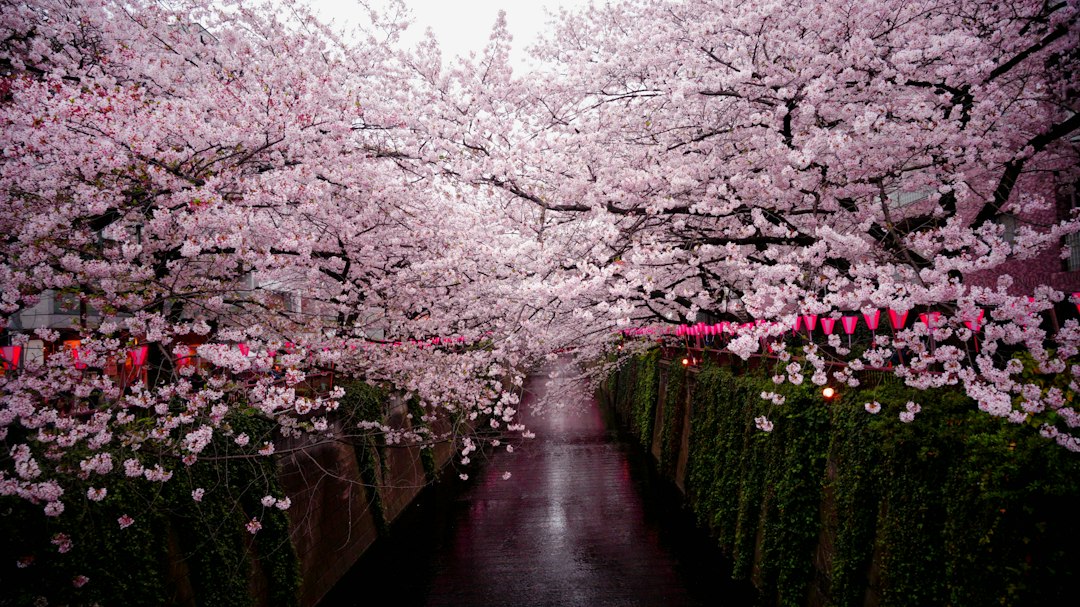
Kubota Castle is a ruin, but Senshu Park preserves its moats, earthworks, and a reconstructed turret a short walk from Akita Station. In April it is where the city gathers under the cherry trees.
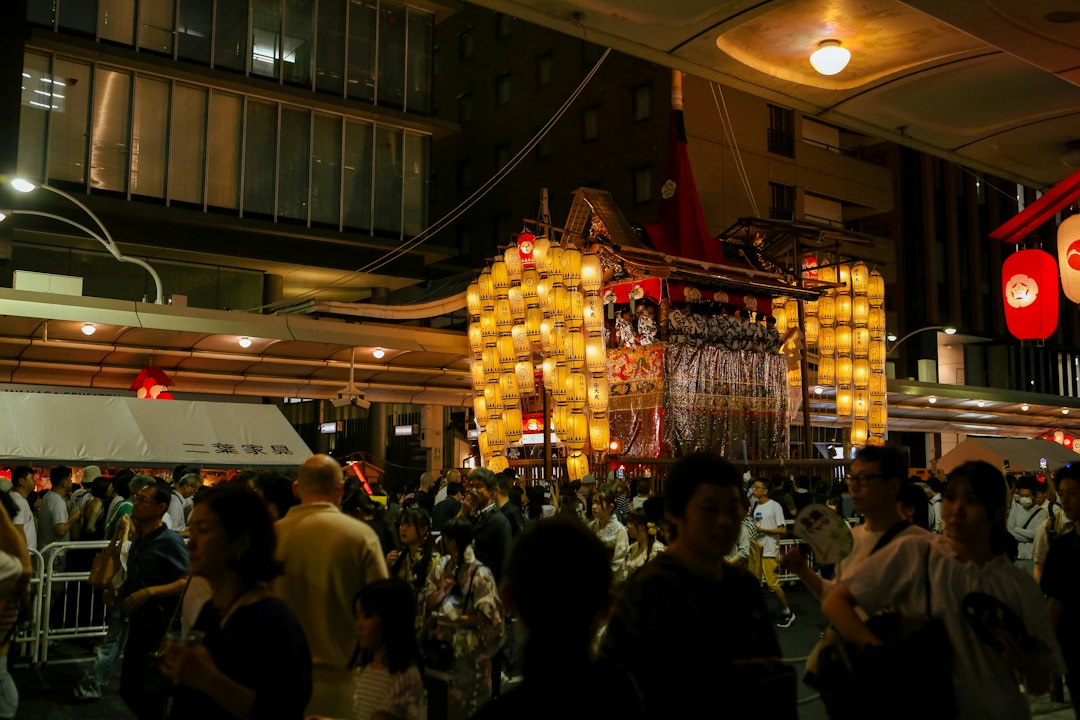
The city’s great event is the Kanto Festival, held from August 3 to 6. Performers balance bamboo poles up to twelve metres long and around fifty kilograms, hung with as many as 46 candlelit lanterns, on a palm, a forehead, or a hip. Together with Aomori’s Nebuta and Sendai’s Tanabata, it is one of the three great summer festivals of Tohoku, and our guide to August in Japan and the Tohoku festivals covers how to plan around all three. Hotels fill months ahead.
Kiritanpo, Inaniwa Udon, and Sake
Akita food is winter food. Kiritanpo is mashed rice pressed around cedar skewers, toasted over a fire, then broken into a chicken hotpot with burdock, mushrooms, and green onion. Eat it in a small restaurant in January, when the snow outside is waist-high, and the dish makes complete sense.
Inaniwa udon is the other specialty, thinner and more translucent than ordinary udon, with a smooth, slightly firm bite. The prefecture’s rice and water also make it serious sake country. On summer roadsides, look for babahera, a pink and yellow ice cream shaped into a rose by the woman selling it.
Choosing Your Season
Late April brings the cherries in Kakunodate and the heaviest crowds. June and early autumn are, in our view, the best months for a first visit: mild weather, open roads, and far fewer people.
Winter is a different trip. Heavy snow falls from December to March and some roads are affected. In exchange, you get Nyuto Onsen under snow and the Yokote Kamakura festival in mid-February, when the town fills with small snow huts lit from within.
Akita Prefecture: Frequently Asked Questions
How do you get to Akita Prefecture from Tokyo?
The Komachi trains on the Akita Shinkansen run from Tokyo roughly hourly, coupled to a Tohoku Shinkansen train as far as Morioka. Kakunodate is about three hours away, and Akita City about four. Seat reservations are mandatory, and the Japan Rail Pass covers the trip. Flights from Tokyo to Akita Airport take a little over an hour.
Can you visit Akita Prefecture without a car?
Partly. Kakunodate, Tazawako, and Akita City are all shinkansen stops, and Kakunodate is walkable from its station. Nyuto Onsen and the Oga Peninsula are served by infrequent buses, however, and the lakeshore is hard to see properly without a vehicle. For a short trip, a car or a hired driver saves more time than anywhere else we work in.
How many days do you need in Akita Prefecture?
Three nights is a good minimum. Spend one day on Kakunodate and Lake Tazawa, one night at Nyuto Onsen, and one day on the Oga Peninsula from Akita City. With a fourth day you can add Lake Towada on the Aomori border, or stay a second night at Nyuto.
Related Tours

Conclusion
Akita does not reward the checklist approach. The distances are real, the buses are few, and trying to cover Kakunodate, Nyuto, Oga, and the city in two days leaves you mostly in transit.
Choose two bases instead: Akita City or Kakunodate for the samurai street and the lake, and one night at a Nyuto inn for the baths. Add Oga only if you have a third day. If you are weighing Akita against other rural regions, our guide to Japan’s countryside and how to reach it puts it in context. Then book the inn first, because everything else in the prefecture is easier to arrange than a room at Tsurunoyu.
Plan Your Japan Trip with Local Experts
Our team has guided 40,000+ travelers across Japan. Tell us about your trip and we’ll get back to you within 24 hours.




