In this article:
- What Miyashita Park Actually Is
- The Rooftop Park: Lawn, Skatepark, and Hours
- Below the Park: Shops and Shibuya Yokocho
- Miyashita Park After Dark
- Miyashita Park: Frequently Asked Questions
Introduction
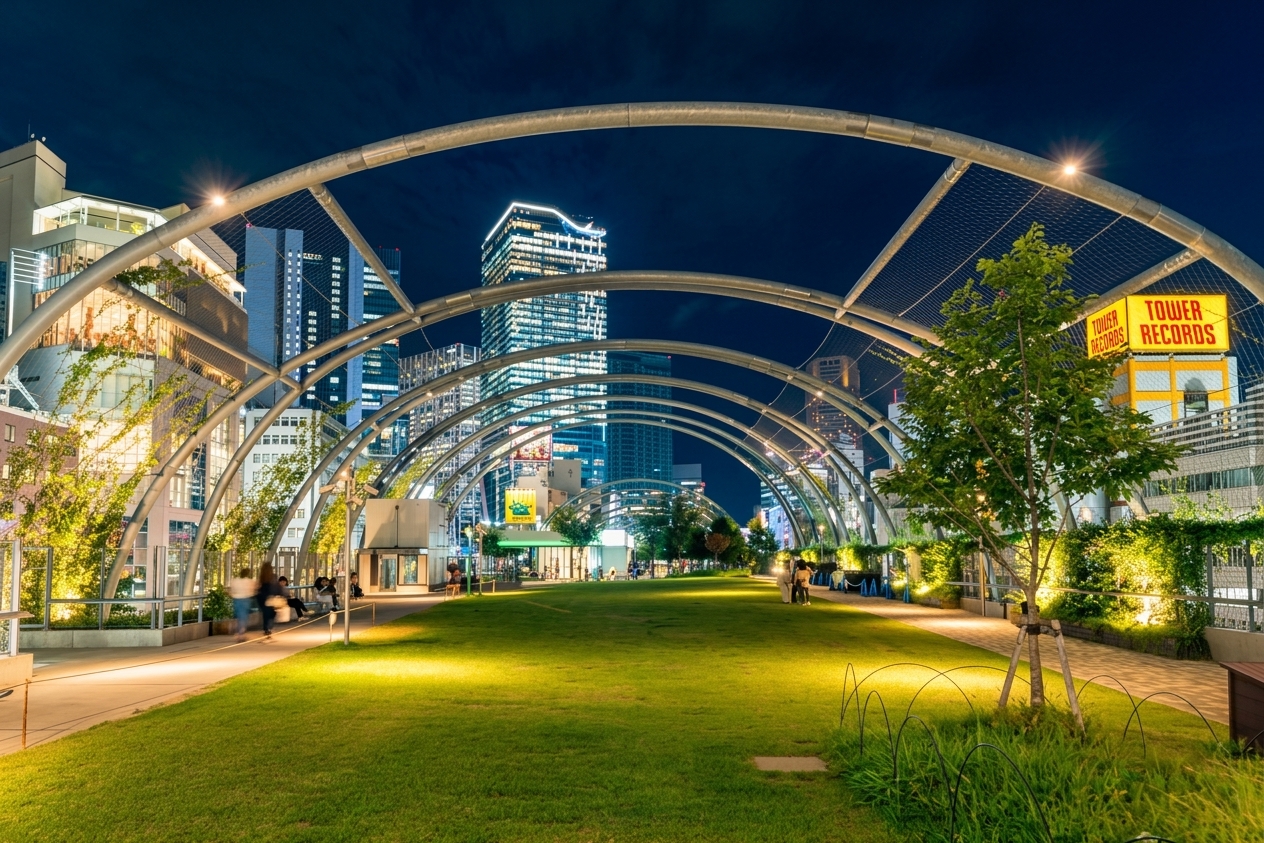
Walk north from the Hachiko Exit, keep the JR tracks on your left, and within three or four minutes the crowd thins. Miyashita Park runs alongside the railway here, a building so long and so low that most visitors take it for a row of shops. The park is on the roof.
That is the first thing to understand about it. Miyashita Park is not a garden you wander into from the street. It is a public park laid on top of a shopping complex, with a lawn, a skate park and a climbing wall three floors above the traffic on Meiji-dori, and a food alley at ground level that stays open until five in the morning on most nights.
For the travelers we guide in Shibuya, it plays two roles. By day it is a quiet place to sit between the crossing and Harajuku. After dark it becomes one of the stops on our Shibuya evenings, and the part of the neighbourhood where local drinkers far outnumber visitors. Both are worth knowing about before you go.
What Miyashita Park Actually Is
The name covers three things at once, which is where most of the confusion starts.
There is the public park on the roof, run by Shibuya City. There is RAYARD Miyashita Park, the shopping and dining complex underneath it. And there is a hotel, sequence Miyashita Park, at the northern end. Signs, maps and reviews use “Miyashita Park” for all three.
From a 1950s Public Park to a 2020 Rooftop Complex
A park has stood on this site since 1953. In the 1960s it was rebuilt on top of a car park, which made it one of the earliest rooftop parks in Tokyo. For decades it was a plain, slightly neglected strip of green that most people crossed without stopping.
The park closed for redevelopment in 2017 and reopened in July 2020 in its current form. The redevelopment was not universally welcomed. People had been living in the old park, and the shift from public space to a commercial building with a park on top remains a point of debate in Tokyo. We mention it because the building makes more sense once you know what it replaced.
A 330-Metre Building Between the Tracks and Meiji-dori
The complex stretches roughly 330 metres, following the railway line north from Shibuya towards Harajuku. It is split into a South and a North section by a road crossing, with three floors of shops and restaurants and the park across the top.
The length matters in practice. If a friend says to meet “at Miyashita Park”, ask which end. The South end is closer to the station and to Nonbei Yokocho. The North end sits at the Jingu-mae 6-chome intersection, where the hotel entrance is and where Shibuya starts to turn into Harajuku.
Getting There From Shibuya Station
From the Hachiko Exit, the walk takes about three to five minutes. Pass under the elevated JR tracks and follow them north. The South building begins just past the lantern-lit entrance to Nonbei Yokocho.
Lifts and escalators run from street level to the roof. If you are carrying shopping or travelling with a pushchair, use the lifts inside RAYARD rather than the outdoor stairs.
Expert Tip
Treat Miyashita Park as the middle of a walk rather than a destination. Our private day guests often start at Meiji Shrine in the morning, come down through Harajuku, and reach the North end of the park by early afternoon. From there, the roof carries you most of the way back to Shibuya Station above the traffic, with somewhere to sit when your legs need it.
The Rooftop Park: Lawn, Skatepark, and Hours
The roof is the reason to come, and it is better than it sounds.
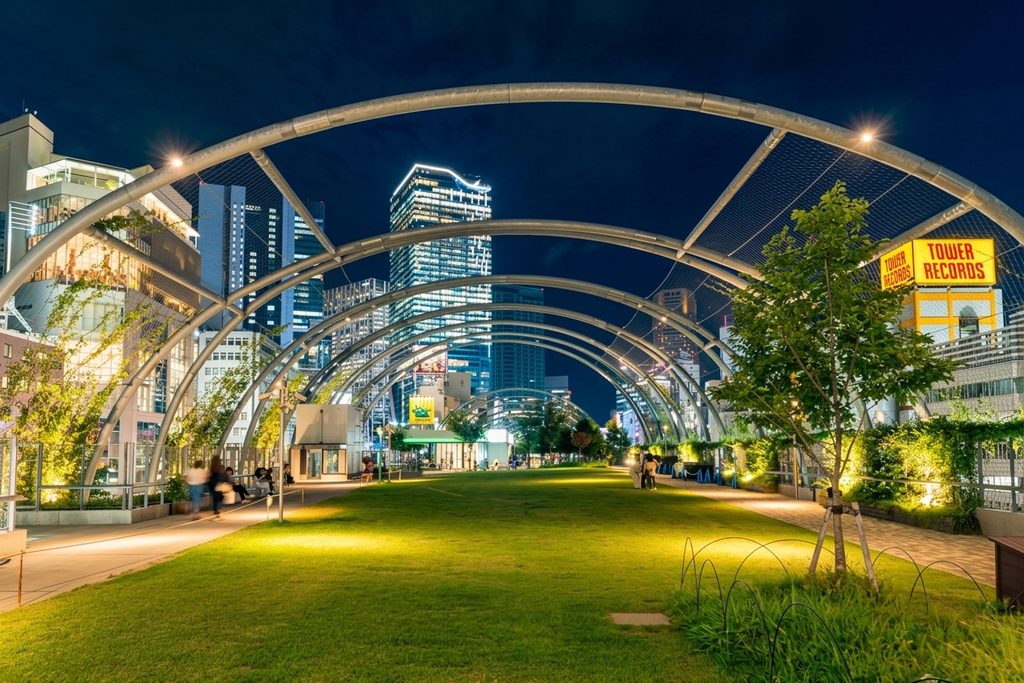
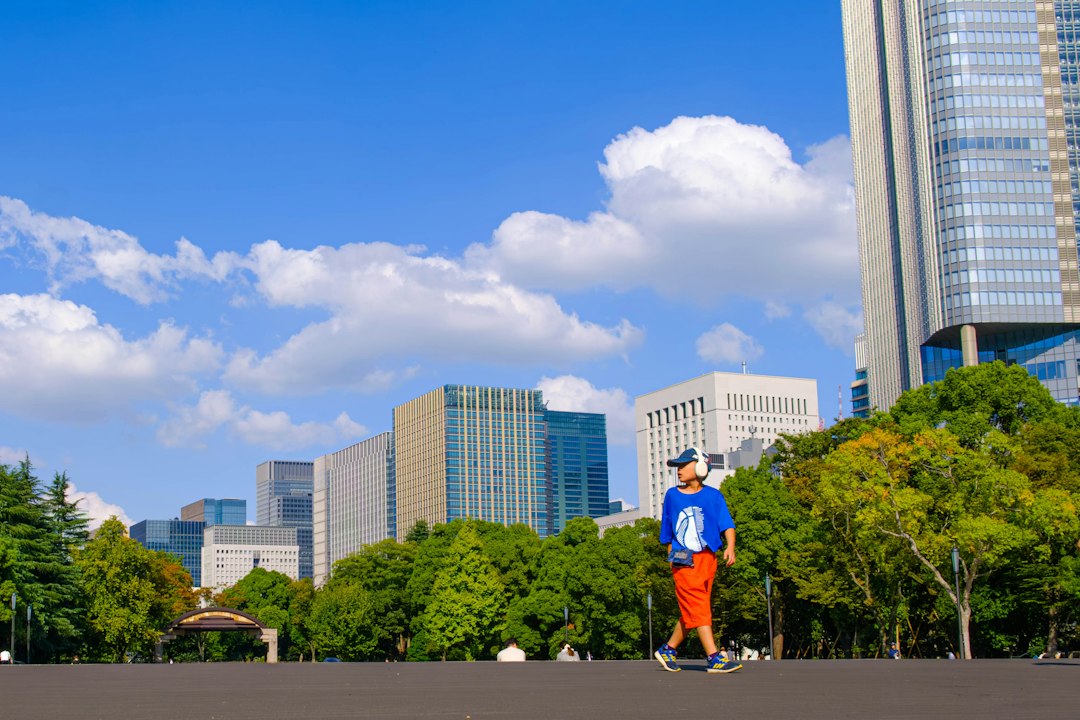
Up here Shibuya becomes oddly calm. The Yamanote Line slides past at eye level on one side, the office towers of Shibuya rise at the southern end, and the noise from the street below arrives muffled. On a weekday afternoon you will find students on laptops, office workers eating lunch on the grass, and a few skateboarders. Very few tourists.
The Lawn, the Benches, and the View Along the Tracks
The central lawn is the main draw. It is not large, but it is real grass, open to sit on, and shaded in patches by trees planted along the edges. Benches and low seating run along much of the length of the roof.
The best spot, in our view, is towards the South end in late afternoon. The light drops behind the buildings to the west, the towers around the station start to light up, and trains pass continuously below. It is one of the few places in central Shibuya where you can sit outside, for free, without buying anything.
Look out, too, for the small public artworks along the roof, including a Hachiko figure and a Doraemon sculpture. They are not reasons to visit on their own. Still, children tend to find them quickly.
Skate Park, Bouldering Wall, and Sand Court
The roof has three sports facilities. The skate park takes skateboards and inline skates. The bouldering wall is short enough for beginners and children. Both are paid on the day, with rental gear available, so you do not need to bring shoes or a board.
The sand court, used for beach volleyball and similar games, is different. It is for groups only and has to be booked in advance, so it is not something a visitor can walk up and use.
Most of our travelers watch rather than take part. The skate park in particular draws a good local crowd in the evening, and a few minutes on a bench beside it tells you more about Shibuya than the shops below do.
Hours and House Rules
The park is open from 8:00 to 23:00, and closed over the New Year holidays, from 29 December to 3 January. The sports facilities run from 9:00 to 22:00, with the last reception at 21:30. Entry to the park itself is free.
The whole park is non-smoking. Dogs are allowed on a lead. The rules are posted at the entrances, and staff do enforce them.
Below the Park: Shops and Shibuya Yokocho
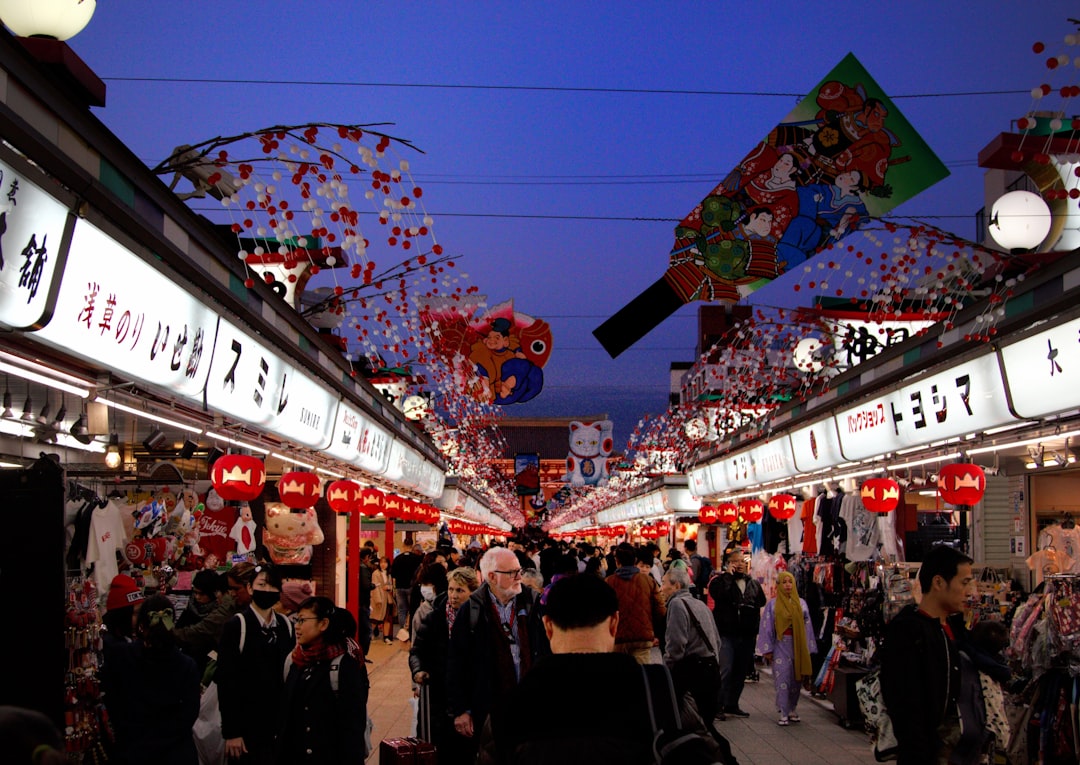
Underneath the park, RAYARD Miyashita Park holds around ninety shops and restaurants across its South and North sections.
RAYARD Miyashita Park: What the Shops Are Like
The mix leans towards fashion, streetwear and design. A handful of international labels sit alongside Japanese brands, stationery and homeware shops, a Studio Ghibli goods store, and a free gallery space with rotating exhibitions. The North section tends to be quieter than the South.
Shops generally open from 11:00 to 21:00, although individual stores vary. If shopping is your main reason for coming to Tokyo, the department stores around Shibuya Station and the boutiques on Cat Street will hold your attention longer. Our Harajuku shopping guide covers the stretch north of here.
That said, RAYARD suits an hour well. The corridors are open to the air, the shops are small, and nothing about it feels like a mall in the usual sense.
Shibuya Yokocho: Regional Food Under One Roof
The ground floor of the South building is taken up by Shibuya Yokocho, a covered alley of around twenty small restaurants serving food from different regions of Japan, from Hokkaido to Okinawa. Counters and shared tables run the length of it, lanterns hang overhead, and the noise level rises steadily through the evening.
It keeps unusually long hours. From Monday to Saturday and on public holidays, it runs from 11:00 until 5:00 the following morning. On Sundays it closes at 23:00. Individual stalls set their own times within that.
We think of it as a good introduction rather than the real thing. It is designed to look like an old drinking alley, and it is built for people who have not been to one. For a first night in Tokyo, that is no bad thing. The menus are easier, the seating is forgiving, and nobody minds if you move on after one plate.
The Food Hall and Other Quieter Options
Upstairs in the South building, a food hall on the third floor runs from 11:00 to 22:30 on weekdays and from 10:30 on weekends and holidays. It is calmer than Shibuya Yokocho and better suited to a quick lunch or a family meal.
Restaurants elsewhere in the complex generally stay open until 23:00. In our experience, the quieter tables are found at the North end, away from the flow of people walking up from the station.
Expert Tip
If you want a seat in Shibuya Yokocho, go early. By the middle of the evening on a Friday or Saturday the shared tables are full of groups from nearby offices, and finding room for more than two becomes difficult. Arriving before six, or coming back late once the after-work crowd has thinned, gives you your pick of the counters.
Miyashita Park After Dark
Most guides to Miyashita Park stop at the shops. For us, the building matters most after eight in the evening.
The Rooftop Bars and Their Crowd
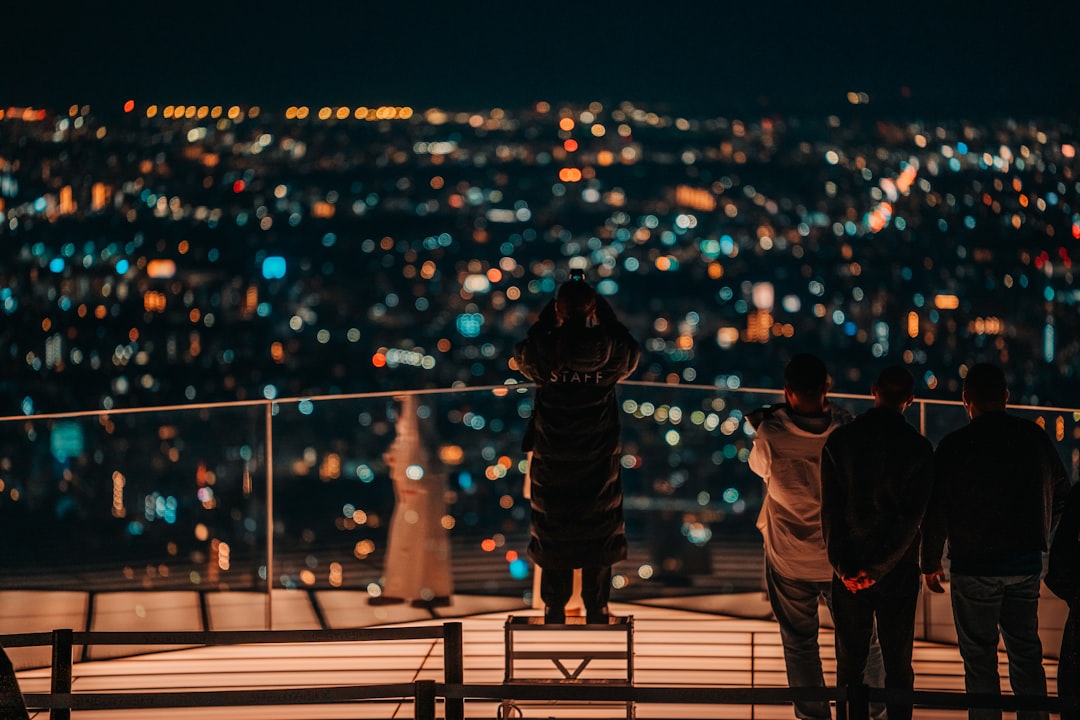
The bars along the roof draw a younger, local crowd. Office workers in their twenties, friends meeting after work, people who live nearby. On most nights we see almost no other foreign visitors there.
This is the second stop on our Shibuya bar and izakaya crawl. We start in an izakaya above the crossing, then walk here, and it tends to be the point in the evening where guests stop taking photographs and start talking. The open air helps. So does the fact that nobody around you is a tourist.
A few practical points. Several bars in Shibuya only take cash, so carry notes. Smoking is allowed inside many of them, even though the park itself is non-smoking. And if you want a drink with a view rather than a crowd, the rooftop bar at sequence Miyashita Park, called SOAK, looks out over the city from the hotel at the North end.
Nonbei Yokocho, One Minute Away
Directly beside the South end, under the railway, is Nonbei Yokocho, a short lane of tiny bars that has been there since the 1950s. Many of the rooms hold six or seven people. The contrast with Shibuya Yokocho, a few steps away, is the point.
If Shibuya Yokocho is the introduction, Nonbei Yokocho is closer to the original. The seating is tighter, some bars charge a table fee, and it helps to go early in the evening. Our guide to Nonbei Yokocho covers how to choose a door and what to expect inside.
Where the Night Goes Next: The Lanes Behind Center-gai
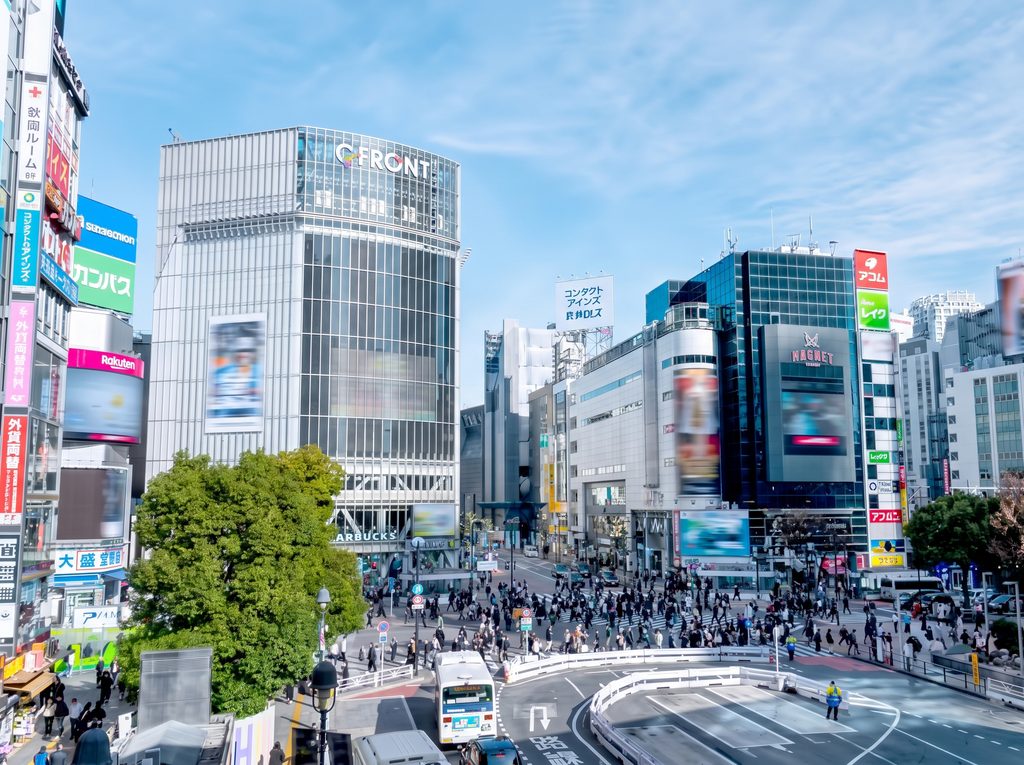
From Miyashita Park, the evening usually continues south, back across the station towards Center-gai. The main street is the Shibuya you have seen in films, and we leave it almost immediately.
The lanes behind it hold small counters where perhaps a dozen people fit and the owner does the pouring. That is where our crawl ends, and guests are welcome to stay on after the tour finishes. Our longer piece on the Shibuya bar crawl explains how the neighbourhoods fit together, and why so few visitors reach them on their own.
Miyashita Park: Frequently Asked Questions
Is Miyashita Park free to visit?
Yes. The rooftop park is a public park run by Shibuya City, and entry is free. You only pay for what you use: the skate park and bouldering wall charge on the day, and the shops and restaurants below are priced as you would expect in central Shibuya.
What time does Miyashita Park close?
The rooftop park closes at 23:00 and reopens at 8:00. Shops in RAYARD generally close at 21:00 and restaurants around 23:00. Shibuya Yokocho on the ground floor stays open until 5:00 the next morning from Monday to Saturday and on public holidays, and closes at 23:00 on Sundays.
Is Miyashita Park worth visiting if I do not want to shop?
We think so, as long as you plan it as part of a walk rather than a stop on its own. The roof is one of the few places in Shibuya where you can sit outside for free, and the evening crowd along the park is closer to local Shibuya than anything around the crossing. Combine it with Nonbei Yokocho and it becomes a good first evening in the neighbourhood.
Related Tours


Conclusion
Go twice if you can. Once in the afternoon, when the roof is quiet and the light is good, and once after dark, when the bars along the park fill with people who live and work in Shibuya.
If you only have one visit, make it the evening. Arrive around seven, walk the length of the roof from the North end to the South, have a drink in Nonbei Yokocho, and then decide whether the night ends there or carries on towards the lanes behind Center-gai. Bring cash either way.
Plan Your Japan Trip with Local Experts
Our team has guided 40,000+ travelers across Japan. Tell us about your trip and we’ll get back to you within 24 hours.