In this article:
- Toshogu Shrine
- Kegon Falls and Lake Chuzenji
- Irohazaka, Senjogahara, and Yumoto Onsen
- Shinkyo Bridge, Rinno-ji, and Futarasan
- Yuba and Nikko Kakigori
- Visiting Nikko: Frequently Asked Questions
Introduction
Japanese religious architecture is usually restrained — unpainted wood, clean lines, deliberate emptiness. Nikko is the exception, and it is a deliberate one. Tokugawa Ieyasu’s grandson spent an amount equivalent to a substantial share of the shogunate’s annual revenue covering his grandfather’s mausoleum in gold leaf and carvings.
The result divides people. Some find it the most impressive thing in Japan; others find it vulgar. Both reactions are reasonable and both are more interesting than indifference.
Two hours north of Tokyo, the shrines sit at the entrance to a national park that would justify the trip on its own. Most visitors do it in a day. We would argue for a night.
Toshogu Shrine
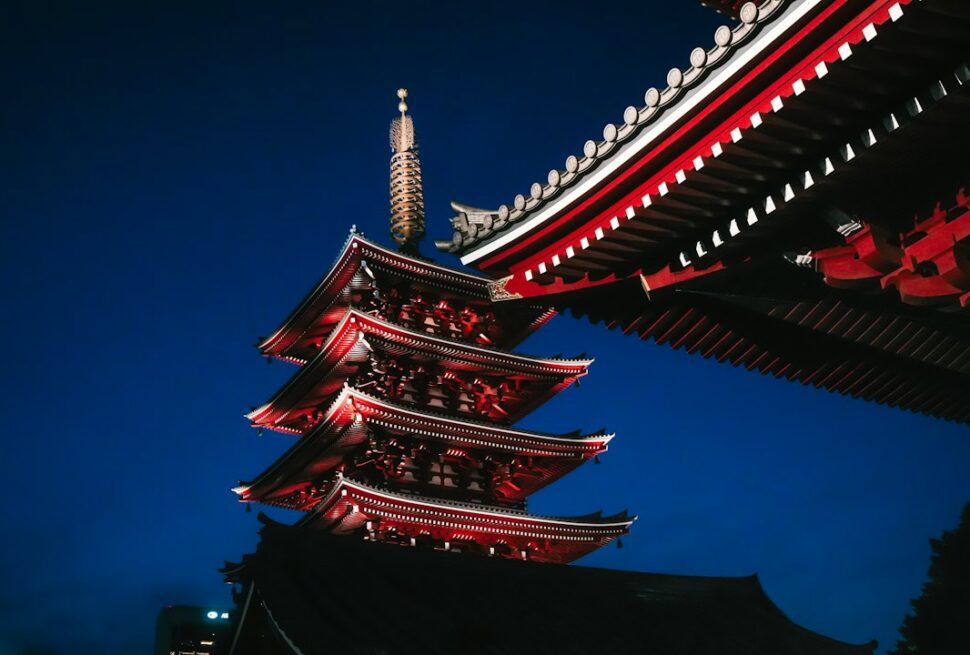
Toshogu is a World Heritage site and the reason most people come to Nikko.
The Complex
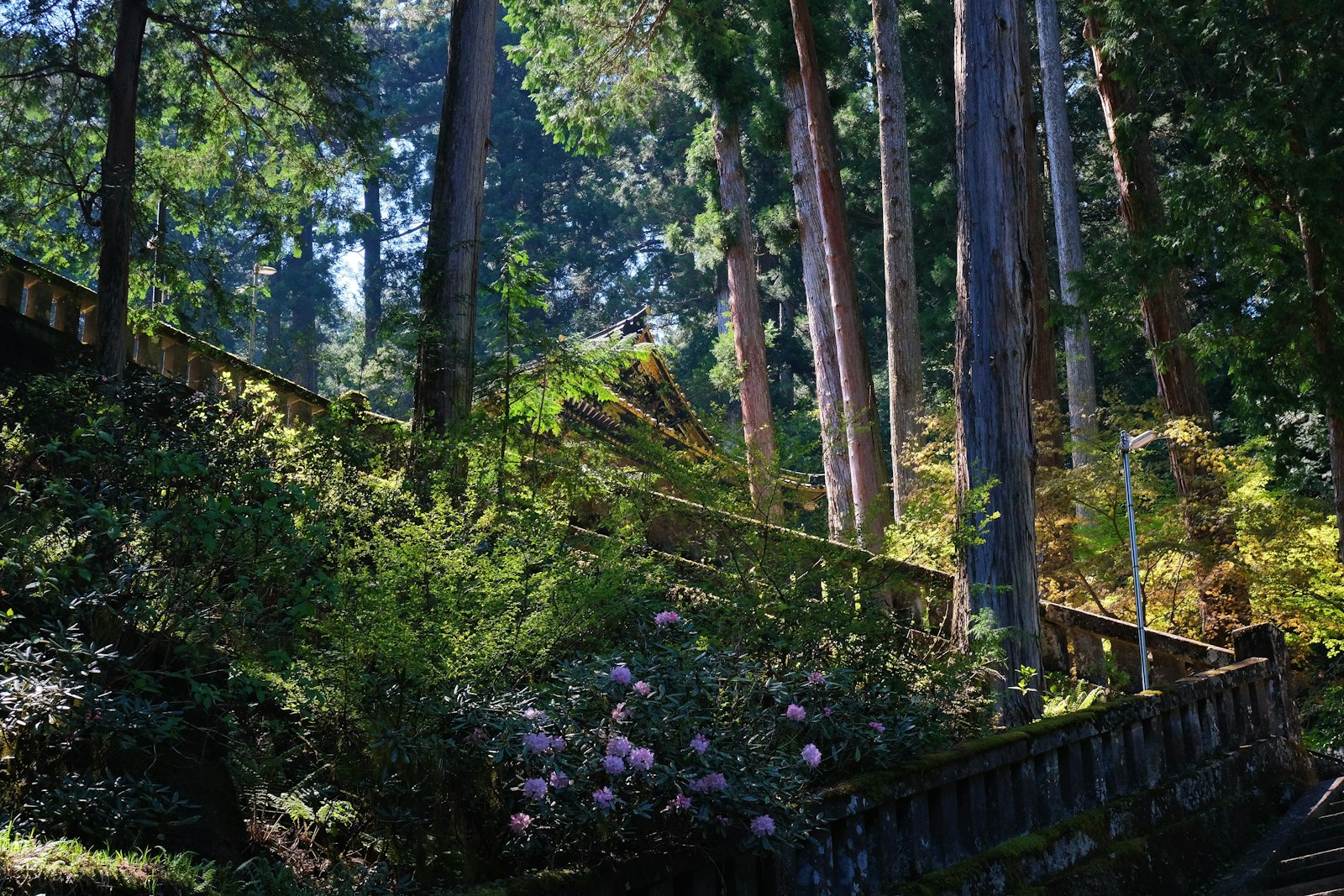
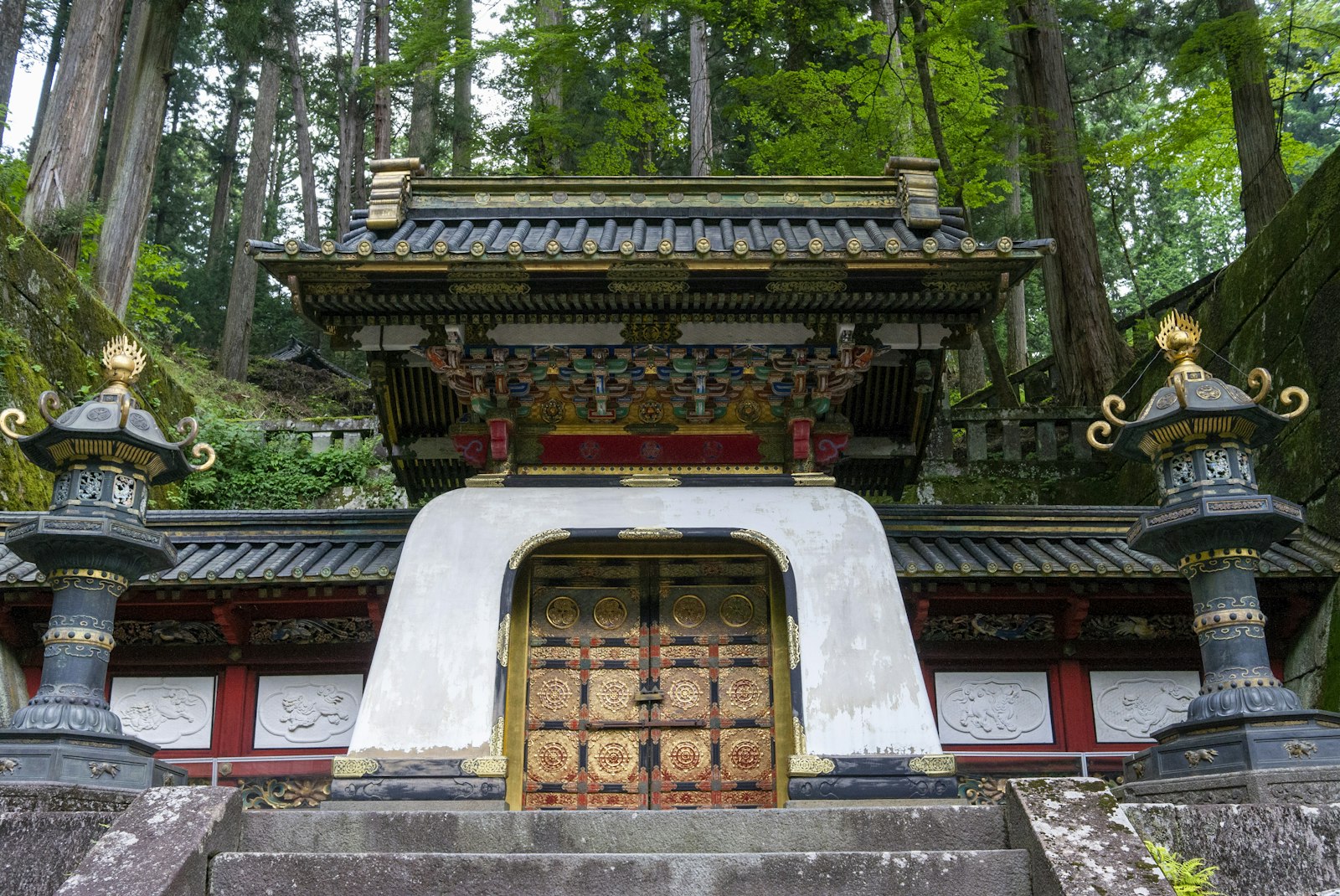
Ieyasu, who ended a century of civil war and founded the shogunate that ruled for 250 years, is enshrined here as a deity. The complex was rebuilt on its current scale in 1636 by his grandson Iemitsu, employing 15,000 craftsmen over roughly a year and a half.
The site climbs a forested hillside in stages, with each level more decorated than the last. Ieyasu’s actual tomb sits at the top, reached by a 200-step stone stairway that most visitors skip — it is the quietest part of the complex and the only genuinely austere thing in it.
The Three Wise Monkeys and the Sleeping Cat
The three monkeys — see no evil, hear no evil, speak no evil — are carved on the sacred stable, part of an eight-panel sequence depicting a life cycle. The monkey panel is the third; the others are rarely photographed and repay a minute of attention.
The nemuri-neko, the sleeping cat, sits above the gateway to the tomb path. It is small, easy to miss, and carries a reading beyond the obvious: sparrows are carved on the reverse, and cat and sparrow coexisting is meant to signal peace.
Yomeimon Gate
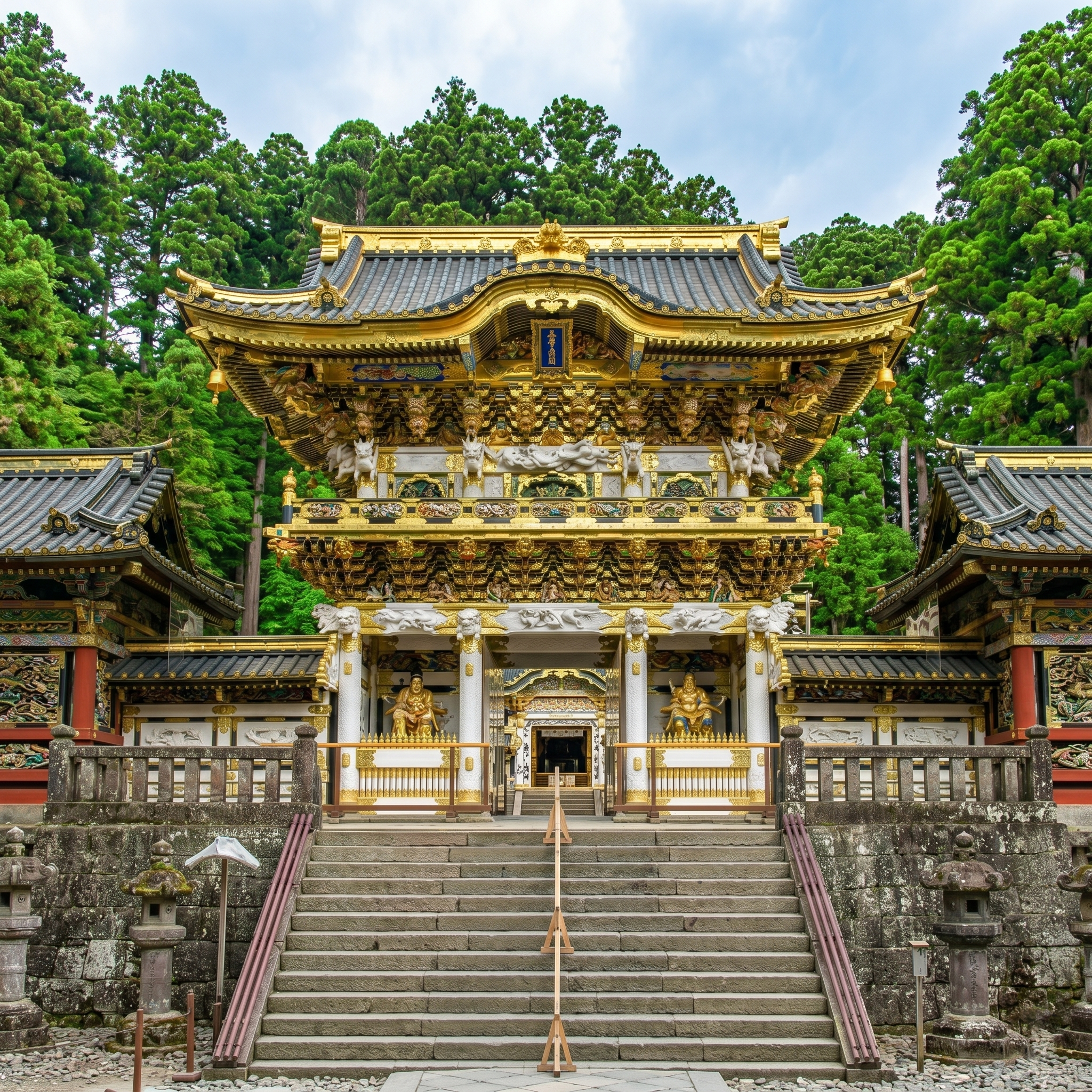
Yomeimon carries over 500 carvings — dragons, sages, children, mythical beasts — in gold, white, and vermilion. It is known as the sunset gate, on the basis that people stood looking at it until dark.
One of its twelve columns has its pattern carved upside down, deliberately, so the gate would not be perfect and thereby invite misfortune. Ask staff to point it out; it is on the rear left and difficult to find unaided.
Expert Tip
Toshogu opens at 8am and the first coaches from Tokyo arrive around 10.30. If you are staying overnight in Nikko, being at the gate at opening gives you Yomeimon almost to yourself for the better part of an hour. On a day trip from Tokyo this is not achievable — which is the strongest single argument for staying the night.
Kegon Falls and Lake Chuzenji
Above the shrines, the road climbs sharply into Nikko National Park and the landscape changes entirely.
Kegon Falls
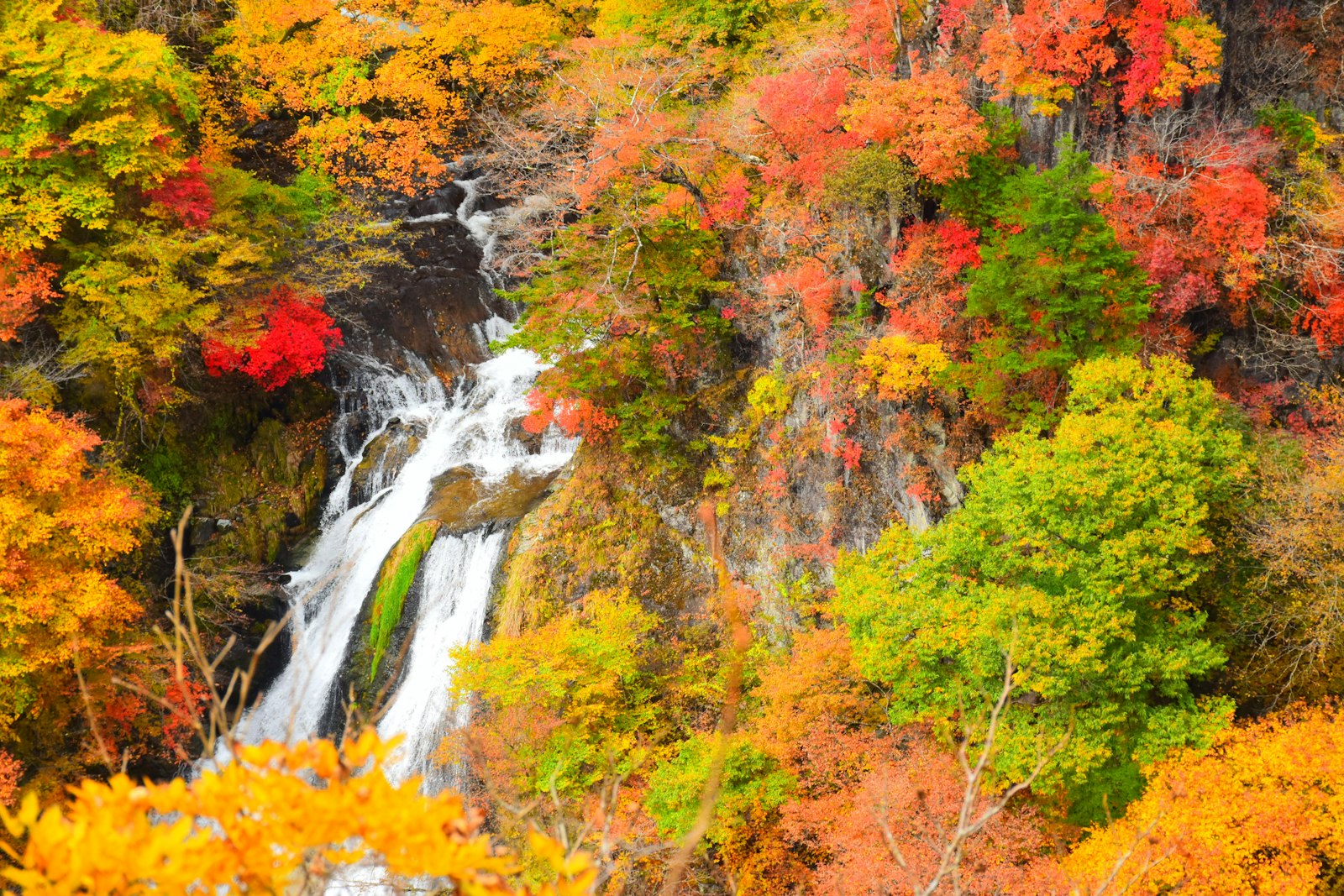
Kegon drops 97 metres from Lake Chuzenji in a single fall, and it is counted among Japan’s three great waterfalls. A free platform gives the standard view; a lift descends 100 metres through the rock to a lower observation deck at the base for a small fee.
Take the lift. From above you see the top of the fall; from below you see its full height against the cliff, with a dozen smaller streams seeping from the rock face alongside it.
Lake Chuzenji
Chuzenji was formed when Mount Nantai erupted and dammed the valley. It sits at 1,269 metres, which makes it Japan’s highest natural lake of its size and keeps summer temperatures roughly ten degrees below Tokyo.
Sightseeing boats run circuits from the eastern shore between April and November. The lake was a summer retreat for foreign diplomats from the Meiji period, and the restored British and Italian embassy villas on the southern shore are open to visitors.
Mount Nantai
Nantai is a near-perfect volcanic cone rising from the lake’s northern shore, and it is a sacred mountain — the climb starts through the gate of Futarasan’s Chugushi shrine, which controls access.
The climbing season runs from late April to early November. It is roughly four hours up over 1,200 metres of ascent, unrelenting and mostly on loose volcanic rock. This is a serious hike rather than a walk.
Irohazaka, Senjogahara, and Yumoto Onsen
The upper reaches of the park hold the landscape most day-trippers never reach.
The Irohazaka Road
Irohazaka is a pair of one-way roads connecting the town to the lake, with 48 hairpin bends between them — one for each character of the old Japanese syllabary, each corner signed with its letter.
In late October the traffic is severe; a 30-minute drive can take three hours. The Akechidaira ropeway partway up gives the best view of the road and Kegon Falls together.
Senjogahara Marshland
Senjogahara is a high plateau marsh at around 1,400 metres, formed from a drained lake and protected under the Ramsar Convention. A wooden boardwalk crosses it for about 6.5 kilometres between Ryuzu Falls and Yudaki Falls.
It takes two to three hours one way and is nearly flat. The grasses turn deep red in early October, roughly two weeks before the foliage below. Buses run to both ends, so it works as a one-way walk.
Nikko Yumoto Onsen
At the far end of the park, Yumoto is a small hot spring village at 1,500 metres with milky, strongly sulphurous water. The source pools are visible behind the village in a small marsh where the water surfaces.
It is genuinely remote and considerably cheaper than Chuzenji. In winter it doubles as a small ski area, and the road stays open.
Shinkyo Bridge, Rinno-ji, and Futarasan
Three more sites cluster around Toshogu and are covered by the combined ticket.
Shinkyo Bridge
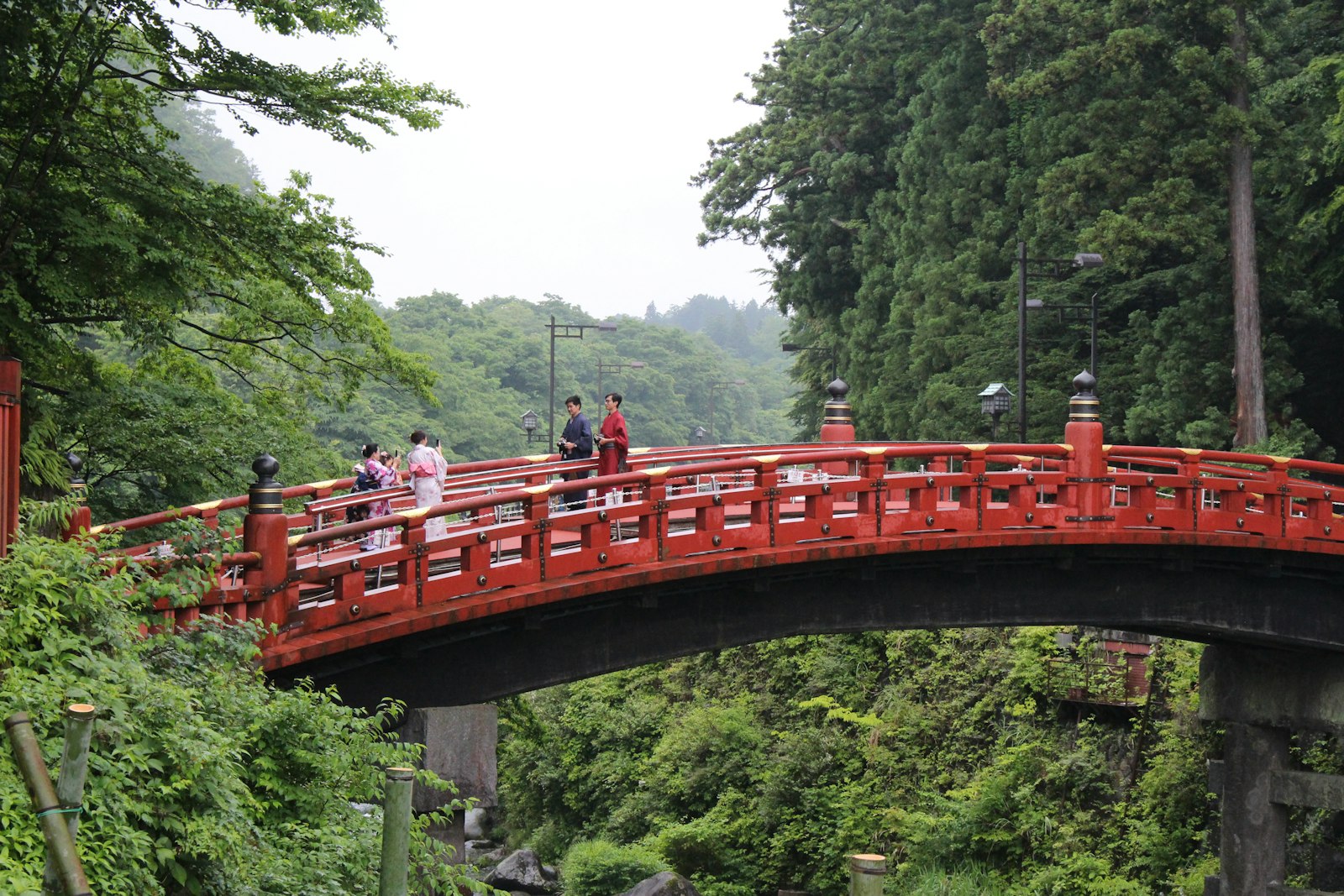
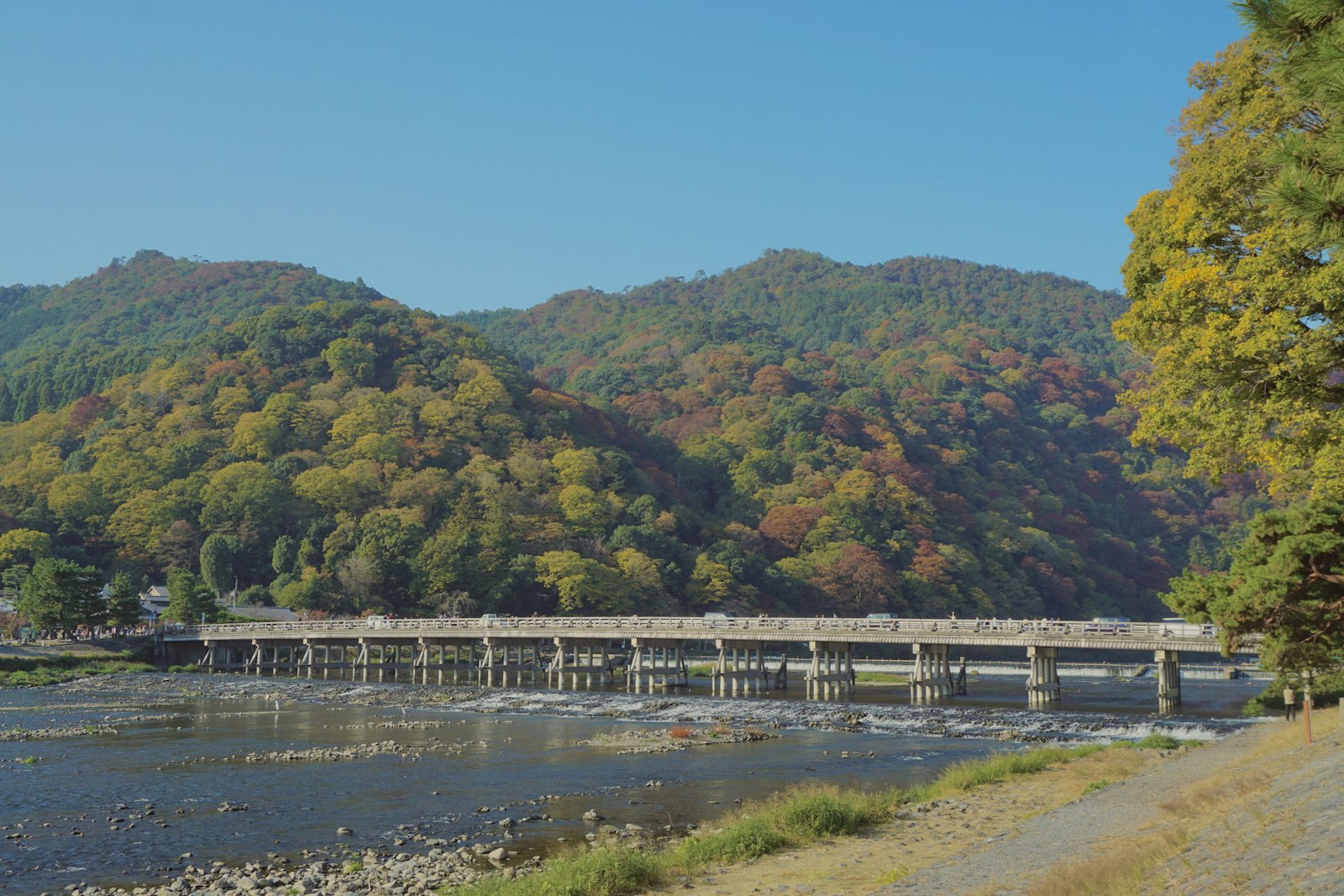
The vermilion bridge over the Daiya River marks the entrance to the sacred precinct. Legend has it that the monk Shodo Shonin was carried across the river here by two snakes sent by a deity.
It was reserved for imperial messengers and shogunate officials for most of its history. Crossing it now costs a small fee and takes forty seconds; most people photograph it from the road bridge alongside, which is the better view anyway.
Rinno-ji
Rinno-ji is the Buddhist half of the complex, founded in 766, and its main hall holds three gilded statues over eight metres tall — Amida, Senju-Kannon, and Bato-Kannon, representing the three mountains of Nikko.
The hall emerged in 2019 from a twelve-year restoration. The Shoyoen garden alongside is a compact strolling garden built around a pond, and it is the quietest corner of the whole area.
Futarasan Shrine
Futarasan predates Toshogu by 800 years, founded in 782, and is dedicated to the three sacred mountains. It is far plainer than its neighbour and correspondingly less visited.
The grounds hold a number of trees designated as sacred, and the shrine sells charms for matchmaking and good fortune. Its Chugushi branch sits on Lake Chuzenji’s shore and its inner shrine on Nantai’s summit.
Yuba and Nikko Kakigori
Nikko’s food comes from two sources: temple vegetarian cooking and unusually pure water.
Yuba
Yuba is the skin that forms on soy milk as it heats, lifted off in sheets. Nikko’s temples developed it as a protein source under Buddhist dietary restriction, and the local style is thicker and folded rather than the thin single sheets of Kyoto.
It appears rolled and simmered in broth, raw as sashimi with soy and wasabi, deep-fried, and wrapped around fillings in steamed buns sold along the approach road. The sashimi version is the one that shows what it actually tastes like.
Nikko Kakigori
Nikko produces tennen-goori — natural ice, frozen slowly outdoors in ponds over winter and stored in ice houses. Only a handful of producers remain in Japan and three of them are here.
Shaved from a natural block, the ice is denser and produces a finer texture that does not cause the usual cold headache. Shops serving it queue in summer, and the ice sells out; morning is the reliable time.
Tobu Passes
Tobu Railway runs direct limited expresses from Asakusa in under two hours. The Nikko All Area Pass covers the round trip plus buses to Chuzenji and Yumoto; the cheaper World Heritage Area Pass covers only the shrine district buses.
The All Area version pays off if you go up to the lake, which is the main decision. Both are sold at the Tobu Asakusa tourist centre and require a separate limited express surcharge.
Expert Tip
The combined ticket sold at Rinno-ji covers Rinno-ji and Futarasan but not Toshogu, which sells separately and is the expensive one. Buy Toshogu’s ticket on its own unless you are certain you want all three — many visitors find that after two hours in Toshogu they have no appetite left for further shrines, and the combined ticket then goes unused.
Visiting Nikko: Frequently Asked Questions
Can I do Toshogu and Kegon Falls in one day from Tokyo? Yes, but it is tight. Leave Asakusa by 7.30am, do the shrines first, take the bus up Irohazaka around 1pm, and allow 90 minutes at the lake. In peak autumn the bus queues make this unrealistic — plan an overnight instead.
Which Tobu pass is best value? The Nikko All Area Pass if you are going to Lake Chuzenji or Yumoto. The World Heritage Area Pass if you are only doing the shrines and returning the same day. Both exclude the limited express surcharge, which is roughly 1,500 yen each way.
When is the autumn colour at its best? Lake Chuzenji and Irohazaka peak in mid-to-late October. The shrine area, 700 metres lower, peaks in early to mid-November. Senjogahara’s grasses turn earliest, in the first week of October, which spreads the season across five weeks in total.
Related Tours
Conclusion
Stay overnight if you can arrange it. Toshogu before the coaches arrive is a different building, and the upper park — Senjogahara, Yumoto — is effectively unreachable on a day trip that also includes the shrines.
If it has to be a day, choose one half. The shrines with a slow lunch, or the lake and the marsh boardwalk. Attempting both in nine hours produces a day of bus queues and not much else.
Plan Your Japan Trip with Local Experts
Our team has guided 40,000+ travelers across Japan. Tell us about your trip and we’ll get back to you within 24 hours.