In this article:
- November Weather in Tokyo and What to Pack
- Autumn Leaves in Tokyo: Where and When
- Festivals, Holidays, and What to Eat
- Planning the Month: Timing, Mt. Fuji, and Kyoto
- Tokyo in November: Frequently Asked Questions
Introduction
Tokyo in November smells of roasted chestnuts and damp leaves, and the light goes gold by mid-afternoon.
The humidity that hangs over the city from June to September is gone. October’s typhoon rain has usually passed. What is left is a run of dry, clear days, cool enough for walking all day and warm enough to sit outside at lunch. For travelers who plan their days around walking neighbourhoods, gardens, and shrines rather than air-conditioned malls, this is close to the ideal month.
It is not a month without trade-offs, though. The days are short, the leaves arrive later in the city than most visitors expect, and the last two weeks are when much of Japan travels to see the foliage. Below is how we plan November in Tokyo for the travelers we work with, and what we tell them to change.
November Weather in Tokyo and What to Pack
November is the month Tokyo’s weather settles down. It is noticeably drier and sunnier than October, and the cold of December has not yet arrived.
The Numbers: Early vs. Late November
The Japan Meteorological Agency’s 1991 to 2020 averages for central Tokyo put November’s mean daily high at 16.7°C (62°F) and the mean daily low at 8.8°C (48°F). Monthly rainfall averages 96mm, well under half of October’s 235mm, and there are more hours of sunshine than in October.
Those averages hide a real slide across the month. The first week can still bring afternoons near 20°C, when a long-sleeved shirt is enough. By the last week, highs in the low teens and mornings in single digits are normal. If your trip falls at the end of the month, pack for early winter rather than autumn.
Short Days and Cold Evenings
The detail that catches people out is daylight, not temperature. Sunset in Tokyo falls at around 4:45pm at the start of November and close to 4:30pm by the end. By five o’clock it is dark.
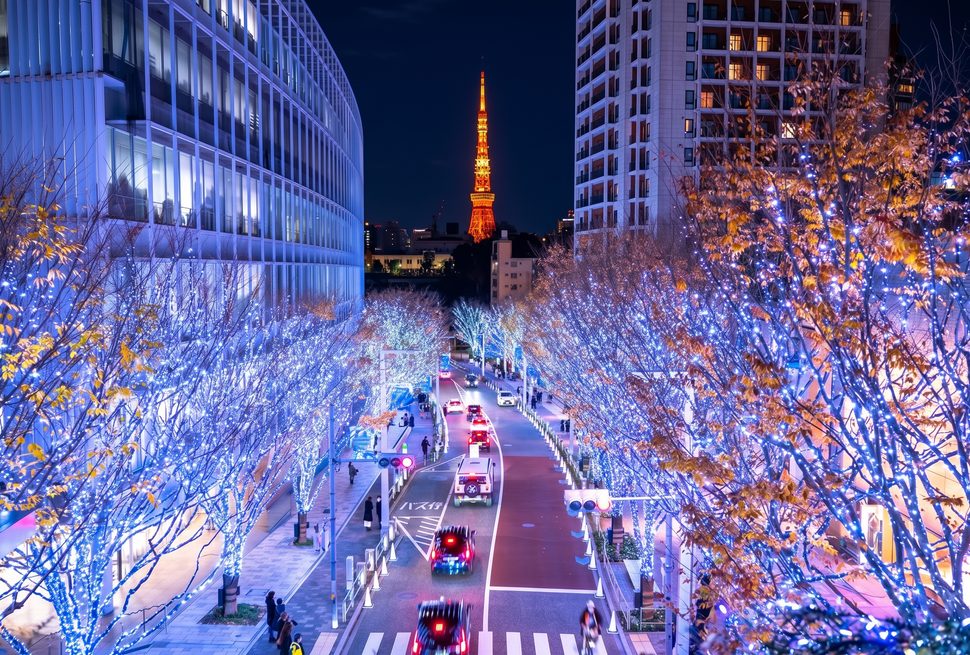
That changes how a day should be built. Gardens, shrine approaches, and anything you want to photograph belong in the morning and early afternoon. Evenings are better given to food, illuminations, and indoor museums. Once the sun goes, the temperature drops quickly, and a riverside walk in Asakusa that felt pleasant at three feels raw at six.
What to Pack: Layers, Not a Winter Coat
We suggest layers over one heavy coat. A light down jacket or wool coat over a knit, plus a scarf, handles almost every November day in the city. Heavy winter gear is unnecessary unless you are heading into the mountains.
Comfortable, closed walking shoes matter more than anything else in the suitcase. Temple visits and restaurants with tatami rooms involve taking shoes off, so shoes that slip on and off easily save time and patience. A compact umbrella is worth carrying, even in a dry month.
Expert Tip
Check the forecast the evening before, not the week before, and build the next day around it. November in Tokyo tends to bring dry, clear days in runs, so a single rainy day is easy to fill with museums or a long lunch, and the outdoor plans move to the day after.
Autumn Leaves in Tokyo: Where and When
Most visitors arrive expecting red maples in early November and find the city still largely green. Tokyo sits low and close to the sea, so its foliage turns late, and the order matters: ginkgo first, maples after.
Mid-November to early December is the window we plan around. For a wider view of timing across the country, our guide to Japan’s autumn leaves and peak timing covers the regions that turn earlier.
Ginkgo First: Jingu Gaien’s Icho Namiki
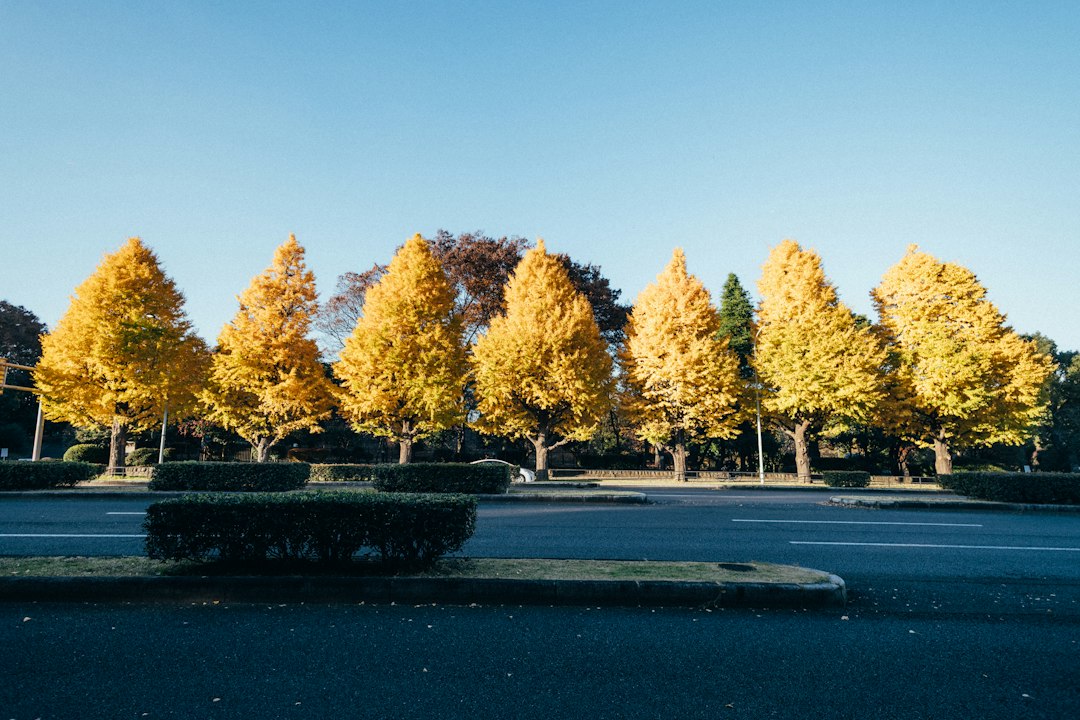
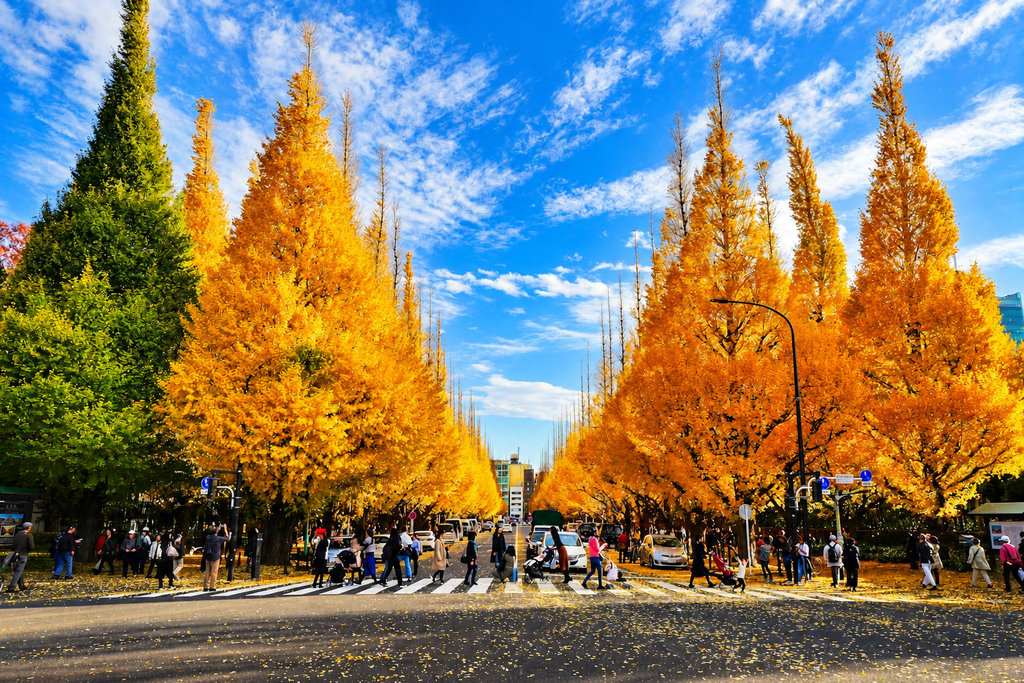
The ginkgo avenue at Meiji Jingu Gaien is the image most people associate with Tokyo in autumn. The trees line a straight avenue of roughly 300 metres off Aoyama-dori, and when they turn in the second half of November the whole street goes a flat, luminous yellow. A ginkgo festival with food stalls usually runs alongside the peak.
Go early. On a weekend afternoon at peak the pavement is shoulder to shoulder, and photographs become photographs of other people. Before eight on a weekday, it is quiet enough to hear the leaves underfoot. The fallen leaves carry a sharp, slightly sour smell that surprises most visitors; that is the ginkgo fruit, and it is normal.
Ginkgo also lines ordinary streets across the city. Some of the most satisfying yellow we see is on unremarkable avenues and university campuses, with nobody photographing it.
Maples Later: Rikugien and the Stroll Gardens
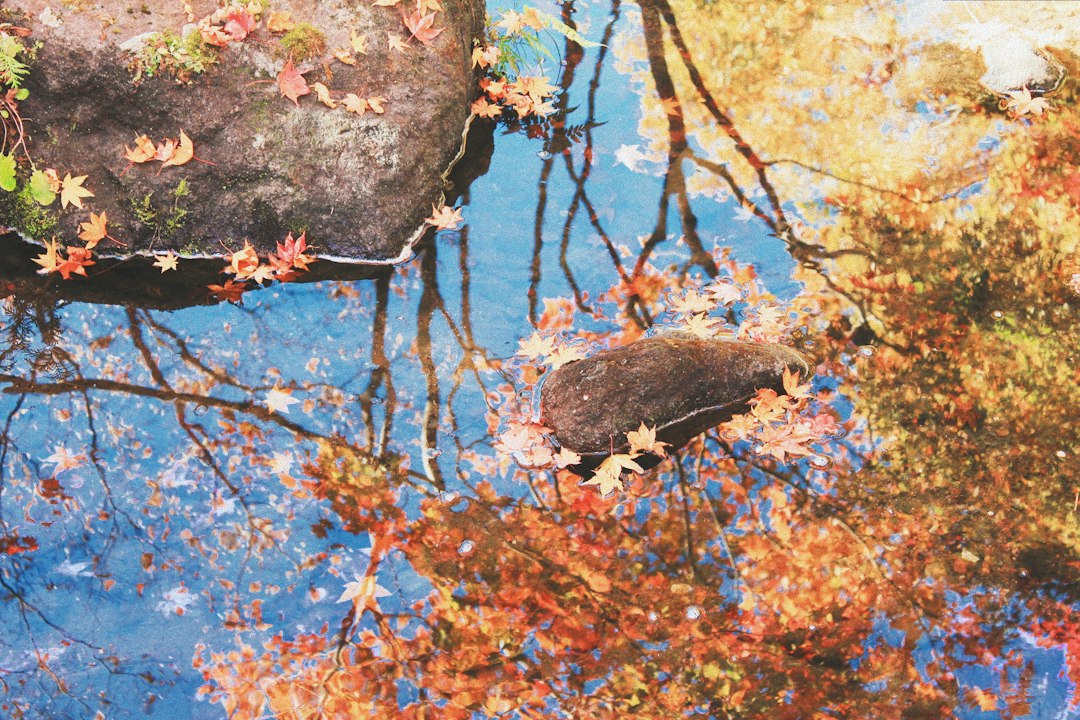
Maples in central Tokyo tend to peak from late November into early December. The classic Edo-period stroll gardens are the places to see them, because the gardens were designed around exactly this kind of seasonal view.
Rikugien in Komagome is our first choice. Its central pond, small hills, and teahouse give the maples depth, and the garden usually holds an evening illumination during the peak. Koishikawa Korakuen near Iidabashi is the other garden we send people to, and it tends to be calmer.
Shinjuku Gyoen is larger and easier to fit into a day, with a mix of ginkgo, maple, and plane trees. It is less intimate than Rikugien, but its open lawns make it the better choice for a slow picnic on a warm November afternoon.
Mt. Takao: Mountain Color Within an Hour
For color that arrives earlier and feels more like the countryside, Mt. Takao in western Tokyo is under an hour from Shinjuku on the Keio Line. The mountain holds an autumn leaves festival through November, and the maples near the summit turn ahead of those in the city.
That said, Takao on a November weekend is one of the most crowded hikes in the country. Go on a weekday, start before nine, and take one of the quieter trails up rather than the paved main path. Walking down past the temple at Yakuo-in as the light fades is the best part of the day.
Festivals, Holidays, and What to Eat
November’s events in Tokyo are smaller and older than the summer festivals. Most of them are rooted in the agricultural year, and the best of them feel local rather than staged for visitors.
Tori-no-ichi in Asakusa
Tori-no-ichi is a market held on the days of the rooster in the old calendar, which fall twelve days apart in November. The largest is at Otori Shrine in Asakusa, where stalls sell kumade: ornamental bamboo rakes, decorated with masks, rice, and gold, that businesses buy to “rake in” good fortune for the coming year. In 2026 the shrine lists the market days as November 7 and November 19.
Go after dark. When a stall sells a large kumade, the sellers and buyers clap together in a sharp rhythmic chant, and the sound carries down the lanes. It is loud, crowded, and one of the few events in the city that still feels entirely for residents.
Chrysanthemums at Shinjuku Gyoen
From November 1 to 15, Shinjuku Gyoen holds its chrysanthemum exhibition in the Japanese garden. The flowers are displayed under temporary wooden pavilions and trained into forms that take a year of work, from single enormous blooms to cascades of small flowers.
It rewards slow attention rather than a quick walk-through. Chrysanthemums have long been associated with the imperial household, and the exhibition has its roots in that tradition. Entry to the garden is ¥500 for adults, and no separate ticket is needed for the exhibition.
The Two Public Holidays
Japan has two national holidays in November: Culture Day on November 3 and Labor Thanksgiving Day on November 23. In 2026, the first falls on a Tuesday and the second on a Monday, which turns November 21 to 23 into a three-day weekend.
That weekend coincides with peak foliage in much of the country, so expect domestic travelers in popular spots and on trains out of Tokyo. We keep that weekend for city neighbourhoods and restaurants, and schedule day trips on either side of it.
November Food: Chestnuts, Sweet Potatoes, and Oden
Autumn is when Japanese food is at its most seasonal. Chestnuts appear in rice, sweets, and the Mont Blanc cakes at department store food halls. Roasted sweet potatoes, yaki-imo, are sold from carts and supermarket warmers, and a hot one in a paper bag is the right snack for a cold evening.
Oden, a slow-simmered broth of fish cakes, daikon, and egg, returns to convenience store counters as the evenings cool. For a proper meal, November is also a good month to book an izakaya evening or a counter dinner, when menus shift toward mushrooms, root vegetables, and fatty autumn fish.
Expert Tip
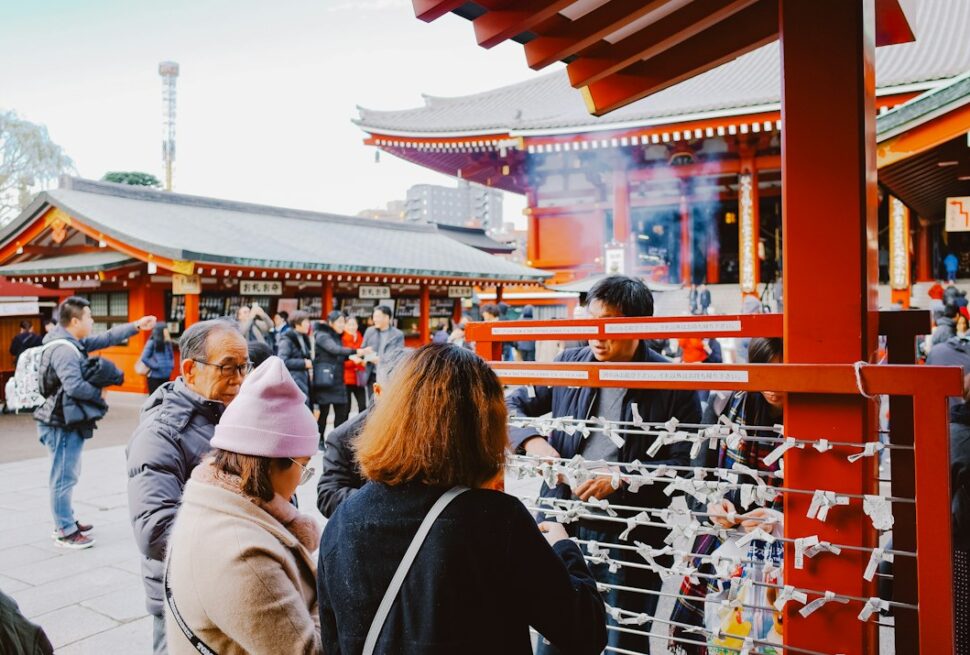
If you are staying near Asakusa, pair Senso-ji in the morning with Tori-no-ichi at night on one of the market days. The two sit a short taxi ride apart, and seeing the shrine district at seven in the morning and again after dark shows you two entirely different versions of the same neighbourhood.
Planning the Month: Timing, Mt. Fuji, and Kyoto
November in Tokyo is comfortable rather than quiet. The city itself absorbs visitors well, but its famous gardens and anything with a foliage reputation are busy on weekends.
Why Mornings Matter More in November
The short days compress everyone’s sightseeing into the same hours. Between ten and three, the gardens, Meiji Shrine, and the ginkgo avenue fill at once. Before nine they are close to empty.
This is where a private guide changes the day most. On our private Tokyo tours, which start by default at Senso-ji in Asakusa, guides reorder the route around the light and the crowds: shrine approaches and gardens first, the market lanes and lunch after, and an indoor or evening stop to finish. The day is between two and eight hours, and nothing is fixed until you tell your guide what you want to see. For a morning that ends among old cedar trees, our guide to walking Meiji Shrine explains the approach and when to go.
Clearer Air and Mt. Fuji Views
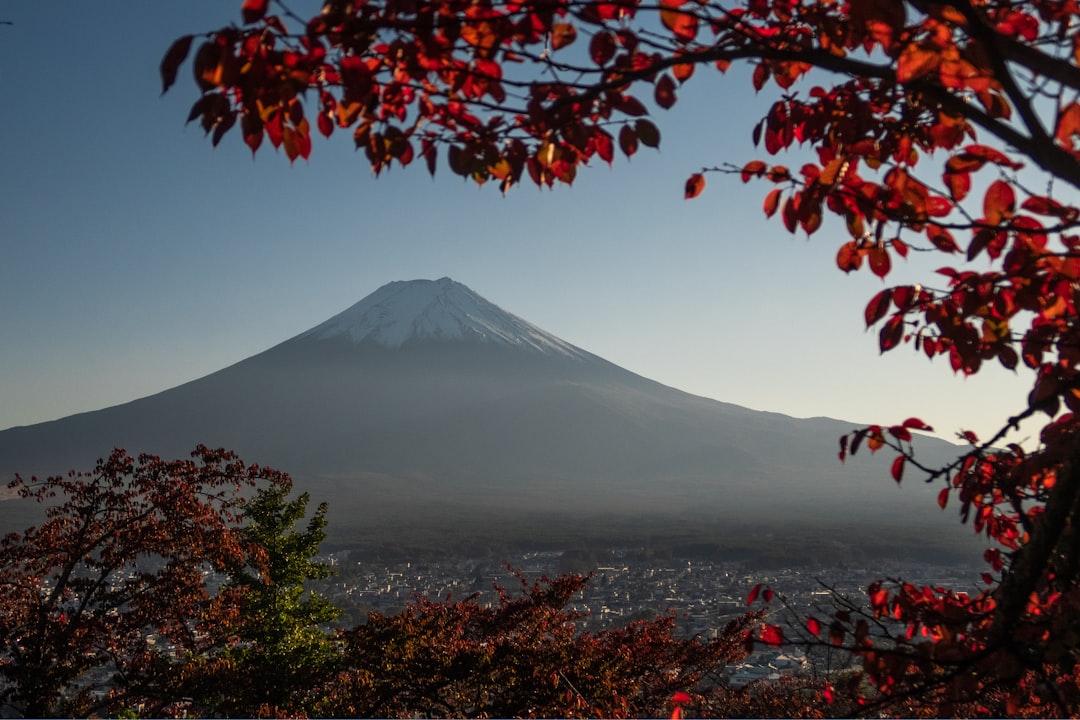
November is when the air around Tokyo starts to clear. Summer haze hides Mt. Fuji for weeks at a time; from late autumn through winter, it appears from observation decks and trains far more often, especially early in the morning.
If a Fuji day trip is on your list, November is a good month for it, and the mountain’s lower slopes around the Fuji Five Lakes add their own foliage. Our comparison of trains and buses from Tokyo to Mt. Fuji covers the routes. We recommend picking the day at short notice based on the forecast, rather than fixing it weeks in advance.
Combining Tokyo With Kyoto’s Peak Foliage
Most of our November travelers spend part of the trip in Kyoto, and the maples there usually peak in the second half of the month. That is also Kyoto’s busiest time of year. The difference between Tofuku-ji or Kiyomizu-dera at eight in the morning and at eleven is the difference between a temple and a queue.
In Kyoto, the busiest hours run from roughly ten to four, and early starts matter more than anywhere else in Japan. On our private Kyoto tours, guides plan the order of stops around exactly this, which is often the single biggest change to how a November day there feels. Going Tokyo first and Kyoto second tends to work well, because you follow the season as it moves: ginkgo gold in Tokyo, then deeper reds further west.
Tokyo in November: Frequently Asked Questions
Is November a good time to visit Tokyo?
Yes, in our view it is one of the best. The weather is dry and mild, the humidity of summer and the rain of October have passed, and the foliage arrives in the second half of the month. The main costs are short daylight and busy weekends in the gardens, both of which are manageable with early starts.
When do the autumn leaves peak in Tokyo?
Later than most people expect. Ginkgo usually turns yellow from mid to late November, and maples in the city tend to peak from late November into early December. If your trip is in early November, head to Mt. Takao or further into the mountains for color, and for the rest of the country see our guide to visiting Japan in November.
How cold is Tokyo in November, and what should I wear?
Average highs are around 17°C (62°F) and lows around 9°C (48°F), with the start of the month warmer and the end noticeably colder. Layers work best: a knit or light fleece, a light down jacket or wool coat, and a scarf for the evenings. Comfortable walking shoes that come off easily matter more than a heavy coat.
Related Tours



Conclusion
Tokyo in November asks you to plan around the light. The best of the month happens between seven and three: the ginkgo avenue before the crowds, the gardens in low sun, a long lunch. After dark the city is still there for you, with markets, illuminations, and a hot sweet potato on the walk back to the hotel.
If you are still choosing dates, aim for the second half of the month for foliage, and keep the three-day weekend of November 21 to 23 for the city rather than for day trips. Pack layers, set the alarm earlier than feels reasonable, and let the leaves decide the order of your days.
Plan Your Japan Trip with Local Experts
Our team has guided 40,000+ travelers across Japan. Tell us about your trip and we’ll get back to you within 24 hours.