
In this article:
- What Kanazawa Castle Was, and Why So Little of It Is Original
- Walking the Grounds: Gates, Turrets, and Stone
- Gyokusen-inmaru Garden and the Castle After Dark
- Planning a Visit: Hours, Tickets, and Pairing It With Kenroku-en
- Kanazawa Castle: Frequently Asked Questions
Introduction
Most people walk into Kanazawa Castle looking for a keep, and there is not one.
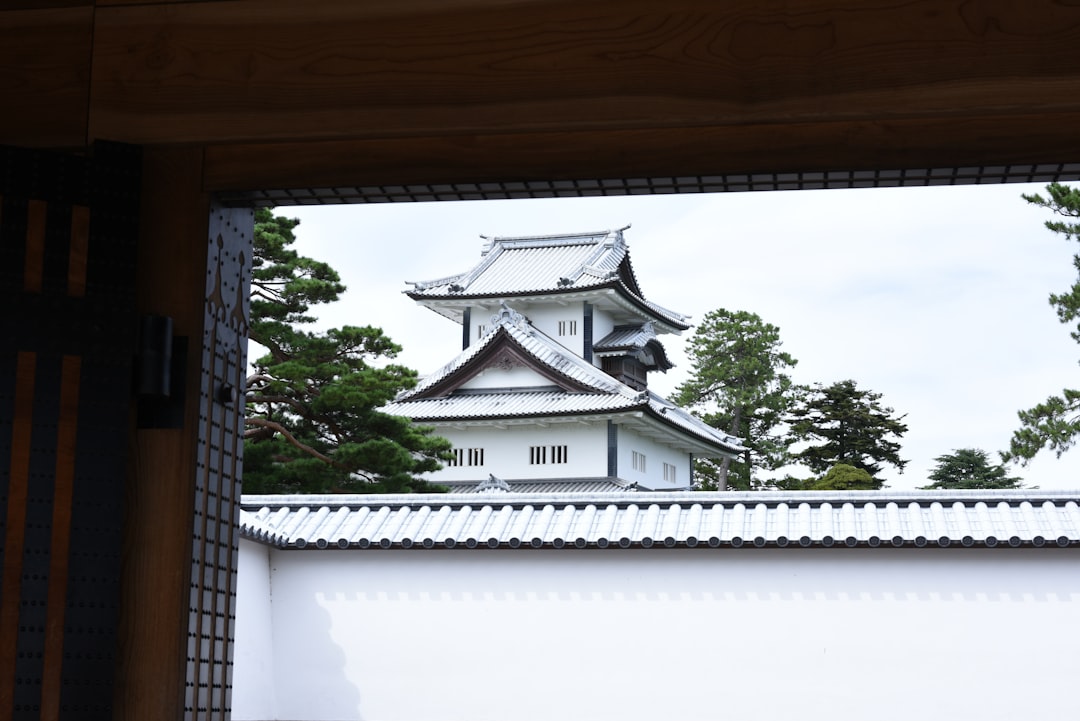
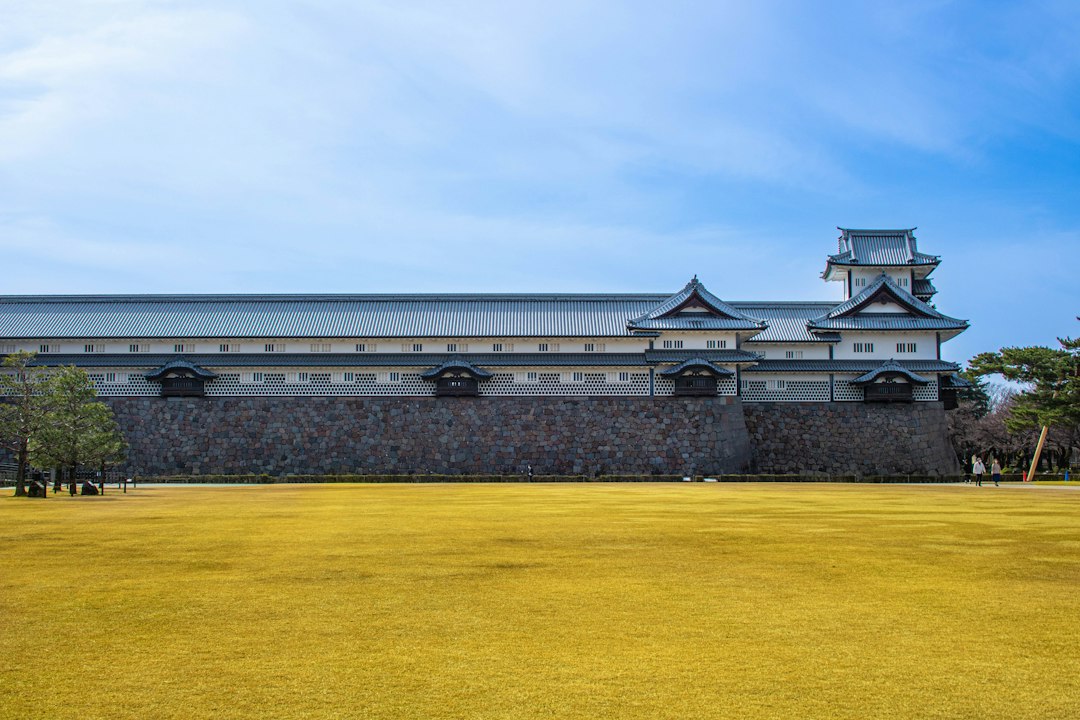
What you find instead is a broad, open lawn ringed by white turrets and long storehouses, their roofs a strange pale grey that looks almost like frost even in August. Beneath them run stone walls in half a dozen different styles, some rough and irregular, some cut so precisely that the joints barely show. The castle has been burning down and being rebuilt since the early seventeenth century, and the version you walk through today is largely a reconstruction of how it looked in the 1850s.
That can sound like a reason to skip it. We think the opposite. Kanazawa was the capital of the richest feudal domain in Japan outside the shogun’s own lands, and the castle is where that wealth was organised, defended, and displayed. Understand the castle first, and Kenroku-en, the samurai district, and the teahouse streets all start to make sense as parts of one city.
What Kanazawa Castle Was, and Why So Little of It Is Original
The short answer is fire. The longer answer tells you a great deal about the family that ran the place.
The Maeda and the Million-Koku Domain
Construction began in 1580 under Sakuma Morimasa, a general sent by Oda Nobunaga to take Kaga Province. Three years later Maeda Toshiie defeated him, took the castle, and made it the headquarters of a domain his family would hold until the Meiji Restoration.
Kaga was assessed at over one million koku of rice, the unit by which feudal wealth was measured. Only the Tokugawa shogunate’s own holdings ranked higher. That position was both an asset and a danger, because a lord that rich was exactly the kind of lord the shogunate watched most closely.
The Maeda answered this, in part, by spending on culture rather than on armies. Gold leaf, lacquer, Kutani porcelain and Kaga silk dyeing all concentrated in Kanazawa as a result, and the workshops are still there. The wider story of Kanazawa’s craft and samurai districts starts inside these walls.
A Keep That Burned in 1602 and Was Never Rebuilt
The original castle had a keep of several storeys. It burned in 1602 and the Maeda chose not to replace it, building turrets and storehouses around the main enclosure instead. Further fires followed, including a major one in 1631 and the great Kanazawa fire of 1759, and each rebuilding changed the layout.
This is why Kanazawa does not appear on lists of Japan’s twelve original surviving castle keeps. It is a different kind of castle to visit. You are reading a site and a system of walls, not admiring a single tower.
What Survived the Fire of 1881
After the Meiji Restoration, the Imperial Japanese Army’s 9th Division took over the site as its headquarters. A fire in 1881 destroyed most of what remained. Kanazawa University later occupied the grounds from 1949 until the late 1980s, which is why the castle park as a public space is relatively recent.
Three structures are original and designated Important Cultural Properties: the Ishikawa-mon Gate, rebuilt in 1788; the Sanjikken Nagaya storehouse; and the Tsurumaru storehouse. Everything else white and wooden that you see has been reconstructed, most of it since 2001.
Walking the Grounds: Gates, Turrets, and Stone
The reconstructions here are unusually good. That matters, because a poor rebuild in concrete with a lift inside would have made the whole site feel like a theme park.
Ishikawa-mon and the White Lead Roofs
Most visitors enter through Ishikawa-mon, which sits only a few metres from the main entrance of Kenroku-en. It is the gate that survived, and it is worth stopping inside the square courtyard beyond the first door. The layout was designed to trap attackers in an enclosed box under fire from above.
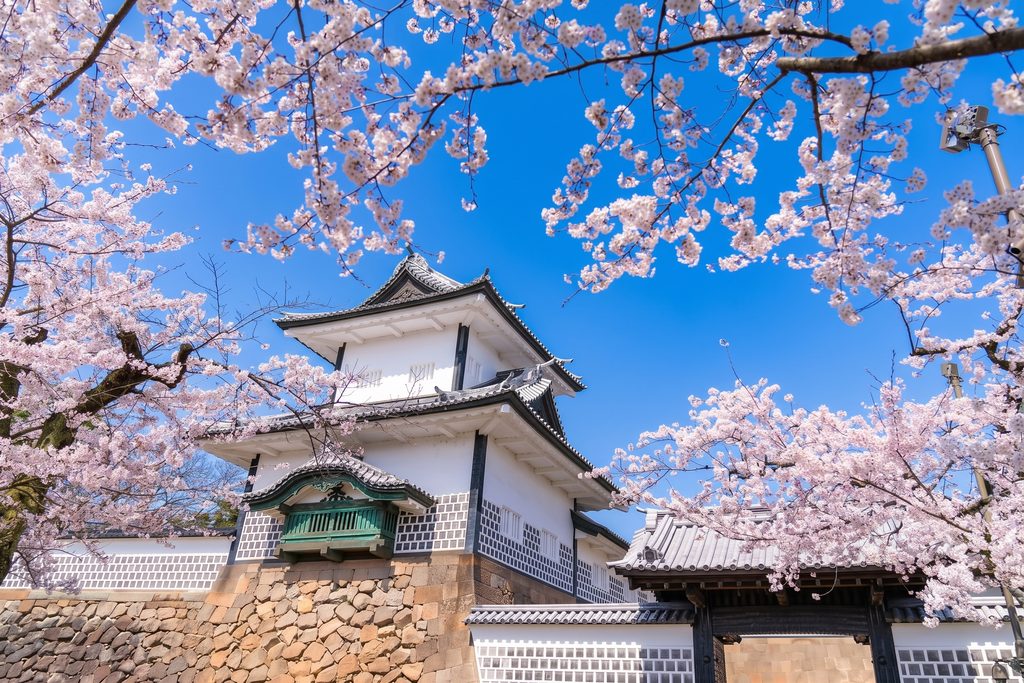
Look up at the roofs. The pale grey-white tiles are made of lead, which weathers to that colour over time. The practical reason was fire resistance. The story every guide in Kanazawa tells is that in a siege the tiles could be melted down and cast into bullets, and while there is no record that this was ever planned, it is a good story, and it makes people look at the roofs properly.
The walls below the roofs are finished in white plaster set with flat tiles and raised seams of mortar, a pattern that repeats across the whole castle and gives it its crisp, graphic look.
Inside Hishi Yagura and Gojikken Nagaya
The main paid section is the chain of reconstructed buildings along the edge of the Ninomaru enclosure: the three-storey Hishi Yagura turret, the two-storey Gojikken Nagaya storehouse that runs from it, and the Hashizume-mon Tsuzuki Yagura turret at the far end. All three were completed in 2001 and rebuilt with traditional wooden construction, based on Meiji-era photographs, Edo-period drawings, and excavation.
Hishi means diamond, and the turret is named for its diamond-shaped floor plan. Inside, the interest is structural rather than decorative. There are no painted screens or armour displays to speak of. What you get is exposed timber framing, pegged joints, and the sheer weight of the beams overhead.
We recommend it without hesitation for anyone who likes to understand how things are built. For travelers who want period rooms and objects, it will feel sparse, and the walk around the outside may be enough.
A Museum of Stone Walls
Kanazawa Castle is often called a museum of stone walls, because walls from different periods and in different styles survive side by side. Some are stacked from rough, barely shaped boulders. Others use stones cut into regular blocks that fit together tightly. A few were clearly built to be looked at as much as to hold up a slope.
The best place to see the contrast is along the paths between Ishikawa-mon and Gyokusen-inmaru, where you can move from one style to another in a few minutes. Look at the corners in particular, where the builders had to solve the hardest problem and where the change in technique between periods shows most clearly.
The Noto Peninsula earthquake on 1 January 2024 damaged a number of the castle’s walls, and some sections were still under survey and repair at the time of writing. Expect scaffolding or fenced areas in places.
Expert Tip
The Kanazawa Goodwill Guide Network runs free volunteer guiding at the castle, mostly in English, from a waiting area at the Ishikawa-mon rest area. There is no booking, so arrive in the morning and ask. Even forty minutes with a guide pointing at stone joints and roof lines changes how the rest of the grounds read.
Gyokusen-inmaru Garden and the Castle After Dark
Kenroku-en gets the crowds. Gyokusen-inmaru, on the other side of the castle, is the garden we would walk first if we had only half an hour.
A Lord’s Garden Built Against the Castle Walls
The third Maeda lord, Toshitsune, laid out this garden in 1634 as a private stroll garden, fed by water from the Tatsumi canal. Later lords altered it, and it disappeared along with most of the castle. The version you see was recreated in 2015 from excavation, old drawings, and records.
What sets it apart is that the castle walls are part of the design. The stone terraces rise from the pond in tiers, with a height difference of around 22 metres from the bottom of the pond to the top wall. One section, the Shikishi Tanzaku wall, sets squares and slim rectangles of cut stone into the face of the wall, a decorative detail you will not find in a purely military wall.
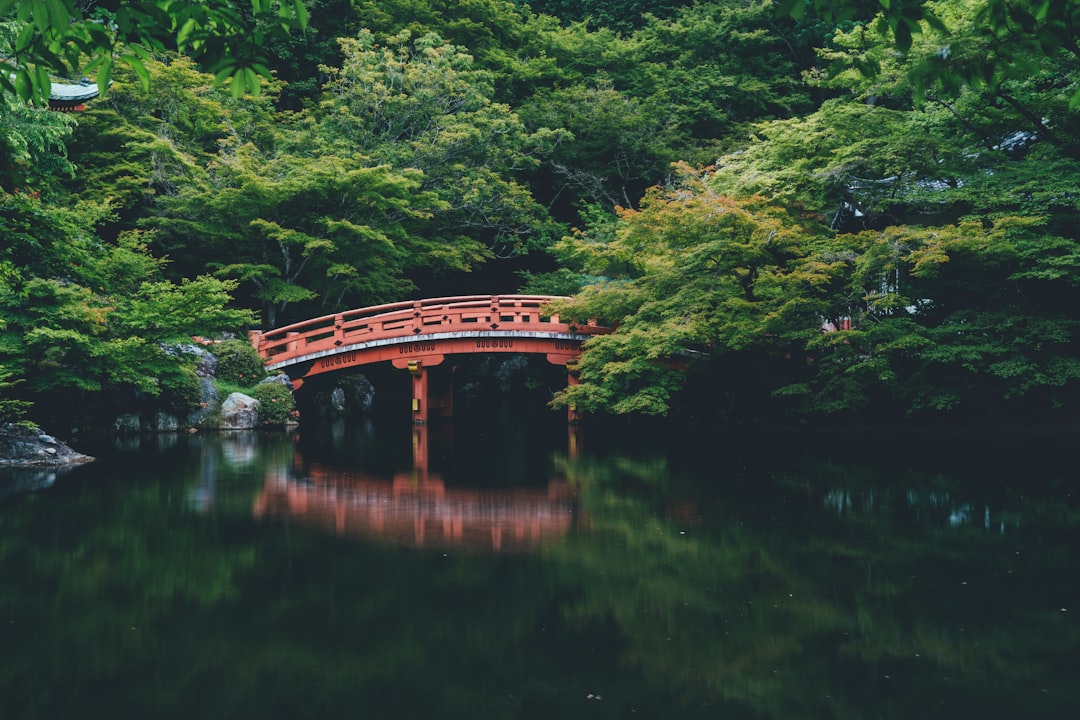
Stand on the far side of the pond and the whole thing reads like a painting: water, a small island, and then the castle rising behind in grey stone and white plaster.
Evening Illuminations
On Sundays and during peak seasons, including cherry blossom time, the castle park opens in the evening from sunset until 21:00, with Gyokusen-inmaru, the castle buildings, and Sannomaru lit up. Entry is free. The outer walls are also lit every night until 22:00, which you can see from the street.
The schedule changes each year, so check the dates on the official Kanazawa Castle Park site before planning an evening around it. If the dates line up, this is the time of day we would pick for the garden. The lighting picks out the stone terraces and doubles them in the pond.
Matcha at Gyokusen-an
Gyokusen-an, a modern rest house overlooking the garden, serves matcha with a seasonal sweet for ¥1,000. The tatami room looks straight across the pond at the walls.
It is not a formal tea ceremony, and it does not need to be. Sitting still for fifteen minutes in front of the view is the right way to see this garden.
Planning a Visit: Hours, Tickets, and Pairing It With Kenroku-en
The logistics are easy. The grounds are free, open every day of the year, and sit in the middle of the city.
Opening Hours and Admission
Kanazawa Castle Park is open from 7:00 to 18:00 between 1 March and 15 October, and from 8:00 to 17:00 from 16 October to the end of February. Walking the grounds costs nothing.
The reconstructed Hishi Yagura, Gojikken Nagaya and Hashizume-mon Tsuzuki Yagura open from 9:00 to 16:30, with last entry at 16:00. Admission is ¥320 for adults and ¥100 for children aged 6 to 17. Visitors aged 65 and over enter free with government-issued ID. The Kahoku-mon and Nezumita-mon gates keep the same hours and are free.
If you are also visiting Kenroku-en, the official castle site lists a Kenrokuen+1 combined ticket at ¥500. Ask at the ticket window which sites it currently covers before you buy.
Getting There From Kanazawa Station
The castle is roughly 20 minutes from Kanazawa Station by the Kanazawa Loop Bus, which leaves from the East Exit. Hokutetsu and JR buses also run the route. Get off at Kenrokuen Shita or the Kenrokuen Garden and Kanazawa Castle Park stop, then walk about five minutes to Ishikawa-mon.
If you are arriving on the shinkansen, the full journey from Tokyo takes around two and a half hours, and our guide to riding the shinkansen covers luggage and seat reservations. Leave bags in a locker at the station. The castle paths involve slopes and gravel.
Castle First or Garden First
Kenroku-en and the castle face each other across a road that was once a moat. Kenroku-en was, in effect, the castle’s outer garden before it opened to the public, and seeing the two together gives you the full arrangement of a domain capital in a single morning.
In our experience, the order matters. Go to the castle first, at 9:00 when the buildings open, and cross into Kenroku-en afterwards. The castle lawn is quiet early, and the garden, which fills with tour groups by mid-morning, is better read once you know whose garden it was. Allow two hours for the castle and Gyokusen-inmaru together, and at least another ninety minutes for Kenroku-en.
Our private Kanazawa tour starts at the Kodatsuno Gate of Kenroku-en and usually takes in both the garden and the castle park before moving on to Higashi Chaya. The guide shapes the order around the weather and your pace, which in a city that gets as much rain as Kanazawa does is not a small thing.
Expert Tip
Bring an umbrella whatever the forecast says. Kanazawa gets a great deal of rain and snow, and the castle park is open ground with little cover between buildings. On a grey, drizzly day, the pale lead roofs and wet stone actually look better than in bright sun, so rain is not a reason to cancel.
Kanazawa Castle: Frequently Asked Questions
Is there a castle keep at Kanazawa Castle?
No. The main keep burned in 1602 and was never rebuilt. The castle instead had turrets, storehouses, and gates around its enclosures, and those are what have been reconstructed. If a standing keep is what you want to see, Matsumoto, Himeji, or Osaka Castle are better choices, though Kanazawa rewards a different kind of attention.
How long do you need at Kanazawa Castle?
Around two hours covers the grounds, the paid turret and storehouse buildings, and Gyokusen-inmaru Garden at a relaxed pace. With Kenroku-en next door, most visitors spend a full morning between the two. Add time if you want to sit down for matcha at Gyokusen-an.
Is Kanazawa Castle Park free?
Yes, the grounds, the Kahoku-mon and Nezumita-mon gates, and Gyokusen-inmaru Garden are free to enter. The only paid section is the group of reconstructed buildings including Hishi Yagura and Gojikken Nagaya, which costs ¥320 for adults. Kenroku-en, across the road, charges its own admission.
Related Tours

Conclusion
Kanazawa Castle is not the place to see a great tower. It is the place to see how a domain the size of a small country was run: the gate built to trap attackers, the lead roofs laid against fire, the walls that turned into garden terraces once there was no one left to fight.
Go early, before the buildings open at 9:00 if you can, and walk the lawn while it is still empty. Start at Ishikawa-mon, loop past the stone walls to Gyokusen-inmaru, and only then cross the old moat to Kenroku-en. The garden will make more sense for it.
Plan Your Japan Trip with Local Experts
Our team has guided 40,000+ travelers across Japan. Tell us about your trip and we’ll get back to you within 24 hours.




