
In this article:
- Why Kumamoto Castle Was Built Never to Fall
- The Castle After Two Earthquakes
- Planning Your Visit: Tickets, Hours, and Getting There
- Below the Walls: Josaien, Suizenji, and What Kumamoto Eats
- Kumamoto Castle: Frequently Asked Questions
Introduction
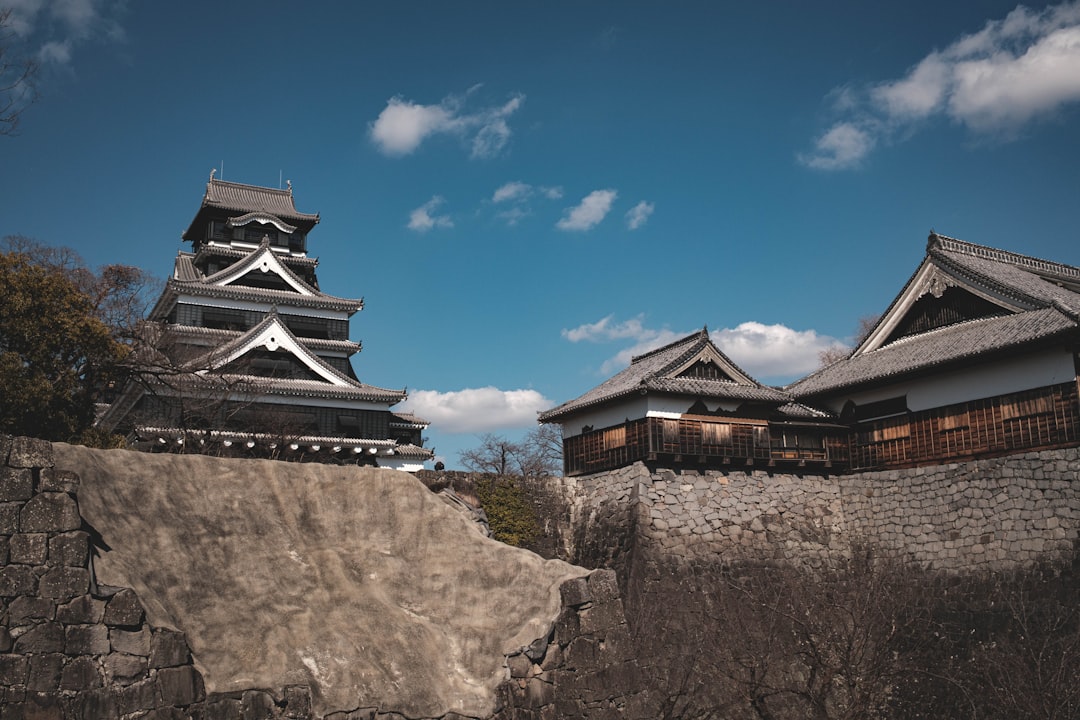
Stand at the foot of the walls at Kumamoto Castle and look up. The stone does not rise in a straight line. It starts at a gentle slope you could almost walk up, then steepens as it climbs until, near the top, it leans out over your head.
That curve is the reason people have travelled to Kumamoto for four centuries. It is also why the castle’s recent history is so striking. A fortress designed never to fall to an army lost large sections of its walls to the 2016 earthquakes, spent years being rebuilt stone by numbered stone, and was shaken again on 28 July 2026.
We take travelers here on our Kumamoto day tours, and the question we hear most is no longer about samurai. It is whether the castle is worth visiting while it is still under repair. Our answer is yes, and arguably more so now than when it was finished. The rest of this guide explains why, and how to plan the visit.
Why Kumamoto Castle Was Built Never to Fall
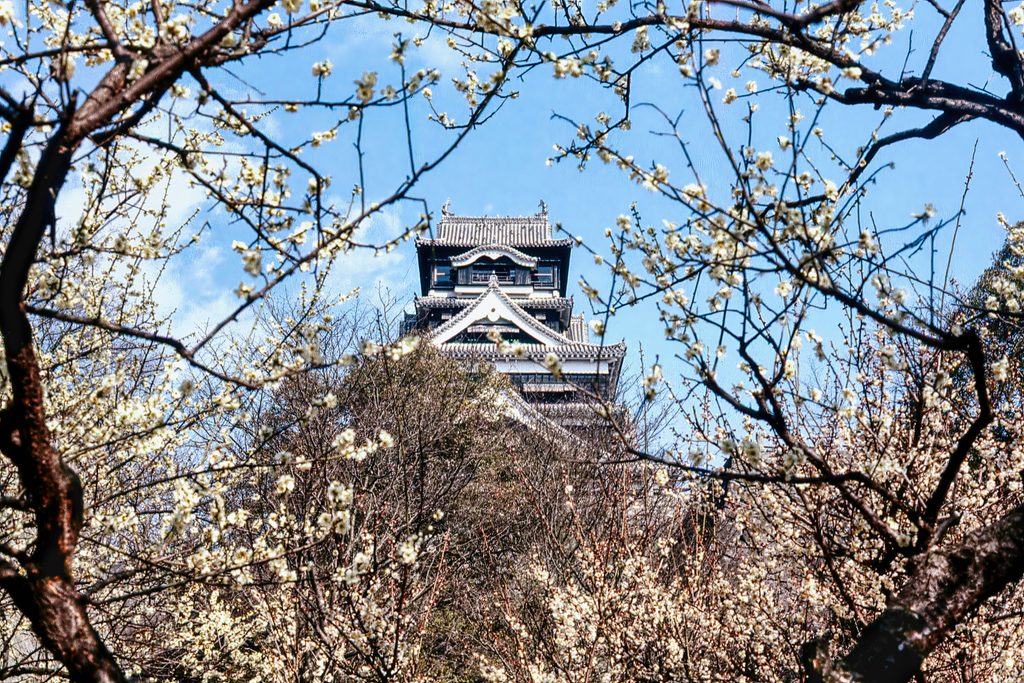
Kumamoto Castle is counted among Japan’s three great castles, and it earns the title through engineering rather than decoration.
Kato Kiyomasa and the Musha-gaeshi Walls
The castle was built at the start of the seventeenth century by Kato Kiyomasa, a general who had served Toyotomi Hideyoshi and spent much of his career attacking other people’s fortifications. He built this one knowing exactly how a siege is won.
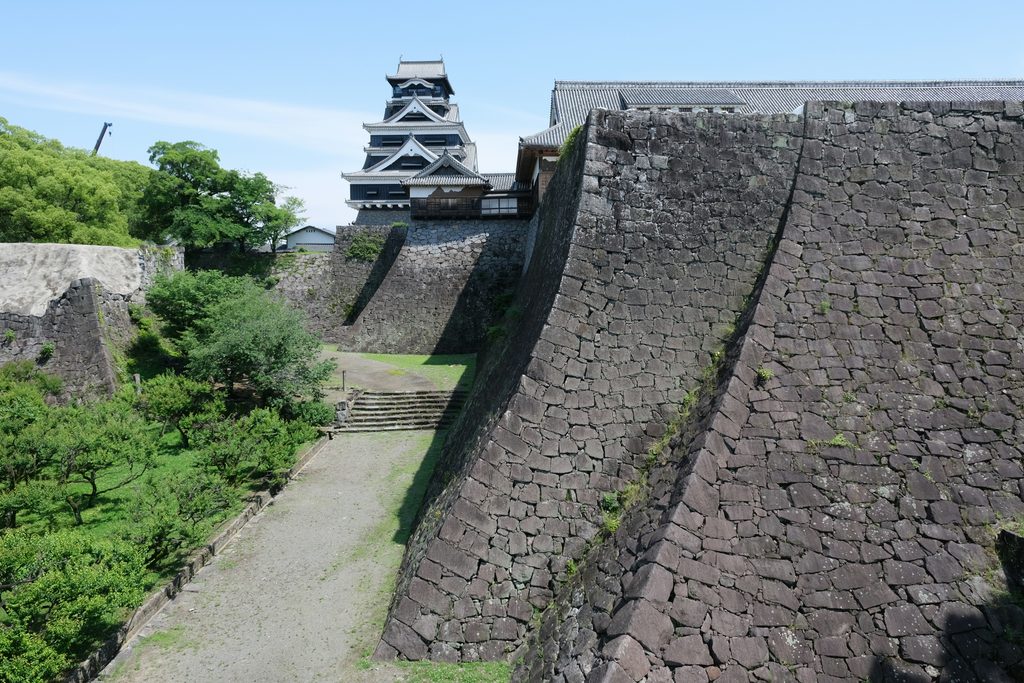
The stone walls are called musha-gaeshi, roughly “warrior repellers.” At the base the angle is shallow enough to tempt an attacker. Halfway up it steepens, and at the top it is close to vertical. Anyone climbing finds the wall getting harder the higher they go, at the point where defenders above can reach them most easily.
Inside the walls, the approaches wind and double back. Walk the route from the south entrance to the keep slowly and you start to see it as a trap laid out in stone.
The 1877 Siege and What Burned
The design was tested in 1877, during the Satsuma Rebellion. Saigo Takamori’s rebel army besieged the government garrison inside the castle for more than fifty days and never took it.
That said, the castle did not come through intact. The keep and many of the wooden buildings burned just before the siege began. A line often attributed to Saigo, that he was beaten not by the government army but by Kiyomasa, is repeated at every tour stop in the city. Whether or not he said it, the walls held.
What Is Original and What Is Rebuilt
Be clear-eyed about this before you go. The keep you see today is a 1960 reconstruction in reinforced concrete, and its interior is a modern museum. Visitors who have just come from Himeji sometimes feel let down.
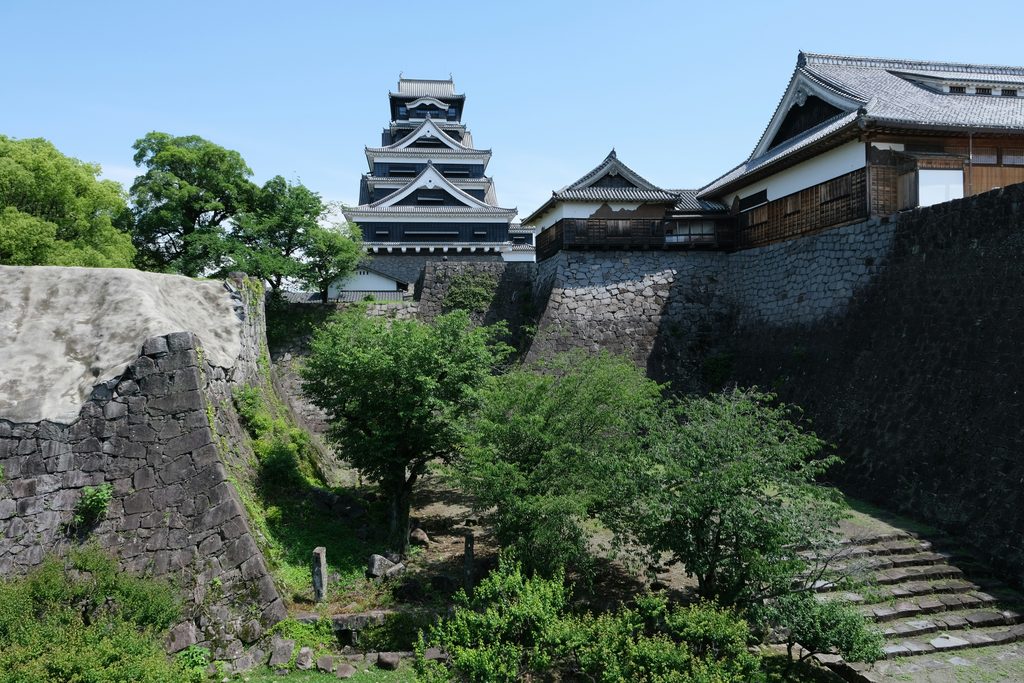
However, the stonework is largely original, and so are thirteen structures designated as Important Cultural Properties, including the Uto Turret and the long wall along the Tsuboi River. The Honmaru Goten palace was rebuilt with traditional methods and reopened in 2008. If you want to compare, our guide to Japan’s twelve original castle keeps covers the ones that survived intact.
In our view the walls are the real monument here. Give them more of your time than the keep.
Look in particular at the corners. The stones at each angle are long blocks laid alternately in two directions, locking the corner together, while the faces between them are filled with smaller stones. Once you see the pattern, the restored sections on the walkway become far easier to read.
The Castle After Two Earthquakes
No other major castle in Japan lets you watch restoration work at this scale, and the reason is two earthquakes ten years apart.
2016: Collapsed Walls and a Restoration Plan to 2052
The Kumamoto earthquakes of April 2016 brought down sections of stone wall across the site, cracked buildings, and stripped roof tiles from the keep. Photographs of the collapsed corners circulated around the world.
Kumamoto City treated the damage as a long-term cultural project rather than a quick rebuild. Each fallen stone was recovered, recorded, and matched to its original position. The keep reopened inside and out in 2021. Under the city’s revised restoration plan, the Uto Turret and the Honmaru Goten palace are scheduled for completion in fiscal 2032, and the plan as a whole runs to fiscal 2052.
In practice, that means scaffolding, cranes, and fenced areas will be part of any visit for years to come.
July 2026: Closed, Inspected, Reopened on 13 August
On 28 July 2026 a strong earthquake struck Kumamoto Prefecture again. The castle closed immediately for safety inspections. Local reporting described new stone wall collapses and deterioration at dozens of locations, and cracked earthen walls on buildings including the keep and the palace.
After inspection, the city reopened the grounds on 13 August 2026. The keep interior and the elevated walkway reopened with it. Some areas remain off-limits, including the stone wall viewing space on the first floor of the smaller keep, and netting and tape now mark parts of the walkway where the ground shifted.
Our guides check what is accessible on the day of each tour. Conditions are still changing, so look at the official Kumamoto Castle site in the week before your visit.
Expert Tip
Visitor numbers in the first week after the 2026 reopening were roughly half those of the same week a year earlier, and the mayor noted that some people did not know the castle had reopened. If your trip falls in autumn 2026, you may find the grounds quieter than usual. Arriving at opening time improves the odds further.
The Special Viewing Walkway and the Keep Interior
The elevated walkway was built so visitors could keep coming while the ground below is under repair. It runs for several hundred metres, raised roughly six metres above the grounds, and passes close to walls that are being rebuilt. From it you can see numbered stones laid out in rows and the gaps they will fill.
Inside the keep, each floor covers a period of the castle’s life: Kiyomasa’s construction, the Hosokawa family who ruled Kumamoto afterwards, the 1877 siege, and the post-2016 recovery. The top floor looks out over the grounds and the city. On a clear day you can follow the scaffolding across the whole site from up there.
We suggest doing the walkway first and the keep second. The exhibits make more sense once you have seen the stones up close.
Planning Your Visit: Tickets, Hours, and Getting There
The practical side is simple. The only real decision is how early to arrive.
Admission and Opening Hours
Admission is ¥800 for adults and high school students and ¥300 for elementary and junior high school students, with preschool children free. Standard hours are 9:00 to 17:00, with last entry at 16:00. In recent summers the city has extended evening hours in July and August.
Tickets are sold at several entrances, and online tickets are available through the official site. When a tour group arrives at the main entrance, the queue there can be slow. The ticket office near Sakuranobaba Josaien is usually calmer.
Allow two to three hours for the walkway, the keep, and a slow circuit of the outer walls. Rushing it in one hour is possible, but you will spend that hour walking rather than looking.
From Kumamoto Station by Tram
Kumamoto Station sits some distance from the castle, and the city tram is the easiest way in. The ride takes around fifteen minutes to the stop by the castle and city hall, and the flat adult fare is ¥200.
One detail catches visitors out. In late 2024, Kumamoto’s bus companies stopped accepting nationwide transit IC cards such as Suica and ICOCA, switching to credit card tap payment instead. The city tram has continued to accept IC cards. If you are carrying a Suica from Tokyo, use the tram, not the bus.
Walking from the station takes thirty to forty minutes along the river. It is pleasant in cooler months and hard work in August.
Travelers on our private tour meet their guide at Kumamoto Station itself. The guide makes contact on WhatsApp beforehand to agree the plan, which is useful now that the open areas of the castle can shift from week to week. The tram stop is directly outside the station, so there is no need for a taxi.
When to Go: Cherry Blossom, Ginkgo, and Early Mornings
Around 800 cherry trees bloom across the grounds in late March and early April. It is the most photographed moment of the year, and the most crowded.
We prefer late November. The castle has long been nicknamed Ginnan-jo, for the ginkgo trees Kiyomasa is said to have planted, and the yellow leaves against the black keep are worth the trip on their own.
Whatever the season, go at 9:00. The walkway is narrow in places, and it is at its quietest in the first hour.
Below the Walls: Josaien, Suizenji, and What Kumamoto Eats
A castle visit in Kumamoto rarely ends at the castle. The best parts of the day are often the hours after it.
Sakuranobaba Josaien
Directly below the southern walls is Sakuranobaba Josaien, a modern complex built to look like an Edo-period castle town. It holds more than twenty restaurants and shops, a history exhibition, and stalls selling local food.
It is openly aimed at visitors, and we will not pretend otherwise. Still, it is the most efficient place to try several Kumamoto specialities in one stop. On our Kumamoto private tour, it is also where guests can try on samurai armour, which tends to be more fun than people expect after a morning of looking at defensive walls.
Suizenji Jojuen Garden
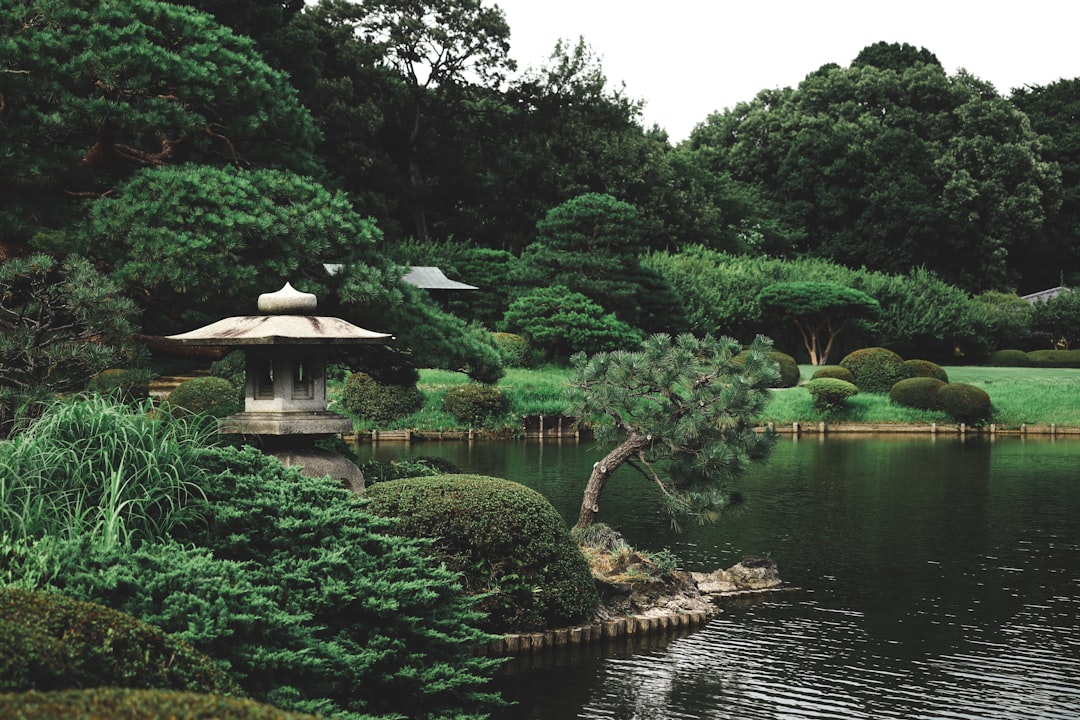
Suizenji Jojuen is a short tram ride east of the castle. It is a stroll garden laid out by the Hosokawa family in the seventeenth century around a spring-fed pond, with a small conical hill standing in for Mount Fuji.
The garden is often described as a miniature of the old Tokaido road between Edo and Kyoto. There is a teahouse on the water, and the clarity of the spring water is the detail most visitors mention afterwards. Where the castle is loud with history, Suizenji is quiet. We like the contrast at the end of a long day.
Basashi, Karashi Renkon, and Kumamoto Ramen
Kumamoto’s best-known dish is basashi, raw horse meat sliced thin and served with grated ginger or garlic and a sweet local soy sauce. It is taken seriously here, and the marbled cuts can be excellent. Nobody is obliged to try it.
Karashi renkon is lotus root with its holes packed with mustard miso, then battered and fried. The story goes that it was created as a restorative for a sickly Hosokawa lord. The mustard is sharp, so take a small bite first.
Kumamoto ramen is a pork bone broth finished with blackened garlic oil and crisp garlic. It is heavier than the Hakata style you may have eaten in Fukuoka, and better suited to a cold evening. For more on the region’s food, see our guide to Kyushu’s volcanic landscapes and regional food.
Expert Tip
Entry fees, lunch, and your guide’s expenses on our tours are paid as you go, and small restaurants in Kumamoto are easiest paid in cash. Withdraw yen at a convenience store ATM near Kumamoto Station before you set off, rather than looking for one near the castle.
Kumamoto Castle: Frequently Asked Questions
Is Kumamoto Castle open after the 2026 earthquake?
Yes. The castle closed after the earthquake of 28 July 2026 and reopened to the public on 13 August 2026, including the keep interior and the elevated walkway. Some areas remain closed while stone walls are surveyed, and restoration from the 2016 earthquakes is still continuing. Check the official site shortly before your visit, since accessible areas can change.
How long do I need at Kumamoto Castle?
Two to three hours covers the walkway, the keep, and the outer walls at a comfortable pace. Add an hour or more if you want lunch at Sakuranobaba Josaien. A full day in Kumamoto comfortably includes the castle, Josaien, and Suizenji Jojuen garden.
Can I visit Kumamoto Castle as a day trip from Fukuoka?
Yes. The shinkansen from Hakata to Kumamoto takes around forty minutes, which makes this an easy day trip. Leave Fukuoka by 8:00 and you can be at the castle when it opens. If you are basing yourself in Fukuoka, our Fukuoka travel guide covers the city itself.
Related Tours

Conclusion
Go now, while the repairs are visible. Once the walls are finished in the coming decades, the numbered stones and scaffolding will be gone. So will one of the few chances anywhere in Japan to watch a castle being rebuilt by hand.
Arrive at 9:00, take the tram rather than the bus if you are carrying an IC card, and walk the elevated walkway before entering the keep. Then go down to Josaien for lunch and finish the afternoon by the spring water at Suizenji. That order works well in every season we have guided it.
Plan Your Japan Trip with Local Experts
Our team has guided 40,000+ travelers across Japan. Tell us about your trip and we’ll get back to you within 24 hours.




