
In this article:
- Minami: Dotonbori, Uranamba, and Kuromon Market
- Osaka Castle and the Older City
- Shinsekai, Tennoji, and the City From Above
- Beyond the Center: The Bay, Universal Studios, and Day Trips
- Things to Do in Osaka: Frequently Asked Questions
Introduction
Most lists of things to do in Osaka read like a list of things to see. That is the wrong way round for this city.
Kyoto has a checklist. Tokyo has districts that each do one thing well. Osaka has streets, and the best of it is found by walking them at the right hour with an appetite. The castle is worth a morning, and the view from Abeno Harukas is worth an evening. Still, the thing travelers talk about when they get home is a counter in Uranamba where a man in a headband handed them a skewer and explained, without being asked, which sauce it went in.
This is a merchant city, less formal than Kyoto and more direct than Tokyo, and it rewards visitors who plan the day around meals rather than monuments. Below we work through Osaka by area, with the timing and order our guides use, and an honest view of what to skip.
Minami: Dotonbori, Uranamba, and Kuromon Market
Minami, the southern downtown around Namba, is where almost every first visit to Osaka starts. It is loud, lit, and crowded, and it is also where the city’s food culture is most concentrated.
The mistake is treating it as one place. Dotonbori, the backstreets behind it, and Kuromon Market a short walk east are three different experiences, and they work best at three different times of day.
Dotonbori After Dark, and Why You Should Leave It
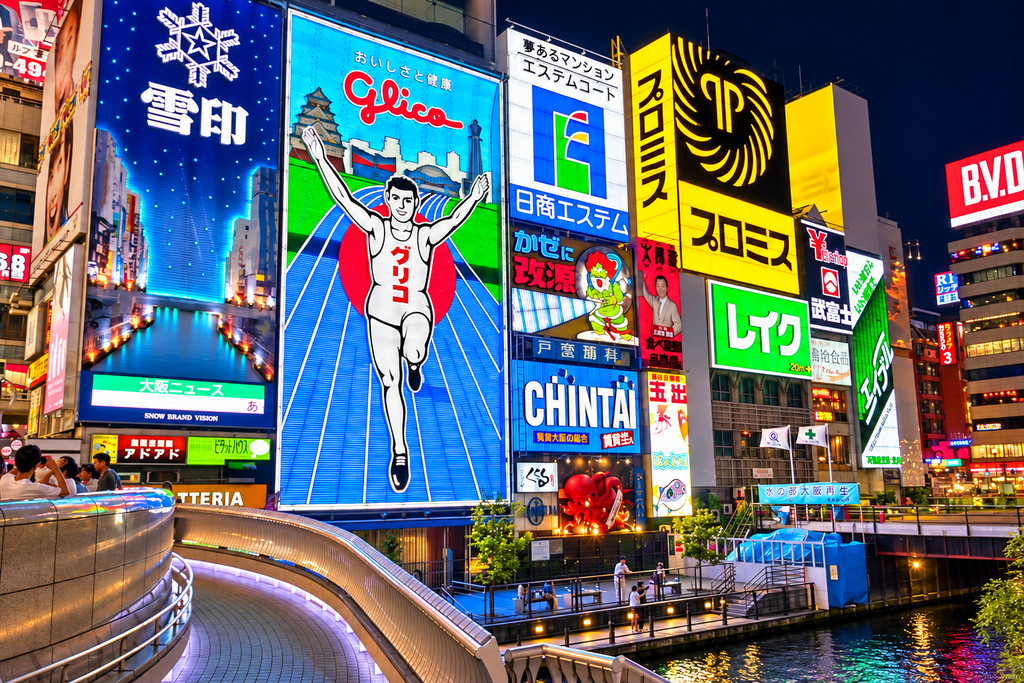
Dotonbori should be seen at night, when the canal carries the reflection of the running man sign and the giant mechanical crab above the Kani Doraku restaurant. Walk the length of it once, cross the Ebisu Bridge, and take the photograph everyone takes.
Then leave. The main strip is built for people passing through, and the takoyaki stalls with the longest queues are not always the best ones. In our experience the eating improves sharply within a few hundred metres of the neon, once you turn into the lanes where office workers eat after work.
Uranamba and the Standing Bar
Uranamba, literally “behind Namba”, is the grid of narrow streets south and east of Namba Station. It has no single sight. What it has is density: small izakaya, grill counters, oyster bars, and tachinomiya, standing bars where there are no seats and the plates are cheap.
A tachinomiya is one of the most ordinary and most enjoyable ways to spend an evening in Osaka. You order a drink and two or three small plates, stay twenty minutes, and move on. That rhythm, rather than one long dinner, is how the neighborhood is meant to be used.
This is also the route our Dotonbori food tour takes. It starts briefly under the neon, stops at a local temple for ten minutes, and then works through a takoyaki stall, an izakaya, and a standing bar, thirteen dishes in total. The structure is the useful part to borrow even if you go alone: one street-food stop, one sit-down room, one standing bar.
Kuromon Market Before Lunch
Kuromon Market is a covered arcade roughly 580 metres long with around 150 shops, a short walk from Nippombashi Station. It began as a wholesale fish market for the city’s restaurants and still sells to them, although the stalls now cater heavily to visitors eating on the spot.
Go in the late morning. Early enough that the fish counters are fully stocked, late enough that grilled scallops and wagyu skewers are being cooked to order. Prices here are higher than in an ordinary supermarket, and the honest way to see it is as a tasting walk rather than a bargain.
Expert Tip
Osaka’s food streets run on cash more than its department stores do. Standing bars, market stalls, and small counters in Uranamba often take cash only, so carry a few thousand yen in notes and coins before you set out for the evening. An IC card covers the subway and convenience stores; it will not reliably cover the takoyaki stall.
Osaka Castle and the Older City
Osaka is older than its skyline suggests. The castle, a temple founded in the sixth century, and a shrine whose summer festival fills the river with boats give the city a history that most visitors pass straight by on the way to dinner.
Reading the Castle Walls, Not Just the Tower
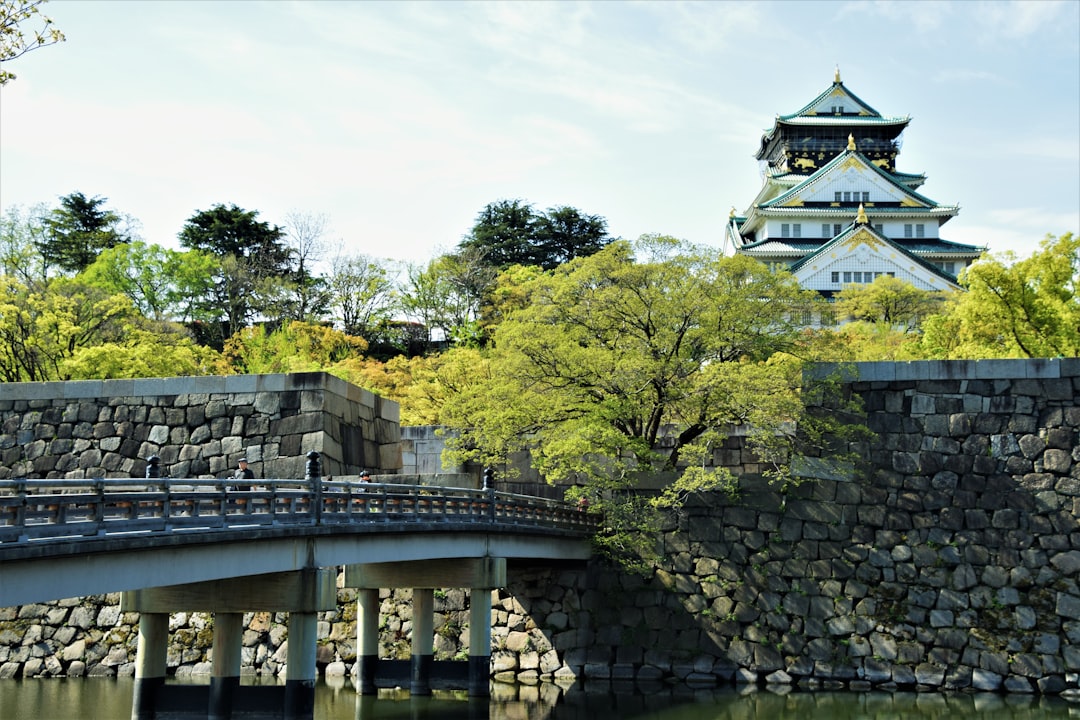
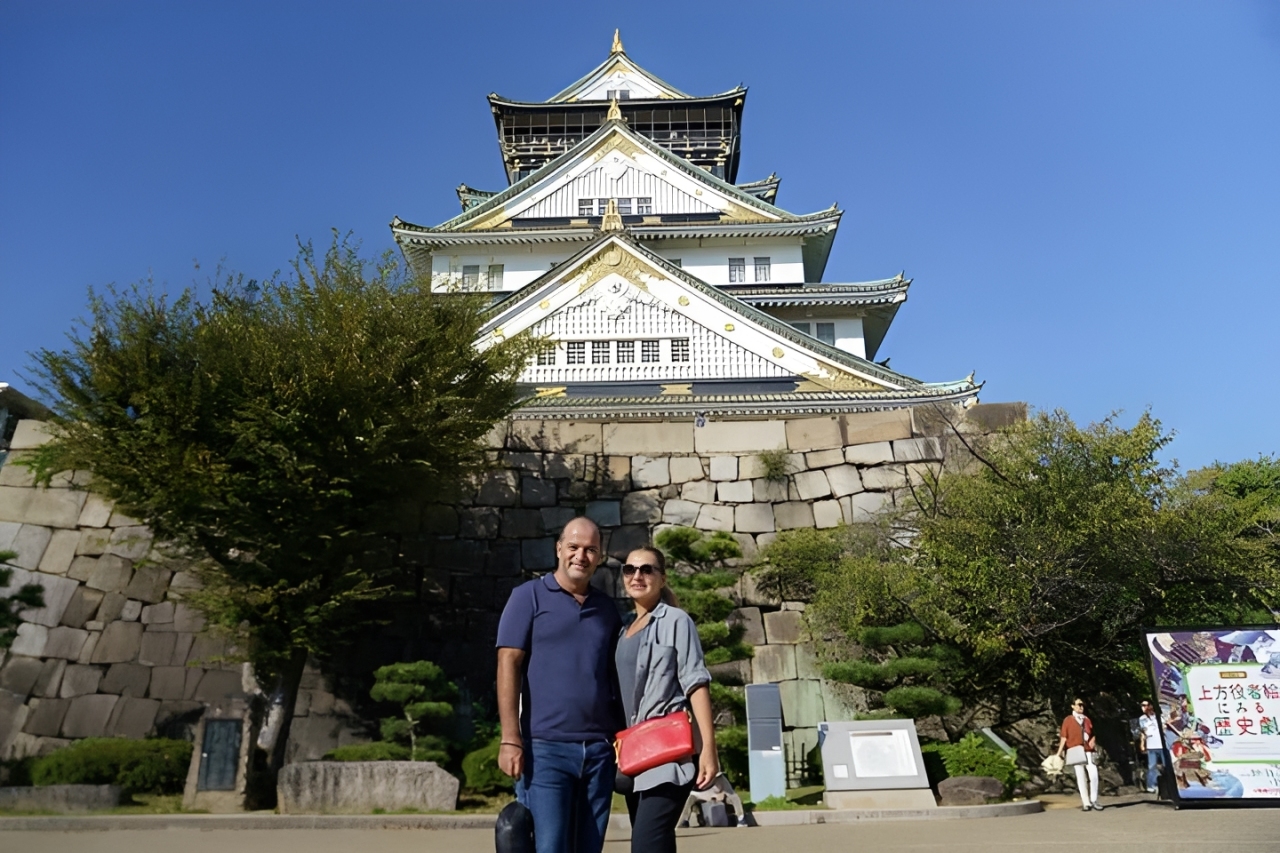
Osaka Castle is usually photographed and rarely explained. The main tower is a ferro-concrete reconstruction built in 1931, and some visitors feel let down when they learn this. We think that is the wrong thing to focus on.
The walls, the moats, and the approach were laid out to make an assault expensive, and the massive cut stones at the gates are original. Once someone points out how the angles and the double moat work, the grounds read as a piece of military design rather than a backdrop. The museum inside the tower covers the sieges that ended the Warring States period, and the view from the top gives you the shape of the city.
Allow around eighty minutes for the grounds and the tower together. Hokoku Shrine, at the foot of the castle, is dedicated to Toyotomi Hideyoshi, the man who built the original.
Shitennoji, Older Than the Castle by a Thousand Years
Shitennoji was founded by Prince Shotoku in 593 and is regarded as the first Buddhist temple in Japan built by state initiative. Fire and war have destroyed its buildings many times. Each rebuilding has followed the original sixth-century layout, a straight line of gate, pagoda, main hall, and lecture hall.
It is a short walk from Tennoji, which makes it easy to pair with Shinsekai. The inner precinct charges a small entry fee, while the outer grounds are open to walk. On a weekday morning it is quiet in a way almost nothing else in central Osaka is.
Osaka Tenmangu and the Tenjin Matsuri
Osaka Tenmangu, north of the castle, is dedicated to Sugawara no Michizane, the deity of scholarship. For most of the year it is a neighborhood shrine, reached through Tenjinbashisuji, one of the longest covered shopping streets in Japan.
On July 24 and 25 it becomes something else. The Tenjin Matsuri ends with a procession of more than a hundred lantern-lit boats on the Okawa River and fireworks overhead. If your dates are flexible and you can tolerate the heat and the crowds, it is the single best reason to be in Osaka in summer.
Shinsekai, Tennoji, and the City From Above
The area around Tennoji shows two versions of Osaka side by side. Shinsekai is the city’s retro past, and Abeno Harukas across the tracks is its present.
We usually recommend treating them as one afternoon, finishing at the observation deck around sunset. They are close enough to walk between.
Shinsekai and Kushikatsu
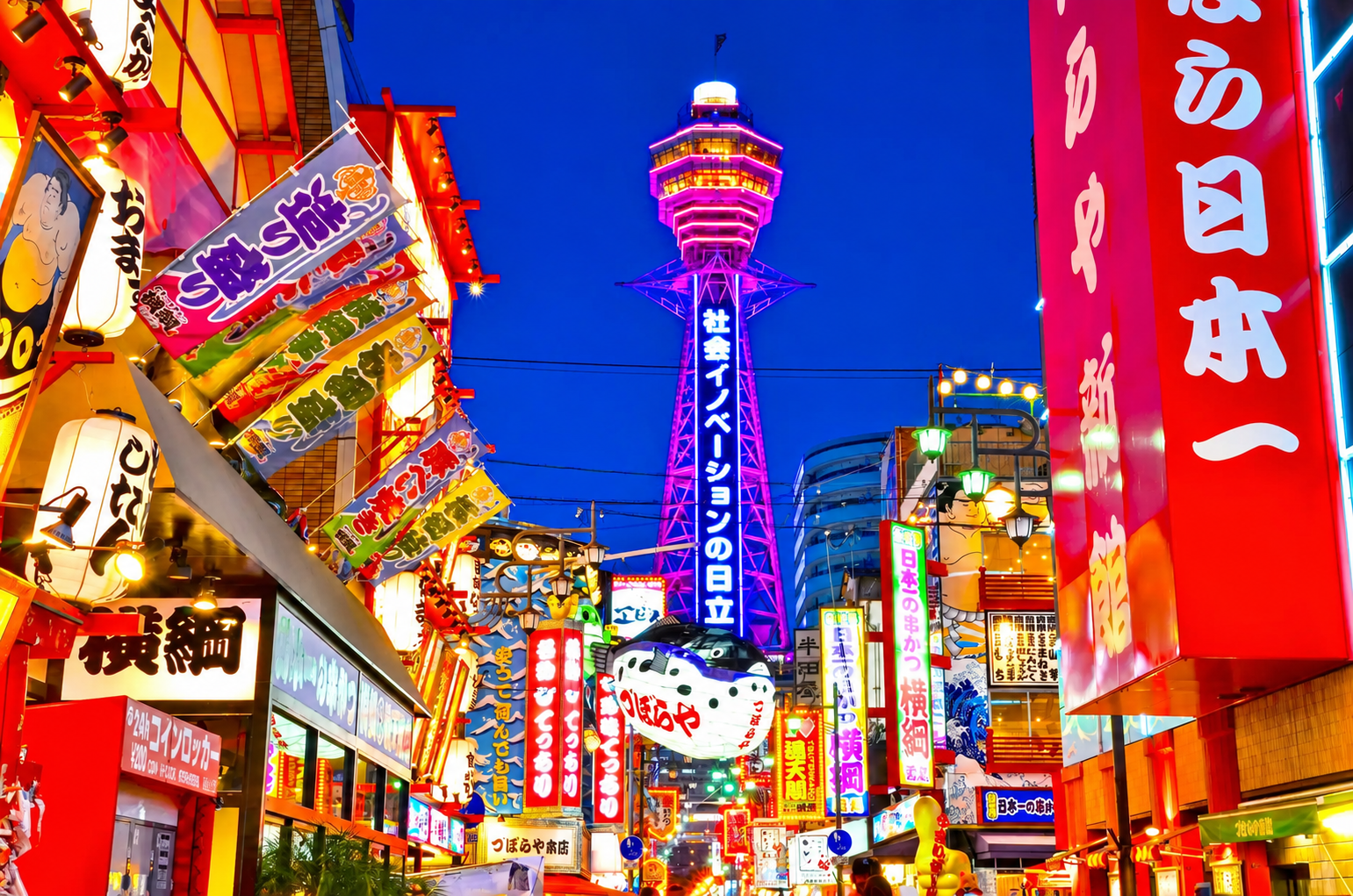
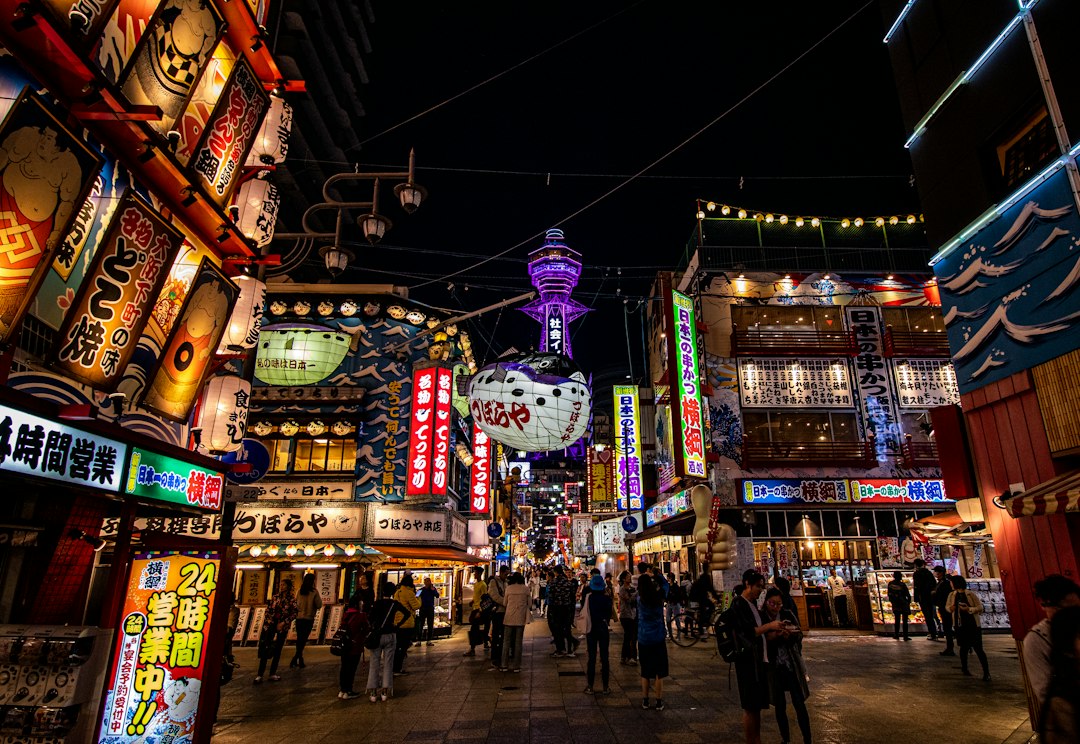
Shinsekai, “the new world”, grew up in the early twentieth century around Tsutenkaku, the steel tower at its center. Today it is a sprawl of pachinko halls, old-fashioned game arcades, and kushikatsu restaurants under oversized signs. It is a little rough around the edges, which is exactly the appeal.
Kushikatsu is skewered meat, seafood, and vegetables, battered and deep-fried, eaten with a thin sauce from a shared tin on the counter. The widely known rule is no double dipping: dip once, before you bite. Use the cabbage on the table to scoop more sauce if you want it.
Nearby Namba Yasaka Shrine, with its stage built in the shape of an enormous lion’s head, is worth the short detour if you are moving between Shinsekai and Namba.
Abeno Harukas or the Umeda Sky Building
Osaka has two observation decks worth your time, and most visitors only need one.
Abeno Harukas stands 300 metres tall, and its observatory, Harukas 300, occupies the top floors with glass walls on every side. It gives the widest view of the city and, on a clear day, the mountains beyond. The Umeda Sky Building in the north is lower, but its rooftop deck is open-air and runs in a ring between two towers, which gives it a sense of height the sealed glass of Harukas does not.
If you are staying in Namba or spending the afternoon in Shinsekai, go to Harukas. If you are in Umeda, the Sky Building at dusk is the better experience. Doing both in one trip repeats the same view.
Expert Tip
Osaka is compact, and most of the sights in this article are a short subway ride apart. The route that works best for a first day runs south: the castle in the morning, the subway to Tennoji for Shinsekai and a kushikatsu lunch, then on to Namba for Dotonbori at dusk. Going north to south follows the city’s own layout and saves you from doubling back across town.
Beyond the Center: The Bay, Universal Studios, and Day Trips
Some of the most rewarding things to do from Osaka are not in its downtown at all. The bay, the forested hills to the north, and two of Japan’s oldest cities are all within easy reach.
Kaiyukan and Universal Studios Japan
The Osaka Aquarium Kaiyukan, in the bay area, is built around a central tank that holds whale sharks, with the exhibits spiralling down around it. It is one of the better aquariums in Asia and a reliable choice on a rainy day, especially with children.
Universal Studios Japan, also on the bay, is a full day in its own right. The Super Nintendo World area is the main draw for many visitors, and entry to it can require a timed ticket on busy days. Buy tickets online well ahead, and if the park is your priority, give it its own day rather than squeezing it between other plans.
Minoo Falls in Autumn
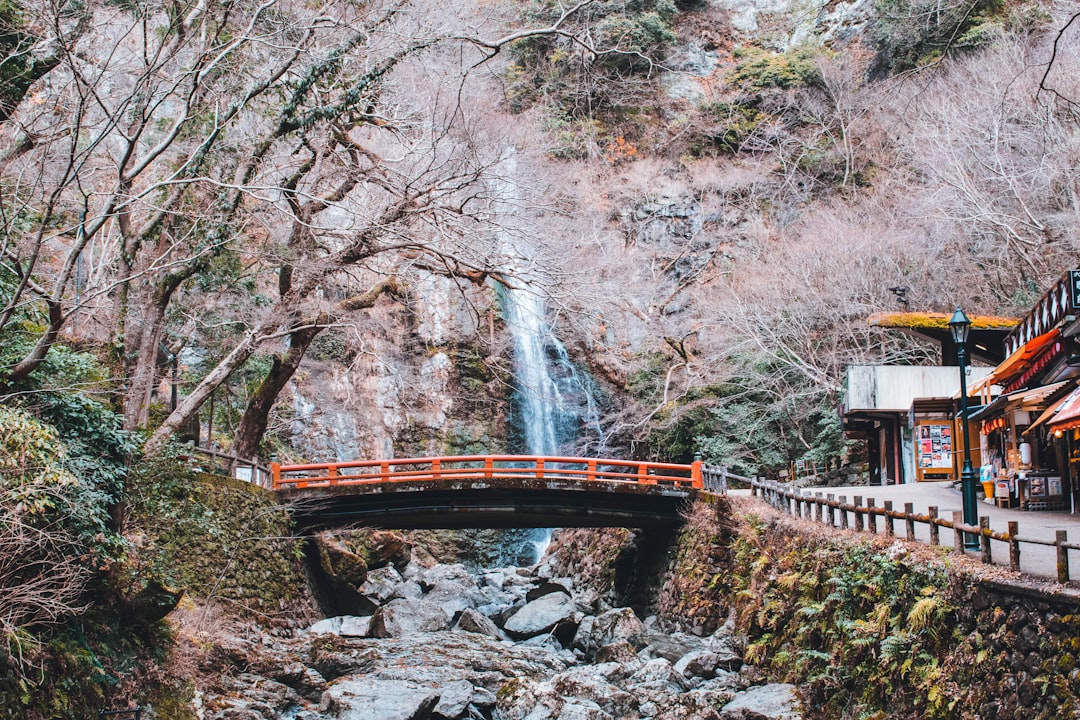
Minoo Park, in the hills north of the city, is the easiest escape into forest from central Osaka. A paved path of about 2.7 kilometres follows a river from Hankyu Minoo Station up to a 33-metre waterfall, around forty minutes on foot at an easy pace.
Autumn is the time to go. The maples along the path turn in November, and the shops near the station sell momiji tempura, maple leaves fried in sweet batter. It is a half day, and a welcome counterweight to the neon.
Nara and Kyoto as Day Trips
Nara is under an hour from Namba on the Kintetsu line, and its deer park and Todaiji temple make an easy day trip. Kyoto is similarly close by JR from Osaka Station. Our guide to three days in Osaka shows how to fit one of them in without losing the city itself.
One piece of advice we give often: do not split a single day between Osaka and a second city. It looks efficient on paper, and in practice you spend the best hours of the day on trains. Choose one per day, and give Osaka at least one full day that is entirely its own.
Things to Do in Osaka: Frequently Asked Questions
How many days do you need in Osaka?
Two full days cover the city itself comfortably: one for the castle, Shinsekai, and Minami, and one for markets, Umeda, and whatever you want to go back to. Add a day for Universal Studios Japan if it is on your list, and further days if you plan to use Osaka as a base for Nara or Kyoto.
Is Osaka Castle worth going inside?
Yes, as long as you know what to expect. The tower is a 1931 reconstruction with a modern museum inside, not an original interior. The exhibits on the sieges of Osaka and the view from the top are good, and the original stone walls and moats outside are the real historical substance of the visit.
Is it better to stay in Namba or Umeda?
For most first-time visitors we suggest Namba. It puts Dotonbori, Uranamba, and Kuromon Market within walking distance, which matters in a city where the evening is spent eating. Umeda is the better choice if you will take many day trips by JR, since Osaka Station is the main rail hub.
Related Tours

Conclusion
The most useful decision you can make about Osaka is to plan it around meals. Decide where you want to eat lunch and where you want to be at dusk, and the sights arrange themselves around those two points. The castle fits the morning, Shinsekai the afternoon, and Minami the evening.
Leave room for the unplanned part. The best meal most of our travelers have in Osaka is not one they booked, but a standing bar they walked past twice before going in. Book a place to stay in Namba, carry cash, and give the city at least one evening with no plan beyond the next plate.
Plan Your Japan Trip with Local Experts
Our team has guided 40,000+ travelers across Japan. Tell us about your trip and we’ll get back to you within 24 hours.




