

In this article:
- Why Donki Looks Like That
- What to Actually Buy
- Timing and 24-Hour Shopping
- Tax-Free and Coupons
- MEGA Donki and the Branch Differences
- Don Quijote Shopping: Frequently Asked Questions
Introduction
The first Don Quijote opened in 1980 and the founder’s insight was counterintuitive: make the shop harder to navigate, not easier. Pile stock to the ceiling, narrow the aisles, hand-write the signs, and customers stop looking for a specific item and start hunting.
It worked well enough to build a chain of several hundred stores across Japan and abroad. Japanese people call it Donki, and treat it as somewhere between a discount store, a novelty shop, and a late-night emergency resource.
For visitors it is genuinely useful — tax-free, open late, and stocking most of what people come to Japan to buy. It is also the place where a planned twenty-minute stop becomes ninety minutes.
Why Donki Looks Like That
The chaos is a designed retail strategy called compression display, and understanding it makes the shop easier to use.
Compression Display
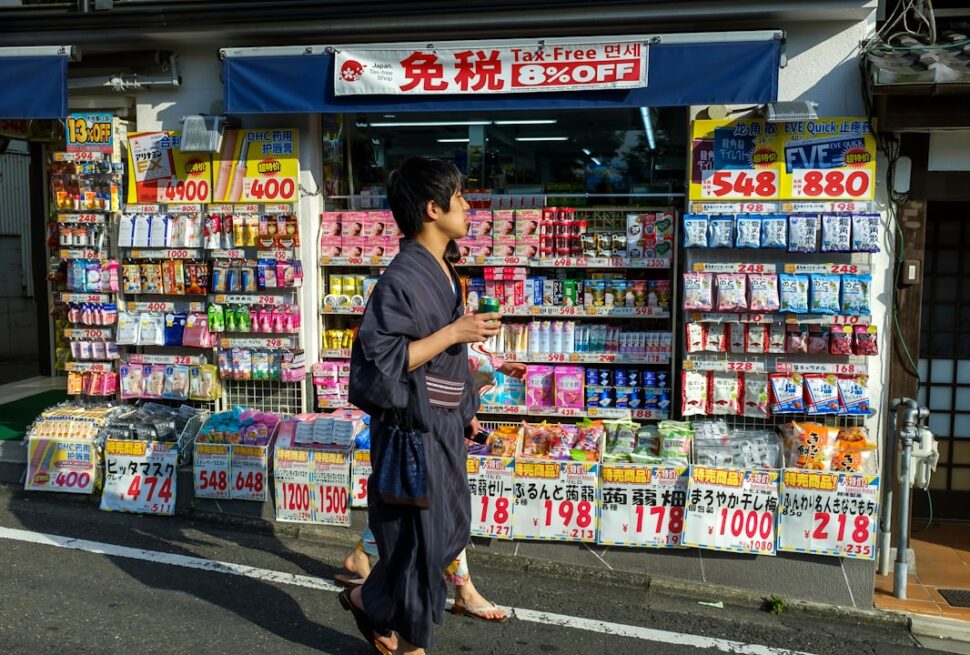
Stock is packed floor to ceiling with narrow, maze-like aisles, and hand-lettered cardboard signs shout prices from every surface. The intended effect is to slow customers down and create the sense of a treasure hunt.
The practical consequence: related items are not always shelved together, and the same product can appear in two places at different prices. If you want something specific, ask staff rather than searching — most stores have English-speaking staff at the information desk.
The Jingle
The Don Quijote theme song plays on a loop, all day, in every store. It is called Miracle Shopping and it was written by an employee.
Japanese people find it as relentless as visitors do. It is part of the identity now and it is not going anywhere.
Donpen
The mascot is a blue penguin called Donpen, who appears on the bags, the signage, and a range of own-brand merchandise.
Donpen goods are cheap and only sold here, which makes them a reasonable small souvenir. The plush versions turn up in the character goods section rather than with the toys.
Expert Tip
Ignore the layout and use the store directory posted by the lifts, which lists categories by floor. Donki’s floors are internally chaotic but categorically consistent — cosmetics are always together, snacks are always together. Getting to the right floor first turns the maze into a single manageable room.
What to Actually Buy
Three categories justify the visit; the rest is browsing.

Cosmetics and Skincare
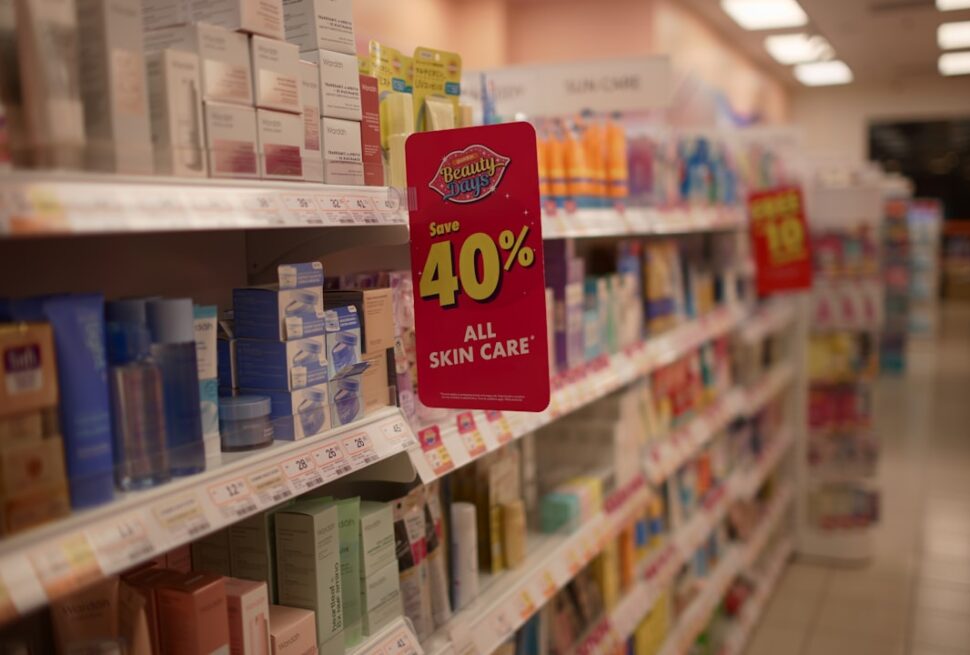
Donki discounts Japanese drugstore cosmetics heavily — sheet masks, sunscreens, hair oils, cleansers — often below Matsumoto Kiyoshi and well below anywhere at an airport.
The cosmetics floor is usually the busiest and the best organised, with English signage on major products. Bulk sheet mask packs and Anessa or Biore sunscreen are the two things most visitors are actually here for.
Snacks in Bulk
The confectionery aisles carry regional KitKats, matcha sweets, instant ramen, and boxed omiyage in multipacks at prices below station gift shops.
For volume gifting this is the efficient option. Check dates on anything containing chocolate in summer; Donki’s stock turns fast but the stores run warm.
Novelties and Costumes
The upper floors carry costumes, party goods, absurd socks, and adult novelties, generally with no attempt at subtlety in the signage.
This section is genuinely entertaining and it is where the treasure-hunt design pays off. It is also why Donki is not the place for an efficient errand.

Timing and 24-Hour Shopping
Most central Donki branches run 24 hours or close around 3am, and the timing changes the experience completely.
Avoiding the Queue
Between roughly 2pm and 8pm, the tax-free counters at tourist-district branches — Shibuya, Shinjuku, Asakusa, Namba — run queues of 30 to 60 minutes.
After 11pm the same counter is usually empty. If you are staying centrally, a late visit is the single highest-value adjustment you can make to a Donki trip.
Last-Minute Gift Runs
Because it is open when nothing else is, Donki solves the night-before-departure problem. Souvenirs, snacks, cosmetics, and packing supplies are all available at 1am.
Branches near major stations and airports exist for exactly this. Just note that tax-free processing still requires the passport and the 5,000 yen threshold regardless of the hour.
Emergency Luggage
Donki sells suitcases cheaply, which is why so many visitors leave with one. A basic hard case runs a few thousand yen and is tax-free eligible as a general good.
It will not survive many trips. As a one-way solution to an overweight-baggage problem, it is the cheapest option in Japan.
Tax-Free and Coupons
The rules are straightforward but strictly enforced.

Passport Requirements
You need your physical passport at a dedicated tax-free register. Photocopies and photographs are not accepted, and staff will refuse them.
Minimum spend is 5,000 yen before tax at that store on that day. The 10 percent is deducted at the register rather than refunded later.
Digital Coupons
Donki publishes discount coupons on its website and app, typically giving an extra few percent on purchases over a set threshold, and they stack with tax-free.
Search for the current coupon before you queue and have it open on your phone. Terms change regularly and the coupon must be shown before the transaction is rung up, not after.
The Sealed Bag
Consumables — cosmetics, food, drink, medicine — are sealed into a plastic bag that must remain unopened until you leave Japan. General goods such as clothing and electronics are not restricted.
Customs at departure can and sometimes do inspect the bag. Do not open it to redistribute purchases between suitcases; if you need to, buy those items without the tax exemption.
MEGA Donki and the Branch Differences
Branches vary more than the uniform branding suggests.
MEGA Don Quijote
MEGA branches are the large-format version, adding fresh groceries, produce, and a wider clothing range to the standard stock. The Shibuya branch runs eight floors.
These are where local residents shop rather than only visitors, and the fresh food floors are a reasonable way to see an ordinary Japanese supermarket without hunting for one.
Akihabara

The Akihabara branch leans into the district — several floors of anime goods, cosplay, and character merchandise, with the AKB48 theatre occupying the eighth floor of the same building.
It is the branch to visit if you want the character goods rather than the cosmetics.
Jonetsu Kakaku
Jonetsu Kakaku is Donki’s own-brand line, covering food, household goods, and electronics at low prices. Quality is inconsistent by design — some products are genuinely good and some are clearly built to a price.
The food items are the reliable end. The branded snacks and instant noodles under this label are a cheap way to try a lot of things.
Expert Tip
Donki stores in tourist districts price some items above their suburban branches, particularly souvenir-coded goods and popular cosmetics. If you are passing a residential-area branch — anywhere outside Shibuya, Shinjuku, Asakusa, or Namba — the same basket is usually a few hundred yen cheaper and the queue is nonexistent.
Don Quijote Shopping: Frequently Asked Questions
Can I use a photo of my passport for tax-free? No. The physical passport is required and staff will not process the exemption without it. Some branches also require the passport holder to be the person paying.
Are credit cards and mobile payments accepted? Yes, all major international cards, plus most Japanese IC cards and QR payment services. Note that tax-free processing happens at specific registers, so join the correct queue rather than a general one.
What if the tax-free line at MEGA Donki Shibuya is enormous? Either come back after 11pm, or walk to a smaller branch — there are several within fifteen minutes in Shibuya and Shinjuku with the same stock and no queue. If your purchase is under 5,000 yen, use a normal register and skip the exemption entirely.
Related Tours

Conclusion
Go late and go with a list. Donki’s design is engineered to make you browse, and after 11pm you can browse without also spending forty minutes at a register.
Use it for cosmetics, bulk snacks, and anything you forgot. For craft goods, tea, or a serious gift, shop elsewhere — Donki is very good at what it does and that is not what it does.
Plan Your Japan Trip with Local Experts
Our team has guided 40,000+ travelers across Japan. Tell us about your trip and we’ll get back to you within 24 hours.