In this article:
- The Shed in Ikeda
- My Cupnoodles Factory
- The Tunnel and the Exhibits
- The Chicken Ramen Factory
- Getting There, and Ikeda or Yokohama
- Cup Noodle Museum Osaka: Frequently Asked Questions
Introduction
A Japanese poll conducted at the end of the twentieth century asked people to name the country’s best invention of the century. Instant ramen beat karaoke, the Walkman, and the bullet train.
A man working alone in a shed behind his house for a year invented it here, in a suburb of Osaka. Momofuku Ando was 48, had failed in several businesses, and was trying to solve a specific problem: Japan in the 1950s was short of food and long on wheat flour supplied by the United States, and nobody wanted to eat bread.
The museum built on that site is free. It is small, it is in a residential street twenty minutes from Umeda, and it is one of the better hours available in Osaka for anyone travelling with children.
The Shed in Ikeda
The founding object of the museum is a reconstruction of a garden hut, and it is more affecting than it sounds.
1958
Ando spent roughly a year in the shed behind his house working on the problem of how people could store noodles at room temperature and prepare them with hot water alone.
The solution was flash-frying. Frying cooked noodles in palm oil drives off the moisture and leaves a network of tiny holes, so the noodle both keeps indefinitely and rehydrates in minutes. He arrived at it by watching his wife make tempura.
Chicken Ramen went on sale in August 1958 at a price several times that of fresh noodles, and sold anyway.
The Reconstruction
They rebuilt the hut to its original scale with the equipment he used: a domestic-scale fryer, drying racks, and an ordinary kitchen.
There is no laboratory here, no team, and no budget. That is the exhibit’s point, and the exhibit makes it without a word of commentary.
Children walk through it in thirty seconds. Adults tend to stand in it for a while.
Cup Noodles, 1971
The second invention was the packaging, and the story is that Ando watched Americans break his noodle blocks into paper cups and pour hot water on them, having no bowls or chopsticks.
The cup solved three problems at once: container, cooking vessel, and crockery. Ando solved the manufacturing problem — how to insert a fragile fried noodle block into a cup without breaking it — by inverting the process and dropping the cup over the noodles instead.
That detail is the single best thing in the museum’s exhibition, and it is the kind of insight that only appears when someone has spent thirteen years thinking about one object.
Expert Tip
Entry to the museum is free. The activities are not, and neither are they expensive — the design-your-own cup runs a few hundred yen, the noodle-making class rather more. This means a family of four can spend a satisfying ninety minutes here for less than the cost of two coffees in Kyoto, which makes it one of the best value attractions in the Kansai region and a genuinely useful option on a day when the budget has taken a beating elsewhere.
My Cupnoodles Factory
The activity everyone comes for, and it works.
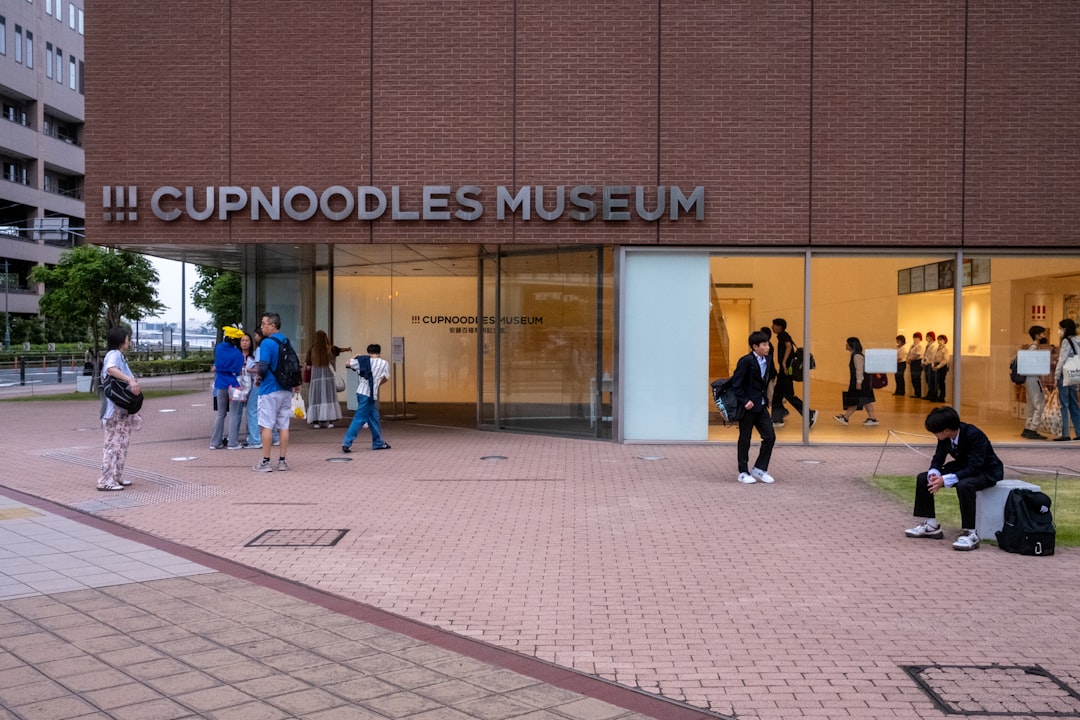
Designing the Cup
You buy a blank cup from a vending machine for a small fee, take it to a long table with coloured markers, and draw on it.
There is no time limit and no template. The tables fill with people of every age drawing badly, which is most of the charm.
Date it. At the end, they print the cup’s stated best-before period on the seal, and writing the day you made it on the side matters more later than you expect.
Choosing the Contents
You hand the cup over at a counter and choose one of four soup bases, then four toppings from a selection of around a dozen — prawn, egg, kimchi, cheese, and several others including seasonal items.
The combinations run into the thousands, which is the number the museum likes to quote. In practice you will pick the prawn and the egg like everybody else.
Staff fill the cup in front of you, with the noodle block dropped in by the inverted method described in the exhibition. Watching the process immediately after learning why they designed it to work that way creates a genuinely well-designed sequence.
Sealing and Carrying It Home
The cup is lidded, shrink-wrapped, and handed back. You then inflate a small plastic bag with a hand pump, put the cup inside, and wear it around your neck.
The bag is not a gimmick. The cup is fragile, and an air cushion is the only thing standing between it and the rest of your luggage.
They travel internationally without difficulty in hand luggage. Some countries restrict the entry of instant noodles containing meat products, so check your own customs rules if you are taking one home.
The Tunnel and the Exhibits
The rest of the museum takes about forty minutes, and the designers have put more thought into it than they usually do with free attractions.
The Instant Ramen Tunnel
A corridor lined with several hundred package designs, arranged chronologically from 1958 to the present.
The graphic design history is the interesting layer — the shift from illustrated to photographic packaging, the arrival of regional variants, the international editions with entirely different visual languages.
It photographs extremely well, which is the other reason people stop here.
The Theatre and the Tasting
A short animated film covers Ando’s story for children, in Japanese with visual clarity that carries most of it regardless.
A tasting counter sells small portions of regional and international Cup Noodle varieties — flavours produced for specific markets and not sold in Japanese shops. It is a small thing and it is the exhibit adults linger at.
English Support
Signage carries English throughout the main exhibits, and the activity instructions are available in English. Staff at the activity counters manage the process with visitors who share no language with them dozens of times a day and are entirely unfazed.
The animated film and some of the detailed panels are Japanese-only. Nothing essential is lost.
The Chicken Ramen Factory
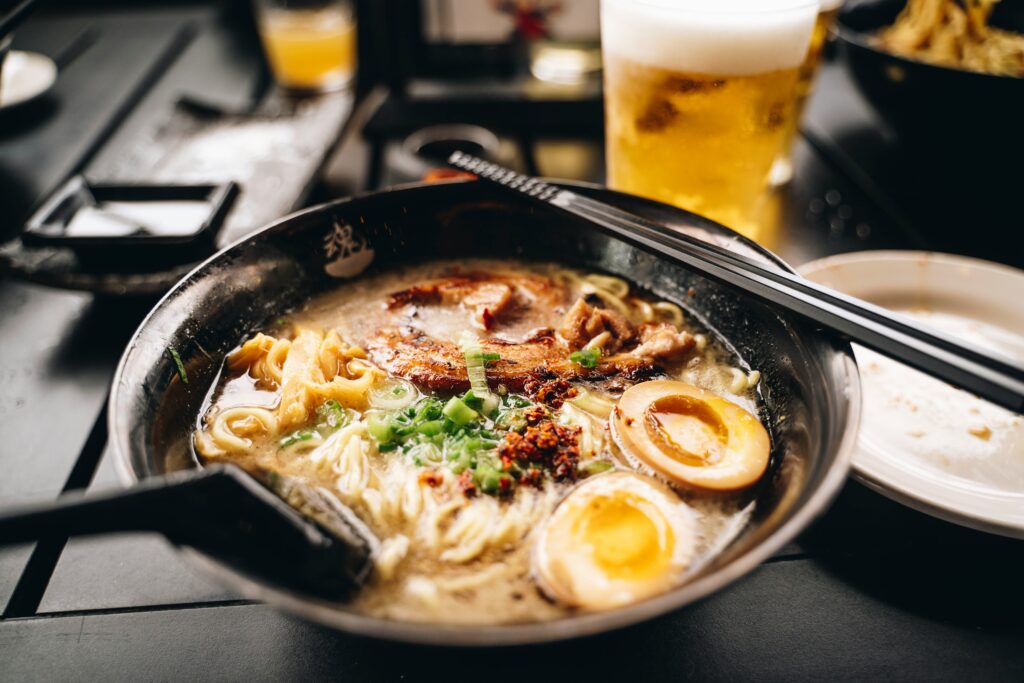
The serious version of the activity, and the one worth planning around.
What You Actually Do
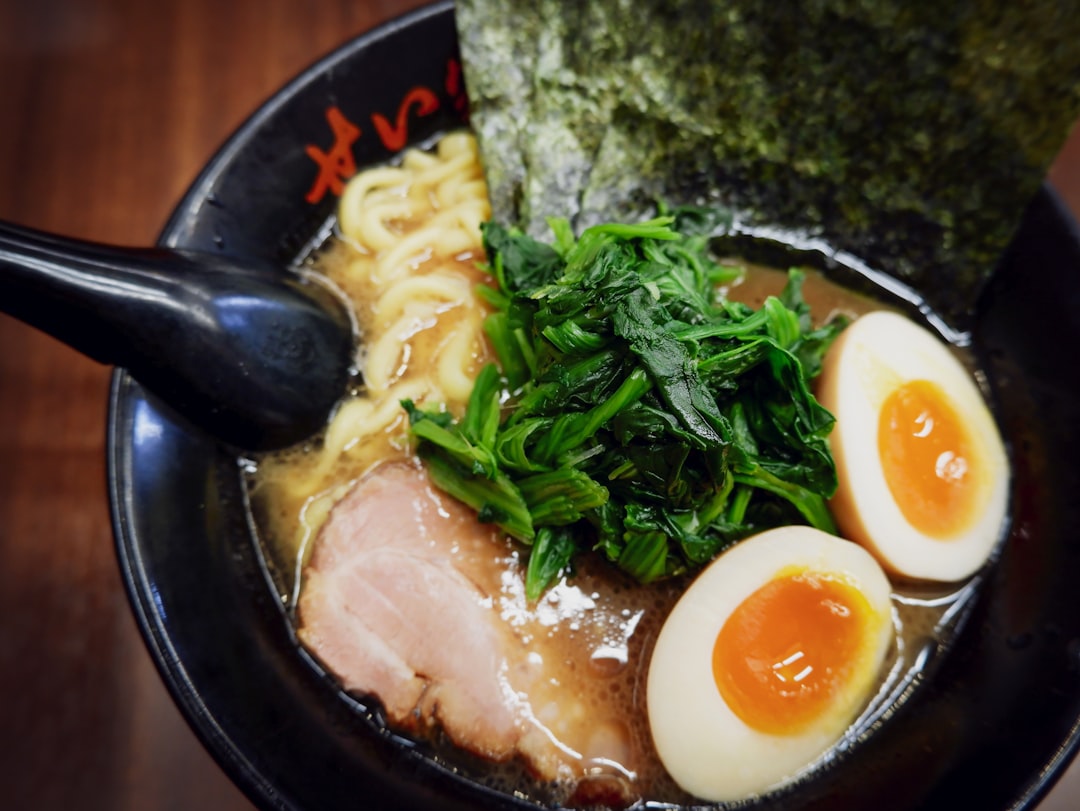
You make instant noodles from flour: kneading the dough by hand, rolling it out, cutting it into strands, steaming, seasoning, and flash-frying in the same manner Ando worked out in the shed.
It runs around ninety minutes in a proper kitchen space with instructors. You take home a sealed bag of the noodles you made.
It is a real cooking class rather than a demonstration, and the physical work of kneading is done by you.
Booking
Advance reservation online is required and slots are released on a rolling basis. Weekends and school holidays fill quickly.
This is the one thing at the museum you cannot decide to do on arrival. If you want it, book before you leave home.
Sessions are conducted in Japanese. The process is demonstrative enough that foreign participants manage, but check current arrangements for language support when booking, and expect to follow rather than to be talked through it.
The Bandana
Participants wear and keep a bandana printed with Hiyoko-chan, the Chicken Ramen chick mascot.
It is a small thing and it is the souvenir children hold onto. The mascot dates to the 1990s and is now the most recognisable element of the brand in Japan.
Expert Tip
There are two Cup Noodles Museums and they are different products. Ikeda is the original site, free to enter, small, and built around the shed where the invention happened. Yokohama is a much larger purpose-built attraction with paid admission, a children’s play structure, and an international food court — better for a full day with young children, and with no historical site attached. If you are in Kansai, Ikeda is the one worth your time. If you are in Tokyo, Yokohama is close and Ikeda is not worth a separate journey.
Getting There, and Ikeda or Yokohama
Straightforward, and closer to central Osaka than people assume.
Trains
Take the Hankyu Takarazuka Line from Umeda to Ikeda Station — around twenty minutes on a limited express. The museum is a five-minute signposted walk from the station.
Hankyu Umeda is a separate terminal from JR Osaka Station, connected by a short walk. The Japan Rail Pass does not cover Hankyu lines, and the fare is a few hundred yen.
Ikeda is also close to Itami Airport, which makes the museum a reasonable stop on a departure day if you have a late flight.
Opening and Crowds
The museum closes one day a week and over the New Year period; confirm the current calendar before travelling.
Weekends, school holidays, and rainy days produce queues at the My Cupnoodles counter that can run to an hour. Weekday mornings are close to empty.
Numbered tickets are sometimes issued for the cup activity at busy times, so head there first and do the exhibition while you wait.
Combining It With Something
Ikeda itself is a pleasant, unremarkable suburb with a small hilltop castle reconstruction and a local sake brewery.
The stronger pairing is Minoo Park, twenty minutes away by train, where a wooded valley path leads to a 33-metre waterfall. It is one of the best short walks near Osaka and it is spectacular in November. Fried maple leaves are sold as a snack along the path, which is exactly as strange and as good as it sounds.
Cup Noodle Museum Osaka: Frequently Asked Questions
Do I need to book in advance?
Not for entry, which is free and needs no reservation. Not usually for My Cupnoodles either — you buy the blank cup from a vending machine on arrival, though numbered tickets may be issued during busy periods. You do need to book the Chicken Ramen Factory noodle-making class in advance online, and it sells out at weekends and in school holidays. The simple rule: turn up any weekday for the museum and the cup, book ahead if you want the class.
How long does making a cup take?
About thirty minutes from buying the blank cup to walking out with it in an inflated bag, of which the drawing is however long you choose to spend. Add queueing time at busy periods, which can double it. The whole museum including the cup takes ninety minutes to two hours; add ninety minutes on top if you have booked the noodle-making class.
Is it good for young children?
Very. The drawing activity requires no special skill. Watching the cup being filled and sealed is visibly satisfying. They also leave carrying something they made. The exhibition is short enough not to test them. The Ikeda site does not have the large indoor play structure found at the Yokohama museum. Yokohama is therefore better for a full day with children under five. But for ninety minutes in Osaka, Ikeda works well and costs almost nothing.
Related Tours
Conclusion
Go on a weekday morning. Make the cup first. Then see the exhibition while the queue forms behind you.
Spend a minute in the shed before you leave. With no money, staff, or training, one man solved a problem in a nine-square-metre shed that changed how much of the world eats.
Plan Your Japan Trip with Local Experts
Our team has guided 40,000+ travelers across Japan. Tell us about your trip and we’ll get back to you within 24 hours.