In this article:
- The Five Shapes Behind Every Sushi Roll
- The Classic Rolls You Will Find in Japan
- Western Rolls and Where They Came From
- Rolls Tied to Place and Season
- Different Sushi Rolls: Frequently Asked Questions
Introduction
Most travelers arrive in Japan knowing more about different sushi rolls than about any other Japanese food, and most of what they know comes from restaurants in London, Sydney, or Los Angeles. The dragon roll, the spicy tuna roll, the roll with cream cheese in it. Then they sit down at a counter in Tokyo and find a menu where the rolls are thin, plain, and wrapped in nori on the outside.
That gap confuses people, and it should not. Both traditions are real. They grew up in different places, for different diners, and they reward different expectations.
We walk travelers through Tokyo’s food markets most mornings, and the question of rolls comes up more than almost any other. This guide sorts it out: the shapes, the classic Japanese rolls, the Western inventions and where they came from, and the rolls that belong to a specific season or region.
The Five Shapes Behind Every Sushi Roll
Every roll you will ever order is a variation on five basic forms. Learn these and any menu, in any country, becomes readable.
The Japanese umbrella term is makizushi, or maki for short, meaning rolled sushi. Chefs usually make a roll on a bamboo mat called a makisu, which lets them press rice and filling into a tight cylinder before slicing.
Hosomaki: The Thin Roll
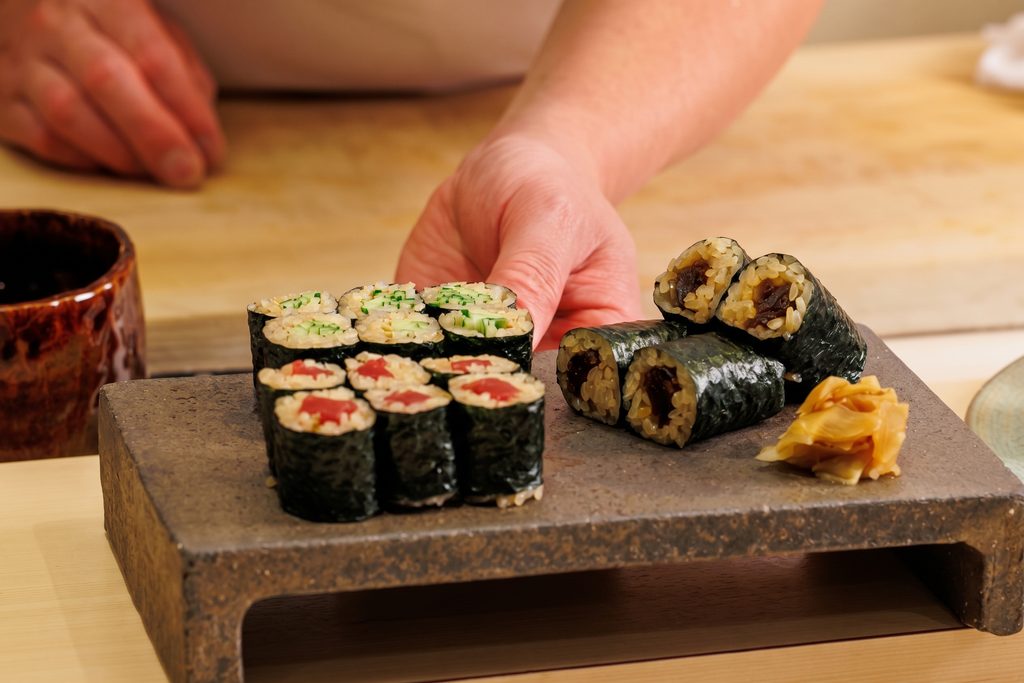
Hosomaki means thin roll. It holds a single filling, uses less rice, and features the nori wrapped around the outside. Sliced into six pieces, each one is a small disc that disappears in one bite.
This is the roll most Japanese sushi counters serve. It is modest by design. The point is the balance between seasoned rice, crisp nori, and one clean flavor, and that balance breaks down when you add a second or third ingredient.
Futomaki and Chumaki: The Thick Rolls
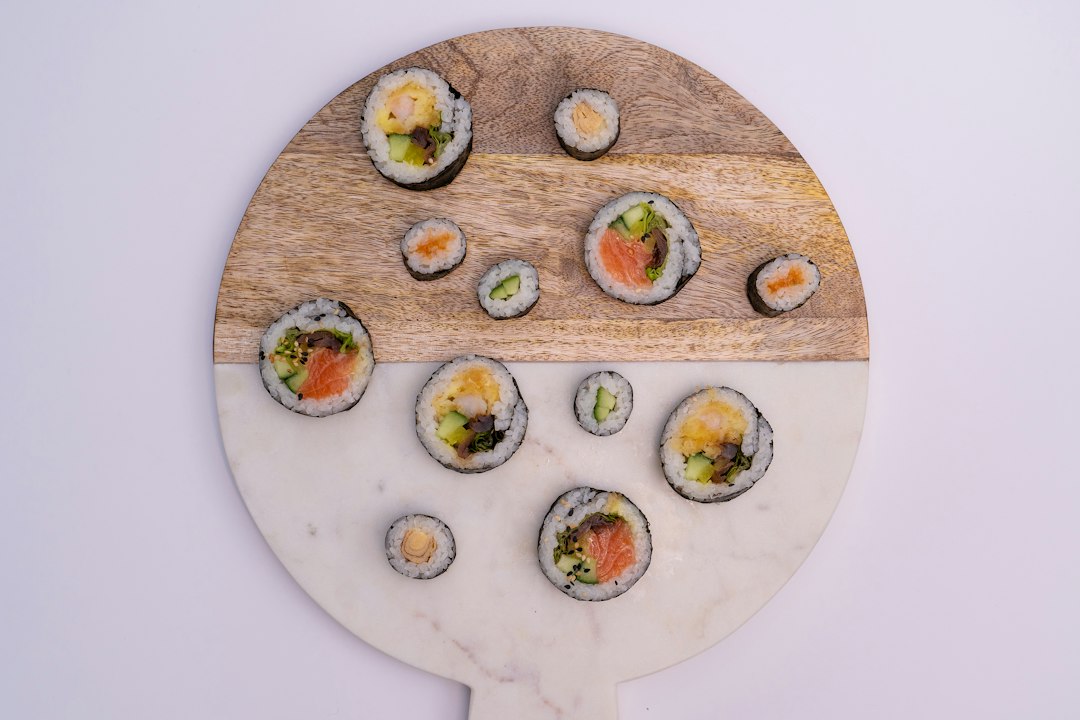
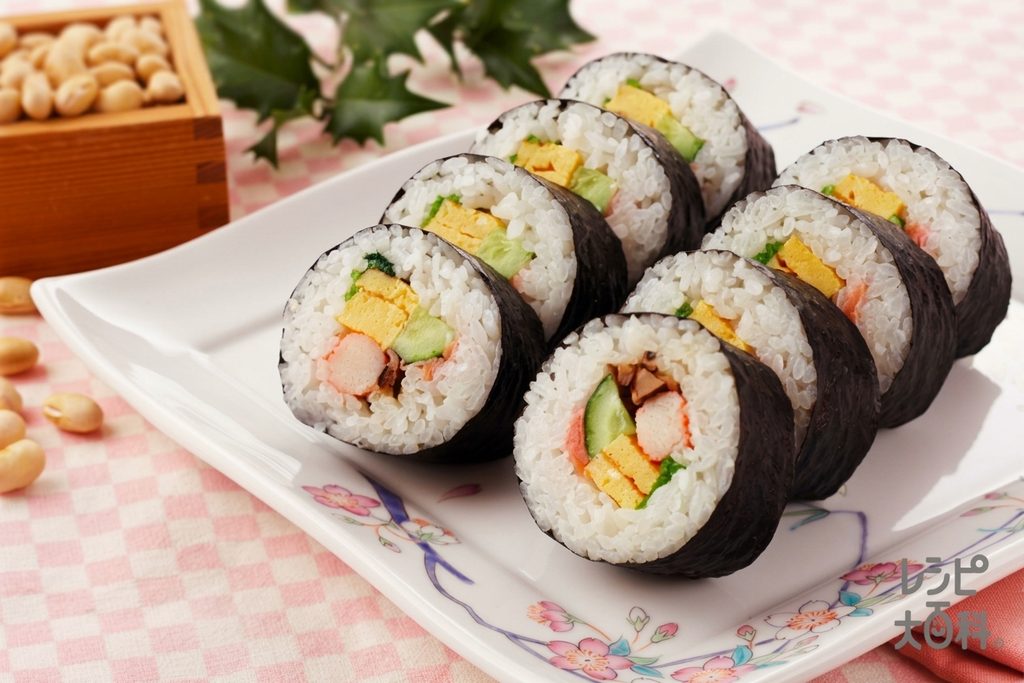
Futomaki means fat roll, and it carries several fillings at once. A typical Japanese futomaki might include sweet rolled omelet, simmered shiitake, cucumber, pink fish flakes, and kanpyo gourd, all arranged so that the cut face shows a pattern of color.
Between the two sits chumaki, a medium roll with two or three fillings. It appears less often on menus, and many shops do not use the term at all.
In practice, futomaki in Japan is more of a home, festival, and takeaway food than a counter dish. You find it in department store food halls and at family celebrations more than at high-end sushi bars.
Uramaki: Rice on the Outside
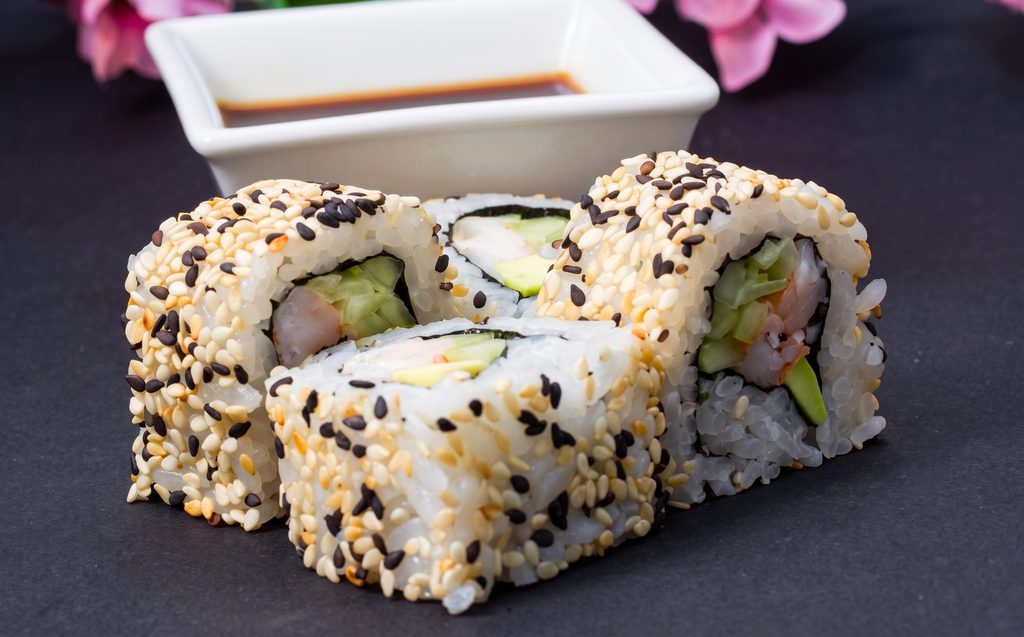
Uramaki is the inside-out roll. The rice wraps the outside, the nori sits inside around the filling, and chefs often coat the outer rice with sesame seeds or fish roe.
This is the shape almost every Western signature roll uses. It is also the one you will see least in Japan. Still, it is a Japanese technique, and the name is Japanese; its popularity developed abroad.
Temaki and Gunkan: The Hand Roll and the Battleship
Temaki, the hand roll, is a cone of nori filled with rice and fillings and eaten from the hand. It is not sliced. Eat it quickly, because the nori is crisp for about a minute before the moisture from the rice softens it.
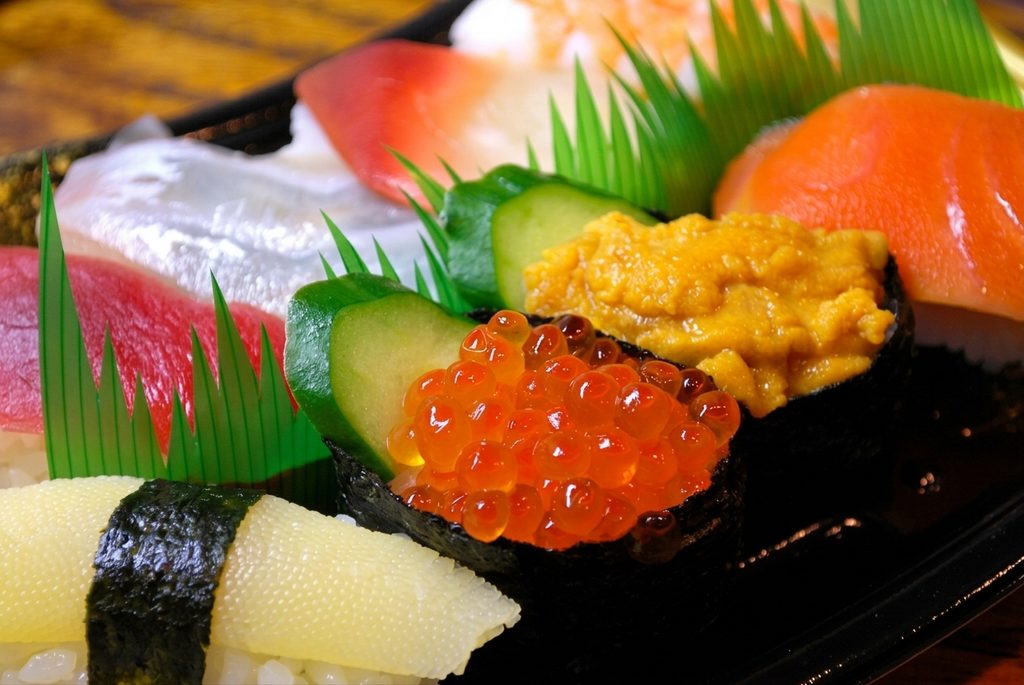
Gunkan, meaning battleship, is technically a relative of nigiri: an oval of rice wrapped with a band of nori that rises above it, forming a small wall to hold loose toppings like sea urchin or salmon roe. Food historians generally credit Ginza Kyubey with it, where the chef devised it in 1941 to hold sea urchin that would not stay on a standard piece of nigiri.
Expert Tip
At a sushi counter, order a hand roll last rather than first. The chef passes it straight across the counter, and it is meant to be eaten within seconds, before the nori loses its snap. Ordering one in the middle of a sequence of nigiri tends to interrupt the rhythm the chef is building.
The Classic Rolls You Will Find in Japan
Japanese rolls are named for what is inside them, and the list is short. At most Tokyo sushi counters you will see a handful of hosomaki, each with one filling, and very little else.
That restraint is the tradition. We think these plain rolls are underrated by visitors, who often skip them looking for something more elaborate.
Kanpyo and Kappa: The Quiet Ones
Kanpyo maki is the most traditional roll of Edomae sushi, the Tokyo style. Chefs shave dried gourd into ribbons, rehydrate it, and simmer it in soy sauce and sugar until it turns soft, sweet, and faintly caramel in color. Japan’s Ministry of Agriculture lists it among Tokyo’s regional dishes.
Kappa maki holds a single baton of cucumber. The name comes from the kappa, a water creature of Japanese folklore said to love cucumbers. It is cool and crisp, and it works well as a pause between richer pieces of fish.
Tekka and Negitoro: The Tuna Rolls
Tekka maki is the tuna roll: lean red tuna, rice, nori, nothing more. The usual story behind the name points to gambling halls in the late nineteenth century, known as tekkaba, where players wanted food they could eat with one hand without soiling their cards. Treat that as a popular account rather than documented history.
Negitoro maki uses minced fatty tuna mixed with chopped green onion. The name is commonly read as negi, green onion, plus toro, fatty tuna, though some trace it to an old verb for scraping meat from the bone. Either way, it is soft, rich, and one of the easiest rolls to like on first taste.
Oshinko, Ume Shiso, and Natto
Oshinko maki, sometimes called shinko maki, uses pickled vegetables, most often takuan, the yellow pickled daikon. It is crunchy and salty, and pairs well with a cup of tea at the end of a meal.
Ume shiso maki combines pickled plum paste with a shiso leaf. The plum is sour and salty; the shiso is sharp and herbal. It is the roll we suggest to anyone who says Japanese food tastes too mild.
Natto maki, filled with fermented soybeans, divides people. Order one if you are curious. Few visitors order a second.
Where Rolls Sit in a Sushi Meal
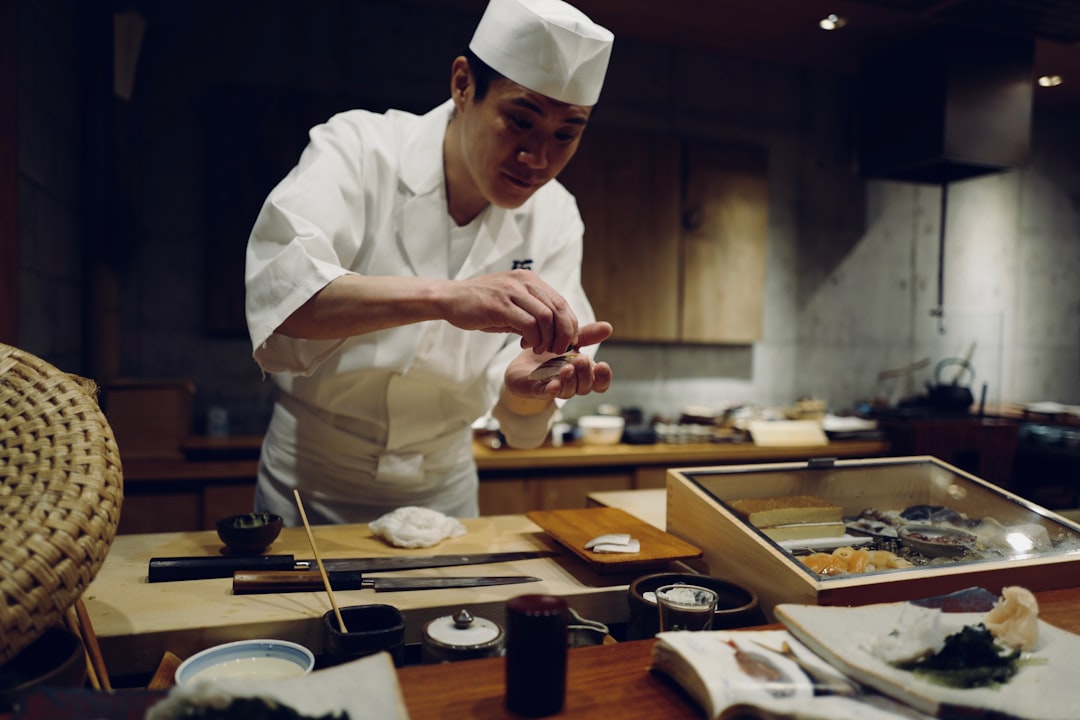
At a traditional counter, rolls usually arrive near the end. Many chefs close an omakase sequence with a hosomaki, often kanpyo or negitoro, as a final savory note before the soup or dessert. Our guide to omakase dining in Tokyo covers that sequence in more detail.
If you are ordering item by item rather than taking omakase, the same principle applies. Start with lighter fish, move toward richer ones, and finish with a roll.
Western Rolls and Where They Came From
The rolls that dominate menus in North America, Europe, and Australia were largely invented outside Japan. That is not a criticism. They answer a different question: how to make sushi appealing to diners who had never eaten raw fish or seaweed.
Most follow the same pattern. They use the uramaki shape, combine several fillings, and often add sauce on top, whether spicy mayonnaise, sweet eel sauce, or both.
The California Roll and Its Disputed Birth
The California roll is the ancestor of nearly every Western roll: crab or imitation crab, avocado, and cucumber, rolled inside-out with rice on the outside. Its invention is disputed. One account credits a sushi chef at Tokyo Kaikan in Los Angeles in the 1960s. Another credits Hidekazu Tojo, a Japanese chef in Vancouver, who says he developed his inside-out version in the early 1970s.
Neither claim has been settled. What is clear is that the inside-out shape hid the nori, which many first-time North American diners found off-putting, and that decision shaped the next fifty years of sushi abroad.
Spicy Tuna, Dragon, Rainbow, Philadelphia
A few other names appear on almost every Western menu. The spicy tuna roll mixes chopped tuna with chili mayonnaise. The dragon roll is usually shrimp tempura inside with slices of avocado or eel fanned across the top like scales.
The rainbow roll is a California roll topped with alternating slices of different fish. The Philadelphia roll pairs smoked salmon with cream cheese, and it is perhaps the clearest example of a roll built entirely for a non-Japanese palate.
These are good food in their own right. Just do not expect to find them at a traditional counter in Tokyo.
What Happens When You Order Them in Japan
At an established Edomae sushi bar, asking for a dragon roll will produce a polite apology. The chef does not have the ingredients, and the style is outside what the shop does.
Conveyor-belt chains and casual shops are different. Many carry a California roll or a salad roll with imitation crab and mayonnaise, and some add seasonal creations of their own. If a companion is less adventurous with raw fish, these chains are the easiest place to find a familiar roll.
Our view is that the trip is a chance to eat the other tradition. Order a kanpyo roll, an ume shiso roll, and a tekka roll at a proper counter, and you will understand in three bites why Japanese rolls stay so plain.
Rolls Tied to Place and Season
Some Japanese rolls are about the calendar or the region as much as the food. These are the ones travelers rarely hear about before they arrive.
Ehomaki: The Uncut Roll of Setsubun
Every year around February 3, at Setsubun, supermarkets and convenience stores across Japan fill their shelves with ehomaki: a whole, uncut futomaki. The custom is to eat it in silence, in one go, facing the year’s lucky direction. Talking, the story goes, lets the good fortune escape.
The practice is traced to Osaka merchants, but its national spread is recent. Seven-Eleven stores in Hiroshima began selling rolls under the ehomaki name in 1989, and the chain rolled it out nationwide in 1998. If you are in Japan in early February, buy one. Watching a whole office quietly eating sushi rolls facing the same wall is one of the stranger pleasures of the Japanese winter.
Boso Futomaki: Chiba’s Decorative Rolls
In the Boso area of Chiba Prefecture, east of Tokyo, futomaki became a festival food known as matsuri-zushi. Cooks build the roll from smaller rolls and strips of colored filling so that each slice reveals a picture: a camellia, a flower, a character, sometimes a seasonal motif.
It is a home and community tradition rather than a restaurant dish. Some cooking classes in Japan teach decorative rolls, known as kazari maki, if you want to try making one yourself.
Rolls in Markets, Station Kiosks, and Convenience Stores
Outside restaurants, rolls are everyday food. Department store basements sell futomaki by the piece, and convenience stores stock hosomaki and hand-roll packs designed to keep the nori separate from the rice until you open them.
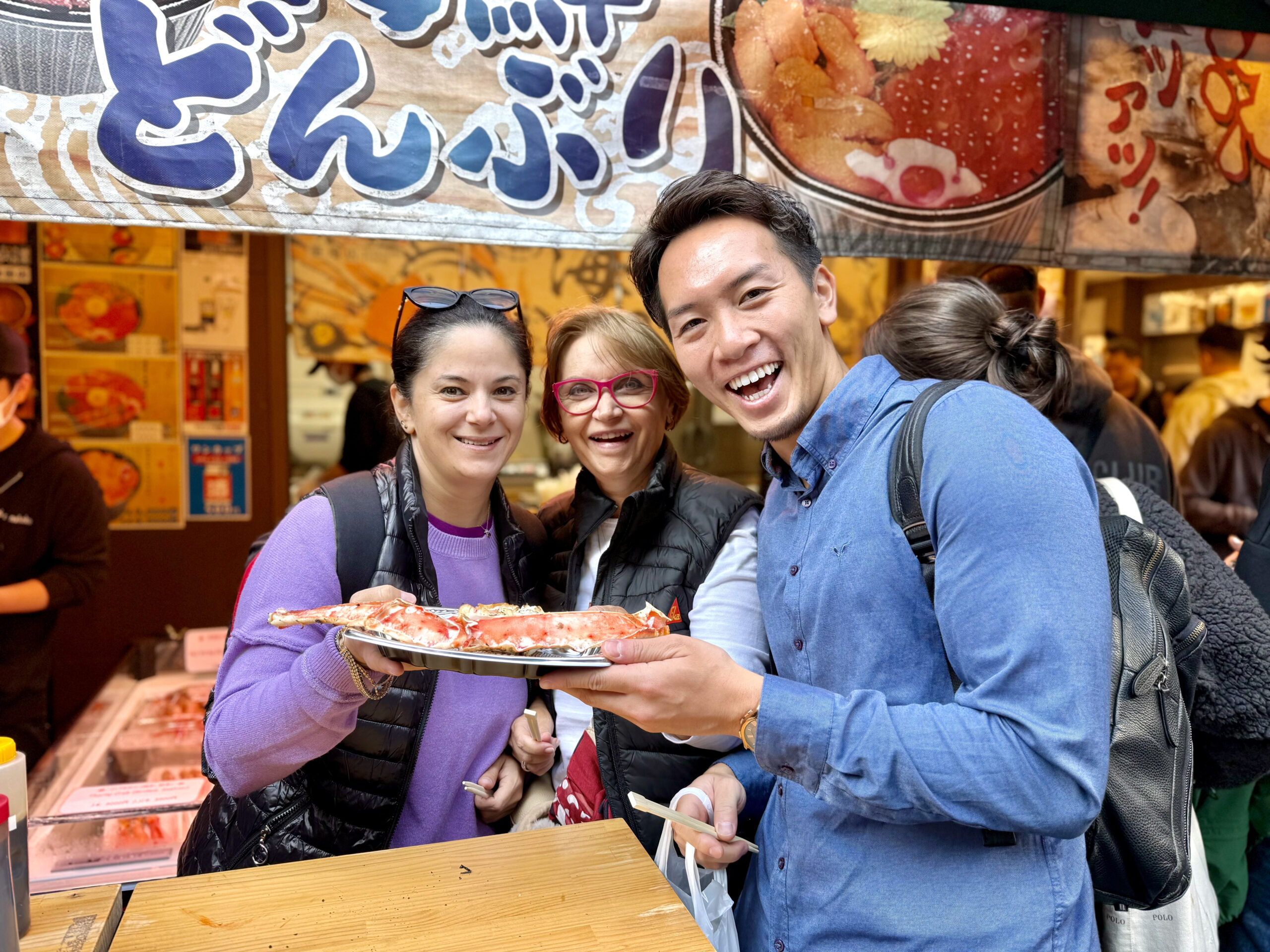
In Tokyo’s Tsukiji Outer Market, where we run our morning food walk, you see the parts of a futomaki before you see the roll. The sweet rolled omelet, tamagoyaki, is made and sold at several stalls, and it is the same omelet that sits at the center of a good thick roll. Most of those stalls take cash only, and most of what you eat there is eaten standing. Our guide to what to eat at Tsukiji Outer Market covers the rest.
Expert Tip
Convenience store hand rolls come in a wrapper with a film between the rice and the nori. Pull the tabs in the numbered order printed on the pack, and the nori wraps the rice cleanly and stays crisp. Tear it open any other way and you end up with torn seaweed and a handful of loose rice.
Different Sushi Rolls: Frequently Asked Questions
What is the most traditional sushi roll in Japan?
In Tokyo, kanpyo maki, the thin roll of simmered dried gourd, is generally considered the classic Edomae roll. Tekka maki and kappa maki are close behind. All three are hosomaki with a single filling, which reflects the Japanese preference for balance over abundance in rolled sushi.
Is it acceptable to eat sushi rolls with your hands?
Yes. Sushi, including rolls, can be eaten with the hands or with chopsticks, and hand rolls are meant to be held. Dip lightly and avoid soaking the rice, so the roll does not fall apart in the soy sauce.
Can I find a California roll in Tokyo?
Yes, though not at traditional counters. Conveyor-belt chains, some supermarkets, and restaurants aimed at international diners often carry one. If you want the full range of Western signature rolls, you will find more of them in your home city than in Tokyo.
Related Tours

Conclusion
The best way to understand the difference between Japanese and Western rolls is to order the plain ones at a proper Tokyo counter and pay attention to the nori, the temperature of the rice, and how little else there is. Then, on another night, try a salad roll at a conveyor-belt chain and notice how much Japan itself has borrowed back.
For a wider view of the city’s sushi, from Ginza counters to market breakfasts, read our Tokyo sushi guide. And if you are in Japan in early February, find an ehomaki, check which way to face, and eat it without saying a word.
Plan Your Japan Trip with Local Experts
Our team has guided 40,000+ travelers across Japan. Tell us about your trip and we’ll get back to you within 24 hours.