In this article:
- The Town as a Ryokan
- The Seven Baths
- Tattoos, Passes, and Etiquette
- Crab, Beef, and the Ropeway
- Getting Here and What to Combine
- Kinosaki Onsen: Frequently Asked Questions
Introduction
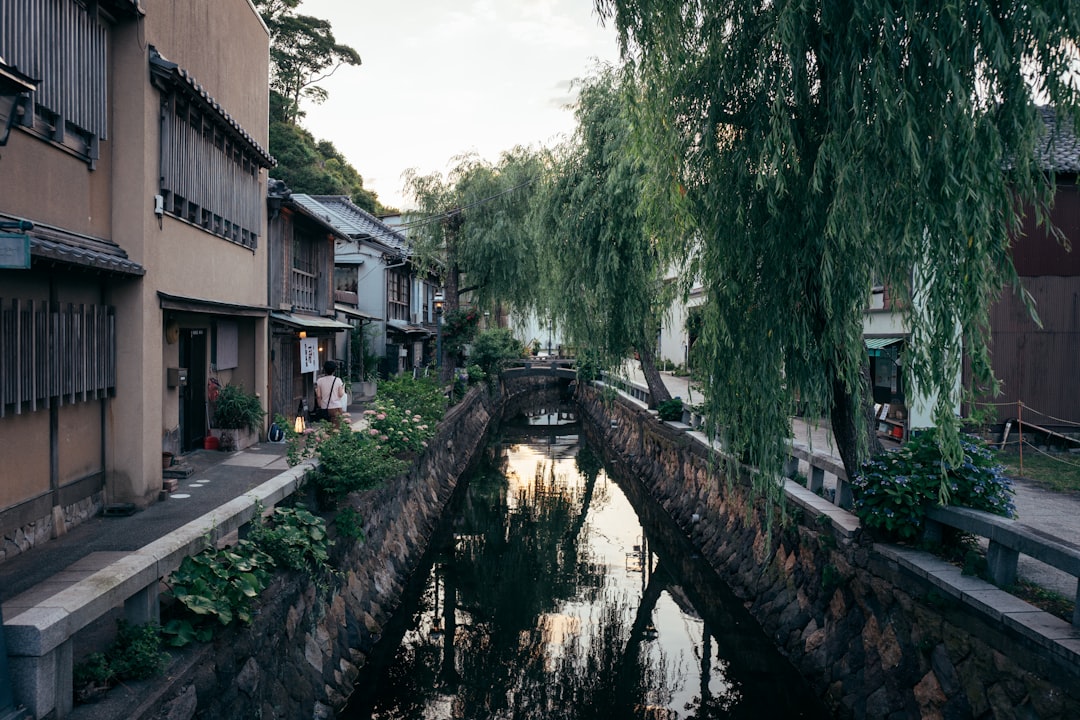
In Kinosaki the sound after dark is wooden clogs on stone, from every direction, continuously.
The whole town walks between bathhouses in the evening. Guests change into a yukata at their inn, put on geta, and go out — to the bath at the end of the street, then to another one, then to a bar, then to a third bath before bed. Nobody is dressed in anything else.
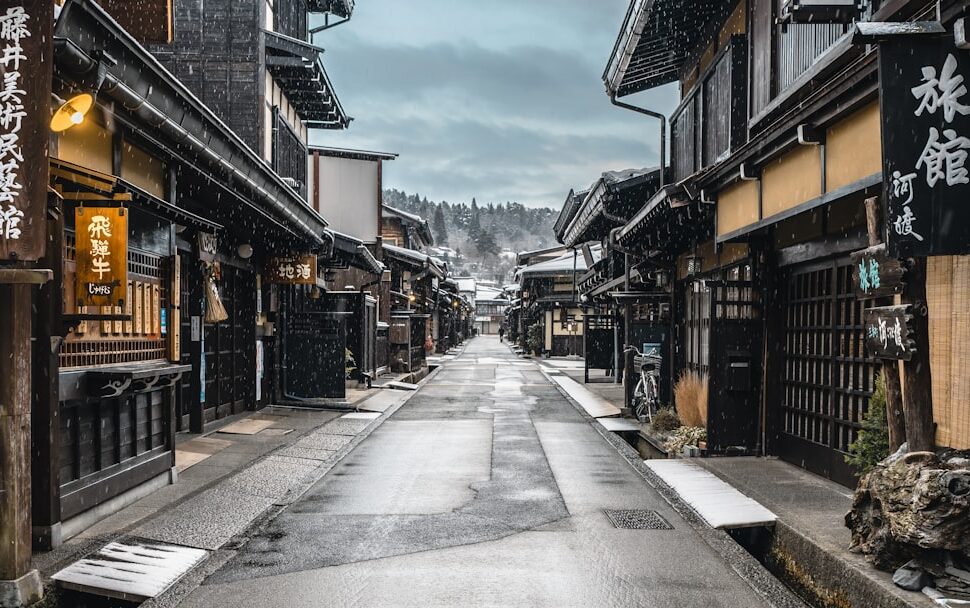
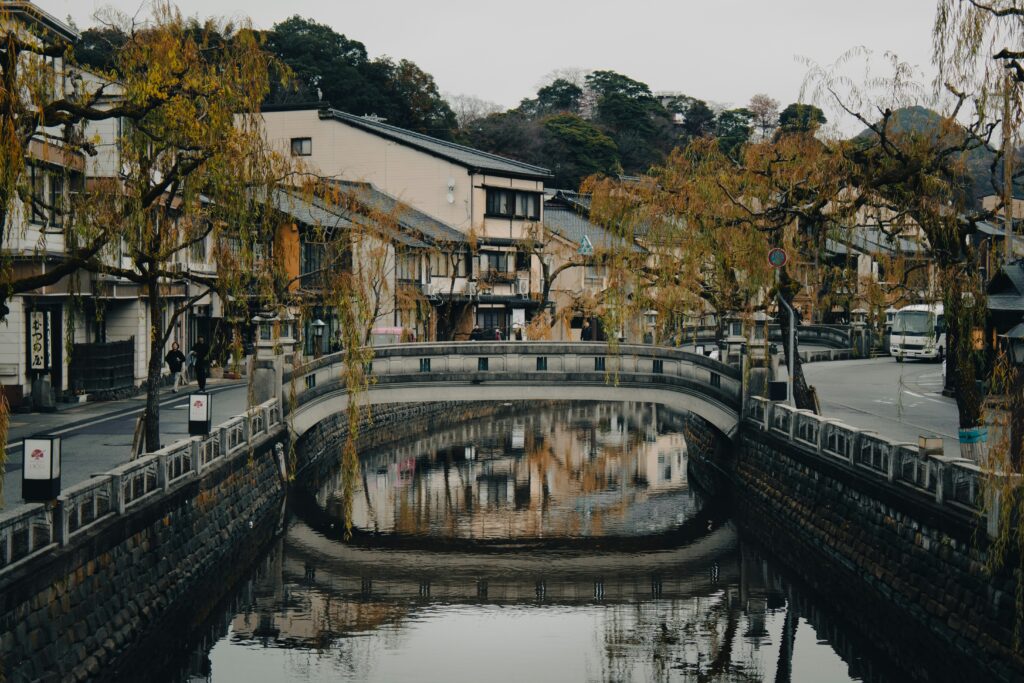
The willows along the Otani River, the stone bridges, and the two-storey wooden inns are the setting, and it is genuinely beautiful. But the reason Kinosaki works while other onsen towns feel like a hotel with a bath is structural: the inns here are deliberately small and their baths are deliberately modest, so that the public ones are the point.
The Town as a Ryokan
A 1,300-year-old spa town in northern Hyogo, twenty minutes from the Sea of Japan.
The Founding Story
The origin legend involves a stork — an oriental white stork seen bathing an injured leg in a spring, which led to the discovery of the water. The Buddhist monk Dochi Shonin is credited with establishing the town’s oldest bath after a thousand days of prayer in the early eighth century.
The stork is not incidental. Toyooka, the city Kinosaki belongs to, is the site of Japan’s programme to reintroduce the oriental white stork after it went extinct in the wild here in 1971, and released birds now nest in the surrounding rice fields.
Why the Inns Are Small
Kinosaki’s ryokan are mostly modest wooden buildings with a dozen rooms or fewer, and their private baths are correspondingly small.
This is a deliberate arrangement rather than an accident of scale. The town’s explicit philosophy is that the ryokan is your room, the streets are the corridors, and the seven public baths are the bathhouse. Everything is built to keep people moving through the town rather than staying indoors.
The effect is that Kinosaki in the evening is full of people, which is exactly the opposite of most onsen resorts, where guests disappear into their hotels after check-in.
Wearing the Yukata
Your inn provides the yukata, an outer haori jacket, and geta. You wear them from check-in until departure, including to dinner, to the baths, and to the bars.
Left side over right. The reverse is used for the dead and it is the one mistake worth avoiding.
Underneath: underwear, and in winter add a layer — inns provide a thin under-robe and thermal layers are entirely acceptable. Nobody can see and nobody is checking.
Geta take practice. Walk slowly, shorten your stride, and expect blisters between the toes on the first evening. Many inns offer a choice of geta or slippers, and there is no penalty for taking the slippers.
Expert Tip
Take your own small towel and a drawstring bag. Inns provide both, and the pattern that works is: a small towel for washing, a larger one for drying, and a waterproof bag for carrying the wet one to the next bath. Doing three or four baths in an evening means carrying a damp towel around the town, and the bag is the difference between that being pleasant and being irritating.
The Seven Baths
Soto-yu meguri — the circuit of the seven external baths — is the activity. They are within a fifteen-minute walk of each other along the river.
Goshono-yu
The most impressive of the seven and the one to prioritise. The outdoor bath sits beneath a waterfall against a wooded rock face, and the building is modelled on a Kyoto imperial palace hall.
Large, well designed, and the best photograph in the town if photography were permitted, which it is not.
Busy in the early evening. Go at opening or late.
Ichino-yu
Set in a striking building resembling a kabuki theatre, with a cave bath cut into the rock at the back — a low stone chamber that feels like bathing inside the hill.
Central, popular, and the one most visitors do first. The cave is genuinely unusual and worth the queue.
Kono-yu
The oldest of the seven, and the one from the stork legend. It sits at the far end of the town, past the ropeway station, which means it is the least busy.
Good outdoor bath, quiet setting, and a walk up the river to reach it. Pair it with the ropeway.
The Other Four
Satono-yu is the largest and most modern, with multiple bath types across two floors, a roof terrace, and saunas — the most facility-like of the seven and the best in bad weather.
Mandara-yu is the smallest and simplest, with a wooden outdoor tub and almost no one in it. Yanagi-yu is small, hot, and traditional. Jizo-yu is the local favourite, plain and central, with a distinctive lantern-shaped window.
Doing all seven in a single stay is a stated goal for many visitors and is achievable over two nights. In one night, three is comfortable and four is ambitious.
Opening Hours
Each bath closes on a different day of the week and they open at staggered times, some from early morning and some only from mid-afternoon.
Check the current schedule at your inn on arrival — it changes, and it determines the order you do them in. Most stay open until eleven at night, which is when the town is at its best.
Tattoos, Passes, and Etiquette
The practical rules, including the one that makes Kinosaki unusual in Japan.
Tattoos Are Not an Issue Here
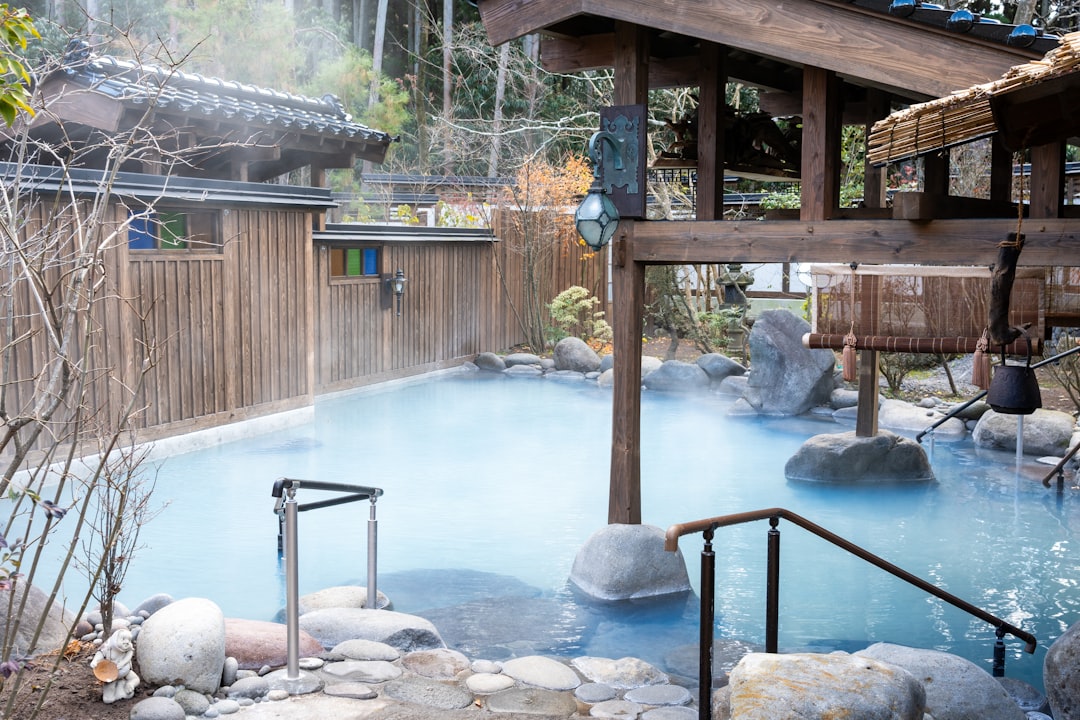
All seven public bathhouses admit guests with tattoos. No covering, no patches, no separate hours, no conversation at the desk.
This is a deliberate town-wide policy rather than an inconsistently applied tolerance, and it makes Kinosaki one of the few places in Japan where a tattooed visitor can bathe normally in a traditional setting.
It is worth stating plainly because tattooed travelers routinely plan whole itineraries around this restriction elsewhere. Here it does not apply.
Individual private ryokan baths set their own rules, but the seven public baths — the ones you came for — do not.
The Yumepa Pass
Guests staying at a Kinosaki ryokan receive a pass, generally in the form of a card or a code, giving unlimited access to all seven baths for the duration of the stay. It is included in the room rate.
You tap it at the gate. There is no separate payment at any bath.
Day visitors buy a one-day pass covering all seven, sold at the baths and at the station tourist office, or pay individual admission at each. The day pass is worth it if you intend to visit two or more.
Bathing Etiquette
Standard Japanese onsen rules apply. Undress completely in the changing room — swimwear is not worn. Wash and rinse thoroughly at the seated shower station before entering the water. Do not put the small towel in the bath; fold it on your head or leave it at the side.
Tie long hair up. Do not swim, splash, or take photographs. Rinsing off after the bath is optional and many prefer to leave the minerals on the skin.
Phones stay in the locker. This is the rule people break and it is taken seriously.
Expert Tip
Book your inn for two nights rather than one. Kinosaki’s whole design assumes an evening of moving between baths, and a single night gives you roughly four hours of that after check-in and dinner. Two nights lets you do all seven, use the quiet morning baths when the town is empty, and take the ropeway or a trip to the coast during the day. The town is small enough that people worry two nights is too many, and they are consistently wrong.
Crab, Beef, and the Ropeway
Kinosaki has a serious food reputation and one attraction that is not a bath.
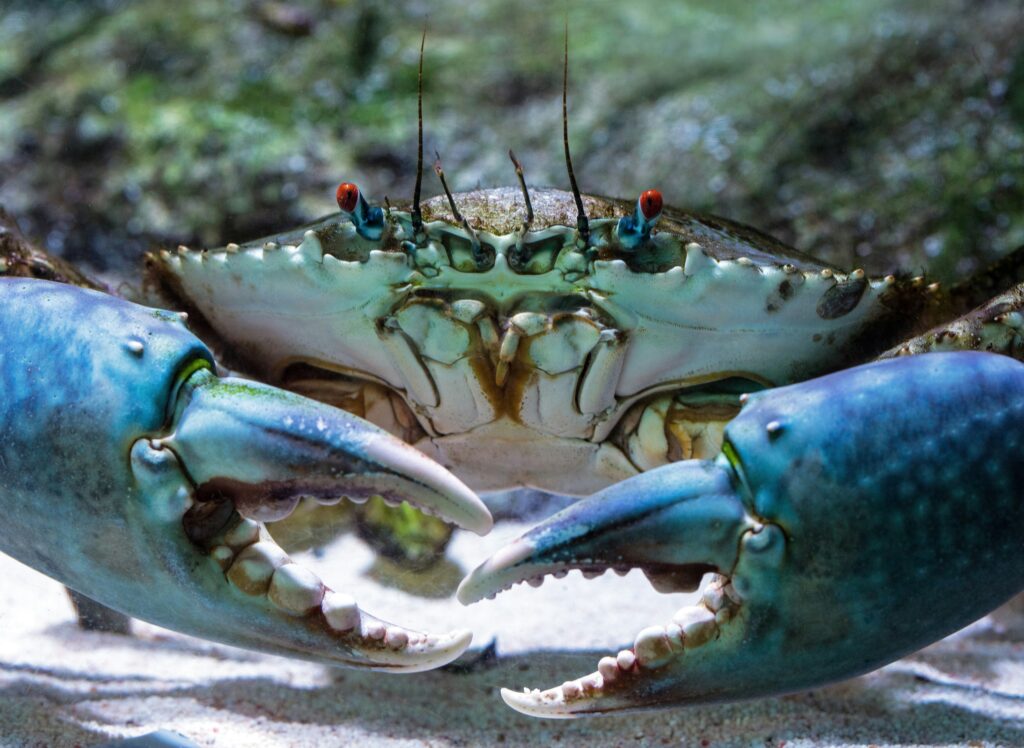
Matsuba Crab
The snow crab landed at the nearby ports of Tsuiyama and Shibayama is the reason a large proportion of Japanese visitors come to Kinosaki, and the season is fixed: it opens in early November and closes in late March.
A full crab kaiseki dinner at a ryokan runs through sashimi, grilled legs, hotpot, and finally rice cooked in the broth. It is expensive — a crab-focused stay costs substantially more than the same room in summer — and it is the best crab most people will eat.
Individually tagged crab from specific boats commands the highest prices. Ask your inn what grade the dinner uses when booking, because the range is wide.
Outside the season, the town serves other seafood well and the price of a room falls considerably.
Tajima Beef
Tajima cattle are raised in this part of Hyogo, and the bloodline is the ancestor of Kobe beef — Kobe is a brand applied to Tajima cattle meeting specific criteria.
Eaten here as steak, in a hotpot, or as skewers from shops in the town. It is considerably cheaper than the same quality carries in Kobe or Tokyo.
The Ropeway and Onsenji
A ropeway runs from the far end of town up Mount Daishi, with a mid-station at Onsenji, the temple traditionally visited before bathing, and a summit station with a view over the town and out to the Sea of Japan.
The temple is worth the stop. Historically, pilgrims were expected to receive permission at Onsenji before entering the baths, and the practice is still observed by some.
The summit has a café and a viewing terrace. Autumn colour here is excellent and the walk down is possible for those who want it.
The Street Food
The streets between the baths carry stalls and small shops selling crab croquettes, grilled squid, soft-serve ice cream, and the local craft beer.
There is also a small brewery and several standing bars. Onsen town evenings in Japan can be dead; Kinosaki’s are not, and the food between baths is part of why.
Getting Here and What to Combine
Better connected than its location suggests.
Trains
The JR limited express Kinosaki runs direct from Kyoto in around two and a half hours. The Konotori runs direct from Osaka in around two hours forty. Both are covered by the Japan Rail Pass.
Kinosaki Onsen Station is in the town. You walk out of it into the main street, and most inns are five to ten minutes on foot.
Book reserved seats in crab season and at weekends. These trains fill.
On Arrival
Inns generally allow early luggage drop before check-in, and many will collect bags from the station.
Change into yukata as soon as you check in. The town works from that point on, and travelers who stay in their own clothes on the first evening consistently say afterwards that they wish they had not.
Combining the Trip
Himeji is on the way from Osaka or Kyoto and holds the finest surviving castle in Japan — an original keep rather than a reconstruction. Breaking the journey there for three hours works well.
Amanohashidate, the pine-covered sandbar counted among Japan’s three great views, is along the coast to the east and reachable by a scenic local line.
Izushi, forty minutes inland, is a small castle town known for sara-soba — buckwheat noodles served on stacks of small ceramic plates. It makes a good half-day from Kinosaki.
Kinosaki Onsen: Frequently Asked Questions
Are all seven public baths really tattoo-friendly?
Yes. All seven soto-yu admit visitors with tattoos, with no covering required and no restriction on size or placement. This is a town policy and it is applied consistently, which is why Kinosaki appears on every list of tattoo-friendly onsen in Japan. Individual ryokan may set their own rules for their private baths, so if that matters to you, ask when booking the room — but the seven public baths, which are the reason to come, are open to everyone.
Do I have to stay overnight to use the seven baths?
No. Day visitors can buy a one-day pass covering all seven, sold at the bathhouses and at the station tourist office, or pay individual admission at each bath. Kinosaki works as a day trip from Kyoto or Osaka in the sense that you can arrive, do three baths, eat, and return. What you miss is the evening — the illuminated river, the town full of people in yukata, and the late baths that stay open until eleven. The town’s entire character is nocturnal, and we would strongly suggest the night.
What do I wear under the yukata?
Underwear, and in cold months an additional layer. Inns supply a thin under-robe, and wearing thermal leggings or a long-sleeved top beneath the yukata in winter is completely normal — the Sea of Japan coast is cold and windy, and nobody expects visitors to freeze for authenticity. Wrap the left side over the right, tie the sash at the waist rather than the stomach, and take the haori jacket. You undress fully at the bathhouse anyway, so the layers underneath are your own business.
Related Tours
Conclusion
Change into the yukata the moment you check in, and go out. Everything Kinosaki is good at happens in the street between one bath and the next, and the visitors who treat their inn as a hotel see none of it.
If you have a tattoo and have been planning around Japanese bathing rules, come here. Seven traditional public baths, a stork legend, snow crab in winter, and no conversation at the desk about what is on your arm.
Plan Your Japan Trip with Local Experts
Our team has guided 40,000+ travelers across Japan. Tell us about your trip and we’ll get back to you within 24 hours.